
Stine Janvin / Morten Joh: Or Gare: Funeral Procession Music from Ryfylke, Norway
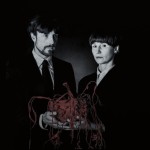
Artist: Stine Janvin / Morten Joh
Title: Or Gare: Funeral Procession Music from Ryfylke, Norway
Format: 12" + Download
Label: Futura Resistenza (@)
Rated:

Title: Or Gare: Funeral Procession Music from Ryfylke, Norway
Format: 12" + Download
Label: Futura Resistenza (@)
Rated:
Or Gare: Funeral Procession Music from Ryfylke, Norway is one of those rare records that seems to arrive from a place where time has stopped measuring itself. Not because it is nostalgic, but because it is concerned with something older than nostalgia: ritual. The album's source material comes from the "Liksong" tradition of Norway's Ryfylke region, funeral songs once performed while accompanying the dead on their final journey. Yet Stine Janvin and Morten Joh are not interested in historical reconstruction. They treat these remnants of collective memory as living matter, capable of transformation.
The result occupies a fascinating space between folk archaeology and speculative sound art. Ancient melodic contours emerge through synthesizers, tape manipulations, retuned percussion, and layers of voice that seem suspended between human presence and spectral resonance. It often feels as though centuries have folded onto one another, leaving medieval spirituality and contemporary electronics sharing the same dimly lit room.
For listeners familiar with Janvin's work, her approach will come as little surprise. Over the years she has established herself as one of the most distinctive vocal explorers in experimental music, constantly expanding the expressive possibilities of the voice beyond conventional singing. Here, however, she appears less concerned with individual expression than with collective remembrance. Her vocal performances rarely seek attention for themselves; instead, they function as conduits through which forgotten gestures and communal emotions are allowed to surface once more.
Morten Joh proves an ideal collaborator. His synthesizers, tape delays, and carefully sculpted textures never impose a modern framework upon the material. Rather, they illuminate its peculiar harmonic qualities, especially the unstable intervals that seem to hover perpetually between resolution and uncertainty. The music often inhabits spaces that Western ears instinctively try to categorize but never fully can. It is neither mournful nor consoling, neither sacred nor secular. Like grief itself, it refuses tidy definitions.
The album's sequencing mirrors the stages of a funeral procession, transforming the listening experience into a gradual passage. From departure through gathering, burial, reflection, and eventual acceptance, each piece contributes to a larger narrative arc. Yet this is not storytelling in the conventional sense. The progression feels more physical than narrative, as though one were walking slowly through changing weather, noticing how the landscape alters almost imperceptibly with every step.
Guest contributions from cellist Lucy Railton and guitarist Jules Reidy deepen the album's emotional palette without disturbing its remarkable cohesion. Their appearances feel less like featured performances than additional currents feeding an already flowing river.
What makes "Or Gare" particularly compelling is its treatment of slowness. Many contemporary recordings employ minimalism as an aesthetic choice; here slowness feels ethical. The music grants mourning the space it requires. Nothing is rushed toward catharsis. Nothing seeks dramatic effect. Instead, sounds unfold with the patient inevitability of a procession moving across a landscape shaped by generations of footsteps.
There is also something quietly radical in the album's relationship with memory. Janvin and Joh do not preserve tradition under glass. They allow it to evolve, to become strange again. Their reimagining acknowledges that cultural inheritance is never static. Songs survive not because they remain unchanged, but because each generation finds new ways to inhabit them.
Throughout "Or Gare", voices, electronics, and percussion create an atmosphere that is simultaneously intimate and immense. At times the music feels as though it is taking place inside a small wooden chapel; moments later it seems to expand across mountains, fjords, and centuries. The effect is deeply immersive, yet never overwhelming.
In the end, this is not an album about death so much as accompaniment. It understands that rituals exist not for the dead alone, but for those who remain behind, tasked with carrying memory forward. Janvin and Joh have transformed a nearly vanished musical practice into something unexpectedly vital: a work that listens as carefully to the past as it does to the future. In an age obsessed with acceleration, "Or Gare" moves with deliberate grace, reminding us that some journeys acquire their meaning precisely because they cannot be hurried.
The result occupies a fascinating space between folk archaeology and speculative sound art. Ancient melodic contours emerge through synthesizers, tape manipulations, retuned percussion, and layers of voice that seem suspended between human presence and spectral resonance. It often feels as though centuries have folded onto one another, leaving medieval spirituality and contemporary electronics sharing the same dimly lit room.
For listeners familiar with Janvin's work, her approach will come as little surprise. Over the years she has established herself as one of the most distinctive vocal explorers in experimental music, constantly expanding the expressive possibilities of the voice beyond conventional singing. Here, however, she appears less concerned with individual expression than with collective remembrance. Her vocal performances rarely seek attention for themselves; instead, they function as conduits through which forgotten gestures and communal emotions are allowed to surface once more.
Morten Joh proves an ideal collaborator. His synthesizers, tape delays, and carefully sculpted textures never impose a modern framework upon the material. Rather, they illuminate its peculiar harmonic qualities, especially the unstable intervals that seem to hover perpetually between resolution and uncertainty. The music often inhabits spaces that Western ears instinctively try to categorize but never fully can. It is neither mournful nor consoling, neither sacred nor secular. Like grief itself, it refuses tidy definitions.
The album's sequencing mirrors the stages of a funeral procession, transforming the listening experience into a gradual passage. From departure through gathering, burial, reflection, and eventual acceptance, each piece contributes to a larger narrative arc. Yet this is not storytelling in the conventional sense. The progression feels more physical than narrative, as though one were walking slowly through changing weather, noticing how the landscape alters almost imperceptibly with every step.
Guest contributions from cellist Lucy Railton and guitarist Jules Reidy deepen the album's emotional palette without disturbing its remarkable cohesion. Their appearances feel less like featured performances than additional currents feeding an already flowing river.
What makes "Or Gare" particularly compelling is its treatment of slowness. Many contemporary recordings employ minimalism as an aesthetic choice; here slowness feels ethical. The music grants mourning the space it requires. Nothing is rushed toward catharsis. Nothing seeks dramatic effect. Instead, sounds unfold with the patient inevitability of a procession moving across a landscape shaped by generations of footsteps.
There is also something quietly radical in the album's relationship with memory. Janvin and Joh do not preserve tradition under glass. They allow it to evolve, to become strange again. Their reimagining acknowledges that cultural inheritance is never static. Songs survive not because they remain unchanged, but because each generation finds new ways to inhabit them.
Throughout "Or Gare", voices, electronics, and percussion create an atmosphere that is simultaneously intimate and immense. At times the music feels as though it is taking place inside a small wooden chapel; moments later it seems to expand across mountains, fjords, and centuries. The effect is deeply immersive, yet never overwhelming.
In the end, this is not an album about death so much as accompaniment. It understands that rituals exist not for the dead alone, but for those who remain behind, tasked with carrying memory forward. Janvin and Joh have transformed a nearly vanished musical practice into something unexpectedly vital: a work that listens as carefully to the past as it does to the future. In an age obsessed with acceleration, "Or Gare" moves with deliberate grace, reminding us that some journeys acquire their meaning precisely because they cannot be hurried.
Comments
Stream
Browse by Genre
Industrial Music / Industrial Metal / Aggro Industrial / Electro Metal
Industrial Noise / Power Noise / Harsh Noise
Synth Pop / Electro Pop / Synth-Electronica
Techno / Trance / Goa / Drum'n'Bass / Jungle / Tribal / Trip-Hop
Ambient / Electronica / Ethereal / Dub / Soundscapes / Abstract
Experimental / Avantgarde / Weird & Wired / Glitch / Noise / Field Recording
Dark / Gothic / Wave / New Wave / Dark Wave / Industrial Gothic
New Music / Downtown / Avantgarde Jazz / New Classical / World