
Sunday, October 25, 2026
Gabriel Vicéns: Niebla
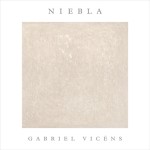


Fog is an appropriate title, because "Niebla" rarely allows the listener the comfort of a fixed horizon. What appears solid suddenly dissolves. Rhythms emerge and disappear. Melodies take shape only to be swallowed by collective improvisation. Certainties are treated with suspicion. Yet beneath this shifting surface lies a remarkably coherent artistic vision.
For his fifth album, Gabriel Vicéns continues the path that has made him one of the more distinctive voices in contemporary jazz: a refusal to choose between tradition and experimentation. Born in Puerto Rico and based in New York, Vicéns has spent years developing a musical language that acknowledges cultural inheritance without allowing it to become a museum exhibit. On "Niebla", Afro-Puerto Rican rhythmic traditions, modern jazz, chamber-like sensitivity, and free improvisation coexist not as separate ingredients but as parts of a single ecosystem.
The album's title proves revealing in more ways than one. Fog obscures distances, alters perception, and forces attention toward the immediate moment. Listening to these compositions produces a similar effect. The music constantly shifts between propulsion and suspension, making time itself feel unstable. One moment the ensemble surges forward with extraordinary momentum; the next, it seems content to linger inside a single gesture, examining it from multiple angles as though searching for hidden meanings.
Vicéns' guitar occupies a fascinating role within this environment. Despite his formidable technical abilities, he rarely behaves like a traditional jazz guitar hero. Solos emerge organically from the ensemble rather than dominating it. Even when his playing becomes fiery, there remains a sense of dialogue rather than conquest. This is refreshing. The history of jazz contains no shortage of musicians who approached every performance as a competitive sport. "Niebla" prefers conversation to victory.
The ensemble deserves enormous credit for the album's success. Alto saxophonist Roman Filiú brings both lyricism and volatility, capable of turning a phrase from tender reflection into urgent declaration within a few measures. Pianist Vitor Gonçalves contributes textures that frequently blur the boundary between harmony and atmosphere. Meanwhile, bassist Rick Rosato, drummer E.J. Strickland, and percussionist Victor Pablo create a rhythmic foundation that remains flexible even at its most intricate.
What distinguishes "Niebla" from many contemporary jazz recordings is its treatment of silence. Modern virtuosity often behaves like a nervous condition, terrified of leaving any space unfilled. Vicéns seems comfortable allowing music to breathe. Certain passages derive their power not from density but from restraint. The pauses become structural elements, shaping the listener's experience as profoundly as the notes themselves.
The Puerto Rican elements woven throughout the record are equally compelling because they never feel ornamental. Rhythmic traditions associated with bomba and plena are not presented as cultural decoration or historical references. Instead, they function as living forces within the music's architecture. The connection to ancestry is present, but so is the desire to push beyond inherited forms. The result feels less like preservation and more like continuation.
Particularly striking is the way several compositions navigate multiple temporal dimensions simultaneously. Some sections feel rooted in communal memory, carrying echoes of centuries-old traditions. Others sound entirely contemporary, even speculative. At times the band seems to inhabit both worlds at once. This creates an unusual tension: the music feels deeply grounded while remaining perpetually in motion.
The longer pieces, especially "Ramaje" and "900-50-80", reveal Vicéns at his most ambitious. Rather than relying on conventional development, these works unfold like landscapes. Themes appear, vanish, re-emerge transformed. Improvisation serves not as ornamentation but as a method of discovery. The musicians do not merely perform the compositions; they actively investigate them.
There is also a visual quality running throughout the album, perhaps unsurprising given Vicéns' parallel work as a visual artist. Sounds are arranged with a painter's sensitivity to texture, contrast, and negative space. Certain passages feel almost sculptural, as though carved rather than composed.
By the time the closing sequence arrives, "Niebla" has accomplished something increasingly rare: it has altered the listener's perception of duration. The album's seventy minutes never feel rushed, yet neither do they drift aimlessly. Instead, they encourage a different relationship with attention itself. In a culture obsessed with speed, efficiency, and immediate conclusions, Vicéns proposes something far less fashionable: uncertainty.
That uncertainty becomes the album's greatest strength. Like fog, "Niebla" does not obscure reality so much as reveal that reality was never as straightforward as it appeared. Through its fusion of ancestral rhythms, adventurous improvisation, and temporal exploration, Gabriel Vicéns has created a work that is intellectually stimulating without becoming academic, emotionally resonant without becoming sentimental, and technically dazzling without ever forgetting its humanity. Some albums provide answers. "Niebla" asks better questions. And unlike most questions, these linger long after the music has faded.
For his fifth album, Gabriel Vicéns continues the path that has made him one of the more distinctive voices in contemporary jazz: a refusal to choose between tradition and experimentation. Born in Puerto Rico and based in New York, Vicéns has spent years developing a musical language that acknowledges cultural inheritance without allowing it to become a museum exhibit. On "Niebla", Afro-Puerto Rican rhythmic traditions, modern jazz, chamber-like sensitivity, and free improvisation coexist not as separate ingredients but as parts of a single ecosystem.
The album's title proves revealing in more ways than one. Fog obscures distances, alters perception, and forces attention toward the immediate moment. Listening to these compositions produces a similar effect. The music constantly shifts between propulsion and suspension, making time itself feel unstable. One moment the ensemble surges forward with extraordinary momentum; the next, it seems content to linger inside a single gesture, examining it from multiple angles as though searching for hidden meanings.
Vicéns' guitar occupies a fascinating role within this environment. Despite his formidable technical abilities, he rarely behaves like a traditional jazz guitar hero. Solos emerge organically from the ensemble rather than dominating it. Even when his playing becomes fiery, there remains a sense of dialogue rather than conquest. This is refreshing. The history of jazz contains no shortage of musicians who approached every performance as a competitive sport. "Niebla" prefers conversation to victory.
The ensemble deserves enormous credit for the album's success. Alto saxophonist Roman Filiú brings both lyricism and volatility, capable of turning a phrase from tender reflection into urgent declaration within a few measures. Pianist Vitor Gonçalves contributes textures that frequently blur the boundary between harmony and atmosphere. Meanwhile, bassist Rick Rosato, drummer E.J. Strickland, and percussionist Victor Pablo create a rhythmic foundation that remains flexible even at its most intricate.
What distinguishes "Niebla" from many contemporary jazz recordings is its treatment of silence. Modern virtuosity often behaves like a nervous condition, terrified of leaving any space unfilled. Vicéns seems comfortable allowing music to breathe. Certain passages derive their power not from density but from restraint. The pauses become structural elements, shaping the listener's experience as profoundly as the notes themselves.
The Puerto Rican elements woven throughout the record are equally compelling because they never feel ornamental. Rhythmic traditions associated with bomba and plena are not presented as cultural decoration or historical references. Instead, they function as living forces within the music's architecture. The connection to ancestry is present, but so is the desire to push beyond inherited forms. The result feels less like preservation and more like continuation.
Particularly striking is the way several compositions navigate multiple temporal dimensions simultaneously. Some sections feel rooted in communal memory, carrying echoes of centuries-old traditions. Others sound entirely contemporary, even speculative. At times the band seems to inhabit both worlds at once. This creates an unusual tension: the music feels deeply grounded while remaining perpetually in motion.
The longer pieces, especially "Ramaje" and "900-50-80", reveal Vicéns at his most ambitious. Rather than relying on conventional development, these works unfold like landscapes. Themes appear, vanish, re-emerge transformed. Improvisation serves not as ornamentation but as a method of discovery. The musicians do not merely perform the compositions; they actively investigate them.
There is also a visual quality running throughout the album, perhaps unsurprising given Vicéns' parallel work as a visual artist. Sounds are arranged with a painter's sensitivity to texture, contrast, and negative space. Certain passages feel almost sculptural, as though carved rather than composed.
By the time the closing sequence arrives, "Niebla" has accomplished something increasingly rare: it has altered the listener's perception of duration. The album's seventy minutes never feel rushed, yet neither do they drift aimlessly. Instead, they encourage a different relationship with attention itself. In a culture obsessed with speed, efficiency, and immediate conclusions, Vicéns proposes something far less fashionable: uncertainty.
That uncertainty becomes the album's greatest strength. Like fog, "Niebla" does not obscure reality so much as reveal that reality was never as straightforward as it appeared. Through its fusion of ancestral rhythms, adventurous improvisation, and temporal exploration, Gabriel Vicéns has created a work that is intellectually stimulating without becoming academic, emotionally resonant without becoming sentimental, and technically dazzling without ever forgetting its humanity. Some albums provide answers. "Niebla" asks better questions. And unlike most questions, these linger long after the music has faded.
Comments
Stream
Browse by Genre
Industrial Music / Industrial Metal / Aggro Industrial / Electro Metal
Industrial Noise / Power Noise / Harsh Noise
Synth Pop / Electro Pop / Synth-Electronica
Techno / Trance / Goa / Drum'n'Bass / Jungle / Tribal / Trip-Hop
Ambient / Electronica / Ethereal / Dub / Soundscapes / Abstract
Experimental / Avantgarde / Weird & Wired / Glitch / Noise / Field Recording
Dark / Gothic / Wave / New Wave / Dark Wave / Industrial Gothic
New Music / Downtown / Avantgarde Jazz / New Classical / World