
Jarl: Nerve Cell Threads Electronics


For more than two decades, Jarl, the long-running project of Swedish composer Erik Jarl, has occupied a peculiar territory within the electronic underground. His music often feels scientific without becoming clinical, immersive without becoming decorative. Across releases that have explored neurotransmitters, synapses, receptors, and other hidden architectures of perception, Jarl has repeatedly approached the human body not as a biological machine but as a mysterious landscape of signals, delays, and electrical conversations.
With "Nerve Cell Threads Electronics", he returns once again to the nervous system, effectively creating an unofficial fourth chapter to that ongoing investigation. The title sounds like something discovered in a laboratory notebook left unattended after midnight, and the music follows suit: part experiment, part hallucination, part patient observation of invisible processes unfolding beneath consciousness.
The album consists of four extended pieces, each titled simply "Electrical Impulse", as if individual chapters of a single transmission. Together they occupy nearly an hour, unfolding with the kind of patience that has become increasingly rare in a culture where attention spans are measured in notifications per minute. Jarl appears unconcerned by such matters. His music advances at the speed of thought itself: not the rapid-fire chatter of everyday cognition, but the deeper currents moving beneath it.
From the opening moments of "Electrical Impulse 1", thick analog tones begin their slow migration across the stereo field. Sequences emerge, mutate, dissolve, and reappear in altered forms. Nothing is static, yet nothing feels hurried. The music resembles a living organism adjusting itself molecule by molecule, allowing subtle transformations to become the primary narrative.
The longer central pieces reveal the album's greatest strength. "Electrical Impulse 2" and "Electrical Impulse 4" function almost like neurological voyages, propelled by sequencer patterns that repeatedly threaten to become hypnotic before drifting into darker territory. Percussive elements appear not as conventional rhythm but as signals travelling through a network, firing intermittently and triggering new developments. One can imagine synapses communicating through vintage synthesizers, which is admittedly not how neuroscience works, but it would make conferences considerably more interesting.
What distinguishes this release from some of Jarl's earlier explorations is its increased sense of shadow. The melodies remain present, but they are partially obscured, like distant lights viewed through fog. The psychedelic dimension has not disappeared; rather, it has matured. Instead of bright cosmic excursions, the listener encounters something more subterranean, a descent into hidden circuitry where beauty and unease coexist comfortably.
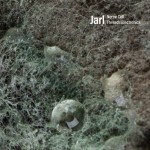
The mastering by Peter Andersson enhances this quality. Every layer feels carefully positioned, allowing dense analog textures to breathe without sacrificing their weight. The result is immersive but never overwhelming, detailed without becoming fussy. Meanwhile, the artwork by Karolina Urbaniak complements the album's conceptual framework, suggesting organic structures suspended somewhere between biology and abstraction.
There is an intriguing paradox at the heart of "Nerve Cell Threads Electronics". It is deeply rooted in the language of physiology, yet its emotional effect is surprisingly spiritual. Listening to these evolving patterns, one becomes aware not merely of neural activity but of consciousness itself: the strange phenomenon that arises from countless electrical exchanges and somehow produces memory, imagination, longing, and the persistent belief that buying another synthesizer will finally solve everything.
Perhaps that is why the album resonates beyond its conceptual premise. Jarl is not simply illustrating neurological processes. He is using them as metaphors for transformation. Sounds connect, separate, trigger reactions, and evolve into new forms, much like thoughts themselves. The listener becomes part of that circuit, following pathways whose destination remains uncertain but compelling.
In the end, "Nerve Cell Threads Electronics" feels less like a collection of compositions than a prolonged encounter with a living system. Darker than its predecessors yet equally rich in detail, it demonstrates that Erik Jarl remains one of the more distinctive voices in contemporary electronic music. Few artists can make sixty minutes of slowly shifting analog currents feel simultaneously scientific, mysterious, and quietly moving. Fewer still can make the firing of imaginary neurons sound this beautiful.
With "Nerve Cell Threads Electronics", he returns once again to the nervous system, effectively creating an unofficial fourth chapter to that ongoing investigation. The title sounds like something discovered in a laboratory notebook left unattended after midnight, and the music follows suit: part experiment, part hallucination, part patient observation of invisible processes unfolding beneath consciousness.
The album consists of four extended pieces, each titled simply "Electrical Impulse", as if individual chapters of a single transmission. Together they occupy nearly an hour, unfolding with the kind of patience that has become increasingly rare in a culture where attention spans are measured in notifications per minute. Jarl appears unconcerned by such matters. His music advances at the speed of thought itself: not the rapid-fire chatter of everyday cognition, but the deeper currents moving beneath it.
From the opening moments of "Electrical Impulse 1", thick analog tones begin their slow migration across the stereo field. Sequences emerge, mutate, dissolve, and reappear in altered forms. Nothing is static, yet nothing feels hurried. The music resembles a living organism adjusting itself molecule by molecule, allowing subtle transformations to become the primary narrative.
The longer central pieces reveal the album's greatest strength. "Electrical Impulse 2" and "Electrical Impulse 4" function almost like neurological voyages, propelled by sequencer patterns that repeatedly threaten to become hypnotic before drifting into darker territory. Percussive elements appear not as conventional rhythm but as signals travelling through a network, firing intermittently and triggering new developments. One can imagine synapses communicating through vintage synthesizers, which is admittedly not how neuroscience works, but it would make conferences considerably more interesting.
What distinguishes this release from some of Jarl's earlier explorations is its increased sense of shadow. The melodies remain present, but they are partially obscured, like distant lights viewed through fog. The psychedelic dimension has not disappeared; rather, it has matured. Instead of bright cosmic excursions, the listener encounters something more subterranean, a descent into hidden circuitry where beauty and unease coexist comfortably.
The mastering by Peter Andersson enhances this quality. Every layer feels carefully positioned, allowing dense analog textures to breathe without sacrificing their weight. The result is immersive but never overwhelming, detailed without becoming fussy. Meanwhile, the artwork by Karolina Urbaniak complements the album's conceptual framework, suggesting organic structures suspended somewhere between biology and abstraction.
There is an intriguing paradox at the heart of "Nerve Cell Threads Electronics". It is deeply rooted in the language of physiology, yet its emotional effect is surprisingly spiritual. Listening to these evolving patterns, one becomes aware not merely of neural activity but of consciousness itself: the strange phenomenon that arises from countless electrical exchanges and somehow produces memory, imagination, longing, and the persistent belief that buying another synthesizer will finally solve everything.
Perhaps that is why the album resonates beyond its conceptual premise. Jarl is not simply illustrating neurological processes. He is using them as metaphors for transformation. Sounds connect, separate, trigger reactions, and evolve into new forms, much like thoughts themselves. The listener becomes part of that circuit, following pathways whose destination remains uncertain but compelling.
In the end, "Nerve Cell Threads Electronics" feels less like a collection of compositions than a prolonged encounter with a living system. Darker than its predecessors yet equally rich in detail, it demonstrates that Erik Jarl remains one of the more distinctive voices in contemporary electronic music. Few artists can make sixty minutes of slowly shifting analog currents feel simultaneously scientific, mysterious, and quietly moving. Fewer still can make the firing of imaginary neurons sound this beautiful.
Comments
Stream
Browse by Genre
Industrial Music / Industrial Metal / Aggro Industrial / Electro Metal
Industrial Noise / Power Noise / Harsh Noise
Synth Pop / Electro Pop / Synth-Electronica
Techno / Trance / Goa / Drum'n'Bass / Jungle / Tribal / Trip-Hop
Ambient / Electronica / Ethereal / Dub / Soundscapes / Abstract
Experimental / Avantgarde / Weird & Wired / Glitch / Noise / Field Recording
Dark / Gothic / Wave / New Wave / Dark Wave / Industrial Gothic
New Music / Downtown / Avantgarde Jazz / New Classical / World