
Saturday, August 29, 2026
Chessie + Contriva: Black Jacket
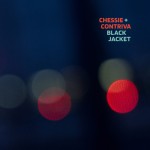


Some collaborations are born from commercial strategy, some from convenience, and some from the increasingly rare phenomenon of people genuinely liking each other's music. "Black Jacket" belongs emphatically to the latter category. It is the sound of two bands maintaining a creative correspondence for more than two decades, eventually discovering that admiration, patience, and geography can produce something more durable than novelty.
The story begins in 2001, when Washington D.C.'s Chessie and Berlin's Contriva shared a stage and recognized a common language beneath their different accents. Twenty-five years later, that conversation finally arrives in completed form. The result is neither a Chessie record featuring Contriva nor a Contriva record featuring Chessie. Instead, "Black Jacket" occupies a fascinating third space where individual identities gradually blur into a collective sensibility.
That may sound suspiciously harmonious. Human collaborations usually involve at least some degree of artistic territorial dispute, passive-aggressive email exchanges, or debates over whether a track is finished. Yet "Black Jacket" carries remarkably little friction. The album feels less like negotiation than convergence.
Both groups arrive with distinct histories. Chessie, founded by Stephen Gardner and Ben Bailes, emerged from the fertile American post-rock underground of the 1990s, exploring the intersection of abstract electronics, ambient textures, and a peculiar fascination with railways. Their work often transformed transportation infrastructure into emotional geography, proving that train travel can inspire surprisingly profound reflection once one stops worrying about delays.
Contriva, meanwhile, assembled a remarkable cast of musicians including Masha Qrella, Max Punktezahl, Hannes Lehmann, and Rike Schuberty. Associated with labels such as Morr Music and Monika Enterprise, the group developed a distinctive approach that balanced experimental textures with melodic sophistication. Their music never treated atmosphere and songcraft as opposing forces.
On "Black Jacket", those sensibilities intertwine beautifully.
The album's track titles immediately suggest a world built around color, movement, and place. "Take Me To Hiddensee" opens like a departure rather than an arrival. Gentle instrumental motifs unfold with an unforced elegance, establishing the record's preference for suggestion over declaration. Throughout the album, melody functions less as destination than as horizon.
Pieces such as "Magenta", "Hellblau", and "Brunswick Green" reinforce the impression that the music is painting rather than narrating. Colors become emotional coordinates. Textures overlap like translucent layers of watercolor, revealing subtle relationships beneath the surface. The arrangements remain remarkably detailed without becoming crowded, allowing each instrument to retain its own breathing space.
One of the album's most appealing qualities is its refusal to embrace the dramatic tendencies often associated with post-rock. There are no towering crescendos demanding applause for their architectural achievements. No guitars attempting to impersonate weather systems. Instead, "Black Jacket" favors accumulation over explosion. The emotional impact emerges gradually, through repetition, nuance, and careful interplay.
"Cabina A" and "Point No Point" showcase this approach particularly well. Rhythms drift in and out of focus while guitars, electronics, and percussion establish shifting relationships that never fully settle. The presence of drummer Robert Kretzschmar on the latter track adds momentum without disturbing the album's contemplative atmosphere.
Elsewhere, "Lunar White" introduces saxophone contributions from Peter Ehwald, adding another shade to the palette. The instrument appears almost like a distant voice remembered rather than heard directly, reinforcing the record's fascination with memory and distance.
What makes "Black Jacket" especially compelling is the sense of elapsed time embedded within it. Recorded intermittently between 2008 and 2025, the album spans nearly two decades of artistic evolution. Yet it never feels fragmented. If anything, the long gestation period contributes to its coherence. The music carries the quiet confidence of ideas allowed to mature at their own pace.
There is also something deeply refreshing about an album that understands the expressive power of restraint. In an era where musicians are often encouraged to maximize every emotional gesture, Chessie and Contriva seem content to leave certain things unresolved. Their compositions invite the listener to inhabit them rather than decode them.
The cover photograph, depicting an evening view toward train tracks in Pennsylvania, feels entirely appropriate. Much like railways themselves, these pieces are defined by connection. Not direct routes from point A to point B, but networks of relationships stretching across distance and time.
By the closing moments of "Fugitive", "Black Jacket" reveals itself as more than a collaboration. It becomes a meditation on artistic friendship itself: on what happens when musicians continue listening to one another over decades, across continents, through changing circumstances and evolving aesthetics.
The album never announces this achievement. It simply embodies it. Quietly, patiently, and with the kind of grace that only emerges when nobody is trying too hard to impress anyone. Sometimes the most remarkable journeys are not the ones that race toward a destination. Sometimes they are the ones that keep finding reasons to continue travelling together.
The story begins in 2001, when Washington D.C.'s Chessie and Berlin's Contriva shared a stage and recognized a common language beneath their different accents. Twenty-five years later, that conversation finally arrives in completed form. The result is neither a Chessie record featuring Contriva nor a Contriva record featuring Chessie. Instead, "Black Jacket" occupies a fascinating third space where individual identities gradually blur into a collective sensibility.
That may sound suspiciously harmonious. Human collaborations usually involve at least some degree of artistic territorial dispute, passive-aggressive email exchanges, or debates over whether a track is finished. Yet "Black Jacket" carries remarkably little friction. The album feels less like negotiation than convergence.
Both groups arrive with distinct histories. Chessie, founded by Stephen Gardner and Ben Bailes, emerged from the fertile American post-rock underground of the 1990s, exploring the intersection of abstract electronics, ambient textures, and a peculiar fascination with railways. Their work often transformed transportation infrastructure into emotional geography, proving that train travel can inspire surprisingly profound reflection once one stops worrying about delays.
Contriva, meanwhile, assembled a remarkable cast of musicians including Masha Qrella, Max Punktezahl, Hannes Lehmann, and Rike Schuberty. Associated with labels such as Morr Music and Monika Enterprise, the group developed a distinctive approach that balanced experimental textures with melodic sophistication. Their music never treated atmosphere and songcraft as opposing forces.
On "Black Jacket", those sensibilities intertwine beautifully.
The album's track titles immediately suggest a world built around color, movement, and place. "Take Me To Hiddensee" opens like a departure rather than an arrival. Gentle instrumental motifs unfold with an unforced elegance, establishing the record's preference for suggestion over declaration. Throughout the album, melody functions less as destination than as horizon.
Pieces such as "Magenta", "Hellblau", and "Brunswick Green" reinforce the impression that the music is painting rather than narrating. Colors become emotional coordinates. Textures overlap like translucent layers of watercolor, revealing subtle relationships beneath the surface. The arrangements remain remarkably detailed without becoming crowded, allowing each instrument to retain its own breathing space.
One of the album's most appealing qualities is its refusal to embrace the dramatic tendencies often associated with post-rock. There are no towering crescendos demanding applause for their architectural achievements. No guitars attempting to impersonate weather systems. Instead, "Black Jacket" favors accumulation over explosion. The emotional impact emerges gradually, through repetition, nuance, and careful interplay.
"Cabina A" and "Point No Point" showcase this approach particularly well. Rhythms drift in and out of focus while guitars, electronics, and percussion establish shifting relationships that never fully settle. The presence of drummer Robert Kretzschmar on the latter track adds momentum without disturbing the album's contemplative atmosphere.
Elsewhere, "Lunar White" introduces saxophone contributions from Peter Ehwald, adding another shade to the palette. The instrument appears almost like a distant voice remembered rather than heard directly, reinforcing the record's fascination with memory and distance.
What makes "Black Jacket" especially compelling is the sense of elapsed time embedded within it. Recorded intermittently between 2008 and 2025, the album spans nearly two decades of artistic evolution. Yet it never feels fragmented. If anything, the long gestation period contributes to its coherence. The music carries the quiet confidence of ideas allowed to mature at their own pace.
There is also something deeply refreshing about an album that understands the expressive power of restraint. In an era where musicians are often encouraged to maximize every emotional gesture, Chessie and Contriva seem content to leave certain things unresolved. Their compositions invite the listener to inhabit them rather than decode them.
The cover photograph, depicting an evening view toward train tracks in Pennsylvania, feels entirely appropriate. Much like railways themselves, these pieces are defined by connection. Not direct routes from point A to point B, but networks of relationships stretching across distance and time.
By the closing moments of "Fugitive", "Black Jacket" reveals itself as more than a collaboration. It becomes a meditation on artistic friendship itself: on what happens when musicians continue listening to one another over decades, across continents, through changing circumstances and evolving aesthetics.
The album never announces this achievement. It simply embodies it. Quietly, patiently, and with the kind of grace that only emerges when nobody is trying too hard to impress anyone. Sometimes the most remarkable journeys are not the ones that race toward a destination. Sometimes they are the ones that keep finding reasons to continue travelling together.
Comments
Stream
Browse by Genre
Industrial Music / Industrial Metal / Aggro Industrial / Electro Metal
Industrial Noise / Power Noise / Harsh Noise
Synth Pop / Electro Pop / Synth-Electronica
Techno / Trance / Goa / Drum'n'Bass / Jungle / Tribal / Trip-Hop
Ambient / Electronica / Ethereal / Dub / Soundscapes / Abstract
Experimental / Avantgarde / Weird & Wired / Glitch / Noise / Field Recording
Dark / Gothic / Wave / New Wave / Dark Wave / Industrial Gothic
New Music / Downtown / Avantgarde Jazz / New Classical / World