
yttriphie: Solipsis
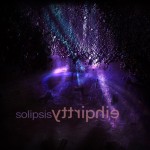


When Michael Plaster resurfaced in 2025 with "an extremely slow motion explosion", the album felt like a message that had spent two decades drifting through strange currents before finally reaching shore. It was deeply concerned with memory, entropy, and the peculiar beauty of things falling apart in slow motion. Listening to it was like wandering through someone else's dream and gradually discovering traces of your own reflection hidden inside it.
With "Solipsis", Plaster does not simply revisit that territory. He walks beyond it.
The second release under the yttriphie name feels less concerned with memory itself than with the consciousness experiencing that memory. If the previous album gazed outward toward the vast machinery of time and dissolution, "Solipsis" turns its attention inward, into the endlessly baffling chamber where perception, imagination, doubt, and identity all seem to share the same cramped apartment. Unsurprisingly, none of them get along particularly well.
Plaster remains best known to many listeners as a founding member of soulwhirlingsomewhere, one of the most beloved acts associated with Projekt Records' golden era. Yet yttriphie increasingly feels less like a nostalgic return and more like the continuation of a conversation interrupted by life, silence, and the passing of years. The sensibility remains recognisable: melancholy, introspective, and emotionally generous. But the perspective has shifted.
The title itself offers a clue. By removing the final "m" from "solipsism", Plaster transforms a philosophical doctrine into something slightly stranger and more personal. The album circles questions that have haunted thinkers for centuries: How can we know what is real? What is consciousness? Are we experiencing the world, or merely our interpretation of it? Thankfully, "Solipsis" never attempts to answer these questions. Humanity has already produced enough certainty about things it barely understands.
Instead, Plaster composes eight long-form pieces that inhabit uncertainty with remarkable grace. Across sixty-seven minutes, synthesizers, treated guitars, piano fragments, distant percussion, and countless half-glimpsed textures drift through one another like weather systems sharing the same sky. The music remains recognisably ambient, yet it possesses a narrative instinct that prevents it from becoming static. Every piece feels like a journey, however abstract its destination may be.
What distinguishes "Solipsis" from its predecessor is its increased sense of contrast. The previous album often resembled a continuous state of suspended reflection. Here, emotional weather changes unexpectedly. Gentle passages darken. Seemingly ominous textures soften into tenderness. Beauty and unease become inseparable companions, each revealing new dimensions within the other.
"Paddock of Skies" exemplifies this beautifully. Its immense duration allows Plaster to unfold ideas with patient confidence, gradually revealing hidden details buried beneath luminous surfaces. Sounds emerge and recede like distant landmarks seen through rain. The effect is immersive without ever becoming overwhelming.
That rain imagery proves difficult to escape throughout the record. Much like the strongest moments on "an extremely slow motion explosion", these compositions often evoke landscapes suspended between external reality and emotional projection. One is never entirely certain whether the storm exists outside the window or within the listener. The distinction gradually loses importance.
The album's centrepiece, "The Pulpy Center", introduces a welcome increase in density and momentum. Horn-like textures, percussion, and swelling synthesizers gather into one of the record's most dramatic passages. Yet even here, Plaster resists the temptation of grandiosity. The music expands rather than explodes. It accumulates pressure without seeking release. The result feels more psychologically complex than a conventional climax.
Meanwhile, "Everything is Disappearing" emerges as perhaps the album's emotional core. The title echoes themes present throughout Plaster's recent work, but the perspective feels different. Rather than contemplating disappearance as loss, the piece seems to accept impermanence as a condition of existence. There is sadness here, certainly, but also curiosity. The music asks what remains when familiar structures dissolve.
This sense of inquiry permeates the entire album. The tracks do not function as static ambient environments so much as thought experiments rendered in sound. Not intellectual exercises, but emotional investigations. Each composition explores a particular state of mind, tracing its contours without rushing toward conclusions.
Plaster's experience as a songwriter continues to shape his approach, even when traditional song structures are absent. Beneath the drifting atmospheres lies a strong sense of direction. Themes return in altered forms. Tensions emerge and resolve. Emotional arcs develop naturally. The listener is never simply floating. There is always movement, however subtle.
The closing "Underplump" serves as a fitting conclusion, gathering many of the album's recurring qualities into a final meditation on perception and uncertainty. By the time its last sounds fade, one has the sensation of waking from an unusually vivid dream and briefly questioning which side of sleep constitutes reality.
Like its predecessor, "Solipsis" thrives on ambiguity, but it deploys that ambiguity differently. "An Extremely Slow Motion Explosion" explored the poetry of dissolution, finding beauty in gradual collapse. "Solipsis" examines the observer standing amidst the fragments, wondering who is doing the observing in the first place.
The result is a richer, more expansive work that deepens rather than repeats the concerns of its predecessor. Michael Plaster has created an album that feels philosophical without becoming academic, emotional without becoming sentimental, and immersive without losing its sense of narrative purpose.
For a record built around the possibility that consciousness might be the only certainty available to us, it displays a remarkable generosity toward the unknown. It doesn't seek answers. It cultivates wonder.
And sometimes wonder is the most honest response available.
With "Solipsis", Plaster does not simply revisit that territory. He walks beyond it.
The second release under the yttriphie name feels less concerned with memory itself than with the consciousness experiencing that memory. If the previous album gazed outward toward the vast machinery of time and dissolution, "Solipsis" turns its attention inward, into the endlessly baffling chamber where perception, imagination, doubt, and identity all seem to share the same cramped apartment. Unsurprisingly, none of them get along particularly well.
Plaster remains best known to many listeners as a founding member of soulwhirlingsomewhere, one of the most beloved acts associated with Projekt Records' golden era. Yet yttriphie increasingly feels less like a nostalgic return and more like the continuation of a conversation interrupted by life, silence, and the passing of years. The sensibility remains recognisable: melancholy, introspective, and emotionally generous. But the perspective has shifted.
The title itself offers a clue. By removing the final "m" from "solipsism", Plaster transforms a philosophical doctrine into something slightly stranger and more personal. The album circles questions that have haunted thinkers for centuries: How can we know what is real? What is consciousness? Are we experiencing the world, or merely our interpretation of it? Thankfully, "Solipsis" never attempts to answer these questions. Humanity has already produced enough certainty about things it barely understands.
Instead, Plaster composes eight long-form pieces that inhabit uncertainty with remarkable grace. Across sixty-seven minutes, synthesizers, treated guitars, piano fragments, distant percussion, and countless half-glimpsed textures drift through one another like weather systems sharing the same sky. The music remains recognisably ambient, yet it possesses a narrative instinct that prevents it from becoming static. Every piece feels like a journey, however abstract its destination may be.
What distinguishes "Solipsis" from its predecessor is its increased sense of contrast. The previous album often resembled a continuous state of suspended reflection. Here, emotional weather changes unexpectedly. Gentle passages darken. Seemingly ominous textures soften into tenderness. Beauty and unease become inseparable companions, each revealing new dimensions within the other.
"Paddock of Skies" exemplifies this beautifully. Its immense duration allows Plaster to unfold ideas with patient confidence, gradually revealing hidden details buried beneath luminous surfaces. Sounds emerge and recede like distant landmarks seen through rain. The effect is immersive without ever becoming overwhelming.
That rain imagery proves difficult to escape throughout the record. Much like the strongest moments on "an extremely slow motion explosion", these compositions often evoke landscapes suspended between external reality and emotional projection. One is never entirely certain whether the storm exists outside the window or within the listener. The distinction gradually loses importance.
The album's centrepiece, "The Pulpy Center", introduces a welcome increase in density and momentum. Horn-like textures, percussion, and swelling synthesizers gather into one of the record's most dramatic passages. Yet even here, Plaster resists the temptation of grandiosity. The music expands rather than explodes. It accumulates pressure without seeking release. The result feels more psychologically complex than a conventional climax.
Meanwhile, "Everything is Disappearing" emerges as perhaps the album's emotional core. The title echoes themes present throughout Plaster's recent work, but the perspective feels different. Rather than contemplating disappearance as loss, the piece seems to accept impermanence as a condition of existence. There is sadness here, certainly, but also curiosity. The music asks what remains when familiar structures dissolve.
This sense of inquiry permeates the entire album. The tracks do not function as static ambient environments so much as thought experiments rendered in sound. Not intellectual exercises, but emotional investigations. Each composition explores a particular state of mind, tracing its contours without rushing toward conclusions.
Plaster's experience as a songwriter continues to shape his approach, even when traditional song structures are absent. Beneath the drifting atmospheres lies a strong sense of direction. Themes return in altered forms. Tensions emerge and resolve. Emotional arcs develop naturally. The listener is never simply floating. There is always movement, however subtle.
The closing "Underplump" serves as a fitting conclusion, gathering many of the album's recurring qualities into a final meditation on perception and uncertainty. By the time its last sounds fade, one has the sensation of waking from an unusually vivid dream and briefly questioning which side of sleep constitutes reality.
Like its predecessor, "Solipsis" thrives on ambiguity, but it deploys that ambiguity differently. "An Extremely Slow Motion Explosion" explored the poetry of dissolution, finding beauty in gradual collapse. "Solipsis" examines the observer standing amidst the fragments, wondering who is doing the observing in the first place.
The result is a richer, more expansive work that deepens rather than repeats the concerns of its predecessor. Michael Plaster has created an album that feels philosophical without becoming academic, emotional without becoming sentimental, and immersive without losing its sense of narrative purpose.
For a record built around the possibility that consciousness might be the only certainty available to us, it displays a remarkable generosity toward the unknown. It doesn't seek answers. It cultivates wonder.
And sometimes wonder is the most honest response available.
Comments
Stream
Browse by Genre
Industrial Music / Industrial Metal / Aggro Industrial / Electro Metal
Industrial Noise / Power Noise / Harsh Noise
Synth Pop / Electro Pop / Synth-Electronica
Techno / Trance / Goa / Drum'n'Bass / Jungle / Tribal / Trip-Hop
Ambient / Electronica / Ethereal / Dub / Soundscapes / Abstract
Experimental / Avantgarde / Weird & Wired / Glitch / Noise / Field Recording
Dark / Gothic / Wave / New Wave / Dark Wave / Industrial Gothic
New Music / Downtown / Avantgarde Jazz / New Classical / World