
Monday, October 19, 2026
Ensemble Volcanic Ash: Pluto In Aquarius
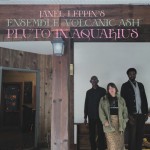
Artist: Ensemble Volcanic Ash (@)
Title: Pluto In Aquarius
Format: LP
Label: Cuneiform (http://www.cuneiformrecords.com/) (@)
Rated:

Title: Pluto In Aquarius
Format: LP
Label: Cuneiform (http://www.cuneiformrecords.com/) (@)
Rated:
There are moments when instrumental music seems to say more about the state of the world than a hundred opinion columns. Not because it offers solutions, and certainly not because a tenor saxophone has suddenly developed a coherent political platform, but because sound can sometimes capture the tension, urgency, frustration, and stubborn hope that language struggles to contain. "Pluto in Aquarius", the third release by Janel Leppin's Ensemble Volcanic Ash, belongs to that category of records.
Its title inevitably invites astrological interpretations, but one need not consult planetary charts to recognize that Leppin is responding to an era defined by instability, conflict, power struggles, and collective uncertainty. The album feels deeply connected to the contemporary moment, yet it wisely avoids becoming a topical document destined to age alongside yesterday's headlines. Instead, it examines broader cycles of resistance, renewal, and social transformation through a musical language that remains fluid, volatile, and alive.
Washington D.C.-based cellist, composer, and multi-instrumentalist Janel Leppin has spent more than two decades building one of the most distinctive artistic voices operating between jazz, contemporary composition, experimental rock, and improvisation. Whether leading Ensemble Volcanic Ash, collaborating with guitarist Anthony Pirog, or pursuing her own solo explorations, she consistently approaches genre not as a set of rules but as a collection of materials to be reshaped according to necessity.
That philosophy reaches a particularly potent form here. While earlier Ensemble Volcanic Ash recordings often embraced the group's chamber-jazz dimensions, "Pluto in Aquarius" strips away some of that orchestral grandeur in favour of something leaner and more immediate. The result resembles a collective that has traded polished footwear for combat boots. Not because elegance has disappeared, but because urgency has become impossible to ignore.
The ensemble itself remains formidable. Leppin's cello and CP-70 electric piano occupy a fascinating position within the music, functioning simultaneously as structural framework and disruptive force. Around her, bassist Luke Stewart, drummer Larry Ferguson, guitarist Anthony Pirog, and tenor saxophonist Brian Settles operate with the kind of intuitive communication that can only emerge from years of shared experience. Their interplay feels less like coordinated performance and more like a living ecosystem continually adapting to changing conditions.
The opening "Mountain Pose" immediately establishes the album's character. Despite the title's suggestion of stillness, the music radiates restless energy. Themes emerge and collide. Rhythms push against one another. The ensemble sounds perpetually on the verge of transformation, as though each piece contains several possible futures competing for realization.
That sense of motion defines much of the record. The title track condenses remarkable emotional complexity into less than five minutes, balancing tension and release without settling comfortably into either state. Elsewhere, "Hope Marathon" offers one of the album's most revealing titles. Hope here is not portrayed as a sudden revelation or triumphant victory. It is endurance. It is effort. It is continuing forward despite mounting evidence that reality has not read the motivational literature.
Leppin's compositional approach excels at this kind of ambiguity. The music rarely divides the world into simple oppositions. Strength and vulnerability coexist. Beauty emerges alongside abrasion. Moments of collective exhilaration are shadowed by uncertainty. The pieces often feel like conversations between conflicting impulses rather than declarations of certainty.
The shorter tracks contribute significantly to the album's impact. "Point Thy Sword", "New Guard", and the delightfully blunt "Cruel Motherfuckers" function almost like sharp sketches, concentrated bursts of energy that prevent the record from settling into predictability. Their brevity enhances their effectiveness. Like well-placed punctuation marks, they reshape the meaning of the surrounding material.
Particularly striking is "Susan Was a Warrior", a composition that channels admiration and resilience without lapsing into sentimentality. The ensemble approaches the piece with a combination of tenderness and determination, creating one of the album's most emotionally resonant moments. It demonstrates Leppin's ability to write music that remains deeply personal while inviting broader interpretations.
Then there are the titles that leave little room for ambiguity. "We See Dark Money" and "Jazz Is Resistance" practically announce their intentions before a single note is played. Yet the music itself remains refreshingly free from didacticism. Rather than illustrating political positions, the ensemble embodies them through process. Listening becomes a lesson in collective action: individual voices maintaining their identities while contributing to something larger than themselves.
This idea reaches its fullest expression in "The Collective", arguably the album's centrepiece. Here the group achieves a remarkable balance between structure and spontaneity. Every musician contributes actively, yet no single voice dominates. The composition becomes a model of cooperation, demonstrating through sound what many institutions struggle to accomplish in practice.
The closing "Deerhoof Is God" provides an appropriately irreverent finale. Its title may provoke a smile, but beneath the humour lies a genuine acknowledgment of artistic independence and creative fearlessness. The piece encapsulates much of what makes "Pluto in Aquarius" so compelling: intelligence without pretension, conviction without dogmatism, and complexity without unnecessary complication.
Perhaps the most impressive aspect of the album is how naturally it integrates its various influences. Jazz, post-rock, chamber music, improvisation, and experimental composition all appear within its vocabulary, but none are treated as destinations. They are simply tools for articulating ideas that exceed any single genre's capacity.
In the end, "Pluto in Aquarius" succeeds because it understands that resistance is not merely opposition. It is also creation. It is the act of building alternative possibilities, however fragile, within difficult circumstances. Janel Leppin and Ensemble Volcanic Ash have created a record that confronts the present without becoming trapped by it. The music remains alert, questioning, and defiantly imaginative.
Not a bad achievement for thirteen tracks that often sound as if they are simultaneously arguing, dancing, organizing a protest, and planning tomorrow's future over strong coffee and very little sleep.
Its title inevitably invites astrological interpretations, but one need not consult planetary charts to recognize that Leppin is responding to an era defined by instability, conflict, power struggles, and collective uncertainty. The album feels deeply connected to the contemporary moment, yet it wisely avoids becoming a topical document destined to age alongside yesterday's headlines. Instead, it examines broader cycles of resistance, renewal, and social transformation through a musical language that remains fluid, volatile, and alive.
Washington D.C.-based cellist, composer, and multi-instrumentalist Janel Leppin has spent more than two decades building one of the most distinctive artistic voices operating between jazz, contemporary composition, experimental rock, and improvisation. Whether leading Ensemble Volcanic Ash, collaborating with guitarist Anthony Pirog, or pursuing her own solo explorations, she consistently approaches genre not as a set of rules but as a collection of materials to be reshaped according to necessity.
That philosophy reaches a particularly potent form here. While earlier Ensemble Volcanic Ash recordings often embraced the group's chamber-jazz dimensions, "Pluto in Aquarius" strips away some of that orchestral grandeur in favour of something leaner and more immediate. The result resembles a collective that has traded polished footwear for combat boots. Not because elegance has disappeared, but because urgency has become impossible to ignore.
The ensemble itself remains formidable. Leppin's cello and CP-70 electric piano occupy a fascinating position within the music, functioning simultaneously as structural framework and disruptive force. Around her, bassist Luke Stewart, drummer Larry Ferguson, guitarist Anthony Pirog, and tenor saxophonist Brian Settles operate with the kind of intuitive communication that can only emerge from years of shared experience. Their interplay feels less like coordinated performance and more like a living ecosystem continually adapting to changing conditions.
The opening "Mountain Pose" immediately establishes the album's character. Despite the title's suggestion of stillness, the music radiates restless energy. Themes emerge and collide. Rhythms push against one another. The ensemble sounds perpetually on the verge of transformation, as though each piece contains several possible futures competing for realization.
That sense of motion defines much of the record. The title track condenses remarkable emotional complexity into less than five minutes, balancing tension and release without settling comfortably into either state. Elsewhere, "Hope Marathon" offers one of the album's most revealing titles. Hope here is not portrayed as a sudden revelation or triumphant victory. It is endurance. It is effort. It is continuing forward despite mounting evidence that reality has not read the motivational literature.
Leppin's compositional approach excels at this kind of ambiguity. The music rarely divides the world into simple oppositions. Strength and vulnerability coexist. Beauty emerges alongside abrasion. Moments of collective exhilaration are shadowed by uncertainty. The pieces often feel like conversations between conflicting impulses rather than declarations of certainty.
The shorter tracks contribute significantly to the album's impact. "Point Thy Sword", "New Guard", and the delightfully blunt "Cruel Motherfuckers" function almost like sharp sketches, concentrated bursts of energy that prevent the record from settling into predictability. Their brevity enhances their effectiveness. Like well-placed punctuation marks, they reshape the meaning of the surrounding material.
Particularly striking is "Susan Was a Warrior", a composition that channels admiration and resilience without lapsing into sentimentality. The ensemble approaches the piece with a combination of tenderness and determination, creating one of the album's most emotionally resonant moments. It demonstrates Leppin's ability to write music that remains deeply personal while inviting broader interpretations.
Then there are the titles that leave little room for ambiguity. "We See Dark Money" and "Jazz Is Resistance" practically announce their intentions before a single note is played. Yet the music itself remains refreshingly free from didacticism. Rather than illustrating political positions, the ensemble embodies them through process. Listening becomes a lesson in collective action: individual voices maintaining their identities while contributing to something larger than themselves.
This idea reaches its fullest expression in "The Collective", arguably the album's centrepiece. Here the group achieves a remarkable balance between structure and spontaneity. Every musician contributes actively, yet no single voice dominates. The composition becomes a model of cooperation, demonstrating through sound what many institutions struggle to accomplish in practice.
The closing "Deerhoof Is God" provides an appropriately irreverent finale. Its title may provoke a smile, but beneath the humour lies a genuine acknowledgment of artistic independence and creative fearlessness. The piece encapsulates much of what makes "Pluto in Aquarius" so compelling: intelligence without pretension, conviction without dogmatism, and complexity without unnecessary complication.
Perhaps the most impressive aspect of the album is how naturally it integrates its various influences. Jazz, post-rock, chamber music, improvisation, and experimental composition all appear within its vocabulary, but none are treated as destinations. They are simply tools for articulating ideas that exceed any single genre's capacity.
In the end, "Pluto in Aquarius" succeeds because it understands that resistance is not merely opposition. It is also creation. It is the act of building alternative possibilities, however fragile, within difficult circumstances. Janel Leppin and Ensemble Volcanic Ash have created a record that confronts the present without becoming trapped by it. The music remains alert, questioning, and defiantly imaginative.
Not a bad achievement for thirteen tracks that often sound as if they are simultaneously arguing, dancing, organizing a protest, and planning tomorrow's future over strong coffee and very little sleep.
Comments
Stream
Browse by Genre
Industrial Music / Industrial Metal / Aggro Industrial / Electro Metal
Industrial Noise / Power Noise / Harsh Noise
Synth Pop / Electro Pop / Synth-Electronica
Techno / Trance / Goa / Drum'n'Bass / Jungle / Tribal / Trip-Hop
Ambient / Electronica / Ethereal / Dub / Soundscapes / Abstract
Experimental / Avantgarde / Weird & Wired / Glitch / Noise / Field Recording
Dark / Gothic / Wave / New Wave / Dark Wave / Industrial Gothic
New Music / Downtown / Avantgarde Jazz / New Classical / World