
Tuesday, October 20, 2026
Dobrawa Czocher: State Of Matter
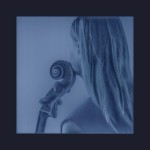

There is a peculiar kind of bravery in allowing an instrument to stop behaving like itself. On "State Of Matter", Dobrawa Czocher never abandons the cello, yet she constantly persuades it to reveal unfamiliar identities. Sometimes it sings with centuries of classical memory; sometimes it becomes percussion, breath, pulse, or a shadow dissolving into electronics. The result is less a collection of compositions than an ecosystem where sound is forever changing phase, perfectly reflecting the album's title.
The Polish composer and cellist has spent years building a reputation that comfortably transcends the concert hall. After studies in Warsaw and Detmold, her tenure as principal cellist with the Mieczysaw Karowicz Symphony Orchestra and her celebrated collaborations with Hania Rani established her as one of the most distinctive figures in Europe's contemporary classical landscape. Yet "State Of Matter" feels like the record of someone deliberately stepping away from familiar achievements. Following her move from Warsaw to Poland's Baltic coast, the landscape itself appears to have rewritten her vocabulary.
Nature, thankfully, is not treated here as wallpaper for mindfulness playlists. The sea is never merely picturesque. It behaves as an unpredictable force, simultaneously eroding and rebuilding emotional terrain. Forests suggest shelter but also disorientation. These pieces breathe like weather systems rather than narratives with neat beginnings and endings.
The opening "Monologue" establishes an intimate dialogue, almost as if Czocher is tuning not simply an instrument but an internal compass. From there, "Blue" introduces one of the album's defining characteristics: rhythm emerging from unexpected places. Percussive cello techniques intertwine with synthesizers and carefully sculpted electronics without ever feeling like decorative additions. Even more striking is Czocher's own layered voice, appearing for the first time in her recorded work. Rather than stepping into the spotlight, it becomes another texture within the ensemble, a ghostly extension of the instrument itself.
"Phoenix" provides the emotional fulcrum. Its gradual ascent is constructed with remarkable patience, relying less on dramatic gestures than on accumulating microscopic shifts in intensity. When the piece finally reaches its powerful climax, it feels earned rather than engineered. In an era where many compositions mistake volume for emotional depth, Czocher demonstrates that restraint often carries far greater weight. Humans, predictably, tend to believe everything must become louder to become meaningful. Music continues to disagree.
Elsewhere, "Sehnsucht" embraces longing without collapsing into sentimentality, allowing repetition to function not as minimalism for its own sake but as a form of contemplation. "Sirens" avoids the obvious mythological traps its title might suggest, instead exploring attraction and danger through subtle harmonic tensions. "Letter From The Soul" briefly narrows the emotional focus before "Fluctuations" restores movement, illustrating how instability itself can become a source of balance. By the time "Someone On Your Side" and "Goodbye" arrive, the record has quietly transformed from an exploration of external landscapes into an examination of resilience, ending not with closure but with acceptance.
What distinguishes "State Of Matter" from many contemporary neo-classical releases is its refusal to become cinematic shorthand for emotion. One can hear echoes of Bach's architectural clarity, Kodály's physical relationship with the cello, Reich's hypnotic pulse and Richter's expansive atmospheres, yet these influences never dominate the conversation. Czocher absorbs them into a language that remains unmistakably her own, one where classical discipline coexists naturally with electronic experimentation.
The production deserves equal praise. Recorded at the historic Studio S4 of Polish Radio, every layer occupies space with remarkable precision. Silence becomes an active participant rather than the absence of sound, allowing individual gestures to resonate long after they have disappeared.
If "Dreamscapes" introduced Dobrawa Czocher as a compelling composer, "State Of Matter" confirms that she possesses something considerably rarer: the confidence to keep evolving without announcing every transformation with fanfare. Like the Baltic tides that inspired much of its creation, the album changes constantly while appearing almost motionless. Only after the final notes fade does one realise that the landscape has shifted beneath one's feet. Quietly, patiently, almost imperceptibly. And perhaps that is the most profound state of matter music can achieve.
The Polish composer and cellist has spent years building a reputation that comfortably transcends the concert hall. After studies in Warsaw and Detmold, her tenure as principal cellist with the Mieczysaw Karowicz Symphony Orchestra and her celebrated collaborations with Hania Rani established her as one of the most distinctive figures in Europe's contemporary classical landscape. Yet "State Of Matter" feels like the record of someone deliberately stepping away from familiar achievements. Following her move from Warsaw to Poland's Baltic coast, the landscape itself appears to have rewritten her vocabulary.
Nature, thankfully, is not treated here as wallpaper for mindfulness playlists. The sea is never merely picturesque. It behaves as an unpredictable force, simultaneously eroding and rebuilding emotional terrain. Forests suggest shelter but also disorientation. These pieces breathe like weather systems rather than narratives with neat beginnings and endings.
The opening "Monologue" establishes an intimate dialogue, almost as if Czocher is tuning not simply an instrument but an internal compass. From there, "Blue" introduces one of the album's defining characteristics: rhythm emerging from unexpected places. Percussive cello techniques intertwine with synthesizers and carefully sculpted electronics without ever feeling like decorative additions. Even more striking is Czocher's own layered voice, appearing for the first time in her recorded work. Rather than stepping into the spotlight, it becomes another texture within the ensemble, a ghostly extension of the instrument itself.
"Phoenix" provides the emotional fulcrum. Its gradual ascent is constructed with remarkable patience, relying less on dramatic gestures than on accumulating microscopic shifts in intensity. When the piece finally reaches its powerful climax, it feels earned rather than engineered. In an era where many compositions mistake volume for emotional depth, Czocher demonstrates that restraint often carries far greater weight. Humans, predictably, tend to believe everything must become louder to become meaningful. Music continues to disagree.
Elsewhere, "Sehnsucht" embraces longing without collapsing into sentimentality, allowing repetition to function not as minimalism for its own sake but as a form of contemplation. "Sirens" avoids the obvious mythological traps its title might suggest, instead exploring attraction and danger through subtle harmonic tensions. "Letter From The Soul" briefly narrows the emotional focus before "Fluctuations" restores movement, illustrating how instability itself can become a source of balance. By the time "Someone On Your Side" and "Goodbye" arrive, the record has quietly transformed from an exploration of external landscapes into an examination of resilience, ending not with closure but with acceptance.
What distinguishes "State Of Matter" from many contemporary neo-classical releases is its refusal to become cinematic shorthand for emotion. One can hear echoes of Bach's architectural clarity, Kodály's physical relationship with the cello, Reich's hypnotic pulse and Richter's expansive atmospheres, yet these influences never dominate the conversation. Czocher absorbs them into a language that remains unmistakably her own, one where classical discipline coexists naturally with electronic experimentation.
The production deserves equal praise. Recorded at the historic Studio S4 of Polish Radio, every layer occupies space with remarkable precision. Silence becomes an active participant rather than the absence of sound, allowing individual gestures to resonate long after they have disappeared.
If "Dreamscapes" introduced Dobrawa Czocher as a compelling composer, "State Of Matter" confirms that she possesses something considerably rarer: the confidence to keep evolving without announcing every transformation with fanfare. Like the Baltic tides that inspired much of its creation, the album changes constantly while appearing almost motionless. Only after the final notes fade does one realise that the landscape has shifted beneath one's feet. Quietly, patiently, almost imperceptibly. And perhaps that is the most profound state of matter music can achieve.
Comments
Stream
Browse by Genre
Industrial Music / Industrial Metal / Aggro Industrial / Electro Metal
Industrial Noise / Power Noise / Harsh Noise
Synth Pop / Electro Pop / Synth-Electronica
Techno / Trance / Goa / Drum'n'Bass / Jungle / Tribal / Trip-Hop
Ambient / Electronica / Ethereal / Dub / Soundscapes / Abstract
Experimental / Avantgarde / Weird & Wired / Glitch / Noise / Field Recording
Dark / Gothic / Wave / New Wave / Dark Wave / Industrial Gothic
New Music / Downtown / Avantgarde Jazz / New Classical / World