
Saturday, September 5, 2026
Antoine Ferris: [KAAARST]
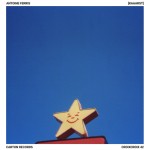


Some records introduce themselves politely. [KAAARST] kicks the door with the body of a bass guitar, then apologizes by humming a strangely beautiful melody. Humanity, as usual, is perfectly capable of making elegance out of blunt force.
French bassist Antoine Ferris has been an active presence in Toulouse's adventurous improvised music scene through projects such as Baraque à Free, Megacoaster, Feràmia and Totun, developing a vocabulary that treats the electric bass as anything but a conventional low-end instrument. Across those ensembles, and through collaborations with composers and improvisers, he has cultivated an approach where electronics, hip-hop production aesthetics, noise, and free improvisation are not competing languages but different dialects of the same conversation. [KAAARST], his first solo statement, feels less like a debut than the moment when years of accumulated experiments finally found a coherent gravitational centre.
Calling this a bass album would be technically correct in the same way calling a volcano "warm geology" would also be technically correct. Ferris continuously dismantles the identity of his instrument. Strings become percussion, feedback becomes melody, contact microphones amplify microscopic gestures, effects pedals generate unstable rhythmic companions that behave almost like stubborn improvisers rather than obedient machines. At times he attacks the instrument with his fists, elsewhere with a butter knife, turning performance into a peculiar choreography where every object seems equally qualified to become a musical tool.
Yet despite all this apparent violence, [KAAARST] never settles for noise as spectacle. The abrasive textures are consistently shadowed by melancholy. There is an emotional hesitation beneath the distortion, as though every burst of sonic aggression immediately questions itself. The album lives inside that contradiction, finding tenderness in abrasion and vulnerability inside mechanical repetition.
The sequencing reinforces this fragmented emotional geography. The miniature opener "crush" barely has time to introduce itself before dissolving, while "strange party" assembles fractured grooves from unstable rhythmic cells that flirt with electronic music without ever surrendering to predictable structures. Pieces like "hount orbe" and "coume sourde" stretch improvisation into something almost geological, allowing feedback and resonance to evolve with patient inevitability. Even the provocatively titled "electronic dance music" seems to smile ironically at genre expectations: if anyone arrives expecting club anthems, they may discover instead that dancing can also happen inside one's nervous system.
Ferris' fascination with electronic production is especially compelling because it never attempts to disguise the physicality of performance. Sampling techniques borrowed from beat-making coexist with unmistakably tactile instrumental gestures. Every scrape, strike and accidental resonance preserves the memory of hands touching wood and metal. The electronics do not erase the performer; they magnify the traces of his presence until every imperfection acquires structural importance.
The collaborative moments provide welcome shifts in perspective without interrupting the album's identity. Natacha Kanga's contribution to "shame's coming" introduces a fragile vocal dimension that contrasts beautifully with Ferris' fragmented instrumental language, while Louie Z's Occitan singing on "la nèu" anchors the record in a sense of place and cultural memory. The use of an endangered regional language feels quietly significant: amid all the digital manipulation and sonic deconstruction, an ancient voice appears, reminding us that experimentation does not require abandoning history.
There are echoes throughout the record of artists who have expanded the vocabulary of the electric bass and electroacoustic improvisation, yet Ferris avoids sounding derivative. His references to industrial music, glitch aesthetics, hip-hop production and free improvisation remain ingredients rather than destinations. The album constantly resists becoming too comfortable within any single tradition, preferring instead to occupy the unstable terrain between them.
The title itself suggests rugged landscapes shaped over immense stretches of time, and that metaphor proves surprisingly apt. These pieces often feel eroded rather than constructed. Sounds emerge like exposed mineral layers, revealing hidden colours beneath rough surfaces. Even the shortest tracks function as sedimentary deposits, each preserving tiny sonic fossils that resonate long after they disappear.
For listeners accustomed to clearly defined genres, [KAAARST] may initially resemble an elaborate puzzle whose picture never appears on the box. That is precisely its strength. Ferris trusts curiosity more than certainty, inviting repeated listening rather than immediate comprehension. The album rewards attention to detail: the unstable pulse hiding beneath distortion, the unexpected lyricism surfacing through feedback, the rhythmic intelligence concealed inside apparent chaos.
In an era where software can simulate almost any instrumental gesture with alarming efficiency, Antoine Ferris reminds us that unpredictability remains profoundly human. Sometimes all it takes is a bass guitar, a handful of pedals, questionable kitchen utensils, and the willingness to let accidents become collaborators. The result is an album that feels simultaneously raw and meticulously considered, proving that even broken signals can carry remarkably honest messages.
French bassist Antoine Ferris has been an active presence in Toulouse's adventurous improvised music scene through projects such as Baraque à Free, Megacoaster, Feràmia and Totun, developing a vocabulary that treats the electric bass as anything but a conventional low-end instrument. Across those ensembles, and through collaborations with composers and improvisers, he has cultivated an approach where electronics, hip-hop production aesthetics, noise, and free improvisation are not competing languages but different dialects of the same conversation. [KAAARST], his first solo statement, feels less like a debut than the moment when years of accumulated experiments finally found a coherent gravitational centre.
Calling this a bass album would be technically correct in the same way calling a volcano "warm geology" would also be technically correct. Ferris continuously dismantles the identity of his instrument. Strings become percussion, feedback becomes melody, contact microphones amplify microscopic gestures, effects pedals generate unstable rhythmic companions that behave almost like stubborn improvisers rather than obedient machines. At times he attacks the instrument with his fists, elsewhere with a butter knife, turning performance into a peculiar choreography where every object seems equally qualified to become a musical tool.
Yet despite all this apparent violence, [KAAARST] never settles for noise as spectacle. The abrasive textures are consistently shadowed by melancholy. There is an emotional hesitation beneath the distortion, as though every burst of sonic aggression immediately questions itself. The album lives inside that contradiction, finding tenderness in abrasion and vulnerability inside mechanical repetition.
The sequencing reinforces this fragmented emotional geography. The miniature opener "crush" barely has time to introduce itself before dissolving, while "strange party" assembles fractured grooves from unstable rhythmic cells that flirt with electronic music without ever surrendering to predictable structures. Pieces like "hount orbe" and "coume sourde" stretch improvisation into something almost geological, allowing feedback and resonance to evolve with patient inevitability. Even the provocatively titled "electronic dance music" seems to smile ironically at genre expectations: if anyone arrives expecting club anthems, they may discover instead that dancing can also happen inside one's nervous system.
Ferris' fascination with electronic production is especially compelling because it never attempts to disguise the physicality of performance. Sampling techniques borrowed from beat-making coexist with unmistakably tactile instrumental gestures. Every scrape, strike and accidental resonance preserves the memory of hands touching wood and metal. The electronics do not erase the performer; they magnify the traces of his presence until every imperfection acquires structural importance.
The collaborative moments provide welcome shifts in perspective without interrupting the album's identity. Natacha Kanga's contribution to "shame's coming" introduces a fragile vocal dimension that contrasts beautifully with Ferris' fragmented instrumental language, while Louie Z's Occitan singing on "la nèu" anchors the record in a sense of place and cultural memory. The use of an endangered regional language feels quietly significant: amid all the digital manipulation and sonic deconstruction, an ancient voice appears, reminding us that experimentation does not require abandoning history.
There are echoes throughout the record of artists who have expanded the vocabulary of the electric bass and electroacoustic improvisation, yet Ferris avoids sounding derivative. His references to industrial music, glitch aesthetics, hip-hop production and free improvisation remain ingredients rather than destinations. The album constantly resists becoming too comfortable within any single tradition, preferring instead to occupy the unstable terrain between them.
The title itself suggests rugged landscapes shaped over immense stretches of time, and that metaphor proves surprisingly apt. These pieces often feel eroded rather than constructed. Sounds emerge like exposed mineral layers, revealing hidden colours beneath rough surfaces. Even the shortest tracks function as sedimentary deposits, each preserving tiny sonic fossils that resonate long after they disappear.
For listeners accustomed to clearly defined genres, [KAAARST] may initially resemble an elaborate puzzle whose picture never appears on the box. That is precisely its strength. Ferris trusts curiosity more than certainty, inviting repeated listening rather than immediate comprehension. The album rewards attention to detail: the unstable pulse hiding beneath distortion, the unexpected lyricism surfacing through feedback, the rhythmic intelligence concealed inside apparent chaos.
In an era where software can simulate almost any instrumental gesture with alarming efficiency, Antoine Ferris reminds us that unpredictability remains profoundly human. Sometimes all it takes is a bass guitar, a handful of pedals, questionable kitchen utensils, and the willingness to let accidents become collaborators. The result is an album that feels simultaneously raw and meticulously considered, proving that even broken signals can carry remarkably honest messages.
Comments
Stream
Browse by Genre
Industrial Music / Industrial Metal / Aggro Industrial / Electro Metal
Industrial Noise / Power Noise / Harsh Noise
Synth Pop / Electro Pop / Synth-Electronica
Techno / Trance / Goa / Drum'n'Bass / Jungle / Tribal / Trip-Hop
Ambient / Electronica / Ethereal / Dub / Soundscapes / Abstract
Experimental / Avantgarde / Weird & Wired / Glitch / Noise / Field Recording
Dark / Gothic / Wave / New Wave / Dark Wave / Industrial Gothic
New Music / Downtown / Avantgarde Jazz / New Classical / World