
Dao Strom: Redux
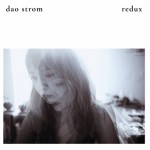


Some albums revisit the past as though it were an old photograph that simply needs dusting off. "Redux" does something considerably more interesting. Dao Strom returns to songs she wrote over two decades ago not to preserve them in amber, but to ask whether memories remain truthful after years of silence. The answer, unsurprisingly, is no. Memory edits, erases, embellishes and occasionally invents. Fortunately, it often becomes a better collaborator than nostalgia.
Born in Vietnam and now based in Portland, Oregon, Dao Strom has long occupied a singular artistic space where literature, music and visual art coexist without competing for attention. As a novelist, poet, multimedia artist and songwriter, her work consistently investigates displacement, diasporic identity, inheritance and emotional geography. Beginning within Austin's early-2000s Americana and alt-country scene, Strom gradually moved toward increasingly experimental forms, producing hybrid projects that merge poetry, sound and visual language. "Redux", first released independently on cassette before receiving this deserved vinyl edition through Disasters By Choice, feels like a natural bridge between those earlier songwriting roots and the broader artistic vocabulary she has developed since.
Calling this an ambient-folk album is accurate, but only in the same way calling the ocean "water" is technically correct. Acoustic guitars remain the skeletal framework, yet they rarely behave as conventional accompaniment. Fingerpicked patterns drift beneath translucent layers of voice, subtle electronics, distant samples and generous pockets of silence, producing songs that seem suspended somewhere between confession and recollection. Rather than moving forward, they circle gently around emotional centres, discovering new contours with every orbit.
Strom's voice is undoubtedly the emotional anchor throughout the record. It never strives for theatrical grandeur or technical display. Instead, it carries the remarkable ability to sound simultaneously intimate and elusive, as though the listener has wandered into a room where someone is quietly remembering rather than performing. Her layered vocal arrangements create soft halos around individual melodies, giving the impression that different versions of herself, separated by years, are singing together.
That concept becomes particularly poignant when considering the album's origins. These compositions were born during another life: another city, another artistic community, another version of Dao Strom. Some were recorded with collaborators at the time; others never progressed beyond unfinished sketches. Revisiting them decades later inevitably transforms them into conversations across time. One hears not simply songs revived, but perspectives revised. The younger songwriter provided the emotional spark; the older artist contributes patience, restraint and the confidence to leave space where younger musicians often feel compelled to fill every silence.
Musically, "Redux" inhabits an intriguing territory shared by contemporary ambient composition, dream folk and experimental songwriting. Listeners may occasionally think of artists such as Grouper, Julianna Barwick or early Grouper collaborator Helen Scarsdale projects, yet Strom avoids imitation by grounding abstraction within remarkably tangible songwriting. Beneath the reverberant textures lie melodies sturdy enough to survive being stripped back to little more than voice and guitar. The ambient elements enrich the songs rather than disguising them.
Tracks such as "Caller of Spirit" and "Jesus Darkness" demonstrate this balance particularly well, allowing sparse harmonic movement to coexist with slowly unfolding electronic atmospheres. Elsewhere, "Everything That Blooms Wrecks Me" distils emotional vulnerability into one of the album's most concise statements, while "Ancestors" gently extends Strom's recurring exploration of lineage and inherited memory without becoming didactic. Even the beautifully titled "Motherbear" resists sentimentality, preferring ambiguity over easy catharsis.
The production deserves equal praise. Recorded entirely by Strom in her home studio, it possesses the kind of sonic honesty that expensive studios often spend enormous effort trying to simulate. Tiny imperfections remain intact: breaths, shifting textures, delicate fluctuations in dynamics. These details become part of the album's emotional architecture rather than distractions from it. One never feels the presence of technology as an obstacle; instead, it functions like another sympathetic instrument quietly expanding the songs' natural resonance.
One of the funniest aspect of this release is that "Redux" suggests restoration, yet nothing here is restored to its original condition. These songs have aged exactly as people do. Their contours remain recognisable, but experience has altered every surface. They no longer belong entirely to the young woman who first wrote them, nor solely to the mature artist performing them now. They occupy the curious territory in between, where memory and imagination politely borrow each other's clothes without worrying too much about returning them.
In an age increasingly obsessed with remasters, anniversary editions and algorithmically fuelled nostalgia, "Redux" offers a far more meaningful form of return. Rather than asking whether old songs deserve another hearing, Dao Strom asks whether we ourselves are ever the same listeners who first encountered them. The answer unfolds quietly across these ten luminous pieces: we are not. And perhaps that gentle estrangement, where familiar voices become new companions once again, is where music discovers its deepest form of renewal.
Born in Vietnam and now based in Portland, Oregon, Dao Strom has long occupied a singular artistic space where literature, music and visual art coexist without competing for attention. As a novelist, poet, multimedia artist and songwriter, her work consistently investigates displacement, diasporic identity, inheritance and emotional geography. Beginning within Austin's early-2000s Americana and alt-country scene, Strom gradually moved toward increasingly experimental forms, producing hybrid projects that merge poetry, sound and visual language. "Redux", first released independently on cassette before receiving this deserved vinyl edition through Disasters By Choice, feels like a natural bridge between those earlier songwriting roots and the broader artistic vocabulary she has developed since.
Calling this an ambient-folk album is accurate, but only in the same way calling the ocean "water" is technically correct. Acoustic guitars remain the skeletal framework, yet they rarely behave as conventional accompaniment. Fingerpicked patterns drift beneath translucent layers of voice, subtle electronics, distant samples and generous pockets of silence, producing songs that seem suspended somewhere between confession and recollection. Rather than moving forward, they circle gently around emotional centres, discovering new contours with every orbit.
Strom's voice is undoubtedly the emotional anchor throughout the record. It never strives for theatrical grandeur or technical display. Instead, it carries the remarkable ability to sound simultaneously intimate and elusive, as though the listener has wandered into a room where someone is quietly remembering rather than performing. Her layered vocal arrangements create soft halos around individual melodies, giving the impression that different versions of herself, separated by years, are singing together.
That concept becomes particularly poignant when considering the album's origins. These compositions were born during another life: another city, another artistic community, another version of Dao Strom. Some were recorded with collaborators at the time; others never progressed beyond unfinished sketches. Revisiting them decades later inevitably transforms them into conversations across time. One hears not simply songs revived, but perspectives revised. The younger songwriter provided the emotional spark; the older artist contributes patience, restraint and the confidence to leave space where younger musicians often feel compelled to fill every silence.
Musically, "Redux" inhabits an intriguing territory shared by contemporary ambient composition, dream folk and experimental songwriting. Listeners may occasionally think of artists such as Grouper, Julianna Barwick or early Grouper collaborator Helen Scarsdale projects, yet Strom avoids imitation by grounding abstraction within remarkably tangible songwriting. Beneath the reverberant textures lie melodies sturdy enough to survive being stripped back to little more than voice and guitar. The ambient elements enrich the songs rather than disguising them.
Tracks such as "Caller of Spirit" and "Jesus Darkness" demonstrate this balance particularly well, allowing sparse harmonic movement to coexist with slowly unfolding electronic atmospheres. Elsewhere, "Everything That Blooms Wrecks Me" distils emotional vulnerability into one of the album's most concise statements, while "Ancestors" gently extends Strom's recurring exploration of lineage and inherited memory without becoming didactic. Even the beautifully titled "Motherbear" resists sentimentality, preferring ambiguity over easy catharsis.
The production deserves equal praise. Recorded entirely by Strom in her home studio, it possesses the kind of sonic honesty that expensive studios often spend enormous effort trying to simulate. Tiny imperfections remain intact: breaths, shifting textures, delicate fluctuations in dynamics. These details become part of the album's emotional architecture rather than distractions from it. One never feels the presence of technology as an obstacle; instead, it functions like another sympathetic instrument quietly expanding the songs' natural resonance.
One of the funniest aspect of this release is that "Redux" suggests restoration, yet nothing here is restored to its original condition. These songs have aged exactly as people do. Their contours remain recognisable, but experience has altered every surface. They no longer belong entirely to the young woman who first wrote them, nor solely to the mature artist performing them now. They occupy the curious territory in between, where memory and imagination politely borrow each other's clothes without worrying too much about returning them.
In an age increasingly obsessed with remasters, anniversary editions and algorithmically fuelled nostalgia, "Redux" offers a far more meaningful form of return. Rather than asking whether old songs deserve another hearing, Dao Strom asks whether we ourselves are ever the same listeners who first encountered them. The answer unfolds quietly across these ten luminous pieces: we are not. And perhaps that gentle estrangement, where familiar voices become new companions once again, is where music discovers its deepest form of renewal.
Comments
Stream
Browse by Genre
Industrial Music / Industrial Metal / Aggro Industrial / Electro Metal
Industrial Noise / Power Noise / Harsh Noise
Synth Pop / Electro Pop / Synth-Electronica
Techno / Trance / Goa / Drum'n'Bass / Jungle / Tribal / Trip-Hop
Ambient / Electronica / Ethereal / Dub / Soundscapes / Abstract
Experimental / Avantgarde / Weird & Wired / Glitch / Noise / Field Recording
Dark / Gothic / Wave / New Wave / Dark Wave / Industrial Gothic
New Music / Downtown / Avantgarde Jazz / New Classical / World