
Wednesday, July 29, 2026
Matthias Muche: Trombone Alone
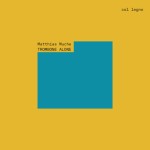


The trombone occupies a curious place in the collective imagination. In symphony orchestras it often announces destiny, catastrophe or divine judgement. In jazz it can swagger, growl and dance. In cartoons it has spent decades slipping on metaphorical banana peels. Poor instrument. It contains multitudes, yet is frequently reduced to comic glissandi or solemn fanfares. Cologne-based composer and trombonist Matthias Muche has devoted a significant part of his artistic practice to rescuing the trombone from such convenient stereotypes, treating it not merely as an instrument, but as a physical environment, a resonant architecture, almost a place one can inhabit.
"Trombone Alone", released by Col Legno, gathers five solo works that distil this vision into its most concentrated form. Muche, recipient of the WDR Jazz Prize for Improvisation in 2021, has developed his language through encounters with figures such as George Lewis, Vinko Globokar, Ray Anderson and Anthony Moore, musicians and thinkers who each, in their own way, questioned what an instrument could be. Here, however, theory quietly dissolves into experience. One does not listen to these pieces as much as enter them.
Recorded in the generous acoustic of a church in Bielefeld, the album immediately establishes space as an active participant. Reverberation is not a decorative afterthought but an essential material, a second performer answering, extending and occasionally contradicting the trombone. The opening "Solo BELLER", featuring spoken text by Anthony Moore, introduces this dimension with measured calm, as if mapping the room before setting out into it. It feels less like the beginning of a concert and more like crossing the threshold of an installation.
And perhaps installation is indeed the right word. These pieces are not organised around melody in the traditional sense, nor do they seek the dramatic arcs often expected from solo instrumental performances. Instead, Muche builds situations. Air, breath, metal, resonance and silence become compositional elements of equal importance. The trombone is extended through objects, altered air paths and electroacoustic interventions, redirecting sound back into the instrument's own body until it becomes difficult to distinguish cause from reflection.
This could sound forbiddingly academic on paper. Fortunately, sound possesses a stubborn resistance to paperwork.
"Solo GLEITER" unfolds like an exploration of invisible currents, tones sliding and bending as though searching for hidden passageways inside the instrument. "Solo QUATER" introduces greater density, yet never feels crowded; each sound appears carefully placed, like stones in a Zen garden where absence matters as much as presence. "Solo BUTTER", despite its deceptively soft title, contains some of the album's most fascinating textures, balancing fragility with a rough physicality that reminds the listener that music begins with breath pushing against resistance.
The closing "Solo GLOCKEN" brings bells into dialogue with the trombone, subtly dissolving the boundary between instrument and environment. By the end, one realises that the church itself has been performing all along. Buildings, after all, are merely very slow instruments waiting for someone to play them.
Muche's work is often described in terms of embodiment, and rightly so. There is an unmistakable sense of effort here: the movement of air, the pressure of lips against metal, the negotiation between body and object. Yet this never becomes a display of virtuosity in the conventional sense. There are no dazzling cascades of notes designed to provoke applause. In fact, "Trombone Alone" quietly questions the very idea of instrumental mastery. Technical brilliance is replaced by attentiveness, by an ethics of listening.
That may be the album's most valuable contribution. Contemporary life increasingly resembles a contest to determine who can demand our attention most aggressively. Notifications flash, algorithms insist, content accelerates. Muche offers the opposite: an invitation to slow perception down. These compositions do not tell the listener what to feel. They create conditions in which feeling may emerge naturally, unpredictably.
There is also an understated poetry in the album's brittleness. Sounds crack, fade, hesitate, reveal their material origins. Nothing is polished into anonymous perfection. Ancient Greek aesthetics associated beauty with a certain fragility, and "Trombone Alone" seems to understand this intuitively. A sound that risks disappearing often becomes more compelling than one that insists on its permanence.
Listeners familiar with Muche's large ensemble project BONECRUSHER, where these works have also been expanded for twelve trombones and percussion, may recognise some of the underlying ideas. Yet the solo versions possess a special clarity. Here, stripped of orchestral scale, the relationship between body, instrument and space becomes fully visible.
This is not an album for passive consumption. It asks for participation, or at least attention. But it rewards that attention generously. What begins as an exploration of the trombone gradually becomes an exploration of listening itself: how we perceive sound, how space shapes meaning, how silence alters memory.
In the end, "Trombone Alone" reminds us that music need not always rush toward melody, climax or resolution. Sometimes it is enough to stand in a room, listen carefully, and discover that even a single breath travelling through a length of brass can contain an entire landscape.
"Trombone Alone", released by Col Legno, gathers five solo works that distil this vision into its most concentrated form. Muche, recipient of the WDR Jazz Prize for Improvisation in 2021, has developed his language through encounters with figures such as George Lewis, Vinko Globokar, Ray Anderson and Anthony Moore, musicians and thinkers who each, in their own way, questioned what an instrument could be. Here, however, theory quietly dissolves into experience. One does not listen to these pieces as much as enter them.
Recorded in the generous acoustic of a church in Bielefeld, the album immediately establishes space as an active participant. Reverberation is not a decorative afterthought but an essential material, a second performer answering, extending and occasionally contradicting the trombone. The opening "Solo BELLER", featuring spoken text by Anthony Moore, introduces this dimension with measured calm, as if mapping the room before setting out into it. It feels less like the beginning of a concert and more like crossing the threshold of an installation.
And perhaps installation is indeed the right word. These pieces are not organised around melody in the traditional sense, nor do they seek the dramatic arcs often expected from solo instrumental performances. Instead, Muche builds situations. Air, breath, metal, resonance and silence become compositional elements of equal importance. The trombone is extended through objects, altered air paths and electroacoustic interventions, redirecting sound back into the instrument's own body until it becomes difficult to distinguish cause from reflection.
This could sound forbiddingly academic on paper. Fortunately, sound possesses a stubborn resistance to paperwork.
"Solo GLEITER" unfolds like an exploration of invisible currents, tones sliding and bending as though searching for hidden passageways inside the instrument. "Solo QUATER" introduces greater density, yet never feels crowded; each sound appears carefully placed, like stones in a Zen garden where absence matters as much as presence. "Solo BUTTER", despite its deceptively soft title, contains some of the album's most fascinating textures, balancing fragility with a rough physicality that reminds the listener that music begins with breath pushing against resistance.
The closing "Solo GLOCKEN" brings bells into dialogue with the trombone, subtly dissolving the boundary between instrument and environment. By the end, one realises that the church itself has been performing all along. Buildings, after all, are merely very slow instruments waiting for someone to play them.
Muche's work is often described in terms of embodiment, and rightly so. There is an unmistakable sense of effort here: the movement of air, the pressure of lips against metal, the negotiation between body and object. Yet this never becomes a display of virtuosity in the conventional sense. There are no dazzling cascades of notes designed to provoke applause. In fact, "Trombone Alone" quietly questions the very idea of instrumental mastery. Technical brilliance is replaced by attentiveness, by an ethics of listening.
That may be the album's most valuable contribution. Contemporary life increasingly resembles a contest to determine who can demand our attention most aggressively. Notifications flash, algorithms insist, content accelerates. Muche offers the opposite: an invitation to slow perception down. These compositions do not tell the listener what to feel. They create conditions in which feeling may emerge naturally, unpredictably.
There is also an understated poetry in the album's brittleness. Sounds crack, fade, hesitate, reveal their material origins. Nothing is polished into anonymous perfection. Ancient Greek aesthetics associated beauty with a certain fragility, and "Trombone Alone" seems to understand this intuitively. A sound that risks disappearing often becomes more compelling than one that insists on its permanence.
Listeners familiar with Muche's large ensemble project BONECRUSHER, where these works have also been expanded for twelve trombones and percussion, may recognise some of the underlying ideas. Yet the solo versions possess a special clarity. Here, stripped of orchestral scale, the relationship between body, instrument and space becomes fully visible.
This is not an album for passive consumption. It asks for participation, or at least attention. But it rewards that attention generously. What begins as an exploration of the trombone gradually becomes an exploration of listening itself: how we perceive sound, how space shapes meaning, how silence alters memory.
In the end, "Trombone Alone" reminds us that music need not always rush toward melody, climax or resolution. Sometimes it is enough to stand in a room, listen carefully, and discover that even a single breath travelling through a length of brass can contain an entire landscape.
Comments
Stream
Browse by Genre
Industrial Music / Industrial Metal / Aggro Industrial / Electro Metal
Industrial Noise / Power Noise / Harsh Noise
Synth Pop / Electro Pop / Synth-Electronica
Techno / Trance / Goa / Drum'n'Bass / Jungle / Tribal / Trip-Hop
Ambient / Electronica / Ethereal / Dub / Soundscapes / Abstract
Experimental / Avantgarde / Weird & Wired / Glitch / Noise / Field Recording
Dark / Gothic / Wave / New Wave / Dark Wave / Industrial Gothic
New Music / Downtown / Avantgarde Jazz / New Classical / World