
Tuesday, August 11, 2026
Amalie Dahl: Dafnie EXTENDED - Live at Moldejazz
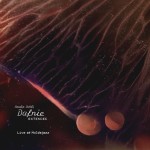
Artist: Amalie Dahl (@)
Title: Dafnie EXTENDED - Live at Moldejazz
Format: LP
Label: Sonic Transmissions Records (@)
Rated:

Title: Dafnie EXTENDED - Live at Moldejazz
Format: LP
Label: Sonic Transmissions Records (@)
Rated:
There is a peculiar moment that every composer secretly hopes for and simultaneously fears: the instant when a carefully cultivated musical language outgrows its original frame. Some projects become diluted when expanded, like adding too much water to good coffee. Others reveal dimensions that were always hiding beneath the surface. "Dafnie EXTENDED: Live at Moldejazz" belongs emphatically to the latter category.
Danish-born, Oslo-based saxophonist and composer Amalie Dahl has rapidly become one of the most compelling figures in the flourishing Scandinavian jazz scene. After studying at NTNU in Trondheim, she steadily built a reputation through projects such as "Breaking/Building Habits", collaborations with Ingebrigt Håker Flaten and several adventurous ensembles, while her quintet Dafnie established itself as a vehicle where rigorous composition and fearless improvisation coexist without either one bullying the other. Rather than treating free jazz as an excuse for chaos or composition as an exercise in control, Dahl has consistently sought the unstable territory where both impulses strengthen one another.
This live recording documents the world premiere of the expanded twelve-piece version of Dafnie at Moldejazz in 2025, and the enlargement feels entirely organic. The original quintet has not simply recruited reinforcements; it has evolved into something resembling a living ecosystem. The additional brass, electronics, accordion, piano, second double bass and second drummer create an ensemble capable of changing its density almost instantaneously, moving from whispering chamber music to orchestral turbulence with astonishing agility.
The opening "Intro" serves less as a traditional introduction than as the slow lifting of a curtain. Textures emerge cautiously, as if each musician is testing the acoustics of the room before committing to the collective narrative. Dahl's writing often begins with deceptively modest melodic fragments, allowing repetition and subtle variation to generate momentum rather than relying on obvious thematic statements. It is an approach that recalls aspects of minimalist thinking without ever becoming mechanically repetitive.
As the performance unfolds through "Floating" and "Drifting_Turning", the ensemble demonstrates remarkable discipline. Large jazz orchestras often resemble committees attempting spontaneous conversation, admirable in theory, occasionally exhausting in practice. Here, however, every voice retains its individuality while contributing to an unmistakably unified sound. Oscar Andreas Haug's trumpet, Henriette Eilertsen's flute and electronics, Sofia Salvo's baritone saxophone, Lisa Ullén's piano and Anna Ueland's synthesizer continuously reshape the harmonic landscape without cluttering it.
Perhaps the most striking achievement lies in the rhythm section. Having two double bassists, Nicolas Leirtrø and Ingebrigt Håker Flaten, alongside two drummers, Trym Karlsen and Veslemøy Narvesen, could easily produce excessive density. Instead, the quartet functions almost architecturally, constructing shifting foundations that allow the horns extraordinary freedom. Rather than merely keeping time, they generate landscapes upon which the music continually rebuilds itself.
"Parallels" beautifully illustrates Dahl's compositional philosophy. Melodic cells circulate among the musicians like shared thoughts, gradually accumulating emotional weight without ever settling into predictable resolutions. Solos emerge naturally from the ensemble rather than interrupting it, reinforcing the impression that individuality here exists only through dialogue. It is collective improvisation understood not as simultaneous freedom but as mutual responsibility.
The emotional center of the album may arrive with "Slow Motion". Its spacious pacing allows silence to become almost as expressive as sound. Every sustained note seems to carry the memory of the previous phrase while anticipating the next. There is remarkable confidence in allowing music to breathe. In an era where many recordings appear terrified of empty space, Dahl demonstrates that restraint often carries greater dramatic force than perpetual activity.
When "In Flux" finally erupts into dense, energetic passages, the release feels entirely earned. Free jazz energy is abundant here, but never gratuitous. The ensemble doesn't explode because improvisers are contractually obliged to reach maximum volume at some point. It expands because the internal logic of the composition demands it. That distinction makes all the difference.
The concluding "Longing" offers an appropriately reflective ending. Rather than delivering a triumphant finale, Dahl allows the music to gradually dissolve into openness, suggesting that the performance represents one moment within a much longer ongoing conversation. It is an ending that resists closure, inviting repeated listening instead of providing definitive answers.
The live recording itself deserves special mention. Capturing a twelve-piece ensemble without sacrificing clarity is no small accomplishment, and the production preserves both the physical impact of the larger passages and the intimacy of quieter interactions. One can almost visualize musicians listening as intensely as they play, a quality that separates genuine ensemble music from carefully organized simultaneity.
What makes "Dafnie EXTENDED" particularly rewarding is that it refuses to treat scale as spectacle. Bigger does not mean louder, busier or more virtuosic for its own sake. Instead, Dahl uses the expanded instrumentation to deepen her exploration of texture, movement and collective expression. The orchestra becomes less a monument than a breathing organism, constantly adapting while preserving its identity.
There is also something quietly optimistic about this music. At a time when so much contemporary culture celebrates individual brilliance, Dahl places her faith in collaboration. Every musician contributes a distinct personality, yet none dominates the narrative. The result suggests that complexity need not produce confusion and that freedom can flourish precisely because structure exists.
"Dafnie EXTENDED: Live at Moldejazz" confirms Amalie Dahl as one of Europe's most imaginative composers working at the intersection of contemporary jazz and large ensemble improvisation. More importantly, it demonstrates that ambitious musical ideas do not require grandiosity to make their impact. Sometimes twelve musicians can sound less like an orchestra than like a single mind dreaming collectively, discovering, note by note, that expansion is not about occupying more space, but about listening more deeply to the space already there.
Danish-born, Oslo-based saxophonist and composer Amalie Dahl has rapidly become one of the most compelling figures in the flourishing Scandinavian jazz scene. After studying at NTNU in Trondheim, she steadily built a reputation through projects such as "Breaking/Building Habits", collaborations with Ingebrigt Håker Flaten and several adventurous ensembles, while her quintet Dafnie established itself as a vehicle where rigorous composition and fearless improvisation coexist without either one bullying the other. Rather than treating free jazz as an excuse for chaos or composition as an exercise in control, Dahl has consistently sought the unstable territory where both impulses strengthen one another.
This live recording documents the world premiere of the expanded twelve-piece version of Dafnie at Moldejazz in 2025, and the enlargement feels entirely organic. The original quintet has not simply recruited reinforcements; it has evolved into something resembling a living ecosystem. The additional brass, electronics, accordion, piano, second double bass and second drummer create an ensemble capable of changing its density almost instantaneously, moving from whispering chamber music to orchestral turbulence with astonishing agility.
The opening "Intro" serves less as a traditional introduction than as the slow lifting of a curtain. Textures emerge cautiously, as if each musician is testing the acoustics of the room before committing to the collective narrative. Dahl's writing often begins with deceptively modest melodic fragments, allowing repetition and subtle variation to generate momentum rather than relying on obvious thematic statements. It is an approach that recalls aspects of minimalist thinking without ever becoming mechanically repetitive.
As the performance unfolds through "Floating" and "Drifting_Turning", the ensemble demonstrates remarkable discipline. Large jazz orchestras often resemble committees attempting spontaneous conversation, admirable in theory, occasionally exhausting in practice. Here, however, every voice retains its individuality while contributing to an unmistakably unified sound. Oscar Andreas Haug's trumpet, Henriette Eilertsen's flute and electronics, Sofia Salvo's baritone saxophone, Lisa Ullén's piano and Anna Ueland's synthesizer continuously reshape the harmonic landscape without cluttering it.
Perhaps the most striking achievement lies in the rhythm section. Having two double bassists, Nicolas Leirtrø and Ingebrigt Håker Flaten, alongside two drummers, Trym Karlsen and Veslemøy Narvesen, could easily produce excessive density. Instead, the quartet functions almost architecturally, constructing shifting foundations that allow the horns extraordinary freedom. Rather than merely keeping time, they generate landscapes upon which the music continually rebuilds itself.
"Parallels" beautifully illustrates Dahl's compositional philosophy. Melodic cells circulate among the musicians like shared thoughts, gradually accumulating emotional weight without ever settling into predictable resolutions. Solos emerge naturally from the ensemble rather than interrupting it, reinforcing the impression that individuality here exists only through dialogue. It is collective improvisation understood not as simultaneous freedom but as mutual responsibility.
The emotional center of the album may arrive with "Slow Motion". Its spacious pacing allows silence to become almost as expressive as sound. Every sustained note seems to carry the memory of the previous phrase while anticipating the next. There is remarkable confidence in allowing music to breathe. In an era where many recordings appear terrified of empty space, Dahl demonstrates that restraint often carries greater dramatic force than perpetual activity.
When "In Flux" finally erupts into dense, energetic passages, the release feels entirely earned. Free jazz energy is abundant here, but never gratuitous. The ensemble doesn't explode because improvisers are contractually obliged to reach maximum volume at some point. It expands because the internal logic of the composition demands it. That distinction makes all the difference.
The concluding "Longing" offers an appropriately reflective ending. Rather than delivering a triumphant finale, Dahl allows the music to gradually dissolve into openness, suggesting that the performance represents one moment within a much longer ongoing conversation. It is an ending that resists closure, inviting repeated listening instead of providing definitive answers.
The live recording itself deserves special mention. Capturing a twelve-piece ensemble without sacrificing clarity is no small accomplishment, and the production preserves both the physical impact of the larger passages and the intimacy of quieter interactions. One can almost visualize musicians listening as intensely as they play, a quality that separates genuine ensemble music from carefully organized simultaneity.
What makes "Dafnie EXTENDED" particularly rewarding is that it refuses to treat scale as spectacle. Bigger does not mean louder, busier or more virtuosic for its own sake. Instead, Dahl uses the expanded instrumentation to deepen her exploration of texture, movement and collective expression. The orchestra becomes less a monument than a breathing organism, constantly adapting while preserving its identity.
There is also something quietly optimistic about this music. At a time when so much contemporary culture celebrates individual brilliance, Dahl places her faith in collaboration. Every musician contributes a distinct personality, yet none dominates the narrative. The result suggests that complexity need not produce confusion and that freedom can flourish precisely because structure exists.
"Dafnie EXTENDED: Live at Moldejazz" confirms Amalie Dahl as one of Europe's most imaginative composers working at the intersection of contemporary jazz and large ensemble improvisation. More importantly, it demonstrates that ambitious musical ideas do not require grandiosity to make their impact. Sometimes twelve musicians can sound less like an orchestra than like a single mind dreaming collectively, discovering, note by note, that expansion is not about occupying more space, but about listening more deeply to the space already there.
Comments
Stream
Browse by Genre
Industrial Music / Industrial Metal / Aggro Industrial / Electro Metal
Industrial Noise / Power Noise / Harsh Noise
Synth Pop / Electro Pop / Synth-Electronica
Techno / Trance / Goa / Drum'n'Bass / Jungle / Tribal / Trip-Hop
Ambient / Electronica / Ethereal / Dub / Soundscapes / Abstract
Experimental / Avantgarde / Weird & Wired / Glitch / Noise / Field Recording
Dark / Gothic / Wave / New Wave / Dark Wave / Industrial Gothic
New Music / Downtown / Avantgarde Jazz / New Classical / World