
Thursday, October 1, 2026
Mr.Vast: Upping The Ante
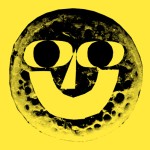


The problem with Mr.Vast is that he makes it extremely difficult to behave like a respectable music reviewer.
One can begin with genre. There is electronic music here, certainly. There are rave rhythms, drum'n'bass, acid-adjacent twitching, synth-pop, ambient passages, folk gestures, spoken word and things that appear to have wandered in from a children's television programme being broadcast from a parallel universe. One can mention absurdism, English eccentricity, cabaret, music hall, post-punk, techno and Wevie Stonder. All of these descriptions are technically defensible. None of them survives contact with the album for very long.
"Upping The Ante" is the third solo album by Henry Sargeant's Mr.Vast persona, following "Grievous Bodily Charm" and "Touch & Go". Sargeant's background as an actor and “dark clown”, together with his long-standing role as vocalist and frontman of Wevie Stonder, goes some way towards explaining why his relationship with the conventional idea of a song remains so cheerfully dysfunctional. Working with Al Boorman, who provides the music, production and mixing, Sargeant treats the pop song less as a fixed structure than as a piece of furniture that can be dismantled and rebuilt while somebody is still sitting on it. The remarkable thing is that "Upping The Ante" is not actually as chaotic as it first appears.
Its opening, “What's Difficult About Being Stupid?”, lasts twenty-eight seconds and immediately establishes that conventional introductions are not going to survive the afternoon. “Scatterbrain” follows with a miniature burst of warped, pseudo-medieval absurdity before “This And That” suddenly launches into a dance track that could, under different circumstances and with substantially less personality, have been mistaken for an actual club record. This is where Mr.Vast becomes particularly cunning.
The music is often genuinely catchy. That fact is easy to overlook because Sargeant fills it with linguistic detours, character voices, surreal observations and the general sensation that somebody has misplaced the instruction manual for human behaviour. Yet Boorman's productions are carefully constructed. Rhythmic transitions, synth figures, bass movements and abrupt changes of atmosphere are not random interruptions. They provide a stable framework against which the verbal nonsense can ricochet.
The absurdity works because the music underneath it works. “This And That” is perhaps the clearest example. It begins with enough dancefloor propulsion to make the listener suspect that Mr.Vast has finally agreed to behave, before the arrangement starts expanding into rave melodrama and rhythmic excess. The track becomes a kind of damaged celebration, simultaneously inviting the body to move and the brain to question why it is doing so.
This tension between genuine musical pleasure and comic disruption runs throughout the album.
“The Bench” takes a gentler route. Its softer electronic setting gives Sargeant room to occupy a more conversational space, creating the impression of a strange little monologue that has accidentally acquired accompaniment. It is almost conventional, which in the Mr.Vast universe means that something is probably about to go wrong.
“Neural Preening” supplies the expected malfunction. Nervous electronic figures, clipped rhythms and an animated vocal performance create a miniature nervous system operating at slightly too high a voltage. The influence of early electronic pop is audible without becoming imitation. There is something of the mechanical twitch of early-80s synth music, but the track is too self-aware to settle comfortably into retro territory.
That is important because "Upping The Ante" is not really interested in nostalgia.
It borrows historical materials the way a magpie steals shiny objects: because they look useful, not because it wishes to preserve them. A rave rhythm from one decade, a folk cadence from another, a lounge-piano gesture, a synth-pop texture, a documentary-music cliché: everything becomes available.
Then “Ants” arrives and demonstrates just how far the album can travel while apparently remaining in the same room.
A wandering vocal narrative is placed over a more relaxed musical setting, producing something halfway between a pub conversation, a spoken-word performance and a song that has forgotten what its chorus was supposed to be. The deliberately skewed imagery is funny, but the real pleasure comes from the way Sargeant's delivery keeps shifting the listener's understanding of what is happening. Is he telling a story? Performing a character? Improvising? Making fun of storytelling itself? Probably all four.
And this is where the connection to his theatrical background becomes more significant than the word “comedy” might suggest. Mr.Vast is not simply a musician who tells jokes between tracks. The voice is a dramatic instrument. Characters appear through changes of diction, accent, rhythm and attitude. The songs behave almost like miniature scenes in which the protagonist is never quite stable.
The album consequently has more in common with theatre than a superficial listen might suggest.
But it is theatre that has been fed through a malfunctioning jukebox.
“I Can't Help It” moves back toward rave and drum'n'bass territory, but the energy is constantly interrupted by vocal and narrative diversions. “Guess Who” provides one of the album's most convincing moments of relative simplicity, allowing the songwriting itself to emerge more clearly. It is a useful reminder that Sargeant and Boorman could presumably make something much more conventional if they were ever seized by an unfortunate lapse in judgement.
They simply don't seem interested. “Crumpet Man” is perhaps the record's great absurdist centrepiece. The music gradually adopts the proportions of an overly serious documentary soundtrack while the subject matter heads in a considerably less respectable direction. The contrast is exquisite. Grand electronic gestures promise historical significance; the vocal supplies something much closer to breakfast.
This is a recurring trick throughout the album: inflate something ridiculous until it becomes strangely majestic. It works because Boorman takes the musical arrangements seriously even when Sargeant refuses to take the subject matter seriously. The result is not novelty music in the disposable sense. The jokes have structural consequences. The music changes around them, accommodates them, contradicts them and occasionally makes them funnier by treating them with complete solemnity.
That solemnity is essential. If the production were merely goofy, the album would become exhausting very quickly. Instead, Boorman gives these songs enough musical weight to survive repeated listening. There are genuine textures, effective hooks, carefully chosen timbres and convincing rhythmic constructions underneath the nonsense. The humour is therefore sitting on top of actual composition rather than being used to conceal its absence.
The title track, “Upping The Ante”, pushes this approach into a kind of mock-anthemic territory. There is a sense of escalation, but also a recognition that escalation itself has become absurd. The album keeps raising its own stakes without ever explaining what game we are playing.
By the time “The End” arrives, the joke is almost philosophical.
Almost.
The record has spent forty-something minutes refusing to settle into a stable identity, and now it reaches a track called “The End”. Even that promise is treated with suspicion. Of course the ending is not quite an ending. With Mr.Vast, closure would probably require a permit.
What makes "Upping The Ante" more than a collection of eccentric sketches is its attitude toward sincerity.
Sargeant's performance is funny, but there is something vulnerable underneath it. The characters, voices and absurd situations are not simply exercises in distancing himself from the audience. They create a way of communicating that bypasses the embarrassment normally attached to direct emotional expression. He can be ridiculous without becoming emotionally empty.
That distinction matters.
There is a long tradition of British eccentricity in which silliness becomes a method for examining social behaviour. Mr.Vast belongs to that lineage, but "Upping The Ante" updates it through electronic music and rave culture. The music is not simply a soundtrack for eccentricity. It provides the contemporary machinery through which the eccentricity moves.
The result is a strange portrait of England assembled from fragments: pub speech, rave culture, music-hall exaggeration, absurd bureaucracy, overheard conversations, old-fashioned characters, contemporary electronic production and the peculiar national ability to discuss complete nonsense as though it were a matter of urgent public policy.
The record's apparent randomness is therefore deceptive. Its subject is actually quite coherent: the instability of identity and language in a culture saturated with performance.
Everyone is playing a role.
Mr.Vast simply refuses to hide the costume.
That refusal gives "Upping The Ante" an oddly liberating quality. The album does not ask the listener to admire its cleverness. It asks them to participate in the confusion. You can dance to it, laugh at it, wonder whether you have misunderstood it, or occasionally discover that a supposedly ridiculous passage has lodged itself in your head with alarming permanence.
The danger is that the sheer density of ideas can occasionally become exhausting. There are moments when Sargeant's verbal energy competes with Boorman's production rather than complementing it, and some of the jokes are sufficiently committed to their own absurdity that they risk wearing out their welcome.
But even that excess is part of the record's character.
"Upping The Ante" does not believe that restraint is automatically a virtue. It would rather throw another idea into the room and see what happens.
In that sense, Mr.Vast's third album is surprisingly serious about being unserious.
It understands that humour can be a form of musical structure, that nonsense can expose things literal language conceals, and that a dance track can be both ridiculous and genuinely exhilarating. Beneath the costumes and comic voices, there is an unusually precise collaboration between Sargeant and Boorman: one supplying a restless stream of language and persona, the other constructing musical environments capable of absorbing almost anything thrown at them.
So perhaps the most useful way to approach "Upping The Ante" is not to ask what genre it belongs to.
Ask instead what happens when somebody stops respecting the borders between genres long enough to discover that they were mostly imaginary anyway.
The answer is eleven tracks of warped pop, rave, theatre, nonsense, melody and electronic mischief.
It is funny.
It is occasionally beautiful.
It is frequently ridiculous.
And, rather inconveniently for anyone hoping to dismiss it as a joke, it is very well made.
One can begin with genre. There is electronic music here, certainly. There are rave rhythms, drum'n'bass, acid-adjacent twitching, synth-pop, ambient passages, folk gestures, spoken word and things that appear to have wandered in from a children's television programme being broadcast from a parallel universe. One can mention absurdism, English eccentricity, cabaret, music hall, post-punk, techno and Wevie Stonder. All of these descriptions are technically defensible. None of them survives contact with the album for very long.
"Upping The Ante" is the third solo album by Henry Sargeant's Mr.Vast persona, following "Grievous Bodily Charm" and "Touch & Go". Sargeant's background as an actor and “dark clown”, together with his long-standing role as vocalist and frontman of Wevie Stonder, goes some way towards explaining why his relationship with the conventional idea of a song remains so cheerfully dysfunctional. Working with Al Boorman, who provides the music, production and mixing, Sargeant treats the pop song less as a fixed structure than as a piece of furniture that can be dismantled and rebuilt while somebody is still sitting on it. The remarkable thing is that "Upping The Ante" is not actually as chaotic as it first appears.
Its opening, “What's Difficult About Being Stupid?”, lasts twenty-eight seconds and immediately establishes that conventional introductions are not going to survive the afternoon. “Scatterbrain” follows with a miniature burst of warped, pseudo-medieval absurdity before “This And That” suddenly launches into a dance track that could, under different circumstances and with substantially less personality, have been mistaken for an actual club record. This is where Mr.Vast becomes particularly cunning.
The music is often genuinely catchy. That fact is easy to overlook because Sargeant fills it with linguistic detours, character voices, surreal observations and the general sensation that somebody has misplaced the instruction manual for human behaviour. Yet Boorman's productions are carefully constructed. Rhythmic transitions, synth figures, bass movements and abrupt changes of atmosphere are not random interruptions. They provide a stable framework against which the verbal nonsense can ricochet.
The absurdity works because the music underneath it works. “This And That” is perhaps the clearest example. It begins with enough dancefloor propulsion to make the listener suspect that Mr.Vast has finally agreed to behave, before the arrangement starts expanding into rave melodrama and rhythmic excess. The track becomes a kind of damaged celebration, simultaneously inviting the body to move and the brain to question why it is doing so.
This tension between genuine musical pleasure and comic disruption runs throughout the album.
“The Bench” takes a gentler route. Its softer electronic setting gives Sargeant room to occupy a more conversational space, creating the impression of a strange little monologue that has accidentally acquired accompaniment. It is almost conventional, which in the Mr.Vast universe means that something is probably about to go wrong.
“Neural Preening” supplies the expected malfunction. Nervous electronic figures, clipped rhythms and an animated vocal performance create a miniature nervous system operating at slightly too high a voltage. The influence of early electronic pop is audible without becoming imitation. There is something of the mechanical twitch of early-80s synth music, but the track is too self-aware to settle comfortably into retro territory.
That is important because "Upping The Ante" is not really interested in nostalgia.
It borrows historical materials the way a magpie steals shiny objects: because they look useful, not because it wishes to preserve them. A rave rhythm from one decade, a folk cadence from another, a lounge-piano gesture, a synth-pop texture, a documentary-music cliché: everything becomes available.
Then “Ants” arrives and demonstrates just how far the album can travel while apparently remaining in the same room.
A wandering vocal narrative is placed over a more relaxed musical setting, producing something halfway between a pub conversation, a spoken-word performance and a song that has forgotten what its chorus was supposed to be. The deliberately skewed imagery is funny, but the real pleasure comes from the way Sargeant's delivery keeps shifting the listener's understanding of what is happening. Is he telling a story? Performing a character? Improvising? Making fun of storytelling itself? Probably all four.
And this is where the connection to his theatrical background becomes more significant than the word “comedy” might suggest. Mr.Vast is not simply a musician who tells jokes between tracks. The voice is a dramatic instrument. Characters appear through changes of diction, accent, rhythm and attitude. The songs behave almost like miniature scenes in which the protagonist is never quite stable.
The album consequently has more in common with theatre than a superficial listen might suggest.
But it is theatre that has been fed through a malfunctioning jukebox.
“I Can't Help It” moves back toward rave and drum'n'bass territory, but the energy is constantly interrupted by vocal and narrative diversions. “Guess Who” provides one of the album's most convincing moments of relative simplicity, allowing the songwriting itself to emerge more clearly. It is a useful reminder that Sargeant and Boorman could presumably make something much more conventional if they were ever seized by an unfortunate lapse in judgement.
They simply don't seem interested. “Crumpet Man” is perhaps the record's great absurdist centrepiece. The music gradually adopts the proportions of an overly serious documentary soundtrack while the subject matter heads in a considerably less respectable direction. The contrast is exquisite. Grand electronic gestures promise historical significance; the vocal supplies something much closer to breakfast.
This is a recurring trick throughout the album: inflate something ridiculous until it becomes strangely majestic. It works because Boorman takes the musical arrangements seriously even when Sargeant refuses to take the subject matter seriously. The result is not novelty music in the disposable sense. The jokes have structural consequences. The music changes around them, accommodates them, contradicts them and occasionally makes them funnier by treating them with complete solemnity.
That solemnity is essential. If the production were merely goofy, the album would become exhausting very quickly. Instead, Boorman gives these songs enough musical weight to survive repeated listening. There are genuine textures, effective hooks, carefully chosen timbres and convincing rhythmic constructions underneath the nonsense. The humour is therefore sitting on top of actual composition rather than being used to conceal its absence.
The title track, “Upping The Ante”, pushes this approach into a kind of mock-anthemic territory. There is a sense of escalation, but also a recognition that escalation itself has become absurd. The album keeps raising its own stakes without ever explaining what game we are playing.
By the time “The End” arrives, the joke is almost philosophical.
Almost.
The record has spent forty-something minutes refusing to settle into a stable identity, and now it reaches a track called “The End”. Even that promise is treated with suspicion. Of course the ending is not quite an ending. With Mr.Vast, closure would probably require a permit.
What makes "Upping The Ante" more than a collection of eccentric sketches is its attitude toward sincerity.
Sargeant's performance is funny, but there is something vulnerable underneath it. The characters, voices and absurd situations are not simply exercises in distancing himself from the audience. They create a way of communicating that bypasses the embarrassment normally attached to direct emotional expression. He can be ridiculous without becoming emotionally empty.
That distinction matters.
There is a long tradition of British eccentricity in which silliness becomes a method for examining social behaviour. Mr.Vast belongs to that lineage, but "Upping The Ante" updates it through electronic music and rave culture. The music is not simply a soundtrack for eccentricity. It provides the contemporary machinery through which the eccentricity moves.
The result is a strange portrait of England assembled from fragments: pub speech, rave culture, music-hall exaggeration, absurd bureaucracy, overheard conversations, old-fashioned characters, contemporary electronic production and the peculiar national ability to discuss complete nonsense as though it were a matter of urgent public policy.
The record's apparent randomness is therefore deceptive. Its subject is actually quite coherent: the instability of identity and language in a culture saturated with performance.
Everyone is playing a role.
Mr.Vast simply refuses to hide the costume.
That refusal gives "Upping The Ante" an oddly liberating quality. The album does not ask the listener to admire its cleverness. It asks them to participate in the confusion. You can dance to it, laugh at it, wonder whether you have misunderstood it, or occasionally discover that a supposedly ridiculous passage has lodged itself in your head with alarming permanence.
The danger is that the sheer density of ideas can occasionally become exhausting. There are moments when Sargeant's verbal energy competes with Boorman's production rather than complementing it, and some of the jokes are sufficiently committed to their own absurdity that they risk wearing out their welcome.
But even that excess is part of the record's character.
"Upping The Ante" does not believe that restraint is automatically a virtue. It would rather throw another idea into the room and see what happens.
In that sense, Mr.Vast's third album is surprisingly serious about being unserious.
It understands that humour can be a form of musical structure, that nonsense can expose things literal language conceals, and that a dance track can be both ridiculous and genuinely exhilarating. Beneath the costumes and comic voices, there is an unusually precise collaboration between Sargeant and Boorman: one supplying a restless stream of language and persona, the other constructing musical environments capable of absorbing almost anything thrown at them.
So perhaps the most useful way to approach "Upping The Ante" is not to ask what genre it belongs to.
Ask instead what happens when somebody stops respecting the borders between genres long enough to discover that they were mostly imaginary anyway.
The answer is eleven tracks of warped pop, rave, theatre, nonsense, melody and electronic mischief.
It is funny.
It is occasionally beautiful.
It is frequently ridiculous.
And, rather inconveniently for anyone hoping to dismiss it as a joke, it is very well made.
Comments
Stream
Browse by Genre
Industrial Music / Industrial Metal / Aggro Industrial / Electro Metal
Industrial Noise / Power Noise / Harsh Noise
Synth Pop / Electro Pop / Synth-Electronica
Techno / Trance / Goa / Drum'n'Bass / Jungle / Tribal / Trip-Hop
Ambient / Electronica / Ethereal / Dub / Soundscapes / Abstract
Experimental / Avantgarde / Weird & Wired / Glitch / Noise / Field Recording
Dark / Gothic / Wave / New Wave / Dark Wave / Industrial Gothic
New Music / Downtown / Avantgarde Jazz / New Classical / World