
Tujiko Noriko: Pon
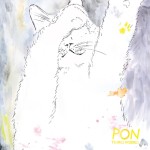

There is a particular difficulty in writing about music made out of grief when the music itself refuses to behave like grief. "Pon", Tujiko Noriko’s sixth album for Editions Mego, is dedicated to Ponpon, the deaf cat she adopted as a kitten and later lost in an accident. One might reasonably expect a record of mourning to arrive wearing black, sit in a corner and make everyone uncomfortable. Noriko has other ideas. Her response is stranger and, ultimately, more convincing: she builds a world in which affection, memory, absurdity, domestic noise, electronic fragility and melodic beauty can continue to coexist.
That distinction matters. "Pon" is not really an album "about" loss. It is an album about what remains active after loss has happened.
Noriko has spent more than two decades cultivating a musical language in which the apparently incompatible are allowed to occupy the same room. Electronics can be delicate rather than clinical; melodies can be sentimental without becoming syrupy; field recordings can function simultaneously as documentation and hallucination. Her work has always possessed an unusual relationship with technology, treating digital manipulation less as a demonstration of technical competence than as another bodily surface to touch, scratch and gently deform. Contemporary writing on "Pon" has picked up precisely on this tension between experimental electronics, dream-pop intimacy, field recordings and a deliberately childlike sense of wonder.
The opening “Only on Love” establishes the terms beautifully. There is no grand entrance, no neon sign announcing "IMPORTANT EMOTIONAL ALBUM HERE". Instead, Noriko lets sounds appear as if they had been lying around the room all along: small electronic events, soft vocal gestures, fragments of rhythm and melody occupying their own little corners. The result is intimate without being claustrophobic. Her voice rarely behaves like a conventional pop singer demanding the foreground. It is more like another object inside the arrangement, sometimes clearly articulated, sometimes half-swallowed by the machinery surrounding it.
That balance becomes increasingly fascinating as "Pon" progresses. “Bosom” and “Boku Wa Obake” introduce rhythmic and vocal oddities without abandoning the album's fundamental warmth. There is something slightly mischievous in the way Noriko inserts unexpected sounds into apparently innocent structures. The music frequently seems to be smiling while concealing a small knife behind its back.
And then there is “Knife of Yonder”, one of the album's major achievements. At almost eleven minutes, it has room to mutate rather than merely develop. It begins in an unusually warm, spacious electronic environment, gradually accumulates pressure and eventually opens into a much larger, almost ecstatic passage before drifting somewhere considerably less predictable. Its trajectory is important because it demonstrates that Noriko's gentleness is not synonymous with passivity. Beneath the pastel surfaces there is a restless composer constantly testing what a song is allowed to become.
This is perhaps where comparisons with Björk, which have followed Noriko since the beginning of her career, become particularly unhelpful. The resemblance is superficial at best. Both artists understand the expressive possibilities of the voice when surrounded by microscopic electronic detail, certainly, but Noriko's universe is considerably more eccentric and less interested in technological spectacle. Her music often feels assembled from things that should not quite fit together: lullaby, glitch, domestic recording, synthetic pulse, half-remembered melody, accidental noise. The seams are not hidden. They are part of the emotional information.
“Kikoeru Pon” brings that approach into especially sharp focus. The track incorporates domestic recordings and the sounds associated with Ponpon, allowing the animal to become present not through some sentimental reconstruction but through the ordinary acoustic traces of a shared life. It is an unusually powerful gesture because it refuses the monumental language of memorialisation. There is no marble statue here. There is a room, a memory, some noise, a voice and the faintly ridiculous fact that love often survives in the least cinematic details.
That sense of domesticity keeps returning. “Birthday” is almost miniature in scale, while “Beachside Cats” sounds like the sort of title that might belong to a harmless children's record until you remember that Tujiko Noriko is constitutionally incapable of leaving harmless things entirely alone. “Pon on TGV” shifts the geography again, transforming travel into another fragment of memory. The album becomes a collection of places and moments rather than a linear narrative.
There is also a fascinating relationship here between language and perception. Noriko does not need every listener to understand every word. The voice is frequently experienced first as texture, rhythm and emotional contour. That becomes especially poignant given Ponpon's deafness: "Pon" repeatedly asks what it means to communicate when conventional assumptions about listening no longer suffice. The record does not turn this into an academic thesis, thankfully. Humans already have enough academic theses. Instead, it lets the question remain embedded in the sounds themselves.
The later sequence becomes more spacious and contemplative, with “Kareki Ni Hana”, “Wakaru Pon” and “Kazeyo Pon” allowing the album's emotional temperature to settle. Some listeners may find the extended atmospheric passages less immediately eventful than the more intricate opening material, but that apparent looseness is part of the record's logic. Memory does not edit itself efficiently. It wanders, repeats, loses the thread, discovers something irrelevant and suddenly finds that the irrelevant thing was the point.
Noriko's production is crucial throughout. The electronics never create an impassable wall between listener and subject. Instead, they behave almost like translucent curtains. Behind them are melody, breath, domestic life and absence. Lawrence English contributes mixing and treatments, while Stephan Mathieu handles mastering, but the finished object remains unmistakably Noriko's: tactile, peculiar, tender and occasionally just odd enough to keep sentimentality at bay.
There is a lovely contradiction at the heart of "Pon". It is an album about something that cannot be recovered, yet it is full of movement. Things scurry, flicker, travel, glitch, sing and disappear. Even the album's shortest pieces feel less like interludes than photographs whose edges have begun to move.
Perhaps that is why "Pon" ultimately feels less like a memorial than a continuation. The cat is gone, but the sounds of having lived together have not vanished. They have been rearranged, transformed and given another life. Noriko does not attempt to make absence beautiful. She simply discovers that beauty was already hiding inside the ordinary things that absence leaves behind.
And that may be the most affecting thing about "Pon": it understands that remembering someone, or some creature, is not necessarily a solemn activity. Sometimes memory is a glitch. Sometimes it is a melody. Sometimes it is a noise from another room. Sometimes it is an inexplicable little electronic squeak that should probably have been removed in the mix but somehow makes the whole thing more alive.
"Pon" leaves those imperfections intact. Humanity, inconveniently, survives there.
That distinction matters. "Pon" is not really an album "about" loss. It is an album about what remains active after loss has happened.
Noriko has spent more than two decades cultivating a musical language in which the apparently incompatible are allowed to occupy the same room. Electronics can be delicate rather than clinical; melodies can be sentimental without becoming syrupy; field recordings can function simultaneously as documentation and hallucination. Her work has always possessed an unusual relationship with technology, treating digital manipulation less as a demonstration of technical competence than as another bodily surface to touch, scratch and gently deform. Contemporary writing on "Pon" has picked up precisely on this tension between experimental electronics, dream-pop intimacy, field recordings and a deliberately childlike sense of wonder.
The opening “Only on Love” establishes the terms beautifully. There is no grand entrance, no neon sign announcing "IMPORTANT EMOTIONAL ALBUM HERE". Instead, Noriko lets sounds appear as if they had been lying around the room all along: small electronic events, soft vocal gestures, fragments of rhythm and melody occupying their own little corners. The result is intimate without being claustrophobic. Her voice rarely behaves like a conventional pop singer demanding the foreground. It is more like another object inside the arrangement, sometimes clearly articulated, sometimes half-swallowed by the machinery surrounding it.
That balance becomes increasingly fascinating as "Pon" progresses. “Bosom” and “Boku Wa Obake” introduce rhythmic and vocal oddities without abandoning the album's fundamental warmth. There is something slightly mischievous in the way Noriko inserts unexpected sounds into apparently innocent structures. The music frequently seems to be smiling while concealing a small knife behind its back.
And then there is “Knife of Yonder”, one of the album's major achievements. At almost eleven minutes, it has room to mutate rather than merely develop. It begins in an unusually warm, spacious electronic environment, gradually accumulates pressure and eventually opens into a much larger, almost ecstatic passage before drifting somewhere considerably less predictable. Its trajectory is important because it demonstrates that Noriko's gentleness is not synonymous with passivity. Beneath the pastel surfaces there is a restless composer constantly testing what a song is allowed to become.
This is perhaps where comparisons with Björk, which have followed Noriko since the beginning of her career, become particularly unhelpful. The resemblance is superficial at best. Both artists understand the expressive possibilities of the voice when surrounded by microscopic electronic detail, certainly, but Noriko's universe is considerably more eccentric and less interested in technological spectacle. Her music often feels assembled from things that should not quite fit together: lullaby, glitch, domestic recording, synthetic pulse, half-remembered melody, accidental noise. The seams are not hidden. They are part of the emotional information.
“Kikoeru Pon” brings that approach into especially sharp focus. The track incorporates domestic recordings and the sounds associated with Ponpon, allowing the animal to become present not through some sentimental reconstruction but through the ordinary acoustic traces of a shared life. It is an unusually powerful gesture because it refuses the monumental language of memorialisation. There is no marble statue here. There is a room, a memory, some noise, a voice and the faintly ridiculous fact that love often survives in the least cinematic details.
That sense of domesticity keeps returning. “Birthday” is almost miniature in scale, while “Beachside Cats” sounds like the sort of title that might belong to a harmless children's record until you remember that Tujiko Noriko is constitutionally incapable of leaving harmless things entirely alone. “Pon on TGV” shifts the geography again, transforming travel into another fragment of memory. The album becomes a collection of places and moments rather than a linear narrative.
There is also a fascinating relationship here between language and perception. Noriko does not need every listener to understand every word. The voice is frequently experienced first as texture, rhythm and emotional contour. That becomes especially poignant given Ponpon's deafness: "Pon" repeatedly asks what it means to communicate when conventional assumptions about listening no longer suffice. The record does not turn this into an academic thesis, thankfully. Humans already have enough academic theses. Instead, it lets the question remain embedded in the sounds themselves.
The later sequence becomes more spacious and contemplative, with “Kareki Ni Hana”, “Wakaru Pon” and “Kazeyo Pon” allowing the album's emotional temperature to settle. Some listeners may find the extended atmospheric passages less immediately eventful than the more intricate opening material, but that apparent looseness is part of the record's logic. Memory does not edit itself efficiently. It wanders, repeats, loses the thread, discovers something irrelevant and suddenly finds that the irrelevant thing was the point.
Noriko's production is crucial throughout. The electronics never create an impassable wall between listener and subject. Instead, they behave almost like translucent curtains. Behind them are melody, breath, domestic life and absence. Lawrence English contributes mixing and treatments, while Stephan Mathieu handles mastering, but the finished object remains unmistakably Noriko's: tactile, peculiar, tender and occasionally just odd enough to keep sentimentality at bay.
There is a lovely contradiction at the heart of "Pon". It is an album about something that cannot be recovered, yet it is full of movement. Things scurry, flicker, travel, glitch, sing and disappear. Even the album's shortest pieces feel less like interludes than photographs whose edges have begun to move.
Perhaps that is why "Pon" ultimately feels less like a memorial than a continuation. The cat is gone, but the sounds of having lived together have not vanished. They have been rearranged, transformed and given another life. Noriko does not attempt to make absence beautiful. She simply discovers that beauty was already hiding inside the ordinary things that absence leaves behind.
And that may be the most affecting thing about "Pon": it understands that remembering someone, or some creature, is not necessarily a solemn activity. Sometimes memory is a glitch. Sometimes it is a melody. Sometimes it is a noise from another room. Sometimes it is an inexplicable little electronic squeak that should probably have been removed in the mix but somehow makes the whole thing more alive.
"Pon" leaves those imperfections intact. Humanity, inconveniently, survives there.
Comments
Stream
Browse by Genre
Industrial Music / Industrial Metal / Aggro Industrial / Electro Metal
Industrial Noise / Power Noise / Harsh Noise
Synth Pop / Electro Pop / Synth-Electronica
Techno / Trance / Goa / Drum'n'Bass / Jungle / Tribal / Trip-Hop
Ambient / Electronica / Ethereal / Dub / Soundscapes / Abstract
Experimental / Avantgarde / Weird & Wired / Glitch / Noise / Field Recording
Dark / Gothic / Wave / New Wave / Dark Wave / Industrial Gothic
New Music / Downtown / Avantgarde Jazz / New Classical / World