
Martin Küchen: Chase the Demons Out
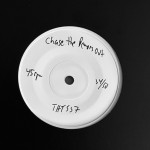
Artist: Martin Küchen (@)
Title: Chase the Demons Out
Format: 7"
Label: Thanatosis Produktion (@)
Rated:

Title: Chase the Demons Out
Format: 7"
Label: Thanatosis Produktion (@)
Rated:
There are records that invite contemplation, records that demand attention, and then there are records that seem to grab you by the collar and ask what exactly you think you are doing with your life. "Chase the Demons Out" belongs rather firmly to the third category.
Martin Küchen has spent much of his career demonstrating that improvisation can accommodate enormous structures, from the expansive work of Angles to his collaborations with figures such as Phil Minton, Mark Sanders, Burkhard Beins and Keith Rowe. His solo work, however, has repeatedly shown another side of that vocabulary: less concerned with architectural grandeur than with what happens when sound is reduced to its most combustible components.
This three-part release is almost aggressively economical. Küchen plays sopranino saxophone, hand drums, cymbals, metal plates and bowls, with no overdubs, recorded in Malmö in October 2024. The equipment list might look like the inventory of an unusually argumentative kitchen, but the result is considerably more purposeful.
The opening “Chase the Demons Out” is an immediate confrontation. The sopranino doesn't so much sing as claw its way through the air, while percussion provides a dense, unstable ground beneath it. Notes splinter, drums thud, metal flashes. There is no attempt to make anger aesthetically convenient. The piece takes its title from a phrase associated with Chinese state propaganda of the 1970s and its rhetoric of eliminating ideological enemies, turning the historical reference into something uncomfortably contemporary. Yet what makes the piece compelling is that Küchen doesn't simply translate political outrage into loudness. He makes it physical. The saxophone seems to struggle against the percussion rather than merely ride above it, creating a strange sensation of resistance happening in real time. Every sound appears to have to earn its existence.
Then comes “Mach kein Krach!”, whose title translates roughly as “don't make noise”. The joke is almost too perfect. The childhood injunction to be quiet becomes, in Küchen's hands, an argument for precisely the opposite. This isn't noise for noise's sake. It is the sound of refusing to disappear politely. The percussion becomes more insistently bodily, while the saxophone acquires an almost wounded insistence, as though someone has finally decided that obedience was a rather poor career choice.
The final “Mit Ach und Krach” extends the idea through a German expression describing something accomplished only with considerable difficulty. It is an appropriate conclusion because this music never gives the impression that resistance is glamorous. There is nothing heroic about these sounds. They sweat. They scrape. They wheeze. They keep going. That distinction matters. Experimental music occasionally falls into the trap of confusing extremity with profundity, as if turning the volume up automatically grants access to political truth. Küchen avoids that trap because the extremity here is structural rather than decorative. The violence of the music is inseparable from its fragility. The sopranino can sound furious one moment and almost unbearably exposed the next. The drums don't establish a reassuring pulse; they create pressure.
The three pieces consequently feel less like separate compositions than different stages of one psychological mechanism: witnessing something intolerable, refusing silence, then discovering that resistance itself is exhausting. It is not exactly a cheerful progression. Humanity, in its infinite wisdom, has once again provided Küchen with plenty of source material. There is also something refreshingly old-fashioned about the record's politics. Not simplistic, but direct. At a time when protest is routinely converted into branding, content and algorithm-friendly outrage, Küchen offers three instruments and roughly sixteen minutes of sound that refuses to package its anger into a slogan. The music doesn't tell us what to think so much as recreate the sensation of being unable to accept what we are seeing.
This is particularly evident in the relationship between the title track and the closing piece. "Chase the Demons Out" looks outward, toward authoritarianism, violence and collective fear. "Mit Ach und Krach" turns the same energy inward, toward the sheer difficulty of doing anything about it. Between them stands "Mach kein Krach!", the beautifully absurd parental command that becomes a miniature manifesto: don't be quiet merely because quiet is more convenient for everybody else. And then there is the physicality of the recording. Because there are no overdubs, everything happens within the same precarious moment. The metallic surfaces, drums and saxophone occupy the same breathing space. You can almost hear Küchen negotiating the limits of his own body. This isn't an edited representation of fury; it is fury having to operate through lungs, hands, skin, metal and time.
That makes "Chase the Demons Out" a surprisingly intimate record beneath its abrasive exterior. Its anger is not theatrical. It feels closer to moral fatigue, the exhaustion that comes from repeatedly encountering reasons to shout and discovering that shouting is still one of the few things available to you. Thanatosis, fittingly, has issued it as a very limited 7-inch edition of only 50 numbered copies, alongside the digital release. A tiny physical object containing a disproportionate amount of fury. Human beings do love putting enormous emotional problems into small cardboard sleeves.
Küchen's answer is not to defeat the demons, at least not musically. He makes them audible, then refuses to give them the final word. The record ends not in resolution but in effort, the sound of someone continuing to push against whatever is pressing back.
Sometimes resistance is majestic. Sometimes it is bloody, clumsy and noisy. This one chooses noise. And, for once, that's probably the point.
Martin Küchen has spent much of his career demonstrating that improvisation can accommodate enormous structures, from the expansive work of Angles to his collaborations with figures such as Phil Minton, Mark Sanders, Burkhard Beins and Keith Rowe. His solo work, however, has repeatedly shown another side of that vocabulary: less concerned with architectural grandeur than with what happens when sound is reduced to its most combustible components.
This three-part release is almost aggressively economical. Küchen plays sopranino saxophone, hand drums, cymbals, metal plates and bowls, with no overdubs, recorded in Malmö in October 2024. The equipment list might look like the inventory of an unusually argumentative kitchen, but the result is considerably more purposeful.
The opening “Chase the Demons Out” is an immediate confrontation. The sopranino doesn't so much sing as claw its way through the air, while percussion provides a dense, unstable ground beneath it. Notes splinter, drums thud, metal flashes. There is no attempt to make anger aesthetically convenient. The piece takes its title from a phrase associated with Chinese state propaganda of the 1970s and its rhetoric of eliminating ideological enemies, turning the historical reference into something uncomfortably contemporary. Yet what makes the piece compelling is that Küchen doesn't simply translate political outrage into loudness. He makes it physical. The saxophone seems to struggle against the percussion rather than merely ride above it, creating a strange sensation of resistance happening in real time. Every sound appears to have to earn its existence.
Then comes “Mach kein Krach!”, whose title translates roughly as “don't make noise”. The joke is almost too perfect. The childhood injunction to be quiet becomes, in Küchen's hands, an argument for precisely the opposite. This isn't noise for noise's sake. It is the sound of refusing to disappear politely. The percussion becomes more insistently bodily, while the saxophone acquires an almost wounded insistence, as though someone has finally decided that obedience was a rather poor career choice.
The final “Mit Ach und Krach” extends the idea through a German expression describing something accomplished only with considerable difficulty. It is an appropriate conclusion because this music never gives the impression that resistance is glamorous. There is nothing heroic about these sounds. They sweat. They scrape. They wheeze. They keep going. That distinction matters. Experimental music occasionally falls into the trap of confusing extremity with profundity, as if turning the volume up automatically grants access to political truth. Küchen avoids that trap because the extremity here is structural rather than decorative. The violence of the music is inseparable from its fragility. The sopranino can sound furious one moment and almost unbearably exposed the next. The drums don't establish a reassuring pulse; they create pressure.
The three pieces consequently feel less like separate compositions than different stages of one psychological mechanism: witnessing something intolerable, refusing silence, then discovering that resistance itself is exhausting. It is not exactly a cheerful progression. Humanity, in its infinite wisdom, has once again provided Küchen with plenty of source material. There is also something refreshingly old-fashioned about the record's politics. Not simplistic, but direct. At a time when protest is routinely converted into branding, content and algorithm-friendly outrage, Küchen offers three instruments and roughly sixteen minutes of sound that refuses to package its anger into a slogan. The music doesn't tell us what to think so much as recreate the sensation of being unable to accept what we are seeing.
This is particularly evident in the relationship between the title track and the closing piece. "Chase the Demons Out" looks outward, toward authoritarianism, violence and collective fear. "Mit Ach und Krach" turns the same energy inward, toward the sheer difficulty of doing anything about it. Between them stands "Mach kein Krach!", the beautifully absurd parental command that becomes a miniature manifesto: don't be quiet merely because quiet is more convenient for everybody else. And then there is the physicality of the recording. Because there are no overdubs, everything happens within the same precarious moment. The metallic surfaces, drums and saxophone occupy the same breathing space. You can almost hear Küchen negotiating the limits of his own body. This isn't an edited representation of fury; it is fury having to operate through lungs, hands, skin, metal and time.
That makes "Chase the Demons Out" a surprisingly intimate record beneath its abrasive exterior. Its anger is not theatrical. It feels closer to moral fatigue, the exhaustion that comes from repeatedly encountering reasons to shout and discovering that shouting is still one of the few things available to you. Thanatosis, fittingly, has issued it as a very limited 7-inch edition of only 50 numbered copies, alongside the digital release. A tiny physical object containing a disproportionate amount of fury. Human beings do love putting enormous emotional problems into small cardboard sleeves.
Küchen's answer is not to defeat the demons, at least not musically. He makes them audible, then refuses to give them the final word. The record ends not in resolution but in effort, the sound of someone continuing to push against whatever is pressing back.
Sometimes resistance is majestic. Sometimes it is bloody, clumsy and noisy. This one chooses noise. And, for once, that's probably the point.
Comments
Stream
Browse by Genre
Industrial Music / Industrial Metal / Aggro Industrial / Electro Metal
Industrial Noise / Power Noise / Harsh Noise
Synth Pop / Electro Pop / Synth-Electronica
Techno / Trance / Goa / Drum'n'Bass / Jungle / Tribal / Trip-Hop
Ambient / Electronica / Ethereal / Dub / Soundscapes / Abstract
Experimental / Avantgarde / Weird & Wired / Glitch / Noise / Field Recording
Dark / Gothic / Wave / New Wave / Dark Wave / Industrial Gothic
New Music / Downtown / Avantgarde Jazz / New Classical / World