
Saturday, October 10, 2026
أحمد [Ahmed]: Play Monk
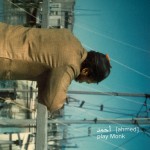

There is something almost impudent about choosing Thelonious Monk as the next subject of a project that has spent years excavating the music of Ahmed Abdul-Malik. Monk's compositions have already been played, dissected, modernised, deconstructed, reconstructed, academicised, sanctified and probably discussed at length by people wearing particularly serious-looking glasses. The repertoire is so thoroughly canonised that approaching it without either reverence or irony would seem almost impossible. Ahmed wisely chooses neither.
The connection is nevertheless far from arbitrary. Ahmed Abdul-Malik was a member of Monk's late-1950s quartets, and the two musicians shared an interest in treating musical time as something considerably less obedient than the straight line Western notation tends to suggest. For Ahmed, this becomes more than a historical footnote. It is a passageway. After six albums devoted to Abdul-Malik's compositions, the quartet of Pat Thomas, Joel Grip, Antonin Gerbal and Seymour Wright turns toward Monk not to preserve his music, but to see how much further its peculiar logic can travel. The answer, over roughly two hours, is: quite a long way.
The opening "Bye-Ya / Epistrophy" initially gives the listener something resembling a handrail. There is rhythm, there is melody, there is the unmistakable crooked architecture of Monk. Then the quartet begins pulling individual elements apart. Thomas's piano becomes increasingly physical, Grip's bass both anchors and destabilises the proceedings, Gerbal turns rhythm into an almost muscular continuum, while Wright's alto saxophone repeatedly approaches the melodic material only to fracture it, stretch it or abandon it altogether. The tune is not forgotten. It is subjected to pressure.
That distinction is crucial. "Play Monk" is not really an album of covers. It is closer to an archaeological experiment in which the quartet takes Monk's compositions apart to discover what kind of machinery is hidden inside them. A melody becomes a fragment; a fragment becomes a rhythm; the rhythm becomes an obsession; the obsession becomes texture. Then, occasionally, some recognisable feature reappears like an old acquaintance who has spent the intervening years behaving strangely.
"Friday Thirteenth" is a particularly revealing example. Its characteristic melodic contour remains somewhere underneath the surface, but repetition gradually changes its psychological function. What begins as a theme becomes a kind of gravitational field. Thomas keeps returning to the material while Wright approaches it from increasingly oblique angles, and Grip and Gerbal generate a restless physicality underneath. The effect is hypnotic without becoming comfortable. This is music that can repeat without remaining still, which is rather more difficult than it sounds.
Then comes "Round Midnight", and here the quartet performs perhaps its most audacious act of transformation. One of the most familiar compositions in the jazz repertoire is stretched across more than twenty-five minutes, but duration is only part of the story. The famous nocturnal atmosphere is not simply amplified. It is dissolved. What remains is a darker investigation of space, touch and collective timing, with the quartet gradually reducing the composition to unstable particles. Monk's shadow remains visible, but the portrait has been left out in the rain.
The second disc pushes the process even further. "Epistrophy" acts almost like a compressed laboratory experiment before "Evidence" expands the same principle into nearly half an hour. Here the quartet's collective method becomes especially apparent. There is remarkably little sense of four musicians waiting for their turn. Instead, the music behaves as a single organism with four nervous systems, constantly adjusting its balance.
That collective quality is one of Ahmed's most interesting characteristics. These musicians are not simply impressive improvisers placed in the same room. Their playing often seems to operate according to a shared physical intuition. Repetition, density and minute alterations become structural tools. A gesture may be repeated enough times to lose its original identity, only to acquire another one through persistence. The music consequently feels less like a sequence of solos than like an argument conducted by four people who have forgotten that arguments are supposed to end.
And yet there is humour here, too. Monk's music has always possessed an impish relationship with seriousness, and Ahmed retain something of that crooked grin. The quartet can become ferocious, but never entirely solemn. Even at its densest, the music contains an awareness that absurdity is one of the most useful weapons available to experimental art. You can dismantle a canon without pretending that you have transcended it.
This is particularly evident in the relationship between Pat Thomas and Seymour Wright. Thomas has a wonderfully percussive approach to the piano, turning individual notes and clusters into physical objects rather than merely harmonic information. Wright, meanwhile, seems perfectly happy to treat the alto saxophone as both melodic instrument and malfunctioning machine. Their exchanges are not conventional conversations. They resemble two people repeatedly interrupting one another until, somehow, a third language emerges.
Joel Grip and Antonin Gerbal provide the necessary instability beneath them. Grip's bass is rarely content simply to mark harmonic territory, while Gerbal's drumming supplies propulsion without behaving like conventional accompaniment. Their rhythm can tighten, accelerate, fragment or become almost ritualistic. The result is music that often seems to be moving extremely quickly while remaining trapped inside a very small temporal space.
"Evidence", appropriately, becomes one of the album's most extreme propositions. The original composition is treated not as something that needs to be faithfully represented but as material capable of surviving radical surgery. The quartet finds a small number of gestures and keeps worrying them until they become something else. There is aggression here, but also discipline. Chaos is permitted to enter the room, provided it fills in the paperwork first.
The closing "Oska T" continues this temporal distortion, leaving the album suspended between recognition and abstraction. By this stage, the listener has learned the peculiar grammar of "Play Monk": don't expect development in the conventional sense; expect mutation. Don't wait for the theme to return unchanged; notice what has happened to it while you weren't looking.
There is a larger idea behind all this. Ahmed have spent years looking backward in order to move forward. Their project with Abdul-Malik was already an attempt to recover a neglected modernist possibility from the past and activate it in the present. Turning toward Monk might initially seem like a move in the opposite direction, toward a composer whose place in jazz history is already beyond dispute. But the quartet's real interest is not historical correction. It is historical friction.
Monk becomes a set of tools rather than a monument. That is why "Play Monk" works. The album doesn't ask whether Monk's compositions can still sound radical in 2026. It asks a more interesting question: what happens when musicians who have spent years developing a language of repetition, rupture and collective improvisation put that language inside Monk's already unstable structures?
The answer is neither tribute nor desecration. It is continuation. The past is taken apart, shaken vigorously, and returned with several important pieces apparently missing. Human civilisation has survived worse.
The connection is nevertheless far from arbitrary. Ahmed Abdul-Malik was a member of Monk's late-1950s quartets, and the two musicians shared an interest in treating musical time as something considerably less obedient than the straight line Western notation tends to suggest. For Ahmed, this becomes more than a historical footnote. It is a passageway. After six albums devoted to Abdul-Malik's compositions, the quartet of Pat Thomas, Joel Grip, Antonin Gerbal and Seymour Wright turns toward Monk not to preserve his music, but to see how much further its peculiar logic can travel. The answer, over roughly two hours, is: quite a long way.
The opening "Bye-Ya / Epistrophy" initially gives the listener something resembling a handrail. There is rhythm, there is melody, there is the unmistakable crooked architecture of Monk. Then the quartet begins pulling individual elements apart. Thomas's piano becomes increasingly physical, Grip's bass both anchors and destabilises the proceedings, Gerbal turns rhythm into an almost muscular continuum, while Wright's alto saxophone repeatedly approaches the melodic material only to fracture it, stretch it or abandon it altogether. The tune is not forgotten. It is subjected to pressure.
That distinction is crucial. "Play Monk" is not really an album of covers. It is closer to an archaeological experiment in which the quartet takes Monk's compositions apart to discover what kind of machinery is hidden inside them. A melody becomes a fragment; a fragment becomes a rhythm; the rhythm becomes an obsession; the obsession becomes texture. Then, occasionally, some recognisable feature reappears like an old acquaintance who has spent the intervening years behaving strangely.
"Friday Thirteenth" is a particularly revealing example. Its characteristic melodic contour remains somewhere underneath the surface, but repetition gradually changes its psychological function. What begins as a theme becomes a kind of gravitational field. Thomas keeps returning to the material while Wright approaches it from increasingly oblique angles, and Grip and Gerbal generate a restless physicality underneath. The effect is hypnotic without becoming comfortable. This is music that can repeat without remaining still, which is rather more difficult than it sounds.
Then comes "Round Midnight", and here the quartet performs perhaps its most audacious act of transformation. One of the most familiar compositions in the jazz repertoire is stretched across more than twenty-five minutes, but duration is only part of the story. The famous nocturnal atmosphere is not simply amplified. It is dissolved. What remains is a darker investigation of space, touch and collective timing, with the quartet gradually reducing the composition to unstable particles. Monk's shadow remains visible, but the portrait has been left out in the rain.
The second disc pushes the process even further. "Epistrophy" acts almost like a compressed laboratory experiment before "Evidence" expands the same principle into nearly half an hour. Here the quartet's collective method becomes especially apparent. There is remarkably little sense of four musicians waiting for their turn. Instead, the music behaves as a single organism with four nervous systems, constantly adjusting its balance.
That collective quality is one of Ahmed's most interesting characteristics. These musicians are not simply impressive improvisers placed in the same room. Their playing often seems to operate according to a shared physical intuition. Repetition, density and minute alterations become structural tools. A gesture may be repeated enough times to lose its original identity, only to acquire another one through persistence. The music consequently feels less like a sequence of solos than like an argument conducted by four people who have forgotten that arguments are supposed to end.
And yet there is humour here, too. Monk's music has always possessed an impish relationship with seriousness, and Ahmed retain something of that crooked grin. The quartet can become ferocious, but never entirely solemn. Even at its densest, the music contains an awareness that absurdity is one of the most useful weapons available to experimental art. You can dismantle a canon without pretending that you have transcended it.
This is particularly evident in the relationship between Pat Thomas and Seymour Wright. Thomas has a wonderfully percussive approach to the piano, turning individual notes and clusters into physical objects rather than merely harmonic information. Wright, meanwhile, seems perfectly happy to treat the alto saxophone as both melodic instrument and malfunctioning machine. Their exchanges are not conventional conversations. They resemble two people repeatedly interrupting one another until, somehow, a third language emerges.
Joel Grip and Antonin Gerbal provide the necessary instability beneath them. Grip's bass is rarely content simply to mark harmonic territory, while Gerbal's drumming supplies propulsion without behaving like conventional accompaniment. Their rhythm can tighten, accelerate, fragment or become almost ritualistic. The result is music that often seems to be moving extremely quickly while remaining trapped inside a very small temporal space.
"Evidence", appropriately, becomes one of the album's most extreme propositions. The original composition is treated not as something that needs to be faithfully represented but as material capable of surviving radical surgery. The quartet finds a small number of gestures and keeps worrying them until they become something else. There is aggression here, but also discipline. Chaos is permitted to enter the room, provided it fills in the paperwork first.
The closing "Oska T" continues this temporal distortion, leaving the album suspended between recognition and abstraction. By this stage, the listener has learned the peculiar grammar of "Play Monk": don't expect development in the conventional sense; expect mutation. Don't wait for the theme to return unchanged; notice what has happened to it while you weren't looking.
There is a larger idea behind all this. Ahmed have spent years looking backward in order to move forward. Their project with Abdul-Malik was already an attempt to recover a neglected modernist possibility from the past and activate it in the present. Turning toward Monk might initially seem like a move in the opposite direction, toward a composer whose place in jazz history is already beyond dispute. But the quartet's real interest is not historical correction. It is historical friction.
Monk becomes a set of tools rather than a monument. That is why "Play Monk" works. The album doesn't ask whether Monk's compositions can still sound radical in 2026. It asks a more interesting question: what happens when musicians who have spent years developing a language of repetition, rupture and collective improvisation put that language inside Monk's already unstable structures?
The answer is neither tribute nor desecration. It is continuation. The past is taken apart, shaken vigorously, and returned with several important pieces apparently missing. Human civilisation has survived worse.
Comments
Stream
Browse by Genre
Industrial Music / Industrial Metal / Aggro Industrial / Electro Metal
Industrial Noise / Power Noise / Harsh Noise
Synth Pop / Electro Pop / Synth-Electronica
Techno / Trance / Goa / Drum'n'Bass / Jungle / Tribal / Trip-Hop
Ambient / Electronica / Ethereal / Dub / Soundscapes / Abstract
Experimental / Avantgarde / Weird & Wired / Glitch / Noise / Field Recording
Dark / Gothic / Wave / New Wave / Dark Wave / Industrial Gothic
New Music / Downtown / Avantgarde Jazz / New Classical / World