
Thursday, August 27, 2026
Tim Ra & Jens Strüver: Kosmische Kuriere
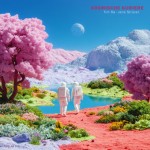


There are two possible ways of making a record about the end of civilisation. One is to stare into the abyss until it starts looking marketable. The other is to put on a spacesuit, leave the planet for a while and see whether humanity looks any better from a sufficient distance. "Kosmische Kuriere" chooses the second option, although it sensibly leaves the spacesuit at home.
Tim Ra and Jens Strüver have constructed an album that treats outer space less as an escape route than as a change of perspective. The premise is unapologetically utopian: in a world increasingly organised around borders, hostility, technological anxiety and political exhaustion, the cosmic becomes a metaphor for a humanity capable of exceeding its own habits. It is an ambitious idea, perhaps even an unfashionably sincere one. Fortunately, the music is considerably more subtle than the manifesto might suggest.
The Berlin connection matters. Strüver's long engagement with Krautrock, minimal electronics, experimental archives and cinematic sound gives the project a strong historical memory, while Tim Ra's work as a producer, rapper and multimedia artist brings together synthesizers, sequencers, science fiction and AI-assisted processes. Their meeting point is not retro-futurism for its own sake, but a kind of speculative musical archaeology: familiar twentieth-century sounds are taken out of their original habitats and allowed to float somewhere else.
"Venus Matinee" is an elegant place to begin. Its soft shimmer and carefully arranged melodic details carry an unmistakable cinematic flavour, with the kind of sophisticated orchestral pop atmosphere that makes you expect someone in a perfectly tailored suit to walk into the room carrying a martini. Except the room is apparently Venus, so the dress code is presumably complicated. The track establishes one of the album's most appealing qualities: its futurism is not metallic or dystopian. It is warm, sensual and surprisingly human.
Then "Pulsar" introduces a more explicit rhythmic presence. The track seems to orbit between lounge jazz, exotica and electronic pulse, gradually becoming more expansive without ever needing to resort to brute-force propulsion. It is music that understands that a groove can suggest movement without necessarily requiring a kick drum to shout instructions at everyone.
That relaxed quality is central to "Kosmische Kuriere". The album often allows rhythm to become implied rather than declared. Structures breathe. Instruments appear almost weightlessly. Melodic fragments drift into one another instead of behaving like obedient pop hooks. The effect is cinematic, but not in the usual sense of providing a soundtrack to something that already exists. These pieces seem to construct their own imaginary films while playing.
"Labyrinth der Sterne" is one of the album's most concise examples. Barely two minutes long, it behaves more like a passage between dimensions than a conventional composition. "Planet außer Kurs", meanwhile, introduces a gentle instability into the journey. Its playful sense of disorientation is important because the album's utopianism could otherwise become dangerously well-behaved. Fortunately, the Cosmic Couriers understand that paradise without a little eccentricity would probably be unbearably dull.
"Saturn Soiree" then settles into a graceful cosmic lounge. The title is almost too perfect, but the music earns it. There is elegance here without stiffness, nostalgia without a desperate attempt to recreate a supposedly better past. It feels like an imaginary 1960s vision of the future that has somehow survived long enough to discover synthesizers, minimal techno and the internet.
The second half becomes more contemplative. "Darkstar" and "Nebula" move into darker territory, where choral textures and orchestral associations create a much larger sense of scale. The influence of classical and cinematic science fiction traditions can be felt without turning the pieces into exercises in quotation. There is a faint memory of grand cosmic narratives, of humanity standing beneath an enormous sky and suddenly realising that its political arguments are rather small.
"Nebula", at nearly nine minutes, is the album's great expansion. Rather than rushing toward some spectacular interstellar climax, it allows atmosphere to accumulate. Layers appear gradually, producing a sense of suspended motion. The music seems to be travelling without having a destination. That paradox suits the album perfectly: outer space is not presented as somewhere to conquer, but somewhere in which our usual categories become less convincing.
This is also where the collaboration's political dimension becomes most interesting. The idea of a "world without borders" could easily become the sort of grand statement that looks impressive on a gallery wall and collapses when someone asks what it actually means. Here, however, the music does some of the thinking itself. The tracks refuse rigid boundaries between jazz, classical music, exotica, electronic composition and cinematic sound. Their hybridity is not decoration. It is the argument.
Different musical histories are allowed to coexist without one being required to dominate the others.
That makes Strüver's archival sensibility particularly useful. His work with experimental traditions and overlooked musical histories has given him an ear for connections that aren't necessarily obvious. Ra brings a different kind of synthesis, one in which hip-hop, electronic production, multimedia art and artificial intelligence become part of the same imaginative vocabulary. Neither approach is treated as a novelty. The past is not museum material, and the future is not merely a collection of shiny gadgets. Which brings us to the album's relationship with AI.
In lesser hands, artificial intelligence in a utopian cosmic project could produce something painfully obvious: a machine-made vision of a machine-shaped paradise. "Kosmische Kuriere" instead uses technology as one ingredient in a broader human process. The result is not about surrendering imagination to algorithms, but about finding ways to use contemporary tools while retaining curiosity, taste and emotional intention. That distinction matters.
"Wasser des Lebens", the closing track, makes the point quietly. Its weightless sweetness provides no triumphant finale, no orchestral declaration that humanity has finally learned its lesson. It simply settles into a gentler emotional space. After all the planets, stars, nebulae and cosmic machinery, the album ends with something remarkably terrestrial: tenderness. And perhaps that is the real destination.
Despite all its talk of the cosmos, "Kosmische Kuriere" is ultimately concerned with earthly behaviour. It looks outward in order to reconsider how we inhabit the place we already have. The music's greatest achievement is therefore not its ability to evoke space, but its refusal to use space as an excuse for abandoning humanity.
There is something almost quaint about believing that empathy and love might still constitute a meaningful political proposition. In 2026, such optimism can seem considerably more radical than another dystopian soundtrack. We have accumulated enough cultural products predicting our extinction to fill several galaxies. What is rarer is an artistic work willing to imagine what might come after the catastrophe without pretending that catastrophe is inevitable.
"Kosmische Kuriere" does exactly that. It is not naïve. There are shadows here, moments of melancholy and uncertainty, and a persistent awareness that the old structures are failing. But the album refuses to turn collapse into spectacle. Instead, it proposes transformation: loosen the borders, scramble the categories, listen differently, and perhaps discover that the strange planet we were looking for was the one underneath our feet all along.
The Cosmic Couriers don't bring back a message from another civilisation. They bring back a slightly altered perspective on ours. And, considering the state of the delivery service down here, that may already count as interstellar progress.
Tim Ra and Jens Strüver have constructed an album that treats outer space less as an escape route than as a change of perspective. The premise is unapologetically utopian: in a world increasingly organised around borders, hostility, technological anxiety and political exhaustion, the cosmic becomes a metaphor for a humanity capable of exceeding its own habits. It is an ambitious idea, perhaps even an unfashionably sincere one. Fortunately, the music is considerably more subtle than the manifesto might suggest.
The Berlin connection matters. Strüver's long engagement with Krautrock, minimal electronics, experimental archives and cinematic sound gives the project a strong historical memory, while Tim Ra's work as a producer, rapper and multimedia artist brings together synthesizers, sequencers, science fiction and AI-assisted processes. Their meeting point is not retro-futurism for its own sake, but a kind of speculative musical archaeology: familiar twentieth-century sounds are taken out of their original habitats and allowed to float somewhere else.
"Venus Matinee" is an elegant place to begin. Its soft shimmer and carefully arranged melodic details carry an unmistakable cinematic flavour, with the kind of sophisticated orchestral pop atmosphere that makes you expect someone in a perfectly tailored suit to walk into the room carrying a martini. Except the room is apparently Venus, so the dress code is presumably complicated. The track establishes one of the album's most appealing qualities: its futurism is not metallic or dystopian. It is warm, sensual and surprisingly human.
Then "Pulsar" introduces a more explicit rhythmic presence. The track seems to orbit between lounge jazz, exotica and electronic pulse, gradually becoming more expansive without ever needing to resort to brute-force propulsion. It is music that understands that a groove can suggest movement without necessarily requiring a kick drum to shout instructions at everyone.
That relaxed quality is central to "Kosmische Kuriere". The album often allows rhythm to become implied rather than declared. Structures breathe. Instruments appear almost weightlessly. Melodic fragments drift into one another instead of behaving like obedient pop hooks. The effect is cinematic, but not in the usual sense of providing a soundtrack to something that already exists. These pieces seem to construct their own imaginary films while playing.
"Labyrinth der Sterne" is one of the album's most concise examples. Barely two minutes long, it behaves more like a passage between dimensions than a conventional composition. "Planet außer Kurs", meanwhile, introduces a gentle instability into the journey. Its playful sense of disorientation is important because the album's utopianism could otherwise become dangerously well-behaved. Fortunately, the Cosmic Couriers understand that paradise without a little eccentricity would probably be unbearably dull.
"Saturn Soiree" then settles into a graceful cosmic lounge. The title is almost too perfect, but the music earns it. There is elegance here without stiffness, nostalgia without a desperate attempt to recreate a supposedly better past. It feels like an imaginary 1960s vision of the future that has somehow survived long enough to discover synthesizers, minimal techno and the internet.
The second half becomes more contemplative. "Darkstar" and "Nebula" move into darker territory, where choral textures and orchestral associations create a much larger sense of scale. The influence of classical and cinematic science fiction traditions can be felt without turning the pieces into exercises in quotation. There is a faint memory of grand cosmic narratives, of humanity standing beneath an enormous sky and suddenly realising that its political arguments are rather small.
"Nebula", at nearly nine minutes, is the album's great expansion. Rather than rushing toward some spectacular interstellar climax, it allows atmosphere to accumulate. Layers appear gradually, producing a sense of suspended motion. The music seems to be travelling without having a destination. That paradox suits the album perfectly: outer space is not presented as somewhere to conquer, but somewhere in which our usual categories become less convincing.
This is also where the collaboration's political dimension becomes most interesting. The idea of a "world without borders" could easily become the sort of grand statement that looks impressive on a gallery wall and collapses when someone asks what it actually means. Here, however, the music does some of the thinking itself. The tracks refuse rigid boundaries between jazz, classical music, exotica, electronic composition and cinematic sound. Their hybridity is not decoration. It is the argument.
Different musical histories are allowed to coexist without one being required to dominate the others.
That makes Strüver's archival sensibility particularly useful. His work with experimental traditions and overlooked musical histories has given him an ear for connections that aren't necessarily obvious. Ra brings a different kind of synthesis, one in which hip-hop, electronic production, multimedia art and artificial intelligence become part of the same imaginative vocabulary. Neither approach is treated as a novelty. The past is not museum material, and the future is not merely a collection of shiny gadgets. Which brings us to the album's relationship with AI.
In lesser hands, artificial intelligence in a utopian cosmic project could produce something painfully obvious: a machine-made vision of a machine-shaped paradise. "Kosmische Kuriere" instead uses technology as one ingredient in a broader human process. The result is not about surrendering imagination to algorithms, but about finding ways to use contemporary tools while retaining curiosity, taste and emotional intention. That distinction matters.
"Wasser des Lebens", the closing track, makes the point quietly. Its weightless sweetness provides no triumphant finale, no orchestral declaration that humanity has finally learned its lesson. It simply settles into a gentler emotional space. After all the planets, stars, nebulae and cosmic machinery, the album ends with something remarkably terrestrial: tenderness. And perhaps that is the real destination.
Despite all its talk of the cosmos, "Kosmische Kuriere" is ultimately concerned with earthly behaviour. It looks outward in order to reconsider how we inhabit the place we already have. The music's greatest achievement is therefore not its ability to evoke space, but its refusal to use space as an excuse for abandoning humanity.
There is something almost quaint about believing that empathy and love might still constitute a meaningful political proposition. In 2026, such optimism can seem considerably more radical than another dystopian soundtrack. We have accumulated enough cultural products predicting our extinction to fill several galaxies. What is rarer is an artistic work willing to imagine what might come after the catastrophe without pretending that catastrophe is inevitable.
"Kosmische Kuriere" does exactly that. It is not naïve. There are shadows here, moments of melancholy and uncertainty, and a persistent awareness that the old structures are failing. But the album refuses to turn collapse into spectacle. Instead, it proposes transformation: loosen the borders, scramble the categories, listen differently, and perhaps discover that the strange planet we were looking for was the one underneath our feet all along.
The Cosmic Couriers don't bring back a message from another civilisation. They bring back a slightly altered perspective on ours. And, considering the state of the delivery service down here, that may already count as interstellar progress.
Comments
Stream
Browse by Genre
Industrial Music / Industrial Metal / Aggro Industrial / Electro Metal
Industrial Noise / Power Noise / Harsh Noise
Synth Pop / Electro Pop / Synth-Electronica
Techno / Trance / Goa / Drum'n'Bass / Jungle / Tribal / Trip-Hop
Ambient / Electronica / Ethereal / Dub / Soundscapes / Abstract
Experimental / Avantgarde / Weird & Wired / Glitch / Noise / Field Recording
Dark / Gothic / Wave / New Wave / Dark Wave / Industrial Gothic
New Music / Downtown / Avantgarde Jazz / New Classical / World