
Etienne Nillesen: Twee
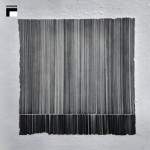
Artist: Etienne Nillesen
Title: Twee
Format: Download Only (MP3 + Lossless)
Label: SOFA Music (@)
Rated:

Title: Twee
Format: Download Only (MP3 + Lossless)
Label: SOFA Music (@)
Rated:
A snare drum is usually asked to do one of two things: keep time or make a loud, emphatic noise while somebody else gets to have the melody. Etienne Nillesen has spent years politely refusing both assignments. With "TWEE", he takes two snare drums, tunes them in close relation, and spends thirty-five minutes discovering how much musical information can be extracted from an instrument that most of us have been trained to recognise by its characteristic little burst of military punctuation.
The title is a useful place to start, if only because "twee" is an almost comically inappropriate word for what follows. In English, it describes something excessively cute or precious, the sort of adjective that might be applied to a miniature teacup, a knitted animal or a song that has been aggressively instructed to have feelings. There is very little of that here. The title's mismatch may be deliberate, accidental or simply Nillesen having a sense of humour. In any case, the music quickly settles the matter: this is not twee, unless one has developed a remarkably liberal definition of cuteness.
Nillesen is a Dutch percussionist, composer and sound artist based in Cologne whose career has moved progressively away from the conventional drum kit. He began playing drums as a child, studied jazz and subsequently became increasingly fascinated by the possibilities contained within a much smaller setup. The reduction was not an aesthetic stunt but part of a long process of finding out what he actually needed to say. Eventually the snare became the central instrument of his practice, and his work now occupies an unusually fertile point between improvisation, contemporary composition and sound art. He has collaborated with musicians including Rudi Mahall, Simon Nabatov, Philip Zoubek, Elisabeth Coudoux, Kaja Draksler and many others, while also developing an extensive solo practice around the extended snare drum.
His previous "en", released by Sofa Music in 2024, already demonstrated how far this investigation could go with a single snare. "TWEE" adds a second drum, and that apparently modest numerical increase changes the physics of the situation considerably. The two instruments are tuned close to one another, producing beating patterns and shifting relationships between their partials. Nillesen does not simply strike them and wait for interesting things to happen. He applies sustained pressure, moves in circular patterns across different parts of the drumheads and adjusts the contact points so gradually that the listener begins to hear pitch where there ought, according to the percussion department of common sense, to be nothing but membrane and metal.
This is where "TWEE" becomes more than an extended demonstration of unusual technique. The sound does not proceed through a succession of discrete events. It behaves more like a continuously changing condition. A tone appears, another begins to interfere with it, a pulse emerges from their disagreement, and then the whole relationship shifts. What initially seems static reveals itself to be packed with microscopic activity. The closer one listens, the less “minimal” the piece becomes.
That paradox is central to Nillesen's music. The means are extremely limited, but the perceptual consequences are not. The instrument remains recognisable throughout, yet its familiar identity gradually becomes irrelevant. You can still hear the snare drum, but you stop hearing it as “a snare drum”. It becomes a resonating surface with pitch, grain, friction, sympathetic vibration and a surprisingly elaborate internal weather system.
The recording venue matters. "TWEE" was recorded at the Deutschlandfunk Kammermusiksaal in Cologne, the same chamber-music hall used for "en", and the acoustics are not merely a neutral container around the performance. They participate in it. The resonance of the room allows small differences between the two drums to become legible, while the sustained tones expose the relationship between direct sound and reflected sound. This is music in which the room has almost as much patience as the musician.
Nillesen's technique is physical, but the result is strangely disembodied. One can imagine the movements required to create these sounds, yet the recorded music encourages a different kind of attention, because the gestures themselves have disappeared. What remains is friction transformed into tone, pressure transformed into duration, and tiny movements transformed into a shifting field of pitch. It is one of those cases in which knowing how the sound is produced makes the listening more fascinating rather than less mysterious.
There is also a quiet rhythmic dimension here, although calling "TWEE" rhythmic music would be misleading. The beating between closely tuned drums generates pulses that appear without being explicitly played. Their frequency can change as the intonation changes, so rhythm is not imposed upon the sound from outside. It grows out of the acoustic relationship between the two instruments. Nillesen effectively discovers rhythm inside pitch.
This connects "TWEE" to a much older experimental tradition in which musicians stop accepting the conventional distinction between sound and musical event. But Nillesen avoids the solemnity that can sometimes accompany such investigations. He is not trying to convince us that a drum is secretly a philosophical object. He is simply listening to it closely enough to discover that it has been hiding things in plain sight.
That sense of discovery is perhaps the strongest aspect of the piece. There are no obvious climaxes to reward impatient listeners, no sudden changes inserted to reassure us that something is happening. Instead, the music asks whether our attention can become sensitive enough to register change at a scale normally dismissed as insignificant. A slight alteration in pressure can modify the overtone balance. A different position on the membrane can change the apparent pitch. Two nearly related frequencies can produce a third sensation, a wavering that is neither exactly one sound nor the other.
The effect can be hypnotic, but “hypnotic” is only part of the story. There are moments when the resonance becomes abrasive, almost metallic, and the apparently serene surface develops a harder edge. Other passages produce sounds that seem closer to voices, electronic oscillations or some malfunctioning piece of machinery than to percussion. Recent criticism has rightly noticed that the piece can move from sustained, delicate vibration towards much harsher and more insistent textures, preventing the work from settling into the comfortable category of ambient meditation.
This is important because "TWEE" could easily have become a rather respectable exercise in contemplative minimalism. It does not. Nillesen's concentration is rigorous, but the sounds themselves remain unpredictable. The drums occasionally seem to resist the performer, producing unstable resonances that have to be followed rather than completely controlled. The music therefore has an element of negotiation: Nillesen proposes a condition and then responds to what the instruments give him back.
That quality is consistent with his wider approach to improvisation. He has described his attraction to the freedom of creating music in the moment, but also to the idea that improvisation requires preparation and discipline rather than simply waiting for inspiration to descend from the heavens, presumably after checking its parking arrangements. His solo work turns that principle into an unusually concentrated practice. The material is carefully developed, yet the precise behaviour of the resonating drums cannot be entirely predicted.
The 35-minute duration is therefore well judged. A shorter piece might merely demonstrate the technique. A much longer one could begin to demand an almost monastic level of commitment from the listener. Here there is enough time for the ear to recalibrate itself. What initially sounds like a sustained tone gradually separates into layers, then those layers become relationships, and eventually those relationships become the real composition.
The achievement is especially striking because Nillesen does not conceal the limitations of his chosen instrument. He embraces them. The snare has a finite surface, a finite resonance and a very familiar cultural identity. Instead of escaping those constraints, he investigates them so thoroughly that they become sources of freedom. The narrower the vocabulary becomes, the more finely he is able to distinguish its smallest variations.
That makes "TWEE" an unusually good example of what experimental music can accomplish when experimentation is based on sustained curiosity rather than novelty for its own sake. There is nothing particularly spectacular about the premise. Two snares. One musician. One continuous piece. No electronics, no ensemble, no elaborate technology. Human civilisation has spent centuries developing increasingly complicated instruments and recording systems, only for Nillesen to turn around and ask what happens if we pay very close attention to two pieces of stretched material. The answer is unexpectedly rich.
By the end, the snare drum has not been reinvented so much as patiently reintroduced to us. We thought we knew its sound because we had heard it thousands of times. Nillesen demonstrates that familiarity is often just laziness with good public relations. "TWEE" makes the ordinary strange without disguising it, and makes minimal means feel expansive without inflating them into something grandiose. It is music that rewards concentration without demanding reverence. The listener does not need to meditate, light a candle or acquire a sudden interest in Tibetan philosophy. Sitting still and listening carefully is already sufficient. The rest happens inside the sound: two nearly related bodies rubbing against one another until pitch, rhythm, resonance and texture become difficult to separate.
Perhaps that is what "TWEE" ultimately has in common with the best experimental work. It does not give us more things to hear. It teaches us to hear more things in what was already there.
The title is a useful place to start, if only because "twee" is an almost comically inappropriate word for what follows. In English, it describes something excessively cute or precious, the sort of adjective that might be applied to a miniature teacup, a knitted animal or a song that has been aggressively instructed to have feelings. There is very little of that here. The title's mismatch may be deliberate, accidental or simply Nillesen having a sense of humour. In any case, the music quickly settles the matter: this is not twee, unless one has developed a remarkably liberal definition of cuteness.
Nillesen is a Dutch percussionist, composer and sound artist based in Cologne whose career has moved progressively away from the conventional drum kit. He began playing drums as a child, studied jazz and subsequently became increasingly fascinated by the possibilities contained within a much smaller setup. The reduction was not an aesthetic stunt but part of a long process of finding out what he actually needed to say. Eventually the snare became the central instrument of his practice, and his work now occupies an unusually fertile point between improvisation, contemporary composition and sound art. He has collaborated with musicians including Rudi Mahall, Simon Nabatov, Philip Zoubek, Elisabeth Coudoux, Kaja Draksler and many others, while also developing an extensive solo practice around the extended snare drum.
His previous "en", released by Sofa Music in 2024, already demonstrated how far this investigation could go with a single snare. "TWEE" adds a second drum, and that apparently modest numerical increase changes the physics of the situation considerably. The two instruments are tuned close to one another, producing beating patterns and shifting relationships between their partials. Nillesen does not simply strike them and wait for interesting things to happen. He applies sustained pressure, moves in circular patterns across different parts of the drumheads and adjusts the contact points so gradually that the listener begins to hear pitch where there ought, according to the percussion department of common sense, to be nothing but membrane and metal.
This is where "TWEE" becomes more than an extended demonstration of unusual technique. The sound does not proceed through a succession of discrete events. It behaves more like a continuously changing condition. A tone appears, another begins to interfere with it, a pulse emerges from their disagreement, and then the whole relationship shifts. What initially seems static reveals itself to be packed with microscopic activity. The closer one listens, the less “minimal” the piece becomes.
That paradox is central to Nillesen's music. The means are extremely limited, but the perceptual consequences are not. The instrument remains recognisable throughout, yet its familiar identity gradually becomes irrelevant. You can still hear the snare drum, but you stop hearing it as “a snare drum”. It becomes a resonating surface with pitch, grain, friction, sympathetic vibration and a surprisingly elaborate internal weather system.
The recording venue matters. "TWEE" was recorded at the Deutschlandfunk Kammermusiksaal in Cologne, the same chamber-music hall used for "en", and the acoustics are not merely a neutral container around the performance. They participate in it. The resonance of the room allows small differences between the two drums to become legible, while the sustained tones expose the relationship between direct sound and reflected sound. This is music in which the room has almost as much patience as the musician.
Nillesen's technique is physical, but the result is strangely disembodied. One can imagine the movements required to create these sounds, yet the recorded music encourages a different kind of attention, because the gestures themselves have disappeared. What remains is friction transformed into tone, pressure transformed into duration, and tiny movements transformed into a shifting field of pitch. It is one of those cases in which knowing how the sound is produced makes the listening more fascinating rather than less mysterious.
There is also a quiet rhythmic dimension here, although calling "TWEE" rhythmic music would be misleading. The beating between closely tuned drums generates pulses that appear without being explicitly played. Their frequency can change as the intonation changes, so rhythm is not imposed upon the sound from outside. It grows out of the acoustic relationship between the two instruments. Nillesen effectively discovers rhythm inside pitch.
This connects "TWEE" to a much older experimental tradition in which musicians stop accepting the conventional distinction between sound and musical event. But Nillesen avoids the solemnity that can sometimes accompany such investigations. He is not trying to convince us that a drum is secretly a philosophical object. He is simply listening to it closely enough to discover that it has been hiding things in plain sight.
That sense of discovery is perhaps the strongest aspect of the piece. There are no obvious climaxes to reward impatient listeners, no sudden changes inserted to reassure us that something is happening. Instead, the music asks whether our attention can become sensitive enough to register change at a scale normally dismissed as insignificant. A slight alteration in pressure can modify the overtone balance. A different position on the membrane can change the apparent pitch. Two nearly related frequencies can produce a third sensation, a wavering that is neither exactly one sound nor the other.
The effect can be hypnotic, but “hypnotic” is only part of the story. There are moments when the resonance becomes abrasive, almost metallic, and the apparently serene surface develops a harder edge. Other passages produce sounds that seem closer to voices, electronic oscillations or some malfunctioning piece of machinery than to percussion. Recent criticism has rightly noticed that the piece can move from sustained, delicate vibration towards much harsher and more insistent textures, preventing the work from settling into the comfortable category of ambient meditation.
This is important because "TWEE" could easily have become a rather respectable exercise in contemplative minimalism. It does not. Nillesen's concentration is rigorous, but the sounds themselves remain unpredictable. The drums occasionally seem to resist the performer, producing unstable resonances that have to be followed rather than completely controlled. The music therefore has an element of negotiation: Nillesen proposes a condition and then responds to what the instruments give him back.
That quality is consistent with his wider approach to improvisation. He has described his attraction to the freedom of creating music in the moment, but also to the idea that improvisation requires preparation and discipline rather than simply waiting for inspiration to descend from the heavens, presumably after checking its parking arrangements. His solo work turns that principle into an unusually concentrated practice. The material is carefully developed, yet the precise behaviour of the resonating drums cannot be entirely predicted.
The 35-minute duration is therefore well judged. A shorter piece might merely demonstrate the technique. A much longer one could begin to demand an almost monastic level of commitment from the listener. Here there is enough time for the ear to recalibrate itself. What initially sounds like a sustained tone gradually separates into layers, then those layers become relationships, and eventually those relationships become the real composition.
The achievement is especially striking because Nillesen does not conceal the limitations of his chosen instrument. He embraces them. The snare has a finite surface, a finite resonance and a very familiar cultural identity. Instead of escaping those constraints, he investigates them so thoroughly that they become sources of freedom. The narrower the vocabulary becomes, the more finely he is able to distinguish its smallest variations.
That makes "TWEE" an unusually good example of what experimental music can accomplish when experimentation is based on sustained curiosity rather than novelty for its own sake. There is nothing particularly spectacular about the premise. Two snares. One musician. One continuous piece. No electronics, no ensemble, no elaborate technology. Human civilisation has spent centuries developing increasingly complicated instruments and recording systems, only for Nillesen to turn around and ask what happens if we pay very close attention to two pieces of stretched material. The answer is unexpectedly rich.
By the end, the snare drum has not been reinvented so much as patiently reintroduced to us. We thought we knew its sound because we had heard it thousands of times. Nillesen demonstrates that familiarity is often just laziness with good public relations. "TWEE" makes the ordinary strange without disguising it, and makes minimal means feel expansive without inflating them into something grandiose. It is music that rewards concentration without demanding reverence. The listener does not need to meditate, light a candle or acquire a sudden interest in Tibetan philosophy. Sitting still and listening carefully is already sufficient. The rest happens inside the sound: two nearly related bodies rubbing against one another until pitch, rhythm, resonance and texture become difficult to separate.
Perhaps that is what "TWEE" ultimately has in common with the best experimental work. It does not give us more things to hear. It teaches us to hear more things in what was already there.
Comments
Stream
Browse by Genre
Industrial Music / Industrial Metal / Aggro Industrial / Electro Metal
Industrial Noise / Power Noise / Harsh Noise
Synth Pop / Electro Pop / Synth-Electronica
Techno / Trance / Goa / Drum'n'Bass / Jungle / Tribal / Trip-Hop
Ambient / Electronica / Ethereal / Dub / Soundscapes / Abstract
Experimental / Avantgarde / Weird & Wired / Glitch / Noise / Field Recording
Dark / Gothic / Wave / New Wave / Dark Wave / Industrial Gothic
New Music / Downtown / Avantgarde Jazz / New Classical / World