
Monday, November 2, 2026
Russ Tolman: Stray
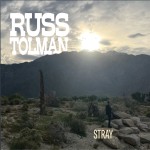


There is a particular kind of freedom that comes with getting older: the gradual realisation that one no longer has to impress anybody, follow the latest musical fashion or pretend that every disappointment was secretly a valuable learning experience. Russ Tolman's "Stray" operates from something close to this position. Its ten songs move through country, folk, rock, soul and Americana with the unhurried confidence of a songwriter who has spent decades learning what to keep and what to discard. There are no elaborate gestures towards reinvention, no desperate attempts to sound younger, and mercifully few signs of an artist checking the charts before deciding which guitar to pick up. Instead, Tolman offers a collection of compact, carefully arranged songs populated by imperfect characters, unresolved relationships and the occasional glimmer of hard-earned optimism. The album's title might suggest someone who has lost their way, but these songs sound more like the work of someone who has finally stopped asking for directions.
Tolman's musical history stretches back to the late seventies, when he formed Suspects with Steve Wynn and Kendra Smith, before founding True West in 1980. The latter became associated with the Paisley Underground, the loose Los Angeles scene that brought together psychedelic guitar music, jangling melodies and a healthy disregard for the boundaries between garage rock, folk and country. True West developed a darker, more hypnotic approach than some of their contemporaries, releasing two albums and touring extensively, including a stint opening for R.E.M. during the "Fables of the Reconstruction" tour. Tolman left the band in 1985 to pursue a solo career, beginning with "Totem Poles and Glory Holes" (1986). Subsequent records such as "Down In Earthquake Town", "Goodbye Joe", "Road Movie" and "Sweet Spot" established him as a songwriter with a strong attachment to American roots traditions, though his work has never been especially interested in observing genre boundaries. Alongside recording, he has also been involved in label management and reissue production, a career trajectory suggesting that he has spent as much time preserving musical history as adding to it.
Seven years have passed since "Goodbye El Dorado", and "Stray" finds Tolman working with a small group of musicians whose contributions are fundamental to its character. Tom Heyman, known for his work with Chuck Prophet, Hiss Golden Messenger and Alejandro Escovedo, supplies guitar and pedal steel, bringing just the right amount of melodic ache to the arrangements. Mike Coykendall, whose credits include M. Ward and She & Him, handles drums and backing vocals, while San Francisco musician Rusty Miller contributes bass, piano and harmonies. Tolman has surrounded himself with players who understand the value of restraint. Their performances are lively without being showy, and the arrangements leave enough room for the songs to breathe. Nobody seems particularly interested in demonstrating how many instruments they can play before the next chorus arrives.
"Streets Of Denim", co-written with longtime associate Steve Wynn, is an effective opening statement. Its concise arrangement combines a country-rock foundation with a melodic immediacy that recalls the more accessible side of the Paisley Underground, while the guitar work adds a slightly weathered edge. There is a sense of looking back without becoming trapped in the exercise. The song's subject matter, concerned with memory and the uncertain significance of past encounters, fits Tolman's recurring interest in the way ordinary moments acquire emotional weight over time. It is a strong introduction to the album, and its brevity is part of its appeal: the song makes its point and leaves before anybody can start explaining what it all means.
"My Way Back" shifts towards soul, with a melodic sensibility that nods to Smokey Robinson and the Detroit tradition. The song's determination to recover lost emotional ground is familiar territory, but Tolman avoids turning it into a grand declaration of romantic desperation. There is something appealingly modest about its persistence, as if the narrator has accepted that reconciliation may require more patience than a dramatic gesture. The rhythm section keeps things moving, while the backing vocals lend the chorus a warmth that never becomes sugary. "Make It Fine" continues in a more reflective vein, its gentle country-rock arrangement allowing Tolman's vocal delivery to carry the emotional burden. His voice is not conventionally polished, and that is precisely why it works. It has the grain of someone who has accumulated a few stories and no longer feels obliged to make every one of them sound heroic.
"It's Because" introduces a little more guitar-driven energy, with Heyman's playing giving the song a welcome bite. The album's balance between roots music and rock becomes particularly effective here: the arrangement has enough momentum to avoid becoming overly contemplative, while the songwriting retains its preference for ambiguity over easy resolution. "Why Do We Fight" is one of the two outside compositions, written by k.d. lang and Laura Veirs for their 2016 collaboration with Neko Case, "case/lang/veirs". Tolman approaches it with an understated sense of gravity, allowing the song's questioning character to emerge without adding unnecessary drama. Its presence also broadens the album's emotional vocabulary, introducing a perspective that sits comfortably alongside Tolman's own writing.
The other cover, Arthur Alexander's "If It's Really Got To Be This Way", draws on a deeper strand of American soul and country songwriting. Alexander's compositions have often been interpreted by artists from very different musical backgrounds, and this particular choice suits Tolman's affection for songs in which heartbreak and resignation are inseparable. The performance avoids the temptation to imitate the original's historical setting. Instead, it becomes part of the album's own musical world, with the pedal steel and restrained rhythm section giving it a gently bruised character. It is a reminder that a good song does not require constant updating. Sometimes it simply needs another voice that understands what it is carrying.
The title track "Stray" is among the album's more introspective moments. Its position gives the record a centre of gravity, bringing together the themes of displacement, independence and emotional uncertainty that recur throughout the collection. Tolman's writing is at its best when it allows contradictions to remain unresolved. The characters in these songs are neither tragic heroes nor uncomplicated survivors; they are people who have made decisions, lived with the consequences and occasionally discovered that the alternative might not have been any better. "Our Love" moves into a softer, more affectionate register, while "Back To Yesterday" revisits the familiar pull of nostalgia. Yet the latter is not simply an invitation to romanticise the past. Tolman seems aware that memory has a habit of improving the lighting and quietly removing the less attractive furniture.
Closing with "Hello Rising Sun", the album leaves behind a relatively optimistic impression. Its title might suggest a conventional gesture towards renewal, but the song's understated character avoids any suggestion that the world has suddenly become a more cooperative place. The sun rises regardless of our personal circumstances, which is perhaps one of its more dependable qualities. The arrangement is warm and melodic, bringing the record to a close without manufacturing a grand finale. After thirty minutes spent among old attachments, second thoughts and uncertain destinations, a little daylight is welcome.
What makes "Stray" satisfying is its refusal to treat experience as something that must be converted into wisdom. Tolman's songs contain regret, affection, humour and resignation, but they rarely turn these emotions into slogans. The musical arrangements are equally economical. Heyman's pedal steel adds atmosphere without drowning the songs in country sentimentality; Coykendall's drumming provides movement without imposing unnecessary weight; Miller's piano and bass give the performances a comfortable sense of cohesion. The production allows the instruments to retain their character, favouring the intimacy of a well-rehearsed group over the immaculate surfaces of contemporary studio pop.
There is, admittedly, little here that will surprise listeners familiar with Tolman's previous work or the broader traditions from which he draws. The album's strengths lie elsewhere: in the quality of its melodies, the intelligence of its arrangements and the consistency of its songwriting. Its ten tracks last barely half an hour, but that compactness feels deliberate. Tolman has no interest in stretching a good idea until it becomes a lifestyle choice. "Stray" is a record made by someone who knows that a song can be complete without being definitive, and that growing older does not necessarily mean becoming more certain. Sometimes it simply means getting better at recognising which roads are worth taking, which people are worth keeping around and which arguments are best abandoned before the second verse. A little country twang helps, naturally.
Comments
Stream
Browse by Genre
Industrial Music / Industrial Metal / Aggro Industrial / Electro Metal
Industrial Noise / Power Noise / Harsh Noise
Synth Pop / Electro Pop / Synth-Electronica
Techno / Trance / Goa / Drum'n'Bass / Jungle / Tribal / Trip-Hop
Ambient / Electronica / Ethereal / Dub / Soundscapes / Abstract
Experimental / Avantgarde / Weird & Wired / Glitch / Noise / Field Recording
Dark / Gothic / Wave / New Wave / Dark Wave / Industrial Gothic
New Music / Downtown / Avantgarde Jazz / New Classical / World