
Wednesday, November 11, 2026
Lucas and Lukas | Gary Lucas and Lukas Ligeti: Omnidirectional
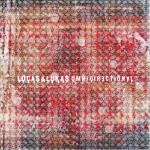
Artist: Lucas and Lukas | Gary Lucas and Lukas Ligeti
Title: Omnidirectional
Format: Download Only (MP3 + Lossless)
Label: Cuneiform (http://www.cuneiformrecords.com/) (@)
Rated:
Title: Omnidirectional
Format: Download Only (MP3 + Lossless)
Label: Cuneiform (http://www.cuneiformrecords.com/) (@)
Rated:
There is a particular pleasure in hearing two accomplished musicians temporarily abandon the security of their respective reputations and see what happens when they are left alone with their instruments. Gary Lucas and Lukas Ligeti have certainly accumulated enough musical experience to make a less adventurous record, perhaps even one that would allow everybody to go home feeling professionally validated. Fortunately, "Omnidirectional" has other intentions. Recorded live in the studio at New York's EastSide Sound, this four-part improvisational encounter brings together electric guitar and effects with drums and percussion, producing a restless mixture of psychedelic abstraction, free jazz, avant-rock and moments of surprisingly tender beauty. It is a record that occasionally sounds as though its participants have discovered several new ways to make their instruments misbehave, and are understandably reluctant to stop.
Lucas and Ligeti are not strangers to one another. Their previous musical association includes Lucas's long-running band Gods and Monsters, but "Omnidirectional" gives their interaction a more exposed setting. The material was entirely improvised, with the performances subsequently mixed by Marc Urselli. There is no elaborate compositional framework to guide the listener, although the four extended pieces have enough internal development to avoid the impression of an unfiltered rehearsal recording. Instead, the album captures two musicians responding to one another with a combination of instinct, technical command and a healthy disregard for predictable outcomes.
“Phlogiston” opens with an immediate sense of physical activity. Lucas's guitar produces a succession of sharply articulated phrases, distorted textures and sustained tones, while Ligeti approaches the drum kit as a considerably more complicated proposition than a mechanism for keeping time. Percussive gestures appear in different rhythmic configurations, sometimes reinforcing the guitar's momentum, sometimes deliberately undermining it. The piece develops through alternating periods of intensity and suspension, with Lucas moving between blues-inflected gestures, abstract electronic treatments and something approaching a psychedelic guitar monologue. Ligeti's contribution is particularly compelling because it never settles into a supporting role. His playing has an almost architectural quality, with different rhythmic layers operating independently while remaining responsive to the overall movement. The resulting thirteen minutes are energetic without becoming merely athletic.
The album's second piece, “Journey in Satchidananda”, offers a different kind of challenge. Composed by Alice Coltrane and originally released on her landmark 1971 album "Journey in Satchidananda", the piece carries a considerable spiritual and musical history. Lucas and Ligeti approach it without attempting to reproduce the original's distinctive combination of harp, tambura, bass and percussion. Their version is a reinterpretation rather than a tribute in the conventional sense. Lucas's guitar takes on a floating, almost vocal character, while Ligeti's percussion provides a supple framework that avoids the obvious temptation to turn the composition into a conventional jazz-rock workout. The melodic identity remains recognisable, but the duo gradually loosens its edges, allowing the music to move into more open territory. It is one of the album's most beautiful passages, partly because the musicians resist the urge to make their interpretation sound more impressive than the composition itself. Alice Coltrane's music has no shortage of grandeur already.
“Over 6 Million Served” introduces a rather different atmosphere. Its title initially suggests the language of fast-food advertising, although the numerical reference also carries an unmistakably darker historical resonance. The music itself is turbulent, with Lucas producing a more aggressive range of guitar sounds and Ligeti responding through increasingly unpredictable percussion. There are moments when the combination approaches a particularly unruly form of psychedelic rock, but the rhythmic activity keeps shifting beneath the surface. Lucas's guitar can sound almost orchestral in its layering, despite the absence of additional musicians, while Ligeti's playing seems to multiply the available rhythmic possibilities rather than simply reinforce them. The piece has a raw, physical character, but it is never a straightforward demonstration of instrumental force. Its most interesting moments occur when the musicians seem to pull in opposite directions, creating a productive tension that neither attempts to resolve too quickly.
The fifteen-minute “Whorls Within Whirls” closes the album with its most expansive statement. The title suggests a fascination with patterns nested inside other patterns, and Ligeti's approach to percussion makes this particularly appropriate. His rhythmic imagination has long been concerned with polymeter and polytempo, exploring ways in which different rhythmic systems can coexist without being forced into a common grid. Here, those interests emerge through an improvised performance rather than a predetermined compositional scheme. Lucas's guitar moves through a broad range of textures, from sustained and almost meditative passages to more abrasive bursts of sound, while Ligeti continually alters the listener's sense of rhythmic orientation. The piece develops less like a conventional finale than like an extended investigation whose conclusions remain deliberately provisional. It is also the clearest demonstration of how effectively the two musicians can maintain interest over a substantial duration without relying on obvious structural landmarks.
The album's title is well chosen. "Omnidirectional" suggests movement without a fixed destination, and the music frequently seems to explore several possibilities simultaneously. Yet the record is not simply a celebration of freedom for its own sake. Improvisation can become a rather convenient excuse for musicians to play whatever happens to occur to them, with the audience expected to mistake the absence of planning for some higher artistic principle. Lucas and Ligeti avoid that trap through an unusually attentive form of interaction. Their playing is spontaneous, but not careless; adventurous, but rarely self-indulgent. They seem perfectly comfortable allowing an idea to develop, abandoning it when necessary, or following an unexpected interruption into territory that neither could have anticipated.
The musicians' respective backgrounds help explain the breadth of the encounter. Gary Lucas has built an unusually diverse career across avant-garde rock, blues, jazz, classical music, folk and film composition. His association with Captain Beefheart's Magic Band remains an important part of his musical history, but his subsequent work has been far too varied to be confined to that particular chapter. He has released more than fifty albums under his own name and collaborated with artists including Lou Reed, John Cale, Patti Smith and Nick Cave. His songwriting partnership with Jeff Buckley produced two of the latter's best-known compositions, “Grace” and “Mojo Pin”. Lucas's guitar playing is difficult to classify precisely because it draws on such different traditions: blues phrasing, experimental noise, psychedelic repetition and more conventional melodic expression can all appear within the same performance. He is a musician whose technical ability is most interesting when it serves an unpredictable musical imagination.
Lukas Ligeti has developed an equally distinctive path, although from a rather different starting point. Born in Vienna in 1965, he is the son of composer György Ligeti, a figure whose influence on twentieth-century music is difficult to overstate. Lukas has established his own identity as a composer, drummer and electronic percussionist, working across contemporary classical music, jazz, electronics and experimental traditions from Africa. His academic career has included teaching at the University of California, Irvine, and the University of Pretoria, and he is currently Professor of Composition at the Royal Conservatory of Brussels. He has also collaborated with musicians such as John Zorn, Marilyn Crispell, Henry Kaiser and Elliott Sharp, while co-founding the intercultural projects Beta Foly in Côte d'Ivoire and Burkina Electric in Burkina Faso. His interest in complex rhythmic structures and unconventional performance practices is not an academic exercise detached from musical experience; it is a fundamental part of how he approaches sound and collaboration.
The combination of these two personalities is therefore particularly productive. Lucas brings an instinctive, often flamboyant approach to the electric guitar, while Ligeti introduces a rhythmic intelligence that refuses to treat percussion as a subordinate discipline. Their differences are not smoothed over in pursuit of an artificial stylistic unity. Instead, they become the principal source of the album's energy. There are moments when Lucas seems to be pushing the music towards a more recognisable rock vocabulary, only for Ligeti to introduce rhythmic complications that make the ground beneath it considerably less stable. Elsewhere, the guitarist's more abstract passages leave room for percussion to become almost melodic in its own right.
The recording also benefits from the work of Marc Urselli, who handled the live recording and mixing at EastSide Sound in New York. The presentation preserves the physical character of the performance without making the instruments feel excessively separated. This is important in music that depends so heavily on interaction: the listener needs to hear the individual gestures, but also to perceive how they alter one another. The production gives the album enough definition to make its details accessible while retaining the unruly character of the original encounter.
If there is a limitation, it is that the album's improvisational nature occasionally makes its longer passages feel more like a succession of possibilities than a fully developed dramatic arc. Some listeners may find the more turbulent sections overly familiar within the broader history of experimental guitar music, while others might wish for a more radical departure from the established language of free improvisation. But these are relatively minor reservations in a record whose principal achievement lies in the quality of its musical exchange. The musicians are not trying to invent an entirely new vocabulary; they are demonstrating how much can still be discovered within one that remains open to reinterpretation.
"Omnidirectional" is ultimately a rewarding meeting between two musicians who understand that virtuosity is not necessarily about displaying everything one can do. Sometimes it is about recognising when another player has introduced an idea worth pursuing, even if it leads somewhere inconvenient. Lucas and Ligeti move between melodic clarity, rhythmic complexity and outright sonic turbulence without losing their sense of purpose. The result is an album that feels both intellectually alert and instinctively physical, capable of moving from moments of genuine lyricism to passages that seem determined to dismantle the furniture.
There is no shortage of musicians who can make a guitar sound enormous or a drum kit sound complicated. What makes this collaboration convincing is that neither musician seems particularly interested in winning either competition. They are more concerned with keeping the possibilities open, and with discovering how far two instruments can travel when neither agrees to behave as expected. The four pieces offer no neat conclusion, but they leave behind a rather satisfying impression: that musical freedom is not the absence of direction, but the ability to change direction without asking permission.
Comments
Stream
Browse by Genre
Industrial Music / Industrial Metal / Aggro Industrial / Electro Metal
Industrial Noise / Power Noise / Harsh Noise
Synth Pop / Electro Pop / Synth-Electronica
Techno / Trance / Goa / Drum'n'Bass / Jungle / Tribal / Trip-Hop
Ambient / Electronica / Ethereal / Dub / Soundscapes / Abstract
Experimental / Avantgarde / Weird & Wired / Glitch / Noise / Field Recording
Dark / Gothic / Wave / New Wave / Dark Wave / Industrial Gothic
New Music / Downtown / Avantgarde Jazz / New Classical / World