
Saturday, November 28, 2026
Juliana Venter: Home Galactic
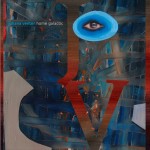
Artist: Juliana Venter
Title: Home Galactic
Format: CD + Download
Label: Sonic Transmissions Records (@)
Rated:
Title: Home Galactic
Format: CD + Download
Label: Sonic Transmissions Records (@)
Rated:
There is something rather audacious about making a solo album for voice alone. It removes almost every familiar means of musical camouflage: no rhythm section to provide momentum, no harmonic instrument to offer shelter, no production trickery to turn uncertainty into atmosphere. Juliana Venter takes this exposure a step further by recording "Home Galactic" inside a water tower on Nesodden, Norway, relying entirely on the natural acoustics of the building. No added effects, no electronic treatments, just the voice and the sound of the space responding to it. The result is an unusually intimate yet physically expansive work, in which a single performer seems capable of occupying several dimensions at once.
Venter is hardly a newcomer to adventurous music. Born in Pretoria and raised in South Africa and Namibia, she studied opera before becoming involved with The Mud Ensemble, the politically outspoken Johannesburg collective that helped shape South Africa's avant-garde performance scene during the 1990s. Her subsequent career has moved through contemporary composition, free improvisation, jazz, theatre and experimental music, with collaborations including Paal Nilssen-Love Circus and saxophonist Rolf-Erik Nystrøm. Her classical training is evident in the control and range of her vocal technique, but it has never confined her to conventional ideas of singing. She can move from an almost operatic clarity to fractured utterances, guttural sounds, breath-driven gestures and passages that seem to emerge from a place considerably older than formal musical education. The voice here is not simply delivering a melody; it is an entire physical vocabulary.
The album's central concern is the meaning of home, a subject that becomes less straightforward the more countries one has lived in. Venter's reflections on immigration are neither sentimental nor particularly interested in the usual rhetoric of cultural exchange. She describes the experience of feeling invisible, unwelcome or somehow out of place in Europe, while finding that a return to Johannesburg in 2011 offered no simple restoration of the world she remembered. What remained were smells, weather, animals, languages, landscapes and the warmth of human encounters. These details matter because they prevent the album's international references from becoming a decorative catalogue of exotic influences. Venter is not collecting cultural souvenirs. She is trying to understand how the music and traditions encountered throughout her life have become part of her own identity, even when the idea of belonging to a single society has grown increasingly elusive.
The opening “Rev It Again” establishes the album's confrontational side. Its repeated vocal gestures evoke the mechanical insistence of propaganda, but the piece also carries a political demand not to let historical atrocities become comfortably distant. The title track, a substantial fifteen-minute composition, is the album's most ambitious statement. Venter moves between languages, vocal styles and references to different musical traditions, including the Central Asian practice of shashmaqam and the rhythmic articulation of konnakol. Afrikaans poetry by N.P. van Wyk Louw and material derived from Eugène Marais enter a work that confronts antisemitism, censorship and the contradictions of political rhetoric. Its scale is not merely a question of duration: the piece feels like a compressed personal history, with the voice repeatedly changing its manner of address as though trying to find a language adequate to the world it describes.
The short “Shaban al-Dalou” is among the album's most painful moments. Sung in Arabic, it remembers the nineteen-year-old Palestinian who was burned alive during an Israeli attack on Al-Aqsa hospital in Gaza. Venter frames the piece as a plea for forgiveness from a world that abandoned him. There is no attempt to turn this tragedy into an abstract symbol or to soften its political implications through musical prettiness. The brevity of the track makes its impact particularly severe. “The Scream Inside” follows with a more instinctive vocal expression, while “Bebop Suicide” takes a sharply different route, treating the life of a jazz musician with mordant humour. Breath, spit and sweat become the essential materials of performance, and the piece's irreverence suggests that artistic defiance need not always wear a solemn expression. Sometimes it can arrive looking rather dishevelled.
“Du Må Ikke Sove”, based on the Norwegian poet Arnulf Øverland's warning against indifference in the face of injustice, gives the album another direct political dimension. Written in 1937, the poem acquired particular significance during the resistance to Nazi occupation, but Venter's decision to revisit it is clearly directed towards the present as well. The warning has not become obsolete; humanity has simply developed an impressive capacity for ignoring familiar lessons. “My Dream Goes Wandering” is more elusive, incorporating haiku by Matsuo Bash in Japanese alongside Zulu material. Its reflections on mortality eventually give way to a distinctly South African expression of defiance, an irreverent dismissal of death that prevents the piece from becoming an exercise in solemn spiritual contemplation.
The traditional instruments used on the album are introduced with considerable restraint. On “Jeg Venter Her”, Venter plays the Umrhubhe, the musical bow associated with the AmaXhosa people, while “My Dream Goes Wandering” features the Makhoyane bow from Eswatini. A water bowl and bell also appear, subtly altering the acoustic character without displacing the voice as the central presence. “Krimanchuli”, meanwhile, draws on a traditional Georgian folk song and introduces a water-bowl accompaniment, bringing another cultural reference into the album without treating it as an ornamental interlude. These instruments feel integral to the work's conception: they are not there to demonstrate the breadth of Venter's research, but to make audible some of the musical relationships that have shaped her life.
The closing sequence is particularly affecting. Rilke's “Ende des Herbstes” turns towards the passage of time and the continuing renewal of nature, before “The Return Home” concludes the album with a field recording made during a trip to Mozambique. Crickets and frogs provide the music of a swamp, accompanied by the memory of a journey shared with a lover. After the intensity of the preceding material, this ending feels almost disarmingly ordinary. No grand conclusion is required; the natural world is already performing its own composition, apparently without needing a grant application or a press release.
There are risks in an undertaking of this kind. A voice-led album that moves through so many languages, literary references and political concerns could easily become overburdened by its own intentions. At times, the succession of ideas is so dense that individual pieces seem to carry more contextual weight than their musical development can fully accommodate. The natural reverberation of the tower also creates a distinctive acoustic environment that, while central to the album's identity, can occasionally make the material feel more unified in texture than in dramatic shape. Yet these reservations are inseparable from the work's ambition. Venter is not trying to construct a conventional song cycle, and the album's shifts between lyricism, improvisation, ritual, satire and protest reflect a life that has never followed a particularly tidy narrative.
What makes "Home Galactic" compelling is the refusal to separate personal experience from political awareness, or musical curiosity from the responsibilities of remembering. Venter's voice can be tender, abrasive, playful, wounded and fiercely direct, sometimes within the same piece. It carries poetry from several continents, but also the marks of a particular biography, one shaped by displacement, historical violence and the continuing search for a place in which one can feel at ease. The title may suggest that home is somewhere beyond the limits of geography, but the album arrives at a more complicated proposition: perhaps home is not a territory one can reclaim, but something one continues to make from the languages, sounds and people that have entered one's life. In Venter's case, the resulting universe happens to fit inside a water tower. It is a remarkably crowded place, and not one that needs additional furniture.
Comments
Stream
Browse by Genre
Industrial Music / Industrial Metal / Aggro Industrial / Electro Metal
Industrial Noise / Power Noise / Harsh Noise
Synth Pop / Electro Pop / Synth-Electronica
Techno / Trance / Goa / Drum'n'Bass / Jungle / Tribal / Trip-Hop
Ambient / Electronica / Ethereal / Dub / Soundscapes / Abstract
Experimental / Avantgarde / Weird & Wired / Glitch / Noise / Field Recording
Dark / Gothic / Wave / New Wave / Dark Wave / Industrial Gothic
New Music / Downtown / Avantgarde Jazz / New Classical / World