
Friday, October 16, 2026
D?sAccordes: In C - Terry Riley
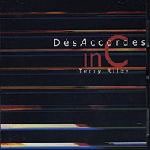
I had no idea what to expect when I put this in my CD player. Instrumentation listed classic guitars, electric guitars, electric basses, harp, chello, percussion, and drums. There was a credit for "conductor and bass". I had never heard of DésAccordes, Terry Riley, or even Gazul Records so I was pretty much a blank slate for this one. Seems that Riley is a frequent collaborator with Kronos Quartet (with whom I am much enamored) so I was interested to check this out. The piece was originally composed in 1964 and is now being reproduced by French outfit DésAccordes. There are 5 unnamed tracks that run for a total of 48.54.
On to the music. According to the liner notes, "Terry Riley set down on paper within a few hours the 53 patterns that compose the one page score of In C." It’s all about interlocking patterns, but often we seem to hear the same thing over and over again. Track 1 is the shortest track, consisting of nice drone with an interesting build. Track 2 starts off being a bit more repetitive. It gets old pretty quick. Shifts slowly over time in an almost imperceptible way. About ¾ of the way through, gets a bit less like listening to a metronome hitting a steady 4 / 4 beat on strings at 200 beats per minute. Starts to sort of fall apart, which is where I think it becomes interesting. Track 2 flows well into track 3, which is unsurprising as the liner notes state that this was always meant to be performed as one continual piece. Repitition still reigns, but much more varied than track 2 and a bit more variation in dynamics. Track 4 was going along fine, until about halfway through when it kicked into what sounded like minimalism mixed with something out of a musical - a jarring, unholy union. It was as if DésAccordes suddenly decided that what Riley had written did not "rock" enough and they were going to fix it. Luckily it didn’t last long, and after about a minute they went back to what they were doing. I thought track 2 was the low point of the disc. I was wrong. This one minute pretty much ruined the track for me. Track 5 is an interesting track but it seems to end a couple of times, leaving you wondering if it will really end this time.
I must admit that this was not really my thing. I like repetition as much as the next experimentalist and I have enjoyed other minimalist composers like Phillip Glass and Steve Reich. But if you thought that Steve Reich was not minimalist enough, this may be just the disc for you.
Comments
Browse by Genre
Industrial Music / Industrial Metal / Aggro Industrial / Electro Metal
Industrial Noise / Power Noise / Harsh Noise
Synth Pop / Electro Pop / Synth-Electronica
Techno / Trance / Goa / Drum'n'Bass / Jungle / Tribal / Trip-Hop
Ambient / Electronica / Ethereal / Dub / Soundscapes / Abstract
Experimental / Avantgarde / Weird & Wired / Glitch / Noise / Field Recording
Dark / Gothic / Wave / New Wave / Dark Wave / Industrial Gothic
New Music / Downtown / Avantgarde Jazz / New Classical / World