
Sunday, November 15, 2026
Diodati: Diem supremum obire
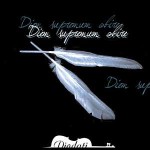
Artist: Diodati (@)
Title: Diem supremum obire
Format: CD
Label: Koerperschall Records/Echozone (@)
Distributor: Masterpiece
Rated:


Title: Diem supremum obire
Format: CD
Label: Koerperschall Records/Echozone (@)
Distributor: Masterpiece
Rated:
Such a title - "Diem supremum obire" is a Latin sentence literally meaning "go round the last day" - let easily guess the conceptual framework of this release (co-produced by Echozone and Korperschall Records) focuses on the theme of death and this worthwhile Bavarian gothic/wave ensemble properly chooses an austere composure to flay this delicate matter so that Diodati musically depth any aspect of death by embracing gothic half-lights without renouncing a certain compositional zing: so it happens that recognisable classical arias gradually turn into a sort of bolero in "Lady Medusa of Suffer", tackling the theme of mother's death, it occurs that the track about the death of culture (I admit I don't know what the Sanskrit word they used to give a title to it means) sounds like a mixture between a Schubert's Lied and a sped piano part of some Brahms' requiem or that dark folk songs such as 'Hinnen Fuor Der Sun Ze Helle' (around the death of faith) or the lovely "Taim sinte ar do thuama" (taken from an anonymous 17th century Irish poem, which was played even by Dead Can Dance some years ago) get inflamed with a mystical ardor. Diodati's above-mentioned compositional austerity doesn't mean their music lacks of ornaments as showed by the vocal polyphonies when Anja haunting voice melts or duets with Gwydion Enbarr's one, being this element the real third instrument beside Elias Wonka's piano and Max Sellmeier's cello for its impressive versatility, whose intense baritone lends itself to the general atmosphere of the record and dramatic tension. Edgar Allan Poe's quote from his "Romance" printed on the artwork, saying "I could not love except where Death / Was mingling his with Beauty's breath", describes quite well "Diem supremum obire"'s absorbing inebriated moodiness.
Comments
Browse by Genre
Industrial Music / Industrial Metal / Aggro Industrial / Electro Metal
Industrial Noise / Power Noise / Harsh Noise
Synth Pop / Electro Pop / Synth-Electronica
Techno / Trance / Goa / Drum'n'Bass / Jungle / Tribal / Trip-Hop
Ambient / Electronica / Ethereal / Dub / Soundscapes / Abstract
Experimental / Avantgarde / Weird & Wired / Glitch / Noise / Field Recording
Dark / Gothic / Wave / New Wave / Dark Wave / Industrial Gothic
New Music / Downtown / Avantgarde Jazz / New Classical / World