
Monday, October 19, 2026
VV.AA: The Dreams of Gaia
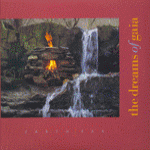
The double disc published by Earth Ear Records is in fact two separate products - the sampler of ecological music and the collection of various texts. Attempts to understand the mysteries of nature as well as to get to the underworld of the Earth and civilization form the basis for each one of them, but also trying to show the links between all living things via acoustic media. I recommend to patiently read everything that's written in the booklet if you are willing to listen to this sampler. The hypnotic, unobtrusive and tangible poetry of John Luther Adams helps you to tune in emotionally to the music. The introductory text by Jim Cummings accentuates the necessary elements and provides the obligatory context, which helps to understand the meaning behind the music. The quotations from different authors featured on the sampler reveal their common ideology, which lies in understanding the world in all its wholeness, dynamics and complex interconnections via the sonic experience. The briefly explained View of Gaia is the result of merging various conceptions about the essence and meaning of the creative work of "the sound sculptors". It's an important part that leads to understanding THE DREAMS OF GAIA in all its wholeness. There's no point in telling you about all virtues of this wonderful booklet, I can only stress that this information will not burden you, will not complicate the process of listening. Quite the opposite - it will enrich your perception directing it along the path of the highest delight.
To be able to move in space without leaving your seat is one of the most important advantages that the art is able to give you. This is also true about music. Especially that kind of music which IS space itself - space in its sonic form. THE DREAMS OF GAIA takes you on journeys whose trajectories cross many different corners of the world - North and South America, Africa, Europe, Siberia, Australia and Antarctica. Megalopolises and national parks, deserts and glaciers, moorlands and meadows - all are kind tributaries of this single sonic river.
The main intrigue in DREAMS OF GAIA is that the objects are not visible, their presence only indicated by sounds and we are free to build our own associations, to imagine landscapes, time and... ourselves. By surrendering to our own imagination we will be able to change the state we're in. The hints provided by the devotees of "natural audio" will find their own continuation within us, revealing our own human connection with everything that exists both materially and sensually.
The flow of a river, the splashing of waterfalls, the whooshing of wild duck's wings, the screaming of hunchback whales and the rumbling of gorillas, the chirring of water insects, the whispering of a forest, the crackle and rustling of its dwellers, the neighing of horses, the wailing of sirens, the noise of highways, human speech and laugh and the slightly perceivable breath of wind - everything seems to be fixed, the fragments are taken out of reality and built into full compositions. So, where does the feeling of something mythically mysterious that permeates each composition comes from when we know that all source material is quite mundane? The blind man, suddenly recovering his sight on a gloomy evening somewhere on the darkish edge of town will probably find everything that surrounds him to be extremely colorful. For a dull ear the simplicity of everyday sounds seems like a supernatural revelation. And we can only repeat the words of Jim Cummings "Thanks to the sound". But even greater gratitude must go to those who scrupulously discovers and collects the sounds, "opens" our ears and conducts us to the wealthy universe which is often left unnoticed by us. There are works of 19 different authors on this disc, including such masters of natural sound as Bernie Krause, Gordon Hempton and Walter Tilgner along with other non-ordinary artists of sonic space.
Comments
Browse by Genre
Industrial Music / Industrial Metal / Aggro Industrial / Electro Metal
Industrial Noise / Power Noise / Harsh Noise
Synth Pop / Electro Pop / Synth-Electronica
Techno / Trance / Goa / Drum'n'Bass / Jungle / Tribal / Trip-Hop
Ambient / Electronica / Ethereal / Dub / Soundscapes / Abstract
Experimental / Avantgarde / Weird & Wired / Glitch / Noise / Field Recording
Dark / Gothic / Wave / New Wave / Dark Wave / Industrial Gothic
New Music / Downtown / Avantgarde Jazz / New Classical / World