
Browse by Genre
Industrial Music / Industrial Metal / Aggro Industrial / Electro Metal
Industrial Noise / Power Noise / Harsh Noise
Synth Pop / Electro Pop / Synth-Electronica
Techno / Trance / Goa / Drum'n'Bass / Jungle / Tribal / Trip-Hop
Ambient / Electronica / Ethereal / Dub / Soundscapes / Abstract
Experimental / Avantgarde / Weird & Wired / Glitch / Noise / Field Recording
Dark / Gothic / Wave / New Wave / Dark Wave / Industrial Gothic
New Music / Downtown / Avantgarde Jazz / New Classical / World
Search Reviews
Music Reviews
Dwson: Nothing To Lose

Nothing To Lose feels like the moment a producer known for speaking in whispers decides he has something worth saying out loud.
For more than a decade, Dwson has occupied a fascinating corner of South African electronic music. Emerging from Cape Town's vibrant house scene, he built his reputation not through oversized drops or festival theatrics, but through patience, atmosphere, and an instinctive understanding of emotional space. His tracks often seemed less interested in making crowds explode than in making them feel something. A dangerous habit in dance music, where subtlety is frequently treated as a software malfunction.
With "Nothing To Lose", his sixth album, that emotional tendency remains intact, but the frame has widened considerably. Where previous records often allowed vocals to appear as occasional visitors, here they become permanent residents. Nearly every track is built around singers, collaborators, and songcraft, creating a record that draws as much from contemporary R&B as from deep house traditions. Rather than abandoning the club, Dwson simply invites more people into it.
The most striking achievement of the album is its sense of continuity. Despite its long guest list, featuring voices such as Ziyon, Liv East, Ammo Moses, Lusanda, Ason, Unwnd, and others, the record never feels like a compilation of disconnected collaborations. It unfolds more like a late-night drive through a city that gradually empties as the hours pass. Streetlights blur. Conversations become quieter. Thoughts become louder. The destination matters less than the movement itself.
Tracks such as "Selfish", "Sense" and "Riptide" demonstrate Dwson's gift for restraint. The arrangements rarely rush toward climaxes. Instead, they breathe. Layers appear and disappear with the confidence of someone who understands that groove is often more persuasive than spectacle. Many producers decorate their tracks until they resemble overfurnished apartments. Dwson, by contrast, leaves enough empty space for the listener's own memories to move in.
There is also a noticeable warmth throughout the album. Not nostalgia exactly, though echoes of early-2000s R&B occasionally drift through the mix like familiar scents from another room. Rather, it is the warmth of maturity. Dwson seems less concerned with proving his technical abilities than with communicating feeling. The result is music that frequently lands somewhere between the dancefloor and the diary.
The recurring presence of Unwnd is particularly important in shaping the album's identity. These collaborations provide some of the record's most intimate moments, introducing a youthful vulnerability that complements Dwson's polished production. Elsewhere, veterans such as Ziyon help connect different generations of South African soul and house music, creating a subtle dialogue between the genre's past and future.
One of the album's underlying themes appears to be reinvention. Not the dramatic kind celebrated in marketing campaigns, but the quieter version that occurs when an artist stops worrying about expectations and begins following curiosity instead. The title itself suggests risk, yet the music sounds remarkably comfortable in its own skin. Dwson is not leaping into the unknown; he is finally allowing listeners to see more of the landscape he has been exploring all along.
By the time the closing stretch arrives, particularly through tracks like "New Day" and "Shadows", the album achieves something increasingly rare: it feels complete. Not because every question has been answered, but because the journey has been allowed to unfold at its own pace. In an era dominated by playlists, algorithms, and attention spans measured in microscopic units, "Nothing To Lose" still believes in the album as a destination.
Ultimately, this is not a record about losing anything. It is about expansion. About a producer stepping beyond the elegant boundaries he once drew for himself and discovering that the horizon had been wider all along. Dwson's deep-house roots remain firmly planted, but new branches reach toward soul, R&B, and contemporary songwriting. The tree has grown taller. The roots, thankfully, are still visible.
For more than a decade, Dwson has occupied a fascinating corner of South African electronic music. Emerging from Cape Town's vibrant house scene, he built his reputation not through oversized drops or festival theatrics, but through patience, atmosphere, and an instinctive understanding of emotional space. His tracks often seemed less interested in making crowds explode than in making them feel something. A dangerous habit in dance music, where subtlety is frequently treated as a software malfunction.
With "Nothing To Lose", his sixth album, that emotional tendency remains intact, but the frame has widened considerably. Where previous records often allowed vocals to appear as occasional visitors, here they become permanent residents. Nearly every track is built around singers, collaborators, and songcraft, creating a record that draws as much from contemporary R&B as from deep house traditions. Rather than abandoning the club, Dwson simply invites more people into it.
The most striking achievement of the album is its sense of continuity. Despite its long guest list, featuring voices such as Ziyon, Liv East, Ammo Moses, Lusanda, Ason, Unwnd, and others, the record never feels like a compilation of disconnected collaborations. It unfolds more like a late-night drive through a city that gradually empties as the hours pass. Streetlights blur. Conversations become quieter. Thoughts become louder. The destination matters less than the movement itself.
Tracks such as "Selfish", "Sense" and "Riptide" demonstrate Dwson's gift for restraint. The arrangements rarely rush toward climaxes. Instead, they breathe. Layers appear and disappear with the confidence of someone who understands that groove is often more persuasive than spectacle. Many producers decorate their tracks until they resemble overfurnished apartments. Dwson, by contrast, leaves enough empty space for the listener's own memories to move in.
There is also a noticeable warmth throughout the album. Not nostalgia exactly, though echoes of early-2000s R&B occasionally drift through the mix like familiar scents from another room. Rather, it is the warmth of maturity. Dwson seems less concerned with proving his technical abilities than with communicating feeling. The result is music that frequently lands somewhere between the dancefloor and the diary.
The recurring presence of Unwnd is particularly important in shaping the album's identity. These collaborations provide some of the record's most intimate moments, introducing a youthful vulnerability that complements Dwson's polished production. Elsewhere, veterans such as Ziyon help connect different generations of South African soul and house music, creating a subtle dialogue between the genre's past and future.
One of the album's underlying themes appears to be reinvention. Not the dramatic kind celebrated in marketing campaigns, but the quieter version that occurs when an artist stops worrying about expectations and begins following curiosity instead. The title itself suggests risk, yet the music sounds remarkably comfortable in its own skin. Dwson is not leaping into the unknown; he is finally allowing listeners to see more of the landscape he has been exploring all along.
By the time the closing stretch arrives, particularly through tracks like "New Day" and "Shadows", the album achieves something increasingly rare: it feels complete. Not because every question has been answered, but because the journey has been allowed to unfold at its own pace. In an era dominated by playlists, algorithms, and attention spans measured in microscopic units, "Nothing To Lose" still believes in the album as a destination.
Ultimately, this is not a record about losing anything. It is about expansion. About a producer stepping beyond the elegant boundaries he once drew for himself and discovering that the horizon had been wider all along. Dwson's deep-house roots remain firmly planted, but new branches reach toward soul, R&B, and contemporary songwriting. The tree has grown taller. The roots, thankfully, are still visible.
Stine Janvin / Morten Joh: Or Gare: Funeral Procession Music from Ryfylke, Norway
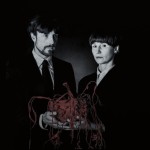
Artist: Stine Janvin / Morten Joh
Title: Or Gare: Funeral Procession Music from Ryfylke, Norway
Format: 12" + Download
Label: Futura Resistenza (@)
Rated:

Title: Or Gare: Funeral Procession Music from Ryfylke, Norway
Format: 12" + Download
Label: Futura Resistenza (@)
Rated:
Or Gare: Funeral Procession Music from Ryfylke, Norway is one of those rare records that seems to arrive from a place where time has stopped measuring itself. Not because it is nostalgic, but because it is concerned with something older than nostalgia: ritual. The album's source material comes from the "Liksong" tradition of Norway's Ryfylke region, funeral songs once performed while accompanying the dead on their final journey. Yet Stine Janvin and Morten Joh are not interested in historical reconstruction. They treat these remnants of collective memory as living matter, capable of transformation.
The result occupies a fascinating space between folk archaeology and speculative sound art. Ancient melodic contours emerge through synthesizers, tape manipulations, retuned percussion, and layers of voice that seem suspended between human presence and spectral resonance. It often feels as though centuries have folded onto one another, leaving medieval spirituality and contemporary electronics sharing the same dimly lit room.
For listeners familiar with Janvin's work, her approach will come as little surprise. Over the years she has established herself as one of the most distinctive vocal explorers in experimental music, constantly expanding the expressive possibilities of the voice beyond conventional singing. Here, however, she appears less concerned with individual expression than with collective remembrance. Her vocal performances rarely seek attention for themselves; instead, they function as conduits through which forgotten gestures and communal emotions are allowed to surface once more.
Morten Joh proves an ideal collaborator. His synthesizers, tape delays, and carefully sculpted textures never impose a modern framework upon the material. Rather, they illuminate its peculiar harmonic qualities, especially the unstable intervals that seem to hover perpetually between resolution and uncertainty. The music often inhabits spaces that Western ears instinctively try to categorize but never fully can. It is neither mournful nor consoling, neither sacred nor secular. Like grief itself, it refuses tidy definitions.
The album's sequencing mirrors the stages of a funeral procession, transforming the listening experience into a gradual passage. From departure through gathering, burial, reflection, and eventual acceptance, each piece contributes to a larger narrative arc. Yet this is not storytelling in the conventional sense. The progression feels more physical than narrative, as though one were walking slowly through changing weather, noticing how the landscape alters almost imperceptibly with every step.
Guest contributions from cellist Lucy Railton and guitarist Jules Reidy deepen the album's emotional palette without disturbing its remarkable cohesion. Their appearances feel less like featured performances than additional currents feeding an already flowing river.
What makes "Or Gare" particularly compelling is its treatment of slowness. Many contemporary recordings employ minimalism as an aesthetic choice; here slowness feels ethical. The music grants mourning the space it requires. Nothing is rushed toward catharsis. Nothing seeks dramatic effect. Instead, sounds unfold with the patient inevitability of a procession moving across a landscape shaped by generations of footsteps.
There is also something quietly radical in the album's relationship with memory. Janvin and Joh do not preserve tradition under glass. They allow it to evolve, to become strange again. Their reimagining acknowledges that cultural inheritance is never static. Songs survive not because they remain unchanged, but because each generation finds new ways to inhabit them.
Throughout "Or Gare", voices, electronics, and percussion create an atmosphere that is simultaneously intimate and immense. At times the music feels as though it is taking place inside a small wooden chapel; moments later it seems to expand across mountains, fjords, and centuries. The effect is deeply immersive, yet never overwhelming.
In the end, this is not an album about death so much as accompaniment. It understands that rituals exist not for the dead alone, but for those who remain behind, tasked with carrying memory forward. Janvin and Joh have transformed a nearly vanished musical practice into something unexpectedly vital: a work that listens as carefully to the past as it does to the future. In an age obsessed with acceleration, "Or Gare" moves with deliberate grace, reminding us that some journeys acquire their meaning precisely because they cannot be hurried.
The result occupies a fascinating space between folk archaeology and speculative sound art. Ancient melodic contours emerge through synthesizers, tape manipulations, retuned percussion, and layers of voice that seem suspended between human presence and spectral resonance. It often feels as though centuries have folded onto one another, leaving medieval spirituality and contemporary electronics sharing the same dimly lit room.
For listeners familiar with Janvin's work, her approach will come as little surprise. Over the years she has established herself as one of the most distinctive vocal explorers in experimental music, constantly expanding the expressive possibilities of the voice beyond conventional singing. Here, however, she appears less concerned with individual expression than with collective remembrance. Her vocal performances rarely seek attention for themselves; instead, they function as conduits through which forgotten gestures and communal emotions are allowed to surface once more.
Morten Joh proves an ideal collaborator. His synthesizers, tape delays, and carefully sculpted textures never impose a modern framework upon the material. Rather, they illuminate its peculiar harmonic qualities, especially the unstable intervals that seem to hover perpetually between resolution and uncertainty. The music often inhabits spaces that Western ears instinctively try to categorize but never fully can. It is neither mournful nor consoling, neither sacred nor secular. Like grief itself, it refuses tidy definitions.
The album's sequencing mirrors the stages of a funeral procession, transforming the listening experience into a gradual passage. From departure through gathering, burial, reflection, and eventual acceptance, each piece contributes to a larger narrative arc. Yet this is not storytelling in the conventional sense. The progression feels more physical than narrative, as though one were walking slowly through changing weather, noticing how the landscape alters almost imperceptibly with every step.
Guest contributions from cellist Lucy Railton and guitarist Jules Reidy deepen the album's emotional palette without disturbing its remarkable cohesion. Their appearances feel less like featured performances than additional currents feeding an already flowing river.
What makes "Or Gare" particularly compelling is its treatment of slowness. Many contemporary recordings employ minimalism as an aesthetic choice; here slowness feels ethical. The music grants mourning the space it requires. Nothing is rushed toward catharsis. Nothing seeks dramatic effect. Instead, sounds unfold with the patient inevitability of a procession moving across a landscape shaped by generations of footsteps.
There is also something quietly radical in the album's relationship with memory. Janvin and Joh do not preserve tradition under glass. They allow it to evolve, to become strange again. Their reimagining acknowledges that cultural inheritance is never static. Songs survive not because they remain unchanged, but because each generation finds new ways to inhabit them.
Throughout "Or Gare", voices, electronics, and percussion create an atmosphere that is simultaneously intimate and immense. At times the music feels as though it is taking place inside a small wooden chapel; moments later it seems to expand across mountains, fjords, and centuries. The effect is deeply immersive, yet never overwhelming.
In the end, this is not an album about death so much as accompaniment. It understands that rituals exist not for the dead alone, but for those who remain behind, tasked with carrying memory forward. Janvin and Joh have transformed a nearly vanished musical practice into something unexpectedly vital: a work that listens as carefully to the past as it does to the future. In an age obsessed with acceleration, "Or Gare" moves with deliberate grace, reminding us that some journeys acquire their meaning precisely because they cannot be hurried.
synfilums: antonym
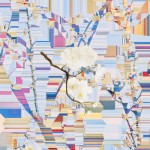

There are albums that bloom. There are albums that fade. And then there is "antonym", a record fascinated by everything that happens in between. Not the flower itself, but the mutation. Not the image, but its reflection in moving water. Not spring as a postcard, but as a process.
The fifth release from synfilums, the duo of Shin Kikuchi and Itoko Toma, begins with a curious act of artistic self-negation. Its predecessor, "synonym", was built around piano compositions inspired by cherry blossoms and their many symbolic resonances. Yet that album was never originally intended as a destination. It was raw material, a seedbed. The piano recordings were conceived as source matter to be dismantled, sampled, stretched, recoloured, and transformed into something else entirely. Ironically, the beauty of those recordings demanded their own release first. Only afterwards could "antonym" emerge, like a second life growing from the remains of the first.
The title proves remarkably precise. If a synonym seeks similarity, an antonym embraces opposition. Yet synfilums approaches opposition not as conflict but as evolution. Throughout the album, original and derivative, acoustic and electronic, memory and invention coexist in a state of productive tension. What results is less a collection of reworks than an exploration of how identity changes while remaining recognisable.
This fascination with transformation has long been embedded in the work of Shin Kikuchi. Known primarily as the co-founder of SCHOLE and as one of the most distinctive visual voices in contemporary Japanese ambient culture, Kikuchi has spent years constructing delicate relationships between sound, image, design, and atmosphere. His photography, artwork, and curatorial sensibility have shaped entire aesthetic worlds. In synfilums, those concerns become musical. Alongside pianist, vocalist, and composer Itoko Toma, whose work frequently inhabits the border between modern classical composition and intimate sonic storytelling, he has developed a project where visual and auditory perception appear inseparable.
Listening to "antonym" often feels like observing light pass through different materials. The source remains constant, but the resulting colours continually change.
The album's conceptual anchor is the cherry blossom, a motif so deeply woven into Japanese cultural consciousness that it risks becoming decorative in lesser hands. Synfilums avoids this trap by focusing not on symbolism but on cycles. Blossoms fall. Leaves emerge. Leaves disappear. Branches reveal themselves. Beauty is not located in a single moment but in the succession of states.
This philosophy permeates every aspect of the record. Piano fragments drift through electronic treatments, emerging briefly before dissolving into textured atmospheres. Melodies appear as traces rather than declarations. Sounds seem less performed than remembered. The music possesses an unusual transparency, as if each layer allows glimpses of the layers beneath it.
The presence of invited artists further expands this sense of multiplicity. Contributions from figures associated with the wider SCHOLE universe, including Yoshinori Takezawa, flica, Paniyolo, [.que], Jochen Tiberius Koch, and akisai, create subtle shifts in perspective. Rather than disrupting the album's coherence, these reinterpretations reinforce its central theme: a single source can generate countless forms without exhausting its potential.
Particularly striking is how modest the album remains despite its conceptual ambitions. Many projects built around reconstruction and transformation feel compelled to announce their complexity. "antonym" does the opposite. Its ideas unfold quietly, often through small gestures. A timbral shift. A lingering resonance. A melody that appears briefly before retreating into silence. The record trusts listeners to notice these details rather than underlining them.
There is also something gently humorous about the entire endeavour. Human beings spend an extraordinary amount of effort preserving things exactly as they are, while nature spends equal effort changing them. Synfilums sides firmly with nature. Here, nothing remains fixed. Every sound is a potential future version of itself. Every composition seems willing to abandon certainty in favour of growth.
The production deserves particular praise. The original piano recordings were captured with unusual spatial depth through a sophisticated multi-microphone setup, and that dimensional richness survives even after extensive processing. The album never loses touch with its acoustic origins. No matter how abstract the textures become, one senses the physical presence of strings, wood, resonance, and touch somewhere beneath the surface.
By the time the closing pieces arrive, "antonym" has become something more than a reimagining of an earlier work. It resembles a meditation on impermanence itself. Not as melancholy, but as possibility. The album suggests that transformation is not the opposite of preservation. It may, in fact, be its most faithful form.
What synfilums ultimately achieves is remarkably difficult: music that feels simultaneously delicate and conceptually rigorous. The record operates like a botanical experiment conducted inside a dream, cultivating impossible varieties from familiar roots. Each track unfolds as a variation on memory, asking what remains when a sound is altered, displaced, and reborn.
The answer, it turns out, is not the same flower. It is a new season.
The fifth release from synfilums, the duo of Shin Kikuchi and Itoko Toma, begins with a curious act of artistic self-negation. Its predecessor, "synonym", was built around piano compositions inspired by cherry blossoms and their many symbolic resonances. Yet that album was never originally intended as a destination. It was raw material, a seedbed. The piano recordings were conceived as source matter to be dismantled, sampled, stretched, recoloured, and transformed into something else entirely. Ironically, the beauty of those recordings demanded their own release first. Only afterwards could "antonym" emerge, like a second life growing from the remains of the first.
The title proves remarkably precise. If a synonym seeks similarity, an antonym embraces opposition. Yet synfilums approaches opposition not as conflict but as evolution. Throughout the album, original and derivative, acoustic and electronic, memory and invention coexist in a state of productive tension. What results is less a collection of reworks than an exploration of how identity changes while remaining recognisable.
This fascination with transformation has long been embedded in the work of Shin Kikuchi. Known primarily as the co-founder of SCHOLE and as one of the most distinctive visual voices in contemporary Japanese ambient culture, Kikuchi has spent years constructing delicate relationships between sound, image, design, and atmosphere. His photography, artwork, and curatorial sensibility have shaped entire aesthetic worlds. In synfilums, those concerns become musical. Alongside pianist, vocalist, and composer Itoko Toma, whose work frequently inhabits the border between modern classical composition and intimate sonic storytelling, he has developed a project where visual and auditory perception appear inseparable.
Listening to "antonym" often feels like observing light pass through different materials. The source remains constant, but the resulting colours continually change.
The album's conceptual anchor is the cherry blossom, a motif so deeply woven into Japanese cultural consciousness that it risks becoming decorative in lesser hands. Synfilums avoids this trap by focusing not on symbolism but on cycles. Blossoms fall. Leaves emerge. Leaves disappear. Branches reveal themselves. Beauty is not located in a single moment but in the succession of states.
This philosophy permeates every aspect of the record. Piano fragments drift through electronic treatments, emerging briefly before dissolving into textured atmospheres. Melodies appear as traces rather than declarations. Sounds seem less performed than remembered. The music possesses an unusual transparency, as if each layer allows glimpses of the layers beneath it.
The presence of invited artists further expands this sense of multiplicity. Contributions from figures associated with the wider SCHOLE universe, including Yoshinori Takezawa, flica, Paniyolo, [.que], Jochen Tiberius Koch, and akisai, create subtle shifts in perspective. Rather than disrupting the album's coherence, these reinterpretations reinforce its central theme: a single source can generate countless forms without exhausting its potential.
Particularly striking is how modest the album remains despite its conceptual ambitions. Many projects built around reconstruction and transformation feel compelled to announce their complexity. "antonym" does the opposite. Its ideas unfold quietly, often through small gestures. A timbral shift. A lingering resonance. A melody that appears briefly before retreating into silence. The record trusts listeners to notice these details rather than underlining them.
There is also something gently humorous about the entire endeavour. Human beings spend an extraordinary amount of effort preserving things exactly as they are, while nature spends equal effort changing them. Synfilums sides firmly with nature. Here, nothing remains fixed. Every sound is a potential future version of itself. Every composition seems willing to abandon certainty in favour of growth.
The production deserves particular praise. The original piano recordings were captured with unusual spatial depth through a sophisticated multi-microphone setup, and that dimensional richness survives even after extensive processing. The album never loses touch with its acoustic origins. No matter how abstract the textures become, one senses the physical presence of strings, wood, resonance, and touch somewhere beneath the surface.
By the time the closing pieces arrive, "antonym" has become something more than a reimagining of an earlier work. It resembles a meditation on impermanence itself. Not as melancholy, but as possibility. The album suggests that transformation is not the opposite of preservation. It may, in fact, be its most faithful form.
What synfilums ultimately achieves is remarkably difficult: music that feels simultaneously delicate and conceptually rigorous. The record operates like a botanical experiment conducted inside a dream, cultivating impossible varieties from familiar roots. Each track unfolds as a variation on memory, asking what remains when a sound is altered, displaced, and reborn.
The answer, it turns out, is not the same flower. It is a new season.
SWEDEK: M * L * K

There are albums that politely invite the listener inside. "M * L * K" is not one of them. It opens the door, removes the floor, rearranges the walls while you are entering, and then seems genuinely surprised that anyone expected a conventional room in the first place.
That attitude is entirely fitting for SWEDEK, the Austrian improvisational trio formed by Helmut Kaplan, Wernfried Lackner, and Dieta Mattersdorfer. Between them lies a long history of experimental practice: multimedia art, electroacoustic composition, loop-based sound manipulation, free improvisation, real-time data sonification, noise, and electronics. These are musicians who have spent decades investigating what happens when systems behave unexpectedly. Predictability is not merely absent from "M * L * K"; it feels actively discouraged.
The album arrives with a manifesto-like disclaimer that warns listeners against expecting familiar structures. Curiously, the warning proves both accurate and misleading. Traditional forms are indeed scarce. There are no reassuring choruses, no narrative arcs, no obvious destinations. Yet the record is far from chaotic. What emerges instead is a different kind of order, one operating beneath the surface like root systems hidden beneath a forest floor.
Recorded live over two days in Graz without overdubs, the album captures improvisation in a particularly honest state. Nothing feels corrected, polished into submission, or forced into predetermined shapes. The music retains the awkwardness, surprise, and occasional instability that accompany genuine discovery. One gets the impression that the performers are exploring the terrain at precisely the same moment as the audience.
The track titles form an intriguing sequence: "Small", "Pearl", "Cream", "Ivory", "Eggshell", "Bone", "Powder", "Colorless". At first glance they resemble paint samples accidentally left in a hardware store after an avant-garde intervention. Yet they suggest a gradual bleaching process, a movement toward reduction, subtraction, and dissolution. The album itself mirrors this trajectory, stripping away certainty until only texture, gesture, and interaction remain.
What makes "M * L * K" compelling is the way it continually shifts between microscopic and panoramic listening. A fragment of bass emerges, electronics flutter briefly into focus, a guitar gesture appears and vanishes before it can establish meaning. Sounds rarely remain long enough to become familiar. The listener is forced to abandon the habit of anticipation and instead inhabit the present moment. Human beings generally dislike this. We spend enormous amounts of energy predicting the future, often incorrectly. SWEDEK removes that luxury.
The trio's interplay is remarkable precisely because it avoids the obvious. Rather than building toward climaxes, the musicians often seem fascinated by unstable states. A texture begins to cohere, only to be interrupted by an unexpected intervention. A rhythm threatens to emerge, then dissolves back into abstraction. The music behaves like a living organism continually changing its shape to avoid classification.
There is also a subtle humour running through the record. Not the kind that announces itself through irony or parody, but a more elusive playfulness. Certain passages feel as though the musicians are testing ideas simply to see what happens next. One can almost hear curiosity operating as a compositional principle. The result is music that occasionally stumbles into beauty by refusing to chase it directly.
Helmut Kaplan's long engagement with loops and collage techniques casts a shadow across the proceedings, while Wernfried Lackner's background in electronic experimentation and Dieta Mattersdorfer's experience within electroacoustic and improvised music contribute to a constantly shifting balance between organic and synthetic sound sources. Yet individual identities ultimately become secondary. SWEDEK functions less as three performers than as a temporary ecosystem.
The album's greatest achievement may be its resistance to interpretation. Many experimental releases invite listeners to decode hidden meanings or conceptual frameworks. "M * L * K" seems content to exist before explanation arrives. Its structures reveal themselves only through attention, not analysis. Like watching clouds, listening becomes an exercise in recognising patterns without demanding permanence.
By the time "Colorless" concludes the journey, nothing has been resolved in any conventional sense. But resolution was never the point. The album is interested in process rather than outcome, in movement rather than destination. It proposes that meaning can emerge from interaction itself, without requiring a final statement to validate the experience.
In a cultural landscape increasingly dominated by algorithms designed to predict our preferences before we discover them ourselves, "M * L * K" feels quietly rebellious. It celebrates uncertainty. It values accidents. It trusts improvisation. Most importantly, it reminds us that not every path needs a map, and not every sound needs to justify its existence.
Sometimes a thing wriggles away just as you think you've understood it. SWEDEK appears to regard that not as a problem, but as the entire point.
That attitude is entirely fitting for SWEDEK, the Austrian improvisational trio formed by Helmut Kaplan, Wernfried Lackner, and Dieta Mattersdorfer. Between them lies a long history of experimental practice: multimedia art, electroacoustic composition, loop-based sound manipulation, free improvisation, real-time data sonification, noise, and electronics. These are musicians who have spent decades investigating what happens when systems behave unexpectedly. Predictability is not merely absent from "M * L * K"; it feels actively discouraged.
The album arrives with a manifesto-like disclaimer that warns listeners against expecting familiar structures. Curiously, the warning proves both accurate and misleading. Traditional forms are indeed scarce. There are no reassuring choruses, no narrative arcs, no obvious destinations. Yet the record is far from chaotic. What emerges instead is a different kind of order, one operating beneath the surface like root systems hidden beneath a forest floor.
Recorded live over two days in Graz without overdubs, the album captures improvisation in a particularly honest state. Nothing feels corrected, polished into submission, or forced into predetermined shapes. The music retains the awkwardness, surprise, and occasional instability that accompany genuine discovery. One gets the impression that the performers are exploring the terrain at precisely the same moment as the audience.
The track titles form an intriguing sequence: "Small", "Pearl", "Cream", "Ivory", "Eggshell", "Bone", "Powder", "Colorless". At first glance they resemble paint samples accidentally left in a hardware store after an avant-garde intervention. Yet they suggest a gradual bleaching process, a movement toward reduction, subtraction, and dissolution. The album itself mirrors this trajectory, stripping away certainty until only texture, gesture, and interaction remain.
What makes "M * L * K" compelling is the way it continually shifts between microscopic and panoramic listening. A fragment of bass emerges, electronics flutter briefly into focus, a guitar gesture appears and vanishes before it can establish meaning. Sounds rarely remain long enough to become familiar. The listener is forced to abandon the habit of anticipation and instead inhabit the present moment. Human beings generally dislike this. We spend enormous amounts of energy predicting the future, often incorrectly. SWEDEK removes that luxury.
The trio's interplay is remarkable precisely because it avoids the obvious. Rather than building toward climaxes, the musicians often seem fascinated by unstable states. A texture begins to cohere, only to be interrupted by an unexpected intervention. A rhythm threatens to emerge, then dissolves back into abstraction. The music behaves like a living organism continually changing its shape to avoid classification.
There is also a subtle humour running through the record. Not the kind that announces itself through irony or parody, but a more elusive playfulness. Certain passages feel as though the musicians are testing ideas simply to see what happens next. One can almost hear curiosity operating as a compositional principle. The result is music that occasionally stumbles into beauty by refusing to chase it directly.
Helmut Kaplan's long engagement with loops and collage techniques casts a shadow across the proceedings, while Wernfried Lackner's background in electronic experimentation and Dieta Mattersdorfer's experience within electroacoustic and improvised music contribute to a constantly shifting balance between organic and synthetic sound sources. Yet individual identities ultimately become secondary. SWEDEK functions less as three performers than as a temporary ecosystem.
The album's greatest achievement may be its resistance to interpretation. Many experimental releases invite listeners to decode hidden meanings or conceptual frameworks. "M * L * K" seems content to exist before explanation arrives. Its structures reveal themselves only through attention, not analysis. Like watching clouds, listening becomes an exercise in recognising patterns without demanding permanence.
By the time "Colorless" concludes the journey, nothing has been resolved in any conventional sense. But resolution was never the point. The album is interested in process rather than outcome, in movement rather than destination. It proposes that meaning can emerge from interaction itself, without requiring a final statement to validate the experience.
In a cultural landscape increasingly dominated by algorithms designed to predict our preferences before we discover them ourselves, "M * L * K" feels quietly rebellious. It celebrates uncertainty. It values accidents. It trusts improvisation. Most importantly, it reminds us that not every path needs a map, and not every sound needs to justify its existence.
Sometimes a thing wriggles away just as you think you've understood it. SWEDEK appears to regard that not as a problem, but as the entire point.
Mokado: Where Does The Night Go?

Artist: Mokado (@)
Title: Where Does The Night Go?
Format: Download Only (MP3 + Lossless)
Label: Le Hameau Records (@)
Rated:
Title: Where Does The Night Go?
Format: Download Only (MP3 + Lossless)
Label: Le Hameau Records (@)
Rated:
There is something mildly suspicious about anyone trying to map the night. It never agreed to be mapped in the first place, it tends to rewrite the map, and it has a long history of ignoring human schedules out of pure spite.
Still, Mokado takes a disciplined stab at it with "Where Does The Night Go?", released via Le Hameau Records. Third album in, and the question is less philosophical gimmick than structural excuse: a spine to hang a sequence of club-leaning vignettes that behave like timestamps slowly losing their authority.
The shift in direction is not subtle. Compared to earlier work, this is more outward-facing, more rhythm-driven, and frankly less interested in sitting still and contemplating its own reflection. Electro-pop and melodic techno are still here, but they’ve been pushed into contact with UK club grammar: garage swing, breakbeat fractures, pitched vocal fragments that sound like memories being autotuned into plausibility.
The British imprint is not decorative. It’s foundational. You can hear the lineage of Jamie xx in the spacious restraint, and echoes of SBTRKT in the chopped vocal aesthetics and percussive nervous system. But Mokado doesn’t cosplay UK club culture; he filters it through a continental lens where cities blur into interchangeable nocturnal organisms - Paris, London, Berlin reduced to variations of the same glowing pulse.
What gives the album its identity is the strict temporal choreography: "0:00AM" to "6:42AM", each track a station on a route that starts with intention and ends with emotional residue. "The Block", "The Dream", "The Walk", "The Club" - it reads like a slightly unhinged metro map designed by someone who stayed out too late but still insists on labeling everything correctly.
And yet, the progression is not linear in any comforting sense. Early cuts feel kinetic, almost playful, like the night hasn’t yet decided whether it’s going to be generous or hostile. Mid-album, the energy starts to bend inward: "The Moon" and "The Nook" introduce a softer gravity, where rhythm becomes less about propulsion and more about keeping emotional balance. By "The Tube" and "The Park", the music feels like it’s waking up inside itself, slightly disoriented, politely pretending it remembers the way home.
The album’s real trick is that it doesn’t romanticize nightlife as chaos or freedom. It treats it as continuity: a series of small transformations that feel meaningful only because they happen in sequence, not because they resolve into anything. The final stretch doesn’t answer the opening question. It quietly implies the question was never the point.
If there’s a philosophical residue left behind, it’s the uncomfortable realization that night doesn’t “go” anywhere. It just thins out, like sound leaking through walls at dawn, leaving behind people who briefly believed they were part of something larger than their own tired bodies.
Still, Mokado takes a disciplined stab at it with "Where Does The Night Go?", released via Le Hameau Records. Third album in, and the question is less philosophical gimmick than structural excuse: a spine to hang a sequence of club-leaning vignettes that behave like timestamps slowly losing their authority.
The shift in direction is not subtle. Compared to earlier work, this is more outward-facing, more rhythm-driven, and frankly less interested in sitting still and contemplating its own reflection. Electro-pop and melodic techno are still here, but they’ve been pushed into contact with UK club grammar: garage swing, breakbeat fractures, pitched vocal fragments that sound like memories being autotuned into plausibility.
The British imprint is not decorative. It’s foundational. You can hear the lineage of Jamie xx in the spacious restraint, and echoes of SBTRKT in the chopped vocal aesthetics and percussive nervous system. But Mokado doesn’t cosplay UK club culture; he filters it through a continental lens where cities blur into interchangeable nocturnal organisms - Paris, London, Berlin reduced to variations of the same glowing pulse.
What gives the album its identity is the strict temporal choreography: "0:00AM" to "6:42AM", each track a station on a route that starts with intention and ends with emotional residue. "The Block", "The Dream", "The Walk", "The Club" - it reads like a slightly unhinged metro map designed by someone who stayed out too late but still insists on labeling everything correctly.
And yet, the progression is not linear in any comforting sense. Early cuts feel kinetic, almost playful, like the night hasn’t yet decided whether it’s going to be generous or hostile. Mid-album, the energy starts to bend inward: "The Moon" and "The Nook" introduce a softer gravity, where rhythm becomes less about propulsion and more about keeping emotional balance. By "The Tube" and "The Park", the music feels like it’s waking up inside itself, slightly disoriented, politely pretending it remembers the way home.
The album’s real trick is that it doesn’t romanticize nightlife as chaos or freedom. It treats it as continuity: a series of small transformations that feel meaningful only because they happen in sequence, not because they resolve into anything. The final stretch doesn’t answer the opening question. It quietly implies the question was never the point.
If there’s a philosophical residue left behind, it’s the uncomfortable realization that night doesn’t “go” anywhere. It just thins out, like sound leaking through walls at dawn, leaving behind people who briefly believed they were part of something larger than their own tired bodies.