
Tuesday, October 13, 2026
Browse by Genre
Industrial Music / Industrial Metal / Aggro Industrial / Electro Metal
Industrial Noise / Power Noise / Harsh Noise
Synth Pop / Electro Pop / Synth-Electronica
Techno / Trance / Goa / Drum'n'Bass / Jungle / Tribal / Trip-Hop
Ambient / Electronica / Ethereal / Dub / Soundscapes / Abstract
Experimental / Avantgarde / Weird & Wired / Glitch / Noise / Field Recording
Dark / Gothic / Wave / New Wave / Dark Wave / Industrial Gothic
New Music / Downtown / Avantgarde Jazz / New Classical / World
Search Reviews
Music Reviews
H. Takahashi: Body Trip (Remixed & Remastered)

Artist: H. Takahashi (@)
Title: Body Trip (Remixed & Remastered)
Format: CD x 2 + Download
Label: Constellation Tatsu (@)
Rated:

Title: Body Trip (Remixed & Remastered)
Format: CD x 2 + Download
Label: Constellation Tatsu (@)
Rated:
Ten years is a respectable interval in ambient music. It is long enough for an album to become a personal ritual, for its melodies to acquire the emotional significance of familiar places, and for listeners to develop strong opinions about sounds that, to an untrained observer, might resemble a particularly tasteful electrical fault. H. Takahashi’s "Body Trip", originally released in 2016, has endured because its minimal electronic compositions leave room for the listener without treating emptiness as an achievement in itself. Delicate synthesizer tones, gently repeating figures and small melodic shifts create music that feels suspended without becoming inert. This anniversary edition revisits the original through two complementary perspectives: a remastered presentation of the twelve tracks and a second disc of reinterpretations by a varied group of contemporary electronic artists. It is both a return and an experiment in musical perspective, asking what happens when a familiar composition is entrusted to somebody else’s imagination.
Takahashi is a Tokyo-based composer and architect whose work extends beyond his solo recordings into projects such as UNKNOWN ME, ATORIS and H TO O. He also runs Kankyo Records, a record shop devoted to ambient, environmental and experimental music. That architectural background offers a useful way of approaching his compositions, provided we resist the temptation to turn every piece of electronic music into a metaphor for buildings. His tracks are often defined by proportion, spacing and the delicate relationship between individual elements. A sound may be simple in isolation, yet its placement changes the character of everything around it. There is little need for dramatic development when a tiny alteration in repetition can make a passage feel newly alive. Takahashi’s minimalism is less about removing material than about discovering how much can happen before a composition begins to look busy.
The remixed disc opens with David Edren’s version of “Enter”, which establishes an invitingly different atmosphere without discarding the original’s restraint. Small percussive details and choral textures give the music a more tangible presence, while Edren’s version of “Quiet”, placed at the end of the disc, explores a similarly contemplative register. These bookends make a persuasive case for reinterpretation as a form of attentive listening: Edren seems interested in what can be drawn out of the compositions rather than in proving that he could have made them better. Kohei Oyamada, meanwhile, revisits three pieces, “Pipeline”, “Metabolism” and “Highball”, using brighter electronic gestures and more animated patterns. His versions introduce a livelier internal motion, as if the original music had quietly discovered that standing still was optional.
The most striking transformations come when artists allow the material to move beyond the expectations associated with ambient music. K-LONE gives “Tera” a dub-informed, micro-house sensibility, introducing a more recognisable rhythmic framework without sacrificing its understated character. The Vernon Spring’s “Pulse” brings acoustic piano into the picture, lending the composition a more immediate, tactile quality. TOMC’s “Absorption” finds a light, almost bossa-nova-like sway, while Matthew David’s brief treatment of “Limestone” adds a more lopsided, beat-oriented momentum. Leif’s “Hotspring” moves through hazier textures, and COLA REN’s “Drain” explores a more defined melodic profile. Loris S. Sarid’s “Reproduction” completes a set in which the source material becomes a meeting point for distinct musical temperaments rather than an instruction to maintain a uniform mood.
This variety is the collection’s real strength. Remix albums can easily become exercises in professional politeness, with every contributor making a few tasteful adjustments before handing the original back in pristine condition. Here, the approaches differ enough to make the sequence engaging. Some artists preserve the music’s open-ended calm; others introduce rhythmic detail, more conspicuous melodic gestures or a different sense of physical movement. The results are not all equally radical, nor do they need to be. The point is that the tracks become more legible in different ways. One version draws attention to rhythm, another to timbre, another to the emotional implications of a simple melodic figure. Listening to these variations can make the original compositions seem less fixed than they first appeared.
The second disc, containing the remastered versions of all twelve original tracks, is essential to that exchange. Without it, the remixes would risk becoming an assortment of attractive interpretations detached from the music that inspired them. Hearing the source material alongside the new versions restores the relationship between the two and gives the set a more convincing shape. The original “Enter” remains concise and understated; “Pipeline” and “Metabolism” reveal how much subtle movement can be carried by repetition; “Tera” maintains its measured pace; and “Pulse” demonstrates how little a composition needs to change in order to establish a distinct emotional temperature. The shorter pieces, particularly “Limestone”, work as miniature studies in economy, while “Quiet” provides a longer closing reflection. The remaster does not need to turn these tracks into something unrecognisable. Its value lies in presenting their internal detail with renewed clarity.
There is also something quietly revealing about the sequence of the two discs. The remixes come first, so the listener encounters the album through the imaginations of others before returning to Takahashi’s original arrangements. That order encourages comparison without turning it into a competition. The source tracks are not merely raw material awaiting improvement, and the remixes are not footnotes to the original. Each version offers a different account of the same musical idea. The exercise is less about discovering which artist has the best answer than about recognising how many answers a relatively small set of sounds can support.
Takahashi’s music has often been associated with the contemporary Japanese ambient and environmental tradition, but "Body Trip" is not simply a piece of decorative serenity. Its repetitions and restrained melodic shifts create a sense of duration in which small details can acquire disproportionate significance. The remixers make that quality more apparent by changing the balance between stillness and movement. The album’s quietness proves surprisingly adaptable: it can accommodate piano, dub-inflected rhythm, intricate electronic patterns and hazier textural approaches without losing its identity. Calm, it turns out, is not a fixed tempo or a ban on interesting things happening.
As a ten-year retrospective, "Body Trip (Remixed & Remastered)" avoids the museum-like solemnity that often accompanies anniversary editions. It gives the original recording room to breathe while allowing a younger and cross-generational group of artists to test its boundaries. The remastered disc rewards familiarity; the remix disc makes familiarity less comfortable, in the best sense. Together they demonstrate that minimalism need not be a sealed aesthetic, and that a composition can retain its character while acquiring new accents, new rhythms and new shades of feeling. Nobody needs to be transported to another dimension, achieve perfect mindfulness or purchase a ceremonial cushion to appreciate the result. Sometimes it is enough to hear a piece of music twice, through different ears, and discover that the second hearing has quietly changed the first.
Takahashi is a Tokyo-based composer and architect whose work extends beyond his solo recordings into projects such as UNKNOWN ME, ATORIS and H TO O. He also runs Kankyo Records, a record shop devoted to ambient, environmental and experimental music. That architectural background offers a useful way of approaching his compositions, provided we resist the temptation to turn every piece of electronic music into a metaphor for buildings. His tracks are often defined by proportion, spacing and the delicate relationship between individual elements. A sound may be simple in isolation, yet its placement changes the character of everything around it. There is little need for dramatic development when a tiny alteration in repetition can make a passage feel newly alive. Takahashi’s minimalism is less about removing material than about discovering how much can happen before a composition begins to look busy.
The remixed disc opens with David Edren’s version of “Enter”, which establishes an invitingly different atmosphere without discarding the original’s restraint. Small percussive details and choral textures give the music a more tangible presence, while Edren’s version of “Quiet”, placed at the end of the disc, explores a similarly contemplative register. These bookends make a persuasive case for reinterpretation as a form of attentive listening: Edren seems interested in what can be drawn out of the compositions rather than in proving that he could have made them better. Kohei Oyamada, meanwhile, revisits three pieces, “Pipeline”, “Metabolism” and “Highball”, using brighter electronic gestures and more animated patterns. His versions introduce a livelier internal motion, as if the original music had quietly discovered that standing still was optional.
The most striking transformations come when artists allow the material to move beyond the expectations associated with ambient music. K-LONE gives “Tera” a dub-informed, micro-house sensibility, introducing a more recognisable rhythmic framework without sacrificing its understated character. The Vernon Spring’s “Pulse” brings acoustic piano into the picture, lending the composition a more immediate, tactile quality. TOMC’s “Absorption” finds a light, almost bossa-nova-like sway, while Matthew David’s brief treatment of “Limestone” adds a more lopsided, beat-oriented momentum. Leif’s “Hotspring” moves through hazier textures, and COLA REN’s “Drain” explores a more defined melodic profile. Loris S. Sarid’s “Reproduction” completes a set in which the source material becomes a meeting point for distinct musical temperaments rather than an instruction to maintain a uniform mood.
This variety is the collection’s real strength. Remix albums can easily become exercises in professional politeness, with every contributor making a few tasteful adjustments before handing the original back in pristine condition. Here, the approaches differ enough to make the sequence engaging. Some artists preserve the music’s open-ended calm; others introduce rhythmic detail, more conspicuous melodic gestures or a different sense of physical movement. The results are not all equally radical, nor do they need to be. The point is that the tracks become more legible in different ways. One version draws attention to rhythm, another to timbre, another to the emotional implications of a simple melodic figure. Listening to these variations can make the original compositions seem less fixed than they first appeared.
The second disc, containing the remastered versions of all twelve original tracks, is essential to that exchange. Without it, the remixes would risk becoming an assortment of attractive interpretations detached from the music that inspired them. Hearing the source material alongside the new versions restores the relationship between the two and gives the set a more convincing shape. The original “Enter” remains concise and understated; “Pipeline” and “Metabolism” reveal how much subtle movement can be carried by repetition; “Tera” maintains its measured pace; and “Pulse” demonstrates how little a composition needs to change in order to establish a distinct emotional temperature. The shorter pieces, particularly “Limestone”, work as miniature studies in economy, while “Quiet” provides a longer closing reflection. The remaster does not need to turn these tracks into something unrecognisable. Its value lies in presenting their internal detail with renewed clarity.
There is also something quietly revealing about the sequence of the two discs. The remixes come first, so the listener encounters the album through the imaginations of others before returning to Takahashi’s original arrangements. That order encourages comparison without turning it into a competition. The source tracks are not merely raw material awaiting improvement, and the remixes are not footnotes to the original. Each version offers a different account of the same musical idea. The exercise is less about discovering which artist has the best answer than about recognising how many answers a relatively small set of sounds can support.
Takahashi’s music has often been associated with the contemporary Japanese ambient and environmental tradition, but "Body Trip" is not simply a piece of decorative serenity. Its repetitions and restrained melodic shifts create a sense of duration in which small details can acquire disproportionate significance. The remixers make that quality more apparent by changing the balance between stillness and movement. The album’s quietness proves surprisingly adaptable: it can accommodate piano, dub-inflected rhythm, intricate electronic patterns and hazier textural approaches without losing its identity. Calm, it turns out, is not a fixed tempo or a ban on interesting things happening.
As a ten-year retrospective, "Body Trip (Remixed & Remastered)" avoids the museum-like solemnity that often accompanies anniversary editions. It gives the original recording room to breathe while allowing a younger and cross-generational group of artists to test its boundaries. The remastered disc rewards familiarity; the remix disc makes familiarity less comfortable, in the best sense. Together they demonstrate that minimalism need not be a sealed aesthetic, and that a composition can retain its character while acquiring new accents, new rhythms and new shades of feeling. Nobody needs to be transported to another dimension, achieve perfect mindfulness or purchase a ceremonial cushion to appreciate the result. Sometimes it is enough to hear a piece of music twice, through different ears, and discover that the second hearing has quietly changed the first.
Sainkho Namtchylak / Mirco Magnani: Beyond Fine Lines

Artist: Sainkho Namtchylak / Mirco Magnani
Title: Beyond Fine Lines
Format: CD
Label: Fluid Audio/Undogmatisch (@)
Rated:
Title: Beyond Fine Lines
Format: CD
Label: Fluid Audio/Undogmatisch (@)
Rated:
Humanity has spent a remarkable amount of time drawing lines between things that may not be as separate as we would like to believe: life and death, peace and war, the body and whatever supposedly survives it, reason and the less manageable contents of the mind. We then build entire systems around these distinctions and act surprised when the boundaries become difficult to maintain. "Beyond Fine Lines", the collaboration between Sainkho Namtchylak and Mirco Magnani, takes this ancient habit of dividing experience and subjects it to a musical examination that is contemplative without being entirely peaceful. Its ten pieces move between introspection, poetic declaration and experimental sound, seeking connections across the apparent gaps rather than offering another grand theory of existence. There are no easy answers here, which is probably just as well: the market for definitive answers is already overcrowded.
Namtchylak’s voice is the album’s most immediately arresting presence, but describing it simply as the centre of the music would understate its function. Born in Tuva, in southern Siberia near the Mongolian border, she developed a distinctive artistic language informed by Tuvan overtone singing, Siberian spiritual traditions, formal vocal study and decades of experimentation across jazz and avant-garde music. Her voice can carry words with an almost conversational intimacy before moving into sounds that seem to belong to a different register of physical expression. She does not merely sing over Magnani’s compositions; she changes their emotional proportions. A syllable, a breath or a sudden shift in vocal intensity can make the surrounding arrangement feel newly exposed. The effect is not that of a virtuoso demonstrating the number of things a voice can do, but of an artist testing how much thought, memory and unease can pass through it.
Magnani provides the musical architecture, creating compositions that leave room for this vocal mobility without dissolving into shapeless accompaniment. His background in groups such as Minox and Technophonic Chamber Orchestra, as well as his work across electronic music and audiovisual projects, is relevant to the way he approaches the material: structure is present, but it does not need to announce itself with a marching band and a laminated diagram. The arrangements offer a setting in which melody, atmosphere and improvisational gesture can coexist. The album emerged from a collaboration that began with two tracks for Magnani’s "Zarathustra – Der Grosse Mittag", and the familiarity established there seems to have allowed the pair to develop a more sustained exchange. The division of credits is telling, too: Magnani composed the music for six tracks with Namtchylak supplying lyrics, while the other four are credited to both artists for the music. The distinction suggests not a simple singer-and-composer arrangement but a relationship in which the voice can also influence the shape of the composition itself.
The title track establishes the album’s central concern with division and connection, placing hope amid the uneasy territory between peace and conflict. This is not a particularly reassuring starting point, though reassurance would hardly be the most convincing response to a world that continues to confuse aggression with strength. “City Bell Hums” expands the perspective, presenting the city as a place of damaged ideals, frustrated affection and collective desperation. The urban environment becomes more than a backdrop: it is a social and emotional structure in which private longing and public violence are difficult to disentangle. There is a tension between the scale of these concerns and the intimacy of Namtchylak’s delivery. The words address large, almost impossible subjects, yet the voice keeps bringing them back to the vulnerable individual who has to live among their consequences.
“Buran” and “Shambala Dreamin’” shift the album towards more suggestive territory, where symbolic language and evocative sound resist the demand for a fixed interpretation. The spiritual references are not presented as an instruction manual for transcendence, and the music does not pretend that attaching an exotic-sounding destination to a track title automatically produces enlightenment. Instead, these pieces contribute to an atmosphere in which the material and the metaphysical can remain in conversation. “Earthcoming” and “Divine Ethereality” continue this exploration, their titles proposing movement between grounded existence and something less tangible. The contrast is productive precisely because the album never completely resolves it. Whatever lies beyond ordinary perception remains a possibility, not a product conveniently available for delivery by the end of the track.
On “Poets-Beacon”, the creative act acquires a more openly defiant dimension. Poetry appears as a form of persistence, a way of keeping consciousness active in circumstances that might otherwise reduce it to survival. The idea could easily become pompous, especially when the poet is elevated into a heroic figure appointed to illuminate the universe. Namtchylak’s wider approach to language and vocal expression, however, gives the theme a physical edge: the voice is not an abstract emblem of artistic freedom but the means by which that freedom is enacted. “Body on Stage” develops a related tension between the physical body and its symbolic significance. Performance makes the body visible, but it also turns it into a site where nature, thought and cultural meaning meet. There is an intriguing circularity here: the voice is produced by a body, yet its expressive possibilities seem to exceed the limits ordinarily assigned to that body.
“No Hurry, No Rush” introduces a deceptively practical philosophy. Its emphasis on moving calmly, distinguishing essentials from distractions and resisting needless agitation might sound like advice from a particularly patient life coach, were it not for the music’s more complicated atmosphere and the recognition that no amount of personal serenity allows anyone to opt out of the world. Calmness is not presented as a magical solution to every difficulty. It is closer to a discipline of attention, an attempt to act without adding unnecessary confusion to an already confused situation. The closing “Golden-Red Leaves of Autumn” returns to mortality, renewal and the briefness of individual life. Its seasonal imagery carries both loss and the promise of continuation, but the sentiment avoids becoming entirely sentimental because the underlying question remains unresolved: how should one value the life one has when its ending cannot be negotiated away? The answer, such as it is, lies in attention to the present rather than in a confident description of whatever might follow.
The album’s principal limitation is also connected to its ambitions. Its philosophical vocabulary occasionally approaches the universal and the abstract so directly that individual ideas risk becoming familiar emblems: the city of broken dreams, the poet as beacon, the passage from death towards rebirth. Such symbols are hardly new, and the record is most compelling when Namtchylak’s distinctive vocal presence and Magnani’s arrangements give them a particular emotional weight rather than asking them to carry the entire argument alone. But this is a tension worth accepting. A work concerned with shared human experience will inevitably encounter some well-travelled ideas; originality depends less on discovering an entirely new subject than on finding a way to inhabit it honestly.
"Beyond Fine Lines" ultimately succeeds through the dialogue between a voice that refuses to remain within conventional vocal boundaries and compositions that provide shape without insisting on complete control. Its contemplation is not an escape from reality so much as an effort to look at reality without immediately reducing it to slogans, categories or convenient conclusions. The music allows fragility and resilience to coexist, and its quieter passages do not cancel the force of its more intense expressions. There is no guarantee that listening will make anyone wiser, kinder or less inclined to argue with strangers on the internet. Such transformations may be beyond the reasonable remit of a ten-track album. But Namtchylak and Magnani offer something more credible than a promise of transcendence: a space in which uncertainty can be experienced without being mistaken for failure, and in which the boundaries separating one condition from another remain open to reconsideration.
Namtchylak’s voice is the album’s most immediately arresting presence, but describing it simply as the centre of the music would understate its function. Born in Tuva, in southern Siberia near the Mongolian border, she developed a distinctive artistic language informed by Tuvan overtone singing, Siberian spiritual traditions, formal vocal study and decades of experimentation across jazz and avant-garde music. Her voice can carry words with an almost conversational intimacy before moving into sounds that seem to belong to a different register of physical expression. She does not merely sing over Magnani’s compositions; she changes their emotional proportions. A syllable, a breath or a sudden shift in vocal intensity can make the surrounding arrangement feel newly exposed. The effect is not that of a virtuoso demonstrating the number of things a voice can do, but of an artist testing how much thought, memory and unease can pass through it.
Magnani provides the musical architecture, creating compositions that leave room for this vocal mobility without dissolving into shapeless accompaniment. His background in groups such as Minox and Technophonic Chamber Orchestra, as well as his work across electronic music and audiovisual projects, is relevant to the way he approaches the material: structure is present, but it does not need to announce itself with a marching band and a laminated diagram. The arrangements offer a setting in which melody, atmosphere and improvisational gesture can coexist. The album emerged from a collaboration that began with two tracks for Magnani’s "Zarathustra – Der Grosse Mittag", and the familiarity established there seems to have allowed the pair to develop a more sustained exchange. The division of credits is telling, too: Magnani composed the music for six tracks with Namtchylak supplying lyrics, while the other four are credited to both artists for the music. The distinction suggests not a simple singer-and-composer arrangement but a relationship in which the voice can also influence the shape of the composition itself.
The title track establishes the album’s central concern with division and connection, placing hope amid the uneasy territory between peace and conflict. This is not a particularly reassuring starting point, though reassurance would hardly be the most convincing response to a world that continues to confuse aggression with strength. “City Bell Hums” expands the perspective, presenting the city as a place of damaged ideals, frustrated affection and collective desperation. The urban environment becomes more than a backdrop: it is a social and emotional structure in which private longing and public violence are difficult to disentangle. There is a tension between the scale of these concerns and the intimacy of Namtchylak’s delivery. The words address large, almost impossible subjects, yet the voice keeps bringing them back to the vulnerable individual who has to live among their consequences.
“Buran” and “Shambala Dreamin’” shift the album towards more suggestive territory, where symbolic language and evocative sound resist the demand for a fixed interpretation. The spiritual references are not presented as an instruction manual for transcendence, and the music does not pretend that attaching an exotic-sounding destination to a track title automatically produces enlightenment. Instead, these pieces contribute to an atmosphere in which the material and the metaphysical can remain in conversation. “Earthcoming” and “Divine Ethereality” continue this exploration, their titles proposing movement between grounded existence and something less tangible. The contrast is productive precisely because the album never completely resolves it. Whatever lies beyond ordinary perception remains a possibility, not a product conveniently available for delivery by the end of the track.
On “Poets-Beacon”, the creative act acquires a more openly defiant dimension. Poetry appears as a form of persistence, a way of keeping consciousness active in circumstances that might otherwise reduce it to survival. The idea could easily become pompous, especially when the poet is elevated into a heroic figure appointed to illuminate the universe. Namtchylak’s wider approach to language and vocal expression, however, gives the theme a physical edge: the voice is not an abstract emblem of artistic freedom but the means by which that freedom is enacted. “Body on Stage” develops a related tension between the physical body and its symbolic significance. Performance makes the body visible, but it also turns it into a site where nature, thought and cultural meaning meet. There is an intriguing circularity here: the voice is produced by a body, yet its expressive possibilities seem to exceed the limits ordinarily assigned to that body.
“No Hurry, No Rush” introduces a deceptively practical philosophy. Its emphasis on moving calmly, distinguishing essentials from distractions and resisting needless agitation might sound like advice from a particularly patient life coach, were it not for the music’s more complicated atmosphere and the recognition that no amount of personal serenity allows anyone to opt out of the world. Calmness is not presented as a magical solution to every difficulty. It is closer to a discipline of attention, an attempt to act without adding unnecessary confusion to an already confused situation. The closing “Golden-Red Leaves of Autumn” returns to mortality, renewal and the briefness of individual life. Its seasonal imagery carries both loss and the promise of continuation, but the sentiment avoids becoming entirely sentimental because the underlying question remains unresolved: how should one value the life one has when its ending cannot be negotiated away? The answer, such as it is, lies in attention to the present rather than in a confident description of whatever might follow.
The album’s principal limitation is also connected to its ambitions. Its philosophical vocabulary occasionally approaches the universal and the abstract so directly that individual ideas risk becoming familiar emblems: the city of broken dreams, the poet as beacon, the passage from death towards rebirth. Such symbols are hardly new, and the record is most compelling when Namtchylak’s distinctive vocal presence and Magnani’s arrangements give them a particular emotional weight rather than asking them to carry the entire argument alone. But this is a tension worth accepting. A work concerned with shared human experience will inevitably encounter some well-travelled ideas; originality depends less on discovering an entirely new subject than on finding a way to inhabit it honestly.
"Beyond Fine Lines" ultimately succeeds through the dialogue between a voice that refuses to remain within conventional vocal boundaries and compositions that provide shape without insisting on complete control. Its contemplation is not an escape from reality so much as an effort to look at reality without immediately reducing it to slogans, categories or convenient conclusions. The music allows fragility and resilience to coexist, and its quieter passages do not cancel the force of its more intense expressions. There is no guarantee that listening will make anyone wiser, kinder or less inclined to argue with strangers on the internet. Such transformations may be beyond the reasonable remit of a ten-track album. But Namtchylak and Magnani offer something more credible than a promise of transcendence: a space in which uncertainty can be experienced without being mistaken for failure, and in which the boundaries separating one condition from another remain open to reconsideration.
The Pink Diamond Revue: At The Discotheque

Artist: The Pink Diamond Revue (@)
Title: At The Discotheque
Format: CD & 12" + Download
Label: self-released
Rated:

Title: At The Discotheque
Format: CD & 12" + Download
Label: self-released
Rated:
From Reading, U.K. comes The Pink Diamond Revue, and their debut album, 'At The Discotheque.' The record came to me back in the late summer (I think), so long ago I almost forgot about them, but here they are, all in their candy-coloured neon splendour. According to their website, they formed over 9 years ago and have played over 500 shows throughout the U.K. and Europe. From what I can tell, the band consists of Tim Lane (live guitar, programmed synths) and Rob Courtman (drums), plus a mannequin named Acid Dot (seen live but not heard) and some unnamed female dancer (live only, obviously). All vocals seem to be sampled dialogue snippets cleverly employed with an occasional melodic vocal sample, as on their "Diamonds Are Forever" released back in 2023, sampling Shirley Bassey's vocal from the James Bond flick of the same name, but that track is not on the 'At The Discotheque' album. This is a visual band as much as it's a musical one, depending on a vintage light show reminiscent of Warhol's Exploding Plastic Inevitable.
Unfortunately, without the visuals, the music falls a little flat, despite its strong electro beat. There is plenty of good synth-work though as well as effective guitar, and you'd have to be a real misanthrope not to dance to it. The Pink Diamond Revue is not the only band to employ this 'samples as vocals' technique. Songs on the album (and there are 16 of them!) are repetitive, and not all of them have that WOW factor you get from listening to a Lords of Acid album. Not quite Art of Noise either, although there are a few passages reminiscent of them. Still, there is a crazy party atmosphere throughout, which should enhance club play more than home play. Some songs such as “Milkshake” where the sampled lyrics are just “Coleslaw, Apple Pie and a Milkshake” are absolutely absurd. Maybe that’s the point.
While ‘At The Discotheque’ makes for an interesting listening experience (at least once through), the samples-as-lead-vocals thing loses its novelty after a while. I think The Pink Diamond Revue could benefit immensely from a flamboyant lead vocalist chock full of charisma with a decent set of pipes who knows how to put on a show. It would help personify the band, motivate the crowd, up their songwriting game, and pull in more $$$ and fans to boot. The album is available on vinyl, CD and download (the CD and LP available from the band’s website - https://thepinkdiamondrevue.com/ which you should definitely visit because that’s where all their cool videos live. I especially like the video for “Miss Lonely Hears.”
Unfortunately, without the visuals, the music falls a little flat, despite its strong electro beat. There is plenty of good synth-work though as well as effective guitar, and you'd have to be a real misanthrope not to dance to it. The Pink Diamond Revue is not the only band to employ this 'samples as vocals' technique. Songs on the album (and there are 16 of them!) are repetitive, and not all of them have that WOW factor you get from listening to a Lords of Acid album. Not quite Art of Noise either, although there are a few passages reminiscent of them. Still, there is a crazy party atmosphere throughout, which should enhance club play more than home play. Some songs such as “Milkshake” where the sampled lyrics are just “Coleslaw, Apple Pie and a Milkshake” are absolutely absurd. Maybe that’s the point.
While ‘At The Discotheque’ makes for an interesting listening experience (at least once through), the samples-as-lead-vocals thing loses its novelty after a while. I think The Pink Diamond Revue could benefit immensely from a flamboyant lead vocalist chock full of charisma with a decent set of pipes who knows how to put on a show. It would help personify the band, motivate the crowd, up their songwriting game, and pull in more $$$ and fans to boot. The album is available on vinyl, CD and download (the CD and LP available from the band’s website - https://thepinkdiamondrevue.com/ which you should definitely visit because that’s where all their cool videos live. I especially like the video for “Miss Lonely Hears.”
Push For Night: That Porous Line
There is a particular kind of darkness that becomes more interesting when you can finally make out the objects inside it. "That Porous Line", the latest album by Push For Night, works through this principle without mistaking increased visibility for comfort. Across seven pieces, Oliver Chapoy and James Elliott build a shifting electro-acoustic environment from guitar, bass, keyboards, percussion, synthesizers and processed fragments, letting these materials collide, overlap and occasionally behave as if they have forgotten what they were originally meant to do. The music is still strange, often murky and sometimes downright uncooperative, but it has acquired a more evident melodic instinct. If the duo’s previous work could feel like a prolonged encounter with a locked door, this album finds them experimenting with the hinges.
The opening “A Good Hosing Down” establishes the new balance. Small, bright instrumental gestures emerge through a grainy veil, suggesting a melody without quite settling into one. The piece has a curious organic quality, as if its sounds have been handled rather than manufactured, though the apparent simplicity is deceptive: textures gradually warp, and what initially seems welcoming becomes harder to place. The track’s title promises a thorough wash, but the music is less interested in cleanliness than in what happens when water gets into places it should not. The result is tactile, subtly disorienting and more patient than its occasional eruptions might suggest.
“Fang Vendor” introduces a different kind of physicality. Low frequencies and a slow, almost lurching pulse provide some sense of footing, while brittle electronic details and fragments of melody keep shifting the ground beneath it. There is something faintly absurd about the title, like a job description from an economy that has run out of respectable professions, and the music carries a comparable air of dislocated purpose. Its components seem to be negotiating their roles in real time, sometimes cooperating, sometimes interrupting each other with the enthusiasm of people who have all arrived at a meeting with different agendas.
The album’s central stretch is where its compositional patience becomes most apparent. “It’s Sure To Be Dark If You Shut Your Eyes” builds from scattered gestures and elusive rhythmic traces, with piano-like notes and processed fragments appearing and receding among denser layers. Instead of driving towards a conventional climax, it continually alters the listener’s sense of what deserves attention. A detail that seemed incidental acquires weight; another vanishes just as it begins to make sense. The piece is not so much a puzzle to be solved as a situation in which the clues keep changing their minds.
“Idler’s Reward” offers a more pronounced melodic thread, with Zachary Koeber’s clarinet adding a breathy, almost human counterweight to the electronic haze. Its development feels unusually spacious for a duo whose materials can be so densely layered. The music seems to pause, reconsider its direction and move again, allowing contrasts between sustained tones, instrumental fragments and more abrasive passages to register without forcing them into a tidy narrative. The title’s suggestion that doing very little might eventually pay off feels apt: the track rewards attention, but not the frantic sort that treats every second of music as a clue to an imminent revelation. Sometimes listening requires the radical act of not trying to improve the situation.
“Bait Is Lowered” is less accommodating. Its layers ripple and churn, with rhythmic elements appearing to surface before being pulled back under. There is a faintly predatory quality to the arrangement, as though the music were testing what it could draw into its orbit. Yet Push For Night resist the easy payoff of turning tension into sheer volume. Their disturbances are often more effective when they remain partial: an unexpected distortion, an awkward shift in texture, a sound that seems to have entered from another room and refuses to explain itself. The unease comes from the sense that the composition is active beneath its own surface, not from any obvious attempt to frighten the listener into submission.
At just over three minutes, “Turned Slowly And Slowly Turned” is the album’s briefest piece, but it does not function as a conventional interlude. Its comparatively concentrated span gives the record a moment of altered perspective, the title itself suggesting rotation without a clear distinction between movement and repetition. The closing title track then takes a gentler route, allowing melodic traces and more recognisable instrumental shapes to emerge without resolving the album’s peculiarities. The music does not suddenly step into daylight; it simply becomes easier to distinguish one thing from another. Even here, the edges remain unstable, and the listener is left with the impression that the apparent clarity might be temporary.
The contribution of David Daniell seems important to this change in character. His playing helped redirect the early sessions towards melody and spontaneity, and the duo’s decision to rely more on direct instrumental performance gives the record a different kind of vulnerability. Not every gesture sounds polished into inevitability. Some retain the slight awkwardness of an event that happened once and could not be reproduced in exactly the same way. That quality gives the album a sense of presence which heavy processing can sometimes obscure, even as the sounds are subsequently cut up, altered and reassembled.
The title "That Porous Line" suggests a boundary that still exists but no longer performs its job particularly well. Throughout the album, the distinction between acoustic gesture and electronic construction, between a deliberate musical phrase and a stray fragment, becomes permeable. Push For Night do not use this ambiguity merely as an aesthetic trick. It allows the compositions to remain unsettled while becoming more emotionally legible, as though melody were not the opposite of disorder but one of the ways disorder might briefly communicate.
There is still plenty here to unsettle anyone hoping for a straightforward ambient record, and the occasional density can make the music feel deliberately resistant to easy interpretation. But the shift in approach has given Push For Night a wider emotional range. "That Porous Line" is not darkness made cheerful, which would be a rather embarrassing misunderstanding of the assignment. It is darkness made more intricate, with enough warmth and melodic curiosity to reveal that obscurity need not mean emotional distance. The room remains strange; the difference is that its occupants have started playing music rather than merely rearranging the shadows.
The opening “A Good Hosing Down” establishes the new balance. Small, bright instrumental gestures emerge through a grainy veil, suggesting a melody without quite settling into one. The piece has a curious organic quality, as if its sounds have been handled rather than manufactured, though the apparent simplicity is deceptive: textures gradually warp, and what initially seems welcoming becomes harder to place. The track’s title promises a thorough wash, but the music is less interested in cleanliness than in what happens when water gets into places it should not. The result is tactile, subtly disorienting and more patient than its occasional eruptions might suggest.
“Fang Vendor” introduces a different kind of physicality. Low frequencies and a slow, almost lurching pulse provide some sense of footing, while brittle electronic details and fragments of melody keep shifting the ground beneath it. There is something faintly absurd about the title, like a job description from an economy that has run out of respectable professions, and the music carries a comparable air of dislocated purpose. Its components seem to be negotiating their roles in real time, sometimes cooperating, sometimes interrupting each other with the enthusiasm of people who have all arrived at a meeting with different agendas.
The album’s central stretch is where its compositional patience becomes most apparent. “It’s Sure To Be Dark If You Shut Your Eyes” builds from scattered gestures and elusive rhythmic traces, with piano-like notes and processed fragments appearing and receding among denser layers. Instead of driving towards a conventional climax, it continually alters the listener’s sense of what deserves attention. A detail that seemed incidental acquires weight; another vanishes just as it begins to make sense. The piece is not so much a puzzle to be solved as a situation in which the clues keep changing their minds.
“Idler’s Reward” offers a more pronounced melodic thread, with Zachary Koeber’s clarinet adding a breathy, almost human counterweight to the electronic haze. Its development feels unusually spacious for a duo whose materials can be so densely layered. The music seems to pause, reconsider its direction and move again, allowing contrasts between sustained tones, instrumental fragments and more abrasive passages to register without forcing them into a tidy narrative. The title’s suggestion that doing very little might eventually pay off feels apt: the track rewards attention, but not the frantic sort that treats every second of music as a clue to an imminent revelation. Sometimes listening requires the radical act of not trying to improve the situation.
“Bait Is Lowered” is less accommodating. Its layers ripple and churn, with rhythmic elements appearing to surface before being pulled back under. There is a faintly predatory quality to the arrangement, as though the music were testing what it could draw into its orbit. Yet Push For Night resist the easy payoff of turning tension into sheer volume. Their disturbances are often more effective when they remain partial: an unexpected distortion, an awkward shift in texture, a sound that seems to have entered from another room and refuses to explain itself. The unease comes from the sense that the composition is active beneath its own surface, not from any obvious attempt to frighten the listener into submission.
At just over three minutes, “Turned Slowly And Slowly Turned” is the album’s briefest piece, but it does not function as a conventional interlude. Its comparatively concentrated span gives the record a moment of altered perspective, the title itself suggesting rotation without a clear distinction between movement and repetition. The closing title track then takes a gentler route, allowing melodic traces and more recognisable instrumental shapes to emerge without resolving the album’s peculiarities. The music does not suddenly step into daylight; it simply becomes easier to distinguish one thing from another. Even here, the edges remain unstable, and the listener is left with the impression that the apparent clarity might be temporary.
The contribution of David Daniell seems important to this change in character. His playing helped redirect the early sessions towards melody and spontaneity, and the duo’s decision to rely more on direct instrumental performance gives the record a different kind of vulnerability. Not every gesture sounds polished into inevitability. Some retain the slight awkwardness of an event that happened once and could not be reproduced in exactly the same way. That quality gives the album a sense of presence which heavy processing can sometimes obscure, even as the sounds are subsequently cut up, altered and reassembled.
The title "That Porous Line" suggests a boundary that still exists but no longer performs its job particularly well. Throughout the album, the distinction between acoustic gesture and electronic construction, between a deliberate musical phrase and a stray fragment, becomes permeable. Push For Night do not use this ambiguity merely as an aesthetic trick. It allows the compositions to remain unsettled while becoming more emotionally legible, as though melody were not the opposite of disorder but one of the ways disorder might briefly communicate.
There is still plenty here to unsettle anyone hoping for a straightforward ambient record, and the occasional density can make the music feel deliberately resistant to easy interpretation. But the shift in approach has given Push For Night a wider emotional range. "That Porous Line" is not darkness made cheerful, which would be a rather embarrassing misunderstanding of the assignment. It is darkness made more intricate, with enough warmth and melodic curiosity to reveal that obscurity need not mean emotional distance. The room remains strange; the difference is that its occupants have started playing music rather than merely rearranging the shadows.
The Sprigs: For Red Riberbank
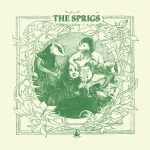
Kenneth Grahame's "The Wind in the Willows" has always contained a curious tension between the pleasures of domestic comfort and the temptation to venture beyond it. Mole, Ratty and Badger enjoy their meals, their homes and the occasional leisurely excursion, apparently unaware that the English countryside is one planning application away from becoming a gated community. On "For Red Riverbank", The Sprigs bring this pastoral idyll into contact with a much uglier reality: developers are approaching, landlords have their own interests, and the people who inhabit a place are not necessarily the people who get to decide its future. The result is an album that sounds as if a children's story has been discovered in a damp box of protest records, then assembled by musicians who cannot resist making the whole thing slightly stranger than it needs to be. Fortunately, that is precisely what it needs.
Initially the solo project of Rory Salter, aka Malvern Brume and Lone Capture Library, The Sprigs have grown into a trio with Ben Murphy and Ben Victor Waggett, the latter also a co-founder of Infant Tree. Their first full-length LP for Bison Records builds on two earlier cassettes and a covers collection, expanding the project into a more fully realised band without sacrificing its ramshackle character. Guitars, recorders, pipes, samples and assorted bits of musical detritus are assembled with a looseness that feels deliberate rather than careless. The recordings have the intimate, slightly battered quality of something made by people more interested in getting a sound to behave interestingly than in persuading it to behave correctly. Salter's experience in experimental music is audible in the way fragments are cut, repeated and placed beside one another, but the songs retain a crooked accessibility that keeps the whole enterprise from becoming an exercise in avant-garde self-importance.
The opening "come along, back home" establishes the album's peculiar emotional geography. Its long duration allows simple guitar figures and rough-edged vocal material to acquire an almost communal quality, though the apparent simplicity is continually unsettled by noises and fragments that seem to have wandered in from another recording altogether. The track feels familiar without being entirely reassuring. There is warmth in its musical gestures, but the surrounding material suggests that the past being recalled was never quite as innocent as nostalgia would prefer. Leon Rosselson's "Stand up for Judas" enters the collage as a reminder that songs can carry political arguments across decades, even when their original circumstances have changed. The effect is not that of a history lesson pasted onto a folk record; rather, the historical material complicates the music's apparent homespun innocence.
"Ratty & the moles get to work" is considerably more playful, its compact form suggesting an industrious little community setting about its business. Yet the title's cheerfulness has a double edge. Work is not simply a charming activity performed by anthropomorphic animals; it is also the means by which people maintain their lives, and the question of who benefits from that labour runs beneath the album's story. The Sprigs are too mischievous to spell out every implication, allowing the contrast between the music's buoyancy and the larger conflict to do the work. One moment the record seems content to potter about in the countryside; the next, the countryside appears to have acquired a planning department.
The shorter pieces that follow, "Lest limbs be reddened and rent" and "...on the wheels that turn for the profit of the few", bring the political dimension closer to the foreground. Their titles are less concerned with bucolic charm than with physical vulnerability and the machinery of economic advantage. The music remains fragmentary, avoiding the neatness of a conventional protest song, but the fragments themselves acquire a sharper purpose. Folk motifs, historical references and rough sonic edges are placed in uneasy proximity, as if the listener were overhearing several different versions of the same argument through thin walls. The collage does not need to become sonically aggressive to communicate conflict. Sometimes a small, apparently harmless tune is more disturbing when you realise what has been placed beside it.
"murmurs from the wide world" offers a brief change of perspective, a pause in which the album's rural setting seems to open onto a larger and less predictable landscape. The title is apt: the world beyond the immediate concerns of Mole and his companions is never entirely absent, and the album's samples make sure that the characters' private troubles cannot be mistaken for an isolated fairy tale. This is not escapist folk music, though it understands the appeal of escape. The Sprigs allow the listener to settle into the music's eccentric rhythms, then quietly remind us that the outside world has a habit of following people home.
The centrepiece, "For Peace & Mild Ale", featuring words and voice by Ash Reid, stretches across more than twelve minutes and gives the album room to develop its most sustained mixture of reflection and social commentary. The title suggests a modest vision of happiness: peace, a drink, the company of others, and perhaps the hope that tomorrow will not require quite so much effort. It is a small, humane aspiration, and that is precisely why the political context matters. The record is not defending an idealised past in which everyone lived harmoniously among hedgerows and hand-knitted waistcoats. It is concerned with the conditions that allow ordinary people to build lives, maintain communities and enjoy the pleasures that make existence tolerable. There is something moving about a record that can acknowledge historical hardship without treating every moment of pleasure as a guilty distraction.
The album's use of British labour history is especially effective because it avoids turning the past into decorative atmosphere. Leon Rosselson's material, including the reference to "Aliezer Coppe" in "Freedom is the mole who will turn the world upside down", brings historical and radical associations into a setting that might otherwise be mistaken for eccentric pastoral nostalgia. The juxtaposition is not merely clever. It exposes a relationship between the ideal of the countryside as a refuge and the material struggle over who can live, work and remain there. Even the animal characters become more than literary mascots. Their struggle to protect their home becomes a way of thinking about the communities that are routinely expected to make room for somebody else's ambitions.
"Freedom is the mole who will turn the world upside down" is the album's most striking change of scale. Its electric intensity pushes the music towards something resembling lo-fi noise rock, with a force that feels earned rather than theatrically imposed. After so much fragile, homespun material, the eruption has the effect of a small revolt finally deciding that politeness has not been especially productive. The title's political implication is unmistakable, but the track retains the band's unruly humour. The Mole, usually associated with domestic comforts and subterranean modesty, becomes an unlikely revolutionary. There is a joke here, but not a dismissive one: perhaps those who have been digging quietly beneath the established order have understood its weaknesses better than anyone standing proudly on top of it.
"The Battle for Red Riverbank" closes the record without tidying up its contradictions. The conflict has become explicit, but there is no reassuring suggestion that a good tune, a few determined woodland creatures and an archive of radical speeches will automatically defeat the developers. The Sprigs are too alert to the world's stubbornness to offer that kind of fairy-tale resolution. Instead, the music leaves the listener with the sense of a struggle that continues beyond the album's duration. The red riverbank is both a specific imagined place and a symbol for the real places whose value cannot be measured solely in terms of what they might earn.
This is where "For Red Riverbank" distinguishes itself from the more sentimental varieties of hauntological folk. Its lo-fi textures and historical fragments certainly evoke a Britain recalled through old recordings, fading memories and the peculiar emotional charge of obsolete media. But the album does not treat the past as a lost golden age whose only remaining function is to make the present seem disappointing. It asks what nostalgia conceals, whose histories are preserved, and what happens when affection for a place is confronted by the economics of its ownership. The musical roughness is essential to this argument. Nothing here has been polished into a reassuring heritage product, and the album's eccentricities keep its political concerns from hardening into a lecture.
There is also a welcome generosity in the music itself. For all its interest in inequality and displacement, the record is not permanently grim. Its tunes can be funny, awkward, catchy and unexpectedly tender; its instrumental passages offer genuine pleasure rather than treating enjoyment as a suspicious bourgeois habit. The Sprigs understand that communities are not held together by political convictions alone. They also depend on songs, shared jokes, familiar places and the small rituals through which people recognise one another. To defend those things is not to deny the seriousness of material conditions. It is to understand what those conditions are supposed to make possible.
The handmade presentation reinforces the record's refusal of mass-produced nostalgia. The screen-printed sleeve, artwork by Ben Victor Waggett and physical pressing produced by Press On in Middlesbrough give the LP a tangible connection to the independent network that sustains this kind of work. The object feels consistent with the music: locally made, slightly unruly and uninterested in disguising the labour involved. In an album so concerned with the relationship between place and value, that detail is more than packaging trivia.
Ultimately, "For Red Riverbank" is an imaginative achievement because it uses the language of folklore without surrendering to folklore's comforting simplifications. The Sprigs turn Grahame's woodland into a contested landscape, where domestic pleasures coexist with class conflict, and where the sounds of the past can illuminate the present without pretending to offer a ready-made solution. The music's rough edges, unexpected turns and occasional bursts of exuberance make the argument feel lived rather than merely stated.
Mole, Ratty and Badger may be fictional animals, but their predicament is recognisable enough. Somebody wants their land, somebody else has calculated its potential value, and the people who already live there are expected to regard the resulting disruption as progress. The Sprigs respond with guitars, recorders, archival voices and a healthy disregard for musical tidiness. It may not be the most efficient way to stop a developer, but it makes a more compelling case for the value of a place than another glossy brochure promising luxury apartments and a communal herb garden. The riverbank, after all, was never just real estate. It was somewhere to live.
Initially the solo project of Rory Salter, aka Malvern Brume and Lone Capture Library, The Sprigs have grown into a trio with Ben Murphy and Ben Victor Waggett, the latter also a co-founder of Infant Tree. Their first full-length LP for Bison Records builds on two earlier cassettes and a covers collection, expanding the project into a more fully realised band without sacrificing its ramshackle character. Guitars, recorders, pipes, samples and assorted bits of musical detritus are assembled with a looseness that feels deliberate rather than careless. The recordings have the intimate, slightly battered quality of something made by people more interested in getting a sound to behave interestingly than in persuading it to behave correctly. Salter's experience in experimental music is audible in the way fragments are cut, repeated and placed beside one another, but the songs retain a crooked accessibility that keeps the whole enterprise from becoming an exercise in avant-garde self-importance.
The opening "come along, back home" establishes the album's peculiar emotional geography. Its long duration allows simple guitar figures and rough-edged vocal material to acquire an almost communal quality, though the apparent simplicity is continually unsettled by noises and fragments that seem to have wandered in from another recording altogether. The track feels familiar without being entirely reassuring. There is warmth in its musical gestures, but the surrounding material suggests that the past being recalled was never quite as innocent as nostalgia would prefer. Leon Rosselson's "Stand up for Judas" enters the collage as a reminder that songs can carry political arguments across decades, even when their original circumstances have changed. The effect is not that of a history lesson pasted onto a folk record; rather, the historical material complicates the music's apparent homespun innocence.
"Ratty & the moles get to work" is considerably more playful, its compact form suggesting an industrious little community setting about its business. Yet the title's cheerfulness has a double edge. Work is not simply a charming activity performed by anthropomorphic animals; it is also the means by which people maintain their lives, and the question of who benefits from that labour runs beneath the album's story. The Sprigs are too mischievous to spell out every implication, allowing the contrast between the music's buoyancy and the larger conflict to do the work. One moment the record seems content to potter about in the countryside; the next, the countryside appears to have acquired a planning department.
The shorter pieces that follow, "Lest limbs be reddened and rent" and "...on the wheels that turn for the profit of the few", bring the political dimension closer to the foreground. Their titles are less concerned with bucolic charm than with physical vulnerability and the machinery of economic advantage. The music remains fragmentary, avoiding the neatness of a conventional protest song, but the fragments themselves acquire a sharper purpose. Folk motifs, historical references and rough sonic edges are placed in uneasy proximity, as if the listener were overhearing several different versions of the same argument through thin walls. The collage does not need to become sonically aggressive to communicate conflict. Sometimes a small, apparently harmless tune is more disturbing when you realise what has been placed beside it.
"murmurs from the wide world" offers a brief change of perspective, a pause in which the album's rural setting seems to open onto a larger and less predictable landscape. The title is apt: the world beyond the immediate concerns of Mole and his companions is never entirely absent, and the album's samples make sure that the characters' private troubles cannot be mistaken for an isolated fairy tale. This is not escapist folk music, though it understands the appeal of escape. The Sprigs allow the listener to settle into the music's eccentric rhythms, then quietly remind us that the outside world has a habit of following people home.
The centrepiece, "For Peace & Mild Ale", featuring words and voice by Ash Reid, stretches across more than twelve minutes and gives the album room to develop its most sustained mixture of reflection and social commentary. The title suggests a modest vision of happiness: peace, a drink, the company of others, and perhaps the hope that tomorrow will not require quite so much effort. It is a small, humane aspiration, and that is precisely why the political context matters. The record is not defending an idealised past in which everyone lived harmoniously among hedgerows and hand-knitted waistcoats. It is concerned with the conditions that allow ordinary people to build lives, maintain communities and enjoy the pleasures that make existence tolerable. There is something moving about a record that can acknowledge historical hardship without treating every moment of pleasure as a guilty distraction.
The album's use of British labour history is especially effective because it avoids turning the past into decorative atmosphere. Leon Rosselson's material, including the reference to "Aliezer Coppe" in "Freedom is the mole who will turn the world upside down", brings historical and radical associations into a setting that might otherwise be mistaken for eccentric pastoral nostalgia. The juxtaposition is not merely clever. It exposes a relationship between the ideal of the countryside as a refuge and the material struggle over who can live, work and remain there. Even the animal characters become more than literary mascots. Their struggle to protect their home becomes a way of thinking about the communities that are routinely expected to make room for somebody else's ambitions.
"Freedom is the mole who will turn the world upside down" is the album's most striking change of scale. Its electric intensity pushes the music towards something resembling lo-fi noise rock, with a force that feels earned rather than theatrically imposed. After so much fragile, homespun material, the eruption has the effect of a small revolt finally deciding that politeness has not been especially productive. The title's political implication is unmistakable, but the track retains the band's unruly humour. The Mole, usually associated with domestic comforts and subterranean modesty, becomes an unlikely revolutionary. There is a joke here, but not a dismissive one: perhaps those who have been digging quietly beneath the established order have understood its weaknesses better than anyone standing proudly on top of it.
"The Battle for Red Riverbank" closes the record without tidying up its contradictions. The conflict has become explicit, but there is no reassuring suggestion that a good tune, a few determined woodland creatures and an archive of radical speeches will automatically defeat the developers. The Sprigs are too alert to the world's stubbornness to offer that kind of fairy-tale resolution. Instead, the music leaves the listener with the sense of a struggle that continues beyond the album's duration. The red riverbank is both a specific imagined place and a symbol for the real places whose value cannot be measured solely in terms of what they might earn.
This is where "For Red Riverbank" distinguishes itself from the more sentimental varieties of hauntological folk. Its lo-fi textures and historical fragments certainly evoke a Britain recalled through old recordings, fading memories and the peculiar emotional charge of obsolete media. But the album does not treat the past as a lost golden age whose only remaining function is to make the present seem disappointing. It asks what nostalgia conceals, whose histories are preserved, and what happens when affection for a place is confronted by the economics of its ownership. The musical roughness is essential to this argument. Nothing here has been polished into a reassuring heritage product, and the album's eccentricities keep its political concerns from hardening into a lecture.
There is also a welcome generosity in the music itself. For all its interest in inequality and displacement, the record is not permanently grim. Its tunes can be funny, awkward, catchy and unexpectedly tender; its instrumental passages offer genuine pleasure rather than treating enjoyment as a suspicious bourgeois habit. The Sprigs understand that communities are not held together by political convictions alone. They also depend on songs, shared jokes, familiar places and the small rituals through which people recognise one another. To defend those things is not to deny the seriousness of material conditions. It is to understand what those conditions are supposed to make possible.
The handmade presentation reinforces the record's refusal of mass-produced nostalgia. The screen-printed sleeve, artwork by Ben Victor Waggett and physical pressing produced by Press On in Middlesbrough give the LP a tangible connection to the independent network that sustains this kind of work. The object feels consistent with the music: locally made, slightly unruly and uninterested in disguising the labour involved. In an album so concerned with the relationship between place and value, that detail is more than packaging trivia.
Ultimately, "For Red Riverbank" is an imaginative achievement because it uses the language of folklore without surrendering to folklore's comforting simplifications. The Sprigs turn Grahame's woodland into a contested landscape, where domestic pleasures coexist with class conflict, and where the sounds of the past can illuminate the present without pretending to offer a ready-made solution. The music's rough edges, unexpected turns and occasional bursts of exuberance make the argument feel lived rather than merely stated.
Mole, Ratty and Badger may be fictional animals, but their predicament is recognisable enough. Somebody wants their land, somebody else has calculated its potential value, and the people who already live there are expected to regard the resulting disruption as progress. The Sprigs respond with guitars, recorders, archival voices and a healthy disregard for musical tidiness. It may not be the most efficient way to stop a developer, but it makes a more compelling case for the value of a place than another glossy brochure promising luxury apartments and a communal herb garden. The riverbank, after all, was never just real estate. It was somewhere to live.