
Browse by Genre
Industrial Music / Industrial Metal / Aggro Industrial / Electro Metal
Industrial Noise / Power Noise / Harsh Noise
Synth Pop / Electro Pop / Synth-Electronica
Techno / Trance / Goa / Drum'n'Bass / Jungle / Tribal / Trip-Hop
Ambient / Electronica / Ethereal / Dub / Soundscapes / Abstract
Experimental / Avantgarde / Weird & Wired / Glitch / Noise / Field Recording
Dark / Gothic / Wave / New Wave / Dark Wave / Industrial Gothic
New Music / Downtown / Avantgarde Jazz / New Classical / World
Search Reviews
Music Reviews
Six Microphones: Environmental Studies

Artist: Six Microphones (@)
Title: Environmental Studies
Format: Download Only (MP3 + Lossless)
Label: Line (@)
Rated:

Title: Environmental Studies
Format: Download Only (MP3 + Lossless)
Label: Line (@)
Rated:
Robert Gerard Pietrusko has long approached sound as if it were a form of urban planning: something to be mapped, shaped, and gently coerced into revealing its hidden structures. With Environmental Studies, though, he shifts from sculptor to ecologist. He doesn’t impose form - he invites it, then steps back to watch the environment negotiate with itself.
The premise is almost disarmingly basic: a microphone pointed at a loudspeaker, a taut loop of attention between two devices that would normally behave themselves. But once this system is released into the Carpenter Center - the only North American building designed by Le Corbusier - the whole place starts behaving like a resonant organism. Concrete surfaces, circulation paths, gallery voids, the wandering public: everyone and everything becomes part of the instrument, whether they intended to or not.
What’s striking is the absence of composed material. Nothing is written down, there is no “original” version hiding somewhere in Pietrusko’s notebook. All sound emerges from interaction: the system’s shifting parameters, the quirks of the architecture, and the fidgety presence of those who happen to pass through. It’s a bit like those conversations where you forget who started speaking - except the egos have been graciously removed from the equation.
Across its three long sections, the album reveals an environment thinking out loud. Tones flutter like nervous eyelashes, drones bloom and collapse under the gallery’s geometry, and faint harmonic tensions drift around as if testing the limits of the room. Now and then a sudden shimmer or wobble appears - a reminder that Le Corbusier believed buildings should provoke, not simply behave.
The irony is that this recording captures only one evening of a month-long installation in 2015. Yet the piece sidesteps nostalgia entirely: it belongs too deeply to the acoustics of its moment to sound dated. What you hear is not a fixed artwork but a trace of an encounter - an imprint of how space, system, and people briefly arranged themselves.
Pietrusko, with his dual background in design and composition, continues to build bridges between disciplines that most artists keep in separate drawers. No wonder his work appears in major museums and biennales: he doesn’t so much compose music as create listening conditions, situations in which sound is coaxed into revealing its spatial DNA.
Environmental Studies is a map without a key, an echo studying its own reflection, a quiet reminder of our scale. Sound doesn’t belong to us; it passes through, measures us, and moves on. If you let it, this album teaches you to follow it - not like a melody, but like a weather pattern.
The premise is almost disarmingly basic: a microphone pointed at a loudspeaker, a taut loop of attention between two devices that would normally behave themselves. But once this system is released into the Carpenter Center - the only North American building designed by Le Corbusier - the whole place starts behaving like a resonant organism. Concrete surfaces, circulation paths, gallery voids, the wandering public: everyone and everything becomes part of the instrument, whether they intended to or not.
What’s striking is the absence of composed material. Nothing is written down, there is no “original” version hiding somewhere in Pietrusko’s notebook. All sound emerges from interaction: the system’s shifting parameters, the quirks of the architecture, and the fidgety presence of those who happen to pass through. It’s a bit like those conversations where you forget who started speaking - except the egos have been graciously removed from the equation.
Across its three long sections, the album reveals an environment thinking out loud. Tones flutter like nervous eyelashes, drones bloom and collapse under the gallery’s geometry, and faint harmonic tensions drift around as if testing the limits of the room. Now and then a sudden shimmer or wobble appears - a reminder that Le Corbusier believed buildings should provoke, not simply behave.
The irony is that this recording captures only one evening of a month-long installation in 2015. Yet the piece sidesteps nostalgia entirely: it belongs too deeply to the acoustics of its moment to sound dated. What you hear is not a fixed artwork but a trace of an encounter - an imprint of how space, system, and people briefly arranged themselves.
Pietrusko, with his dual background in design and composition, continues to build bridges between disciplines that most artists keep in separate drawers. No wonder his work appears in major museums and biennales: he doesn’t so much compose music as create listening conditions, situations in which sound is coaxed into revealing its spatial DNA.
Environmental Studies is a map without a key, an echo studying its own reflection, a quiet reminder of our scale. Sound doesn’t belong to us; it passes through, measures us, and moves on. If you let it, this album teaches you to follow it - not like a melody, but like a weather pattern.
Anna Högberg Attack: Ensamseglaren

There are records that feel like rooms you walk into; this one feels like a shore. A departure point. A stretch of sand still warm from someone who just stood there, watching a sail shrink into the evening. Ensamseglaren (“the lone sailor / the lonely sailor”) arrives like a message in a bottle - except the bottle explodes as soon as you uncork it, releasing twelve musicians who have clearly decided that tenderness and ferocity aren’t opposites but two sides of the same hull.
Högberg pressed pause on her flagship band some years ago, trading the frantic pulse of touring for the no-less-frantic world of nursing. Maybe that’s why this return lands so hard: she comes back wielding a double sextet like a rescue crew, with brass and reeds that don’t just announce grief - they metabolise it. The ensemble behaves like an unruly organism, all lungs and claws and sudden leaps of light. This is music that mourns by overflowing.
You can hear the autobiographical anchor in the suite’s dedication to her father, the “solo sailor” immortalised on the cover. But the music doesn’t cling to sentimentality; instead it surges forward, churning personal loss into collective propulsion. The horns radiate the feeling of trying to keep your balance on a deck that won’t stop pitching. The turntables add small fissures in the surface - glitches of memory, scratches of something unrepairable. Two drummers keep shifting the ground like tides that haven’t made up their mind.
Moments of quiet arrive like fog: breathy harmonics, almost-whispers from the reeds, delicate friction from the saws that seem to trace the outlines of someone no longer there. Then, without warning, the whole ensemble ignites, blaring with the ecstatic certainty of creatures who refuse to let sorrow stay still. There’s humour here, too - the kind that sneaks in through the side door when everyone is trying not to cry. A trumpet squeaks at the wrong moment, a turntable hiccups, and suddenly the whole scene feels human again.
If the suite has a thesis, it might be this: grief is not a straight line but a coastline - sharp, curved, interrupted by inlets and cliffs, shaped by forces we can’t command. Högberg seems to know something about holding contradictions: the music is stormy but warm, monumental but porous, mournful yet bursting with the desire to live harder, louder, together.
By the time the final movement fades, the imaginary boat has vanished into the horizon. But you don’t feel abandoned. Instead, you feel like someone on another beach has already caught sight of it, waving, ready to welcome it home. And in that strange relay between shores - between the living and the gone, between players and listeners - Ensamseglaren becomes less a suite and more a rite of passage: salty, bracing, strangely comforting.
It’s a big-band elegy for people who can’t sit still; a farewell that refuses to whisper; a reminder that even the loneliest voyage leaves a wake luminous enough for others to follow.
Högberg pressed pause on her flagship band some years ago, trading the frantic pulse of touring for the no-less-frantic world of nursing. Maybe that’s why this return lands so hard: she comes back wielding a double sextet like a rescue crew, with brass and reeds that don’t just announce grief - they metabolise it. The ensemble behaves like an unruly organism, all lungs and claws and sudden leaps of light. This is music that mourns by overflowing.
You can hear the autobiographical anchor in the suite’s dedication to her father, the “solo sailor” immortalised on the cover. But the music doesn’t cling to sentimentality; instead it surges forward, churning personal loss into collective propulsion. The horns radiate the feeling of trying to keep your balance on a deck that won’t stop pitching. The turntables add small fissures in the surface - glitches of memory, scratches of something unrepairable. Two drummers keep shifting the ground like tides that haven’t made up their mind.
Moments of quiet arrive like fog: breathy harmonics, almost-whispers from the reeds, delicate friction from the saws that seem to trace the outlines of someone no longer there. Then, without warning, the whole ensemble ignites, blaring with the ecstatic certainty of creatures who refuse to let sorrow stay still. There’s humour here, too - the kind that sneaks in through the side door when everyone is trying not to cry. A trumpet squeaks at the wrong moment, a turntable hiccups, and suddenly the whole scene feels human again.
If the suite has a thesis, it might be this: grief is not a straight line but a coastline - sharp, curved, interrupted by inlets and cliffs, shaped by forces we can’t command. Högberg seems to know something about holding contradictions: the music is stormy but warm, monumental but porous, mournful yet bursting with the desire to live harder, louder, together.
By the time the final movement fades, the imaginary boat has vanished into the horizon. But you don’t feel abandoned. Instead, you feel like someone on another beach has already caught sight of it, waving, ready to welcome it home. And in that strange relay between shores - between the living and the gone, between players and listeners - Ensamseglaren becomes less a suite and more a rite of passage: salty, bracing, strangely comforting.
It’s a big-band elegy for people who can’t sit still; a farewell that refuses to whisper; a reminder that even the loneliest voyage leaves a wake luminous enough for others to follow.
Hand to Earth: Nurru Wäna
Some albums don’t simply play; they arrive, like weather, like the scent of a place you haven’t seen in years but that still knows your name. Nurru WÄna - meaning “the scent of home” - belongs to that rare category. It’s the sound of five musicians approaching the idea of belonging from different corners of the globe and discovering, almost shyly, that their paths rhyme.
Hand to Earth is a meeting point more than a band. At its centre are the WÄgilak song traditions held and carried by Daniel and David Wilfred - voice, bilma, yidaki - elements that feel older than vowels, older than the idea of music itself. Around them orbit the breath-frayed clarinets and trumpets of Aviva Endean and Peter Knight, the lithe percussion and voice of Sunny Kim, and the patient electronics that Lawrence English pours like fog around the edges. The group formed years ago as a kind of ongoing conversation, and Nurru WÄna feels like a new chapter written with calm hands and hearts still a little raw.
The album was recorded mostly in Melbourne, mid-tour, during one of those rare days when travel stops pressing its thumb on the spine. Daniel Wilfred felt compelled to record songs tied to the Djuwapada songline, which traces a journey across Arnhem Land as a dreaming figure sings the world into being - birds, trees, seasons, all the way to the coast. You can hear this lineage in the directness of the performances: single takes, no hesitation, no dressing the words in unnecessary finery. It’s music as lived inheritance.
“Bush Honey (guku)” opens with a slow unfurling - voice and yidaki sketching a space that feels half ceremonial, half intimate. Electronics rustle in like a warm draft under a door. It’s gentle but carries the weight of memory. “Nurru WÄna Part I” brings Sunny Kim’s voice in counterpoint, singing lines by Korean poet Yoon Dong Ju. Her presence doesn’t blend with Daniel Wilfred’s so much as stand beside it, like two strangers walking the same trail for different reasons but finding comfort in the shared silence.
Across the record, the group’s approach is both structured and gloriously porous. “MÄdawk” and “Gadayka” carry the bones of traditional song with just enough electronic mist and brass shadows to suggest a world expanding - like someone adding new rooms to an old house without touching the foundation. There’s humour, too, buried deep: the playful swagger of “The Crow”, which was recorded in New York of all places, proof that even birds with mythic significance enjoy unexpected layovers.
What’s striking is how little the album strains for effect. There’s no cultural cosplay, no faux-mystical posturing, no cinematic swelling designed to explain emotions you’re already feeling. Instead, the pieces evolve the way natural things do: slowly, patiently, guided by the mood of the moment. The electronics aren’t there to modernize; they’re there to listen. The winds don’t elaborate; they respond. It’s a respectful, almost tender kind of collaboration - music where nobody seems interested in being the protagonist.
Thematically, Nurru WÄna hovers around displacement, longing, and the half-lit territory between where you’re from and where you’re going. But it never gets heavy-handed about it. Instead, the songs make you feel as if you’re carrying a memory you can’t quite name - warm, a little aching, with the faint taste of eucalyptus or salt on the air. It’s grief without despair, and joy without spectacle. The kind of emotional honesty that keeps its shoes on.
If there’s a lesson here - and there might be, though the album doesn’t insist - it’s that belonging isn’t a destination. It’s a practice, a call and response. A voice singing the land into being, and another voice answering from far away, surprised at how familiar the language feels.
Nurru WÄna doesn’t chase transcendence. It simply opens a window and lets the breeze in. And for fifty minutes, it smells a little like home, wherever you happen to be.
Hand to Earth is a meeting point more than a band. At its centre are the WÄgilak song traditions held and carried by Daniel and David Wilfred - voice, bilma, yidaki - elements that feel older than vowels, older than the idea of music itself. Around them orbit the breath-frayed clarinets and trumpets of Aviva Endean and Peter Knight, the lithe percussion and voice of Sunny Kim, and the patient electronics that Lawrence English pours like fog around the edges. The group formed years ago as a kind of ongoing conversation, and Nurru WÄna feels like a new chapter written with calm hands and hearts still a little raw.
The album was recorded mostly in Melbourne, mid-tour, during one of those rare days when travel stops pressing its thumb on the spine. Daniel Wilfred felt compelled to record songs tied to the Djuwapada songline, which traces a journey across Arnhem Land as a dreaming figure sings the world into being - birds, trees, seasons, all the way to the coast. You can hear this lineage in the directness of the performances: single takes, no hesitation, no dressing the words in unnecessary finery. It’s music as lived inheritance.
“Bush Honey (guku)” opens with a slow unfurling - voice and yidaki sketching a space that feels half ceremonial, half intimate. Electronics rustle in like a warm draft under a door. It’s gentle but carries the weight of memory. “Nurru WÄna Part I” brings Sunny Kim’s voice in counterpoint, singing lines by Korean poet Yoon Dong Ju. Her presence doesn’t blend with Daniel Wilfred’s so much as stand beside it, like two strangers walking the same trail for different reasons but finding comfort in the shared silence.
Across the record, the group’s approach is both structured and gloriously porous. “MÄdawk” and “Gadayka” carry the bones of traditional song with just enough electronic mist and brass shadows to suggest a world expanding - like someone adding new rooms to an old house without touching the foundation. There’s humour, too, buried deep: the playful swagger of “The Crow”, which was recorded in New York of all places, proof that even birds with mythic significance enjoy unexpected layovers.
What’s striking is how little the album strains for effect. There’s no cultural cosplay, no faux-mystical posturing, no cinematic swelling designed to explain emotions you’re already feeling. Instead, the pieces evolve the way natural things do: slowly, patiently, guided by the mood of the moment. The electronics aren’t there to modernize; they’re there to listen. The winds don’t elaborate; they respond. It’s a respectful, almost tender kind of collaboration - music where nobody seems interested in being the protagonist.
Thematically, Nurru WÄna hovers around displacement, longing, and the half-lit territory between where you’re from and where you’re going. But it never gets heavy-handed about it. Instead, the songs make you feel as if you’re carrying a memory you can’t quite name - warm, a little aching, with the faint taste of eucalyptus or salt on the air. It’s grief without despair, and joy without spectacle. The kind of emotional honesty that keeps its shoes on.
If there’s a lesson here - and there might be, though the album doesn’t insist - it’s that belonging isn’t a destination. It’s a practice, a call and response. A voice singing the land into being, and another voice answering from far away, surprised at how familiar the language feels.
Nurru WÄna doesn’t chase transcendence. It simply opens a window and lets the breeze in. And for fifty minutes, it smells a little like home, wherever you happen to be.
Jung An Tagen: Revenge of the Speaker People
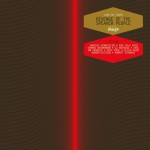
Artist: Jung An Tagen (@)
Title: Revenge of the Speaker People
Format: CD x 2 (double CD)
Label: Editions Mego (@)
Rated:
Title: Revenge of the Speaker People
Format: CD x 2 (double CD)
Label: Editions Mego (@)
Rated:
Some albums aim for the mind, others for the hips; this one goes straight for the inner ear, as if Jung An Tagen were trying to negotiate directly with your cochlea. And frankly, he succeeds in ways that feel both brilliant and faintly illegal.
Stefan Juster has long been the kind of artist who treats sound not as scenery but as a laboratory substance - something you pipette, heat, break, and reassemble under flickering fluorescent lights. Across his releases for Editions Mego and his own ETAT imprint, he’s carved out a peculiar territory where dancefloor impulses collide with psychoacoustic trapdoors. Yet "Revenge of the Speaker People" seems to mark a new escalation: an album that weaponizes the science of hearing itself. Call it techno’s inner ear crisis.
Online reactions already paint a picture: people speak of dizziness, sensory delight, and the uncanny feeling that the music is whispering directly from inside their skulls. Fans of Amacher, Hecker, or Schmickler will immediately recognize the lineage, but Juster isn’t content to play acolyte. Instead, he slips otoacoustic emissions-those faint, ghostlike tones generated by the ear rather than for the ear - into a percussive chassis built from ultra-dry kicks and needle-point rhythms. It’s a mischievous move, as though he were remixing your auditory nervous system rather than his own tracks.
CD1 is the mad-science core of the project: alternating slivers of OAE experiments and tightly coiled “MIX” tracks that seem to sprint across your auditory field like a swarm of metallic insects with impeccable timing. Each miniature lasts just long enough to unsettle your expectations, but not long enough for you to fully grasp what has happened. The structure resembles a techno album blueprint fed through a prism and reflected back onto the listener with rearranged geometry. And yes - there’s a wicked humor in imagining unsuspecting clubbers exposed to this stuff at 3 a.m., suddenly questioning whether they’ve aged five years in ten seconds.
Online reviewers have highlighted the odd physicality of the experience, and they’re right: this music doesn’t simply sound strange; it acts strange. It feels like a mischievous handshake between the speaker and your inner ear, one of those secret society grips where you’re not sure whether you’ve just been welcomed or cursed.
CD2 opens the gates to the remixers-an assortment of Mego veterans, sonic contortionists, and one incendiary emissary from Príncipe. Here the album blossoms into a miniature ecosystem of distortions. Some isolate the emissions like microscopic jewels; others pulverize the source material into rhythmic avalanches that feel delightfully unsafe. Thomas Brinkmann constructs a weirdly elegant chassis; Evol folds the project into a fractal; Nik Colk Void sharpens everything until it glitters dangerously. Even the calmer contributions don’t let you catch your breath-they just lure you into a different kind of labyrinth.
What ties it all together is Juster’s appetite for risk, a quality reviewers keep circling around. Nearly everything about "Revenge of the Speaker People" feels improbable: its conceptual tightrope walk, its peculiar playfulness, the way it turns a biological curiosity into a dance-music mutagen. It's as if Juster were saying: "If the ear is active, let’s give it something to wrestle with".
In the end, this isn’t merely an album - it’s a negotiation between physics and pleasure, between the club and the clinic, between what speakers emit and what your body insists on adding. A record that simultaneously tickles, teases, and terrorizes the tiny hair cells inside your head.
And truly: if your neighbors don’t complain, you’re not playing it right.
Stefan Juster has long been the kind of artist who treats sound not as scenery but as a laboratory substance - something you pipette, heat, break, and reassemble under flickering fluorescent lights. Across his releases for Editions Mego and his own ETAT imprint, he’s carved out a peculiar territory where dancefloor impulses collide with psychoacoustic trapdoors. Yet "Revenge of the Speaker People" seems to mark a new escalation: an album that weaponizes the science of hearing itself. Call it techno’s inner ear crisis.
Online reactions already paint a picture: people speak of dizziness, sensory delight, and the uncanny feeling that the music is whispering directly from inside their skulls. Fans of Amacher, Hecker, or Schmickler will immediately recognize the lineage, but Juster isn’t content to play acolyte. Instead, he slips otoacoustic emissions-those faint, ghostlike tones generated by the ear rather than for the ear - into a percussive chassis built from ultra-dry kicks and needle-point rhythms. It’s a mischievous move, as though he were remixing your auditory nervous system rather than his own tracks.
CD1 is the mad-science core of the project: alternating slivers of OAE experiments and tightly coiled “MIX” tracks that seem to sprint across your auditory field like a swarm of metallic insects with impeccable timing. Each miniature lasts just long enough to unsettle your expectations, but not long enough for you to fully grasp what has happened. The structure resembles a techno album blueprint fed through a prism and reflected back onto the listener with rearranged geometry. And yes - there’s a wicked humor in imagining unsuspecting clubbers exposed to this stuff at 3 a.m., suddenly questioning whether they’ve aged five years in ten seconds.
Online reviewers have highlighted the odd physicality of the experience, and they’re right: this music doesn’t simply sound strange; it acts strange. It feels like a mischievous handshake between the speaker and your inner ear, one of those secret society grips where you’re not sure whether you’ve just been welcomed or cursed.
CD2 opens the gates to the remixers-an assortment of Mego veterans, sonic contortionists, and one incendiary emissary from Príncipe. Here the album blossoms into a miniature ecosystem of distortions. Some isolate the emissions like microscopic jewels; others pulverize the source material into rhythmic avalanches that feel delightfully unsafe. Thomas Brinkmann constructs a weirdly elegant chassis; Evol folds the project into a fractal; Nik Colk Void sharpens everything until it glitters dangerously. Even the calmer contributions don’t let you catch your breath-they just lure you into a different kind of labyrinth.
What ties it all together is Juster’s appetite for risk, a quality reviewers keep circling around. Nearly everything about "Revenge of the Speaker People" feels improbable: its conceptual tightrope walk, its peculiar playfulness, the way it turns a biological curiosity into a dance-music mutagen. It's as if Juster were saying: "If the ear is active, let’s give it something to wrestle with".
In the end, this isn’t merely an album - it’s a negotiation between physics and pleasure, between the club and the clinic, between what speakers emit and what your body insists on adding. A record that simultaneously tickles, teases, and terrorizes the tiny hair cells inside your head.
And truly: if your neighbors don’t complain, you’re not playing it right.
SANAM: Sametou Sawtan
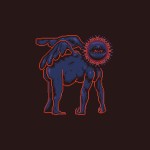
Artist: SANAM (@)
Title: Sametou Sawtan
Format: CD & 12" + Download
Label: Constellation Records (@)
Rated:

Title: Sametou Sawtan
Format: CD & 12" + Download
Label: Constellation Records (@)
Rated:
If the debut SANAM album felt like a bolt of lightning hitting ancient stone, "Sametou Sawtan" is what happens after the dust settles: voices rise from the cracks, feedback coils around old poems like affectionate serpents, and a strange, trembling clarity spreads through the air. The title - “I Heard A Voice” - reads like a warning or an omen, depending on your mood. It turns out to be both.
This band from Beirut has already built a reputation for treating tradition not as a museum piece but as combustible material, ready to ignite when struck by guitars, buzuq filigrees, detuned electronics, and the kind of drumming that sounds as if the kit is trying to outrun history. On their sophomore record, they dive even deeper into this alchemical process - and come back with something that feels both haunted and defiantly alive.
Work on the album began in Beirut, but its spirit stretches across Byblos, Paris, and the emotional no-man’s-land of people watching their country empty out around them. Sandy Chamoun sings from within this suspended state - not mournful, not stoic, but in that aching middle zone where displacement becomes a daily rhythm. Her voice remains SANAM’s gravitational center: crystalline one moment, scorched the next, always carrying a quiet ferocity.
The opening track, "Harik" (“Fire”), lights the fuse. Electronics rasp, drums tumble forward with animal urgency, and Chamoun sounds like someone trying to name a feeling that burns faster than language can keep up. It’s a beginning that feels like an ending, and vice versa - SANAM’s specialty.
"Goblin" leans into a ballad form, but a ballad in SANAM's world is less a confession and more a ritual. Guitars twist around buzuq in a dance equal parts sorrow and mischief. Nothing ever stays still long enough to settle.
"Habibon", meanwhile, proves that autotune need not be a glossy crutch - here it’s a portal. Chamoun’s voice fractures, distorts, recombines, turning emotional instability into architecture. If the track were a building, it would sway in the wind and still refuse to collapse.
The band has long embraced borrowed texts, and on "Hadikat Al Ams" and "Hamam" they prove again how radically context can reshuffle meaning. Paul Shaoul’s words become a hard-edged march, while the Egyptian folk source of "Hamam" mutates into a sprawling, slow-burning séance. The latter is one of the record’s heavyweights: nearly ten minutes of cyclical tension, like watching a storm gather behind a mountain you thought was stable.
Then comes the poetry of Omar Khayyam - a mathematician from the twelfth century whose existential ambiguities land uncomfortably well in 2025. "Sayl Damei" and the title track turn his verses into trembling lanterns held up against contemporary darkness. It’s not nostalgia. It’s continuity under duress.
Chamoun contributes two lyrics of her own: "Harik" and "Tatayoum". The former is a conflagration; the latter, an obsession looped until meaning bends. The buzuq threads through both like a nervous system, binding electronics and percussion into something organic, feverish, and strangely hopeful.
Throughout the album, producer Radwan Ghazi Moumneh acts less like an external hand and more like a tectonic force nudging everything toward eruption. SANAM have always thrived on friction, and here the friction is generative, luminous.
What makes "Sametou Sawtan" remarkable is not its intensity - though it has plenty - but its emotional geometry. The record is full of ruptures and distances: between past and present, between home and elsewhere, between the voice you hear and the voice you imagine. But SANAM do not mourn these distances; they turn them into highways.
To hear this album is to stand at a crossroads that is somehow everywhere at once: Beirut, Byblos, Paris, a medieval poem, a future you can’t quite touch. And in the center, a voice - flickering, steady, refusing to go silent.
If the debut announced SANAM as a storm system, "Sametou Sawtan" shows what they can do once the storm learns to breathe.
This band from Beirut has already built a reputation for treating tradition not as a museum piece but as combustible material, ready to ignite when struck by guitars, buzuq filigrees, detuned electronics, and the kind of drumming that sounds as if the kit is trying to outrun history. On their sophomore record, they dive even deeper into this alchemical process - and come back with something that feels both haunted and defiantly alive.
Work on the album began in Beirut, but its spirit stretches across Byblos, Paris, and the emotional no-man’s-land of people watching their country empty out around them. Sandy Chamoun sings from within this suspended state - not mournful, not stoic, but in that aching middle zone where displacement becomes a daily rhythm. Her voice remains SANAM’s gravitational center: crystalline one moment, scorched the next, always carrying a quiet ferocity.
The opening track, "Harik" (“Fire”), lights the fuse. Electronics rasp, drums tumble forward with animal urgency, and Chamoun sounds like someone trying to name a feeling that burns faster than language can keep up. It’s a beginning that feels like an ending, and vice versa - SANAM’s specialty.
"Goblin" leans into a ballad form, but a ballad in SANAM's world is less a confession and more a ritual. Guitars twist around buzuq in a dance equal parts sorrow and mischief. Nothing ever stays still long enough to settle.
"Habibon", meanwhile, proves that autotune need not be a glossy crutch - here it’s a portal. Chamoun’s voice fractures, distorts, recombines, turning emotional instability into architecture. If the track were a building, it would sway in the wind and still refuse to collapse.
The band has long embraced borrowed texts, and on "Hadikat Al Ams" and "Hamam" they prove again how radically context can reshuffle meaning. Paul Shaoul’s words become a hard-edged march, while the Egyptian folk source of "Hamam" mutates into a sprawling, slow-burning séance. The latter is one of the record’s heavyweights: nearly ten minutes of cyclical tension, like watching a storm gather behind a mountain you thought was stable.
Then comes the poetry of Omar Khayyam - a mathematician from the twelfth century whose existential ambiguities land uncomfortably well in 2025. "Sayl Damei" and the title track turn his verses into trembling lanterns held up against contemporary darkness. It’s not nostalgia. It’s continuity under duress.
Chamoun contributes two lyrics of her own: "Harik" and "Tatayoum". The former is a conflagration; the latter, an obsession looped until meaning bends. The buzuq threads through both like a nervous system, binding electronics and percussion into something organic, feverish, and strangely hopeful.
Throughout the album, producer Radwan Ghazi Moumneh acts less like an external hand and more like a tectonic force nudging everything toward eruption. SANAM have always thrived on friction, and here the friction is generative, luminous.
What makes "Sametou Sawtan" remarkable is not its intensity - though it has plenty - but its emotional geometry. The record is full of ruptures and distances: between past and present, between home and elsewhere, between the voice you hear and the voice you imagine. But SANAM do not mourn these distances; they turn them into highways.
To hear this album is to stand at a crossroads that is somehow everywhere at once: Beirut, Byblos, Paris, a medieval poem, a future you can’t quite touch. And in the center, a voice - flickering, steady, refusing to go silent.
If the debut announced SANAM as a storm system, "Sametou Sawtan" shows what they can do once the storm learns to breathe.