
Browse by Genre
Industrial Music / Industrial Metal / Aggro Industrial / Electro Metal
Industrial Noise / Power Noise / Harsh Noise
Synth Pop / Electro Pop / Synth-Electronica
Techno / Trance / Goa / Drum'n'Bass / Jungle / Tribal / Trip-Hop
Ambient / Electronica / Ethereal / Dub / Soundscapes / Abstract
Experimental / Avantgarde / Weird & Wired / Glitch / Noise / Field Recording
Dark / Gothic / Wave / New Wave / Dark Wave / Industrial Gothic
New Music / Downtown / Avantgarde Jazz / New Classical / World
Search Reviews
Music Reviews
Ivar Grydeland: Bøyning, brytning
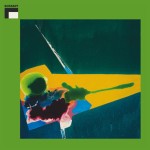


Ivar Grydeland has always seemed less interested in playing the guitar than in negotiating with it. Strings, circuits, delays, ghosts of notes past: everything is invited to the table, and no one is guaranteed a speaking turn. On "Bøyning, brytning" - his third solo album for SOFA - this approach reaches a quietly absorbing clarity. It’s a record about bending and breaking, yes, but also about letting go: of control, of linear time, of the fantasy that sound should behave itself.
Living on the Nesodden peninsula, with the Oslo fjord as daily companion, Grydeland once again turns to water as both metaphor and method. But this is not postcard ambient, nor the sonic equivalent of a tasteful screensaver. The album’s title refers to how light curves and refracts, and that’s exactly how the music moves: angles instead of lines, reflections instead of statements. Sounds arrive as if from a distance, take a detour through some unseen medium, and finally settle - briefly - right beside your ear.
The technical setup behind "Bøyning, brytning" is deliberately unruly: a carefully built system of analog and digital tools designed to resist obedience. Grydeland plays pedal steel, electric and Portuguese guitars into this semi-autonomous environment, where delays and responses behave like temperamental collaborators rather than neutral tools. The result feels uncannily social for a solo record, continuing an investigation he began years ago into how electronics can simulate the sensation of playing with others - sometimes supportive, sometimes contrary, sometimes just confusing enough to be interesting.
The opening piece, “Virkning av lysets bøyning”, stretches across seventeen minutes and sets the tone with patient authority. Joined by percussionist Michaela Antalová, Grydeland allows rhythm to breathe rather than assert itself. The pulse is there, but it drifts, smokes, evaporates. Guitar tones shimmer and tilt, suggesting motion without destination, like watching currents intersect beneath the surface. It’s immersive without being narcotic - music that asks for attention, not surrender.
From there, Grydeland continues alone, finding percussive and harmonic counterpoints inside his own system. “Fordums streng” is almost a ballad, if one accepts a definition of ballad that includes creaking resonance and tones bleeding gently into each other like ink in water. “Virkning av lysets brytning” introduces a more mechanical tension: a melody repeatedly interrupted by sharp, almost slapstick pulses, as if the music were being politely sabotaged by its own infrastructure.
“Ringer i ringer av vann” lives up to its title, sending resonant waves through quiet electronic pops, each sound triggering another at an oblique angle. And then there’s the closing miniature, “Snyt meg langsommere”, whose title carries a wink even if its translation remains cheerfully elusive. Grydeland builds a cavernous, underwater space - only to eject us, without warning, back onto dry land. No grand finale, no fade into infinity. Just a reminder that immersion is temporary.
What makes "Bøyning, brytning" compelling is not virtuosity in the traditional sense, but trust: trust in systems, in listening, in the idea that meaning can emerge from interaction rather than intention. Grydeland doesn’t dramatize this process; he lets it unfold. The humor, when it appears, is dry and structural - the kind that comes from setting something in motion and watching it politely refuse to behave.
This is music that bends toward the listener without ever fully revealing its shape. It refracts, reflects, and occasionally glitches, like light on unsettled water. If you’re looking for statements, you may leave empty-handed. If you’re willing to linger at the edge, watching small changes accumulate until they suddenly matter, "Bøyning, brytning" offers quiet, lasting rewards.
Living on the Nesodden peninsula, with the Oslo fjord as daily companion, Grydeland once again turns to water as both metaphor and method. But this is not postcard ambient, nor the sonic equivalent of a tasteful screensaver. The album’s title refers to how light curves and refracts, and that’s exactly how the music moves: angles instead of lines, reflections instead of statements. Sounds arrive as if from a distance, take a detour through some unseen medium, and finally settle - briefly - right beside your ear.
The technical setup behind "Bøyning, brytning" is deliberately unruly: a carefully built system of analog and digital tools designed to resist obedience. Grydeland plays pedal steel, electric and Portuguese guitars into this semi-autonomous environment, where delays and responses behave like temperamental collaborators rather than neutral tools. The result feels uncannily social for a solo record, continuing an investigation he began years ago into how electronics can simulate the sensation of playing with others - sometimes supportive, sometimes contrary, sometimes just confusing enough to be interesting.
The opening piece, “Virkning av lysets bøyning”, stretches across seventeen minutes and sets the tone with patient authority. Joined by percussionist Michaela Antalová, Grydeland allows rhythm to breathe rather than assert itself. The pulse is there, but it drifts, smokes, evaporates. Guitar tones shimmer and tilt, suggesting motion without destination, like watching currents intersect beneath the surface. It’s immersive without being narcotic - music that asks for attention, not surrender.
From there, Grydeland continues alone, finding percussive and harmonic counterpoints inside his own system. “Fordums streng” is almost a ballad, if one accepts a definition of ballad that includes creaking resonance and tones bleeding gently into each other like ink in water. “Virkning av lysets brytning” introduces a more mechanical tension: a melody repeatedly interrupted by sharp, almost slapstick pulses, as if the music were being politely sabotaged by its own infrastructure.
“Ringer i ringer av vann” lives up to its title, sending resonant waves through quiet electronic pops, each sound triggering another at an oblique angle. And then there’s the closing miniature, “Snyt meg langsommere”, whose title carries a wink even if its translation remains cheerfully elusive. Grydeland builds a cavernous, underwater space - only to eject us, without warning, back onto dry land. No grand finale, no fade into infinity. Just a reminder that immersion is temporary.
What makes "Bøyning, brytning" compelling is not virtuosity in the traditional sense, but trust: trust in systems, in listening, in the idea that meaning can emerge from interaction rather than intention. Grydeland doesn’t dramatize this process; he lets it unfold. The humor, when it appears, is dry and structural - the kind that comes from setting something in motion and watching it politely refuse to behave.
This is music that bends toward the listener without ever fully revealing its shape. It refracts, reflects, and occasionally glitches, like light on unsettled water. If you’re looking for statements, you may leave empty-handed. If you’re willing to linger at the edge, watching small changes accumulate until they suddenly matter, "Bøyning, brytning" offers quiet, lasting rewards.
Isak Ingvarsson: The Calling

Isak Ingvarsson’s "The Calling" arrives with the quiet confidence of someone who has wrestled with angels, lost a few rounds, and decided to turn the whole affair into music rather than theology. This debut album doesn’t so much answer questions as circle them patiently, like a cat around a warm radiator, aware that certainty is overrated and doubt has better acoustics. Rooted in Ingvarsson’s Catholic upbringing but stripped of any ecclesiastical stiffness, the record treats faith less as doctrine and more as a recurring melodic ghost: something learned early, forgotten badly, and remembered at inconvenient moments.
At its core, "The Calling" is a trio record that understands the power of restraint. Ingvarsson’s tenor and baritone saxophones don’t preach; they confess, hesitate, and occasionally mutter under their breath. His lines often feel like psalms rewritten by someone who skipped church but kept the hymns lodged somewhere deep in the body. Johan Graden’s piano and organ work provides a harmonic terrain that is at once grounded and slippery, moving between meditative repetition and sudden, sideways harmonic decisions that feel like doors opening where you expected walls. Kresten Osgood, meanwhile, plays drums as if time itself were optional, nudging, prodding, and sometimes sabotaging the pulse just enough to keep everything human. Even the Yamaha PSR-1500, an instrument that in lesser hands might scream “bad taste”, is deployed with a sense of mischief that borders on grace.
What makes the album compelling is its refusal to dramatize despair or sanctify hope. Pieces unfold slowly, motifs are worried rather than developed, and silences are treated as equal partners. Tracks like “Calling” and “My Prayer” suggest ritual, but a ritual emptied of spectacle: no incense, no stained glass, just breath, friction, and repetition. Elsewhere, the recurring appearances of “Tre Toner” feel like a stubborn thought returning in slightly altered form, refusing to be resolved because resolution would be dishonest. This is music that insists on asking questions without answers, and then asking them again, just to be sure.
Ingvarsson’s background - studies in Berlin, current immersion in New York’s jazz ecosystem, mentorships that bridge avant-garde severity and straight-ahead tradition - comes through not as stylistic name-dropping but as a kind of internal tension. You can hear the pull between discipline and rupture, between lyricism and abrasion. Yet "The Calling" never collapses into angst tourism. There’s a strange calm here, the kind that comes from accepting that belief and doubt are not opposites but roommates who don’t speak much.
In the end, "The Calling" feels less like a debut statement and more like an ongoing process, caught mid-thought. It’s a record that understands that faith, like improvisation, is mostly about listening: to what’s been inherited, to what refuses to leave, and to what emerges when you stop demanding clarity. No miracles are promised here, no conversions attempted. Just a careful, searching music that suggests that sometimes the calling isn’t a voice from above, but a persistent murmur from inside, asking you to keep going, even when the answers remain stubbornly out of reach.
At its core, "The Calling" is a trio record that understands the power of restraint. Ingvarsson’s tenor and baritone saxophones don’t preach; they confess, hesitate, and occasionally mutter under their breath. His lines often feel like psalms rewritten by someone who skipped church but kept the hymns lodged somewhere deep in the body. Johan Graden’s piano and organ work provides a harmonic terrain that is at once grounded and slippery, moving between meditative repetition and sudden, sideways harmonic decisions that feel like doors opening where you expected walls. Kresten Osgood, meanwhile, plays drums as if time itself were optional, nudging, prodding, and sometimes sabotaging the pulse just enough to keep everything human. Even the Yamaha PSR-1500, an instrument that in lesser hands might scream “bad taste”, is deployed with a sense of mischief that borders on grace.
What makes the album compelling is its refusal to dramatize despair or sanctify hope. Pieces unfold slowly, motifs are worried rather than developed, and silences are treated as equal partners. Tracks like “Calling” and “My Prayer” suggest ritual, but a ritual emptied of spectacle: no incense, no stained glass, just breath, friction, and repetition. Elsewhere, the recurring appearances of “Tre Toner” feel like a stubborn thought returning in slightly altered form, refusing to be resolved because resolution would be dishonest. This is music that insists on asking questions without answers, and then asking them again, just to be sure.
Ingvarsson’s background - studies in Berlin, current immersion in New York’s jazz ecosystem, mentorships that bridge avant-garde severity and straight-ahead tradition - comes through not as stylistic name-dropping but as a kind of internal tension. You can hear the pull between discipline and rupture, between lyricism and abrasion. Yet "The Calling" never collapses into angst tourism. There’s a strange calm here, the kind that comes from accepting that belief and doubt are not opposites but roommates who don’t speak much.
In the end, "The Calling" feels less like a debut statement and more like an ongoing process, caught mid-thought. It’s a record that understands that faith, like improvisation, is mostly about listening: to what’s been inherited, to what refuses to leave, and to what emerges when you stop demanding clarity. No miracles are promised here, no conversions attempted. Just a careful, searching music that suggests that sometimes the calling isn’t a voice from above, but a persistent murmur from inside, asking you to keep going, even when the answers remain stubbornly out of reach.
Not Normal: Modærn Qualitet
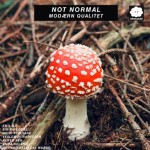
There’s something deliciously ironic about calling a project "Not Normal" and then delivering an album that feels uncannily precise in diagnosing the present moment. "Modærn Qualitet", the debut full-length from Emil Bø’s ensemble of the same name, doesn’t just comment on contemporary jazz or contemporary society: it stares at both until they blink first.
Bø, a Norwegian trombonist and composer who has been quietly but steadily sharpening his voice on the Scandinavian scene, first conceived "Not Normal" as a commissioned work for the Oslo Jazz Festival. On stage, it apparently hit with the force of a well-aimed paradox. In the studio, at Øra in Trondheim, that energy doesn’t dissipate; it mutates. The result is not a document of a live performance, nor a polite studio refinement, but something stranger: a curated ecosystem where composition, improvisation, electronics, and conceptual intent coexist without asking permission.
The album’s central obsession is isolation. Not the romantic, artist-in-a-cabin kind, but the algorithmic one: self-chosen bubbles, curated realities, the comfort of never being surprised unless you want to be. Bø translates this into music that refuses to settle into a single aesthetic lane. Jazz here is elastic, occasionally confrontational, sometimes playful, sometimes eerily vacant. Grooves emerge, wobble, and then quietly dissolve, like social consensus in a comment section.
Instrumentation plays a key role in this sense of controlled instability. Trombone and saxophones often feel less like soloists and more like argumentative voices in a public debate that no one is moderating. Synths, vibraphone, and sound treatments creep in not as decorative elements but as structural agents, blurring the line between acoustic intention and electronic intervention. Veslemøy Narvesen’s drumming deserves special mention: it’s alert, responsive, and often sounds like it’s listening harder than the rest of us.
Tracks like “Maskinell loop” and “Subland” flirt openly with repetition and mechanization, but never fully surrender to them. They circle the idea of automation without becoming automated themselves. The title track, “Modærn Qualitet”, functions almost as a thesis statement: modernity presented not as sleek progress, but as a collage of contradictions, glitches included. Elsewhere, moments labeled “Trio.” or “Solo.” feel less like traditional jazz signposts and more like conceptual placeholders, as if Bø is asking what those terms even mean anymore when context keeps dissolving.
There’s also humor here, dry and slightly absurd. “Dizzy Dada Pt.1” and “Pt.2” wink knowingly at jazz history while dragging it through a hall of distorted mirrors. Reverence is present, but it’s irreverent reverence, the kind that respects tradition enough to poke it with a stick.
What makes "Modærn Qualitet" particularly compelling is that it doesn’t offer solutions. It doesn’t moralize. It observes, assembles, and lets the discomfort linger. The question “what happens when the abnormal becomes normal?” is never answered outright, but the album suggests that the result is this very tension: music that keeps shifting its footing, alert to the absurdity of trying to stand still.
In the end, "Modærn Qualitet" feels less like a statement and more like a condition. Restless, fragmented, oddly lucid. Not normal, indeed - but disturbingly accurate.
Bø, a Norwegian trombonist and composer who has been quietly but steadily sharpening his voice on the Scandinavian scene, first conceived "Not Normal" as a commissioned work for the Oslo Jazz Festival. On stage, it apparently hit with the force of a well-aimed paradox. In the studio, at Øra in Trondheim, that energy doesn’t dissipate; it mutates. The result is not a document of a live performance, nor a polite studio refinement, but something stranger: a curated ecosystem where composition, improvisation, electronics, and conceptual intent coexist without asking permission.
The album’s central obsession is isolation. Not the romantic, artist-in-a-cabin kind, but the algorithmic one: self-chosen bubbles, curated realities, the comfort of never being surprised unless you want to be. Bø translates this into music that refuses to settle into a single aesthetic lane. Jazz here is elastic, occasionally confrontational, sometimes playful, sometimes eerily vacant. Grooves emerge, wobble, and then quietly dissolve, like social consensus in a comment section.
Instrumentation plays a key role in this sense of controlled instability. Trombone and saxophones often feel less like soloists and more like argumentative voices in a public debate that no one is moderating. Synths, vibraphone, and sound treatments creep in not as decorative elements but as structural agents, blurring the line between acoustic intention and electronic intervention. Veslemøy Narvesen’s drumming deserves special mention: it’s alert, responsive, and often sounds like it’s listening harder than the rest of us.
Tracks like “Maskinell loop” and “Subland” flirt openly with repetition and mechanization, but never fully surrender to them. They circle the idea of automation without becoming automated themselves. The title track, “Modærn Qualitet”, functions almost as a thesis statement: modernity presented not as sleek progress, but as a collage of contradictions, glitches included. Elsewhere, moments labeled “Trio.” or “Solo.” feel less like traditional jazz signposts and more like conceptual placeholders, as if Bø is asking what those terms even mean anymore when context keeps dissolving.
There’s also humor here, dry and slightly absurd. “Dizzy Dada Pt.1” and “Pt.2” wink knowingly at jazz history while dragging it through a hall of distorted mirrors. Reverence is present, but it’s irreverent reverence, the kind that respects tradition enough to poke it with a stick.
What makes "Modærn Qualitet" particularly compelling is that it doesn’t offer solutions. It doesn’t moralize. It observes, assembles, and lets the discomfort linger. The question “what happens when the abnormal becomes normal?” is never answered outright, but the album suggests that the result is this very tension: music that keeps shifting its footing, alert to the absurdity of trying to stand still.
In the end, "Modærn Qualitet" feels less like a statement and more like a condition. Restless, fragmented, oddly lucid. Not normal, indeed - but disturbingly accurate.
NiCKY: with
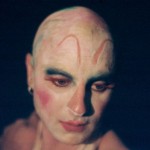
If "by" was NiCKY alone at the piano, mascara slightly smudged, "with" is NiCKY after midnight, jacket off, lights low, surrounded by accomplices who know exactly when to enter and, more importantly, when to leave space. This EP doesn’t abandon intimacy, it dresses it up, then gently pulls the costume back off again.
NiCKY comes from London’s queer performance ecosystem, a place where persona is survival kit and art form at once. What’s striking here is how consciously that armor is loosened. "with" is not louder because it wants to impress, it’s fuller because it wants company. The songs breathe differently: piano still anchors everything, but now there are saxophones that sidle up like flirtatious strangers, drums that know restraint is sexier than bravado, and voices that appear like confidants rather than backing singers.
The EP opens with "I Saw You", a song that understands cruising not as provocation but as recognition. It moves with the calm assurance of someone who has learned that seeing and being seen can be an act of care. NiCKY’s vocal delivery, half-spoken, half-sung, carries that fragile authority familiar from artists who turn vulnerability into posture, though here it never curdles into mannerism.
"The Fall" is the emotional fulcrum, a piece that balances precarity and resilience without turning either into slogan. The spoken-word introduction feels like a threshold, the piano lines arrive cautiously, and then the song lifts itself into something quietly defiant. It’s not a rallying cry, it’s a hand on your shoulder saying: you’re not imagining this, but you’re not alone either.
Then there’s "Private Glance", which struts in wearing a grin sharp enough to puncture art-world pretensions. Saxophones skitter, rhythms tilt, and NiCKY delivers one of their most playful performances to date. It’s funny, yes, but not frivolous. The humor cuts because it knows the room too well, the mirrors, the masks, the choreography of cool. Camp here is not decoration, it’s a diagnostic tool.
Across the EP, collaboration never feels like dilution. The presence of musicians from adjacent worlds, alt-jazz, avant-pop, underground performance, doesn’t blur NiCKY’s voice, it frames it. "Fool’s Convention" closes things on a note of tender introspection, floating somewhere between torch song and dream sequence, as if the EP itself is exhaling after a long, necessary confession.
"with" is about queer vulnerability, yes, but not the Instagram-ready kind. This is vulnerability as process: awkward, layered, occasionally contradictory. NiCKY doesn’t ask for empathy, they construct situations where empathy becomes unavoidable. The result is an EP that feels less like a statement and more like an invitation. Not to watch, not to applaud, but to sit nearby, listen closely, and stay a little longer than planned.
NiCKY comes from London’s queer performance ecosystem, a place where persona is survival kit and art form at once. What’s striking here is how consciously that armor is loosened. "with" is not louder because it wants to impress, it’s fuller because it wants company. The songs breathe differently: piano still anchors everything, but now there are saxophones that sidle up like flirtatious strangers, drums that know restraint is sexier than bravado, and voices that appear like confidants rather than backing singers.
The EP opens with "I Saw You", a song that understands cruising not as provocation but as recognition. It moves with the calm assurance of someone who has learned that seeing and being seen can be an act of care. NiCKY’s vocal delivery, half-spoken, half-sung, carries that fragile authority familiar from artists who turn vulnerability into posture, though here it never curdles into mannerism.
"The Fall" is the emotional fulcrum, a piece that balances precarity and resilience without turning either into slogan. The spoken-word introduction feels like a threshold, the piano lines arrive cautiously, and then the song lifts itself into something quietly defiant. It’s not a rallying cry, it’s a hand on your shoulder saying: you’re not imagining this, but you’re not alone either.
Then there’s "Private Glance", which struts in wearing a grin sharp enough to puncture art-world pretensions. Saxophones skitter, rhythms tilt, and NiCKY delivers one of their most playful performances to date. It’s funny, yes, but not frivolous. The humor cuts because it knows the room too well, the mirrors, the masks, the choreography of cool. Camp here is not decoration, it’s a diagnostic tool.
Across the EP, collaboration never feels like dilution. The presence of musicians from adjacent worlds, alt-jazz, avant-pop, underground performance, doesn’t blur NiCKY’s voice, it frames it. "Fool’s Convention" closes things on a note of tender introspection, floating somewhere between torch song and dream sequence, as if the EP itself is exhaling after a long, necessary confession.
"with" is about queer vulnerability, yes, but not the Instagram-ready kind. This is vulnerability as process: awkward, layered, occasionally contradictory. NiCKY doesn’t ask for empathy, they construct situations where empathy becomes unavoidable. The result is an EP that feels less like a statement and more like an invitation. Not to watch, not to applaud, but to sit nearby, listen closely, and stay a little longer than planned.
Jessica Moss: Unfolding
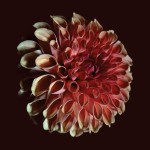
There are artists who compose music; and then there are artists who allow music to condense around them, like dew forming on a cold window at dawn. Jessica Moss has always belonged to the latter camp. "Unfolding", her sixth solo album and perhaps her most inward-reading one, feels like watching someone breathe through grief until breath becomes ritual, and ritual becomes transmission.
This record does not whisper, nor does it roar. It glows. It’s the glow of a votive candle in a room where someone hasn’t slept for a week but still finds the strength to sing. Moss, whose résumé stretches from the apocalyptic hymns of Thee Silver Mt. Zion to the diasporic ache of Black Ox Orkestar, has long orbited the borderlands between serenity and devastation. Here she slows her orbit. She turns it into a vigil.
“Washing Machine”, the opener, sounds almost like a private séance she inadvertently left the door open for. The metallic hums, the buried voice, the looping strings - everything sways with the stubborn rhythm of a body trying to make peace with itself. Knowing the piece began beside an actual European washer is almost too poetic to be true: heartbreak meeting household appliance astronomy, finding a scale of comfort in the drone of warm water and centrifugal force.
“One, Now”, shaped with the help of Tony Buck’s brushwork and Radwan Ghazi Moumneh’s sonic fingerprints, moves as if through fog: violin lines tracing long, aching arcs; bells flickering like memory; voices that seem to hover just above the ground, unsure whether to lament or to bless. Moss draws from Jewish and Arabic modes as if plucking threads from old garments, weaving them into something meant for a future ceremony we haven’t been invited to yet - but may desperately need.
Side Two’s four-part suite - “no one / no where / no one is free / until all are free” - is where her political and personal axes align into something unmistakably sharp. The drones become more fractured, the spaces more cavernous. And yet the message is clear: she’s not offering refuge from the world, but a listening space "inside" it, where sorrow doesn’t need translation and solidarity doesn’t need applause.
Then comes “until all are free”, the choral finale that lands like someone opening a window during a storm - not to stop it, but to acknowledge its truth. Moss multitracks her voice into a secular psalm, a protest hymn disguised as a lullaby. She sings alone, but it’s written for the day she won’t have to.
This is Moss at her most vulnerable, yes, but also at her most exacting. The album is not fragile: it’s tensile, woven from fibres that stretch without breaking. Her collaboration with Montréal’s quantum physicists suddenly feels apt - "Unfolding" behaves like music observing itself, collapsing and expanding at the listener’s touch, a wave that dares to remain a wave.
In an era where ambient often means “pleasant fog machine”, Moss offers something with stakes, with history, with pulse. She isn’t lulling; she’s testifying. And she trusts the listener enough to sit with discomfort, beauty, and the fact that the two often look like siblings.
"Unfolding" is not an escape hatch. It is a lantern. And Moss lights it not for herself, but for whoever else is still searching in the dark - for connection, for justice, for the simple proof that we are not alone.
This record does not whisper, nor does it roar. It glows. It’s the glow of a votive candle in a room where someone hasn’t slept for a week but still finds the strength to sing. Moss, whose résumé stretches from the apocalyptic hymns of Thee Silver Mt. Zion to the diasporic ache of Black Ox Orkestar, has long orbited the borderlands between serenity and devastation. Here she slows her orbit. She turns it into a vigil.
“Washing Machine”, the opener, sounds almost like a private séance she inadvertently left the door open for. The metallic hums, the buried voice, the looping strings - everything sways with the stubborn rhythm of a body trying to make peace with itself. Knowing the piece began beside an actual European washer is almost too poetic to be true: heartbreak meeting household appliance astronomy, finding a scale of comfort in the drone of warm water and centrifugal force.
“One, Now”, shaped with the help of Tony Buck’s brushwork and Radwan Ghazi Moumneh’s sonic fingerprints, moves as if through fog: violin lines tracing long, aching arcs; bells flickering like memory; voices that seem to hover just above the ground, unsure whether to lament or to bless. Moss draws from Jewish and Arabic modes as if plucking threads from old garments, weaving them into something meant for a future ceremony we haven’t been invited to yet - but may desperately need.
Side Two’s four-part suite - “no one / no where / no one is free / until all are free” - is where her political and personal axes align into something unmistakably sharp. The drones become more fractured, the spaces more cavernous. And yet the message is clear: she’s not offering refuge from the world, but a listening space "inside" it, where sorrow doesn’t need translation and solidarity doesn’t need applause.
Then comes “until all are free”, the choral finale that lands like someone opening a window during a storm - not to stop it, but to acknowledge its truth. Moss multitracks her voice into a secular psalm, a protest hymn disguised as a lullaby. She sings alone, but it’s written for the day she won’t have to.
This is Moss at her most vulnerable, yes, but also at her most exacting. The album is not fragile: it’s tensile, woven from fibres that stretch without breaking. Her collaboration with Montréal’s quantum physicists suddenly feels apt - "Unfolding" behaves like music observing itself, collapsing and expanding at the listener’s touch, a wave that dares to remain a wave.
In an era where ambient often means “pleasant fog machine”, Moss offers something with stakes, with history, with pulse. She isn’t lulling; she’s testifying. And she trusts the listener enough to sit with discomfort, beauty, and the fact that the two often look like siblings.
"Unfolding" is not an escape hatch. It is a lantern. And Moss lights it not for herself, but for whoever else is still searching in the dark - for connection, for justice, for the simple proof that we are not alone.