
Saturday, November 21, 2026
Browse by Genre
Industrial Music / Industrial Metal / Aggro Industrial / Electro Metal
Industrial Noise / Power Noise / Harsh Noise
Synth Pop / Electro Pop / Synth-Electronica
Techno / Trance / Goa / Drum'n'Bass / Jungle / Tribal / Trip-Hop
Ambient / Electronica / Ethereal / Dub / Soundscapes / Abstract
Experimental / Avantgarde / Weird & Wired / Glitch / Noise / Field Recording
Dark / Gothic / Wave / New Wave / Dark Wave / Industrial Gothic
New Music / Downtown / Avantgarde Jazz / New Classical / World
Search Reviews
Music Reviews
Pyrroline: Ambiguity
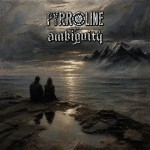
Always when I put on Pyrroline's last album "Struggling" I'm still deeply impressed with its quality and the fact that I can still find new sounds, ideas, and effects on the tracks of this timeless, epic-sounding Dark Electro-album, although it is already 5 years old. Now this German duo returns and continues their path to grow and develop deeper and more detailed into cinematic-sounding classic Dark Electro-music.
With "Ambiguity", Arnte and Schmoun present their newest full-length output once again via Electro Aggression Records (EAR), a label that has steadily built a reputation for championing authentic, multi-layered Dark Electro. Right from the beginning, it becomes obvious that Pyrroline isn't at all interested in delivering cheap, repetitive dancefloor-food for the hyperactive, glowstick-twirling Hellectro brigade. Instead, the duo digs deep into their studio arsenal to squeeze out dense, intricate synthesizer-pads, shifting soundscapes, and biting, pummeling bassline-sequencing works that clearly bows down to the golden mid-90s era of the genre without ever sounding dusty or outdated.
The album opens with the title track "Ambiguity", immediately drawing the listener into a wide, atmospheric scenario with epic string- and pad-layers before the driving beats and Arnte's tense, expressive vocals kick in to lead the way. What separates Pyrroline from many of their colleagues is their remarkable sense for song progression and dynamics. While tracks like "Transition Fault" push forward with sharp rhythmic precision and crisp drum-programming, special praise has to be given to the instrumental "Britzelgritzel" (what a strange-sounding track title!) for its wide, cinematic, and almost Ambient-like passages that showcase the duo's impressive talent for pure atmospheric storytelling without needing a single vocal line.
A special sonic dimension is added when Arnte's female partner Schmoun steps up to the microphone, bringing in her smooth, natural vocal performance as an effective human counterpart to the cold and mechanic music expression of Pyrroline. On "Ambiguity", this contrast shines brightly on "Crossroads Of Progress", where her clear voice weaves gracefully through the intricate electronic structures, as well as on "Day 45", where she takes over the chorus - a brooding track that listeners might already recognize from its pre-release video on YouTube.
To pick out single highlights out of these 12 cohesive tracks is a bit challenging, because the album works best as a complete, immersive sonic journey. However, one track that definitely stands out is the faster-paced "Eventually" with its thick and richly detailed sound layers. The way the atmospheric synth-textures, dystopian lyrical themes, and subtle sonic effects interlock here shows Pyrroline at the absolute peak of their craft - so it comes as no surprise that the duo also submitted this masterpiece to the prestigious HOFA Song Contest in the Industrial category, bringing their authentic underground sound onto a wider stage.
Aside from these gems, I am also quite fine with "Relentless", another track that was already introduced beforehand via a video release on YouTube and features a strong vocal collaboration with TC75, adding an extra dose of raw, energetic pressure to the mix.
Meanwhile, deeper and more atmospheric tunes like "Already Defined?" or the closing "Inner Resonance" showcase the duo's talent for slower, ominous, and filmic soundscapes - leaving plenty of subtle details to discover even after multiple spins, just like on "Struggling".
As for a minor point of criticism on this album – if you want to call it that at all – Pyrroline simply acts like Pyrroline. You know exactly what you will get here: of course delivered on the highest thinkable level of quality and craftsmanship, yet the duo completely avoids surprising style changes or unexpected flirts with other genres. They stay strictly inside their well-defined musical territory without taking risky stylistic detours, which might leave listeners hoping for a bold reinvention slightly wanting.
Finally, some praising words have to be given to the visual presentation of the digipak CD release, crafted by Michael Renfield (R010R), alongside with Arnte. Seeing the silhouettes of the two protagonists sitting in front of a stormy sea during a sundown looks almost romantic, almost natural – what a refreshing contrast to the raw and ominous, cold and mechanic-looking cover artworks of several colleagues in this scene!
"Ambiguity" is undoubtedly another strong addition to Pyrroline's discography. While casual club-goers might miss some instant, straightforward beats here and there, dedicated listeners of classic, well-crafted Dark Electro will be rewarded with a rich, matured album full of subtle details to explore. Whether you prefer adding the well-crafted physical CD-digipak to your shelf or grabbing the digital download, this release deserves a solid spot in any serious Dark Electro-collection.
Sleepwalk: Dystopia
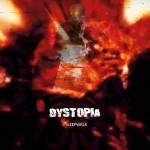
Finally and long awaited, here comes the triumphant return of the Swiss-based Dark Electro-project Sleepwalk. The release of their new album "Dystopia" has taken far too long, especially considering the fact that their previous album "Tempus Vincit Omnia" was released back in 2017. This new 2CD set fulfills the well-known release strategy of the Electro Aggression Records label: to offer the listener as much musical content as possible, with both CDs of this set jam-packed with almost 80 minutes of playing time each. For the band members themselves—now operating as the core duo of founding member Bruno Ruch and vocalist/producer Andreas Lehmann—it was also a long wait until the physical release finally saw the light of day, largely because collecting and assembling the extensive content of the second CD, "Interpretations", proved to be quite time-consuming for various reasons. (Note: A strictly limited 2LP vinyl edition of the main album already saw an earlier release in 2025, while this 2CD package now completes the full picture.)
With roots reaching all the way back to the early 90s in Bern, Sleepwalk have always stood for a complex, multi-layered approach to old-school Dark Electro and EBM rather than simple, one-dimensional club formulas. Mastered once again by Arnte, the 15 original tracks on Disc One prove that the nine-year studio break hasn't dulled their creative edge at all. On the contrary, "Dystopia" unites their trademark ominous, brooding atmosphere with surprisingly accessible melodies and a punchy, contemporary production. The album also carries a deeply personal note, featuring a dedication in memory of Willem Witte of Pantser Fabriek (1978–2025 - RIP).
Right from the ominous opener "Welcome To...", the listener is drawn into a bleak scenario before the title track "Dystopia" immediately emerges as an early highlight—not through sheer club speed, but thanks to its remarkable atmospheric density, woven from brooding, multi-layered synthesizer pads and Andreas Lehmann's distinct, expressive vocal delivery. Immediately following that, "Devil In Disguise" shifts gears and stands out as a particularly well-crafted dancefloor filler, effortlessly uniting infectious, body-moving EBM rhythms with the duo's dark sonic signature. "Psychosis" keeps that club-friendly momentum high, while songs like "Intermediate World" or the slightly more melodic "Phoenix" showcase the band's songwriting depth, taking their time to unfold with plenty of subtle details beneath the surface.
Equally impressive are the two instrumental tracks "Synthetic" and "Force", which truly stand out for their intricate, high-level synthesizer programming and complex rhythmic architecture, proving that Sleepwalk can easily captivate the listener even without vocals. Later in the tracklist, "Ruthless Aggression" and "Egomania" turn up the pressure again, before the eight-minute closer "Last Words" wraps up the main album on a suitably epic and haunting note.
Then there is Disc Two, "Interpretations", compiled by Mr. EAR himself, which offers 17 tracks and truly deserves the highest praise across the board. Far more than a mere bonus disc, it presents 14 cover versions of classic Sleepwalk recordings where every single participating project clearly took their assignment seriously, delivering top-notch, respectful, and deeply dedicated reinterpretations rather than quick throwaway tracks.
Whether it is scene veterans like Plastic Noise Experience ("After Life") and Individual Totem ("Banishment"), or EAR labelmates and peers such as Pyrroline ("Land Under Fire"), T.A.N.K. ("Soul Of Hate"), G.O.L.E.M. ("Your Decision"), Second Disease ("Goddess Of Delight"), Synaptic Defect ("Suppression"), Trilogy ("Hidden Faces"), R010R ("Killing Memories"), Serpents ("Burning In Hell"), Pantser Fabriek ("My Revenge"), Brain Leisure ("Modern Slaves"), and To Avoid ("Grip To The Needle"), there is simply not a single weak spot to be found—even former Sleepwalk co-founder Oliver Spring joins in with Nine Seconds to deliver a remarkable version of "Wheel Of Time". Rounding off this stellar second disc are three noteworthy remixes of new album tracks: Onenine's "Essence Mix" of "Synthetic", Terminal State's gripping rework of "Demons", and especially Pyrroline's brilliant remix of "Dystopia", which opens up so many additional, richly textured facets of the title track that it easily stands on equal footing with the original.
In the end, "Dystopia" is a massive, highly rewarding package for every connoisseur of authentic, multi-layered Dark Electro and classic EBM. Waiting nine years for a new Sleepwalk album was definitely a test of patience, but with 32 tracks in total, strong songwriting on the main disc, and a phenomenal companion disc where every single contributor shines, this 2CD set delivers true value for money and earns an unconditional purchase recommendation—go and get it.
worriedaboutsatan: Outland
Artist: worriedaboutsatan (@)
Title: Outland
Format: Tape + Download
Label: Constellation Tatsu (@)
Rated:

Title: Outland
Format: Tape + Download
Label: Constellation Tatsu (@)
Rated:
There is something rather appealing about an electronic musician deciding that, after years of cultivating an appropriately sinister reputation, it might be time to have a little fun. "Outland" finds Gavin Miller easing off the pressure that characterised March's "No Knock No Doorbell", trading some of its heavier noir tendencies for a more relaxed, exploratory approach. The result is not exactly a cheerful holiday in the countryside, naturally. This is still worriedaboutsatan, after all, and even its brighter moments seem to have received a slightly suspicious letter from the local authorities. But the atmosphere is less oppressive, the arrangements more open-ended, and the music occasionally seems happy to follow an idea simply because it happens to be interesting.
Miller has been developing worriedaboutsatan since 2005–06, initially as a project that grew into a duo with Thomas Ragsdale before returning to its present solo configuration. Across releases for labels including n5MD, Denovali, Gizeh and Past Inside the Present, he has moved between post-rock, ambient, techno and experimental electronica without becoming particularly attached to any one of those territories. His music has also reached audiences beyond the usual underground circuits through its inclusion in Adam Curtis's BBC documentaries "HyperNormalisation" and "Can't Get You Out of My Head", where its uneasy combination of emotional pull and electronic tension proved particularly effective. That cinematic association makes sense, although Miller's work is not simply soundtrack music waiting for someone to supply the pictures. He has a strong instinct for rhythm and melodic development, and a fondness for letting familiar musical materials behave in slightly unfamiliar ways.
The opening “I've Got Nothing But Time” establishes the album's more permissive character. Its eleven minutes are built around a loose guitar-led progression, with an irregular pulse that gives the piece a pleasantly unsettled gait. Rather than immediately settling into a recognisable electronic pattern, it allows its components to stretch and interact, retaining something of the spontaneity of a live jam. There is an almost post-rock quality to its gradual development, though the usual dramatic crescendo never becomes an obligation. The title sounds like a declaration of leisure, but the music suggests that having time is not necessarily the same as knowing what to do with it. Miller seems perfectly content to investigate the possibilities.
“A New Life Awaits You in the Offline Communities” shifts the emphasis towards ambient electronics and a more pronounced rhythmic undercurrent. Its title carries a deliciously ambiguous promise, somewhere between an invitation to escape the digital world and the recruitment slogan of a particularly questionable online commune. Musically, however, it is one of the album's more inviting passages, with a floating quality that never quite loses its sense of movement. “Isogloss” then compresses the mood into a brief, guitar-centred instrumental. The term refers to a geographical boundary marking the distribution of a linguistic feature, an apt name for a piece that seems to occupy the territory between post-punk restraint and electronic melancholy. Its economy is effective, although its brevity also makes it feel like a passing thought rather than a fully developed statement.
“Your Home At One Time” returns to a longer format, combining atmospheric layers with a more measured progression. There is a faint sense of dislocation in the title, as though home were something that could be remembered accurately only by someone who no longer lives there. Miller's music has often worked well with this kind of emotional uncertainty: melodies are present, but they rarely offer the reassurance of a conventional resolution. The shorter “Keygen Variations 2” introduces a more fragmented electronic character, its digital associations suggesting the slightly illicit pleasures of old computer culture, while “An Endless Numbing Paradise” is a miniature that barely has time to establish itself before disappearing. These pieces help prevent the album from becoming a sequence of uniformly extended ambient compositions. They also reveal Miller's willingness to treat an idea as complete even when it lasts less than two minutes, a useful corrective to the assumption that length automatically equals depth.
“Ancestral Hell” brings a heavier, more languid pulse into the proceedings. Its trip-hop inflections and darker electronic colouring recall some of the more brooding corners of Miller's earlier catalogue, but the atmosphere remains comparatively loose. The title might suggest an encounter with inherited trauma or a family reunion that has gone catastrophically wrong; the music is less literal, allowing its unease to emerge through rhythm and texture rather than theatrical gestures. Then comes “I am Vanishing Into The Trees”, a thirteen-minute closing piece that takes the album into another register altogether. Its slow-motion techno pulse gives the track a physical presence, while its gradual development creates a curious mixture of propulsion and withdrawal. The title suggests disappearance, but the rhythm keeps insisting on forward movement. One can leave the world behind, apparently, without necessarily leaving the dancefloor.
Part of the album's appeal lies in the way Miller balances recognisable influences without turning them into a checklist. Post-rock guitars, ambient expanses, electronic beats, tape-like textures and traces of gothic atmosphere all appear, but their function changes from one piece to another. There are moments when the transitions feel more like a collection of different approaches than a tightly unified composition, and the shorter tracks can occasionally seem underdeveloped beside the two substantial bookends. Yet this variety is also central to the record's personality. "Outland" does not seem interested in proving that every musical decision belongs to one grand conceptual scheme. It is content to move between moods, structures and degrees of intensity, occasionally taking a scenic detour simply because the road looks interesting.
The album also makes a useful companion to "No Knock No Doorbell", not because it repeats that record's ideas, but because it reveals another side of the same musical temperament. Where its predecessor leaned more heavily into dark, dense electronic drama, "Outland" allows more air into the arrangements and gives improvisational impulses greater room to develop. Miller's own comparison of the two records, as different characters within the same musical family, is more revealing than any attempt to impose a strict stylistic progression. This is not a retreat from the shadows, merely a decision to stop treating them as permanent residents.
Released by Constellation Tatsu, "Outland" is an engaging and occasionally surprising addition to Miller's extensive catalogue. It may not have the concentrated impact of his more forceful work, and its episodic construction will probably appeal more to listeners comfortable with shifts of scale than to those looking for a tightly plotted electronic statement. But its looseness has a purpose: it gives the music permission to wander, to change its mind and to enjoy the occasional unexpected turn. For an artist whose name suggests a permanent state of alarm, this is a relatively relaxed affair. Satan, it seems, has finally taken a day off. The trees are probably still watching.
Tobia Poltronieri: La voce della padrona
Artist: Tobia Poltronieri (http://www.tobjah.it/) (@)
Title: La voce della padrona
Format: LP
Label: Torto Editions/Esicasmio/Ramble Records (@)
Rated:

Title: La voce della padrona
Format: LP
Label: Torto Editions/Esicasmio/Ramble Records (@)
Rated:
There is something rather wonderful about the idea of spending fifteen years collecting sounds without knowing quite what to do with them, then eventually deciding that they deserve to leave the house. Not every recording needs to become a song, not every musical thought has to justify its existence with a chorus, and not every fragment needs to be rescued from the cutting-room floor. "La voce della padrona" grows out of this freedom. Tobia Poltronieri has assembled material accumulated between 2009 and 2025, captured on dictaphones, four-track cassette recorders and digital devices during journeys, concert tours, sleepless nights and those peculiar intervals when the mind is awake but not entirely committed to the responsibilities of consciousness. The result is a twelve-part instrumental work that feels personal without becoming confessional, and exploratory without turning into an exercise in sound-design self-importance.
Poltronieri is perhaps best known as a co-founder of C+C=Maxigross, the restless collective that emerged from Verona's Lessinia hills in 2008, but his musical history extends well beyond that project. Under the name Tobjah he has pursued a more individual path, moving between songwriting, improvisation and production, while collaborating with musicians as varied as Lino Capra Vaccina, Gabriele Mitelli, Marco Giudici and the late Miles Cooper Seaton. His experience with Seaton, particularly through the Miles Cooper Seaton Trio, is relevant here: the willingness to let a composition remain open, to welcome accidents and to regard musical identity as something that can change through contact with other people. Yet "La voce della padrona" is not simply an archive of collaborations. Its central voice is Poltronieri's guitar, acoustic or electric, treated less as a vehicle for conventional melody than as a means of tracing, interrupting and connecting impressions. Tapes, loops, small keyboards and occasional voices expand the vocabulary, but the guitar remains the album's most recognisable presence.
The opening sequence establishes the record's peculiar sense of proportion. “Labirinto Armonico” and “Cascata Gallurese” are brief, suggestive pieces, followed by the even shorter “Cantico del Saval” and “Ascesa al Corno D’Aquilio”. These titles might suggest a carefully plotted geographical itinerary, but the music is less interested in providing directions than in preserving the sensation of having been somewhere. A few minutes are enough to establish a particular colour or atmosphere before the next recollection takes over. “Rena Majore” gives the guitar more room to unfold, while “Veliero” passes almost like a fleeting thought, its brevity making it feel less like an incomplete composition than a glimpse caught before it disappears. The sequence is deliberately uneven in scale, and that is part of its charm: Poltronieri doesn't seem particularly concerned with the modern album's obligation to make every track look equally important on paper.
The seven-minute “Tropic of Dalston” is the record's most extended episode, and its London reference offers an interesting counterweight to the rural and domestic geography suggested elsewhere. The album moves between the Lessini Prealps, Gallura, southern Sardinia and Verona's Veronetta neighbourhood, but it also carries traces of places encountered through touring and musical friendships. These locations are not presented as postcards, and the music rarely behaves like a literal illustration of landscape. Instead, they become entangled with the imperfect ways in which memory works: a place returns through a particular resonance, a fragment of conversation, a guitar figure or an acoustic detail whose original context may already have vanished. “Carbonassi” introduces Zeno Merlini's clarinet and tapes, while the presence of Alessandro Cau's drums and Luigi Pinarel's voice on the opening track, and Miles Cooper Seaton's electric guitar on “Tropic of Dalston”, gives the material occasional human points of contact. Their contributions feel integrated into the record's long gestation rather than added as prestigious names for the sleeve. Seaton's participation is especially poignant, given his importance in Poltronieri's musical life and his death in 2021.
There is a quiet tension between the album's apparently spontaneous origins and the considerable editorial work required to turn hundreds of fragments into a coherent twelve-track sequence. A sound diary is not automatically an interesting record; private memories can become rather tedious when presented without selection, rather like being trapped at a dinner party with someone who insists on showing every photograph from a holiday. Poltronieri avoids that trap by allowing the pieces to retain their different degrees of finish and immediacy, while giving the whole a recognisable musical character. The short “Ballu del San Francesco”, the more substantial “Mulinu Becciu” and the six-minute “Cieco Pozza” offer successive shifts in pace and texture without forcing an artificial narrative onto the material. The mastering by Giuseppe Ielasi also deserves mention in a record whose identity depends so much on the relationship between recorded detail, texture and space.
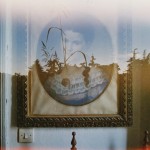
The title inevitably invites a comparison with Franco Battiato's "La voce del padrone", although Poltronieri's record inhabits a very different territory from that landmark of Italian pop. Here the voice is largely absent, or at least displaced: it survives as a memory, a suggestion, a distant presence. The album's final miniature, also titled “La voce della padrona”, was recorded on a Yamaha DX7 that Poltronieri had recently bought from a neighbour. Its chosen preset, rather wonderfully, was called “Ladyvox”. It is a small coincidence, but one that seems to have given the entire collection its final clue. The cover offers another connection to the past: a double-exposure photograph incorporating a portrait of Luigina Anselmi, painted by Alcide Allevi in 1869, an image that had been watching over Poltronieri since childhood in his grandmother's home. The record is dedicated to Diana Presutti, who died in 2023, adding another personal dimension to its meditation on what remains.
Ultimately, "La voce della padrona" is less an album about nostalgia than an attempt to understand how the past continues to inhabit ordinary experience, often without announcing itself. Its fragments have survived changes of location, equipment, relationships and circumstance, but they have not been polished into a falsely seamless retrospective. Some passages feel like notes left in the margins of a much larger composition; others acquire an unexpected weight precisely because they are allowed to remain brief. There is a certain generosity in this approach, and also a useful reminder that not everything we make has to be immediately understood, categorised or turned into something productive. Sometimes a sound can simply stay with us for years, waiting for the right moment to become audible again. Apparently, even forgotten recordings have better patience than most of us.
Michael Columbia: Mirrors, Shapes, Objects
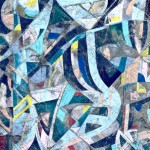
Artist: Michael Columbia
Title: Mirrors, Shapes, Objects
Format: 12" + Download
Label: Cuneiform (http://www.cuneiformrecords.com/) (@)
Rated:
Title: Mirrors, Shapes, Objects
Format: 12" + Download
Label: Cuneiform (http://www.cuneiformrecords.com/) (@)
Rated:
The Chicago independent scene of the early 2000s was an accommodating place for musical eccentricity, provided nobody expected the results to fit neatly into a record-shop category. Michael Columbia emerged from that environment as an offshoot of David McDonnell's work with Bablicon, and their latest album, "Mirrors, Shapes, Objects", suggests that the intervening years have done little to improve their respect for stylistic boundaries. Free jazz, post-rock, electronic experimentation, psychedelic repetition and something approaching conventional songwriting all make an appearance. The remarkable thing is not that these ingredients coexist, but that the trio has learned how to make them interact without turning every track into a referendum on musical identity.
The group brings together three musicians whose careers have taken them through rather different corners of the American underground. McDonnell, responsible here for synthesizers, bass, soprano and alto saxophones, and vocals, began his recording career with Bablicon, the Elephant 6-affiliated collective in which he performed as the Diminisher. He subsequently became involved with Herculaneum, Icy Demons and numerous projects spanning jazz, rock and electronic composition. He is also a composer, computer-music programmer and educator, currently teaching music technology at Temple University. Christopher Kalis contributes synthesizers, guitar and bass, drawing on his experience with Chicago hardware-based groups such as Chandeliers, Songs for Gods and Drasii. Drummer Dylan Ryan, meanwhile, has worked with an impressive range of artists, including Red Krayola, Cursive, Bitchin Bajas, Jeff Parker and Jeremiah Chiu. Their previous association in Icy Demons provides some historical continuity, but "Mirrors, Shapes, Objects" sounds less like a reunion than the meeting of three musicians who have accumulated enough different experiences to make their old partnership newly productive.
The album's nine tracks are mostly concise, rarely exceeding six minutes. This is a significant decision for a group operating in territory where instrumental freedom can sometimes become an excuse for allowing compositions to outlive their welcome. Michael Columbia favour compact structures, frequently introducing vocal passages or recurring melodic ideas before the music moves into more exploratory territory. The result is a record with the restless intelligence of progressive music but without the obligatory twenty-minute excursion into a keyboard solo that requires its own postal address.
“Eagles of the Sea” establishes the approach with an infectious, slightly elusive rhythmic pattern. A recurring sample provides a loose framework, while Ryan's drumming brings a lively, almost mischievous energy to the arrangement. McDonnell's vocals are understated, allowing the soprano saxophone to take over as the piece develops. His playing is agile without becoming overly demonstrative, weaving around the rhythm with a fluidity that recalls the more adventurous side of early-1970s jazz-rock. The composition's appeal comes from the way its components retain their independence while remaining attentive to one another. The electronic elements are not simply decoration, and the saxophone is not there to certify the group's jazz credentials. Everyone has a job, and nobody appears particularly interested in applying for a promotion.
“Red Paint” moves towards a more recognisable song format. Kalis' guitar refrain has a distinctly angular quality, while McDonnell's vocal delivery suggests a relaxed art-rock sensibility. Beneath the relatively accessible surface, however, the lyrics evoke the disoriented consciousness of the protagonist in Jim Jarmusch's "Dead Man", whose journey through an unfamiliar landscape is as much psychological as physical. The trio handles this material with considerable restraint, avoiding the temptation to make the music as overtly dramatic as its subject matter. “Speed Boat” subsequently shifts the balance towards instrumental propulsion, with interlocking rhythms and electronic textures generating a more pronounced psychedelic momentum. Its title may suggest carefree aquatic recreation, but the musical experience is closer to discovering that the boat has developed an independent opinion about navigation.
“The Ghola” is one of the album's most effective instrumental constructions. Its pulsing synthesiser patterns and motorik rhythm section create a hypnotic framework, with the trio gradually expanding the arrangement through subtle shifts in density and emphasis. The title refers to the fictional concept of a reconstructed human being in Frank Herbert's "Dune" universe, an appropriate reference for a composition that seems to assemble its identity from previously existing musical materials. “Maid of Metal” explores a similarly electronic terrain, but with a more flexible rhythmic design. Kalis' use of unsynchronised arpeggios and delay patterns gives the synthesiser lines a pleasantly unpredictable character. Rather than locking every component to a rigid digital grid, the musicians allow the patterns to interact with the live rhythm section, creating a sense of movement that is both precise and slightly unruly.
“Diana” offers another shift in emphasis. Its melodic contours and instrumental interplay reveal the trio's ability to construct a memorable composition without abandoning their experimental instincts. There is an attractive balance between atmosphere and rhythmic definition, with the electronics providing depth while the acoustic instruments keep the arrangement physically grounded. “Hunted by Cougars” takes a more oblique route, its title suggesting a particularly unfortunate outdoor excursion. The music is more concerned with instrumental interplay than narrative illustration, allowing the saxophone, synthesizers and drums to move through a series of changing accents and textures. The humour of the title is welcome, particularly on an album whose musical vocabulary can otherwise become rather serious about its own intellectual credentials.
“Lady Midnight” returns to a more song-oriented approach. Its darker lyrical premise, centred on a duchess experiencing feverish visions during the Hundred Years' War, is matched by a more forceful opening passage. Kalis' guitar and the rhythm section establish a dramatic tension, while McDonnell's measured vocals prevent the composition from becoming an exercise in historical melodrama. The track also demonstrates how comfortably the trio can move between progressive-rock arrangements and new-wave sensibilities. There are echoes of Peter Gabriel's early solo work in the vocal phrasing, but the instrumental language remains distinctly more exploratory.
The closing title track has an unusual history. Originally recorded on reel-to-reel tape nearly twenty years ago, it was rediscovered by McDonnell on an old hard drive and subsequently completed with a new vocal part. Its pulsing bass synthesizers and heavily delayed saxophone preserve something of the atmosphere of Chicago's experimental music scene during the period when the group first emerged. Rather than sounding like an archival curiosity awkwardly attached to a contemporary album, the composition fits surprisingly well. Its presence also reinforces the idea that Michael Columbia is an ongoing creative process, not simply a project revived for the sake of revisiting earlier achievements. The past is allowed into the room, but it does not get to dictate the furniture arrangement.
The recording history of the album is itself revealing. Most of the material was recorded in December 2024, while “The Ghola” and the title track draw on earlier unfinished sessions that were subsequently reworked. This combination of recent compositions and older material gives the record a certain temporal breadth without making it feel like a collection of unrelated leftovers. The trio's years apart have clearly mattered: each member has developed an individual musical vocabulary, and those experiences now feed into a partnership that is more flexible than it might have been during its earlier incarnation.
There are occasional moments when the album's stylistic variety threatens to become a little too comfortable with its own eclecticism. Some of the vocal passages feel more conventional than the surrounding instrumental material, and a few transitions could have been developed further. Yet the decision to keep the compositions relatively short proves largely beneficial. Instead of allowing technical ability to dominate, Michael Columbia focus on the identity of each piece, giving the listener a succession of distinct musical situations rather than one extended demonstration of instrumental competence. The references to Can, King Crimson, Soft Machine and the more experimental side of art-rock are understandable, but they remain points of orientation rather than destinations.
"Mirrors, Shapes, Objects" is a convincing return from a group whose history has been defined by experimentation, interruption and reinvention. Its greatest strength is the relationship between composition and improvisation: the music has enough structure to remain memorable, but enough freedom to avoid sounding overly predetermined. McDonnell, Kalis and Ryan have developed a shared language that accommodates both the pleasures of a well-shaped song and the unpredictable energy of musicians responding to one another in real time. It is a record that values curiosity over stylistic loyalty, and musical personality over the increasingly tedious business of declaring allegiance to a genre. The title may promise three separate categories of perception, but Michael Columbia seem more interested in what happens when all three are placed on the same table and nobody bothers to label them.