
Browse by Genre
Industrial Music / Industrial Metal / Aggro Industrial / Electro Metal
Industrial Noise / Power Noise / Harsh Noise
Synth Pop / Electro Pop / Synth-Electronica
Techno / Trance / Goa / Drum'n'Bass / Jungle / Tribal / Trip-Hop
Ambient / Electronica / Ethereal / Dub / Soundscapes / Abstract
Experimental / Avantgarde / Weird & Wired / Glitch / Noise / Field Recording
Dark / Gothic / Wave / New Wave / Dark Wave / Industrial Gothic
New Music / Downtown / Avantgarde Jazz / New Classical / World
Search Reviews
Music Reviews
Cortex & Hedvig Mollestad: Did We Really?

There is a particular Nordic talent for making intensity sound clean. Not polite, not restrained. Clean. Like a knife you admire before realizing it’s very sharp.
With "Did We Really?", Cortex join forces with Hedvig Mollestad and decide, collectively, that subtlety is nice but velocity is more fun. Released on Sauajazz, the album documents a quintet that has already tested this material on stage, which means the chemistry here is not theoretical. It is road-tempered, slightly dangerous, and clearly enjoying itself.
Cortex, founded in 2007 by trumpeter Thomas Johansson, have long operated in that fertile zone where post-60s American avant-garde meets Scandinavian clarity. Don Cherry hovers somewhere in the background, not as a blueprint but as a spiritual nudge: stay open, stay curious, don’t build fences around your ideas. Groove matters. So does surprise.
Enter Hedvig Mollestad, Norway’s modern guitar hero, a player who can glide from lyrical spaciousness to full-tilt riff architecture without changing facial expression. Her musical lineage often gets triangulated between Terje Rypdal’s expansive tone and the muscle memory of heavy metal, and while those comparisons are convenient, they only hint at what she actually does: she bends electricity into narrative.
“Liminal” opens the record with coiled propulsion. Johansson’s trumpet slices through a tightly wound rhythm section of Ola Høyer on double bass and Dag Erik Knedal Andersen on drums, while Kristoffer Alberts’ saxophones weave in and out of the harmonic field like they’re testing the air pressure. Mollestad doesn’t immediately dominate. She infiltrates. When she locks in, the band thickens.
The pieces she composed, “Liquid Brains” and the title track, inject a particular elasticity into the album. The former has a mischievous pulse, as if fusion and punk briefly agreed to stop arguing and share a stage. The latter compresses urgency into a compact frame, posing its question not as existential dread but as a raised eyebrow: did we really just go there? Yes. And we’re going again.
Across “Twoface” and “HedTex”, the quintet demonstrates an almost athletic control of dynamics. They can sprint in tight formation, then suddenly dissolve into hushed exchanges where every cymbal shimmer and breath through brass feels consequential. This is where Cortex’s long-standing emphasis on interaction pays off. The band listens as aggressively as it plays.
“Snap” and “Elastics” lean into rhythmic agility, flirting with angular patterns that threaten to derail but never quite do. There is always a melodic thread anchoring the exploration. Even at their most abstract, they remain curiously accessible. You could call it genre-bending, but that makes it sound academic. This feels more like genre indifference.
The closing stretch, particularly “Hymans Porch”, allows the quintet to stretch out with measured confidence. Here the interplay becomes almost architectural. Themes rise, fracture, reassemble. Mollestad’s guitar alternates between luminous restraint and riff-driven insistence, while Johansson’s compositions reveal their structural intelligence. Everything feels deliberate without ever sounding stiff.
Technically, the record benefits from Bård Ingebrigtsen’s crisp recording and Fridtjof A. Lindeman’s mastering, which preserve both the bite and the air. Nothing is overpolished. The edges remain intact, which is exactly where this music lives.
If there is a central pleasure in "Did We Really?", it lies in its refusal to choose between sophistication and swagger. This is jazz with muscle tone. It respects the avant-garde but is not intimidated by it. It nods to history without reenacting it.
The album title reads like a retrospective question. Listening through it, though, the answer feels immediate. They did. And they meant to.
With "Did We Really?", Cortex join forces with Hedvig Mollestad and decide, collectively, that subtlety is nice but velocity is more fun. Released on Sauajazz, the album documents a quintet that has already tested this material on stage, which means the chemistry here is not theoretical. It is road-tempered, slightly dangerous, and clearly enjoying itself.
Cortex, founded in 2007 by trumpeter Thomas Johansson, have long operated in that fertile zone where post-60s American avant-garde meets Scandinavian clarity. Don Cherry hovers somewhere in the background, not as a blueprint but as a spiritual nudge: stay open, stay curious, don’t build fences around your ideas. Groove matters. So does surprise.
Enter Hedvig Mollestad, Norway’s modern guitar hero, a player who can glide from lyrical spaciousness to full-tilt riff architecture without changing facial expression. Her musical lineage often gets triangulated between Terje Rypdal’s expansive tone and the muscle memory of heavy metal, and while those comparisons are convenient, they only hint at what she actually does: she bends electricity into narrative.
“Liminal” opens the record with coiled propulsion. Johansson’s trumpet slices through a tightly wound rhythm section of Ola Høyer on double bass and Dag Erik Knedal Andersen on drums, while Kristoffer Alberts’ saxophones weave in and out of the harmonic field like they’re testing the air pressure. Mollestad doesn’t immediately dominate. She infiltrates. When she locks in, the band thickens.
The pieces she composed, “Liquid Brains” and the title track, inject a particular elasticity into the album. The former has a mischievous pulse, as if fusion and punk briefly agreed to stop arguing and share a stage. The latter compresses urgency into a compact frame, posing its question not as existential dread but as a raised eyebrow: did we really just go there? Yes. And we’re going again.
Across “Twoface” and “HedTex”, the quintet demonstrates an almost athletic control of dynamics. They can sprint in tight formation, then suddenly dissolve into hushed exchanges where every cymbal shimmer and breath through brass feels consequential. This is where Cortex’s long-standing emphasis on interaction pays off. The band listens as aggressively as it plays.
“Snap” and “Elastics” lean into rhythmic agility, flirting with angular patterns that threaten to derail but never quite do. There is always a melodic thread anchoring the exploration. Even at their most abstract, they remain curiously accessible. You could call it genre-bending, but that makes it sound academic. This feels more like genre indifference.
The closing stretch, particularly “Hymans Porch”, allows the quintet to stretch out with measured confidence. Here the interplay becomes almost architectural. Themes rise, fracture, reassemble. Mollestad’s guitar alternates between luminous restraint and riff-driven insistence, while Johansson’s compositions reveal their structural intelligence. Everything feels deliberate without ever sounding stiff.
Technically, the record benefits from Bård Ingebrigtsen’s crisp recording and Fridtjof A. Lindeman’s mastering, which preserve both the bite and the air. Nothing is overpolished. The edges remain intact, which is exactly where this music lives.
If there is a central pleasure in "Did We Really?", it lies in its refusal to choose between sophistication and swagger. This is jazz with muscle tone. It respects the avant-garde but is not intimidated by it. It nods to history without reenacting it.
The album title reads like a retrospective question. Listening through it, though, the answer feels immediate. They did. And they meant to.
Rushab Nandha: Tear
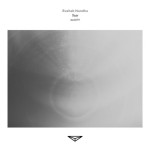
Artist: Rushab Nandha
Title: Tear
Format: Download Only (MP3 + Lossless)
Label: Dragon's Eye Recordings (@)
Rated:

Title: Tear
Format: Download Only (MP3 + Lossless)
Label: Dragon's Eye Recordings (@)
Rated:
Some records want to impress you. "Tear" wants to examine you under a microscope and see how much instability you can tolerate before calling it “experimental” and backing away slowly.
Released digitally on Dragon’s Eye Recordings, "Tear" finds Nairobi-based artist, producer, and mastering engineer Rushab Nandha operating less like a composer and more like a designer dismantling his own blueprints. He calls it an evolution of ideals, an exploration of elasticity, a study in fragility. This is not branding language. It is procedure. Every sound here feels as if it has been sanded down, stretched thin, and tested for tensile strength before being allowed to exist.
Nandha’s background in mastering is not incidental. You can hear the discipline. Frequencies are not merely arranged but calibrated. Nothing spills. Nothing blurs by accident. Even the softest gestures carry the quiet authority of someone who knows exactly how much pressure a waveform can withstand before it fractures. And fracture, here, is not catastrophe. It is form.
The opening title track, “Tear”, unfolds like a structural stress test. Textures hover in suspension, never fully collapsing, never resolving into the comfort of rhythm or melody. The piece breathes in a way that feels architectural, as if space itself were being measured and subtly bent. “Veil”, brief and almost evasive, operates as a hinge rather than an interlude, a thin membrane separating one state of listening from another.
Across “Amnesia” and “Womb”, Nandha pursues his long-standing fascination with relational dualities. Sounds that might initially register as oppositional, brittle versus warm, granular versus fluid, gradually reveal themselves as interdependent. He has a talent for making dissonance behave like a pact rather than a conflict. Elements lean against one another with improbable trust. The tension never shouts. It hums.
“Intra” and “Flame” push this approach further, reducing familiar sonic materials into near-abstractions. A tone that could have been harmonic becomes particulate. A percussive impulse dissolves into texture. It is as if the album is continuously asking how much identity a sound can lose before it becomes something else entirely. The answer seems to be: quite a lot, if you handle it carefully.
By the time “Flutter” arrives, the record has established its central proposition. Instability is not an error state. It is poise in motion. Nandha resists climax, resists the tidy resolution that would allow the listener to categorize and move on. Instead, he offers a series of delicate equilibria, each one balanced on the edge of collapse, each one refusing to fall.
There is a particular courage in this restraint. In an era where maximalism and immediacy dominate digital releases, "Tear" proceeds with patient understatement. It does not compete for attention. It assumes you are capable of sustained listening. That assumption alone feels radical.
As an artist grounded in the idea of complementary opposites, Nandha continues to investigate the hidden affinities between disparate sonic structures. Here, however, the investigation feels more distilled than ever. The album does not argue. It proposes. It sketches. It leaves white space where others would fill.
Fragility, in "Tear", is not decorative. It is structural. And if you give the record time, you begin to sense that what appears delicate is, in fact, rigorously composed. The unresolved is not a lack. It is the point.
Released digitally on Dragon’s Eye Recordings, "Tear" finds Nairobi-based artist, producer, and mastering engineer Rushab Nandha operating less like a composer and more like a designer dismantling his own blueprints. He calls it an evolution of ideals, an exploration of elasticity, a study in fragility. This is not branding language. It is procedure. Every sound here feels as if it has been sanded down, stretched thin, and tested for tensile strength before being allowed to exist.
Nandha’s background in mastering is not incidental. You can hear the discipline. Frequencies are not merely arranged but calibrated. Nothing spills. Nothing blurs by accident. Even the softest gestures carry the quiet authority of someone who knows exactly how much pressure a waveform can withstand before it fractures. And fracture, here, is not catastrophe. It is form.
The opening title track, “Tear”, unfolds like a structural stress test. Textures hover in suspension, never fully collapsing, never resolving into the comfort of rhythm or melody. The piece breathes in a way that feels architectural, as if space itself were being measured and subtly bent. “Veil”, brief and almost evasive, operates as a hinge rather than an interlude, a thin membrane separating one state of listening from another.
Across “Amnesia” and “Womb”, Nandha pursues his long-standing fascination with relational dualities. Sounds that might initially register as oppositional, brittle versus warm, granular versus fluid, gradually reveal themselves as interdependent. He has a talent for making dissonance behave like a pact rather than a conflict. Elements lean against one another with improbable trust. The tension never shouts. It hums.
“Intra” and “Flame” push this approach further, reducing familiar sonic materials into near-abstractions. A tone that could have been harmonic becomes particulate. A percussive impulse dissolves into texture. It is as if the album is continuously asking how much identity a sound can lose before it becomes something else entirely. The answer seems to be: quite a lot, if you handle it carefully.
By the time “Flutter” arrives, the record has established its central proposition. Instability is not an error state. It is poise in motion. Nandha resists climax, resists the tidy resolution that would allow the listener to categorize and move on. Instead, he offers a series of delicate equilibria, each one balanced on the edge of collapse, each one refusing to fall.
There is a particular courage in this restraint. In an era where maximalism and immediacy dominate digital releases, "Tear" proceeds with patient understatement. It does not compete for attention. It assumes you are capable of sustained listening. That assumption alone feels radical.
As an artist grounded in the idea of complementary opposites, Nandha continues to investigate the hidden affinities between disparate sonic structures. Here, however, the investigation feels more distilled than ever. The album does not argue. It proposes. It sketches. It leaves white space where others would fill.
Fragility, in "Tear", is not decorative. It is structural. And if you give the record time, you begin to sense that what appears delicate is, in fact, rigorously composed. The unresolved is not a lack. It is the point.
To Die On Ice: Panoramica degli Abissi

Artist: To Die On Ice (@)
Title: Panoramica degli Abissi
Format: LP
Label: Subsound Records (@)
Rated:

Title: Panoramica degli Abissi
Format: LP
Label: Subsound Records (@)
Rated:
"Panoramica degli Abissi" is one of those records that doesn’t politely ask for your attention. It parks itself in front of you, engine running, headlights on, and waits for you to admit that you were already curious. To Die On Ice, operating as both band and conceptual organism, deliver an album that behaves less like a collection of songs and more like a narrative pressure chamber.
Formed in 2021 by members orbiting various corners of Italy’s underground, To Die On Ice have always treated music as a malleable object rather than a product. Their self-declared “Lynch Core” is not a gimmick so much as a working method: noir atmospheres, emotional excess, crooner melodrama dragged through broken glass, and sudden violence, all stripped of technical vanity. "Panoramica degli Abissi" pushes that approach further, expanding it into a fully articulated ecosystem where sound, text, illustration, and moving image bleed into each other.
The album is conceived as a parallel manipulation of a short novel written by Filippo Dionisi, not a soundtrack but a re-encoding. Each track corresponds to a scene, yet the music refuses to explain anything. Instead, it distorts, exaggerates, withholds. You don’t follow the story so much as you sink into it, like sitting in the passenger seat of a car that has quietly decided to become a submarine. Or a spaceship. Or both, badly.
Sonically, the record is restless and promiscuous. Noir jazz sax lines ooze into post-blues guitar tremolos, then collapse into silence or erupt into screamo-gospel convulsions. Dionisi’s voice is central but never stable: crooning one moment, tearing itself open the next, as if sincerity were something dangerous to handle for too long. Andrea Pedone’s saxophone acts like a second narrator, sometimes seductive, sometimes accusatory, often sounding like it knows how this ends and finds it faintly amusing.
Tracks like “Baccanale” and “Un’Estate” embody the album’s core tension: sensuality turning feral, nostalgia rotting in real time. The Fred Bongusto doom reference is not a joke, unfortunately or fortunately depending on your tolerance for doomed romance. It’s a reminder that Italian melodrama has always had a death wish, and To Die On Ice simply stop pretending otherwise. The guest appearances by Vespertina and Francesca Bono sharpen this dynamic, introducing voices that feel less like features and more like fractures in the narrative surface.
What keeps "Panoramica degli Abissi" from collapsing under its own ambition is a strange discipline. Despite the abundance of ideas, the album is tightly paced, with instrumental interludes acting as narrative sutures rather than filler. The production by Enrico Baraldi and mastering by Claudio Adamo preserve a raw, breathing quality. Nothing is over-polished. You can hear the room, the tension, the risk of things falling apart. Sometimes they almost do, which is the point.
Ultimately, this is a record obsessed with thresholds: between desire and fear, movement and paralysis, intimacy and annihilation. It stares into the abyss, yes, but with a panoramic lens, wide enough to catch irony, tenderness, and the occasional grotesque joke. "Panoramica degli Abissi" doesn’t offer catharsis. It offers recognition. And maybe a cigarette stubbed out at the end of a very long night, still warm, still smoking, insisting that the circle really has closed, whether you feel ready or not.
Formed in 2021 by members orbiting various corners of Italy’s underground, To Die On Ice have always treated music as a malleable object rather than a product. Their self-declared “Lynch Core” is not a gimmick so much as a working method: noir atmospheres, emotional excess, crooner melodrama dragged through broken glass, and sudden violence, all stripped of technical vanity. "Panoramica degli Abissi" pushes that approach further, expanding it into a fully articulated ecosystem where sound, text, illustration, and moving image bleed into each other.
The album is conceived as a parallel manipulation of a short novel written by Filippo Dionisi, not a soundtrack but a re-encoding. Each track corresponds to a scene, yet the music refuses to explain anything. Instead, it distorts, exaggerates, withholds. You don’t follow the story so much as you sink into it, like sitting in the passenger seat of a car that has quietly decided to become a submarine. Or a spaceship. Or both, badly.
Sonically, the record is restless and promiscuous. Noir jazz sax lines ooze into post-blues guitar tremolos, then collapse into silence or erupt into screamo-gospel convulsions. Dionisi’s voice is central but never stable: crooning one moment, tearing itself open the next, as if sincerity were something dangerous to handle for too long. Andrea Pedone’s saxophone acts like a second narrator, sometimes seductive, sometimes accusatory, often sounding like it knows how this ends and finds it faintly amusing.
Tracks like “Baccanale” and “Un’Estate” embody the album’s core tension: sensuality turning feral, nostalgia rotting in real time. The Fred Bongusto doom reference is not a joke, unfortunately or fortunately depending on your tolerance for doomed romance. It’s a reminder that Italian melodrama has always had a death wish, and To Die On Ice simply stop pretending otherwise. The guest appearances by Vespertina and Francesca Bono sharpen this dynamic, introducing voices that feel less like features and more like fractures in the narrative surface.
What keeps "Panoramica degli Abissi" from collapsing under its own ambition is a strange discipline. Despite the abundance of ideas, the album is tightly paced, with instrumental interludes acting as narrative sutures rather than filler. The production by Enrico Baraldi and mastering by Claudio Adamo preserve a raw, breathing quality. Nothing is over-polished. You can hear the room, the tension, the risk of things falling apart. Sometimes they almost do, which is the point.
Ultimately, this is a record obsessed with thresholds: between desire and fear, movement and paralysis, intimacy and annihilation. It stares into the abyss, yes, but with a panoramic lens, wide enough to catch irony, tenderness, and the occasional grotesque joke. "Panoramica degli Abissi" doesn’t offer catharsis. It offers recognition. And maybe a cigarette stubbed out at the end of a very long night, still warm, still smoking, insisting that the circle really has closed, whether you feel ready or not.
Michiko Ogawa: Pancake Moon
Artist: Michiko Ogawa (@)
Title: Pancake Moon
Format: 12" + Download
Label: Futura Resistenza (@)
Rated:
Title: Pancake Moon
Format: 12" + Download
Label: Futura Resistenza (@)
Rated:
"Pancake Moon" arrives with the quiet confidence of something that knows it doesn’t need to raise its voice. Michiko Ogawa, working between Berlin and California, makes music that behaves like breath and weather rather than statement. This is her second solo album, and it feels less like a sequel than a widening of the same circle, drawn more slowly, with steadier hands.
The record is built from a modest set of materials: piano, organ, synthesizer, sh, and field recordings captured in two very different landscapes. Berlin contributes its lived-in murmur, Joshua Tree its vast, indifferent openness. Ogawa doesn’t try to reconcile these places. She lets them coexist, slightly misaligned, like memories that refuse to be put in chronological order. The result is a soundworld where intimacy and distance keep trading places.
The opening piece, "ashimoto no uchuu", unfolds with a patience that borders on stubbornness. Soft keyboards hover, the Farfisa carries a faint, dusty nostalgia, and the sh stretches time until it becomes pliable. The music never announces a direction, yet it keeps moving, like walking in the dark with complete trust in the floor beneath your feet. There’s a sense of accumulation rather than development: sounds stack, thin out, return altered, as if replaying moments that almost happened. It’s not dramatic music, but it is emotionally loaded, the kind that sneaks up on you hours later while you’re doing something unrelated and inconvenient.
"Shizukana hikari" feels warmer, more grounded, though no less strange. The field recording from Joshua Tree introduces a different scale, a reminder that silence is never empty and space is never neutral. Ogawa’s playing here is restrained but assured. She allows dissonance and softness to coexist without resolution, which gives the piece a gentle tension. Nothing is smoothed over. Contradictions are not solved, just accepted, which is rarer than it should be.
Ogawa’s background in contemporary composition, improvisation, and sound art is audible, but never academic. Her interest seems less in technique and more in how sound occupies space, how it brushes against memory, how it alters the room you’re in without asking permission. The sh, in particular, acts like a temporal lens, bending perception and stretching moments until they lose their edges. It’s a sound that feels ancient and futuristic at the same time, which suits an album that refuses to settle anywhere comfortably.
There’s something quietly funny about how serious this music is without ever becoming heavy-handed. Two long tracks, minimal materials, no obvious hooks, and yet "Pancake Moon" remains deeply listenable. It doesn’t demand reverence. It invites attention, then leaves you alone with it. You can listen in the morning with the city leaking in through the windows, or at night when the world shrinks to the size of a room. It works either way, which feels intentional.
In the end, "Pancake Moon" doesn’t try to explain itself. It hovers. It glows faintly. It suggests that memory, place, and sound are less about accuracy than about touch. Like its title, it’s slightly surreal, faintly playful, and disarmingly sincere. A small moon, maybe, but close enough to matter.
The record is built from a modest set of materials: piano, organ, synthesizer, sh, and field recordings captured in two very different landscapes. Berlin contributes its lived-in murmur, Joshua Tree its vast, indifferent openness. Ogawa doesn’t try to reconcile these places. She lets them coexist, slightly misaligned, like memories that refuse to be put in chronological order. The result is a soundworld where intimacy and distance keep trading places.
The opening piece, "ashimoto no uchuu", unfolds with a patience that borders on stubbornness. Soft keyboards hover, the Farfisa carries a faint, dusty nostalgia, and the sh stretches time until it becomes pliable. The music never announces a direction, yet it keeps moving, like walking in the dark with complete trust in the floor beneath your feet. There’s a sense of accumulation rather than development: sounds stack, thin out, return altered, as if replaying moments that almost happened. It’s not dramatic music, but it is emotionally loaded, the kind that sneaks up on you hours later while you’re doing something unrelated and inconvenient.
"Shizukana hikari" feels warmer, more grounded, though no less strange. The field recording from Joshua Tree introduces a different scale, a reminder that silence is never empty and space is never neutral. Ogawa’s playing here is restrained but assured. She allows dissonance and softness to coexist without resolution, which gives the piece a gentle tension. Nothing is smoothed over. Contradictions are not solved, just accepted, which is rarer than it should be.
Ogawa’s background in contemporary composition, improvisation, and sound art is audible, but never academic. Her interest seems less in technique and more in how sound occupies space, how it brushes against memory, how it alters the room you’re in without asking permission. The sh, in particular, acts like a temporal lens, bending perception and stretching moments until they lose their edges. It’s a sound that feels ancient and futuristic at the same time, which suits an album that refuses to settle anywhere comfortably.
There’s something quietly funny about how serious this music is without ever becoming heavy-handed. Two long tracks, minimal materials, no obvious hooks, and yet "Pancake Moon" remains deeply listenable. It doesn’t demand reverence. It invites attention, then leaves you alone with it. You can listen in the morning with the city leaking in through the windows, or at night when the world shrinks to the size of a room. It works either way, which feels intentional.
In the end, "Pancake Moon" doesn’t try to explain itself. It hovers. It glows faintly. It suggests that memory, place, and sound are less about accuracy than about touch. Like its title, it’s slightly surreal, faintly playful, and disarmingly sincere. A small moon, maybe, but close enough to matter.
Connor D'Netto: Some Kinda Way

Artist: Connor D'Netto (@)
Title: Some Kinda Way
Format: Download Only (MP3 + Lossless)
Label: A Guide To Saints (@)
Rated:
Title: Some Kinda Way
Format: Download Only (MP3 + Lossless)
Label: A Guide To Saints (@)
Rated:
"Some Kinda Way" is a record about taking the long route to yourself and then deciding that the detours were the point all along. Connor D’Netto doesn’t dramatize this process, which is refreshing, because the story behind the music already carries enough weight. Instead, he lets sound do the talking, looping, circling, occasionally stalling, and then moving forward again with a slightly crooked grin.
D’Netto is an Australian composer whose work often sits in that fertile overlap between contemporary composition and lived experience, where structure exists but never quite behaves. The pieces here revolve around saturation as both technique and metaphor. Instruments are layered until they stop feeling singular and start behaving like environments. Clarinet lines blur into themselves. The viola da gamba, already an instrument with a stubbornly physical presence, is stretched through delays and loops until it feels less historical and more bodily, almost vocal.
The title piece, split into three parts, takes a familiar minimalist premise and quietly undermines it. Yes, there’s an echo of Reich’s "New York Counterpoint" in the setup, but "Some Kinda Way" isn’t about urban propulsion or crisp geometry. It’s softer around the edges, more hesitant, more human. Musical ideas that once didn’t fit anywhere are dragged back into the light and given room to breathe. You can hear things being tested, reconsidered, accepted late but sincerely. The music doesn’t rush to justify itself. It lingers, like someone rereading old messages with new eyes.
The framing pieces, with titles nodding to tattoos, nails, piercings, function less as transitions and more as thresholds. They mark moments of decision, of marking the body or the self, quietly acknowledging that permanence and vulnerability often arrive together. "Feeling More Like", originally written earlier and revisited here, feels like the emotional core of the album. It revels in the viola da gamba’s quirks, not smoothing them out but amplifying them, as if to say that awkwardness can be a source of warmth rather than embarrassment.
There’s something gently funny about how earnest this record is without tipping into self-importance. It doesn’t ask for applause. It doesn’t posture. Even when the textures grow dense, the mood remains open, almost generous. Lawrence English’s mastering keeps everything tactile and close, preserving the sense that these sounds are being shaped by hands, breath, and patience rather than algorithms.
"Some Kinda Way" is not a coming-out record in the obvious sense. It’s closer to a reclamation ritual, built from leftovers, second thoughts, and ideas that once seemed inconvenient. The result is music that doesn’t insist on resolution. It suggests that becoming yourself is rarely a clean arc. It’s more like layering delays until the sound finally feels like home.
D’Netto is an Australian composer whose work often sits in that fertile overlap between contemporary composition and lived experience, where structure exists but never quite behaves. The pieces here revolve around saturation as both technique and metaphor. Instruments are layered until they stop feeling singular and start behaving like environments. Clarinet lines blur into themselves. The viola da gamba, already an instrument with a stubbornly physical presence, is stretched through delays and loops until it feels less historical and more bodily, almost vocal.
The title piece, split into three parts, takes a familiar minimalist premise and quietly undermines it. Yes, there’s an echo of Reich’s "New York Counterpoint" in the setup, but "Some Kinda Way" isn’t about urban propulsion or crisp geometry. It’s softer around the edges, more hesitant, more human. Musical ideas that once didn’t fit anywhere are dragged back into the light and given room to breathe. You can hear things being tested, reconsidered, accepted late but sincerely. The music doesn’t rush to justify itself. It lingers, like someone rereading old messages with new eyes.
The framing pieces, with titles nodding to tattoos, nails, piercings, function less as transitions and more as thresholds. They mark moments of decision, of marking the body or the self, quietly acknowledging that permanence and vulnerability often arrive together. "Feeling More Like", originally written earlier and revisited here, feels like the emotional core of the album. It revels in the viola da gamba’s quirks, not smoothing them out but amplifying them, as if to say that awkwardness can be a source of warmth rather than embarrassment.
There’s something gently funny about how earnest this record is without tipping into self-importance. It doesn’t ask for applause. It doesn’t posture. Even when the textures grow dense, the mood remains open, almost generous. Lawrence English’s mastering keeps everything tactile and close, preserving the sense that these sounds are being shaped by hands, breath, and patience rather than algorithms.
"Some Kinda Way" is not a coming-out record in the obvious sense. It’s closer to a reclamation ritual, built from leftovers, second thoughts, and ideas that once seemed inconvenient. The result is music that doesn’t insist on resolution. It suggests that becoming yourself is rarely a clean arc. It’s more like layering delays until the sound finally feels like home.