
Browse by Genre
Industrial Music / Industrial Metal / Aggro Industrial / Electro Metal
Industrial Noise / Power Noise / Harsh Noise
Synth Pop / Electro Pop / Synth-Electronica
Techno / Trance / Goa / Drum'n'Bass / Jungle / Tribal / Trip-Hop
Ambient / Electronica / Ethereal / Dub / Soundscapes / Abstract
Experimental / Avantgarde / Weird & Wired / Glitch / Noise / Field Recording
Dark / Gothic / Wave / New Wave / Dark Wave / Industrial Gothic
New Music / Downtown / Avantgarde Jazz / New Classical / World
Search Reviews
Music Reviews
Zea & Drumband Hallelujah Makkum: In lichem fol beloften
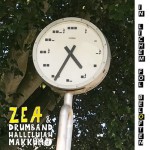
Artist: Zea & Drumband Hallelujah Makkum
Title: In lichem fol beloften
Format: Book + Vinyl
Label: Makkum Records/Subroutine (@)
Rated:

Title: In lichem fol beloften
Format: Book + Vinyl
Label: Makkum Records/Subroutine (@)
Rated:
There’s something quietly radical about "In lichem fol beloften" (Frisian for "A Body Full of Promises"). It doesn’t shout, doesn’t posture, doesn’t try to convince you of its importance. It simply stands there - barefoot, stubborn, speaking Frisian as if it were the most natural and necessary thing in the world - and lets time bend around it.
Arnold de Boer has always treated language like a physical object: something you can rub, bruise, repeat until it changes temperature. Known to many as the restless engine inside The Ex, under the name Zea he has long pursued a parallel path - more ascetic, more inward, but no less political in its refusal to smooth out rough edges. This album feels like a further stripping down, paradoxically achieved by adding people. Lots of them.
Enter Drumband Hallelujah Makkum: sixteen players (including Arnold's father, 81 years aged Feddie de Boer), 125 years of local history, and a pulse that doesn’t decorate the songs but anchors them to the ground. These are not “beats” in any fashionable sense. They are ceremonial, communal, almost agricultural. Drums as weather. Drums as memory. Drums as something you don’t argue with.
The choice of Frisian is not a folkloristic gesture, nor a niche affectation. It’s a statement made without a megaphone. Frisian here functions as a body - imperfect, resistant to easy translation, carrying meanings that don’t want to travel lightly. Even when De Boer translates poets like M. Vasalis or Nelly Sachs, the result isn’t literary reverence but friction. Words rub against rhythm, poetry bumps into breath. "De Dea", for instance, doesn’t dramatize death; it negotiates with it, like two old chess players who know the endgame but keep playing out of habit.
Musically, the album thrives on restraint. Guitar figures circle patiently, clarinet and cello slip in like half-remembered thoughts, and the drums - whether the core band or the full drumband - create a sense of forward motion that never quite becomes progress. This is music that walks, not runs. Music that counts steps. Music that knows where it comes from and doesn’t feel obliged to explain itself.
The recording spaces matter. Churches, with their patient acoustics and refusal to rush decay, turn these songs into something spatial rather than linear. You don’t just listen; you inhabit. Time stretches. Repetition becomes hypnotic rather than insistent. Even the shorter tracks feel complete, like small, sealed rooms.
There’s also an emotional clarity here that avoids sentimentality. "Pine en tiid" ("Pain and time") - splitted in two parts - treats pain not as drama but as duration. "Wer in dei tenein" ("Another Day Gone") doesn’t lament the passing of time; it acknowledges it, calmly, like closing a door without slamming it. And when voices join - whether Dina Popma’s or Tsead Bruinja’s spoken presence - it feels less like collaboration and more like shared breathing.
The accompanying book isn’t an accessory; it’s part of the organism. Lyrics, images, translations, marginal stories: all reinforcing the idea that meaning doesn’t live in one place. It migrates. It hesitates. It resists being pinned down.
If there’s humor here, it’s dry and human - the kind that comes from knowing that promises are fragile things, especially when carried in a body. "In lichem fol beloften" doesn’t offer solutions, anthems, or easy entry points. It offers attention. And in a musical landscape addicted to speed, clarity, and exportability, that might be its most subversive gesture.
A quiet album, then - but quiet like a village that remembers everything.
Arnold de Boer has always treated language like a physical object: something you can rub, bruise, repeat until it changes temperature. Known to many as the restless engine inside The Ex, under the name Zea he has long pursued a parallel path - more ascetic, more inward, but no less political in its refusal to smooth out rough edges. This album feels like a further stripping down, paradoxically achieved by adding people. Lots of them.
Enter Drumband Hallelujah Makkum: sixteen players (including Arnold's father, 81 years aged Feddie de Boer), 125 years of local history, and a pulse that doesn’t decorate the songs but anchors them to the ground. These are not “beats” in any fashionable sense. They are ceremonial, communal, almost agricultural. Drums as weather. Drums as memory. Drums as something you don’t argue with.
The choice of Frisian is not a folkloristic gesture, nor a niche affectation. It’s a statement made without a megaphone. Frisian here functions as a body - imperfect, resistant to easy translation, carrying meanings that don’t want to travel lightly. Even when De Boer translates poets like M. Vasalis or Nelly Sachs, the result isn’t literary reverence but friction. Words rub against rhythm, poetry bumps into breath. "De Dea", for instance, doesn’t dramatize death; it negotiates with it, like two old chess players who know the endgame but keep playing out of habit.
Musically, the album thrives on restraint. Guitar figures circle patiently, clarinet and cello slip in like half-remembered thoughts, and the drums - whether the core band or the full drumband - create a sense of forward motion that never quite becomes progress. This is music that walks, not runs. Music that counts steps. Music that knows where it comes from and doesn’t feel obliged to explain itself.
The recording spaces matter. Churches, with their patient acoustics and refusal to rush decay, turn these songs into something spatial rather than linear. You don’t just listen; you inhabit. Time stretches. Repetition becomes hypnotic rather than insistent. Even the shorter tracks feel complete, like small, sealed rooms.
There’s also an emotional clarity here that avoids sentimentality. "Pine en tiid" ("Pain and time") - splitted in two parts - treats pain not as drama but as duration. "Wer in dei tenein" ("Another Day Gone") doesn’t lament the passing of time; it acknowledges it, calmly, like closing a door without slamming it. And when voices join - whether Dina Popma’s or Tsead Bruinja’s spoken presence - it feels less like collaboration and more like shared breathing.
The accompanying book isn’t an accessory; it’s part of the organism. Lyrics, images, translations, marginal stories: all reinforcing the idea that meaning doesn’t live in one place. It migrates. It hesitates. It resists being pinned down.
If there’s humor here, it’s dry and human - the kind that comes from knowing that promises are fragile things, especially when carried in a body. "In lichem fol beloften" doesn’t offer solutions, anthems, or easy entry points. It offers attention. And in a musical landscape addicted to speed, clarity, and exportability, that might be its most subversive gesture.
A quiet album, then - but quiet like a village that remembers everything.
Durán Vázquez + Kloob: Vinum Sabbati, In the Dawn of Science Fiction
Artist: Durán Vázquez + Kloob (@)
Title: Vinum Sabbati, In the Dawn of Science Fiction
Format: CD + Download
Label: Crónica (@)
Rated:

Title: Vinum Sabbati, In the Dawn of Science Fiction
Format: CD + Download
Label: Crónica (@)
Rated:
There are albums that flirt with darkness, and then there are albums that brew it slowly, like a dubious tincture simmering in a back room where the light never quite arrives. "Vinum Sabbati, In the Dawn of Science Fiction" belongs to the latter. Durán Vázquez and Kloob don’t just reference Arthur Machen’s unsettling "Novel of the White Powder" - they distill it, inhale the fumes, and then calmly invite the listener to do the same, warning label already peeled off.
Both artists come with long electronic pedigrees, but this is not a nostalgic handshake between veterans. Vázquez, long associated with Crónica’s austere and conceptually sharp catalog, brings a rigorously hands-on approach to sound: no generative tricks, no algorithmic safety nets, just legacy software pushed until it starts behaving like a nervous system. Kloob, whose path runs from subterranean dance music to a more rarefied ambient practice, supplies an instinct for atmosphere that knows when to envelop and when to withdraw. Together, they operate less like collaborators and more like accomplices.
The Machen reference is crucial, not as literary garnish but as structural DNA. In the original text, "Vinum Sabbati" is a substance that alters its subjects from the inside out, turning latent corruption into something grotesquely visible. The music mirrors this process with unnerving patience. Sounds rarely arrive fully formed; they seep in, coagulate, and mutate. Drones curdle. Textures itch. Rhythms appear briefly, only to be swallowed by something thicker and less cooperative.
The opening “Prelude to Dreadful Confessions by a Doctor” establishes the album’s clinical tone: a cold, observational distance that paradoxically heightens the horror. By the time tracks like “Devil’s Pharmacy” and “The Rotten Limb” unfold, the sound design has become almost corporeal - less electronic music than a study in sonic pathology. There’s a dry humor lurking here too, in the refusal to dramatize. The titles scream Grand Guignol; the music responds with a raised eyebrow and a scalpel.
What makes the record particularly effective is its sense of restraint. Even at its most oppressive, it avoids the temptation to overwhelm. Dynamic range is treated as a moral issue: silences feel complicit, low frequencies feel invasive, and sudden shifts in density land like unwanted diagnoses. “Ominous Remedy - Transcending Human Condition” stretches this tension beautifully, balancing slow-burning dread with a strange, almost ritualistic calm, as if transcendence were just another side effect listed in small print.
By the closing “Scientific Horror”, the album has completed its transformation. Fear here is not theatrical but procedural - administered carefully, observed closely, and left unresolved. The dedication, “In memory of those who did not survive the medicine”, stops being metaphorical and starts feeling uncomfortably precise.
"Vinum Sabbati, In the Dawn of Science Fiction" is not an easy listen, nor does it pretend to be. It’s an album that understands horror as a process rather than an event, and science fiction as an emotional condition before it ever became a genre. Durán Vázquez and Kloob don’t offer catharsis; they offer exposure. Drink at your own risk.
Both artists come with long electronic pedigrees, but this is not a nostalgic handshake between veterans. Vázquez, long associated with Crónica’s austere and conceptually sharp catalog, brings a rigorously hands-on approach to sound: no generative tricks, no algorithmic safety nets, just legacy software pushed until it starts behaving like a nervous system. Kloob, whose path runs from subterranean dance music to a more rarefied ambient practice, supplies an instinct for atmosphere that knows when to envelop and when to withdraw. Together, they operate less like collaborators and more like accomplices.
The Machen reference is crucial, not as literary garnish but as structural DNA. In the original text, "Vinum Sabbati" is a substance that alters its subjects from the inside out, turning latent corruption into something grotesquely visible. The music mirrors this process with unnerving patience. Sounds rarely arrive fully formed; they seep in, coagulate, and mutate. Drones curdle. Textures itch. Rhythms appear briefly, only to be swallowed by something thicker and less cooperative.
The opening “Prelude to Dreadful Confessions by a Doctor” establishes the album’s clinical tone: a cold, observational distance that paradoxically heightens the horror. By the time tracks like “Devil’s Pharmacy” and “The Rotten Limb” unfold, the sound design has become almost corporeal - less electronic music than a study in sonic pathology. There’s a dry humor lurking here too, in the refusal to dramatize. The titles scream Grand Guignol; the music responds with a raised eyebrow and a scalpel.
What makes the record particularly effective is its sense of restraint. Even at its most oppressive, it avoids the temptation to overwhelm. Dynamic range is treated as a moral issue: silences feel complicit, low frequencies feel invasive, and sudden shifts in density land like unwanted diagnoses. “Ominous Remedy - Transcending Human Condition” stretches this tension beautifully, balancing slow-burning dread with a strange, almost ritualistic calm, as if transcendence were just another side effect listed in small print.
By the closing “Scientific Horror”, the album has completed its transformation. Fear here is not theatrical but procedural - administered carefully, observed closely, and left unresolved. The dedication, “In memory of those who did not survive the medicine”, stops being metaphorical and starts feeling uncomfortably precise.
"Vinum Sabbati, In the Dawn of Science Fiction" is not an easy listen, nor does it pretend to be. It’s an album that understands horror as a process rather than an event, and science fiction as an emotional condition before it ever became a genre. Durán Vázquez and Kloob don’t offer catharsis; they offer exposure. Drink at your own risk.
Pablo Diserens: Ebbing Ice Lines
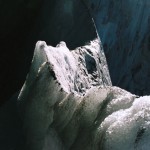
Artist: Pablo Diserens (@)
Title: Ebbing Ice Lines
Format: 12" x 2 + Download
Label: Forms of Minutiae (@)
Rated:
Title: Ebbing Ice Lines
Format: 12" x 2 + Download
Label: Forms of Minutiae (@)
Rated:
There are records that document a place, and then there are records that listen back to it. "Ebbing Ice Lines" belongs firmly to the second category. Pablo Diserens doesn’t arrive in the Low Arctic as a narrator, a mourner, or a moral lecturer; he arrives as an ear pressed gently - sometimes uncomfortably - against the body of ice itself. What comes back is not a message in any human language, but a dense, murmuring presence that refuses to stay symbolic for long.
Diserens, co-founder of forms of minutiae and a figure deeply embedded in contemporary ecoacoustic practice, has long worked at the threshold where field recording stops being documentation and starts behaving like composition. Here, that threshold dissolves almost completely. Across this double LP, glaciers are not treated as scenic backdrops or frozen archives waiting to be decoded, but as active, metabolizing entities. They gurgle, exhale, rasp, fizz, and occasionally seem to chuckle darkly at our insistence on meaning.
The opening “melt morphemes (supraglacial)” sets the tone immediately: pops and crackles from trapped air bubbles collapse geological time into an almost playful immediacy. It’s strangely intimate - less the sound of catastrophe than of a body quietly adjusting to change. That intimacy deepens throughout the record, especially in moments where the boundary between natural and anthropogenic blurs. Distant drones from ships or infrastructure don’t feel like intrusions; they settle into the sound field like unwanted but now unavoidable organs.
What’s striking is how un-dramatic much of the album is, despite its subject matter. This is not an elegy dressed up as sonic spectacle. Tracks like the title piece or “non-night over pseudocraters” move with a glacial patience that resists narrative payoff. The sounds don’t build toward revelation; they hover, circulate, and persist. Listening becomes less about following a trajectory and more about surrendering to scale - temporal, spatial, and emotional.
Diserens’ compositional choices emphasize proximity over panorama. Instead of sweeping Arctic vistas, we’re placed inside crevasses, near moulins, alongside dripping surfaces and submerged ice fragments. By the time “melt morphemes (proglacial)” arrives, the ear has been recalibrated so thoroughly that the low, breathing growls of ice in water feel uncannily human. It’s an unsettling moment, not because it sentimentalizes nature, but because it reminds us how fragile our distinctions really are.
The inclusion of volcanic material on “world in the process of making itself” widens the frame without diluting the focus. Geological forces converse across states - solid, liquid, gaseous - suggesting a continuum rather than a hierarchy. This is where Diserens’ broader philosophical stance becomes audible: sound as a way of thinking with the world, not about it. The album doesn’t ask us to save the glaciers; it asks us to notice them, to accept that attention itself is already a political act.
By the closing “mapping moulins”, the record has subtly altered the listener’s posture. The final drips and flows don’t resolve anything; they simply continue, indifferent to our listening yet somehow changed by it. "Ebbing Ice Lines" is not a warning siren, nor a requiem. It’s a sustained act of presence, one that treats listening as a form of coexistence rather than control.
In a cultural moment saturated with climate metaphors and apocalyptic shortcuts, Diserens offers something rarer and more demanding: patience, humility, and the quiet audacity to let ice speak without subtitles. The result is a record that doesn’t melt your heart - but slowly, persistently, erodes the assumptions you brought with you.
Diserens, co-founder of forms of minutiae and a figure deeply embedded in contemporary ecoacoustic practice, has long worked at the threshold where field recording stops being documentation and starts behaving like composition. Here, that threshold dissolves almost completely. Across this double LP, glaciers are not treated as scenic backdrops or frozen archives waiting to be decoded, but as active, metabolizing entities. They gurgle, exhale, rasp, fizz, and occasionally seem to chuckle darkly at our insistence on meaning.
The opening “melt morphemes (supraglacial)” sets the tone immediately: pops and crackles from trapped air bubbles collapse geological time into an almost playful immediacy. It’s strangely intimate - less the sound of catastrophe than of a body quietly adjusting to change. That intimacy deepens throughout the record, especially in moments where the boundary between natural and anthropogenic blurs. Distant drones from ships or infrastructure don’t feel like intrusions; they settle into the sound field like unwanted but now unavoidable organs.
What’s striking is how un-dramatic much of the album is, despite its subject matter. This is not an elegy dressed up as sonic spectacle. Tracks like the title piece or “non-night over pseudocraters” move with a glacial patience that resists narrative payoff. The sounds don’t build toward revelation; they hover, circulate, and persist. Listening becomes less about following a trajectory and more about surrendering to scale - temporal, spatial, and emotional.
Diserens’ compositional choices emphasize proximity over panorama. Instead of sweeping Arctic vistas, we’re placed inside crevasses, near moulins, alongside dripping surfaces and submerged ice fragments. By the time “melt morphemes (proglacial)” arrives, the ear has been recalibrated so thoroughly that the low, breathing growls of ice in water feel uncannily human. It’s an unsettling moment, not because it sentimentalizes nature, but because it reminds us how fragile our distinctions really are.
The inclusion of volcanic material on “world in the process of making itself” widens the frame without diluting the focus. Geological forces converse across states - solid, liquid, gaseous - suggesting a continuum rather than a hierarchy. This is where Diserens’ broader philosophical stance becomes audible: sound as a way of thinking with the world, not about it. The album doesn’t ask us to save the glaciers; it asks us to notice them, to accept that attention itself is already a political act.
By the closing “mapping moulins”, the record has subtly altered the listener’s posture. The final drips and flows don’t resolve anything; they simply continue, indifferent to our listening yet somehow changed by it. "Ebbing Ice Lines" is not a warning siren, nor a requiem. It’s a sustained act of presence, one that treats listening as a form of coexistence rather than control.
In a cultural moment saturated with climate metaphors and apocalyptic shortcuts, Diserens offers something rarer and more demanding: patience, humility, and the quiet audacity to let ice speak without subtitles. The result is a record that doesn’t melt your heart - but slowly, persistently, erodes the assumptions you brought with you.
Morris Kolontyrsky: Origination
There’s a particular pleasure in watching a musician step sideways rather than forward. Not escalation, not refinement, but a deliberate change of gravity. With "Origination", Morris Kolontyrsky does exactly that: he loosens the bolts of expectation, lets the guitar drift away from the blast radius of death metal, and follows its echo into deep space.
Known primarily as the guitarist of Blood Incantation - a band that made cosmic dread feel muscular and metaphysical at the same time - Kolontyrsky has already shown he’s allergic to creative confinement. "Timewave Zero" was the warning shot. "Origination" is the long-form transmission that follows once the channel is clear. Released on Projekt, a label with a long memory for artists who treat sound as environment rather than event, this debut feels less like a side project and more like a recalibration of identity.
The album unfolds over nearly seventy minutes, but time here behaves oddly. Tracks don’t “progress” so much as breathe, expand, contract, and occasionally stare back at you. Guitar is the gravitational center, but it’s rarely the rock instrument of habit. Instead, Kolontyrsky treats it as a generator of texture and duration: sustained tones that shimmer like heat haze, riffs that emerge obsessively and then dissolve, solos that refuse the usual heroics and instead spiral inward, becoming self-contained ecosystems.
There’s a clear affection for krautrock’s patient momentum and the long arcs of 70s cosmic music, but "Origination" never slips into museum mode. Pieces like “Cyclical Behaviour” and “Expanding and Contracting” flirt with propulsion - motorik ghosts flicker at the edges - before melting back into drone-rich suspension. Elsewhere, “Infiniscape” and the vast closing stretch of “Weaving of Fields” trade motion for immersion, creating the sensation of floating inside a slowly rotating object whose boundaries you can’t quite map.
The production plays a crucial role in this sense of controlled drift. Recorded in Kolontyrsky’s home studio, the palette of analog and semi-analog gear lends the album a tactile warmth, but nothing here feels nostalgic for its own sake. Synths, loops, and guitar interlock like overlapping weather systems, each influencing the other without demanding attention. Steve Roach’s additional layers don’t announce themselves; they deepen the floor, extend the horizon, and quietly remind you that ambient music, when done right, is less about calm than about scale.
What makes "Origination" compelling is not the novelty of a metal musician going ambient - by now, that trope has worn thin - but the absence of apology. Kolontyrsky doesn’t dilute intensity; he redistributes it. The tension once delivered through speed and distortion now lives in duration, repetition, and the slow accumulation of detail. It’s music that trusts patience, both its own and the listener’s, and never rushes to justify itself.
If there’s humor here, it’s subtle: the quiet irony of a guitarist known for confrontation choosing instead to linger, to let notes decay, to build a record where nothing explodes and everything glows. "Origination" isn’t a manifesto, and it doesn’t pretend to be a spiritual awakening either. It’s simply the sound of an artist allowing curiosity to lead, unconcerned with borders, genres, or the comfort of staying put. And honestly, that kind of freedom still feels slightly radical.
Known primarily as the guitarist of Blood Incantation - a band that made cosmic dread feel muscular and metaphysical at the same time - Kolontyrsky has already shown he’s allergic to creative confinement. "Timewave Zero" was the warning shot. "Origination" is the long-form transmission that follows once the channel is clear. Released on Projekt, a label with a long memory for artists who treat sound as environment rather than event, this debut feels less like a side project and more like a recalibration of identity.
The album unfolds over nearly seventy minutes, but time here behaves oddly. Tracks don’t “progress” so much as breathe, expand, contract, and occasionally stare back at you. Guitar is the gravitational center, but it’s rarely the rock instrument of habit. Instead, Kolontyrsky treats it as a generator of texture and duration: sustained tones that shimmer like heat haze, riffs that emerge obsessively and then dissolve, solos that refuse the usual heroics and instead spiral inward, becoming self-contained ecosystems.
There’s a clear affection for krautrock’s patient momentum and the long arcs of 70s cosmic music, but "Origination" never slips into museum mode. Pieces like “Cyclical Behaviour” and “Expanding and Contracting” flirt with propulsion - motorik ghosts flicker at the edges - before melting back into drone-rich suspension. Elsewhere, “Infiniscape” and the vast closing stretch of “Weaving of Fields” trade motion for immersion, creating the sensation of floating inside a slowly rotating object whose boundaries you can’t quite map.
The production plays a crucial role in this sense of controlled drift. Recorded in Kolontyrsky’s home studio, the palette of analog and semi-analog gear lends the album a tactile warmth, but nothing here feels nostalgic for its own sake. Synths, loops, and guitar interlock like overlapping weather systems, each influencing the other without demanding attention. Steve Roach’s additional layers don’t announce themselves; they deepen the floor, extend the horizon, and quietly remind you that ambient music, when done right, is less about calm than about scale.
What makes "Origination" compelling is not the novelty of a metal musician going ambient - by now, that trope has worn thin - but the absence of apology. Kolontyrsky doesn’t dilute intensity; he redistributes it. The tension once delivered through speed and distortion now lives in duration, repetition, and the slow accumulation of detail. It’s music that trusts patience, both its own and the listener’s, and never rushes to justify itself.
If there’s humor here, it’s subtle: the quiet irony of a guitarist known for confrontation choosing instead to linger, to let notes decay, to build a record where nothing explodes and everything glows. "Origination" isn’t a manifesto, and it doesn’t pretend to be a spiritual awakening either. It’s simply the sound of an artist allowing curiosity to lead, unconcerned with borders, genres, or the comfort of staying put. And honestly, that kind of freedom still feels slightly radical.
Lost Signal: Light Of Other Days
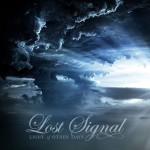
Artist: Lost Signal (@)
Title: Light Of Other Days
Format: CD + Download
Label: Metropolis (@)
Rated:
Title: Light Of Other Days
Format: CD + Download
Label: Metropolis (@)
Rated:
There’s something quietly defiant about "Light Of Other Days". Not loud-defiant, not leather-jacket-on-a-motorbike defiant - more the kind that shows up on time, switches on the synths, and insists that emotional depth still has a place in electronic music without needing to cosplay nostalgia or irony. Charles Rehill, operating once again under the Lost Signal moniker, sounds less interested in proving a comeback than in continuing a conversation he never quite finished.
This is his fourth album, and the second after a long silence broken by "Anatomy Of Melancholy". If that record felt like reopening a sealed room, "Light Of Other Days" is what happens once the dust has settled and you start noticing what’s actually inside. Framed by the aptly named "Departure" and "Return", the album moves like a slow arc rather than a collection of singles - an old-fashioned idea, perhaps, but one that suits Rehill’s instincts perfectly.
Musically, the record leans into melody with an almost stubborn sincerity. Rehill’s background as a sound designer and hardware devotee is audible everywhere: the synths breathe, swell, and shimmer with a tactility that feels earned rather than fetishized. You can sense the lineage - traces of classic electronic romanticism, a cinematic glow that occasionally nods toward Vangelis, paired with a modern restraint that avoids bombast. Nothing here screams; everything speaks at a measured volume.
The songs themselves wrestle openly with big themes - memory, mortality, resilience - but without theatrical despair. "Dream Within A Dream" floats on a melancholic pulse that feels suspended between acceptance and doubt, while "Before Today" stretches its runtime to let emotion accumulate gradually, like a thought you didn’t plan to have but can’t shake. Even "Fear Of Death", which could have collapsed under its own title, remains surprisingly grounded, more contemplative than dramatic.
"Entropy" stands at the album’s gravitational center, expanding the emotional scope outward, from personal loss to cosmic inevitability. Yet it never feels cold or abstract; there’s a human ache running through it, as if the universe itself were slightly uneasy about its own conclusions. That this track has already lived multiple lives through remixes makes sense - its structure invites reinterpretation without losing its core.
What’s refreshing is how little irony there is here. "Light Of Other Days" doesn’t wink at the listener or undercut its own emotions. It accepts vulnerability as part of the deal, and trusts melody to carry meaning without footnotes. In an era where electronic music often hides behind concept or texture alone, Rehill is unafraid to write songs that remember what songs are supposed to do.
This is not an album chasing trends, nor one trapped by its creator’s past. It feels more like a careful alignment: experience meeting craft, technology serving feeling, memory being shaped into sound without trying to freeze it. "Light Of Other Days" understands that nostalgia is a dangerous fuel - powerful, volatile - and handles it with steady hands.
In the end, it’s a record about time passing and not apologizing for it. No grand resolutions, no false optimism. Just the quiet insistence that even as things fade, they can still glow - briefly, beautifully - before the return.
This is his fourth album, and the second after a long silence broken by "Anatomy Of Melancholy". If that record felt like reopening a sealed room, "Light Of Other Days" is what happens once the dust has settled and you start noticing what’s actually inside. Framed by the aptly named "Departure" and "Return", the album moves like a slow arc rather than a collection of singles - an old-fashioned idea, perhaps, but one that suits Rehill’s instincts perfectly.
Musically, the record leans into melody with an almost stubborn sincerity. Rehill’s background as a sound designer and hardware devotee is audible everywhere: the synths breathe, swell, and shimmer with a tactility that feels earned rather than fetishized. You can sense the lineage - traces of classic electronic romanticism, a cinematic glow that occasionally nods toward Vangelis, paired with a modern restraint that avoids bombast. Nothing here screams; everything speaks at a measured volume.
The songs themselves wrestle openly with big themes - memory, mortality, resilience - but without theatrical despair. "Dream Within A Dream" floats on a melancholic pulse that feels suspended between acceptance and doubt, while "Before Today" stretches its runtime to let emotion accumulate gradually, like a thought you didn’t plan to have but can’t shake. Even "Fear Of Death", which could have collapsed under its own title, remains surprisingly grounded, more contemplative than dramatic.
"Entropy" stands at the album’s gravitational center, expanding the emotional scope outward, from personal loss to cosmic inevitability. Yet it never feels cold or abstract; there’s a human ache running through it, as if the universe itself were slightly uneasy about its own conclusions. That this track has already lived multiple lives through remixes makes sense - its structure invites reinterpretation without losing its core.
What’s refreshing is how little irony there is here. "Light Of Other Days" doesn’t wink at the listener or undercut its own emotions. It accepts vulnerability as part of the deal, and trusts melody to carry meaning without footnotes. In an era where electronic music often hides behind concept or texture alone, Rehill is unafraid to write songs that remember what songs are supposed to do.
This is not an album chasing trends, nor one trapped by its creator’s past. It feels more like a careful alignment: experience meeting craft, technology serving feeling, memory being shaped into sound without trying to freeze it. "Light Of Other Days" understands that nostalgia is a dangerous fuel - powerful, volatile - and handles it with steady hands.
In the end, it’s a record about time passing and not apologizing for it. No grand resolutions, no false optimism. Just the quiet insistence that even as things fade, they can still glow - briefly, beautifully - before the return.