
Browse by Genre
Industrial Music / Industrial Metal / Aggro Industrial / Electro Metal
Industrial Noise / Power Noise / Harsh Noise
Synth Pop / Electro Pop / Synth-Electronica
Techno / Trance / Goa / Drum'n'Bass / Jungle / Tribal / Trip-Hop
Ambient / Electronica / Ethereal / Dub / Soundscapes / Abstract
Experimental / Avantgarde / Weird & Wired / Glitch / Noise / Field Recording
Dark / Gothic / Wave / New Wave / Dark Wave / Industrial Gothic
New Music / Downtown / Avantgarde Jazz / New Classical / World
Search Reviews
Music Reviews
Keiji Haino & Reinhold Friedl: truly, slightly, overflowing, whereabout of good will
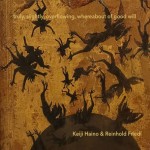
Artist: Keiji Haino & Reinhold Friedl
Title: truly, slightly, overflowing, whereabout of good will
Format: CD + Download
Label: Zeitkratzer (@)
Rated:

Title: truly, slightly, overflowing, whereabout of good will
Format: CD + Download
Label: Zeitkratzer (@)
Rated:
There’s a particular kind of silence that only appears when two radicals stop proving a point and start listening to each other. "truly, slightly, overflowing, whereabout of good will" lives exactly there: not in the clash of egos, not in the fireworks of extended technique, but in a tense, breathing proximity where piano and voice circle each other like wary animals that already know the outcome.
Keiji Haino needs no mythology anymore, yet it keeps accumulating around him like soot. For more than forty years he has treated rock, noise, blues, and free improvisation as raw materials to be broken open rather than genres to inhabit. Reinhold Friedl, on the other hand, comes from the long game of sound research: composer, pianist, and the restless engine behind zeitkratzer, a figure who has patiently dismantled the piano until it forgot it was ever a polite instrument. Their collaboration, ongoing for over a decade, is therefore not a meeting of opposites but a narrowing of focus. Strip away the ensemble, remove the historical scaffolding, and what remains is voice and keys - exposed, vulnerable, merciless.
Recorded in Berlin, the album unfolds as three long-form pieces that refuse the comfort of narrative arcs. The opening track reworks "strange fruits" not as homage or protest song, but as a slow molecular mutation. Haino’s voice does not interpret the melody; it interrogates it, pulling at its fibres until the song becomes a site of unease rather than recognition. Friedl’s piano answers not with chords but with space, friction, and low-pressure turbulence, behaving less like accompaniment and more like a shifting environment. The result is neither respectful nor iconoclastic - it’s something colder and more honest.
Across "wild harvest" and "true, slightly fly", the piano increasingly assumes orchestral weight. Friedl’s inside-piano techniques - developed over decades of physical intimacy with the instrument - turn wood, strings, and resonance into a breathing body. It sighs, rattles, and occasionally lashes out. Against this, Haino’s voice becomes a study in extremes: cavernous bass murmurs, sudden high-register ruptures, whispers that feel closer than speech. Microtonality here isn’t an academic exercise; it’s a physiological fact. The sounds land directly on the nervous system, bypassing interpretation.
What’s striking is how little “performance” there is in the conventional sense. This is not virtuosity as display. It’s endurance, attention, and risk. There are moments where everything seems on the verge of collapse, where the music hovers uncomfortably close to emptiness, and that’s precisely where its gravity lies. Good will, in this context, isn’t kindness - it’s the willingness to stay inside uncertainty without smoothing it out.
Mastered by Stephan Mathieu and recorded by Rabih Beaini, the sound is dry, intimate, and unforgiving. Every breath, scrape, and resonance matters. The packaging’s gold foil might suggest something precious, but the music itself resists fetishization. It doesn’t want admiration; it wants presence.
"truly, slightly, overflowing, whereabout of good will" is not an easy listen, nor does it pretend to be. It’s serious without being solemn, intense without theatrics, and deeply human in its refusal to resolve. This is what happens when two artists with nothing left to prove decide to speak quietly - and mean every word.
Keiji Haino needs no mythology anymore, yet it keeps accumulating around him like soot. For more than forty years he has treated rock, noise, blues, and free improvisation as raw materials to be broken open rather than genres to inhabit. Reinhold Friedl, on the other hand, comes from the long game of sound research: composer, pianist, and the restless engine behind zeitkratzer, a figure who has patiently dismantled the piano until it forgot it was ever a polite instrument. Their collaboration, ongoing for over a decade, is therefore not a meeting of opposites but a narrowing of focus. Strip away the ensemble, remove the historical scaffolding, and what remains is voice and keys - exposed, vulnerable, merciless.
Recorded in Berlin, the album unfolds as three long-form pieces that refuse the comfort of narrative arcs. The opening track reworks "strange fruits" not as homage or protest song, but as a slow molecular mutation. Haino’s voice does not interpret the melody; it interrogates it, pulling at its fibres until the song becomes a site of unease rather than recognition. Friedl’s piano answers not with chords but with space, friction, and low-pressure turbulence, behaving less like accompaniment and more like a shifting environment. The result is neither respectful nor iconoclastic - it’s something colder and more honest.
Across "wild harvest" and "true, slightly fly", the piano increasingly assumes orchestral weight. Friedl’s inside-piano techniques - developed over decades of physical intimacy with the instrument - turn wood, strings, and resonance into a breathing body. It sighs, rattles, and occasionally lashes out. Against this, Haino’s voice becomes a study in extremes: cavernous bass murmurs, sudden high-register ruptures, whispers that feel closer than speech. Microtonality here isn’t an academic exercise; it’s a physiological fact. The sounds land directly on the nervous system, bypassing interpretation.
What’s striking is how little “performance” there is in the conventional sense. This is not virtuosity as display. It’s endurance, attention, and risk. There are moments where everything seems on the verge of collapse, where the music hovers uncomfortably close to emptiness, and that’s precisely where its gravity lies. Good will, in this context, isn’t kindness - it’s the willingness to stay inside uncertainty without smoothing it out.
Mastered by Stephan Mathieu and recorded by Rabih Beaini, the sound is dry, intimate, and unforgiving. Every breath, scrape, and resonance matters. The packaging’s gold foil might suggest something precious, but the music itself resists fetishization. It doesn’t want admiration; it wants presence.
"truly, slightly, overflowing, whereabout of good will" is not an easy listen, nor does it pretend to be. It’s serious without being solemn, intense without theatrics, and deeply human in its refusal to resolve. This is what happens when two artists with nothing left to prove decide to speak quietly - and mean every word.
Kahil El'Zabar's Ethnic Heritage Ensemble: Let The Spirit Out, Live At "mu" London
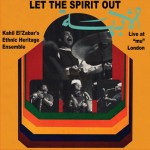
Artist: Kahil El'Zabar's Ethnic Heritage Ensemble (@)
Title: Let The Spirit Out, Live At "mu" London
Format: CD & 12" + Download
Label: Spiritmuse Records (http://spiritmuserecords.com/) (@)
Rated:
Title: Let The Spirit Out, Live At "mu" London
Format: CD & 12" + Download
Label: Spiritmuse Records (http://spiritmuserecords.com/) (@)
Rated:
There are live albums, and then there are recordings that feel less like documents and more like evidence. "Let The Spirit Out, Live at “mu” London" belongs firmly to the second category: proof that music can still function as ritual without costumes, incense, or nostalgia - just bodies in a room, listening hard, breathing together.
Kahil El’Zabar has been doing this kind of work for so long that the word "legend" risks sounding inadequate, almost bureaucratic. For over five decades, he has treated rhythm as a social force rather than a stylistic choice, folding African diasporic traditions, jazz improvisation, spoken invocation, and communal energy into what he once described - accurately - as a spiritual groove. The Ethnic Heritage Ensemble, founded in 1974, was never meant to be a band in the conventional sense; it was conceived as a living vessel for Great Black Music, adaptable enough to carry history forward without embalming it.
This double LP captures two nights at "mu", an audiophile listening space in London chosen precisely because it resists the usual club dynamics. No background chatter, no bar clatter - just attention. El’Zabar composed new material specifically for this setting, alongside fresh arrangements of well-worn standards, not to modernize them but to reopen their pores. The idea is simple and demanding: put the music in front of an audience and let the presence of that audience reshape it in real time.
From the opening moments of “From Your Heart”, led by El’Zabar’s kalimba and his unmistakable vocal cadence, the music announces its intent. This is not performance as spectacle; it’s an invitation. The groove is deep but unforced, the pulse elastic rather than authoritarian. Corey Wilkes’ trumpet cuts through with clarity and warmth, Alex Harding’s baritone sax brings a grainy physicality, and Ishmael Ali’s cello adds an unexpected vertical depth - less string section, more resonant spine.
The reimagined classics are telling choices. “Footprints” doesn’t swing so much as it walks with purpose, carrying Wayne Shorter’s harmonic DNA into a more grounded, percussive terrain. “Summertime” sheds its seasonal melancholy and emerges as a slow, communal chant - less lullaby, more reminder. “Caravan”, often treated as an exotic postcard, becomes something heavier and earthbound, driven by layered rhythms that feel closer to procession than travelogue.
What makes this album work isn’t virtuosity - though there’s plenty - but intention. El’Zabar doesn’t solo over the ensemble; he conducts energy. His introductions and spoken passages might look superfluous on paper, but in context they function like breath marks, recalibrating the room. When the title track finally arrives, stretching close to fifteen minutes, it feels earned rather than climactic: a gradual unsealing, rhythm turning into affirmation.
There’s a subtle humor here too, the kind that comes from confidence. El’Zabar knows exactly what he’s doing, and he’s not afraid to say it out loud. The message - release, freedom, connection - could sound grandiose in lesser hands. Here, it lands because the music backs it up. The spirit isn’t preached; it’s exercised.
Recorded cleanly but without sterilization, the sound preserves the physicality of the event: the air moving, the audience listening, the ensemble responding. The artwork by Nep Sidhu completes the circle, framing the music as something ceremonial rather than archival.
"Let The Spirit Out" is not about escape from the world; it’s about re-entering it with sharper senses. It reminds us that spiritual jazz, at its best, isn’t a genre at all but a practice - one that insists music can still heal without pretending everything is fine. Jump and shout if you want. Or just sit still and let the rhythm do the work.
Kahil El’Zabar has been doing this kind of work for so long that the word "legend" risks sounding inadequate, almost bureaucratic. For over five decades, he has treated rhythm as a social force rather than a stylistic choice, folding African diasporic traditions, jazz improvisation, spoken invocation, and communal energy into what he once described - accurately - as a spiritual groove. The Ethnic Heritage Ensemble, founded in 1974, was never meant to be a band in the conventional sense; it was conceived as a living vessel for Great Black Music, adaptable enough to carry history forward without embalming it.
This double LP captures two nights at "mu", an audiophile listening space in London chosen precisely because it resists the usual club dynamics. No background chatter, no bar clatter - just attention. El’Zabar composed new material specifically for this setting, alongside fresh arrangements of well-worn standards, not to modernize them but to reopen their pores. The idea is simple and demanding: put the music in front of an audience and let the presence of that audience reshape it in real time.
From the opening moments of “From Your Heart”, led by El’Zabar’s kalimba and his unmistakable vocal cadence, the music announces its intent. This is not performance as spectacle; it’s an invitation. The groove is deep but unforced, the pulse elastic rather than authoritarian. Corey Wilkes’ trumpet cuts through with clarity and warmth, Alex Harding’s baritone sax brings a grainy physicality, and Ishmael Ali’s cello adds an unexpected vertical depth - less string section, more resonant spine.
The reimagined classics are telling choices. “Footprints” doesn’t swing so much as it walks with purpose, carrying Wayne Shorter’s harmonic DNA into a more grounded, percussive terrain. “Summertime” sheds its seasonal melancholy and emerges as a slow, communal chant - less lullaby, more reminder. “Caravan”, often treated as an exotic postcard, becomes something heavier and earthbound, driven by layered rhythms that feel closer to procession than travelogue.
What makes this album work isn’t virtuosity - though there’s plenty - but intention. El’Zabar doesn’t solo over the ensemble; he conducts energy. His introductions and spoken passages might look superfluous on paper, but in context they function like breath marks, recalibrating the room. When the title track finally arrives, stretching close to fifteen minutes, it feels earned rather than climactic: a gradual unsealing, rhythm turning into affirmation.
There’s a subtle humor here too, the kind that comes from confidence. El’Zabar knows exactly what he’s doing, and he’s not afraid to say it out loud. The message - release, freedom, connection - could sound grandiose in lesser hands. Here, it lands because the music backs it up. The spirit isn’t preached; it’s exercised.
Recorded cleanly but without sterilization, the sound preserves the physicality of the event: the air moving, the audience listening, the ensemble responding. The artwork by Nep Sidhu completes the circle, framing the music as something ceremonial rather than archival.
"Let The Spirit Out" is not about escape from the world; it’s about re-entering it with sharper senses. It reminds us that spiritual jazz, at its best, isn’t a genre at all but a practice - one that insists music can still heal without pretending everything is fine. Jump and shout if you want. Or just sit still and let the rhythm do the work.
Horse Lords & Arnold Dreyblatt: FRKWYS Vol. 18: Extended Field

There’s a special kind of madness required to look at music and think: "numbers will save us". "FRKWYS Vol. 18: Extended Field" does exactly that - and somehow comes out sounding more alive, more bodily, more sweaty than half the records built on expression. This is not the cold triumph of theory. It’s theory dragged into the street, forced to dance, and politely thanked afterward.
The meeting between Horse Lords and Arnold Dreyblatt feels less like a collaboration and more like a geological event. Two tectonic plates of just intonation slide against each other, slowly at first, then with audible friction. Dreyblatt, a key figure in American experimental music since the late 1970s, has spent decades excavating psychoacoustic phenomena: excited strings, metallic overtones, sound as physical mass. His work - rooted in experiences with La Monte Young and Alvin Lucier - has always treated tuning not as flavor but as architecture. Horse Lords, meanwhile, approach similar materials from the opposite direction: rhythm-first, ecstatic, motoric, suspicious of stasis, and deeply invested in what happens when systems are pushed until they start hallucinating.
What makes "Extended Field" compelling is not that these worlds merge seamlessly - they don’t - but that they agree to coexist under a shared constraint. The numerical matrix at the core of the record acts like a social contract: no one gets to dominate, no one gets to default to habit. And you can hear that discipline everywhere. The galloping, polyrhythmic momentum that defines Horse Lords never disappears, but it’s subtly bent, reweighted, forced to articulate itself inside Dreyblatt’s harmonic scaffolding. Conversely, Dreyblatt’s drones and overtone clouds are no longer static monuments; they’re nudged, stroked, and occasionally provoked into motion.
“Advance” sets the tone: forward motion without triumph, propulsion without release. “Extended Field” feels like a living diagram - numbers turning into grooves, ratios sweating under the pressure of repetition. On “Suspension”, time stretches and thins out; tones hover, bowing textures ripple, and the band seems to breathe inside the sound rather than play on top of it. It’s meditative, but not peaceful - more like watching a bridge vibrate under steady traffic. The closing “Impulse Array” is where the record quietly shows its hand: harmonic progressions emerge that feel uncannily inevitable, strangely reminiscent of sacred music, yet stripped of destination. Direction without arrival. Faith without doctrine.
There’s something gently funny about all this seriousness. Not in a jokey way, but in the cosmic irony of it: a group of fiercely intelligent musicians constructing elaborate limits in order to feel free. Algorithmic discipline as a path to surprise. Mathematics as a sensual experience. If Bach were alive and had access to SuperCollider, he might nod approvingly - then ask why the drummer sounds like he’s trying to outrun time itself.
"FRKWYS Vol. 18: Extended Field" doesn’t ask to be understood so much as inhabited. It’s music that trusts the listener to feel ratios in their bones, to accept that harmony can be both rigorously designed and strangely emotional. No grand gestures, no false transcendence - just a sustained, radiant field where structure hums, pulses, and refuses to sit still.
The meeting between Horse Lords and Arnold Dreyblatt feels less like a collaboration and more like a geological event. Two tectonic plates of just intonation slide against each other, slowly at first, then with audible friction. Dreyblatt, a key figure in American experimental music since the late 1970s, has spent decades excavating psychoacoustic phenomena: excited strings, metallic overtones, sound as physical mass. His work - rooted in experiences with La Monte Young and Alvin Lucier - has always treated tuning not as flavor but as architecture. Horse Lords, meanwhile, approach similar materials from the opposite direction: rhythm-first, ecstatic, motoric, suspicious of stasis, and deeply invested in what happens when systems are pushed until they start hallucinating.
What makes "Extended Field" compelling is not that these worlds merge seamlessly - they don’t - but that they agree to coexist under a shared constraint. The numerical matrix at the core of the record acts like a social contract: no one gets to dominate, no one gets to default to habit. And you can hear that discipline everywhere. The galloping, polyrhythmic momentum that defines Horse Lords never disappears, but it’s subtly bent, reweighted, forced to articulate itself inside Dreyblatt’s harmonic scaffolding. Conversely, Dreyblatt’s drones and overtone clouds are no longer static monuments; they’re nudged, stroked, and occasionally provoked into motion.
“Advance” sets the tone: forward motion without triumph, propulsion without release. “Extended Field” feels like a living diagram - numbers turning into grooves, ratios sweating under the pressure of repetition. On “Suspension”, time stretches and thins out; tones hover, bowing textures ripple, and the band seems to breathe inside the sound rather than play on top of it. It’s meditative, but not peaceful - more like watching a bridge vibrate under steady traffic. The closing “Impulse Array” is where the record quietly shows its hand: harmonic progressions emerge that feel uncannily inevitable, strangely reminiscent of sacred music, yet stripped of destination. Direction without arrival. Faith without doctrine.
There’s something gently funny about all this seriousness. Not in a jokey way, but in the cosmic irony of it: a group of fiercely intelligent musicians constructing elaborate limits in order to feel free. Algorithmic discipline as a path to surprise. Mathematics as a sensual experience. If Bach were alive and had access to SuperCollider, he might nod approvingly - then ask why the drummer sounds like he’s trying to outrun time itself.
"FRKWYS Vol. 18: Extended Field" doesn’t ask to be understood so much as inhabited. It’s music that trusts the listener to feel ratios in their bones, to accept that harmony can be both rigorously designed and strangely emotional. No grand gestures, no false transcendence - just a sustained, radiant field where structure hums, pulses, and refuses to sit still.
VV.AA.: Światłowód
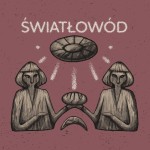
Artist: VV.AA.
Title: Światłowód
Format: CD + Download
Label: Zoharum (http://zoharum.com/) (@)
Rated:
Title: Światłowód
Format: CD + Download
Label: Zoharum (http://zoharum.com/) (@)
Rated:
"Swiatlowod" arrives like a bonfire at dawn: still warm, already turning to smoke, stubbornly luminous against the cold. Marketed plainly as a farewell album, it behaves less like a goodbye note and more like a carefully braided nerve - signals still firing even as the body prepares to change shape. Fitting, given the title: a fiber optic line, a conduit of light, information, memory. ROD unplug the cable, but the glow lingers in your retinas.
ROD, the electro-folk trio from Wejherowo, have always worked in that fertile tension between archaic ritual and contemporary circuitry. Pagan echoes, folk bones, northern chill: these aren’t costumes here, but weather conditions. On "Swiatlowod", that climate fractures into individual trajectories. Alongside four final ROD tracks, we hear solo statements from Hansollo, DN (Loki), and RIP (Cichy), each carving their own runic notch into the same piece of wood. Different hands, same tree.
What’s striking - and slightly suspicious, like a coincidence that’s too neat - is how cohesive the record feels despite its patchwork origin. Different sessions, methods, and temporal coordinates, yet the album flows like a single nocturnal walk from forest edge to city street. That coherence doesn’t come from production gloss or genre loyalty, but from a shared gravity: a pull toward folklore not as nostalgia, but as a way of thinking about sound, land, and time. This is music that believes the past is not behind us, but under our feet.
The ROD tracks proper feel like condensed rituals: short, sharp, purposeful. There’s no indulgence, no ambient sprawl pretending to be depth. "Swiatlowod" and "Portelabend" crackle with restrained urgency, while "Wole Las" and "Gwozdz" lean into blunt repetition, as if insisting that simplicity can still bruise. These pieces feel communal - songs meant to be carried by breath, stomped into dirt, or shouted into fog.
When the album fractures into solo paths, the light refracts. DN’s pieces are austere and inward-looking, almost diaristic, like dates etched into ice. Hansollo’s tracks foreground his background in electronics: colder, cleaner, but still haunted, as if analog ghosts are rattling inside digital cages. RIP’s contributions - co-shaped by Cichy - pull the album toward song form again, pivoting between forest and city, human voice and environment, intimacy and distance. "Leny" and "Miejski" aren’t opposites so much as mirror states: the same unease wearing different coats.
There’s a quiet humor in how "Swiatlowod" refuses grand finales. No epic closer, no sentimental swell. Instead, it disperses. The band says this is the end, but the record behaves like a threshold - less obituary, more trailhead. It gently suggests that dissolution can be productive, that breaking apart doesn’t mean vanishing, just changing bandwidth.
In the end, "Swiatlowod" feels like a document of transmission rather than closure. Signals sent forward, backward, sideways. A reminder that traditions don’t survive by being preserved in amber, but by being re-routed, re-wired, and occasionally cut loose altogether. ROD step away, but the line stays hot.
ROD, the electro-folk trio from Wejherowo, have always worked in that fertile tension between archaic ritual and contemporary circuitry. Pagan echoes, folk bones, northern chill: these aren’t costumes here, but weather conditions. On "Swiatlowod", that climate fractures into individual trajectories. Alongside four final ROD tracks, we hear solo statements from Hansollo, DN (Loki), and RIP (Cichy), each carving their own runic notch into the same piece of wood. Different hands, same tree.
What’s striking - and slightly suspicious, like a coincidence that’s too neat - is how cohesive the record feels despite its patchwork origin. Different sessions, methods, and temporal coordinates, yet the album flows like a single nocturnal walk from forest edge to city street. That coherence doesn’t come from production gloss or genre loyalty, but from a shared gravity: a pull toward folklore not as nostalgia, but as a way of thinking about sound, land, and time. This is music that believes the past is not behind us, but under our feet.
The ROD tracks proper feel like condensed rituals: short, sharp, purposeful. There’s no indulgence, no ambient sprawl pretending to be depth. "Swiatlowod" and "Portelabend" crackle with restrained urgency, while "Wole Las" and "Gwozdz" lean into blunt repetition, as if insisting that simplicity can still bruise. These pieces feel communal - songs meant to be carried by breath, stomped into dirt, or shouted into fog.
When the album fractures into solo paths, the light refracts. DN’s pieces are austere and inward-looking, almost diaristic, like dates etched into ice. Hansollo’s tracks foreground his background in electronics: colder, cleaner, but still haunted, as if analog ghosts are rattling inside digital cages. RIP’s contributions - co-shaped by Cichy - pull the album toward song form again, pivoting between forest and city, human voice and environment, intimacy and distance. "Leny" and "Miejski" aren’t opposites so much as mirror states: the same unease wearing different coats.
There’s a quiet humor in how "Swiatlowod" refuses grand finales. No epic closer, no sentimental swell. Instead, it disperses. The band says this is the end, but the record behaves like a threshold - less obituary, more trailhead. It gently suggests that dissolution can be productive, that breaking apart doesn’t mean vanishing, just changing bandwidth.
In the end, "Swiatlowod" feels like a document of transmission rather than closure. Signals sent forward, backward, sideways. A reminder that traditions don’t survive by being preserved in amber, but by being re-routed, re-wired, and occasionally cut loose altogether. ROD step away, but the line stays hot.
Manja Ristić: Into Your Eyes
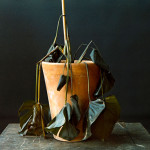
Artist: Manja Ristić (@)
Title: Into Your Eyes
Format: Download Only (MP3 + Lossless)
Label: Line (@)
Rated:
Title: Into Your Eyes
Format: Download Only (MP3 + Lossless)
Label: Line (@)
Rated:
Listening to "Into Your Eyes" feels less like pressing play and more like consenting to slow down - an agreement signed in breath rather than ink. Manja Ristic doesn’t offer tracks so much as thresholds. You don’t cross them quickly; you hover, uncertain at first, then quietly altered.
Ristic has long operated in that rare zone where sound art, ecology, and poetry aren’t separate disciplines but different dialects of the same sentence. A classically trained violinist who gradually abandoned the safety net of notation, she now works as a careful listener to systems most of us ignore until they fail: water pressure, microcurrents, weather moods, the private lives of materials. Her third release for LINE refines this practice into a triptych that feels simultaneously microscopic and planetary - three long-form pieces that ask not “what am I hearing?” but “who is speaking, and why did I stop listening?”.
What’s striking about "Into Your Eyes" is its refusal of drama. There are no climaxes, no obvious narrative arcs, no gestures begging for interpretation. Instead, Ristic builds density through attention. Sounds accumulate like sediment: hydrophone murmurs, fragile resonances, barely-there vibrations that feel closer to tactile sensation than to music in the traditional sense. If you’re waiting for a melody, it won’t arrive. If you’re willing to accept presence instead, you’ll be rewarded.
"Innocence Overturned" opens the album in a state of suspended becoming. It feels like a work about restraint - about stopping before the gesture hardens into statement. There’s a quiet tension here, a sense of ideas deliberately left unfinished, as if completion itself might be a kind of betrayal. It’s contemplative without being precious, and austere without slipping into coldness. Think of it as a room with the lights off, where you gradually realize the darkness is doing something important.
The wonderfully titled "A Seagull Speaks into the Chimney on the Shore of Lake Geneva" introduces a more explicitly narrative layer, though story might be too linear a word. The piece moves like an act of witness: environmental, political, and faintly tragic without ever raising its voice. Field recordings breathe alongside processed textures, and the listening position feels deliberately fragile - as if the work could collapse if approached too aggressively. There’s a quiet, almost dry irony here too: the idea of calling out into a structure built to channel smoke, hoping someone might still hear.
The closing "Prophecy of the World Without Anguish" is the longest and most immersive of the three, and perhaps the most radical in its gentleness. Rather than forecasting catastrophe, it imagines continuity - an uninterrupted mesh of sound-events where nothing is hierarchically louder, more important, or more musical than anything else. Lightning, water, air, resonance: everything coexists without competing for the foreground. It’s not utopian in a naïve sense, but it does suggest that anguish might be a byproduct of how we listen, not of the world itself.
Technically, the album is immaculate without advertising its craft. The use of hydrophones, the careful mastering, the integration of externally recorded material - all of it serves the central idea rather than the other way around. This is sound art that doesn’t fetishize process, even though the process is clearly rigorous. Ristic’s strength lies in knowing when to intervene and when to step aside, allowing the environment to co-author the work.
If there’s humor here, it’s subtle and human: the quiet absurdity of realizing that every surface, every pressure change, every supposedly inert object has been speaking all along - patiently, indifferently - while we were busy being expressive. "Into Your Eyes" doesn’t demand your attention; it patiently waits for it. And once you give it, you may find that the world sounds slightly louder, stranger, and more alive than before.
Ristic has long operated in that rare zone where sound art, ecology, and poetry aren’t separate disciplines but different dialects of the same sentence. A classically trained violinist who gradually abandoned the safety net of notation, she now works as a careful listener to systems most of us ignore until they fail: water pressure, microcurrents, weather moods, the private lives of materials. Her third release for LINE refines this practice into a triptych that feels simultaneously microscopic and planetary - three long-form pieces that ask not “what am I hearing?” but “who is speaking, and why did I stop listening?”.
What’s striking about "Into Your Eyes" is its refusal of drama. There are no climaxes, no obvious narrative arcs, no gestures begging for interpretation. Instead, Ristic builds density through attention. Sounds accumulate like sediment: hydrophone murmurs, fragile resonances, barely-there vibrations that feel closer to tactile sensation than to music in the traditional sense. If you’re waiting for a melody, it won’t arrive. If you’re willing to accept presence instead, you’ll be rewarded.
"Innocence Overturned" opens the album in a state of suspended becoming. It feels like a work about restraint - about stopping before the gesture hardens into statement. There’s a quiet tension here, a sense of ideas deliberately left unfinished, as if completion itself might be a kind of betrayal. It’s contemplative without being precious, and austere without slipping into coldness. Think of it as a room with the lights off, where you gradually realize the darkness is doing something important.
The wonderfully titled "A Seagull Speaks into the Chimney on the Shore of Lake Geneva" introduces a more explicitly narrative layer, though story might be too linear a word. The piece moves like an act of witness: environmental, political, and faintly tragic without ever raising its voice. Field recordings breathe alongside processed textures, and the listening position feels deliberately fragile - as if the work could collapse if approached too aggressively. There’s a quiet, almost dry irony here too: the idea of calling out into a structure built to channel smoke, hoping someone might still hear.
The closing "Prophecy of the World Without Anguish" is the longest and most immersive of the three, and perhaps the most radical in its gentleness. Rather than forecasting catastrophe, it imagines continuity - an uninterrupted mesh of sound-events where nothing is hierarchically louder, more important, or more musical than anything else. Lightning, water, air, resonance: everything coexists without competing for the foreground. It’s not utopian in a naïve sense, but it does suggest that anguish might be a byproduct of how we listen, not of the world itself.
Technically, the album is immaculate without advertising its craft. The use of hydrophones, the careful mastering, the integration of externally recorded material - all of it serves the central idea rather than the other way around. This is sound art that doesn’t fetishize process, even though the process is clearly rigorous. Ristic’s strength lies in knowing when to intervene and when to step aside, allowing the environment to co-author the work.
If there’s humor here, it’s subtle and human: the quiet absurdity of realizing that every surface, every pressure change, every supposedly inert object has been speaking all along - patiently, indifferently - while we were busy being expressive. "Into Your Eyes" doesn’t demand your attention; it patiently waits for it. And once you give it, you may find that the world sounds slightly louder, stranger, and more alive than before.