
Thursday, September 3, 2026
Browse by Genre
Industrial Music / Industrial Metal / Aggro Industrial / Electro Metal
Industrial Noise / Power Noise / Harsh Noise
Synth Pop / Electro Pop / Synth-Electronica
Techno / Trance / Goa / Drum'n'Bass / Jungle / Tribal / Trip-Hop
Ambient / Electronica / Ethereal / Dub / Soundscapes / Abstract
Experimental / Avantgarde / Weird & Wired / Glitch / Noise / Field Recording
Dark / Gothic / Wave / New Wave / Dark Wave / Industrial Gothic
New Music / Downtown / Avantgarde Jazz / New Classical / World
Search Reviews
Music Reviews
Pieuvre: Away From Human Behaviour

Artist: Pieuvre
Title: Away From Human Behaviour
Format: Tape + Download
Label: Kitchen Leg/Adagio 830 (@)
Rated:


Title: Away From Human Behaviour
Format: Tape + Download
Label: Kitchen Leg/Adagio 830 (@)
Rated:
Berlin has long had a peculiar talent for producing bands that sound as though they have escaped from the margins of an art-school notebook. Not polished enough for the mainstream, too playful to be trapped inside academic experimentation, they thrive somewhere between rehearsal rooms, DIY venues and photocopied manifestos. Pieuvre comfortably belong to that lineage. Their second cassette, "Away From Human Behaviour", released jointly by Kitchen Leg Records and Adagio 830, feels less like a carefully calculated sophomore effort than another dispatch from a parallel city where post-punk never became a nostalgia act because it never stopped evolving.
The trio, formed by Pia, Lina and Fege, has already established a distinctive identity within Berlin's underground. Their debut "Hyperstretch" hinted at a chemistry built on jagged guitars, elastic basslines and rhythmic precision, but this new release sharpens that language considerably. They draw obvious inspiration from late-70s and early-80s post-punk, yet refuse to become another band endlessly rearranging the furniture left behind by Gang of Four, Delta 5 or ESG. Instead, they borrow the attitude rather than the blueprint.
What immediately distinguishes Pieuvre is their refusal to sound comfortable. Their songs constantly lean forward, as though equilibrium itself were suspicious. Guitars jab instead of shimmer, rhythms twitch rather than groove conventionally, while melodies emerge almost accidentally from the surrounding angularity. The result is surprisingly danceable, although the dancing involved probably resembles someone enthusiastically trying to assemble IKEA furniture without instructions. Which, in fairness, is also an accurate metaphor for modern adulthood.
Lyrically, "Away From Human Behaviour" explores alienation without surrendering to fashionable cynicism. Work, consumer culture, identity and everyday absurdity become recurring subjects, but Pieuvre approach them with wit instead of resignation. Their observations rarely become preachy because humour remains one of their sharpest political tools. Rather than shouting slogans, they expose contradictions until they begin laughing at themselves.
The multilingual vocals reinforce this sense of fragmented modern existence. English, German and Portuguese coexist naturally throughout the album, reflecting both Berlin's international identity and the band's own refusal to settle inside neat cultural categories. Language becomes another rhythmic element, each syllable contributing its own texture and cadence.
The opening "Geisterbahn" immediately throws listeners into Pieuvre's world with nervous momentum and restless energy. There is something carnival-like beneath its tension, appropriate for a title referencing the ghost train. It suggests that contemporary life itself has become an amusement ride where everyone pretends to be having fun while quietly wondering where the emergency exit might be.
"Cactus" develops one of the album's recurring fascinations: the comparison between human behaviour and the natural world. The promotional notes jokingly ask what distinguishes us from a plant or an inanimate object. The answer, judging from this record, may simply be that humans invented office meetings.
That thread continues brilliantly into "Home Office", perhaps the album's most pointed social observation. Rather than treating remote work as either paradise or dystopia, Pieuvre capture its strange psychological limbo, where domestic intimacy gradually becomes colonised by productivity metrics. Somewhere between the kitchen table and the laptop screen, many people discovered they were commuting without actually travelling anywhere.
Elsewhere, "Executive Love" skewers corporate language with delicious irreverence, while "Wardrobe" and "Roommate" transform seemingly mundane situations into subtle reflections on identity and coexistence. Even "Blueberry Cake", whose title promises comforting domesticity, carries enough irony to remind us that sweetness and unease often arrive together.
Musically, the trio display admirable restraint. These are compact songs, rarely overstaying their welcome. Nothing feels ornamental. Every guitar stab, bass figure and rhythmic accent serves the momentum. Their no-wave influences remain evident, particularly in the deliberately abrasive guitar textures, but there is also a welcome sense of melody that prevents the album from becoming an exercise in aesthetic severity.
One of Pieuvre's greatest strengths lies in their collective identity. No individual appears interested in dominating the music. The songs emerge through interaction rather than hierarchy, reinforcing the communal spirit that has always animated the best underground scenes. This also mirrors the philosophy of Kitchen Leg Records, whose catalogue has consistently championed DIY ethics over commercial polish, embracing cassette culture not as retro fetishism but as an ongoing act of artistic independence.
Andrew Kemp's cover artwork complements the record beautifully, suggesting organisms that exist somewhere between biological and mechanical life. It quietly echoes the album's central question: what exactly separates human beings from the objects and systems they create? The answer becomes increasingly ambiguous as modern existence grows more automated.
There is, perhaps, one delightful contradiction at the heart of "Away From Human Behaviour". Despite its title, this is an intensely human album. Its humour, frustration, awkwardness and curiosity could not belong to anything else. Plants do not worry about alienation. Rocks rarely question capitalism. Octopuses, admittedly, remain suspiciously intelligent, but even they probably have better work-life balance than most of us.
Pieuvre never pretend to possess solutions. Instead, they document the strange choreography of contemporary existence with intelligence, irreverence and infectious energy. They understand that laughter and discomfort are close relatives, particularly when amplified through scratchy guitars and taut rhythms.
In a musical landscape increasingly divided between algorithm-friendly predictability and self-serious experimentation, "Away From Human Behaviour" occupies a far more interesting territory. It is clever without becoming smug, political without becoming didactic, playful without sacrificing substance. Like the best post-punk, it invites you to dance first and think later, only to realise, halfway through the second listen, that it has been making surprisingly sharp observations all along.
The trio, formed by Pia, Lina and Fege, has already established a distinctive identity within Berlin's underground. Their debut "Hyperstretch" hinted at a chemistry built on jagged guitars, elastic basslines and rhythmic precision, but this new release sharpens that language considerably. They draw obvious inspiration from late-70s and early-80s post-punk, yet refuse to become another band endlessly rearranging the furniture left behind by Gang of Four, Delta 5 or ESG. Instead, they borrow the attitude rather than the blueprint.
What immediately distinguishes Pieuvre is their refusal to sound comfortable. Their songs constantly lean forward, as though equilibrium itself were suspicious. Guitars jab instead of shimmer, rhythms twitch rather than groove conventionally, while melodies emerge almost accidentally from the surrounding angularity. The result is surprisingly danceable, although the dancing involved probably resembles someone enthusiastically trying to assemble IKEA furniture without instructions. Which, in fairness, is also an accurate metaphor for modern adulthood.
Lyrically, "Away From Human Behaviour" explores alienation without surrendering to fashionable cynicism. Work, consumer culture, identity and everyday absurdity become recurring subjects, but Pieuvre approach them with wit instead of resignation. Their observations rarely become preachy because humour remains one of their sharpest political tools. Rather than shouting slogans, they expose contradictions until they begin laughing at themselves.
The multilingual vocals reinforce this sense of fragmented modern existence. English, German and Portuguese coexist naturally throughout the album, reflecting both Berlin's international identity and the band's own refusal to settle inside neat cultural categories. Language becomes another rhythmic element, each syllable contributing its own texture and cadence.
The opening "Geisterbahn" immediately throws listeners into Pieuvre's world with nervous momentum and restless energy. There is something carnival-like beneath its tension, appropriate for a title referencing the ghost train. It suggests that contemporary life itself has become an amusement ride where everyone pretends to be having fun while quietly wondering where the emergency exit might be.
"Cactus" develops one of the album's recurring fascinations: the comparison between human behaviour and the natural world. The promotional notes jokingly ask what distinguishes us from a plant or an inanimate object. The answer, judging from this record, may simply be that humans invented office meetings.
That thread continues brilliantly into "Home Office", perhaps the album's most pointed social observation. Rather than treating remote work as either paradise or dystopia, Pieuvre capture its strange psychological limbo, where domestic intimacy gradually becomes colonised by productivity metrics. Somewhere between the kitchen table and the laptop screen, many people discovered they were commuting without actually travelling anywhere.
Elsewhere, "Executive Love" skewers corporate language with delicious irreverence, while "Wardrobe" and "Roommate" transform seemingly mundane situations into subtle reflections on identity and coexistence. Even "Blueberry Cake", whose title promises comforting domesticity, carries enough irony to remind us that sweetness and unease often arrive together.
Musically, the trio display admirable restraint. These are compact songs, rarely overstaying their welcome. Nothing feels ornamental. Every guitar stab, bass figure and rhythmic accent serves the momentum. Their no-wave influences remain evident, particularly in the deliberately abrasive guitar textures, but there is also a welcome sense of melody that prevents the album from becoming an exercise in aesthetic severity.
One of Pieuvre's greatest strengths lies in their collective identity. No individual appears interested in dominating the music. The songs emerge through interaction rather than hierarchy, reinforcing the communal spirit that has always animated the best underground scenes. This also mirrors the philosophy of Kitchen Leg Records, whose catalogue has consistently championed DIY ethics over commercial polish, embracing cassette culture not as retro fetishism but as an ongoing act of artistic independence.
Andrew Kemp's cover artwork complements the record beautifully, suggesting organisms that exist somewhere between biological and mechanical life. It quietly echoes the album's central question: what exactly separates human beings from the objects and systems they create? The answer becomes increasingly ambiguous as modern existence grows more automated.
There is, perhaps, one delightful contradiction at the heart of "Away From Human Behaviour". Despite its title, this is an intensely human album. Its humour, frustration, awkwardness and curiosity could not belong to anything else. Plants do not worry about alienation. Rocks rarely question capitalism. Octopuses, admittedly, remain suspiciously intelligent, but even they probably have better work-life balance than most of us.
Pieuvre never pretend to possess solutions. Instead, they document the strange choreography of contemporary existence with intelligence, irreverence and infectious energy. They understand that laughter and discomfort are close relatives, particularly when amplified through scratchy guitars and taut rhythms.
In a musical landscape increasingly divided between algorithm-friendly predictability and self-serious experimentation, "Away From Human Behaviour" occupies a far more interesting territory. It is clever without becoming smug, political without becoming didactic, playful without sacrificing substance. Like the best post-punk, it invites you to dance first and think later, only to realise, halfway through the second listen, that it has been making surprisingly sharp observations all along.
Matthias Muche: Trombone Alone
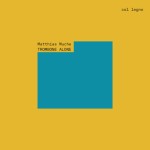
The trombone occupies a curious place in the collective imagination. In symphony orchestras it often announces destiny, catastrophe or divine judgement. In jazz it can swagger, growl and dance. In cartoons it has spent decades slipping on metaphorical banana peels. Poor instrument. It contains multitudes, yet is frequently reduced to comic glissandi or solemn fanfares. Cologne-based composer and trombonist Matthias Muche has devoted a significant part of his artistic practice to rescuing the trombone from such convenient stereotypes, treating it not merely as an instrument, but as a physical environment, a resonant architecture, almost a place one can inhabit.
"Trombone Alone", released by Col Legno, gathers five solo works that distil this vision into its most concentrated form. Muche, recipient of the WDR Jazz Prize for Improvisation in 2021, has developed his language through encounters with figures such as George Lewis, Vinko Globokar, Ray Anderson and Anthony Moore, musicians and thinkers who each, in their own way, questioned what an instrument could be. Here, however, theory quietly dissolves into experience. One does not listen to these pieces as much as enter them.
Recorded in the generous acoustic of a church in Bielefeld, the album immediately establishes space as an active participant. Reverberation is not a decorative afterthought but an essential material, a second performer answering, extending and occasionally contradicting the trombone. The opening "Solo BELLER", featuring spoken text by Anthony Moore, introduces this dimension with measured calm, as if mapping the room before setting out into it. It feels less like the beginning of a concert and more like crossing the threshold of an installation.
And perhaps installation is indeed the right word. These pieces are not organised around melody in the traditional sense, nor do they seek the dramatic arcs often expected from solo instrumental performances. Instead, Muche builds situations. Air, breath, metal, resonance and silence become compositional elements of equal importance. The trombone is extended through objects, altered air paths and electroacoustic interventions, redirecting sound back into the instrument's own body until it becomes difficult to distinguish cause from reflection.
This could sound forbiddingly academic on paper. Fortunately, sound possesses a stubborn resistance to paperwork.
"Solo GLEITER" unfolds like an exploration of invisible currents, tones sliding and bending as though searching for hidden passageways inside the instrument. "Solo QUATER" introduces greater density, yet never feels crowded; each sound appears carefully placed, like stones in a Zen garden where absence matters as much as presence. "Solo BUTTER", despite its deceptively soft title, contains some of the album's most fascinating textures, balancing fragility with a rough physicality that reminds the listener that music begins with breath pushing against resistance.
The closing "Solo GLOCKEN" brings bells into dialogue with the trombone, subtly dissolving the boundary between instrument and environment. By the end, one realises that the church itself has been performing all along. Buildings, after all, are merely very slow instruments waiting for someone to play them.
Muche's work is often described in terms of embodiment, and rightly so. There is an unmistakable sense of effort here: the movement of air, the pressure of lips against metal, the negotiation between body and object. Yet this never becomes a display of virtuosity in the conventional sense. There are no dazzling cascades of notes designed to provoke applause. In fact, "Trombone Alone" quietly questions the very idea of instrumental mastery. Technical brilliance is replaced by attentiveness, by an ethics of listening.
That may be the album's most valuable contribution. Contemporary life increasingly resembles a contest to determine who can demand our attention most aggressively. Notifications flash, algorithms insist, content accelerates. Muche offers the opposite: an invitation to slow perception down. These compositions do not tell the listener what to feel. They create conditions in which feeling may emerge naturally, unpredictably.
There is also an understated poetry in the album's brittleness. Sounds crack, fade, hesitate, reveal their material origins. Nothing is polished into anonymous perfection. Ancient Greek aesthetics associated beauty with a certain fragility, and "Trombone Alone" seems to understand this intuitively. A sound that risks disappearing often becomes more compelling than one that insists on its permanence.
Listeners familiar with Muche's large ensemble project BONECRUSHER, where these works have also been expanded for twelve trombones and percussion, may recognise some of the underlying ideas. Yet the solo versions possess a special clarity. Here, stripped of orchestral scale, the relationship between body, instrument and space becomes fully visible.
This is not an album for passive consumption. It asks for participation, or at least attention. But it rewards that attention generously. What begins as an exploration of the trombone gradually becomes an exploration of listening itself: how we perceive sound, how space shapes meaning, how silence alters memory.
In the end, "Trombone Alone" reminds us that music need not always rush toward melody, climax or resolution. Sometimes it is enough to stand in a room, listen carefully, and discover that even a single breath travelling through a length of brass can contain an entire landscape.
"Trombone Alone", released by Col Legno, gathers five solo works that distil this vision into its most concentrated form. Muche, recipient of the WDR Jazz Prize for Improvisation in 2021, has developed his language through encounters with figures such as George Lewis, Vinko Globokar, Ray Anderson and Anthony Moore, musicians and thinkers who each, in their own way, questioned what an instrument could be. Here, however, theory quietly dissolves into experience. One does not listen to these pieces as much as enter them.
Recorded in the generous acoustic of a church in Bielefeld, the album immediately establishes space as an active participant. Reverberation is not a decorative afterthought but an essential material, a second performer answering, extending and occasionally contradicting the trombone. The opening "Solo BELLER", featuring spoken text by Anthony Moore, introduces this dimension with measured calm, as if mapping the room before setting out into it. It feels less like the beginning of a concert and more like crossing the threshold of an installation.
And perhaps installation is indeed the right word. These pieces are not organised around melody in the traditional sense, nor do they seek the dramatic arcs often expected from solo instrumental performances. Instead, Muche builds situations. Air, breath, metal, resonance and silence become compositional elements of equal importance. The trombone is extended through objects, altered air paths and electroacoustic interventions, redirecting sound back into the instrument's own body until it becomes difficult to distinguish cause from reflection.
This could sound forbiddingly academic on paper. Fortunately, sound possesses a stubborn resistance to paperwork.
"Solo GLEITER" unfolds like an exploration of invisible currents, tones sliding and bending as though searching for hidden passageways inside the instrument. "Solo QUATER" introduces greater density, yet never feels crowded; each sound appears carefully placed, like stones in a Zen garden where absence matters as much as presence. "Solo BUTTER", despite its deceptively soft title, contains some of the album's most fascinating textures, balancing fragility with a rough physicality that reminds the listener that music begins with breath pushing against resistance.
The closing "Solo GLOCKEN" brings bells into dialogue with the trombone, subtly dissolving the boundary between instrument and environment. By the end, one realises that the church itself has been performing all along. Buildings, after all, are merely very slow instruments waiting for someone to play them.
Muche's work is often described in terms of embodiment, and rightly so. There is an unmistakable sense of effort here: the movement of air, the pressure of lips against metal, the negotiation between body and object. Yet this never becomes a display of virtuosity in the conventional sense. There are no dazzling cascades of notes designed to provoke applause. In fact, "Trombone Alone" quietly questions the very idea of instrumental mastery. Technical brilliance is replaced by attentiveness, by an ethics of listening.
That may be the album's most valuable contribution. Contemporary life increasingly resembles a contest to determine who can demand our attention most aggressively. Notifications flash, algorithms insist, content accelerates. Muche offers the opposite: an invitation to slow perception down. These compositions do not tell the listener what to feel. They create conditions in which feeling may emerge naturally, unpredictably.
There is also an understated poetry in the album's brittleness. Sounds crack, fade, hesitate, reveal their material origins. Nothing is polished into anonymous perfection. Ancient Greek aesthetics associated beauty with a certain fragility, and "Trombone Alone" seems to understand this intuitively. A sound that risks disappearing often becomes more compelling than one that insists on its permanence.
Listeners familiar with Muche's large ensemble project BONECRUSHER, where these works have also been expanded for twelve trombones and percussion, may recognise some of the underlying ideas. Yet the solo versions possess a special clarity. Here, stripped of orchestral scale, the relationship between body, instrument and space becomes fully visible.
This is not an album for passive consumption. It asks for participation, or at least attention. But it rewards that attention generously. What begins as an exploration of the trombone gradually becomes an exploration of listening itself: how we perceive sound, how space shapes meaning, how silence alters memory.
In the end, "Trombone Alone" reminds us that music need not always rush toward melody, climax or resolution. Sometimes it is enough to stand in a room, listen carefully, and discover that even a single breath travelling through a length of brass can contain an entire landscape.
Siril Malmedal Hauge & Kjetil Mulelid: I Remember Oranges
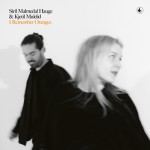
Artist: Siril Malmedal Hauge & Kjetil Mulelid (@)
Title: I Remember Oranges
Format: CD
Label: Svale Records (@)
Rated:
Title: I Remember Oranges
Format: CD
Label: Svale Records (@)
Rated:
There is a peculiar courage in recording music that leaves its fingerprints intact. In an age where every breath can be corrected, every note aligned, and every silence treated as a production flaw, "I Remember Oranges" chooses a far more demanding path: it trusts the moment. Most of these performances were captured live, often in a single take, allowing hesitation, intuition and shared breathing to become part of the composition itself. It is less an album than a conversation that happened to be preserved.
That approach feels entirely natural for Norwegian vocalist and songwriter Siril Malmedal Hauge and pianist Kjetil Mulelid, whose musical relationship has quietly matured over more than a decade. Both have become defining figures of a new Scandinavian jazz generation, collecting critical acclaim, Spellemann nominations and international audiences without ever appearing interested in chasing fashionable trends. Their partnership, formally established as a duo in 2022 after years of collaborating in larger ensembles, is built on something less spectacular but infinitely more valuable: trust. It is the kind of musical trust that cannot be rehearsed into existence; it accumulates slowly through airports, soundchecks, missed trains, late-night conversations and hundreds of concerts.
The title, borrowed from Molly Drake's "I Remember", immediately reveals the album's emotional landscape. Memory here is not presented as nostalgia but as an imperfect, living organism. We rarely remember events exactly as they happened. Instead, we remember fragments: a colour, a scent, the texture of a voice, the impossible brightness of an orange in a foreign marketplace. Human memory has always been a terrible archivist and an excellent poet.
That idea quietly threads its way through the record. The original compositions and carefully chosen covers never compete for attention but seem to complete one another, forming a meditation on connection, absence and the curious way shared experiences eventually become private possessions. Even the album's sequencing feels carefully considered, flowing like recollections rather than chapters.
"Where Will You Go?" establishes the emotional vocabulary from the outset. Its lyrics contemplate loss without surrendering to despair, wondering whether those we miss survive in rain against a window, humming moons or the earth beneath our feet. Rather than dramatizing grief, Hauge approaches it with remarkable gentleness, acknowledging that memories rarely disappear. They simply drift in and out of focus.
Throughout the album, her voice refuses theatrical excess. She sings with extraordinary restraint, allowing emotional weight to emerge through nuance instead of volume. It is tempting to describe her delivery as fragile, but that would be misleading. There is considerable strength in resisting unnecessary emphasis. Like someone speaking quietly in a room where everyone is already listening, she understands that intimacy rarely requires amplification.
Opposite her, Mulelid proves once again why he has become one of Norway's most distinctive contemporary pianists. His playing constantly balances lyricism with harmonic curiosity. Classical influences remain evident, yet they never overshadow his improvisational instincts. Rather than accompanying the voice, his piano anticipates it, answers it, occasionally questions it. The silence between notes becomes as meaningful as the notes themselves.
The guest appearances deepen rather than interrupt the duo's language. Trumpeter Mathias Eick, whose unmistakably luminous tone has become synonymous with modern Nordic jazz, appears on "Cranes", adding another layer of longing to a composition already rich with imagery of migration, remembrance and continuity. The trumpet never dominates the piece; instead, it behaves like another memory floating across the horizon. Meanwhile, Johanne Flottorp's Hardanger fiddle on "Poem" introduces a subtle folk resonance that beautifully complements lyrics exploring vulnerability and the fear of exposing one's unguarded self. The traditional instrument feels less like an exotic colour and more like another emotional register within the conversation.
The repertoire also says much about the duo's artistic identity. Covering Ornette Coleman's almost ascetic "What Reason Could I Give?", Randy Newman's warmly human "Feels Like Home", Molly Drake's quietly devastating meditation on memory and, finally, "Moon River" could easily have resulted in an uneven collection of standards. Instead, every borrowed composition sounds as though it naturally belongs inside the same emotional architecture. They are interpreted rather than performed, absorbed into the duo's own vocabulary instead of preserved behind respectful glass.
The original songs arguably reveal even greater depth when viewed alongside the accompanying lyrics. "Ventetid", sung in Nynorsk, transforms waiting into an act of creation, colouring anticipation with hope rather than frustration. "La Petite Rose", inspired by "The Little Prince", reflects on lifelong friendship through images of planets drifting apart while memories continue orbiting one another. "Poem" may be the emotional centrepiece, asking one of the simplest yet most frightening questions possible: "If I show you who I really am, will you remain?" It is astonishing how much vulnerability can fit inside so few words.
Perhaps what makes "I Remember Oranges" so affecting is its complete lack of urgency. It never attempts to impress. Contemporary music often behaves like someone frantically waving both arms, desperate not to disappear beneath the endless flood of new releases. This album simply sits down beside you and waits. Eventually you realise you've stopped looking at your phone. A remarkable achievement, really. Entire mindfulness industries have built fortunes trying to accomplish exactly that.
Sonically, the production mirrors the philosophy behind the performances. There is air around every phrase, enough space for resonance to bloom naturally. Mike Hartung's recording, Bård Ingebrigtsen's mix and Helge Sten's mastering avoid polishing away the subtle imperfections that make these performances feel inhabited rather than manufactured.
Ultimately, "I Remember Oranges" reminds us that music does not always need to astonish in order to endure. Sometimes its greatest achievement lies in making us notice what already exists: the quiet miracle of listening closely, the peculiar architecture of memory, the fragile threads connecting one human being to another. Like the fruit in Molly Drake's song, these moments eventually fade from sight, but their colour lingers somewhere inside us.
Not every album demands repeated listening. Some simply earn it. This is one of them.
That approach feels entirely natural for Norwegian vocalist and songwriter Siril Malmedal Hauge and pianist Kjetil Mulelid, whose musical relationship has quietly matured over more than a decade. Both have become defining figures of a new Scandinavian jazz generation, collecting critical acclaim, Spellemann nominations and international audiences without ever appearing interested in chasing fashionable trends. Their partnership, formally established as a duo in 2022 after years of collaborating in larger ensembles, is built on something less spectacular but infinitely more valuable: trust. It is the kind of musical trust that cannot be rehearsed into existence; it accumulates slowly through airports, soundchecks, missed trains, late-night conversations and hundreds of concerts.
The title, borrowed from Molly Drake's "I Remember", immediately reveals the album's emotional landscape. Memory here is not presented as nostalgia but as an imperfect, living organism. We rarely remember events exactly as they happened. Instead, we remember fragments: a colour, a scent, the texture of a voice, the impossible brightness of an orange in a foreign marketplace. Human memory has always been a terrible archivist and an excellent poet.
That idea quietly threads its way through the record. The original compositions and carefully chosen covers never compete for attention but seem to complete one another, forming a meditation on connection, absence and the curious way shared experiences eventually become private possessions. Even the album's sequencing feels carefully considered, flowing like recollections rather than chapters.
"Where Will You Go?" establishes the emotional vocabulary from the outset. Its lyrics contemplate loss without surrendering to despair, wondering whether those we miss survive in rain against a window, humming moons or the earth beneath our feet. Rather than dramatizing grief, Hauge approaches it with remarkable gentleness, acknowledging that memories rarely disappear. They simply drift in and out of focus.
Throughout the album, her voice refuses theatrical excess. She sings with extraordinary restraint, allowing emotional weight to emerge through nuance instead of volume. It is tempting to describe her delivery as fragile, but that would be misleading. There is considerable strength in resisting unnecessary emphasis. Like someone speaking quietly in a room where everyone is already listening, she understands that intimacy rarely requires amplification.
Opposite her, Mulelid proves once again why he has become one of Norway's most distinctive contemporary pianists. His playing constantly balances lyricism with harmonic curiosity. Classical influences remain evident, yet they never overshadow his improvisational instincts. Rather than accompanying the voice, his piano anticipates it, answers it, occasionally questions it. The silence between notes becomes as meaningful as the notes themselves.
The guest appearances deepen rather than interrupt the duo's language. Trumpeter Mathias Eick, whose unmistakably luminous tone has become synonymous with modern Nordic jazz, appears on "Cranes", adding another layer of longing to a composition already rich with imagery of migration, remembrance and continuity. The trumpet never dominates the piece; instead, it behaves like another memory floating across the horizon. Meanwhile, Johanne Flottorp's Hardanger fiddle on "Poem" introduces a subtle folk resonance that beautifully complements lyrics exploring vulnerability and the fear of exposing one's unguarded self. The traditional instrument feels less like an exotic colour and more like another emotional register within the conversation.
The repertoire also says much about the duo's artistic identity. Covering Ornette Coleman's almost ascetic "What Reason Could I Give?", Randy Newman's warmly human "Feels Like Home", Molly Drake's quietly devastating meditation on memory and, finally, "Moon River" could easily have resulted in an uneven collection of standards. Instead, every borrowed composition sounds as though it naturally belongs inside the same emotional architecture. They are interpreted rather than performed, absorbed into the duo's own vocabulary instead of preserved behind respectful glass.
The original songs arguably reveal even greater depth when viewed alongside the accompanying lyrics. "Ventetid", sung in Nynorsk, transforms waiting into an act of creation, colouring anticipation with hope rather than frustration. "La Petite Rose", inspired by "The Little Prince", reflects on lifelong friendship through images of planets drifting apart while memories continue orbiting one another. "Poem" may be the emotional centrepiece, asking one of the simplest yet most frightening questions possible: "If I show you who I really am, will you remain?" It is astonishing how much vulnerability can fit inside so few words.
Perhaps what makes "I Remember Oranges" so affecting is its complete lack of urgency. It never attempts to impress. Contemporary music often behaves like someone frantically waving both arms, desperate not to disappear beneath the endless flood of new releases. This album simply sits down beside you and waits. Eventually you realise you've stopped looking at your phone. A remarkable achievement, really. Entire mindfulness industries have built fortunes trying to accomplish exactly that.
Sonically, the production mirrors the philosophy behind the performances. There is air around every phrase, enough space for resonance to bloom naturally. Mike Hartung's recording, Bård Ingebrigtsen's mix and Helge Sten's mastering avoid polishing away the subtle imperfections that make these performances feel inhabited rather than manufactured.
Ultimately, "I Remember Oranges" reminds us that music does not always need to astonish in order to endure. Sometimes its greatest achievement lies in making us notice what already exists: the quiet miracle of listening closely, the peculiar architecture of memory, the fragile threads connecting one human being to another. Like the fruit in Molly Drake's song, these moments eventually fade from sight, but their colour lingers somewhere inside us.
Not every album demands repeated listening. Some simply earn it. This is one of them.
Electric Six: I Shall Exterminate Everything Around Me That Restricts Me From Being The Master (2026 Remaster)
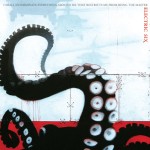
Artist: Electric Six (@)
Title: I Shall Exterminate Everything Around Me That Restricts Me From Being The Master (2026 Remaster)
Format: LP
Label: Metropolis (@)
Rated:
Title: I Shall Exterminate Everything Around Me That Restricts Me From Being The Master (2026 Remaster)
Format: LP
Label: Metropolis (@)
Rated:
Some albums age like fine wine. Others age like a forgotten cheeseburger under the back seat of a tour van. And then there are Electric Six records, which somehow manage to remain exactly as gloriously ridiculous as the day they were conceived. They exist outside the normal laws of musical entropy, trapped in a parallel universe where disco, garage rock, glam, punk, arena hooks and absurdist comedy all signed a legally dubious coexistence agreement.
Originally released in 2007, "I Shall Exterminate Everything Around Me That Restricts Me From Being The Master" arrived during a particularly prolific period for the Detroit collective. By then, many listeners still associated Electric Six almost exclusively with the twin cultural detonations of "Danger! High Voltage" and "Gay Bar", assuming the band had already played every card in its deck of innuendo, satire and dancefloor mayhem. Instead, Dick Valentine and company quietly continued building one of alternative rock's most consistently entertaining catalogues, releasing albums at a pace that suggested sleep was an optional lifestyle choice.
This remastered edition, finally making its debut on vinyl as an expanded double LP through Metropolis Records, does more than simply polish an old favourite. It reminds us that the record occupied a fascinating position in the band's evolution. The novelty factor that many critics insisted upon had already worn off. What's left is a band remarkably comfortable with its own contradictions.
Electric Six have always been difficult to categorise, largely because they seem determined to sabotage any attempt at doing so. They can sound like a glam-rock revue interrupted by a post-punk DJ, a garage band accidentally wandering into Studio 54, or Devo after spending too much time watching late-night infomercials. Their songs frequently begin as one genre before gleefully abandoning it halfway through, as though stylistic consistency were an embarrassing social convention best ignored.
The title itself feels like performance art disguised as megalomania. It is hilariously overblown, yet oddly revealing. Beneath the comic excess lies a recurring fascination with power, identity, consumer culture and self-mythologising. Valentine's lyrics often resemble the ramblings of a charismatic salesman who's simultaneously trying to recruit you into a cult and sell you discounted household appliances. The joke, however, is usually aimed at the narrator himself.
Musically, the album rarely stays still long enough to become predictable. "It's Showtime!" opens like the curtains rising on a gloriously chaotic cabaret before "Down at McDonellzzz" launches into one of the band's trademark collisions between infectious hooks and deliciously juvenile social commentary. "Dance Pattern" and "Rip It!" continue the momentum with rhythms seemingly engineered for awkward dancing, while "Feed My Fuckin' Habit" compresses reckless energy into barely two minutes without ever feeling rushed.
Elsewhere, "When I Get To The Green Building" reveals a surprisingly melodic core beneath the band's perpetual smirk, hinting that Electric Six could probably write straightforward radio-friendly rock if they weren't having far too much fun derailing expectations. "Dirty Looks" closes the original sequence on an unexpectedly triumphant note, its expansive arrangement demonstrating that beneath all the jokes lies a band with an instinctive understanding of dynamics and structure.
That has always been Electric Six's secret weapon. It is easy to laugh with them. It is much harder to notice how carefully these songs are assembled. The humour works because the musicianship never feels disposable. The grooves genuinely groove, the riffs remain satisfyingly sharp, and Valentine's theatrical vocal delivery possesses impeccable comic timing without sacrificing musicality.
The bonus material adds welcome perspective rather than functioning as mere archival filler. The cover of Harry Nilsson's "One" transforms melancholic introspection into something rougher and more muscular without completely abandoning the song's loneliness. It illustrates one of the band's recurring talents: appropriating familiar material while making it sound unmistakably like an Electric Six performance rather than a respectful museum exhibit. The demos and remix similarly offer enjoyable glimpses into the creative machinery without diminishing the polished absurdity of the finished record.
The remaster itself avoids the common temptation of confusing loudness with improvement. Instead, instruments enjoy greater separation, bass lines carry more physical weight, and the layered guitars breathe with renewed clarity. The result preserves the album's raw exuberance while allowing its surprisingly intricate arrangements to emerge more naturally.
Nearly two decades later, "I Shall Exterminate Everything Around Me That Restricts Me From Being The Master" feels less like a relic and more like evidence that irony and sincerity never needed to be sworn enemies. Electric Six understand that humour ages best when built upon genuine craftsmanship rather than disposable punchlines. Their music laughs at rock's inflated ego while simultaneously embracing every glorious excess the genre has to offer.
Perhaps that explains why this album continues to resonate. In an era increasingly obsessed with carefully curated authenticity, Electric Six remain magnificently artificial, cartoonishly excessive and joyfully impossible to pin down. They remind us that intelligence need not wear a serious face, and that sometimes the quickest route to saying something truthful is through a joke delivered at full volume under a mirror ball.
Not every band can make disco-punk sound like both a party and an existential crisis. Electric Six have been doing exactly that for three decades, and judging by this vibrant remaster, they still haven't exhausted the wonderfully absurd possibilities of the formula. Some restrictions, thankfully, were never meant to survive.
Originally released in 2007, "I Shall Exterminate Everything Around Me That Restricts Me From Being The Master" arrived during a particularly prolific period for the Detroit collective. By then, many listeners still associated Electric Six almost exclusively with the twin cultural detonations of "Danger! High Voltage" and "Gay Bar", assuming the band had already played every card in its deck of innuendo, satire and dancefloor mayhem. Instead, Dick Valentine and company quietly continued building one of alternative rock's most consistently entertaining catalogues, releasing albums at a pace that suggested sleep was an optional lifestyle choice.
This remastered edition, finally making its debut on vinyl as an expanded double LP through Metropolis Records, does more than simply polish an old favourite. It reminds us that the record occupied a fascinating position in the band's evolution. The novelty factor that many critics insisted upon had already worn off. What's left is a band remarkably comfortable with its own contradictions.
Electric Six have always been difficult to categorise, largely because they seem determined to sabotage any attempt at doing so. They can sound like a glam-rock revue interrupted by a post-punk DJ, a garage band accidentally wandering into Studio 54, or Devo after spending too much time watching late-night infomercials. Their songs frequently begin as one genre before gleefully abandoning it halfway through, as though stylistic consistency were an embarrassing social convention best ignored.
The title itself feels like performance art disguised as megalomania. It is hilariously overblown, yet oddly revealing. Beneath the comic excess lies a recurring fascination with power, identity, consumer culture and self-mythologising. Valentine's lyrics often resemble the ramblings of a charismatic salesman who's simultaneously trying to recruit you into a cult and sell you discounted household appliances. The joke, however, is usually aimed at the narrator himself.
Musically, the album rarely stays still long enough to become predictable. "It's Showtime!" opens like the curtains rising on a gloriously chaotic cabaret before "Down at McDonellzzz" launches into one of the band's trademark collisions between infectious hooks and deliciously juvenile social commentary. "Dance Pattern" and "Rip It!" continue the momentum with rhythms seemingly engineered for awkward dancing, while "Feed My Fuckin' Habit" compresses reckless energy into barely two minutes without ever feeling rushed.
Elsewhere, "When I Get To The Green Building" reveals a surprisingly melodic core beneath the band's perpetual smirk, hinting that Electric Six could probably write straightforward radio-friendly rock if they weren't having far too much fun derailing expectations. "Dirty Looks" closes the original sequence on an unexpectedly triumphant note, its expansive arrangement demonstrating that beneath all the jokes lies a band with an instinctive understanding of dynamics and structure.
That has always been Electric Six's secret weapon. It is easy to laugh with them. It is much harder to notice how carefully these songs are assembled. The humour works because the musicianship never feels disposable. The grooves genuinely groove, the riffs remain satisfyingly sharp, and Valentine's theatrical vocal delivery possesses impeccable comic timing without sacrificing musicality.
The bonus material adds welcome perspective rather than functioning as mere archival filler. The cover of Harry Nilsson's "One" transforms melancholic introspection into something rougher and more muscular without completely abandoning the song's loneliness. It illustrates one of the band's recurring talents: appropriating familiar material while making it sound unmistakably like an Electric Six performance rather than a respectful museum exhibit. The demos and remix similarly offer enjoyable glimpses into the creative machinery without diminishing the polished absurdity of the finished record.
The remaster itself avoids the common temptation of confusing loudness with improvement. Instead, instruments enjoy greater separation, bass lines carry more physical weight, and the layered guitars breathe with renewed clarity. The result preserves the album's raw exuberance while allowing its surprisingly intricate arrangements to emerge more naturally.
Nearly two decades later, "I Shall Exterminate Everything Around Me That Restricts Me From Being The Master" feels less like a relic and more like evidence that irony and sincerity never needed to be sworn enemies. Electric Six understand that humour ages best when built upon genuine craftsmanship rather than disposable punchlines. Their music laughs at rock's inflated ego while simultaneously embracing every glorious excess the genre has to offer.
Perhaps that explains why this album continues to resonate. In an era increasingly obsessed with carefully curated authenticity, Electric Six remain magnificently artificial, cartoonishly excessive and joyfully impossible to pin down. They remind us that intelligence need not wear a serious face, and that sometimes the quickest route to saying something truthful is through a joke delivered at full volume under a mirror ball.
Not every band can make disco-punk sound like both a party and an existential crisis. Electric Six have been doing exactly that for three decades, and judging by this vibrant remaster, they still haven't exhausted the wonderfully absurd possibilities of the formula. Some restrictions, thankfully, were never meant to survive.
Genesis P. Orridge with Pigface: The Howler: An English Breakfast
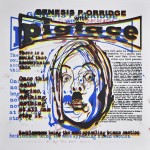
Artist: Genesis P. Orridge with Pigface (@)
Title: The Howler: An English Breakfast
Format: LP
Label: Overdrive/Invisible Records (@)
Rated:
Title: The Howler: An English Breakfast
Format: LP
Label: Overdrive/Invisible Records (@)
Rated:
'The Howler: An English Breakfast' is a collaborative effort by Genesis P. Orridge and Martin Atkins' Pigface including Mick Harris, originally recorded 1996-1997. Although the one-sheet from the PR outfit that provided this album contains anecdotal material by Martin Atkins regarding circumstances surrounding this recording, I will not recount much of it here save for one paragraph, as much of it lacks relevance and just falls into the category of flavor text. "I first met Genesis," Atkins says, "at the Sharon Tate house in California. I was out there working with Skinny Puppy on what would become 'The Process' album, and I needed a day away from both them, and Rick Rubin's Shangri La studio. I stopped by the house to say hit to Trent- he wasn't there, but Gen was, along with Dr. Timothy Leary. Next thing I know Gen is part of Pigface, improvising on tracks we haven't even imagined yet. Six cassette machines onstage and a bag full of tapes. Magic."
Magic for some, maybe, but I think you need to be already a fan of Mr. Orridge and Pigface (perhaps more of the former than the latter) to really appreciate this album. The work is divided into four parts, all of them names "Howler" (1, 2, 3, and 4). It has been described as "a slow, treacherous dub with a booming bass and unidentified sonic attacks flitting about. Over the top of this is the daunting Genesis P-Orridge, reciting a tale of a debauched castle’s breakfast." That's not far off the mark. Instrumentally, there is more happening on nearly any Scorn album than on this. Obviously the ramblings of Genesis P. carry the concept over the rumblings of the music. Since Genesis P. Orridge passed away in 2020, this album is likely to become a collector's item, being one of his last released recordings, something Overdrive (Italy) and Invisible (U.S.) are capitalizing on with limited edition vinyl in a variety of colors and price points. I don't see any other available formats. Four stars for fans of Orridge and Pigface, three for everyone else.
Magic for some, maybe, but I think you need to be already a fan of Mr. Orridge and Pigface (perhaps more of the former than the latter) to really appreciate this album. The work is divided into four parts, all of them names "Howler" (1, 2, 3, and 4). It has been described as "a slow, treacherous dub with a booming bass and unidentified sonic attacks flitting about. Over the top of this is the daunting Genesis P-Orridge, reciting a tale of a debauched castle’s breakfast." That's not far off the mark. Instrumentally, there is more happening on nearly any Scorn album than on this. Obviously the ramblings of Genesis P. carry the concept over the rumblings of the music. Since Genesis P. Orridge passed away in 2020, this album is likely to become a collector's item, being one of his last released recordings, something Overdrive (Italy) and Invisible (U.S.) are capitalizing on with limited edition vinyl in a variety of colors and price points. I don't see any other available formats. Four stars for fans of Orridge and Pigface, three for everyone else.