
Thursday, September 3, 2026
Browse by Genre
Industrial Music / Industrial Metal / Aggro Industrial / Electro Metal
Industrial Noise / Power Noise / Harsh Noise
Synth Pop / Electro Pop / Synth-Electronica
Techno / Trance / Goa / Drum'n'Bass / Jungle / Tribal / Trip-Hop
Ambient / Electronica / Ethereal / Dub / Soundscapes / Abstract
Experimental / Avantgarde / Weird & Wired / Glitch / Noise / Field Recording
Dark / Gothic / Wave / New Wave / Dark Wave / Industrial Gothic
New Music / Downtown / Avantgarde Jazz / New Classical / World
Search Reviews
Music Reviews
Dario Calderone: The Infinite Garden
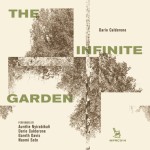
Artist: Dario Calderone (@)
Title: The Infinite Garden
Format: CD + Download
Label: Moving Furniture Records (@)
Rated:

Title: The Infinite Garden
Format: CD + Download
Label: Moving Furniture Records (@)
Rated:
There is a peculiar sentence hidden in the album's credits. After listing the performers, Dario Calderone offers thanks not only to his fellow musicians, but also to birds, raindrops, foxes, earthworms, radio waves, bushes, fungi, passing cars, memories, dreams, ghosts and meteorological events. It initially reads like the acknowledgements page of someone who has spent perhaps a little too much time listening to the wind. Then the music begins, and one realizes the list is neither whimsical nor metaphorical. Every one of those presences is, in some way, part of the ensemble.
"The Infinite Garden" is less an album than an ecological proposition. It suggests that listening is never confined to performers and audience, but extends toward everything occupying the same moment in time. Nature, technology, coincidence and human intention cease to be separate categories. They simply become participants.
Italian double bassist and composer Dario Calderone has spent nearly two decades immersed in contemporary music, collaborating with many of its most adventurous composers while developing a practice rooted in both rigorous interpretation and exploratory performance. A student of the legendary Stefano Scodanibbio, Calderone has consistently viewed the double bass as something far richer than a supporting instrument. Throughout his career, whether performing with the Nieuw Ensemble, Nieuw Amsterdams Peil, or in numerous solo projects, his work has demonstrated an uncommon sensitivity toward the physicality of sound itself.
That sensibility reaches perhaps its clearest expression here.
Recorded in Amsterdam's Amstelpark during a cloudy January afternoon in 2025, "The Infinite Garden" unfolds as a single thirty-five-minute composition performed by an exceptional quartet: Calderone on double bass, Aurélie Nyirabikali Lierman on voice, Naomi Sato on the Japanese "sho", and Gareth Davis on bass clarinet. Surrounding them is an ever-changing live soundscape captured directly from the park itself, allowing weather, wildlife, distant traffic and the unpredictable movements of public space to become equal collaborators in the musical process. The work reflects Calderone's broader concept of "global listening," dissolving boundaries between performers, environment and audience.
The temptation is to describe this as field recording accompanied by improvisation.
That would miss the point entirely.
The environmental sounds never function as background ambience. They possess agency. A distant aeroplane does not interrupt the music; it alters its direction. A brief gust of wind changes the emotional weight of a sustained "sho" chord. Rain becomes rhythm without ever behaving like percussion. Even silence refuses to remain empty, constantly revealing microscopic layers of acoustic life.
The quartet responds with extraordinary restraint.
Naomi Sato's "sho", an ancient Japanese mouth organ capable of producing luminous clusters of sustained harmony, seems almost designed for this environment. Rather than introducing melody, it suspends time, creating shimmering harmonic fields that merge seamlessly with the park's own acoustic atmosphere. Her decades of work bringing the instrument into contemporary music have made her uniquely capable of allowing tradition to breathe inside radically modern contexts.
Gareth Davis approaches the bass clarinet with similar patience. Known for collaborations spanning composers such as Chaya Czernowin and improvisers including Elliott Sharp and Merzbow, Davis has long demonstrated an ability to inhabit musical spaces where certainty is deliberately withheld. Here his instrument rarely asserts itself. Instead, it emerges gradually from the surrounding environment, sometimes resembling distant birdsong, sometimes a slowly shifting geological formation.
Aurélie Nyirabikali Lierman's contribution may be the album's quiet revelation.
Her artistic practice has consistently blurred the lines between radio art, vocal performance and sound ecology, often drawing upon extensive field recordings collected throughout East Africa, a methodology she has described as "Afrique Concrète". That fascination with transforming lived environments into compositional material resonates perfectly with Calderone's concept. Her voice appears less interested in language than in presence itself, hovering somewhere between breath, invocation and remembered speech.
Calderone's double bass anchors everything without ever behaving traditionally.
Rather than establishing harmonic foundations, the instrument explores resonance, friction and weight. Bowed harmonics dissolve into surrounding air. Deep resonances interact with environmental frequencies until it becomes impossible to distinguish instrument from landscape.
What emerges is not improvisation in the conventional sense but negotiation.
Every sound requires permission from every other sound.
One of the album's most compelling achievements lies in its rejection of hierarchy. Contemporary composition often incorporates environmental recordings as aesthetic material. "The Infinite Garden" instead grants them equal citizenship. Human performers do not master nature; they coexist with it.
There is something quietly political in this refusal.
The project imagines listening itself as an act of inclusiveness. Rather than constructing a carefully controlled sonic object, Calderone embraces uncertainty, accepting that the world outside the performers' intentions will inevitably participate. In an era increasingly dominated by algorithmic precision and digital perfection, such openness feels almost radical.
The result occasionally demands patience.
Listeners searching for dramatic developments or easily identifiable thematic progression may initially find themselves adrift. The composition unfolds organically, more like observing changing light across a landscape than following a narrative. Yet surrendering those expectations becomes part of the experience. Gradually, one begins hearing relationships previously overlooked: how distant traffic echoes clarinet timbres, how birds answer sustained harmonies, how footsteps unexpectedly introduce rhythmic counterpoint.
By the closing minutes, the title begins making profound sense.
Gardens are often understood as carefully controlled spaces where nature is disciplined into pleasing arrangements. Calderone imagines something altogether different: an infinite garden where nothing is excluded, where cultivated and wild coexist, where boundaries remain permeable and every participant alters the whole.
It is tempting to call this ambient music.
It is certainly peaceful.
But peace is not the same as passivity.
"The Infinite Garden" asks something surprisingly demanding of its listeners. It asks them to abandon the comforting illusion that music begins when musicians start playing and ends when they stop. Instead, it proposes that listening has always been larger than performance itself.
Perhaps that is Calderone's most generous invitation.
Not simply to hear more carefully, but to realize that the world has been performing all along.
"The Infinite Garden" is less an album than an ecological proposition. It suggests that listening is never confined to performers and audience, but extends toward everything occupying the same moment in time. Nature, technology, coincidence and human intention cease to be separate categories. They simply become participants.
Italian double bassist and composer Dario Calderone has spent nearly two decades immersed in contemporary music, collaborating with many of its most adventurous composers while developing a practice rooted in both rigorous interpretation and exploratory performance. A student of the legendary Stefano Scodanibbio, Calderone has consistently viewed the double bass as something far richer than a supporting instrument. Throughout his career, whether performing with the Nieuw Ensemble, Nieuw Amsterdams Peil, or in numerous solo projects, his work has demonstrated an uncommon sensitivity toward the physicality of sound itself.
That sensibility reaches perhaps its clearest expression here.
Recorded in Amsterdam's Amstelpark during a cloudy January afternoon in 2025, "The Infinite Garden" unfolds as a single thirty-five-minute composition performed by an exceptional quartet: Calderone on double bass, Aurélie Nyirabikali Lierman on voice, Naomi Sato on the Japanese "sho", and Gareth Davis on bass clarinet. Surrounding them is an ever-changing live soundscape captured directly from the park itself, allowing weather, wildlife, distant traffic and the unpredictable movements of public space to become equal collaborators in the musical process. The work reflects Calderone's broader concept of "global listening," dissolving boundaries between performers, environment and audience.
The temptation is to describe this as field recording accompanied by improvisation.
That would miss the point entirely.
The environmental sounds never function as background ambience. They possess agency. A distant aeroplane does not interrupt the music; it alters its direction. A brief gust of wind changes the emotional weight of a sustained "sho" chord. Rain becomes rhythm without ever behaving like percussion. Even silence refuses to remain empty, constantly revealing microscopic layers of acoustic life.
The quartet responds with extraordinary restraint.
Naomi Sato's "sho", an ancient Japanese mouth organ capable of producing luminous clusters of sustained harmony, seems almost designed for this environment. Rather than introducing melody, it suspends time, creating shimmering harmonic fields that merge seamlessly with the park's own acoustic atmosphere. Her decades of work bringing the instrument into contemporary music have made her uniquely capable of allowing tradition to breathe inside radically modern contexts.
Gareth Davis approaches the bass clarinet with similar patience. Known for collaborations spanning composers such as Chaya Czernowin and improvisers including Elliott Sharp and Merzbow, Davis has long demonstrated an ability to inhabit musical spaces where certainty is deliberately withheld. Here his instrument rarely asserts itself. Instead, it emerges gradually from the surrounding environment, sometimes resembling distant birdsong, sometimes a slowly shifting geological formation.
Aurélie Nyirabikali Lierman's contribution may be the album's quiet revelation.
Her artistic practice has consistently blurred the lines between radio art, vocal performance and sound ecology, often drawing upon extensive field recordings collected throughout East Africa, a methodology she has described as "Afrique Concrète". That fascination with transforming lived environments into compositional material resonates perfectly with Calderone's concept. Her voice appears less interested in language than in presence itself, hovering somewhere between breath, invocation and remembered speech.
Calderone's double bass anchors everything without ever behaving traditionally.
Rather than establishing harmonic foundations, the instrument explores resonance, friction and weight. Bowed harmonics dissolve into surrounding air. Deep resonances interact with environmental frequencies until it becomes impossible to distinguish instrument from landscape.
What emerges is not improvisation in the conventional sense but negotiation.
Every sound requires permission from every other sound.
One of the album's most compelling achievements lies in its rejection of hierarchy. Contemporary composition often incorporates environmental recordings as aesthetic material. "The Infinite Garden" instead grants them equal citizenship. Human performers do not master nature; they coexist with it.
There is something quietly political in this refusal.
The project imagines listening itself as an act of inclusiveness. Rather than constructing a carefully controlled sonic object, Calderone embraces uncertainty, accepting that the world outside the performers' intentions will inevitably participate. In an era increasingly dominated by algorithmic precision and digital perfection, such openness feels almost radical.
The result occasionally demands patience.
Listeners searching for dramatic developments or easily identifiable thematic progression may initially find themselves adrift. The composition unfolds organically, more like observing changing light across a landscape than following a narrative. Yet surrendering those expectations becomes part of the experience. Gradually, one begins hearing relationships previously overlooked: how distant traffic echoes clarinet timbres, how birds answer sustained harmonies, how footsteps unexpectedly introduce rhythmic counterpoint.
By the closing minutes, the title begins making profound sense.
Gardens are often understood as carefully controlled spaces where nature is disciplined into pleasing arrangements. Calderone imagines something altogether different: an infinite garden where nothing is excluded, where cultivated and wild coexist, where boundaries remain permeable and every participant alters the whole.
It is tempting to call this ambient music.
It is certainly peaceful.
But peace is not the same as passivity.
"The Infinite Garden" asks something surprisingly demanding of its listeners. It asks them to abandon the comforting illusion that music begins when musicians start playing and ends when they stop. Instead, it proposes that listening has always been larger than performance itself.
Perhaps that is Calderone's most generous invitation.
Not simply to hear more carefully, but to realize that the world has been performing all along.
Espen Reinertsen: Venus er i håret

Artist: Espen Reinertsen
Title: Venus er i håret
Format: 12" + Download
Label: SusannaSonata (@)
Rated:

Title: Venus er i håret
Format: 12" + Download
Label: SusannaSonata (@)
Rated:
Nostalgia is a dangerous ingredient.
Use too much of it and music becomes a museum, lovingly dusted but lifeless. Use just enough, however, and memory ceases to be about the past and instead becomes another instrument, capable of playing melodies that never quite existed. Espen Reinertsen understands this distinction remarkably well. "Venus er i håret" is soaked in familiar sounds, yet never settles for mere recollection. It is an album that remembers rather than recreates.
Nearly a decade after "Nattsyntese", the Norwegian composer, saxophonist, vocalist and producer returns to Susanna Wallumrød's SusannaSonata label with a record that quietly expands his already distinctive musical language. Reinertsen has long occupied an unusual position within Norway's adventurous music scene. As a collaborator he has appeared alongside artists as diverse as Jenny Hval, Jennifer Walshe, Toshimaru Nakamura, Christian Wallumrød and many others, moving comfortably between contemporary composition, free improvisation and experimental jazz. His solo work, however, has always followed its own peculiar orbit, one where pop songs behave like dreams and electronic textures seem to possess emotional memory.
Describing "Venus er i håret" simply as avant-pop feels accurate but incomplete.
Its five extended compositions certainly contain songs. They have verses, recurring melodies and lyrics delivered with quiet intimacy. Yet each one gradually mutates into something less predictable. Reinertsen has spoken of his affection for traditional songs that unexpectedly transform into long instrumental passages, "like an animal with different head and body". That image perfectly captures the album's architecture. Familiar forms gently dissolve into drifting instrumental landscapes before quietly finding their way home again.
One immediately notices the electronics.
The press material references vintage gaming consoles, and indeed the synthesizers frequently evoke early home computers and 8-bit sound chips. Fortunately, this never descends into fashionable retro aesthetics. These electronic voices do not exist to remind listeners of childhood afternoons spent staring at CRT monitors. Instead, they function almost psychologically, as sonic representations of memory itself: slightly pixelated, incomplete, emotionally vivid despite their technical simplicity.
It is an inspired choice.
Memory rarely arrives in high definition.
Around these shimmering electronic figures, Reinertsen constructs surprisingly lush arrangements. Flute, bass clarinet, saxophone, trumpet and subtle programming intermingle with Erik Nylander's wonderfully responsive drumming and Eivind Lønning's restrained trumpet work. Rather than creating dramatic contrasts between acoustic and electronic instruments, the trio allows them to dissolve into one another until distinctions become irrelevant.
Nylander's contribution deserves particular praise.
His drumming rarely provides straightforward pulse. Instead, rhythms constantly shift, hesitate and reconfigure themselves, introducing small disruptions that prevent the songs from ever becoming too comfortable. There is movement throughout the album, but it feels dreamlike rather than mechanical, as though each groove were remembering how it used to dance.
Reinertsen's voice may initially surprise listeners more familiar with his work as a saxophonist.
Soft, vulnerable and almost conversational, it carries little of the theatrical flourish often associated with experimental pop. Instead, he sings with remarkable restraint, allowing fragility to become expressive rather than dramatic. His delivery occasionally recalls the emotional openness of Robert Wyatt, though without imitation, while remaining entirely his own. Over repeated listens the voice gradually becomes less a focal point than another carefully integrated texture within the album's unusually rich sonic ecology.
The songs themselves seem deliberately resistant to grand statements.
Reinertsen has suggested that there are no overarching themes beyond whatever listeners choose to discover. Yet recurring images of memory, bodies, oceans and shifting identities quietly accumulate. The remarkable "Muskelminner fra arkanoidepoken" ("Muscle Memories from the Arkanoid Era") perhaps captures the album's emotional core most clearly, intertwining nostalgic electronic timbres with reflections on physical and emotional memory in ways that feel simultaneously playful and deeply melancholic.
It is impossible not to smile at a record capable of making vintage computer sounds feel genuinely moving.
Human beings, after all, possess a curious talent for attaching profound emotions to objects originally designed to produce cheerful beeps while tiny spaceships destroyed geometric shapes.
The closing title track offers perhaps the album's finest synthesis of its many contradictions. What begins as a gentle ballad slowly expands into a luminous instrumental coda where electronics, winds and subtle rhythmic transformations seem to drift beyond the song itself. One senses Reinertsen becoming increasingly interested in atmosphere without abandoning melody, in abstraction without sacrificing intimacy.
Throughout "Venus er i håret", beauty emerges not from perfection but from constant transformation.
Nothing remains static for long. Harmonies bloom unexpectedly before dissolving. Rhythms mutate almost imperceptibly. Familiar sonic references continually acquire new meanings. The album's emotional landscape feels suspended somewhere between waking memory and hypnagogic imagination, where details remain strangely vivid even as their original contexts disappear.
There is also admirable confidence in its pacing.
With only five compositions spread across nearly forty minutes, Reinertsen allows every musical idea sufficient room to unfold organically. Instrumental passages never feel indulgent, nor do vocal sections appear merely transitional. Instead, each piece breathes according to its own internal logic, unconcerned with conventional song duration or commercial efficiency.
Perhaps that is what makes "Venus er i håret" so quietly affecting.
It never insists upon its originality, despite possessing plenty of it.
Instead, Reinertsen simply invites listeners into a deeply personal world where avant-pop, chamber music, folktronica, jazz and dreamlike songwriting coexist without anxiety over categorization. The result is not experimental for its own sake, but exploratory in the truest sense: curious, generous and open-ended.
Venus may indeed be hiding somewhere in the hair.
More importantly, Reinertsen reminds us that sometimes the smallest, strangest sounds carry the longest memories.
Use too much of it and music becomes a museum, lovingly dusted but lifeless. Use just enough, however, and memory ceases to be about the past and instead becomes another instrument, capable of playing melodies that never quite existed. Espen Reinertsen understands this distinction remarkably well. "Venus er i håret" is soaked in familiar sounds, yet never settles for mere recollection. It is an album that remembers rather than recreates.
Nearly a decade after "Nattsyntese", the Norwegian composer, saxophonist, vocalist and producer returns to Susanna Wallumrød's SusannaSonata label with a record that quietly expands his already distinctive musical language. Reinertsen has long occupied an unusual position within Norway's adventurous music scene. As a collaborator he has appeared alongside artists as diverse as Jenny Hval, Jennifer Walshe, Toshimaru Nakamura, Christian Wallumrød and many others, moving comfortably between contemporary composition, free improvisation and experimental jazz. His solo work, however, has always followed its own peculiar orbit, one where pop songs behave like dreams and electronic textures seem to possess emotional memory.
Describing "Venus er i håret" simply as avant-pop feels accurate but incomplete.
Its five extended compositions certainly contain songs. They have verses, recurring melodies and lyrics delivered with quiet intimacy. Yet each one gradually mutates into something less predictable. Reinertsen has spoken of his affection for traditional songs that unexpectedly transform into long instrumental passages, "like an animal with different head and body". That image perfectly captures the album's architecture. Familiar forms gently dissolve into drifting instrumental landscapes before quietly finding their way home again.
One immediately notices the electronics.
The press material references vintage gaming consoles, and indeed the synthesizers frequently evoke early home computers and 8-bit sound chips. Fortunately, this never descends into fashionable retro aesthetics. These electronic voices do not exist to remind listeners of childhood afternoons spent staring at CRT monitors. Instead, they function almost psychologically, as sonic representations of memory itself: slightly pixelated, incomplete, emotionally vivid despite their technical simplicity.
It is an inspired choice.
Memory rarely arrives in high definition.
Around these shimmering electronic figures, Reinertsen constructs surprisingly lush arrangements. Flute, bass clarinet, saxophone, trumpet and subtle programming intermingle with Erik Nylander's wonderfully responsive drumming and Eivind Lønning's restrained trumpet work. Rather than creating dramatic contrasts between acoustic and electronic instruments, the trio allows them to dissolve into one another until distinctions become irrelevant.
Nylander's contribution deserves particular praise.
His drumming rarely provides straightforward pulse. Instead, rhythms constantly shift, hesitate and reconfigure themselves, introducing small disruptions that prevent the songs from ever becoming too comfortable. There is movement throughout the album, but it feels dreamlike rather than mechanical, as though each groove were remembering how it used to dance.
Reinertsen's voice may initially surprise listeners more familiar with his work as a saxophonist.
Soft, vulnerable and almost conversational, it carries little of the theatrical flourish often associated with experimental pop. Instead, he sings with remarkable restraint, allowing fragility to become expressive rather than dramatic. His delivery occasionally recalls the emotional openness of Robert Wyatt, though without imitation, while remaining entirely his own. Over repeated listens the voice gradually becomes less a focal point than another carefully integrated texture within the album's unusually rich sonic ecology.
The songs themselves seem deliberately resistant to grand statements.
Reinertsen has suggested that there are no overarching themes beyond whatever listeners choose to discover. Yet recurring images of memory, bodies, oceans and shifting identities quietly accumulate. The remarkable "Muskelminner fra arkanoidepoken" ("Muscle Memories from the Arkanoid Era") perhaps captures the album's emotional core most clearly, intertwining nostalgic electronic timbres with reflections on physical and emotional memory in ways that feel simultaneously playful and deeply melancholic.
It is impossible not to smile at a record capable of making vintage computer sounds feel genuinely moving.
Human beings, after all, possess a curious talent for attaching profound emotions to objects originally designed to produce cheerful beeps while tiny spaceships destroyed geometric shapes.
The closing title track offers perhaps the album's finest synthesis of its many contradictions. What begins as a gentle ballad slowly expands into a luminous instrumental coda where electronics, winds and subtle rhythmic transformations seem to drift beyond the song itself. One senses Reinertsen becoming increasingly interested in atmosphere without abandoning melody, in abstraction without sacrificing intimacy.
Throughout "Venus er i håret", beauty emerges not from perfection but from constant transformation.
Nothing remains static for long. Harmonies bloom unexpectedly before dissolving. Rhythms mutate almost imperceptibly. Familiar sonic references continually acquire new meanings. The album's emotional landscape feels suspended somewhere between waking memory and hypnagogic imagination, where details remain strangely vivid even as their original contexts disappear.
There is also admirable confidence in its pacing.
With only five compositions spread across nearly forty minutes, Reinertsen allows every musical idea sufficient room to unfold organically. Instrumental passages never feel indulgent, nor do vocal sections appear merely transitional. Instead, each piece breathes according to its own internal logic, unconcerned with conventional song duration or commercial efficiency.
Perhaps that is what makes "Venus er i håret" so quietly affecting.
It never insists upon its originality, despite possessing plenty of it.
Instead, Reinertsen simply invites listeners into a deeply personal world where avant-pop, chamber music, folktronica, jazz and dreamlike songwriting coexist without anxiety over categorization. The result is not experimental for its own sake, but exploratory in the truest sense: curious, generous and open-ended.
Venus may indeed be hiding somewhere in the hair.
More importantly, Reinertsen reminds us that sometimes the smallest, strangest sounds carry the longest memories.
VV.AA.: Tarkovsky

Some films leave you remembering scenes. Others leave you remembering silence.
That distinction may explain why Andrei Tarkovsky remains one of cinema's most enduring figures. His films never rushed toward their conclusions. They wandered, contemplated, lingered on rain-soaked windows, abandoned rooms, trembling grass, burning houses and human faces carrying thoughts too complex for dialogue. Time itself became one of his principal materials. Music, consequently, could never behave like conventional film scoring. It had to breathe with the same patience.
Cold Spring's beautifully assembled five-disc box set does more than gather together the soundtracks to Tarkovsky's five Soviet features. It reconstructs an artistic dialogue between a visionary filmmaker and two extraordinary composers, Vyacheslav Ovchinnikov and Eduard Artemyev, whose radically different musical languages helped define one of cinema's most singular bodies of work.
This is not merely a collection of film music.
It is a history of artistic evolution.
The journey begins with "Ivan's Childhood" (1962), where Ovchinnikov's orchestral writing still inhabits recognizable cinematic territory. Lyrical strings, restrained brass and melancholy themes accompany the tragedy of childhood consumed by war. Yet even here, one senses Tarkovsky's resistance to emotional manipulation. Rather than telling audiences how to feel, the music opens emotional space around Ivan's fractured memories, allowing dreams and trauma to coexist without easy resolution.
Four years later, "Andrei Rublev" expands that vocabulary into something almost liturgical. Ovchinnikov's score becomes inseparable from the film's spiritual and historical dimensions. Choral passages carry immense emotional gravity without becoming triumphalist, while orchestral textures often seem less interested in illustrating medieval Russia than in expressing the moral weight carried by its inhabitants.
Listening to these first two discs independently reveals how sophisticated Ovchinnikov's writing truly was. Outside the films, one notices the remarkable structural coherence often obscured by the visual narrative. His music balances grandeur with introspection, never allowing spectacle to overwhelm contemplation.
Then something extraordinary happens.
With "Solaris" (1972), Eduard Artemyev enters the picture, and film music quietly changes direction.
Today, electronic scoring is everywhere, from blockbuster science fiction to minimalist television dramas. It is easy to forget how astonishing Artemyev's work sounded in the early 1970s. Having embraced the revolutionary ANS synthesizer, one of the most remarkable instruments ever developed in the Soviet Union by engineer Evgeny Murzin, Artemyev approached electronics not as futuristic decoration but as psychological architecture.
His score for "Solaris" remains astonishingly modern.
Rather than portraying outer space through technological spectacle, Artemyev composes uncertainty itself. Delicate synthesizer textures drift alongside manipulated environmental sounds, while fragments of J.S. Bach emerge like memories refusing to disappear. Human consciousness and artificial sound begin mirroring one another until neither feels entirely stable. The result remains one of the defining achievements of electronic composition in cinema.
If "Solaris" explores memory through science fiction, "Mirror" turns inward completely.
Perhaps Tarkovsky's most autobiographical film, "Mirror" dissolves chronology into recollection, dream and poetic association. Artemyev responds with remarkable sensitivity. The music often appears only briefly, almost apologetically, before retreating into silence. Baroque echoes, electronic atmospheres and sparse instrumental gestures coexist without ever announcing themselves. It is music that understands absence as thoroughly as presence.
By the time we arrive at "Stalker", both director and composer seem to have reached complete artistic trust.
Inspired partly by Indian classical traditions while incorporating flute, harpsichord, choirs, tar and electronic processing, Artemyev creates one of cinema's most haunting sonic environments. Nothing here seeks conventional beauty. Instead, every sound appears suspended between decay and transcendence. The mysterious Zone becomes audible before it becomes visible.
Listening outside the film reveals fascinating details often overshadowed by Tarkovsky's hypnotic imagery. Tiny electronic modulations breathe almost organically. Instrumental colours merge into impossible hybrids. One begins noticing how subtly Artemyev manipulates timbre, allowing sounds to transform without obvious transitions.
The sequencing across five discs also illuminates Tarkovsky's remarkable artistic progression.
His early collaborations with Ovchinnikov still maintain recognizable relationships between image and score. With Artemyev, however, music gradually becomes another physical element within the cinematic landscape, no longer accompanying images but inhabiting the same metaphysical space.
That evolution reflects Tarkovsky's broader philosophy of cinema.
He famously described filmmaking as "sculpting in time", and these soundtracks embody precisely that idea. They resist immediate gratification. Themes rarely announce themselves. Climaxes often dissolve before fully arriving. Silence repeatedly proves more eloquent than orchestration. In an age where many contemporary film scores mistake constant volume for emotional depth, revisiting these works feels almost medicinal.
The restoration itself deserves considerable praise.
Cold Spring has approached the material with admirable respect, presenting newly remastered audio that preserves the original character while offering significantly improved clarity. The deluxe presentation, complete with individually housed discs, reproductions of original Russian and Japanese posters, and elegant packaging, reflects genuine archival care rather than collector-oriented excess.
There is also something quietly moving about encountering these scores together in 2026.
Tarkovsky died nearly forty years ago, Artemyev followed in 2022, and Ovchinnikov several years earlier. Yet their conversation continues uninterrupted. These recordings remind us that cinema has never been solely visual. Some of Tarkovsky's most unforgettable images continue living because these composers understood when to speak, when to whisper, and, perhaps most importantly, when to remain silent.
The famous Room inside "Stalker" supposedly grants one's deepest desire.
If asked to name one wish for modern soundtrack composition, this box set might offer a simple answer: more composers willing to trust mystery over explanation, atmosphere over immediacy, and patience over spectacle.
Some collections preserve great film music.
This one preserves an entire philosophy of listening.
That distinction may explain why Andrei Tarkovsky remains one of cinema's most enduring figures. His films never rushed toward their conclusions. They wandered, contemplated, lingered on rain-soaked windows, abandoned rooms, trembling grass, burning houses and human faces carrying thoughts too complex for dialogue. Time itself became one of his principal materials. Music, consequently, could never behave like conventional film scoring. It had to breathe with the same patience.
Cold Spring's beautifully assembled five-disc box set does more than gather together the soundtracks to Tarkovsky's five Soviet features. It reconstructs an artistic dialogue between a visionary filmmaker and two extraordinary composers, Vyacheslav Ovchinnikov and Eduard Artemyev, whose radically different musical languages helped define one of cinema's most singular bodies of work.
This is not merely a collection of film music.
It is a history of artistic evolution.
The journey begins with "Ivan's Childhood" (1962), where Ovchinnikov's orchestral writing still inhabits recognizable cinematic territory. Lyrical strings, restrained brass and melancholy themes accompany the tragedy of childhood consumed by war. Yet even here, one senses Tarkovsky's resistance to emotional manipulation. Rather than telling audiences how to feel, the music opens emotional space around Ivan's fractured memories, allowing dreams and trauma to coexist without easy resolution.
Four years later, "Andrei Rublev" expands that vocabulary into something almost liturgical. Ovchinnikov's score becomes inseparable from the film's spiritual and historical dimensions. Choral passages carry immense emotional gravity without becoming triumphalist, while orchestral textures often seem less interested in illustrating medieval Russia than in expressing the moral weight carried by its inhabitants.
Listening to these first two discs independently reveals how sophisticated Ovchinnikov's writing truly was. Outside the films, one notices the remarkable structural coherence often obscured by the visual narrative. His music balances grandeur with introspection, never allowing spectacle to overwhelm contemplation.
Then something extraordinary happens.
With "Solaris" (1972), Eduard Artemyev enters the picture, and film music quietly changes direction.
Today, electronic scoring is everywhere, from blockbuster science fiction to minimalist television dramas. It is easy to forget how astonishing Artemyev's work sounded in the early 1970s. Having embraced the revolutionary ANS synthesizer, one of the most remarkable instruments ever developed in the Soviet Union by engineer Evgeny Murzin, Artemyev approached electronics not as futuristic decoration but as psychological architecture.
His score for "Solaris" remains astonishingly modern.
Rather than portraying outer space through technological spectacle, Artemyev composes uncertainty itself. Delicate synthesizer textures drift alongside manipulated environmental sounds, while fragments of J.S. Bach emerge like memories refusing to disappear. Human consciousness and artificial sound begin mirroring one another until neither feels entirely stable. The result remains one of the defining achievements of electronic composition in cinema.
If "Solaris" explores memory through science fiction, "Mirror" turns inward completely.
Perhaps Tarkovsky's most autobiographical film, "Mirror" dissolves chronology into recollection, dream and poetic association. Artemyev responds with remarkable sensitivity. The music often appears only briefly, almost apologetically, before retreating into silence. Baroque echoes, electronic atmospheres and sparse instrumental gestures coexist without ever announcing themselves. It is music that understands absence as thoroughly as presence.
By the time we arrive at "Stalker", both director and composer seem to have reached complete artistic trust.
Inspired partly by Indian classical traditions while incorporating flute, harpsichord, choirs, tar and electronic processing, Artemyev creates one of cinema's most haunting sonic environments. Nothing here seeks conventional beauty. Instead, every sound appears suspended between decay and transcendence. The mysterious Zone becomes audible before it becomes visible.
Listening outside the film reveals fascinating details often overshadowed by Tarkovsky's hypnotic imagery. Tiny electronic modulations breathe almost organically. Instrumental colours merge into impossible hybrids. One begins noticing how subtly Artemyev manipulates timbre, allowing sounds to transform without obvious transitions.
The sequencing across five discs also illuminates Tarkovsky's remarkable artistic progression.
His early collaborations with Ovchinnikov still maintain recognizable relationships between image and score. With Artemyev, however, music gradually becomes another physical element within the cinematic landscape, no longer accompanying images but inhabiting the same metaphysical space.
That evolution reflects Tarkovsky's broader philosophy of cinema.
He famously described filmmaking as "sculpting in time", and these soundtracks embody precisely that idea. They resist immediate gratification. Themes rarely announce themselves. Climaxes often dissolve before fully arriving. Silence repeatedly proves more eloquent than orchestration. In an age where many contemporary film scores mistake constant volume for emotional depth, revisiting these works feels almost medicinal.
The restoration itself deserves considerable praise.
Cold Spring has approached the material with admirable respect, presenting newly remastered audio that preserves the original character while offering significantly improved clarity. The deluxe presentation, complete with individually housed discs, reproductions of original Russian and Japanese posters, and elegant packaging, reflects genuine archival care rather than collector-oriented excess.
There is also something quietly moving about encountering these scores together in 2026.
Tarkovsky died nearly forty years ago, Artemyev followed in 2022, and Ovchinnikov several years earlier. Yet their conversation continues uninterrupted. These recordings remind us that cinema has never been solely visual. Some of Tarkovsky's most unforgettable images continue living because these composers understood when to speak, when to whisper, and, perhaps most importantly, when to remain silent.
The famous Room inside "Stalker" supposedly grants one's deepest desire.
If asked to name one wish for modern soundtrack composition, this box set might offer a simple answer: more composers willing to trust mystery over explanation, atmosphere over immediacy, and patience over spectacle.
Some collections preserve great film music.
This one preserves an entire philosophy of listening.
The Art Ensemble of Chicago: People in Sorrow

Artist: The Art Ensemble of Chicago (@)
Title: People in Sorrow
Format: LP
Label: play loud! productions (@)
Rated:
Title: People in Sorrow
Format: LP
Label: play loud! productions (@)
Rated:
Some albums ask for your attention. Others demand your patience. "People in Sorrow" asks for something far less fashionable: your willingness to suspend the urge to immediately understand what you are hearing. It is a work that unfolds according to its own internal logic, unconcerned with expectations, genre labels, or the increasingly short attention span that governs modern listening. More than half a century after its original release in 1969, the Art Ensemble of Chicago's masterpiece sounds not like a historical document but like a message that simply arrived decades ahead of schedule.
Its return through play loud! productions is therefore far more significant than another welcome reissue. It restores one of the defining statements of twentieth-century creative music to circulation, reminding us why the Art Ensemble became one of the most influential forces ever to emerge from Chicago's AACM (Association for the Advancement of Creative Musicians), an organization whose philosophy fundamentally reshaped the relationship between jazz, composition, improvisation and Black experimental art.
By the summer of 1969, Roscoe Mitchell, Joseph Jarman, Lester Bowie, and Malachi Favors had already escaped many of the artistic limitations imposed by the American jazz industry. Their relocation to France proved transformative. Free from commercial expectations and embraced by a European audience more receptive to radical experimentation, the group entered one of the most astonishing creative periods in modern music, producing fourteen studio albums in less than two years. Among them, "People in Sorrow" stands not merely as the largest achievement, but perhaps as the moment when every aspect of their collective philosophy reached complete maturity.
The title alone invites multiple readings.
Certainly, one can hear echoes of the social and political turbulence surrounding the late 1960s: civil rights struggles, the Vietnam War, exile, displacement and collective grief. Yet reducing the album to political commentary alone would diminish its remarkable openness. This is sorrow not as a specific event, but as a shared human condition, one capable of containing beauty, silence, tenderness and even fleeting moments of wonder.
Unlike many landmark free jazz recordings that announce themselves through immediate intensity, "People in Sorrow" begins almost imperceptibly. Sounds emerge cautiously, as though the musicians are collectively discovering the piece rather than performing it. Long stretches of near-silence become as meaningful as the notes themselves. Every gesture appears considered, every pause purposeful.
It is impossible to discuss this album without mentioning the Ensemble's famous collection of "little instruments." Bells, whistles, shakers, chimes, toys, hand percussion and countless found objects appear throughout the performance, but never as decorative curiosities. They expand the vocabulary of the music, allowing the quartet to think orchestrally rather than instrumentally. One moment resembles an intimate chamber ensemble, the next a ritual procession, then suddenly a fragment of distant folklore before dissolving once more into abstraction.
Roscoe Mitchell's reeds possess extraordinary restraint. His saxophone rarely dominates; instead, it patiently enters conversations already unfolding around it. Joseph Jarman displays similar discipline, moving effortlessly between winds and percussion while maintaining remarkable sensitivity to collective balance. Lester Bowie's trumpet, already unmistakably his own by this stage, alternates between aching lyricism and startling eruptions, often introducing emotional colour without disturbing the surrounding architecture. Meanwhile, Malachi Favors anchors everything with astonishing subtlety. His bass never merely supports; it breathes alongside the others, becoming another voice within an ecosystem built upon mutual listening.
That may be the album's greatest lesson.
Improvisation here is not individual freedom competing for attention. It is communal responsibility. Each musician constantly shapes the space available for everyone else. The result resembles conversation in its highest form: nobody waits merely for their turn to speak.
The two extended movements resist conventional analysis because they function less as compositions than as evolving environments. Themes appear only to dissolve into texture. Rhythms emerge organically before evaporating again. The music repeatedly moves between microscopic detail and overwhelming collective force with astonishing fluidity.
There are moments when the Ensemble erupts into explosive free improvisation, reminding listeners of the extraordinary energy that helped define the era. Yet these passages never feel like climaxes engineered for dramatic effect. They arise naturally from prolonged states of attentive listening, making their intensity feel earned rather than imposed.
One of the album's quiet miracles is its treatment of time.
Seventeen minutes pass during Part I without ever suggesting repetition. The twenty-three-minute second movement expands even further, yet never loses momentum. Instead, chronological time gradually gives way to experiential time. One stops measuring minutes and begins following relationships between sounds, gestures and silences. It is less like listening to an album than entering a landscape where clocks have politely resigned.
The new remaster by Moritz Illner serves the music exceptionally well. Rather than polishing away its organic character, it reveals remarkable detail within the original recording. Instrumental textures feel more tangible, dynamic contrasts become more pronounced, and the subtle spatial relationships between the musicians gain renewed clarity. Chris Morris's accompanying liner notes provide valuable historical context without overwhelming the music's essential mystery.
Perhaps what makes "People in Sorrow" so enduring is that it never attempts to resolve its own emotional contradictions. It accepts sorrow without surrendering to despair. It embraces abstraction without abandoning humanity. It explores freedom while remaining profoundly disciplined.
Listening today, one is struck by how contemporary its philosophy feels. At a time when music is increasingly categorized, algorithmically sorted and reduced to searchable metadata, the Art Ensemble continues refusing every convenient classification. Jazz? Certainly. But also chamber music, ritual, theatre, sound art, folk memory, collective meditation and something that still lacks an adequate name.
There is a famous phrase long associated with the Ensemble: "Great Black Music: Ancient to the Future". "People in Sorrow" may be its purest realization. The album reaches backward into ancestral memory while simultaneously imagining musical futures that many artists are only beginning to explore today.
Some reissues preserve important records.
This one quietly reminds us that certain works never really belonged to the past in the first place. They were simply waiting for listeners capable of hearing how far they were already looking ahead.
Its return through play loud! productions is therefore far more significant than another welcome reissue. It restores one of the defining statements of twentieth-century creative music to circulation, reminding us why the Art Ensemble became one of the most influential forces ever to emerge from Chicago's AACM (Association for the Advancement of Creative Musicians), an organization whose philosophy fundamentally reshaped the relationship between jazz, composition, improvisation and Black experimental art.
By the summer of 1969, Roscoe Mitchell, Joseph Jarman, Lester Bowie, and Malachi Favors had already escaped many of the artistic limitations imposed by the American jazz industry. Their relocation to France proved transformative. Free from commercial expectations and embraced by a European audience more receptive to radical experimentation, the group entered one of the most astonishing creative periods in modern music, producing fourteen studio albums in less than two years. Among them, "People in Sorrow" stands not merely as the largest achievement, but perhaps as the moment when every aspect of their collective philosophy reached complete maturity.
The title alone invites multiple readings.
Certainly, one can hear echoes of the social and political turbulence surrounding the late 1960s: civil rights struggles, the Vietnam War, exile, displacement and collective grief. Yet reducing the album to political commentary alone would diminish its remarkable openness. This is sorrow not as a specific event, but as a shared human condition, one capable of containing beauty, silence, tenderness and even fleeting moments of wonder.
Unlike many landmark free jazz recordings that announce themselves through immediate intensity, "People in Sorrow" begins almost imperceptibly. Sounds emerge cautiously, as though the musicians are collectively discovering the piece rather than performing it. Long stretches of near-silence become as meaningful as the notes themselves. Every gesture appears considered, every pause purposeful.
It is impossible to discuss this album without mentioning the Ensemble's famous collection of "little instruments." Bells, whistles, shakers, chimes, toys, hand percussion and countless found objects appear throughout the performance, but never as decorative curiosities. They expand the vocabulary of the music, allowing the quartet to think orchestrally rather than instrumentally. One moment resembles an intimate chamber ensemble, the next a ritual procession, then suddenly a fragment of distant folklore before dissolving once more into abstraction.
Roscoe Mitchell's reeds possess extraordinary restraint. His saxophone rarely dominates; instead, it patiently enters conversations already unfolding around it. Joseph Jarman displays similar discipline, moving effortlessly between winds and percussion while maintaining remarkable sensitivity to collective balance. Lester Bowie's trumpet, already unmistakably his own by this stage, alternates between aching lyricism and startling eruptions, often introducing emotional colour without disturbing the surrounding architecture. Meanwhile, Malachi Favors anchors everything with astonishing subtlety. His bass never merely supports; it breathes alongside the others, becoming another voice within an ecosystem built upon mutual listening.
That may be the album's greatest lesson.
Improvisation here is not individual freedom competing for attention. It is communal responsibility. Each musician constantly shapes the space available for everyone else. The result resembles conversation in its highest form: nobody waits merely for their turn to speak.
The two extended movements resist conventional analysis because they function less as compositions than as evolving environments. Themes appear only to dissolve into texture. Rhythms emerge organically before evaporating again. The music repeatedly moves between microscopic detail and overwhelming collective force with astonishing fluidity.
There are moments when the Ensemble erupts into explosive free improvisation, reminding listeners of the extraordinary energy that helped define the era. Yet these passages never feel like climaxes engineered for dramatic effect. They arise naturally from prolonged states of attentive listening, making their intensity feel earned rather than imposed.
One of the album's quiet miracles is its treatment of time.
Seventeen minutes pass during Part I without ever suggesting repetition. The twenty-three-minute second movement expands even further, yet never loses momentum. Instead, chronological time gradually gives way to experiential time. One stops measuring minutes and begins following relationships between sounds, gestures and silences. It is less like listening to an album than entering a landscape where clocks have politely resigned.
The new remaster by Moritz Illner serves the music exceptionally well. Rather than polishing away its organic character, it reveals remarkable detail within the original recording. Instrumental textures feel more tangible, dynamic contrasts become more pronounced, and the subtle spatial relationships between the musicians gain renewed clarity. Chris Morris's accompanying liner notes provide valuable historical context without overwhelming the music's essential mystery.
Perhaps what makes "People in Sorrow" so enduring is that it never attempts to resolve its own emotional contradictions. It accepts sorrow without surrendering to despair. It embraces abstraction without abandoning humanity. It explores freedom while remaining profoundly disciplined.
Listening today, one is struck by how contemporary its philosophy feels. At a time when music is increasingly categorized, algorithmically sorted and reduced to searchable metadata, the Art Ensemble continues refusing every convenient classification. Jazz? Certainly. But also chamber music, ritual, theatre, sound art, folk memory, collective meditation and something that still lacks an adequate name.
There is a famous phrase long associated with the Ensemble: "Great Black Music: Ancient to the Future". "People in Sorrow" may be its purest realization. The album reaches backward into ancestral memory while simultaneously imagining musical futures that many artists are only beginning to explore today.
Some reissues preserve important records.
This one quietly reminds us that certain works never really belonged to the past in the first place. They were simply waiting for listeners capable of hearing how far they were already looking ahead.
Annea Lockwood: World Rhythms

There is an old misconception that silence is simply the absence of sound. Annea Lockwood has spent more than six decades gently dismantling that illusion. For the New Zealand-born composer, now rightly regarded as one of the defining figures of experimental music and acoustic ecology, listening has never been a passive act. It is a way of inhabiting the world differently. Rivers become orchestras, burning pianos become rituals, distant environments become living scores. Long before field recording evolved into a fashionable genre and "immersive audio" became another marketing slogan, Lockwood was already asking a deceptively radical question: what happens when we stop treating the world as background noise?
"World Rhythms", originally realized in 1975 and now revisited for its fiftieth anniversary by Room40 through a meticulous restoration and new multichannel rendering by Lawrence English, offers one of the earliest and most visionary answers.
Calling it a composition is technically correct, but perhaps slightly misleading.
Nothing here resembles conventional musical architecture. There are no melodies to follow, no harmonic resolutions waiting patiently at the horizon, no rhythmic patterns designed to reassure the listener that everything is progressing according to plan. Instead, "World Rhythms" proposes something infinitely more adventurous: that rhythm itself already exists everywhere around us, hidden inside tides, insects, machinery, weather systems, human activity and geological time. The composer does not invent these pulses. She reveals them.
The piece unfolds across thirty-seven uninterrupted minutes, yet its perception of time is remarkably elastic. Five minutes can feel like thirty seconds; conversely, a brief cluster of environmental sounds may suddenly expand into an immense psychological landscape. This is one of Lockwood's greatest achievements. Rather than organising sounds according to musical expectations, she allows listening itself to become the narrative.
The original 1975 version was already astonishingly forward-thinking. Multichannel diffusion was still a relatively unexplored compositional territory, and field recordings had rarely been treated with such structural ambition. Many artists at the time approached recorded environments as documentary material or sonic decoration. Lockwood understood something far more profound: every environment already contains countless simultaneous musical relationships waiting to be perceived.
Fifty years later, the restored version does not feel like an archaeological curiosity. Quite the opposite. It sounds uncannily contemporary, perhaps because contemporary listening has finally caught up with ideas that were decades ahead of their time.
Lawrence English deserves enormous credit for resisting the temptation to modernise the work. His reconstruction respects the integrity of Lockwood's original vision while allowing remarkable new spatial relationships to emerge. Details previously buried within ageing master tapes now breathe with renewed clarity. Tiny sonic events drift gently across the stereo image, while broader environmental textures reveal astonishing internal complexity.
What becomes increasingly apparent during repeated listening is that "World Rhythms" is less concerned with sound than with attention.
Modern life relentlessly encourages selective hearing. We filter traffic, ventilation systems, birds, distant conversations and electrical hums into an undifferentiated background simply to survive the day. Lockwood quietly reverses that process. Sounds normally dismissed as irrelevant gradually become protagonists. The world has not changed. Only our willingness to notice it has.
This shift carries subtle philosophical implications. Listening here becomes an ethical gesture, acknowledging that humans do not occupy the centre of every acoustic event. We are participants within far larger systems of vibration and movement. The title itself subtly reflects this perspective. These are not "human" rhythms. They are "world" rhythms.
There is also something deeply physical about the experience. Despite relying on recorded sound, the composition constantly reminds us of the body's role in listening. Low-frequency resonances settle into the chest, delicate textures hover around the ears, distant pulses seem almost tactile. The occasional appearance of the gong, performed by Lockwood herself alongside Vanessa Tomlinson, functions not as dramatic punctuation but as another expanding circle within an already living environment.
Ironically, "World Rhythms" may prove more challenging today than it was in 1975.
Not because contemporary listeners lack curiosity, but because uninterrupted attention has become one of our rarest resources. Thirty-seven minutes without obvious narrative progression can feel almost radical in an era dominated by algorithms that panic if nothing exciting happens within eight seconds. The album quietly refuses such economics of distraction. It asks nothing extraordinary of the listener except patience. That request alone now borders on revolutionary.
Yet patience brings extraordinary rewards.
Gradually, the composition begins reorganising perception itself. Patterns emerge where chaos initially seemed to exist. Distances collapse. Sounds once perceived as isolated reveal hidden relationships. One starts listening not only to the piece but to one's own listening. It is a curious sensation, rather like noticing your breathing after forgetting you had lungs all morning.
The accompanying book enriches this experience, placing the work within Lockwood's broader artistic trajectory while documenting the careful process behind its restoration. Rather than functioning as supplementary material, it reinforces the central idea that attentive listening always benefits from thoughtful context.
Perhaps the most remarkable aspect of "World Rhythms" is its quiet optimism.
Without preaching environmental awareness or ecological responsibility, it gently demonstrates that the world remains infinitely richer than our habitual perception allows. Every landscape contains orchestras. Every place hums with hidden counterpoint. We simply spend far too much time talking over them.
Half a century after its creation, "World Rhythms" feels less like a historical milestone than an unfinished invitation. It reminds us that the most radical musical gesture is sometimes not to produce another sound, but to rediscover those that have been patiently surrounding us all along. Some masterpieces astonish because they predict the future. Others do something even rarer: they teach the future how to listen.
"World Rhythms", originally realized in 1975 and now revisited for its fiftieth anniversary by Room40 through a meticulous restoration and new multichannel rendering by Lawrence English, offers one of the earliest and most visionary answers.
Calling it a composition is technically correct, but perhaps slightly misleading.
Nothing here resembles conventional musical architecture. There are no melodies to follow, no harmonic resolutions waiting patiently at the horizon, no rhythmic patterns designed to reassure the listener that everything is progressing according to plan. Instead, "World Rhythms" proposes something infinitely more adventurous: that rhythm itself already exists everywhere around us, hidden inside tides, insects, machinery, weather systems, human activity and geological time. The composer does not invent these pulses. She reveals them.
The piece unfolds across thirty-seven uninterrupted minutes, yet its perception of time is remarkably elastic. Five minutes can feel like thirty seconds; conversely, a brief cluster of environmental sounds may suddenly expand into an immense psychological landscape. This is one of Lockwood's greatest achievements. Rather than organising sounds according to musical expectations, she allows listening itself to become the narrative.
The original 1975 version was already astonishingly forward-thinking. Multichannel diffusion was still a relatively unexplored compositional territory, and field recordings had rarely been treated with such structural ambition. Many artists at the time approached recorded environments as documentary material or sonic decoration. Lockwood understood something far more profound: every environment already contains countless simultaneous musical relationships waiting to be perceived.
Fifty years later, the restored version does not feel like an archaeological curiosity. Quite the opposite. It sounds uncannily contemporary, perhaps because contemporary listening has finally caught up with ideas that were decades ahead of their time.
Lawrence English deserves enormous credit for resisting the temptation to modernise the work. His reconstruction respects the integrity of Lockwood's original vision while allowing remarkable new spatial relationships to emerge. Details previously buried within ageing master tapes now breathe with renewed clarity. Tiny sonic events drift gently across the stereo image, while broader environmental textures reveal astonishing internal complexity.
What becomes increasingly apparent during repeated listening is that "World Rhythms" is less concerned with sound than with attention.
Modern life relentlessly encourages selective hearing. We filter traffic, ventilation systems, birds, distant conversations and electrical hums into an undifferentiated background simply to survive the day. Lockwood quietly reverses that process. Sounds normally dismissed as irrelevant gradually become protagonists. The world has not changed. Only our willingness to notice it has.
This shift carries subtle philosophical implications. Listening here becomes an ethical gesture, acknowledging that humans do not occupy the centre of every acoustic event. We are participants within far larger systems of vibration and movement. The title itself subtly reflects this perspective. These are not "human" rhythms. They are "world" rhythms.
There is also something deeply physical about the experience. Despite relying on recorded sound, the composition constantly reminds us of the body's role in listening. Low-frequency resonances settle into the chest, delicate textures hover around the ears, distant pulses seem almost tactile. The occasional appearance of the gong, performed by Lockwood herself alongside Vanessa Tomlinson, functions not as dramatic punctuation but as another expanding circle within an already living environment.
Ironically, "World Rhythms" may prove more challenging today than it was in 1975.
Not because contemporary listeners lack curiosity, but because uninterrupted attention has become one of our rarest resources. Thirty-seven minutes without obvious narrative progression can feel almost radical in an era dominated by algorithms that panic if nothing exciting happens within eight seconds. The album quietly refuses such economics of distraction. It asks nothing extraordinary of the listener except patience. That request alone now borders on revolutionary.
Yet patience brings extraordinary rewards.
Gradually, the composition begins reorganising perception itself. Patterns emerge where chaos initially seemed to exist. Distances collapse. Sounds once perceived as isolated reveal hidden relationships. One starts listening not only to the piece but to one's own listening. It is a curious sensation, rather like noticing your breathing after forgetting you had lungs all morning.
The accompanying book enriches this experience, placing the work within Lockwood's broader artistic trajectory while documenting the careful process behind its restoration. Rather than functioning as supplementary material, it reinforces the central idea that attentive listening always benefits from thoughtful context.
Perhaps the most remarkable aspect of "World Rhythms" is its quiet optimism.
Without preaching environmental awareness or ecological responsibility, it gently demonstrates that the world remains infinitely richer than our habitual perception allows. Every landscape contains orchestras. Every place hums with hidden counterpoint. We simply spend far too much time talking over them.
Half a century after its creation, "World Rhythms" feels less like a historical milestone than an unfinished invitation. It reminds us that the most radical musical gesture is sometimes not to produce another sound, but to rediscover those that have been patiently surrounding us all along. Some masterpieces astonish because they predict the future. Others do something even rarer: they teach the future how to listen.