
Browse by Genre
Industrial Music / Industrial Metal / Aggro Industrial / Electro Metal
Industrial Noise / Power Noise / Harsh Noise
Synth Pop / Electro Pop / Synth-Electronica
Techno / Trance / Goa / Drum'n'Bass / Jungle / Tribal / Trip-Hop
Ambient / Electronica / Ethereal / Dub / Soundscapes / Abstract
Experimental / Avantgarde / Weird & Wired / Glitch / Noise / Field Recording
Dark / Gothic / Wave / New Wave / Dark Wave / Industrial Gothic
New Music / Downtown / Avantgarde Jazz / New Classical / World
Search Reviews
Music Reviews
Rapoon: :COLD WAR : drum'n'bass:
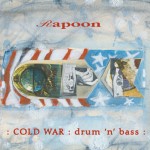
Some anniversaries are celebrated with nostalgia. Others return like unfinished business. Twenty-five years after "Cold War" first emerged from Robin Storey's inexhaustible imagination, its expanded resurrection feels less like an archival curiosity than an uncomfortable reminder that history possesses an alarming talent for recycling itself. Humanity, apparently convinced that every generation deserves its own geopolitical anxiety, continues to insist on sequels no one requested.
Since the late 1980s, following his departure from the pioneering industrial collective Zoviet France, Robin Storey has built Rapoon into one of experimental music's richest and most idiosyncratic universes. Rather than embracing the rigid aesthetics of industrial or ambient music, he developed an approach where looping structures, ethnographic echoes, ritual percussion and electronic manipulation coexist without hierarchy. His albums often resemble imagined geographies, places assembled from memory, myth and radio interference rather than any recognizable map.
Originally released in 2001, "Cold War" was something of an anomaly even within Rapoon's sprawling catalogue. At a time when drum'n'bass had already matured beyond its explosive beginnings, Storey appropriated its vocabulary without becoming indebted to it. The fractured breakbeats, muscular basslines and restless momentum never aimed for club functionality. Instead, they became another layer within his long-standing fascination with repetition, trance and cultural cross-pollination. Jungle rhythms collide with Middle Eastern melodic fragments, looping vocal traces and drifting atmospheres until genre itself becomes almost irrelevant.
Listening today, the original two discs remain remarkably resistant to dating. Tracks such as "Lunarists In The Jungle", "White Silence" or "Rubicon" unfold like unstable ecosystems where rhythm functions less as propulsion than as gravity. Beats constantly threaten to dominate before dissolving into clouds of processed voices, tribal percussion or ghostly drones. Every composition appears to negotiate between movement and suspension, refusing either complete stillness or straightforward momentum.
Storey's production remains wonderfully imperfect by contemporary standards. Rather than the immaculate precision that now defines so much electronic music, these pieces breathe through accumulated texture. Loops rub against one another, frequencies blur at the edges, and details emerge almost accidentally after repeated listens. The music feels assembled by sedimentation rather than engineering, each layer preserving traces of previous ones beneath its surface.
The newly added third disc avoids the common trap of anniversary editions becoming museum exhibitions. Rather than polishing old material into modern gloss, these reinterpretations extend the original ideas into today's fractured political landscape. "Another Thing Again" immediately establishes a broader, darker scale, while "Descended Across Europe" and "The Bomb Doors Are Open" resonate with an unease that contemporary listeners hardly need explained. Their power lies precisely in avoiding explicit commentary. Storey has always understood that suggestion ages far better than slogans.
One of Rapoon's greatest strengths has always been its ability to absorb influences without displaying them like collector's trophies. Dub, industrial, world music, ambient, techno, musique concrète and ritual percussion all appear throughout ":COLD WAR : drum'n'bass:", yet none remain in their original form. Everything passes through Storey's peculiar compositional metabolism until it belongs entirely to the Rapoon vocabulary.
There is also an understated sense of irony running beneath the record. Titles like "You've Been A Great Contestant...You've Won Nothing" or "The Soviet Pants" introduce flashes of absurd humour into an otherwise serious landscape. They serve as subtle reminders that political systems, ideologies and historical narratives often collapse under the weight of their own theatricality. Even catastrophe occasionally wears ill-fitting trousers.
What makes this expanded edition particularly valuable is that it highlights how prophetic Rapoon often appeared without ever attempting prophecy. Storey was never interested in predicting specific events. Instead, he explored recurring emotional climates: tension, displacement, uncertainty, resilience. Those conditions unfortunately remain as contemporary as ever.
Far from functioning as a nostalgic reissue, ":COLD WAR : drum'n'bass:" reveals an artist whose experiments have quietly outlived many of the genres they once intersected. Twenty-five years later, the rhythms still pulse with nervous energy, the atmospheres remain richly enigmatic, and the questions linger unresolved. The Cold War may have officially ended decades ago. Rapoon gently reminds us that the psychological climate surrounding it never really packed its bags.
Since the late 1980s, following his departure from the pioneering industrial collective Zoviet France, Robin Storey has built Rapoon into one of experimental music's richest and most idiosyncratic universes. Rather than embracing the rigid aesthetics of industrial or ambient music, he developed an approach where looping structures, ethnographic echoes, ritual percussion and electronic manipulation coexist without hierarchy. His albums often resemble imagined geographies, places assembled from memory, myth and radio interference rather than any recognizable map.
Originally released in 2001, "Cold War" was something of an anomaly even within Rapoon's sprawling catalogue. At a time when drum'n'bass had already matured beyond its explosive beginnings, Storey appropriated its vocabulary without becoming indebted to it. The fractured breakbeats, muscular basslines and restless momentum never aimed for club functionality. Instead, they became another layer within his long-standing fascination with repetition, trance and cultural cross-pollination. Jungle rhythms collide with Middle Eastern melodic fragments, looping vocal traces and drifting atmospheres until genre itself becomes almost irrelevant.
Listening today, the original two discs remain remarkably resistant to dating. Tracks such as "Lunarists In The Jungle", "White Silence" or "Rubicon" unfold like unstable ecosystems where rhythm functions less as propulsion than as gravity. Beats constantly threaten to dominate before dissolving into clouds of processed voices, tribal percussion or ghostly drones. Every composition appears to negotiate between movement and suspension, refusing either complete stillness or straightforward momentum.
Storey's production remains wonderfully imperfect by contemporary standards. Rather than the immaculate precision that now defines so much electronic music, these pieces breathe through accumulated texture. Loops rub against one another, frequencies blur at the edges, and details emerge almost accidentally after repeated listens. The music feels assembled by sedimentation rather than engineering, each layer preserving traces of previous ones beneath its surface.
The newly added third disc avoids the common trap of anniversary editions becoming museum exhibitions. Rather than polishing old material into modern gloss, these reinterpretations extend the original ideas into today's fractured political landscape. "Another Thing Again" immediately establishes a broader, darker scale, while "Descended Across Europe" and "The Bomb Doors Are Open" resonate with an unease that contemporary listeners hardly need explained. Their power lies precisely in avoiding explicit commentary. Storey has always understood that suggestion ages far better than slogans.
One of Rapoon's greatest strengths has always been its ability to absorb influences without displaying them like collector's trophies. Dub, industrial, world music, ambient, techno, musique concrète and ritual percussion all appear throughout ":COLD WAR : drum'n'bass:", yet none remain in their original form. Everything passes through Storey's peculiar compositional metabolism until it belongs entirely to the Rapoon vocabulary.
There is also an understated sense of irony running beneath the record. Titles like "You've Been A Great Contestant...You've Won Nothing" or "The Soviet Pants" introduce flashes of absurd humour into an otherwise serious landscape. They serve as subtle reminders that political systems, ideologies and historical narratives often collapse under the weight of their own theatricality. Even catastrophe occasionally wears ill-fitting trousers.
What makes this expanded edition particularly valuable is that it highlights how prophetic Rapoon often appeared without ever attempting prophecy. Storey was never interested in predicting specific events. Instead, he explored recurring emotional climates: tension, displacement, uncertainty, resilience. Those conditions unfortunately remain as contemporary as ever.
Far from functioning as a nostalgic reissue, ":COLD WAR : drum'n'bass:" reveals an artist whose experiments have quietly outlived many of the genres they once intersected. Twenty-five years later, the rhythms still pulse with nervous energy, the atmospheres remain richly enigmatic, and the questions linger unresolved. The Cold War may have officially ended decades ago. Rapoon gently reminds us that the psychological climate surrounding it never really packed its bags.
Design: Faithless
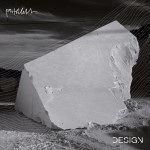
Artist: Design (@)
Title: Faithless
Format: CD & 12" + Download
Label: Overdub Recordings (@)
Rated:

Title: Faithless
Format: CD & 12" + Download
Label: Overdub Recordings (@)
Rated:
There is a peculiar honesty in calling an album "Faithless". Not because disbelief is fashionable, but because certainty has become exhausting. The third full-length by Italian quartet Design does not wage war against religion so much as it mourns the disappearance of dependable foundations altogether. God, politics, institutions, even memory itself are placed on trial, not through slogans but through the slow erosion of confidence. It is an album about discovering that the floor beneath your feet was made of fog all along.
Formed in 2008, Design have steadily evolved from an industrial-tinged alternative rock act into something darker and more psychologically nuanced. Their early releases flirted with electronic rock and new wave, but "Faithless" feels like the record where those influences finally become a coherent language rather than a collection of references. Produced by Enrico Tiberi between Italy and Berlin and mastered by Pete Maher, whose résumé spans artists from Nine Inch Nails to Depeche Mode and Nick Cave & The Bad Seeds, the album sounds expansive without becoming overproduced. Every synth pulse, guitar scrape and programmed beat has room to breathe, as though silence itself had been invited into the mix.
The title track establishes the emotional coordinates immediately. Inspired by the helplessness of standing beside a deathbed, it transforms personal mourning into something universal. The absence of divine answers is not met with theatrical rage but with an almost desperate longing for tangible human connection. Rather than searching heaven for miracles, the song suggests that another person's embrace may be the closest thing we have.
That tension between intimate grief and societal collapse runs throughout the record. "Cold War" shifts the battlefield indoors, portraying domestic conflict with unsettling restraint. Instead of explosions, there are closed doors, suppressed emotions and the suffocating politeness that often surrounds private suffering. It is one of the album's strongest moments precisely because it understands that the loudest violence is sometimes whispered.
Musically, Design navigate the fertile ground between post-punk, darkwave and contemporary electronic rock with confidence. Echoes of Depeche Mode and New Order appear in the melodic instincts, while sharper industrial textures recall the mechanical anxiety of Nine Inch Nails or the sleek emotional abrasion of Crosses. Yet these influences rarely become imitation. The band avoids the museum-piece nostalgia that often burdens revivalist acts, preferring to reinterpret familiar aesthetics through the lens of today's fractured emotional landscape.
The sequencing deserves particular praise. "Sweet Surrender" dances defiantly through cultural decay, offering one of the record's few moments of bitter exhilaration. Its vision of celebrating while the empire burns feels less nihilistic than oddly liberating, as if acknowledging collapse were healthier than endlessly pretending stability still exists. "Blame" follows with painful introspection, refusing the increasingly fashionable habit of outsourcing responsibility. Personal accountability, it turns out, is heavier than conspiracy theories but considerably more useful.
Even the brief instrumental "12 | 12" serves a purpose, functioning as a deep breath before the second half descends further into paranoia and confrontation. "Evil Eye" dismantles toxic attachment through sharp rhythmic tension, while "Red Dragon" expands outward into biblical imagery refracted through environmental destruction and endless warfare. Rather than preaching, the lyrics present symbolic landscapes where mythology and contemporary headlines blur into each other.
The album's final stretch becomes increasingly philosophical. "Loner's Dream" offers fragile tenderness amidst existential uncertainty, asking whether love itself might simply be someone's fading dream. "Keyhole" examines media manipulation with uncommon subtlety, questioning not only what we see but our willingness to participate in carefully staged spectacles. In an era where outrage is monetized by the minute, peeking through a keyhole starts to resemble scrolling endlessly through social media. The monkey with golden chains may have upgraded to a touchscreen.
Everything ultimately converges in the magnificent closer, "The Belly of the Whale". Drawing simultaneously on literary and biblical symbolism, the whale becomes sanctuary, tomb and womb all at once. It is the place where grief ceases to be an enemy and instead becomes something one learns to inhabit. Emerging from its darkness does not erase loss; it simply allows life to continue carrying it differently.
"Faithless" doesn't surrender entirely to despair. Even when confronting death, manipulation, violence and ideological collapse, Design leave open the possibility that redemption survives through empathy, self-awareness and love rather than dogma. That is a surprisingly radical proposition in an age where certainty is sold in convenient packages and doubt is treated like a defect.
"Faithless" is not interested in providing answers. It builds a cathedral from unanswered questions, fills it with pulsing basslines, spectral synthesizers and wounded melodies, then quietly reminds us that perhaps belief has never been about possessing certainty. Sometimes it is simply the courage to keep walking after the lights have gone out. In that sense, Design have crafted one of the more emotionally mature darkwave records in recent memory: bleak without becoming cynical, introspective without becoming self-indulgent, and heavy enough to leave a bruise that lingers well after the final note fades.
Formed in 2008, Design have steadily evolved from an industrial-tinged alternative rock act into something darker and more psychologically nuanced. Their early releases flirted with electronic rock and new wave, but "Faithless" feels like the record where those influences finally become a coherent language rather than a collection of references. Produced by Enrico Tiberi between Italy and Berlin and mastered by Pete Maher, whose résumé spans artists from Nine Inch Nails to Depeche Mode and Nick Cave & The Bad Seeds, the album sounds expansive without becoming overproduced. Every synth pulse, guitar scrape and programmed beat has room to breathe, as though silence itself had been invited into the mix.
The title track establishes the emotional coordinates immediately. Inspired by the helplessness of standing beside a deathbed, it transforms personal mourning into something universal. The absence of divine answers is not met with theatrical rage but with an almost desperate longing for tangible human connection. Rather than searching heaven for miracles, the song suggests that another person's embrace may be the closest thing we have.
That tension between intimate grief and societal collapse runs throughout the record. "Cold War" shifts the battlefield indoors, portraying domestic conflict with unsettling restraint. Instead of explosions, there are closed doors, suppressed emotions and the suffocating politeness that often surrounds private suffering. It is one of the album's strongest moments precisely because it understands that the loudest violence is sometimes whispered.
Musically, Design navigate the fertile ground between post-punk, darkwave and contemporary electronic rock with confidence. Echoes of Depeche Mode and New Order appear in the melodic instincts, while sharper industrial textures recall the mechanical anxiety of Nine Inch Nails or the sleek emotional abrasion of Crosses. Yet these influences rarely become imitation. The band avoids the museum-piece nostalgia that often burdens revivalist acts, preferring to reinterpret familiar aesthetics through the lens of today's fractured emotional landscape.
The sequencing deserves particular praise. "Sweet Surrender" dances defiantly through cultural decay, offering one of the record's few moments of bitter exhilaration. Its vision of celebrating while the empire burns feels less nihilistic than oddly liberating, as if acknowledging collapse were healthier than endlessly pretending stability still exists. "Blame" follows with painful introspection, refusing the increasingly fashionable habit of outsourcing responsibility. Personal accountability, it turns out, is heavier than conspiracy theories but considerably more useful.
Even the brief instrumental "12 | 12" serves a purpose, functioning as a deep breath before the second half descends further into paranoia and confrontation. "Evil Eye" dismantles toxic attachment through sharp rhythmic tension, while "Red Dragon" expands outward into biblical imagery refracted through environmental destruction and endless warfare. Rather than preaching, the lyrics present symbolic landscapes where mythology and contemporary headlines blur into each other.
The album's final stretch becomes increasingly philosophical. "Loner's Dream" offers fragile tenderness amidst existential uncertainty, asking whether love itself might simply be someone's fading dream. "Keyhole" examines media manipulation with uncommon subtlety, questioning not only what we see but our willingness to participate in carefully staged spectacles. In an era where outrage is monetized by the minute, peeking through a keyhole starts to resemble scrolling endlessly through social media. The monkey with golden chains may have upgraded to a touchscreen.
Everything ultimately converges in the magnificent closer, "The Belly of the Whale". Drawing simultaneously on literary and biblical symbolism, the whale becomes sanctuary, tomb and womb all at once. It is the place where grief ceases to be an enemy and instead becomes something one learns to inhabit. Emerging from its darkness does not erase loss; it simply allows life to continue carrying it differently.
"Faithless" doesn't surrender entirely to despair. Even when confronting death, manipulation, violence and ideological collapse, Design leave open the possibility that redemption survives through empathy, self-awareness and love rather than dogma. That is a surprisingly radical proposition in an age where certainty is sold in convenient packages and doubt is treated like a defect.
"Faithless" is not interested in providing answers. It builds a cathedral from unanswered questions, fills it with pulsing basslines, spectral synthesizers and wounded melodies, then quietly reminds us that perhaps belief has never been about possessing certainty. Sometimes it is simply the courage to keep walking after the lights have gone out. In that sense, Design have crafted one of the more emotionally mature darkwave records in recent memory: bleak without becoming cynical, introspective without becoming self-indulgent, and heavy enough to leave a bruise that lingers well after the final note fades.
Space Travel Is Boring: The Horror! The Horror!
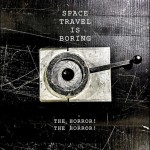
Artist: Space Travel Is Boring
Title: The Horror! The Horror!
Format: Tape + Download
Label: Zoharum (http://zoharum.com/) (@)
Rated:
Title: The Horror! The Horror!
Format: Tape + Download
Label: Zoharum (http://zoharum.com/) (@)
Rated:
There are records that attempt to describe troubled times by raising their voice. "The Horror! The Horror!" chooses the opposite strategy. It whispers, and somehow that makes it more unsettling. The debut full-length from Space Travel Is Boring, the collaboration between Polish musicians Bartosz Leniewski and Michal Smolicki, was assembled patiently over several years, absorbing the psychological residue of pandemics, wars and humanitarian crises until those events became less a topic than a permanent weather system hanging over the music. It is not an album about headlines. It is an album about what headlines do to the nervous system after months and years of accumulation.
Both musicians come from guitar-oriented backgrounds, yet they wisely resist treating ambient music as rock played in slow motion. Instead, guitars become fragments of atmosphere, dissolving into restrained synthesizers, distant voices and carefully measured rhythms. The result sits somewhere between post-rock, dark ambient and minimalist electronica, without ever feeling obliged to settle into any of those territories. Every track seems to move forward reluctantly, as though aware that progress is rarely synonymous with improvement.
The seven compositions unfold like reports filed from an exhausted conscience. "A Useful Trigger" introduces recurring pulses that feel almost reassuring until subtle harmonic shifts reveal cracks beneath the surface. "Smouldering Tyres" expands into one of the album's emotional peaks, allowing dissonance to accumulate with the slow inevitability of smoke filling a room. "The Solar Panels Are Broken", aided by the ghostly voices of Tekla and Helga, offers one of the few explicitly human presences, yet even those voices appear less as protagonists than as fragile signals trying to survive overwhelming interference.
Titles such as "Blood Diamonds", "Thick Smog Blankets a Festival Town" and "Save for Later, Stay Tuned" carry a dry irony that borders on black humour. They read almost like scrolling news notifications generated by an algorithm that has finally developed existential anxiety. Humans have achieved the remarkable feat of compressing catastrophe into clickable headlines; Space Travel Is Boring stretches them back into something that must actually be inhabited.
The duo demonstrates admirable restraint throughout. Many contemporary dark ambient releases mistake volume or density for emotional weight. Here, silence performs as much work as sound. Small rhythmic cells repeat with hypnotic insistence while electronic textures breathe rather than overwhelm, allowing melancholy to emerge naturally instead of being theatrically imposed. Even when distortion enters the frame, it feels organic, like corrosion spreading across metal rather than an effect added for dramatic emphasis.
There are echoes of post-industrial ambience, modern drone composition and cinematic minimalism, yet the album rarely sounds derivative. Its greatest strength lies in refusing obvious climaxes. Every apparent resolution opens another question, every comforting harmony carries the suspicion that it may soon collapse. The music inhabits uncertainty without romanticising despair.
"The Horror! The Horror!" definitely refuses to offer catharsis. There is no triumphant escape from contemporary anxiety, no comforting illusion that beauty automatically heals historical trauma. Instead, Leniewski and Smolicki suggest something quieter: creating attentive, fragile spaces may itself be a meaningful response when certainty has become a scarce resource.
The album's title inevitably recalls Joseph Conrad's famous final words, yet the music avoids literary grandstanding. Its horror is neither spectacular nor supernatural. It resides in accumulated helplessness, in the background hum of a world permanently on edge. Fortunately, despite the project's self-deprecating name, Space Travel Is Boring proves the opposite. This journey may never leave Earth's orbit, but it ventures deep into the strange geography of contemporary unease, discovering that sometimes the darkest landscapes are the ones we have slowly learned to call ordinary.
Both musicians come from guitar-oriented backgrounds, yet they wisely resist treating ambient music as rock played in slow motion. Instead, guitars become fragments of atmosphere, dissolving into restrained synthesizers, distant voices and carefully measured rhythms. The result sits somewhere between post-rock, dark ambient and minimalist electronica, without ever feeling obliged to settle into any of those territories. Every track seems to move forward reluctantly, as though aware that progress is rarely synonymous with improvement.
The seven compositions unfold like reports filed from an exhausted conscience. "A Useful Trigger" introduces recurring pulses that feel almost reassuring until subtle harmonic shifts reveal cracks beneath the surface. "Smouldering Tyres" expands into one of the album's emotional peaks, allowing dissonance to accumulate with the slow inevitability of smoke filling a room. "The Solar Panels Are Broken", aided by the ghostly voices of Tekla and Helga, offers one of the few explicitly human presences, yet even those voices appear less as protagonists than as fragile signals trying to survive overwhelming interference.
Titles such as "Blood Diamonds", "Thick Smog Blankets a Festival Town" and "Save for Later, Stay Tuned" carry a dry irony that borders on black humour. They read almost like scrolling news notifications generated by an algorithm that has finally developed existential anxiety. Humans have achieved the remarkable feat of compressing catastrophe into clickable headlines; Space Travel Is Boring stretches them back into something that must actually be inhabited.
The duo demonstrates admirable restraint throughout. Many contemporary dark ambient releases mistake volume or density for emotional weight. Here, silence performs as much work as sound. Small rhythmic cells repeat with hypnotic insistence while electronic textures breathe rather than overwhelm, allowing melancholy to emerge naturally instead of being theatrically imposed. Even when distortion enters the frame, it feels organic, like corrosion spreading across metal rather than an effect added for dramatic emphasis.
There are echoes of post-industrial ambience, modern drone composition and cinematic minimalism, yet the album rarely sounds derivative. Its greatest strength lies in refusing obvious climaxes. Every apparent resolution opens another question, every comforting harmony carries the suspicion that it may soon collapse. The music inhabits uncertainty without romanticising despair.
"The Horror! The Horror!" definitely refuses to offer catharsis. There is no triumphant escape from contemporary anxiety, no comforting illusion that beauty automatically heals historical trauma. Instead, Leniewski and Smolicki suggest something quieter: creating attentive, fragile spaces may itself be a meaningful response when certainty has become a scarce resource.
The album's title inevitably recalls Joseph Conrad's famous final words, yet the music avoids literary grandstanding. Its horror is neither spectacular nor supernatural. It resides in accumulated helplessness, in the background hum of a world permanently on edge. Fortunately, despite the project's self-deprecating name, Space Travel Is Boring proves the opposite. This journey may never leave Earth's orbit, but it ventures deep into the strange geography of contemporary unease, discovering that sometimes the darkest landscapes are the ones we have slowly learned to call ordinary.
Celer: Capri (Remastered Deluxe Edition)
Artist: Celer (http://www.celer.jp/)
Title: Capri (Remastered Deluxe Edition)
Format: 12" x 3
Label: Two Acorns (http://www.twoacorns.jp/)
Rated:
Title: Capri (Remastered Deluxe Edition)
Format: 12" x 3
Label: Two Acorns (http://www.twoacorns.jp/)
Rated:
When Celer released "Capri" in 2009, ambient music was already crowded with artists trying to evoke places they had never quite visited, memories they may never have had, and sunsets that somehow lasted forty-seven minutes. Yet even within that landscape, "Capri" felt unusual. Not because it was grand, but because it was so deliberately small.
Now reissued in a remastered and expanded deluxe edition by Two Acorns, with mastering from the ever-sensitive ears of Stephan Mathieu and the restoration of material omitted from the original CD, "Capri" emerges not as a forgotten relic but as a completed sketchbook. It remains one of the most delicate works created by the original duo of Will Long and Danielle Baquet, whose partnership defined the project's formative years before Baquet's untimely passing in 2009.
To call "Capri" a concept album is technically accurate, though it risks suggesting narrative coherence. This is not an album that tells a story. It behaves more like a box of postcards found in a drawer decades later, each image disconnected from the next, yet somehow contributing to a larger emotional geography. The Capri of the title is less a destination than a state of perception: sea air translated into texture, sunlight dissolved into memory, architecture reduced to atmosphere.
The brevity of the pieces is crucial. Many ambient records stretch ideas toward infinity, often mistaking duration for profundity. "Capri" does the opposite. Thirty-six miniature compositions drift by in fragments, some barely lasting a minute, refusing to settle into permanence. They appear, shimmer softly, and disappear before the listener can fully grasp them. Like trying to remember a dream while simultaneously waking up and searching for your glasses.
Tracks such as "Mouthfeels Of Capreae", "Polaroid Family Portrait", and "Ascensionaires" establish the album's peculiar language. Piano traces emerge and recede beneath soft drones, environmental echoes, and tape-like imperfections. Nothing insists on being noticed. Everything seems content to exist at the edge of perception.
Throughout the record, Long and Baquet demonstrate an extraordinary understanding of negative space. Silence is not merely an absence between sounds; it becomes a compositional material in itself. Pieces such as "A Pause" and "Op.0" function almost like breaths between thoughts, creating the sensation that the album is remembering itself as it unfolds.
There is also a fascinating tension between warmth and dissolution. "Red Elements" and "Lint White" are among the longer pieces, allowing motifs to linger slightly longer before fading into ambiguity. Yet even these tracks avoid emotional certainty. The music remains suspended between comfort and melancholy, between presence and disappearance. The listener is never entirely sure whether they are arriving somewhere or leaving it.
That ambiguity has become one of Celer's defining artistic virtues. Across an enormous discography, Will Long has often explored themes of impermanence, distance and memory, but "Capri" captures those concerns in unusually concentrated form. Knowing the historical context inevitably adds another layer. Recorded during the final years of the original duo's collaboration, the album now feels almost prophetic in its preoccupation with fleeting moments and vanishing traces. Not tragic, exactly, but deeply aware of transience.
The remastering serves this material beautifully. Rather than modernizing it, Mathieu reveals additional depth within its fragile architecture. The sounds breathe more freely; subtle details emerge without disturbing the original intimacy. The expanded running order also strengthens the album's identity as a collection of interconnected vignettes rather than a conventional sequence of tracks.
What remains most striking, however, is how little "Capri" demands from its audience. In an age where even ambient music occasionally feels compelled to announce its significance with conceptual manifestos and cinematic ambitions, this album remains content to whisper. It trusts the listener to meet it halfway.
Seventeen years after its original release, "Capri" still resembles sunlight reflecting off water: impossible to hold, impossible to examine directly for long, yet somehow unforgettable. It is a work of remarkable modesty, one that understands a rare artistic truth: sometimes the most enduring impressions are left not by monuments, but by passing shadows on a summer afternoon.
Now reissued in a remastered and expanded deluxe edition by Two Acorns, with mastering from the ever-sensitive ears of Stephan Mathieu and the restoration of material omitted from the original CD, "Capri" emerges not as a forgotten relic but as a completed sketchbook. It remains one of the most delicate works created by the original duo of Will Long and Danielle Baquet, whose partnership defined the project's formative years before Baquet's untimely passing in 2009.
To call "Capri" a concept album is technically accurate, though it risks suggesting narrative coherence. This is not an album that tells a story. It behaves more like a box of postcards found in a drawer decades later, each image disconnected from the next, yet somehow contributing to a larger emotional geography. The Capri of the title is less a destination than a state of perception: sea air translated into texture, sunlight dissolved into memory, architecture reduced to atmosphere.
The brevity of the pieces is crucial. Many ambient records stretch ideas toward infinity, often mistaking duration for profundity. "Capri" does the opposite. Thirty-six miniature compositions drift by in fragments, some barely lasting a minute, refusing to settle into permanence. They appear, shimmer softly, and disappear before the listener can fully grasp them. Like trying to remember a dream while simultaneously waking up and searching for your glasses.
Tracks such as "Mouthfeels Of Capreae", "Polaroid Family Portrait", and "Ascensionaires" establish the album's peculiar language. Piano traces emerge and recede beneath soft drones, environmental echoes, and tape-like imperfections. Nothing insists on being noticed. Everything seems content to exist at the edge of perception.
Throughout the record, Long and Baquet demonstrate an extraordinary understanding of negative space. Silence is not merely an absence between sounds; it becomes a compositional material in itself. Pieces such as "A Pause" and "Op.0" function almost like breaths between thoughts, creating the sensation that the album is remembering itself as it unfolds.
There is also a fascinating tension between warmth and dissolution. "Red Elements" and "Lint White" are among the longer pieces, allowing motifs to linger slightly longer before fading into ambiguity. Yet even these tracks avoid emotional certainty. The music remains suspended between comfort and melancholy, between presence and disappearance. The listener is never entirely sure whether they are arriving somewhere or leaving it.
That ambiguity has become one of Celer's defining artistic virtues. Across an enormous discography, Will Long has often explored themes of impermanence, distance and memory, but "Capri" captures those concerns in unusually concentrated form. Knowing the historical context inevitably adds another layer. Recorded during the final years of the original duo's collaboration, the album now feels almost prophetic in its preoccupation with fleeting moments and vanishing traces. Not tragic, exactly, but deeply aware of transience.
The remastering serves this material beautifully. Rather than modernizing it, Mathieu reveals additional depth within its fragile architecture. The sounds breathe more freely; subtle details emerge without disturbing the original intimacy. The expanded running order also strengthens the album's identity as a collection of interconnected vignettes rather than a conventional sequence of tracks.
What remains most striking, however, is how little "Capri" demands from its audience. In an age where even ambient music occasionally feels compelled to announce its significance with conceptual manifestos and cinematic ambitions, this album remains content to whisper. It trusts the listener to meet it halfway.
Seventeen years after its original release, "Capri" still resembles sunlight reflecting off water: impossible to hold, impossible to examine directly for long, yet somehow unforgettable. It is a work of remarkable modesty, one that understands a rare artistic truth: sometimes the most enduring impressions are left not by monuments, but by passing shadows on a summer afternoon.
Juli Deák: Brisk

Artist: Juli Deák (@)
Title: Brisk
Format: CD & 12" + Download
Label: Thanatosis Produktion (@)
Rated:

Title: Brisk
Format: CD & 12" + Download
Label: Thanatosis Produktion (@)
Rated:
For centuries, classical musicians have been engaged in a curious conspiracy: convincing audiences that breathing is merely a logistical inconvenience between notes. The ideal performance often seems designed to erase evidence of the body altogether, transforming flesh, lungs, effort, and imperfection into the illusion of effortless beauty. On "Brisk", Polish-Hungarian flutist Juli Deák dismantles that illusion with remarkable elegance. Rather than hiding the mechanics of performance, she places them front and center, turning breath itself into both subject and instrument.
Based in Budapest and active across contemporary classical music, jazz, improvisation, and folk-inspired projects, Deák represents a generation of musicians increasingly uninterested in preserving disciplinary borders. Her debut album emerges from years of exploring the expressive possibilities of the flute beyond its conventional role. The result is neither a contemporary classical recital nor an experimental manifesto. Instead, "Brisk" feels like a carefully observed study of human presence, rendered through seven solo flute pieces recorded in a church and captured entirely in single takes.
The album's title refers to circular breathing, the demanding technique that allows wind players to sustain sound without interruption. Yet the word also describes the music itself. There is movement everywhere, not necessarily fast movement, but the constant circulation of air, pulse, and energy. Listening to these pieces often feels less like hearing melodies unfold than observing a living organism regulating itself.
From the opening title track, Deák establishes her aesthetic priorities. Key clicks become percussion. Breathy tones become texture. Harmonics and overblown notes multiply the instrument's voice until a single flute seems inhabited by several personalities at once. The effect is fascinating because it never feels like a technical demonstration. Many experimental instrumental records can resemble laboratory reports disguised as concerts. Here, technique serves expression rather than the other way around.
The church acoustic plays a crucial role throughout. Space becomes an active participant, stretching sounds into delicate halos and allowing even the smallest gestures to resonate. Silence is not empty territory but fertile ground where each inhalation acquires significance. One becomes acutely aware that every phrase begins with a breath and eventually returns to one.
Tracks such as "Depict" and "Trace" showcase Deák's ability to balance structural rigor with improvisational freedom. Her classical training remains evident in the precision of her execution, yet the music resists the polished certainty often associated with conservatory culture. Notes wobble. Air escapes. Tones fracture. Small instabilities become expressive events rather than mistakes requiring correction. In an era obsessed with optimization, there is something quietly radical about allowing vulnerability to remain visible.
Perhaps the album's most intriguing achievement lies in how it transforms physical limitation into compositional material. The listener becomes aware of muscles working, lungs expanding, concentration tightening and releasing. Music here is not detached from the body; it is the body thinking out loud. The flute ceases to function merely as an instrument and becomes a kind of respiratory extension, translating biological necessity into sound.
"Steam" and "Contact" particularly emphasize this relationship. Rhythmic key noises create an almost mechanical pulse beneath flowing lines, generating an interplay between machine-like repetition and organic irregularity. The contrast is subtle but powerful. It is as if Deák is simultaneously performing with the instrument and negotiating with it.
For all its conceptual sophistication, however, "Brisk" remains surprisingly lyrical. Beneath the extended techniques and experimental textures lies a distinctly pastoral sensibility. There are moments that feel windswept, almost folkloric, as though distant landscapes occasionally emerge through the abstract architecture of the compositions. The music never abandons melody entirely; it simply approaches it from unusual angles.
The closing pieces, "Float" and "Tamed", offer perhaps the clearest glimpse into the album's emotional core. After exploring the flute's more volatile and unpredictable qualities, Deák allows the music to settle into something gentler, though never entirely stable. Resolution remains partial. The breathing continues. Many musicians spend years perfecting control; Deák seems equally interested in what happens when control encounters its limits. Every inhale, every fluctuation of pitch, every grain of air moving through metal becomes part of the composition. The result is music that feels startlingly alive.
In the end, "Brisk" is less about the flute than about attention itself. It invites listeners to notice sounds that are usually edited out, ignored, or dismissed as incidental. And in doing so, it arrives at a quietly profound observation: perfection is rarely what makes a performance memorable. More often, it is the evidence of a person breathing on the other side of the sound.
Based in Budapest and active across contemporary classical music, jazz, improvisation, and folk-inspired projects, Deák represents a generation of musicians increasingly uninterested in preserving disciplinary borders. Her debut album emerges from years of exploring the expressive possibilities of the flute beyond its conventional role. The result is neither a contemporary classical recital nor an experimental manifesto. Instead, "Brisk" feels like a carefully observed study of human presence, rendered through seven solo flute pieces recorded in a church and captured entirely in single takes.
The album's title refers to circular breathing, the demanding technique that allows wind players to sustain sound without interruption. Yet the word also describes the music itself. There is movement everywhere, not necessarily fast movement, but the constant circulation of air, pulse, and energy. Listening to these pieces often feels less like hearing melodies unfold than observing a living organism regulating itself.
From the opening title track, Deák establishes her aesthetic priorities. Key clicks become percussion. Breathy tones become texture. Harmonics and overblown notes multiply the instrument's voice until a single flute seems inhabited by several personalities at once. The effect is fascinating because it never feels like a technical demonstration. Many experimental instrumental records can resemble laboratory reports disguised as concerts. Here, technique serves expression rather than the other way around.
The church acoustic plays a crucial role throughout. Space becomes an active participant, stretching sounds into delicate halos and allowing even the smallest gestures to resonate. Silence is not empty territory but fertile ground where each inhalation acquires significance. One becomes acutely aware that every phrase begins with a breath and eventually returns to one.
Tracks such as "Depict" and "Trace" showcase Deák's ability to balance structural rigor with improvisational freedom. Her classical training remains evident in the precision of her execution, yet the music resists the polished certainty often associated with conservatory culture. Notes wobble. Air escapes. Tones fracture. Small instabilities become expressive events rather than mistakes requiring correction. In an era obsessed with optimization, there is something quietly radical about allowing vulnerability to remain visible.
Perhaps the album's most intriguing achievement lies in how it transforms physical limitation into compositional material. The listener becomes aware of muscles working, lungs expanding, concentration tightening and releasing. Music here is not detached from the body; it is the body thinking out loud. The flute ceases to function merely as an instrument and becomes a kind of respiratory extension, translating biological necessity into sound.
"Steam" and "Contact" particularly emphasize this relationship. Rhythmic key noises create an almost mechanical pulse beneath flowing lines, generating an interplay between machine-like repetition and organic irregularity. The contrast is subtle but powerful. It is as if Deák is simultaneously performing with the instrument and negotiating with it.
For all its conceptual sophistication, however, "Brisk" remains surprisingly lyrical. Beneath the extended techniques and experimental textures lies a distinctly pastoral sensibility. There are moments that feel windswept, almost folkloric, as though distant landscapes occasionally emerge through the abstract architecture of the compositions. The music never abandons melody entirely; it simply approaches it from unusual angles.
The closing pieces, "Float" and "Tamed", offer perhaps the clearest glimpse into the album's emotional core. After exploring the flute's more volatile and unpredictable qualities, Deák allows the music to settle into something gentler, though never entirely stable. Resolution remains partial. The breathing continues. Many musicians spend years perfecting control; Deák seems equally interested in what happens when control encounters its limits. Every inhale, every fluctuation of pitch, every grain of air moving through metal becomes part of the composition. The result is music that feels startlingly alive.
In the end, "Brisk" is less about the flute than about attention itself. It invites listeners to notice sounds that are usually edited out, ignored, or dismissed as incidental. And in doing so, it arrives at a quietly profound observation: perfection is rarely what makes a performance memorable. More often, it is the evidence of a person breathing on the other side of the sound.