
Saturday, August 29, 2026
Browse by Genre
Industrial Music / Industrial Metal / Aggro Industrial / Electro Metal
Industrial Noise / Power Noise / Harsh Noise
Synth Pop / Electro Pop / Synth-Electronica
Techno / Trance / Goa / Drum'n'Bass / Jungle / Tribal / Trip-Hop
Ambient / Electronica / Ethereal / Dub / Soundscapes / Abstract
Experimental / Avantgarde / Weird & Wired / Glitch / Noise / Field Recording
Dark / Gothic / Wave / New Wave / Dark Wave / Industrial Gothic
New Music / Downtown / Avantgarde Jazz / New Classical / World
Search Reviews
Music Reviews
Steve Roach: LA ROSA – Live in Tucson, 2025

Artist: Steve Roach (@)
Title: LA ROSA – Live in Tucson, 2025
Format: CD x 2 (double CD)
Label: Projekt (@)
Rated:

Title: LA ROSA – Live in Tucson, 2025
Format: CD x 2 (double CD)
Label: Projekt (@)
Rated:
There are places where ambient music makes sense almost before the first note is played. La Rosa, a former Benedictine monastery and church in Tucson transformed into a concert venue in 2025, is one of them. On December 6, 2025, Steve Roach entered this unusual space for a two-hour performance that now arrives as "LA ROSA – Live in Tucson, 2025", a two-CD document of an artist reaching an intriguing point in the fourth decade of his live career. The setting matters, but not simply because “ambient music in a former monastery” is the sort of sentence that practically writes its own press release. The architecture gives Roach's music somewhere to resonate beyond the speakers.
Few electronic musicians have spent as long investigating the relationship between sound, space and altered perception. Since "Structures From Silence" in 1984 and "Dreamtime Return" in 1988, Roach has developed several intertwined languages: deep ambient, sequencer-driven electronic music, tribal and trance-inflected material, and an increasingly sophisticated fascination with environmental sound. "LA ROSA" brings these strands together without making them feel like exhibits in a museum of Steve Roach. This is not a retrospective with convenient labels attached. It is a living sequence in which different periods of his work begin to recognise one another.
The opening “Spirals of Yearning” occupies more than thirty-six minutes, and that duration immediately establishes the rules. Roach is not interested in getting anywhere quickly. Slowly evolving harmonies, spacious electronic textures and carefully articulated sequencer patterns create a sense of motion without conventional progression. The music seems to expand sideways rather than forwards, as though someone had removed the walls from a composition and left the architecture exposed.
Then “Born of Darkness” changes the temperature. The fujara, a remarkably large overtone flute, introduces an organic, almost archaic voice into Roach's electronic environment, while percussion and electronic resonance create an uneasy meeting between primordial and futuristic sound. It is one of the album's strengths that these elements never feel like exotic decorations. They belong to the same vocabulary. Roach has spent decades making acoustic instruments and environmental recordings coexist with synthesizers without allowing either side to become merely illustrative.
“Desert Solitude” returns to a more spacious register, and here the Tucson connection becomes especially palpable. Nocturnal ambience and natural sounds are not simply inserted as documentary evidence of the surrounding landscape; they dissolve the boundary between the physical location and the imagined one. A coyote can suddenly seem like part of the electronic composition, which is probably the only sensible career move for a coyote.
The second disc opens with “Prometheus Returns / The Continent”, bringing greater rhythmic definition into the picture. Sequencers become more prominent, patterns interlock and the music acquires a subterranean momentum. This is the side of Roach that connects him to the wider history of Berlin School electronics, but his approach is rarely merely retro. The sequencer is not a machine for demonstrating technical nostalgia. It becomes a pulse around which harmonic and textural events can orbit.
“Songlines / Otherworld” is perhaps the most obvious bridge between Roach's electronic and organic vocabularies. Its roots reach back to "Dreamtime Return", the 1988 landmark that emerged from his engagement with the Australian landscape and Aboriginal musical traditions. The didgeridoo becomes an important presence, but the performance does not simply reproduce the old album's mythology. Decades later, the material has acquired another layer: memory itself.
That sense of accumulated time is one of the reasons "LA ROSA" succeeds. Roach is not trying to sound young, contemporary or fashionable. Thankfully. There are enough electronic musicians desperately trying to convince us that a new sequencer preset constitutes a cultural event. Roach instead sounds like someone who has spent forty years learning exactly how little needs to happen for something to become immersive.
“Magnificent Gallery / Circular Ceremony” and “Bliss Current” continue this balancing act between pulse and suspension. The music can become surprisingly propulsive before dissolving back into spacious harmonic fields. “This Moment of Today” then strips the momentum down, preparing the ground for the final threshold: “Structures From Silence”.
Ending with that piece is almost impossibly loaded. The original 1984 album remains one of the foundational works of ambient music, built around sustained, slowly breathing harmonies and a radical willingness to let silence become part of the composition. Yet hearing the piece here is not simply a trip back to 1984. The intervening decades are audible. The composer performing it is no longer the young synthesizer enthusiast who discovered how far a single chord could travel. He is someone who has spent a lifetime refining the same question.
What happens when electronic sound stops behaving like machinery and starts behaving like breath?
"LA ROSA" never answers this directly. It does something more convincing: it keeps demonstrating the question.
The lack of post-production overdubs or edits is significant. What we hear is a performance constructed and mixed by Roach from the stage, preserving the continuous movement of the evening rather than manufacturing a cleaner studio object afterwards. There are therefore moments where the music feels slightly vulnerable, where transitions retain the physicality of performance rather than the suspicious perfection of a carefully assembled album. That vulnerability suits the material. Ambient music is often accused of being too immaculate, too frictionless, too determined to make the listener comfortable. Roach allows the concert to remain a concert.
The result is not really about escape, either. It is about attention. The deeper one listens, the more distinctions begin to dissolve: electronic and acoustic, ancient and futuristic, rhythm and stillness, composition and environment. The sacred character of La Rosa becomes less a religious statement than a condition of listening. For two hours, the venue becomes a resonating chamber for memories that belong partly to Roach, partly to the audience and partly to the music itself.
When the final applause arrives after “Structures From Silence”, it feels less like the end of a concert than the moment when a dream remembers that it has a waking world outside it.
For an artist whose career has been built on extending time, that is perhaps the most appropriate conclusion.
The remarkable thing about "LA ROSA" is not that Steve Roach still sounds like Steve Roach.
It is that, after more than forty years, he still seems capable of discovering new rooms inside the same sound.
Few electronic musicians have spent as long investigating the relationship between sound, space and altered perception. Since "Structures From Silence" in 1984 and "Dreamtime Return" in 1988, Roach has developed several intertwined languages: deep ambient, sequencer-driven electronic music, tribal and trance-inflected material, and an increasingly sophisticated fascination with environmental sound. "LA ROSA" brings these strands together without making them feel like exhibits in a museum of Steve Roach. This is not a retrospective with convenient labels attached. It is a living sequence in which different periods of his work begin to recognise one another.
The opening “Spirals of Yearning” occupies more than thirty-six minutes, and that duration immediately establishes the rules. Roach is not interested in getting anywhere quickly. Slowly evolving harmonies, spacious electronic textures and carefully articulated sequencer patterns create a sense of motion without conventional progression. The music seems to expand sideways rather than forwards, as though someone had removed the walls from a composition and left the architecture exposed.
Then “Born of Darkness” changes the temperature. The fujara, a remarkably large overtone flute, introduces an organic, almost archaic voice into Roach's electronic environment, while percussion and electronic resonance create an uneasy meeting between primordial and futuristic sound. It is one of the album's strengths that these elements never feel like exotic decorations. They belong to the same vocabulary. Roach has spent decades making acoustic instruments and environmental recordings coexist with synthesizers without allowing either side to become merely illustrative.
“Desert Solitude” returns to a more spacious register, and here the Tucson connection becomes especially palpable. Nocturnal ambience and natural sounds are not simply inserted as documentary evidence of the surrounding landscape; they dissolve the boundary between the physical location and the imagined one. A coyote can suddenly seem like part of the electronic composition, which is probably the only sensible career move for a coyote.
The second disc opens with “Prometheus Returns / The Continent”, bringing greater rhythmic definition into the picture. Sequencers become more prominent, patterns interlock and the music acquires a subterranean momentum. This is the side of Roach that connects him to the wider history of Berlin School electronics, but his approach is rarely merely retro. The sequencer is not a machine for demonstrating technical nostalgia. It becomes a pulse around which harmonic and textural events can orbit.
“Songlines / Otherworld” is perhaps the most obvious bridge between Roach's electronic and organic vocabularies. Its roots reach back to "Dreamtime Return", the 1988 landmark that emerged from his engagement with the Australian landscape and Aboriginal musical traditions. The didgeridoo becomes an important presence, but the performance does not simply reproduce the old album's mythology. Decades later, the material has acquired another layer: memory itself.
That sense of accumulated time is one of the reasons "LA ROSA" succeeds. Roach is not trying to sound young, contemporary or fashionable. Thankfully. There are enough electronic musicians desperately trying to convince us that a new sequencer preset constitutes a cultural event. Roach instead sounds like someone who has spent forty years learning exactly how little needs to happen for something to become immersive.
“Magnificent Gallery / Circular Ceremony” and “Bliss Current” continue this balancing act between pulse and suspension. The music can become surprisingly propulsive before dissolving back into spacious harmonic fields. “This Moment of Today” then strips the momentum down, preparing the ground for the final threshold: “Structures From Silence”.
Ending with that piece is almost impossibly loaded. The original 1984 album remains one of the foundational works of ambient music, built around sustained, slowly breathing harmonies and a radical willingness to let silence become part of the composition. Yet hearing the piece here is not simply a trip back to 1984. The intervening decades are audible. The composer performing it is no longer the young synthesizer enthusiast who discovered how far a single chord could travel. He is someone who has spent a lifetime refining the same question.
What happens when electronic sound stops behaving like machinery and starts behaving like breath?
"LA ROSA" never answers this directly. It does something more convincing: it keeps demonstrating the question.
The lack of post-production overdubs or edits is significant. What we hear is a performance constructed and mixed by Roach from the stage, preserving the continuous movement of the evening rather than manufacturing a cleaner studio object afterwards. There are therefore moments where the music feels slightly vulnerable, where transitions retain the physicality of performance rather than the suspicious perfection of a carefully assembled album. That vulnerability suits the material. Ambient music is often accused of being too immaculate, too frictionless, too determined to make the listener comfortable. Roach allows the concert to remain a concert.
The result is not really about escape, either. It is about attention. The deeper one listens, the more distinctions begin to dissolve: electronic and acoustic, ancient and futuristic, rhythm and stillness, composition and environment. The sacred character of La Rosa becomes less a religious statement than a condition of listening. For two hours, the venue becomes a resonating chamber for memories that belong partly to Roach, partly to the audience and partly to the music itself.
When the final applause arrives after “Structures From Silence”, it feels less like the end of a concert than the moment when a dream remembers that it has a waking world outside it.
For an artist whose career has been built on extending time, that is perhaps the most appropriate conclusion.
The remarkable thing about "LA ROSA" is not that Steve Roach still sounds like Steve Roach.
It is that, after more than forty years, he still seems capable of discovering new rooms inside the same sound.
Meitei: AGATE / 瑪瑙

There is something fitting about naming an album "AGATE". An agate is not made in a hurry. It accumulates, layer after layer, until pressure and time turn geological patience into something unexpectedly beautiful. Meitei's latest work operates according to much the same principle. "AGATE", released by KITCHEN. LABEL, revisits the musical world of his "Kofu" trilogy, but it does not behave like an archive or a collection of deluxe revisions. These are pieces that have spent years being played, reconsidered, dismantled and rebuilt.
For Meitei, whose work has long revolved around what he calls “lost Japanese moods”, the past has never been a museum exhibit. His music has drawn on folklore, theatre, cinema, old recordings and cultural memory, filtering them through sampling and contemporary electronic production. "AGATE" pushes that approach further by treating his own previous compositions as material that can continue to change. Five years of performing "Kofu" around Japan, Europe and Asia have altered their pacing, density and internal balance, and those experiences are now embedded in the new versions.
“HAO”, the previously unreleased opening piece, establishes the album's atmosphere immediately: fragments appear as though they have travelled through several decades before reaching the listener, with percussion, voices and electronic textures occupying an uncertain space between ceremony and dream. It is not “traditional Japanese music”, nor does it pretend to reconstruct some authentic historical soundscape. Meitei's Japan is imagined, remembered and technologically distorted. The past arrives already covered in dust, static and fingerprints.
That distinction has always been central to his work. Earlier releases such as "Komachi" and "Kofu" found a strange equilibrium between ancient cultural references and contemporary beat-making, sometimes bringing together traditional instruments, field recordings, sampling and techniques associated with producers far removed from Japanese folk traditions. "AGATE" sounds less like a new discovery than the result of someone returning to a familiar landscape after several years and noticing that the landscape has changed.
“SHIN-OIRAN” and “SHIN-SADAYAKKO” are particularly revealing. Their source material belongs to "Kofu", yet the prefix “SHIN”, meaning new or renewed, is almost a manifesto: these are not simply old tracks wearing new clothes. Their rhythms have greater physical presence, while samples and voices seem more weathered, compressed and unstable. The melodies can emerge with surprising clarity before being swallowed again by texture. It is music that keeps one foot in ceremony and the other on a sampler pad.
“SHIN-WAROSOKU” deepens that sensation, allowing repetition to become almost ritualistic without ever becoming predictable. Meitei understands that a loop is not necessarily a closed circle. Tiny alterations in timbre, reverberation and density can make the same gesture feel different every time it returns. The listener begins to recognise the pattern while simultaneously losing confidence about where it is going.
“KYUGEKI” takes the cinematic dimension further, drawing on material connected with Japanese film imagery. There is something wonderfully ghostly about Meitei's approach to such references: he does not reproduce a soundtrack so much as suggest that one has been left playing somewhere in another room. His samples feel detached from their original context, but never entirely severed from it.
Then comes “SHIN-OIRAN II”, the album's longest piece at nearly eleven minutes, and perhaps its clearest demonstration of Meitei's patience. Rather than building towards an obvious climax, it allows layers to accumulate and recede. Percussion, fragments of voice and electronic haze occupy different depths, creating a sensation of movement without conventional narrative progression. The track seems to breathe rather than develop.
This is where the agate metaphor becomes more than clever packaging.
The album's layers do not merely decorate one another. They contain traces of previous states. You can hear the original "Kofu" material underneath the new treatment, just as mineral bands remain visible inside a stone. The pleasure comes from sensing both versions simultaneously: what the piece was and what years of performance have made it become.
“SHIN-EDOGAWARANPO” closes the album in appropriately elusive fashion. The music feels more fragmented here, with distortion and degraded textures becoming almost tactile. Rather than ending with resolution, it leaves behind the impression of a cultural memory that cannot quite be recovered intact. And perhaps that is the point.
Meitei's “lost Japanese moods” were never really about recovering a lost Japan. They are about imagining how cultural memory survives when the original context has disappeared. "AGATE" extends that idea inward: now even Meitei's own music has become something that can be remembered, altered and rediscovered. There is a quiet irony in this. The artist has spent years constructing music from fragments of the past, only to discover that his own compositions have themselves become fragments requiring excavation. Human beings apparently cannot leave anything alone, even their own music. Fortunately, in this case, the interference has produced something worthwhile.
The result is a record of unusual maturity. "AGATE" is less immediately concerned with conjuring a mysterious historical Japan than with examining how sounds acquire age, meaning and emotional residue. Its rhythms are stronger than on some of Meitei's more ambient work, but its real fascination remains textural: voices fade into static, percussion becomes almost visual, melodies emerge like half-remembered phrases, and electronic processing gives old references unfamiliar shadows.
What makes the album particularly fascinating is that it does not confuse nostalgia with truth. The past here is beautiful precisely because it is incomplete. Meitei does not polish away the cracks; he lets them become part of the image.
If "Kofu" looked through a window towards a vanished world, "AGATE" feels more like holding an old object in your hand and discovering that its surface contains several histories at once. The music has been played, altered, performed, remembered and played again until the original and the new can no longer be cleanly separated.
That is not restoration. It is sediment. And after enough pressure, sediment becomes stone.
For Meitei, whose work has long revolved around what he calls “lost Japanese moods”, the past has never been a museum exhibit. His music has drawn on folklore, theatre, cinema, old recordings and cultural memory, filtering them through sampling and contemporary electronic production. "AGATE" pushes that approach further by treating his own previous compositions as material that can continue to change. Five years of performing "Kofu" around Japan, Europe and Asia have altered their pacing, density and internal balance, and those experiences are now embedded in the new versions.
“HAO”, the previously unreleased opening piece, establishes the album's atmosphere immediately: fragments appear as though they have travelled through several decades before reaching the listener, with percussion, voices and electronic textures occupying an uncertain space between ceremony and dream. It is not “traditional Japanese music”, nor does it pretend to reconstruct some authentic historical soundscape. Meitei's Japan is imagined, remembered and technologically distorted. The past arrives already covered in dust, static and fingerprints.
That distinction has always been central to his work. Earlier releases such as "Komachi" and "Kofu" found a strange equilibrium between ancient cultural references and contemporary beat-making, sometimes bringing together traditional instruments, field recordings, sampling and techniques associated with producers far removed from Japanese folk traditions. "AGATE" sounds less like a new discovery than the result of someone returning to a familiar landscape after several years and noticing that the landscape has changed.
“SHIN-OIRAN” and “SHIN-SADAYAKKO” are particularly revealing. Their source material belongs to "Kofu", yet the prefix “SHIN”, meaning new or renewed, is almost a manifesto: these are not simply old tracks wearing new clothes. Their rhythms have greater physical presence, while samples and voices seem more weathered, compressed and unstable. The melodies can emerge with surprising clarity before being swallowed again by texture. It is music that keeps one foot in ceremony and the other on a sampler pad.
“SHIN-WAROSOKU” deepens that sensation, allowing repetition to become almost ritualistic without ever becoming predictable. Meitei understands that a loop is not necessarily a closed circle. Tiny alterations in timbre, reverberation and density can make the same gesture feel different every time it returns. The listener begins to recognise the pattern while simultaneously losing confidence about where it is going.
“KYUGEKI” takes the cinematic dimension further, drawing on material connected with Japanese film imagery. There is something wonderfully ghostly about Meitei's approach to such references: he does not reproduce a soundtrack so much as suggest that one has been left playing somewhere in another room. His samples feel detached from their original context, but never entirely severed from it.
Then comes “SHIN-OIRAN II”, the album's longest piece at nearly eleven minutes, and perhaps its clearest demonstration of Meitei's patience. Rather than building towards an obvious climax, it allows layers to accumulate and recede. Percussion, fragments of voice and electronic haze occupy different depths, creating a sensation of movement without conventional narrative progression. The track seems to breathe rather than develop.
This is where the agate metaphor becomes more than clever packaging.
The album's layers do not merely decorate one another. They contain traces of previous states. You can hear the original "Kofu" material underneath the new treatment, just as mineral bands remain visible inside a stone. The pleasure comes from sensing both versions simultaneously: what the piece was and what years of performance have made it become.
“SHIN-EDOGAWARANPO” closes the album in appropriately elusive fashion. The music feels more fragmented here, with distortion and degraded textures becoming almost tactile. Rather than ending with resolution, it leaves behind the impression of a cultural memory that cannot quite be recovered intact. And perhaps that is the point.
Meitei's “lost Japanese moods” were never really about recovering a lost Japan. They are about imagining how cultural memory survives when the original context has disappeared. "AGATE" extends that idea inward: now even Meitei's own music has become something that can be remembered, altered and rediscovered. There is a quiet irony in this. The artist has spent years constructing music from fragments of the past, only to discover that his own compositions have themselves become fragments requiring excavation. Human beings apparently cannot leave anything alone, even their own music. Fortunately, in this case, the interference has produced something worthwhile.
The result is a record of unusual maturity. "AGATE" is less immediately concerned with conjuring a mysterious historical Japan than with examining how sounds acquire age, meaning and emotional residue. Its rhythms are stronger than on some of Meitei's more ambient work, but its real fascination remains textural: voices fade into static, percussion becomes almost visual, melodies emerge like half-remembered phrases, and electronic processing gives old references unfamiliar shadows.
What makes the album particularly fascinating is that it does not confuse nostalgia with truth. The past here is beautiful precisely because it is incomplete. Meitei does not polish away the cracks; he lets them become part of the image.
If "Kofu" looked through a window towards a vanished world, "AGATE" feels more like holding an old object in your hand and discovering that its surface contains several histories at once. The music has been played, altered, performed, remembered and played again until the original and the new can no longer be cleanly separated.
That is not restoration. It is sediment. And after enough pressure, sediment becomes stone.
Retina.it: Circle of Perseverance

Artist: Retina.it (@)
Title: Circle of Perseverance
Format: Download Only (MP3 + Lossless)
Label: Ashes Imprint
Rated:
Title: Circle of Perseverance
Format: Download Only (MP3 + Lossless)
Label: Ashes Imprint
Rated:
There is a particular kind of electronic music that understands repetition not as a command to stay still, but as an invitation to look closer. "Circle of Perseverance", the first release on Retina.it's new Ashes Imprint, belongs firmly to that category. Composed in 2024 and largely generated through a self-built modular synthesizer, the six tracks move through minimalism, krautrock drift, ambient suspension and fragments of IDM, but never settle comfortably inside any of them.
For Lino Monaco and Nicola Buono, modular synthesis is hardly a recent fascination. The Pompei-based duo has been exploring electronic sound since the 1990s, with a particular devotion to analogue instruments and increasingly elaborate modular systems, including instruments built by Buono himself. Their history includes releases for Hefty, Mousike Lab, Flatmate/Störung and Glacial Movements, as well as collaborations and performances alongside figures ranging from Kraftwerk to Matmos and Noto. This background matters because "Circle of Perseverance" does not sound like two musicians discovering that modular synthesizers can make strange noises. Humanity has already endured enough of those records.
Instead, the six pieces demonstrate a remarkable ability to impose shape on instability. “Ellipse” begins with a restrained rhythmic figure whose components gradually reveal themselves, while “Stratum” develops a more subterranean atmosphere, its pulses and textures moving with the patience of geological processes. The music rarely announces its changes. It allows them to accumulate until the listener suddenly realises that the original pattern has become something else.
The title track is the clearest statement of the method. A rhythmic cell returns repeatedly, but each recurrence seems slightly displaced, altered or expanded. The effect is hypnotic without becoming inert. This is repetition as investigation: the same object is examined from different angles until familiarity begins producing uncertainty.
“The Wedge” introduces a sharper sense of movement, while “Seven Doors” stretches the temporal perspective further, balancing a subdued pulse against drifting electronic textures. There is a quiet intelligence in the way Retina.it resist the temptation to fill every available space. Silence and near-silence become structural elements, allowing tiny changes in timbre to acquire disproportionate significance.
“The Signal” closes the sequence with perhaps its most elusive gesture. The track feels less like a conclusion than the fading remainder of a process that could continue indefinitely. That is appropriate for an album concerned with cycles rather than destinations.
The beauty of "Circle of Perseverance" lies precisely in this refusal to confuse complexity with activity. The modular system may be unstable and reactive, but the music is not chaotic. Retina.it have spent decades learning how to turn electronic unpredictability into compositional material, and here the machine becomes neither master nor servant. It behaves more like a collaborator with a peculiar personality and absolutely no interest in explaining itself.
There is also something distinctly Vesuvian about the record's patience. Not in any literal folkloric sense, but in its sense of pressure concealed beneath a seemingly calm surface. These sounds simmer rather than explode. The rhythms keep circulating, the textures mutate almost imperceptibly, and the listener is gradually drawn into a space where five minutes can feel both substantial and strangely brief.
"Circle of Perseverance" is therefore an album about movement disguised as stasis. Its patterns return, but they never come back quite the same. The circle is not a prison; it is a method of seeing.
And perhaps perseverance is simply what happens when curiosity refuses to get bored.
For Lino Monaco and Nicola Buono, modular synthesis is hardly a recent fascination. The Pompei-based duo has been exploring electronic sound since the 1990s, with a particular devotion to analogue instruments and increasingly elaborate modular systems, including instruments built by Buono himself. Their history includes releases for Hefty, Mousike Lab, Flatmate/Störung and Glacial Movements, as well as collaborations and performances alongside figures ranging from Kraftwerk to Matmos and Noto. This background matters because "Circle of Perseverance" does not sound like two musicians discovering that modular synthesizers can make strange noises. Humanity has already endured enough of those records.
Instead, the six pieces demonstrate a remarkable ability to impose shape on instability. “Ellipse” begins with a restrained rhythmic figure whose components gradually reveal themselves, while “Stratum” develops a more subterranean atmosphere, its pulses and textures moving with the patience of geological processes. The music rarely announces its changes. It allows them to accumulate until the listener suddenly realises that the original pattern has become something else.
The title track is the clearest statement of the method. A rhythmic cell returns repeatedly, but each recurrence seems slightly displaced, altered or expanded. The effect is hypnotic without becoming inert. This is repetition as investigation: the same object is examined from different angles until familiarity begins producing uncertainty.
“The Wedge” introduces a sharper sense of movement, while “Seven Doors” stretches the temporal perspective further, balancing a subdued pulse against drifting electronic textures. There is a quiet intelligence in the way Retina.it resist the temptation to fill every available space. Silence and near-silence become structural elements, allowing tiny changes in timbre to acquire disproportionate significance.
“The Signal” closes the sequence with perhaps its most elusive gesture. The track feels less like a conclusion than the fading remainder of a process that could continue indefinitely. That is appropriate for an album concerned with cycles rather than destinations.
The beauty of "Circle of Perseverance" lies precisely in this refusal to confuse complexity with activity. The modular system may be unstable and reactive, but the music is not chaotic. Retina.it have spent decades learning how to turn electronic unpredictability into compositional material, and here the machine becomes neither master nor servant. It behaves more like a collaborator with a peculiar personality and absolutely no interest in explaining itself.
There is also something distinctly Vesuvian about the record's patience. Not in any literal folkloric sense, but in its sense of pressure concealed beneath a seemingly calm surface. These sounds simmer rather than explode. The rhythms keep circulating, the textures mutate almost imperceptibly, and the listener is gradually drawn into a space where five minutes can feel both substantial and strangely brief.
"Circle of Perseverance" is therefore an album about movement disguised as stasis. Its patterns return, but they never come back quite the same. The circle is not a prison; it is a method of seeing.
And perhaps perseverance is simply what happens when curiosity refuses to get bored.
SINE: La Mordre


There is something deliciously suspicious about "La Mordre". SINE, the Austin-based project of multi-instrumentalist Rona Rougeheart, builds electronic music around sub-bass, heavy beats, industrial textures and a sharp sense of theatricality, but underneath the glamour there is always something with teeth. Her new album for Metropolis Records turns that tension into a narrative about ambition, seduction and the dangerous attraction of success. Rougeheart imagines a character chasing the big breakthrough, gradually discovering that the price of getting there may involve surrendering rather more than expected. The story is present, but never suffocatingly explained: it lives inside the music.
“Goddess” establishes the atmosphere with sleek menace, while “Perilized” introduces a more spectral dimension. From there, “Succumb To Me”, “2 Die 4” and “Trauma Bondage” sharpen the album's central contradiction: the music is designed to attract the body while the lyrics keep whispering that perhaps we should be suspicious. This is where SINE is particularly effective. Desire and danger are rarely presented as opposites. They are two sides of the same mechanism, and Rougeheart knows exactly how much temptation a good bassline can conceal.
Her concept of “Electronic Boom” is useful here, although "La Mordre" is considerably broader than a genre tag might suggest. Industrial electronics, dark pop, EBM-adjacent rhythms, cinematic atmospheres and more sensual passages constantly exchange places. Rougeheart's background as a drummer and multi-instrumentalist is important: the rhythms feel physical rather than merely programmed, while the voice behaves less like a conventional lead vocal than another component of the machinery. She can sound seductive, confrontational, detached or almost playful, sometimes within the same song.
That last quality saves the album from becoming overly solemn. Rougeheart has a well-developed taste for sarcasm and humour, and tracks such as “Immortal Disco” embrace the absurdity of the record's glamorous darkness. It is a useful counterweight to songs dealing with cruelty, trauma, obsession and control. Human beings have always enjoyed dancing while contemplating terrible decisions, so there is something reassuringly traditional about it.
The production, divided between Rougeheart and collaborators including Curse Mackey and AwareNess, gives the album enough variety without sacrificing cohesion. Mark Pistel's mastering provides additional definition to the heavy low end, but the record never becomes simply an exercise in sonic weight. The more effective moments are those in which attractive surfaces conceal uncomfortable ideas. “Blood + Wine” is seductive without becoming innocent; “Cruel” turns unpleasantness into something almost irresistibly danceable; “Bodies” brings the album's fascination with physicality closer to the foreground.
The title itself offers the appropriate metaphor. "La Mordre" evokes biting, and the entire album revolves around the transformation of desire into appetite. Stardom appears first as glitter, then as temptation, finally as something capable of changing the person who wants it. Rougeheart does not turn this into a conventional morality tale. There is no reassuring lesson waiting at the end, only the increasingly blurred boundary between wanting power and becoming consumed by it.
That ambiguity is one of the record's greatest strengths. SINE understands that darkness is more convincing when it does not constantly announce how dark it is. The music can be sensual, funny, aggressive and genuinely uneasy without having to choose one personality. It can invite you onto the dance floor while quietly questioning why you wanted to go there in the first place.
"La Mordre" therefore feels less like a collection of industrial-electronic tracks than a carefully staged descent into temptation. It is sleek without being sterile, theatrical without becoming camp, accessible without surrendering its sharper edges. Most importantly, it understands that seduction works better than intimidation. You do not have to be forced into the darkness. Sometimes the darkness simply offers you a drink. And if the drink happens to contain blood and wine, well, the warning was there. You just chose not to read it.
“Goddess” establishes the atmosphere with sleek menace, while “Perilized” introduces a more spectral dimension. From there, “Succumb To Me”, “2 Die 4” and “Trauma Bondage” sharpen the album's central contradiction: the music is designed to attract the body while the lyrics keep whispering that perhaps we should be suspicious. This is where SINE is particularly effective. Desire and danger are rarely presented as opposites. They are two sides of the same mechanism, and Rougeheart knows exactly how much temptation a good bassline can conceal.
Her concept of “Electronic Boom” is useful here, although "La Mordre" is considerably broader than a genre tag might suggest. Industrial electronics, dark pop, EBM-adjacent rhythms, cinematic atmospheres and more sensual passages constantly exchange places. Rougeheart's background as a drummer and multi-instrumentalist is important: the rhythms feel physical rather than merely programmed, while the voice behaves less like a conventional lead vocal than another component of the machinery. She can sound seductive, confrontational, detached or almost playful, sometimes within the same song.
That last quality saves the album from becoming overly solemn. Rougeheart has a well-developed taste for sarcasm and humour, and tracks such as “Immortal Disco” embrace the absurdity of the record's glamorous darkness. It is a useful counterweight to songs dealing with cruelty, trauma, obsession and control. Human beings have always enjoyed dancing while contemplating terrible decisions, so there is something reassuringly traditional about it.
The production, divided between Rougeheart and collaborators including Curse Mackey and AwareNess, gives the album enough variety without sacrificing cohesion. Mark Pistel's mastering provides additional definition to the heavy low end, but the record never becomes simply an exercise in sonic weight. The more effective moments are those in which attractive surfaces conceal uncomfortable ideas. “Blood + Wine” is seductive without becoming innocent; “Cruel” turns unpleasantness into something almost irresistibly danceable; “Bodies” brings the album's fascination with physicality closer to the foreground.
The title itself offers the appropriate metaphor. "La Mordre" evokes biting, and the entire album revolves around the transformation of desire into appetite. Stardom appears first as glitter, then as temptation, finally as something capable of changing the person who wants it. Rougeheart does not turn this into a conventional morality tale. There is no reassuring lesson waiting at the end, only the increasingly blurred boundary between wanting power and becoming consumed by it.
That ambiguity is one of the record's greatest strengths. SINE understands that darkness is more convincing when it does not constantly announce how dark it is. The music can be sensual, funny, aggressive and genuinely uneasy without having to choose one personality. It can invite you onto the dance floor while quietly questioning why you wanted to go there in the first place.
"La Mordre" therefore feels less like a collection of industrial-electronic tracks than a carefully staged descent into temptation. It is sleek without being sterile, theatrical without becoming camp, accessible without surrendering its sharper edges. Most importantly, it understands that seduction works better than intimidation. You do not have to be forced into the darkness. Sometimes the darkness simply offers you a drink. And if the drink happens to contain blood and wine, well, the warning was there. You just chose not to read it.
Josh Mason: Kicking A Dark Horse
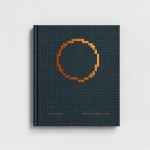
Some records emerge from a place. Kicking A Dark Horse seems to have been trapped inside one, breathing through limestone while the road above repeats its insistent Morse code. The third volume in Greyfade's FOLIO series binds a full-length recording in hardcover form, pairing nine modular-synthesizer pieces by sound artist Josh Mason with his book-length A Temporally Untethered Travelogue of the State(s) of Florida. The parenthetical plural opens beneath the state as a grammatical sinkhole, hovering somewhere between drainage problem and family archive. Sound and language do not accompany one another so much as exchange organs. Between them lies a creature whose dreams glow behind fever-laden curtains.
Mason constructs the music from systems designed to resist mastery: streams of binary information tangled with oscillators pushed beyond their intended behavior, mismatched converters rubbing against delay lines built to strike. Chance supplies the abrasion, while Mason shapes its consequences with severe tenderness. The opening piece, “Unincorporated Community Fight Song,” gathers minute electronic gestures into a fragile social body. Its title promises ceremony, yet the music offers a municipality too dispersed for marching, each tone carrying a small lantern through the bloodstream. “Traumahawk (Volunteer Corps.)” brings that current closer to the skin.
The book teaches us to distrust illumination. Florida's brightness bleaches evidence and gives catastrophe a devotional sheen, turning parking lots into immaculate alibis. Mason watches radiance glance from hotel pools, sodium lamps, bridge pavement, television windows, and the blind terminus of travel. History and hallucination occupy the same overexposed frame. Water initially proposes another grammar, carrying childhood behind the engineering required to keep tenderness above sea level. Every beautiful image drags behind it a permit or pipe, some buried cost still accruing interest. Within this contaminated radiance, “Would Go” reads as a message recovered after its senders have vanished into their own machinery. “A Tomb” receives the signal and folds it inward. Tiny electronic movements flare inside a chamber too immense for human tenancy.
Time in Mason's Florida refuses the road's forward command. A vacuum cord catches beneath a wheel. Film accepts multiple exposures until childhood and adulthood share one face. The self disperses through grandparents' kitchens, a father's unruly metaphysics, friends dead or disappearing, and rooms abandoned after a final glance. Autobiography consequently loses its borders, seeping into county roads and municipal failure until identity becomes a public utility with unreliable service. “Hellified Ire” occupies this psychic center, gritted with a friction that makes duration sound combustible. The track does not illustrate injury but discovers the frequency at which a scar communicates the history of its becoming. Beneath it, development proceeds with administrative calm: mangroves uprooted, shell middens mined, bridges arriving out of sequence, communities translated from ink into debris.
Even the page refuses passive service. Paragraphs crowd the margins while isolated phrases drift through broad white fields. “You have one new message” returns with a machine's immaculate courtesy, announcing contact from an adjacent dimension. The blankness pressurizes whatever language has left unresolved; silence becomes an active material, dense enough to bend memory around it. That spatial tension enters “No Vacancy Loose And Violent In The Socket,” whose liquid delicacy carries light through an electrical wound. The title's idiom opens into metaphysical eviction. “Repair 22,000,000” then crosshatches luminous impulses and removes them strip by strip, until perception confronts its scaffolding. Repair here means attention practiced under impossible conditions. The past cannot be restored, but its wreckage can still be weighed and cataloged.
Mason's surrealism achieves its force by refusing escape. A gull falls burning while a worker finishes his cigarette. A chained man stands beyond the dune and receives the terrible anonymity of being ignored. Elsewhere, a landmark dragon collapses into brackish water, its forgotten sacrifice sinking beneath civic memory. Rockets rupture the coast, after which commerce sprouts from the remains. The comedy of it all curdles inside the throat because absurdity has become realism stripped of public-relations niceties. “Live, From Behind The Power Curve” answers with implied voices and celestial pressure, a broadcast whose choir has no mouths, while “A Garden” opens nearby, though its peace carries no innocence. Delicate tones admit radiance through damaged material, allowing beauty to exist without laundering what produced it.
That ethical refusal gives Kicking A Dark Horse its unusual inflammation. Broken clocks converse with air conditioners; insects enter the same damaged orchestra as saws and failing batteries. The urban and the sublime trade masks until no hierarchy survives. Near the book's close, “La Florida” accumulates objects, injuries, relatives, jokes, appetites, and ghosts. Definition overloads until its circuitry blooms, leaving home immense enough to contain its own indictment. Love for a place can contain the evidence against it. Mason neither resolves that contradiction nor displays it as a trophy. He lets attachment remain morally unfinished, an animal bucking against the enclosure of explanation.
The work's final command is double: capture, release. Mason catches a vanishing place while exposing the violence concealed inside every net, then permits it to escape through heat and ungovernable time. What remains is a haunting of the machine of preservation, salt whitening the circuitry while water rehearses its patient coup below. Yet the deepest disturbance arrives elsewhere. Perhaps memory has never lived inside us at all. Perhaps landscapes use human beings as temporary recording devices, growing eyes to witness their own erasure and nervous systems capable of grieving it. Under that possibility, Kicking A Dark Horse becomes a state dreaming through Mason of the day it will no longer require a witness, because the witness, the wound, and the map will have entered the same clouded water.
Mason constructs the music from systems designed to resist mastery: streams of binary information tangled with oscillators pushed beyond their intended behavior, mismatched converters rubbing against delay lines built to strike. Chance supplies the abrasion, while Mason shapes its consequences with severe tenderness. The opening piece, “Unincorporated Community Fight Song,” gathers minute electronic gestures into a fragile social body. Its title promises ceremony, yet the music offers a municipality too dispersed for marching, each tone carrying a small lantern through the bloodstream. “Traumahawk (Volunteer Corps.)” brings that current closer to the skin.
The book teaches us to distrust illumination. Florida's brightness bleaches evidence and gives catastrophe a devotional sheen, turning parking lots into immaculate alibis. Mason watches radiance glance from hotel pools, sodium lamps, bridge pavement, television windows, and the blind terminus of travel. History and hallucination occupy the same overexposed frame. Water initially proposes another grammar, carrying childhood behind the engineering required to keep tenderness above sea level. Every beautiful image drags behind it a permit or pipe, some buried cost still accruing interest. Within this contaminated radiance, “Would Go” reads as a message recovered after its senders have vanished into their own machinery. “A Tomb” receives the signal and folds it inward. Tiny electronic movements flare inside a chamber too immense for human tenancy.
Time in Mason's Florida refuses the road's forward command. A vacuum cord catches beneath a wheel. Film accepts multiple exposures until childhood and adulthood share one face. The self disperses through grandparents' kitchens, a father's unruly metaphysics, friends dead or disappearing, and rooms abandoned after a final glance. Autobiography consequently loses its borders, seeping into county roads and municipal failure until identity becomes a public utility with unreliable service. “Hellified Ire” occupies this psychic center, gritted with a friction that makes duration sound combustible. The track does not illustrate injury but discovers the frequency at which a scar communicates the history of its becoming. Beneath it, development proceeds with administrative calm: mangroves uprooted, shell middens mined, bridges arriving out of sequence, communities translated from ink into debris.
Even the page refuses passive service. Paragraphs crowd the margins while isolated phrases drift through broad white fields. “You have one new message” returns with a machine's immaculate courtesy, announcing contact from an adjacent dimension. The blankness pressurizes whatever language has left unresolved; silence becomes an active material, dense enough to bend memory around it. That spatial tension enters “No Vacancy Loose And Violent In The Socket,” whose liquid delicacy carries light through an electrical wound. The title's idiom opens into metaphysical eviction. “Repair 22,000,000” then crosshatches luminous impulses and removes them strip by strip, until perception confronts its scaffolding. Repair here means attention practiced under impossible conditions. The past cannot be restored, but its wreckage can still be weighed and cataloged.
Mason's surrealism achieves its force by refusing escape. A gull falls burning while a worker finishes his cigarette. A chained man stands beyond the dune and receives the terrible anonymity of being ignored. Elsewhere, a landmark dragon collapses into brackish water, its forgotten sacrifice sinking beneath civic memory. Rockets rupture the coast, after which commerce sprouts from the remains. The comedy of it all curdles inside the throat because absurdity has become realism stripped of public-relations niceties. “Live, From Behind The Power Curve” answers with implied voices and celestial pressure, a broadcast whose choir has no mouths, while “A Garden” opens nearby, though its peace carries no innocence. Delicate tones admit radiance through damaged material, allowing beauty to exist without laundering what produced it.
That ethical refusal gives Kicking A Dark Horse its unusual inflammation. Broken clocks converse with air conditioners; insects enter the same damaged orchestra as saws and failing batteries. The urban and the sublime trade masks until no hierarchy survives. Near the book's close, “La Florida” accumulates objects, injuries, relatives, jokes, appetites, and ghosts. Definition overloads until its circuitry blooms, leaving home immense enough to contain its own indictment. Love for a place can contain the evidence against it. Mason neither resolves that contradiction nor displays it as a trophy. He lets attachment remain morally unfinished, an animal bucking against the enclosure of explanation.
The work's final command is double: capture, release. Mason catches a vanishing place while exposing the violence concealed inside every net, then permits it to escape through heat and ungovernable time. What remains is a haunting of the machine of preservation, salt whitening the circuitry while water rehearses its patient coup below. Yet the deepest disturbance arrives elsewhere. Perhaps memory has never lived inside us at all. Perhaps landscapes use human beings as temporary recording devices, growing eyes to witness their own erasure and nervous systems capable of grieving it. Under that possibility, Kicking A Dark Horse becomes a state dreaming through Mason of the day it will no longer require a witness, because the witness, the wound, and the map will have entered the same clouded water.