
Monday, November 23, 2026
Browse by Genre
Industrial Music / Industrial Metal / Aggro Industrial / Electro Metal
Industrial Noise / Power Noise / Harsh Noise
Synth Pop / Electro Pop / Synth-Electronica
Techno / Trance / Goa / Drum'n'Bass / Jungle / Tribal / Trip-Hop
Ambient / Electronica / Ethereal / Dub / Soundscapes / Abstract
Experimental / Avantgarde / Weird & Wired / Glitch / Noise / Field Recording
Dark / Gothic / Wave / New Wave / Dark Wave / Industrial Gothic
New Music / Downtown / Avantgarde Jazz / New Classical / World
Search Reviews
Music Reviews
Monique Jean: Malgré tout
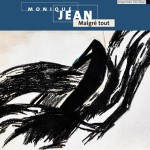
The title "Malgré tout" carries a quiet insistence: despite everything, something continues. In Monique Jean’s case, that persistence takes the form of sound refusing to settle into a definitive shape. Across four electroacoustic compositions, vibrations collide, accumulate, fragment and reassemble, as if the material were continually negotiating its own existence. This is not an especially polite form of music. Its surfaces can be rough, its movements unpredictable, and its structures occasionally difficult to grasp. Yet there is a curious vitality in the way Jean allows instability to become a compositional principle rather than a problem requiring correction.
Jean has been developing this approach for decades. A graduate of the Université de Montréal, where she studied electroacoustic composition with Francis Dhomont, she later completed a doctorate under Nicolas Bernier, focusing on the relationship between improvisation, composition and the unpredictable behaviour of physical sound systems. Her work extends into sound installation, experimental film, video, dance and performance. She is also a member of Theresa Transistor, an electroacoustic improvisation quartet. Her album "Greffes" received the 2012–13 Opus Prize for Best Album in the Musique actuelle / Electroacoustic Music category, while her compositions have appeared at festivals in Europe, North and South America. This is an artist with a substantial history in the field, but one whose methods remain unusually hands-on.
A central element of her practice is MissTake, a self-built instrument consisting of a four-track cassette recorder configured for no-input operation, connected to effects pedals and a multichannel spatialisation system. Rather than using the tape machine to reproduce previously recorded material, Jean turns the apparatus itself into a source of sound. Feedback, intermodulation and the unstable behaviour of analogue circuitry generate material that can be shaped, manipulated and organised without entirely losing its unpredictable character. The name MissTake seems particularly apt: the apparatus makes room for accidents, but these are not simply mistakes waiting to be repaired. They become opportunities, sometimes unruly ones, for discovering sounds that a more obedient system might never produce.
The album opens with “Tumultes”, its longest composition, and the most recent work in the collection. Inspired by Adania Shibli’s "Minor Detail" and Antoine Wauters’s "Mahmoud ou la montée des eaux", it is dedicated to the memory of Serge Arcuri. Its accompanying text evokes barriers, censorship and the divisions that obstruct communication, while insisting on the need to keep searching for a passage towards another person. The political and human implications are clear, but Jean does not attempt to illustrate the novels or translate their narratives into a sequence of sonic events. Instead, the composition seems concerned with the difficulty of reaching across separation itself. Its turbulent material suggests resistance without turning into a simplistic musical equivalent of protest. The result is a piece in which the abstract and the deeply human are not competing interests.
“Volt_#1”, originally composed in 2015 and revised in 2024, takes the listener back to the beginning of Jean’s ongoing investigation into homemade analogue devices. The sounds are rough, noisy and accompanied by the audible presence of the machinery that generates them. Feedback amplifies their unstable character, while the original improvisational sequences are transferred into a more carefully structured electroacoustic composition. This distinction matters. Jean is not simply documenting an improvised performance or preserving a collection of interesting electronic accidents. She is reconsidering what happens when spontaneous material is given a different duration, context and formal organisation. The piece retains a sense of risk, even though its eventual shape is the product of deliberate compositional decisions.
“Dancing on the Edge of Darkness”, developed between 2016 and 2017 in collaboration with video artist Monique Bertrand, brings another set of associations into play. Conceived as part of a five-screen video installation, the work draws on Hamlet, reimagined as a runaway teenager caught between the desire to exist and the temptation to disappear. Jean's response is not to construct a conventional dramatic soundtrack, but to pursue the disturbances implicit in the character: interruptions, electrical interference, abrupt silences, screeching and dissolution. The composition maintains a relatively high level of density, creating a restless continuity in which individual events seem to emerge and vanish before they can establish themselves as stable objects. There is something fittingly uncomfortable about this approach to Shakespeare's most famously indecisive protagonist. Hamlet has spent centuries wondering what to do; here, even the sounds appear unable to make up their minds.
The final “Volt_#3” was originally conceived for sixteen channels, with spatialisation playing a defining role in its construction. Jean imagined an empty public square, still carrying the residual presence of the people who once occupied it. The composition explores the relationship between dense clusters of activity and more scattered lines of sound, suggesting a place in which individual presences briefly gather before dispersing. The image is particularly effective because absence becomes an active component of the piece. An empty square is never entirely empty: its architecture, acoustic properties and accumulated history remain, even when its inhabitants have gone elsewhere. Presented within the album's stereo format, the work necessarily offers a different listening perspective from its original multichannel conception, but its underlying concern with the articulation of space remains central.
The four compositions also reveal the value of bringing together works from different periods rather than presenting the album as a single uninterrupted project. “Tumultes” provides a more recent perspective on Jean's methods, while the two "Volt" pieces and “Dancing on the Edge of Darkness” trace the development of an approach that has remained remarkably consistent without becoming static. The connections are evident, but so are the differences in context and intention. The result is not a chronological survey, nor does it attempt to conceal the gaps between the works. Instead, the sequence allows their shared vocabulary to become clearer through comparison.
There is a risk, naturally, in working with material whose main attraction is its unpredictability. Without sufficient compositional pressure, feedback and electronic instability can become a self-sustaining spectacle, the sonic equivalent of watching someone repeatedly unplug and reconnect a cable while waiting for something extraordinary to happen. Jean avoids this trap by giving her material conceptual and structural responsibilities. The references to literature, political division, theatrical characters and urban space are not decorative explanations attached after the fact. They provide different ways of thinking about the relationships between sound, bodies and environments, without dictating exactly what the listener should hear.
The album's most compelling quality is perhaps its refusal to separate physical sensation from intellectual engagement. Jean's music can be approached through its textures and movements, but it also invites consideration of the forces that shape them: interference, resistance, proximity, separation and the fragile conditions under which different elements coexist. Her compositions do not offer reassuring resolutions, and their roughness is not a cosmetic gesture designed to make electronic music appear more adventurous. There is a genuine commitment to allowing the material to retain its unruly character, even when that makes the listening experience demanding.
Released by empreintes DIGITALes, a Montréal label with a long-standing commitment to electroacoustic composition, "Malgré tout" is a convincing presentation of an artist whose technical ingenuity is matched by a broader interest in the expressive possibilities of sound. Its four pieces do not ask for passive admiration of clever equipment, nor do they turn their literary and political references into explanatory captions. They operate in the space between the concrete and the imagined, where a malfunction can become a compositional decision and an apparently empty place can still contain the traces of countless lives. The title's persistence is therefore more than an expression of endurance. It describes a way of working: continuing to listen, to question and to make something out of whatever refuses to remain still.
Tears|Ov: A Life on Hold
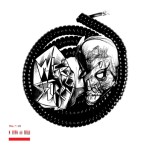
There are few experiences more perfectly designed to test human patience than being kept on hold by a company that has already taken your money. The synthetic reassurance, the apologetic voice that sounds as though it has never apologised for anything in its life, the promise that an operator will be with you shortly: it is a small theatre of institutional indifference, performed daily for an audience that cannot leave without losing its place in the queue. Tears|Ov have taken this familiar irritation as the starting point for "A Life on Hold", then expanded it into a much broader reflection on bureaucracy, media manipulation, social paralysis and the peculiar comedy of contemporary existence. Across ten tracks and just over twenty-five minutes, the London trio turn the language of customer service into an unsettling electronic cabaret, where the jokes are sharp, the machinery is unpredictable and nobody seems particularly convinced that an actual human being will ever answer.
Tears|Ov bring together Terces Wale, L.E. Allen and Lottie Lou Poulet, three artists whose individual histories help explain the project's unusual mixture of sonic experimentation, performance and black humour. Wale and Allen have worked together in various forms since reuniting in London in 2002, eventually developing Tears|Ov into a vehicle for sound collage, poetry and deliberately unstable musical structures. Their earlier work included "Tears Of The Material Vulture" (2016), built around fragments from Allen's involvement with the New York public-access television programme "Madame Chaos", and "A Hopeless Place" (2019), which established their taste for uncomfortable juxtapositions and absurdist vocal material. "Pluto's Return" followed in 2021. Poulet, who joined the project during the making of the new album, brings substantial technical experience: her work has included engineering live performances for Liars, Throbbing Gristle and 808 State, as well as producing Test Dept's "Disturbance". The trio's apparent lack of interest in conventional professional biographies is amusingly reflected in their own description of themselves, which lists digital catering, head-shrinking, laundry and internet research among their various occupations. It is probably the most honest artist statement issued in recent years.
The music is assembled from electronic sequences, samples, spoken fragments, abrasive rhythms and sudden changes of direction. The pieces are generally short, but their compactness rarely makes them feel like sketches waiting for proper development. “One Hour, Location 26” opens with a sense of disquiet that immediately establishes the album's peculiar atmosphere, while “A.W.O.L.” introduces a more forceful rhythmic presence. The title suggests absence without permission, an idea that fits the record's wider interest in people caught inside systems they neither control nor fully understand. “Simple Things/Formation For Now” is a brief but effective collision of synthetic tones and unstable melodic gestures, its slightly malfunctioning character suggesting that even the simplest arrangements can become difficult when too many people are involved.
“We're Sorry” is perhaps the album's most direct statement of intent. Its corporate apology is less an expression of regret than a sound cue signalling that responsibility has been carefully redirected elsewhere. The electronic movement beneath it grows increasingly tense, with prowling oscillator patterns and martial percussion giving the track an almost confrontational momentum. The effect is funny in the way a malfunctioning public-address system can be funny when it announces that everything is under control while smoke begins to emerge from the ceiling. “Probably, I (File Named: Image Is Everything)” is even more compressed, its title evoking the dubious relationship between personal identity and the images through which contemporary culture insists on representing us. The music has a restless, slightly disorienting quality, as if a digital advertisement had developed an anxiety disorder.
“Happy Meal” offers a more playful interlude, with burbling electronic figures that flirt with the cheerful vocabulary of commercial entertainment while quietly undermining it. The title is hardly innocent: fast-food branding, childhood nostalgia and corporate friendliness are all convenient ways of making consumption feel like a personality trait. “P/R/o/t/L”, meanwhile, turns the clipped language and repetitive procedures of automated customer service into a particularly frenetic miniature. Its abrupt edits and fragmented vocal material suggest a conversation in which every possible response has been pre-recorded, except the one that might actually solve the problem. Anyone who has ever attempted to cancel a subscription will recognise the underlying horror.
“Narrow Valley” introduces a more spacious and less immediately aggressive passage, with Poulet's vocal contribution adding another human dimension to the album's otherwise fractured communication. “Setting Sail”, the longest track, is also one of its most substantial. Deep bass pulses and spoken material gradually develop into something more expansive, while samples and shifting electronic textures introduce a sense of uncertainty that reaches beyond the album's initial customer-service premise. The title might imply escape, but the music offers no particularly convincing destination. It is more like setting off without knowing whether the vessel has been inspected, whether the navigation system works or whether the person selling the tickets has any idea where the sea is. “Grateful Relapse” closes the sequence with another concise intervention, and the vinyl edition adds a locked groove on the B-side, a small physical joke that seems entirely appropriate: the record itself is made to repeat, rather like the situations it describes.
The group's interest in media detritus and appropriated language has deeper roots than a simple attraction to found sound. Allen's earlier work with "Madame Chaos", alongside her background in archaeology, has informed a practice of retrieving cultural fragments that mainstream media would normally discard. Wale's writing and performance bring a more explicitly theatrical dimension, drawing on cut-up techniques, absurdist humour and the unstable relationship between public language and private experience. Their performances can be considerably more confrontational than the album's relatively compact electronic constructions suggest. In a recent feature for "The Wire", the group discussed the influence of Dada, the use of grotesque stage personae and the personal history that lies behind some of the record's political references. The events of September 11, 2001, for instance, are not simply an abstract symbol in their work: Allen was in New York when the attacks took place, and the experience had a profound effect on her relationship with Wale. That history gives the album's wider reflections on surveillance, power and collective vulnerability a more complicated emotional foundation.
What makes "A Life on Hold" particularly effective is that it does not confuse political seriousness with musical solemnity. Its humour is not decorative relief from the subject matter; it is part of the method. Corporate language is already a form of surrealism, after all, especially when it promises customer satisfaction while making satisfaction structurally impossible. Tears|Ov expose that absurdity through abrupt edits, synthetic absurdities and vocal interventions that sound as though they have escaped from a television broadcast whose producers have quietly abandoned the building. The brevity of several tracks can occasionally leave an idea hanging just as it begins to develop, and the album's deliberately fragmented construction will not appeal to listeners who expect a conventional progression. But a smooth, reassuring narrative would hardly suit a record about being trapped in systems that repeatedly fail to deliver what they promise.
"A Life on Hold" is a strange, funny and decidedly uncomfortable little object, one that turns the banal vocabulary of modern administration into a portrait of wider social unease. Its ten pieces are too concise to become lectures, too mischievous to settle into conventional protest music, and too sharply observed to be dismissed as mere electronic eccentricity. Tears|Ov understand that the absurdity of contemporary life rarely needs embellishment; it usually arrives in a polite automated voice, accompanied by a reference number and an estimated waiting time. The album's locked groove is therefore more than a vinyl novelty. It is the perfect final gesture: the line is still open, the music keeps playing, and the operator is apparently experiencing an unusually long lunch break.
Spencer Clark: The Spectacle of Light Abductions 2 – Music for the Paintings of Vedran Kopljar

Artist: Spencer Clark
Title: The Spectacle of Light Abductions 2 – Music for the Paintings of Vedran Kopljar
Format: 12" + Download
Label: Pacific City Discs (@)
Rated:


Title: The Spectacle of Light Abductions 2 – Music for the Paintings of Vedran Kopljar
Format: 12" + Download
Label: Pacific City Discs (@)
Rated:
Somewhere between a synthesiser demonstration conducted by an extraterrestrial civilisation and the soundtrack to a documentary about places that do not officially exist, Spencer Clark has found another destination for his peculiar imagination. "Music for the Paintings of Vedran Kopljar" is the second instalment of "The Spectacle of Light Abductions", fifteen years after the original appeared in 2011 under Clark's Fourth World Magazine alias. This time, the point of departure is not an imagined communication from future selves but the paintings of Croatian-born, Antwerp-based artist Vedran Kopljar. The album consists of two substantial pieces, recorded and performed during Kopljar's 2024 exhibition at the Muhka Museum in Antwerp. Together, they form an electronic excursion into a territory where ordinary geography has apparently resigned from its position.
Clark is one of the more distinctive figures to have emerged from the American experimental underground over the past two decades. He first attracted attention as one half of The Skaters, the project he formed with James Ferraro in the early 2000s, but his subsequent output has been remarkably prolific and difficult to contain within a single identity. Monopoly Child Star Searchers, Typhonian Highlife, Black Joker, Fourth World Magazine and Vodka Soap are among the names through which he has explored different variations of his musical imagination. His Pacific City Sound Visions imprint has become an important vehicle for this activity, while his more recent life in Athens has continued a pattern of geographical and artistic restlessness. Clark's music frequently draws on primitive electronic equipment, sampling, repetition and deliberately unstable fidelity, but its eccentricity is not simply a matter of sound. He tends to approach composition through images, sensations and imagined environments, treating musical ideas almost as independent organisms that need to be encouraged rather than disciplined into conventional arrangements. In an interview with "Cyclic Defrost", he described the process of concentrating on an inner image until it begins to develop its own world. That method is particularly relevant here.
The first side, “Abyssfields”, opens with low-resolution percussion and a strange assortment of electronic signals, as though a radio transmission were being received from a civilisation whose idea of communication involves several competing frequencies and an unusually active imagination. Clark's keyboards and sampler generate glistening melodic figures, wavering tones and distorted, voice-like sounds, while the rhythmic elements provide a loose but persistent sense of movement. The piece is not built around a conventional melodic destination. Instead, its motifs gradually mutate, sometimes acquiring an almost ceremonial quality, sometimes dissolving into murkier electronic textures. There is a curious tension between the music's apparent desolation and its vivid colours: the landscape may be barren, but somebody has clearly brought an extravagant collection of lighting equipment.
“Abomination Plateaus”, featuring John Also Bennet on flute, takes a somewhat different approach. A recurring, pinging loop provides the central reference point, while soft synthesiser layers accumulate above it. Bennet's contribution introduces an acoustic presence that seems to hover between recognisable instrumental phrasing and the surrounding electronic material. Rather than providing a conventional melodic counterpoint, the flute becomes another voice within the composition's unusual vocabulary, adding a delicate quality to the track's more insistent rhythmic structure. The repetition is important, but it never feels like a mechanical exercise in endurance. Each return subtly alters the relationship between the sounds, revealing harmonic possibilities that might have remained concealed in a more conventional arrangement. The piece gradually establishes an almost hypnotic momentum, although its sense of direction remains pleasantly elusive.
The visual source deserves more than a passing mention. Kopljar, born in Slavonski Brod in 1991 and now based in Antwerp, works across painting, performance, video and language. His 2024 exhibition at Muhka, "Vedran Kopljar (& parents) — MEAN", explored the ways in which systems create and disrupt meaning. Its paintings included verbal constructions, game-like structures and psychedelic images that resisted straightforward classification. Kopljar's interest in the unstable relationship between rules, interpretation and perception makes him an intriguing counterpart to Clark. Both artists seem interested in what happens when familiar structures are pushed beyond their expected function, although they approach that question through very different materials. Clark does not attempt to provide musical illustrations of individual paintings; instead, he responds to the mental space they suggest. The result is an exchange between visual and sonic abstraction, rather than an exercise in translating one medium into another.
The connection with the original "The Spectacle of Light Abductions" is also more than a matter of recycling an evocative title. The 2011 record, released as Fourth World Magazine, revolved around imagined encounters with future selves and extraterrestrial presences. The new album revisits some of that territory, but its inspiration comes from a more immediate artistic encounter. Clark's imagined beings and Kopljar's painted forms seem to inhabit neighbouring dimensions, connected by a shared suspicion that reality may be considerably less stable than its administrative documentation suggests. The music's peculiar combination of ritualistic repetition, melodic fragments and rough-edged electronic colour is recognisably Clark's, yet the two compositions also benefit from the discipline imposed by their extended forms. There is room for gradual development without the pressure to produce a succession of dramatic events.
One possible reservation concerns the album's limited range of materials. Across nearly thirty-seven minutes, the two pieces remain committed to a relatively narrow vocabulary of synthesised textures, loops and abstracted signals. Listeners looking for substantial rhythmic variation or sharply differentiated sections may find the experience somewhat uniform. But Clark's purpose seems to lie elsewhere. The repetition is a means of sustaining concentration, allowing small changes in tone and harmony to become significant without having to announce themselves with theatrical gestures. It is music that rewards a willingness to remain with an idea, even when that idea appears to be leading nowhere in particular. There are worse ways to spend half an hour, especially in an age when every spare second is apparently expected to become an opportunity for personal optimisation.
"Music for the Paintings of Vedran Kopljar" is an engaging continuation of Clark's long-running investigation into imaginary worlds, primitive electronics and the strange emotional possibilities of repetition. Its two pieces do not offer a conventional narrative, nor do they need to. They create an environment in which sounds seem to possess their own intentions, and where the distinction between musical instrument, signal and imagined presence becomes increasingly difficult to maintain. Kopljar's paintings provide the initial coordinates, Bennet adds an unexpected human breath, and Clark does the rest with his familiar combination of intuition and electronic mischief. The destination remains uncertain, but the expedition is worth taking. Just don't expect the museum gift shop to have a map.
From A Harbour Softly Drawn: Shepherds
Artist: From A Harbour Softly Drawn
Title: Shepherds
Format: CD & 12" + Download
Label: Dronarivm (@)
Rated:
Title: Shepherds
Format: CD & 12" + Download
Label: Dronarivm (@)
Rated:
From A Harbour Softly Drawn is the new project from Scottish multi-instrumentalist and songwriter Fraser McGowan. Drawing from ambient, jazz and electronic influences the project serves as a logical follow-up to the quiet lo-fi, ambient & folk records as 'Caught In The Wake Forever' and 'Small Town Boredom'. 'Shepherds' was born almost a decade ago, from a summer’s worth of recordings of late night improvised attic sessions with friends & early morning field tapes taken from the shorelines of the West of Scotland.
Over time, memories of who played what & when faded. All that remained were hard-drives full of forgotten loops, sketches & samples providing a wealth of foreign sounds to be resampled & molded into something new. Guided by the source material and drawn from a love of early 90s ambient & mellow jazz records, 'Shepherds' 'was cultivated slowly & methodically over an 8 year period, with the careful blending
of samples & rich instrumentation into a collection of downbeat, late night, melancholic slow burners.
Beginning with "Morning Waters" the listener is treated to some kind of scraping(?) sound over ocean surf mingled with ambient synth pads. The a lightly electronic industrial loop kicks in followed by sustained cello notes, thudding percussion, saxophone, and more, eventually with a whispered vocal sample added. "Yillen" offers the sound of a plucked stringed instrument ostinato chord progression with a wordless (female) vocal in the background and synth cello, very briefly, at only 1:27. "Lavender & Blue Thread" is a kind of slow-moving mild jazz improv featuring guitar. "Rhu Aun" sounds experimental and glitchy with various repetitive sampled loops before the sax improve dominates. For some odd reason, this reminded me of Tuxedo Moon. Before the song ends it goes in a completely different direction with a more fully orchestrated loop.
"Seaweed" begins with sound of water (more stream than ocean) and twittering birds, with some melodic synth before bass and piano join in. This sounds like mellow acid-jazz, and then when the the dialogue snippet sample and other electronics come in, I'm thinking Boards of Canada. So far, this is the piece I liked best; it's more fully realized than anything I've previously heard so far. "Untitled (Cairns)" sounds slight and backwards. Final track, "Feels Like Coming Home" begins with some strange electronic looping and short, repeated dialogue snippet before morphing into a thunderstorm. Following that, a repeating synth arpeggio takes over, to which is added some minimal percussion and sustained cello notes. More instruments are added to this minimal ambient improv until it eventually expires. Although 'Shepherds' has some really nice pieces on it, the album, as a whole, seemed lacking, and left me wanting for more.
Pyrroline: Ambiguity
Always when I put on Pyrroline's last album "Struggling" I'm still deeply impressed with its quality and the fact that I can still find new sounds, ideas, and effects on the tracks of this timeless, epic-sounding Dark Electro-album, although it is already 5 years old. Now this German duo returns and continues their path to grow and develop deeper and more detailed into cinematic-sounding classic Dark Electro-music.
With "Ambiguity", Arnte and Schmoun present their newest full-length output once again via Electro Aggression Records (EAR), a label that has steadily built a reputation for championing authentic, multi-layered Dark Electro. Right from the beginning, it becomes obvious that Pyrroline isn't at all interested in delivering cheap, repetitive dancefloor-food for the hyperactive, glowstick-twirling Hellectro brigade. Instead, the duo digs deep into their studio arsenal to squeeze out dense, intricate synthesizer-pads, shifting soundscapes, and biting, pummeling bassline-sequencing works that clearly bows down to the golden mid-90s era of the genre without ever sounding dusty or outdated.
The album opens with the title track "Ambiguity", immediately drawing the listener into a wide, atmospheric scenario with epic string- and pad-layers before the driving beats and Arnte's tense, expressive vocals kick in to lead the way. What separates Pyrroline from many of their colleagues is their remarkable sense for song progression and dynamics. While tracks like "Transition Fault" push forward with sharp rhythmic precision and crisp drum-programming, special praise has to be given to the instrumental "Britzelgritzel" (what a strange-sounding track title!) for its wide, cinematic, and almost Ambient-like passages that showcase the duo's impressive talent for pure atmospheric storytelling without needing a single vocal line.
A special sonic dimension is added when Arnte's female partner Schmoun steps up to the microphone, bringing in her smooth, natural vocal performance as an effective human counterpart to the cold and mechanic music expression of Pyrroline. On "Ambiguity", this contrast shines brightly on "Crossroads Of Progress", where her clear voice weaves gracefully through the intricate electronic structures, as well as on "Day 45", where she takes over the chorus - a brooding track that listeners might already recognize from its pre-release video on YouTube.
To pick out single highlights out of these 12 cohesive tracks is a bit challenging, because the album works best as a complete, immersive sonic journey. However, one track that definitely stands out is the faster-paced "Eventually" with its thick and richly detailed sound layers. The way the atmospheric synth-textures, dystopian lyrical themes, and subtle sonic effects interlock here shows Pyrroline at the absolute peak of their craft - so it comes as no surprise that the duo also submitted this masterpiece to the prestigious HOFA Song Contest in the Industrial category, bringing their authentic underground sound onto a wider stage.
Aside from these gems, I am also quite fine with "Relentless", another track that was already introduced beforehand via a video release on YouTube and features a strong vocal collaboration with TC75, adding an extra dose of raw, energetic pressure to the mix.
Meanwhile, deeper and more atmospheric tunes like "Already Defined?" or the closing "Inner Resonance" showcase the duo's talent for slower, ominous, and filmic soundscapes - leaving plenty of subtle details to discover even after multiple spins, just like on "Struggling".
As for a minor point of criticism on this album – if you want to call it that at all – Pyrroline simply acts like Pyrroline. You know exactly what you will get here: of course delivered on the highest thinkable level of quality and craftsmanship, yet the duo completely avoids surprising style changes or unexpected flirts with other genres. They stay strictly inside their well-defined musical territory without taking risky stylistic detours, which might leave listeners hoping for a bold reinvention slightly wanting.
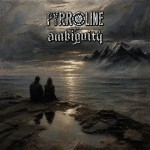
Finally, some praising words have to be given to the visual presentation of the digipak CD release, crafted by Michael Renfield (R010R), alongside with Arnte. Seeing the silhouettes of the two protagonists sitting in front of a stormy sea during a sundown looks almost romantic, almost natural – what a refreshing contrast to the raw and ominous, cold and mechanic-looking cover artworks of several colleagues in this scene!
"Ambiguity" is undoubtedly another strong addition to Pyrroline's discography. While casual club-goers might miss some instant, straightforward beats here and there, dedicated listeners of classic, well-crafted Dark Electro will be rewarded with a rich, matured album full of subtle details to explore. Whether you prefer adding the well-crafted physical CD-digipak to your shelf or grabbing the digital download, this release deserves a solid spot in any serious Dark Electro-collection.