
Browse by Genre
Industrial Music / Industrial Metal / Aggro Industrial / Electro Metal
Industrial Noise / Power Noise / Harsh Noise
Synth Pop / Electro Pop / Synth-Electronica
Techno / Trance / Goa / Drum'n'Bass / Jungle / Tribal / Trip-Hop
Ambient / Electronica / Ethereal / Dub / Soundscapes / Abstract
Experimental / Avantgarde / Weird & Wired / Glitch / Noise / Field Recording
Dark / Gothic / Wave / New Wave / Dark Wave / Industrial Gothic
New Music / Downtown / Avantgarde Jazz / New Classical / World
Search Reviews
Music Reviews
Oonagh Haines: Not Not Pretending
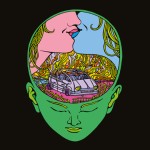
The title "Not Not Pretending" immediately announces its intentions by refusing to announce anything clearly at all. It is a phrase caught in a hall of mirrors, simultaneously denying and affirming itself, the linguistic equivalent of staring at your own reflection until it begins looking back with independent thoughts. Fittingly, Oonagh Haines' debut album inhabits precisely that territory: a place where sincerity and performance, intimacy and detachment, humour and melancholy continually exchange clothes.
Raised between London and Grand-Fort-Philippe near Dunkirk, Haines arrives at this debut by way of an unusually eclectic artistic path. Before embarking on her solo work, she performed in street bands, experimental pop duos, multimedia projects, and object theatre productions. Her background in visual arts and performance clearly informs the music. These songs do not simply unfold; they stage themselves. Every vocal inflection, every electronic texture, every carefully measured pause feels placed within an imagined scene whose boundaries remain intriguingly blurred.
The album sketches a nocturnal landscape populated by damaged romantics, cosmic drifters, accidental philosophers, and people attempting to navigate emotional vulnerability while maintaining at least a minimum level of irony. Which, admittedly, is one of the more common survival strategies of modern life.
Musically, Haines operates in a compelling intersection of deconstructed synth-pop, minimal wave, spoken-word performance, and experimental electronics. Comparisons to the cool detachment of early post-punk vocalists are understandable, but they only tell part of the story. Beneath the surface restraint lies a surprisingly tender emotional core. The distance is real, but so is the longing.
"Loaded Gun" opens the album with a darkly comic monologue that immediately establishes Haines' peculiar gift for balancing absurdity and discomfort. The song's narrator keeps a weapon by the bed, not for protection but to avoid the horror of social interaction. Beneath the deadpan humour lurks something recognisable: the anxiety of modern existence exaggerated just enough to become funny again. The production mirrors this tension, with electronic textures circling around the vocal like thoughts that refuse to settle.
The brilliant "Perfect Date" pushes this approach even further. A Ford Focus filled with candles, a burning car, declarations of romance delivered amid looming disaster. It plays like a parody of cinematic love stories while somehow remaining strangely romantic. Haines understands that desire is often ridiculous. The best relationships frequently begin with two people pretending not to be absurd while being profoundly absurd together.
Throughout the album, humour functions less as comic relief than as a way of approaching difficult subjects indirectly. "Kindness" appears deceptively simple, almost naïve in its catalogue of hopes for human connection. Yet its straightforwardness becomes radical in a cultural environment increasingly dominated by cynicism. The song quietly suggests that empathy, time, laughter, and affection might still be worthwhile ambitions. Revolutionary material, apparently.
Elsewhere, the record turns increasingly existential. "Dust" transforms natural cycles into a meditation on impermanence, linking bodies to leaves, ash, sand, and light. The imagery remains simple but effective, allowing the song to float between folk-like reflection and dreamlike abstraction. Haines avoids grand declarations. Instead, she observes transience with a mixture of curiosity and acceptance.
"Emptiness" and the two-part "Vacuum" sequence form the album's emotional centre. Here, Haines' detached vocal style becomes particularly effective. Rather than dramatizing absence, she inhabits it. The sparse electronic environments surrounding her voice create a sense of psychological space where memories, identities, and desires drift without clear anchoring points.
The recurring references to light, space, black holes, and cosmic distance might suggest a fascination with science-fiction imagery, but they function more as emotional metaphors. Haines seems less interested in outer space than in the vast interior distances people maintain from one another and from themselves. The vacuum is psychological before it is astronomical.
One of the album's greatest strengths is its handling of repetition. Electronic motifs return in altered forms, phrases echo across tracks, and emotional themes resurface from different angles. This creates a subtle sense of continuity without imposing a rigid narrative. The songs feel connected by atmosphere rather than storyline, as if documenting different rooms within the same dream.
The production deserves particular praise. Mixed by Renaud Carton and mastered by José Guerrero, the record achieves a delicate balance between clarity and ambiguity. The electronic elements never overwhelm the songs, nor do they settle into predictable patterns. Instead, they create shifting environments where Haines' voice can move between character, narrator, and confessor.
The closing "Meet Me" offers one of the album's most beautiful moments. Light becomes both destination and transformation. Identity becomes fluid. Conversation dissolves into smoke. The song leaves many questions unanswered, which feels entirely appropriate. Albums obsessed with certainty tend to age poorly. Albums comfortable with ambiguity often linger.
What makes "Not Not Pretending" particularly impressive as a debut is its confidence in incompleteness. Haines does not attempt to explain herself fully. She leaves gaps, contradictions, and unresolved tensions throughout the record. The result feels remarkably human. After all, most people spend their lives performing versions of themselves while simultaneously hoping someone will see through the performance.
The title turns out to be less paradoxical than it first appears. Haines is pretending, and she is not pretending. She is performing, but the emotions are real. She is detached, but deeply invested. She is ironic, yet sincere.
Like the best contemporary art-pop, "Not Not Pretending" understands that authenticity is rarely a matter of removing masks. More often, it emerges from choosing the right mask and wearing it honestly.
In a world increasingly addicted to declarations, Oonagh Haines offers something rarer: uncertainty rendered with elegance, humour, and considerable grace.
Raised between London and Grand-Fort-Philippe near Dunkirk, Haines arrives at this debut by way of an unusually eclectic artistic path. Before embarking on her solo work, she performed in street bands, experimental pop duos, multimedia projects, and object theatre productions. Her background in visual arts and performance clearly informs the music. These songs do not simply unfold; they stage themselves. Every vocal inflection, every electronic texture, every carefully measured pause feels placed within an imagined scene whose boundaries remain intriguingly blurred.
The album sketches a nocturnal landscape populated by damaged romantics, cosmic drifters, accidental philosophers, and people attempting to navigate emotional vulnerability while maintaining at least a minimum level of irony. Which, admittedly, is one of the more common survival strategies of modern life.
Musically, Haines operates in a compelling intersection of deconstructed synth-pop, minimal wave, spoken-word performance, and experimental electronics. Comparisons to the cool detachment of early post-punk vocalists are understandable, but they only tell part of the story. Beneath the surface restraint lies a surprisingly tender emotional core. The distance is real, but so is the longing.
"Loaded Gun" opens the album with a darkly comic monologue that immediately establishes Haines' peculiar gift for balancing absurdity and discomfort. The song's narrator keeps a weapon by the bed, not for protection but to avoid the horror of social interaction. Beneath the deadpan humour lurks something recognisable: the anxiety of modern existence exaggerated just enough to become funny again. The production mirrors this tension, with electronic textures circling around the vocal like thoughts that refuse to settle.
The brilliant "Perfect Date" pushes this approach even further. A Ford Focus filled with candles, a burning car, declarations of romance delivered amid looming disaster. It plays like a parody of cinematic love stories while somehow remaining strangely romantic. Haines understands that desire is often ridiculous. The best relationships frequently begin with two people pretending not to be absurd while being profoundly absurd together.
Throughout the album, humour functions less as comic relief than as a way of approaching difficult subjects indirectly. "Kindness" appears deceptively simple, almost naïve in its catalogue of hopes for human connection. Yet its straightforwardness becomes radical in a cultural environment increasingly dominated by cynicism. The song quietly suggests that empathy, time, laughter, and affection might still be worthwhile ambitions. Revolutionary material, apparently.
Elsewhere, the record turns increasingly existential. "Dust" transforms natural cycles into a meditation on impermanence, linking bodies to leaves, ash, sand, and light. The imagery remains simple but effective, allowing the song to float between folk-like reflection and dreamlike abstraction. Haines avoids grand declarations. Instead, she observes transience with a mixture of curiosity and acceptance.
"Emptiness" and the two-part "Vacuum" sequence form the album's emotional centre. Here, Haines' detached vocal style becomes particularly effective. Rather than dramatizing absence, she inhabits it. The sparse electronic environments surrounding her voice create a sense of psychological space where memories, identities, and desires drift without clear anchoring points.
The recurring references to light, space, black holes, and cosmic distance might suggest a fascination with science-fiction imagery, but they function more as emotional metaphors. Haines seems less interested in outer space than in the vast interior distances people maintain from one another and from themselves. The vacuum is psychological before it is astronomical.
One of the album's greatest strengths is its handling of repetition. Electronic motifs return in altered forms, phrases echo across tracks, and emotional themes resurface from different angles. This creates a subtle sense of continuity without imposing a rigid narrative. The songs feel connected by atmosphere rather than storyline, as if documenting different rooms within the same dream.
The production deserves particular praise. Mixed by Renaud Carton and mastered by José Guerrero, the record achieves a delicate balance between clarity and ambiguity. The electronic elements never overwhelm the songs, nor do they settle into predictable patterns. Instead, they create shifting environments where Haines' voice can move between character, narrator, and confessor.
The closing "Meet Me" offers one of the album's most beautiful moments. Light becomes both destination and transformation. Identity becomes fluid. Conversation dissolves into smoke. The song leaves many questions unanswered, which feels entirely appropriate. Albums obsessed with certainty tend to age poorly. Albums comfortable with ambiguity often linger.
What makes "Not Not Pretending" particularly impressive as a debut is its confidence in incompleteness. Haines does not attempt to explain herself fully. She leaves gaps, contradictions, and unresolved tensions throughout the record. The result feels remarkably human. After all, most people spend their lives performing versions of themselves while simultaneously hoping someone will see through the performance.
The title turns out to be less paradoxical than it first appears. Haines is pretending, and she is not pretending. She is performing, but the emotions are real. She is detached, but deeply invested. She is ironic, yet sincere.
Like the best contemporary art-pop, "Not Not Pretending" understands that authenticity is rarely a matter of removing masks. More often, it emerges from choosing the right mask and wearing it honestly.
In a world increasingly addicted to declarations, Oonagh Haines offers something rarer: uncertainty rendered with elegance, humour, and considerable grace.
Fauna: Taiga Trans
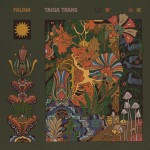
Some albums invite the listener into a room. Others open a window onto a landscape. "Taiga Trans", the debut full-length from Gothenburg collective Fauna, feels more like stumbling upon a gathering deep inside a forest where nobody bothers explaining what is happening because explanation would only ruin it. There are drums. There is dancing. There may be a ritual underway. There is certainly a flute. Beyond that, certainty becomes negotiable.
Fauna arrive carrying an unusually rich cultural baggage, though they wear it lightly. Emerging from Sweden's fertile underground scene, the collective brings together musicians with roots stretching across Syria, Turkey, France, Finland, Poland, and Sweden. In lesser hands, such diversity might become a marketing slogan. Here it becomes a living process. The music does not present itself as a fusion of traditions so much as a place where traditions have forgotten where they came from and started building something new together.
The band's origins lie in informal jam sessions between guitarist Tommie Ek and bassist Ibrahim Shabo, two musicians who had spent years operating within more conventional rock settings. Eventually they reached that familiar point in a creative life where established formulas begin to feel like well-furnished cages. The answer was experimentation: hand drums, unusual guitar sounds, repetition, improvisation, and a gradual opening of the musical doors to a larger community of like-minded explorers.
The result is "Taiga Trans", an album that occupies a fascinating space between psychedelic rock, krautrock, folk traditions, acid house, trance music, and something much older than any of those categories. Listening to it often feels like hearing several centuries of musical history negotiating a temporary peace treaty.
The opening "Bland stenar" immediately establishes Fauna's method. A saz introduces a taut melodic framework while percussion and bass begin assembling a groove sturdy enough to survive minor geological events. Electric guitars enter less as lead instruments than as weather systems. The track moves forward with the patient inevitability of roots finding cracks in stone. There is propulsion, but not urgency. The music trusts repetition to reveal its secrets gradually.
This faith in repetition links Fauna to a lineage stretching from the motorik experiments of German kosmische music to traditional trance practices found across multiple cultures. Yet the band avoids nostalgia. The rhythms may be ancient in spirit, but the production feels unmistakably contemporary. Electronic textures drift through the arrangements like invisible currents, subtly reshaping the landscape.
"En munfull sand" and "Dunans torka" deepen this approach. Layers of percussion interlock with hypnotic bass figures while voices emerge and disappear within the mix. Shabo's multilingual lyrics, delivered alongside Alexandra Shahbo and flautist Fauna Buvat, function less as narrative vehicles than as additional textures. Language becomes rhythm. Meaning dissolves into atmosphere. Anyone hoping for clear semantic explanations may need to consult a different department of human activity.
One of the album's most impressive achievements is its handling of tension. Many trance-oriented records rely on predictable cycles of build and release. Fauna prefer subtler methods. "Bland trÄden", one of the album's longest pieces, evolves through incremental shifts so gradual that one barely notices the transformation until suddenly realizing they have arrived somewhere entirely different. The experience resembles walking through a forest and discovering that dusk has arrived without announcing itself.
The instrumental colours deserve special mention. Buvat's flute often serves as the album's secret weapon, weaving through the dense rhythmic structures with an elegance that recalls both ancient folk traditions and contemporary experimental music. The darbuka and saz bring textures rarely encountered in modern psychedelic rock, while never feeling ornamental. These instruments are not exotic decorations; they are fundamental voices within the conversation.
"Boreala Ändlösheten" acts as a brief atmospheric pivot before "Du ska få se" introduces one of the record's most overtly dance-oriented moments. Here, the group's fascination with techno and rave culture surfaces most clearly. Yet even at its most club-adjacent, the music retains an earthy quality. This is dance music for people who occasionally stop dancing to stare thoughtfully at moss.
That moss receives its own frozen monument in "Frusen mossa", a track that perfectly captures the album's strange balance of movement and stillness. The groove remains hypnotic, but there is also a contemplative dimension, a sense that the repetition is designed not merely to energise but to alter perception itself.
The closing "Blodröda rubiner" serves as a fitting culmination. Nearly eight minutes long, it gathers many of the album's recurring themes into a final ecstatic procession. Voices, percussion, guitars, and electronics converge into something that feels simultaneously ancient and futuristic. One can imagine the track being played around a campfire, inside a warehouse, or during some post-apocalyptic harvest festival. It would probably work in all three situations.
What ultimately distinguishes "Taiga Trans" is its sincerity. In an era where genre-crossing often arrives packaged as calculated eclecticism, Fauna sound genuinely committed to exploration. Their music emerges from curiosity rather than strategy. The collective nature of the project reinforces this impression. No single voice dominates. The album feels less like a statement from individual musicians than the document of a community discovering itself in real time.
There is also something quietly hopeful in the record's construction. Here are musicians from different cultural backgrounds creating a shared musical language without erasing their differences. The result is neither utopian fantasy nor political manifesto. It is simply evidence that collaboration remains one of humanity's more productive habits, despite centuries of contradictory evidence.
By the end of "Taiga Trans", the listener may not know exactly where they have been. Somewhere between forest and dancefloor, between ritual and rave, between memory and invention. Fortunately, certainty was never the point. Fauna are interested in transport rather than destination.
And for forty-three remarkable minutes, they make getting lost feel like a perfectly reasonable plan.
Fauna arrive carrying an unusually rich cultural baggage, though they wear it lightly. Emerging from Sweden's fertile underground scene, the collective brings together musicians with roots stretching across Syria, Turkey, France, Finland, Poland, and Sweden. In lesser hands, such diversity might become a marketing slogan. Here it becomes a living process. The music does not present itself as a fusion of traditions so much as a place where traditions have forgotten where they came from and started building something new together.
The band's origins lie in informal jam sessions between guitarist Tommie Ek and bassist Ibrahim Shabo, two musicians who had spent years operating within more conventional rock settings. Eventually they reached that familiar point in a creative life where established formulas begin to feel like well-furnished cages. The answer was experimentation: hand drums, unusual guitar sounds, repetition, improvisation, and a gradual opening of the musical doors to a larger community of like-minded explorers.
The result is "Taiga Trans", an album that occupies a fascinating space between psychedelic rock, krautrock, folk traditions, acid house, trance music, and something much older than any of those categories. Listening to it often feels like hearing several centuries of musical history negotiating a temporary peace treaty.
The opening "Bland stenar" immediately establishes Fauna's method. A saz introduces a taut melodic framework while percussion and bass begin assembling a groove sturdy enough to survive minor geological events. Electric guitars enter less as lead instruments than as weather systems. The track moves forward with the patient inevitability of roots finding cracks in stone. There is propulsion, but not urgency. The music trusts repetition to reveal its secrets gradually.
This faith in repetition links Fauna to a lineage stretching from the motorik experiments of German kosmische music to traditional trance practices found across multiple cultures. Yet the band avoids nostalgia. The rhythms may be ancient in spirit, but the production feels unmistakably contemporary. Electronic textures drift through the arrangements like invisible currents, subtly reshaping the landscape.
"En munfull sand" and "Dunans torka" deepen this approach. Layers of percussion interlock with hypnotic bass figures while voices emerge and disappear within the mix. Shabo's multilingual lyrics, delivered alongside Alexandra Shahbo and flautist Fauna Buvat, function less as narrative vehicles than as additional textures. Language becomes rhythm. Meaning dissolves into atmosphere. Anyone hoping for clear semantic explanations may need to consult a different department of human activity.
One of the album's most impressive achievements is its handling of tension. Many trance-oriented records rely on predictable cycles of build and release. Fauna prefer subtler methods. "Bland trÄden", one of the album's longest pieces, evolves through incremental shifts so gradual that one barely notices the transformation until suddenly realizing they have arrived somewhere entirely different. The experience resembles walking through a forest and discovering that dusk has arrived without announcing itself.
The instrumental colours deserve special mention. Buvat's flute often serves as the album's secret weapon, weaving through the dense rhythmic structures with an elegance that recalls both ancient folk traditions and contemporary experimental music. The darbuka and saz bring textures rarely encountered in modern psychedelic rock, while never feeling ornamental. These instruments are not exotic decorations; they are fundamental voices within the conversation.
"Boreala Ändlösheten" acts as a brief atmospheric pivot before "Du ska få se" introduces one of the record's most overtly dance-oriented moments. Here, the group's fascination with techno and rave culture surfaces most clearly. Yet even at its most club-adjacent, the music retains an earthy quality. This is dance music for people who occasionally stop dancing to stare thoughtfully at moss.
That moss receives its own frozen monument in "Frusen mossa", a track that perfectly captures the album's strange balance of movement and stillness. The groove remains hypnotic, but there is also a contemplative dimension, a sense that the repetition is designed not merely to energise but to alter perception itself.
The closing "Blodröda rubiner" serves as a fitting culmination. Nearly eight minutes long, it gathers many of the album's recurring themes into a final ecstatic procession. Voices, percussion, guitars, and electronics converge into something that feels simultaneously ancient and futuristic. One can imagine the track being played around a campfire, inside a warehouse, or during some post-apocalyptic harvest festival. It would probably work in all three situations.
What ultimately distinguishes "Taiga Trans" is its sincerity. In an era where genre-crossing often arrives packaged as calculated eclecticism, Fauna sound genuinely committed to exploration. Their music emerges from curiosity rather than strategy. The collective nature of the project reinforces this impression. No single voice dominates. The album feels less like a statement from individual musicians than the document of a community discovering itself in real time.
There is also something quietly hopeful in the record's construction. Here are musicians from different cultural backgrounds creating a shared musical language without erasing their differences. The result is neither utopian fantasy nor political manifesto. It is simply evidence that collaboration remains one of humanity's more productive habits, despite centuries of contradictory evidence.
By the end of "Taiga Trans", the listener may not know exactly where they have been. Somewhere between forest and dancefloor, between ritual and rave, between memory and invention. Fortunately, certainty was never the point. Fauna are interested in transport rather than destination.
And for forty-three remarkable minutes, they make getting lost feel like a perfectly reasonable plan.
Flin van Hemmen: Could Also Be the Nachtzwaluw
Artist: Flin van Hemmen (@)
Title: Could Also Be the Nachtzwaluw
Format: Download Only (MP3 + Lossless)
Label: self-released
Rated:

Title: Could Also Be the Nachtzwaluw
Format: Download Only (MP3 + Lossless)
Label: self-released
Rated:
There is a peculiar moment in life when a sound heard in the dark refuses to identify itself. A bird? An insect? A distant machine? The mind reaches for certainty, but the night has other plans. The title of Flin van Hemmen’s "Could Also Be the Nachtzwaluw" emerges from exactly such a moment: a conversation with his father while listening to nocturnal sounds on a hillside. It is a title built on uncertainty, and in many ways uncertainty becomes the album’s guiding principle.
Van Hemmen has spent decades moving between instruments, disciplines, and musical identities. Born in the Netherlands, forged as a jazz drummer, transplanted to New York, and active across jazz, improvisation, experimental music, field recording, and electronic processing, he has accumulated influences the way rivers accumulate sediments. This record feels less like a new chapter than a meeting point where several tributaries finally converge. Acoustic guitar, piano, drums, environmental recordings, and digital manipulation all sit together without competing for attention, as if old friends have gathered around the same table after years apart.
The album arrives with an unusually explicit sense of purpose. Van Hemmen describes it as a response to the current state of the world, not as protest music but as something closer to emotional maintenance. That distinction matters. Plenty of records shout at history. "Could Also Be the Nachtzwaluw" chooses instead to sit quietly beside it and take notes.
Opening track "Loneduck the Divine" immediately establishes the record's curious balance between intimacy and distance. The title alone sounds like a forgotten character from a children's book written by a mystic who spent too much time watching migratory birds. The music follows a similarly elusive logic, where melodic fragments appear not as declarations but as invitations.
The centrepiece is undoubtedly "The Nachtzwaluw (for Sean Ali)", dedicated to Van Hemmen’s longtime collaborator in the outdoor improvisation project Forest Music. Stretching beyond eight minutes, it unfolds with the patience of someone watching daylight disappear over a landscape. Nothing here rushes. Themes emerge, linger, and drift away like shapes crossing a foggy field. The piece embodies the album’s larger philosophy: listening is not an act of consumption but of coexistence.
Elsewhere, Van Hemmen’s affection for ambiguity becomes increasingly apparent. "Marcescent in E min" takes its title from a botanical term describing leaves that wither but remain attached to the branch. It is an apt metaphor for much of the album, where ideas seem suspended between departure and persistence. The music rarely arrives at conventional resolutions. Instead, it occupies states of transition, those awkward and beautiful moments where something is becoming something else but has not quite decided what.
"Fugue State" plays with another kind of in-between condition. Its title references psychological dislocation, yet the music feels surprisingly grounded. Rhythmic figures and melodic gestures circle each other with quiet determination, creating a sensation not of being lost, but of wandering intentionally. Human beings spend enormous amounts of energy trying to know exactly where they are. Music like this reminds us that getting pleasantly sidetracked can be its own destination.
The wonderfully titled "Clarinet Concerto Palate Cleanser" provides a brief but telling glimpse of Van Hemmen’s humour. Experimental music often suffers from a chronic shortage of self-awareness, as if every sound were carrying the fate of civilization on its shoulders. Here, a touch of levity slips through. The title acknowledges the absurdity of categorisation while simultaneously embracing it. One imagines the composer smiling quietly while naming the piece.
Perhaps the most revealing track is "Allan Holdsworth". Rather than functioning as tribute in any straightforward sense, it reflects Van Hemmen’s broader relationship with influence. Throughout his career, he has absorbed ideas from jazz, contemporary composition, improvisation, and experimental sound art without becoming trapped by any of them. References appear not as monuments but as ingredients. They dissolve into the larger ecosystem of the music.
What makes "Could Also Be the Nachtzwaluw" particularly compelling is its refusal to separate musical exploration from lived experience. Many experimental records feel designed in laboratories of abstraction. Van Hemmen’s work feels inhabited. The field recordings, the acoustic instruments, the gentle imperfections, and the recurring sense of physical space all suggest a composer less interested in constructing worlds than in paying close attention to the one already surrounding him.
The album also benefits from its modest scale. At roughly thirty-five minutes, it resists the temptation to over-explain itself. Each piece contributes to an overarching mood without exhausting it. Like the nocturnal sounds that inspired its title, the music leaves room for mystery.
In the end, "Could Also Be the Nachtzwaluw" is a record about listening. Not merely hearing sounds, but listening deeply enough to accept uncertainty as part of the experience. In a culture increasingly obsessed with instant identification and immediate conclusions, Van Hemmen proposes something refreshingly different: perhaps we do not need to know exactly what we are hearing.
Perhaps it is enough to sit on a hill, listen carefully, and accept that it could also be the nachtzwaluw.
Van Hemmen has spent decades moving between instruments, disciplines, and musical identities. Born in the Netherlands, forged as a jazz drummer, transplanted to New York, and active across jazz, improvisation, experimental music, field recording, and electronic processing, he has accumulated influences the way rivers accumulate sediments. This record feels less like a new chapter than a meeting point where several tributaries finally converge. Acoustic guitar, piano, drums, environmental recordings, and digital manipulation all sit together without competing for attention, as if old friends have gathered around the same table after years apart.
The album arrives with an unusually explicit sense of purpose. Van Hemmen describes it as a response to the current state of the world, not as protest music but as something closer to emotional maintenance. That distinction matters. Plenty of records shout at history. "Could Also Be the Nachtzwaluw" chooses instead to sit quietly beside it and take notes.
Opening track "Loneduck the Divine" immediately establishes the record's curious balance between intimacy and distance. The title alone sounds like a forgotten character from a children's book written by a mystic who spent too much time watching migratory birds. The music follows a similarly elusive logic, where melodic fragments appear not as declarations but as invitations.
The centrepiece is undoubtedly "The Nachtzwaluw (for Sean Ali)", dedicated to Van Hemmen’s longtime collaborator in the outdoor improvisation project Forest Music. Stretching beyond eight minutes, it unfolds with the patience of someone watching daylight disappear over a landscape. Nothing here rushes. Themes emerge, linger, and drift away like shapes crossing a foggy field. The piece embodies the album’s larger philosophy: listening is not an act of consumption but of coexistence.
Elsewhere, Van Hemmen’s affection for ambiguity becomes increasingly apparent. "Marcescent in E min" takes its title from a botanical term describing leaves that wither but remain attached to the branch. It is an apt metaphor for much of the album, where ideas seem suspended between departure and persistence. The music rarely arrives at conventional resolutions. Instead, it occupies states of transition, those awkward and beautiful moments where something is becoming something else but has not quite decided what.
"Fugue State" plays with another kind of in-between condition. Its title references psychological dislocation, yet the music feels surprisingly grounded. Rhythmic figures and melodic gestures circle each other with quiet determination, creating a sensation not of being lost, but of wandering intentionally. Human beings spend enormous amounts of energy trying to know exactly where they are. Music like this reminds us that getting pleasantly sidetracked can be its own destination.
The wonderfully titled "Clarinet Concerto Palate Cleanser" provides a brief but telling glimpse of Van Hemmen’s humour. Experimental music often suffers from a chronic shortage of self-awareness, as if every sound were carrying the fate of civilization on its shoulders. Here, a touch of levity slips through. The title acknowledges the absurdity of categorisation while simultaneously embracing it. One imagines the composer smiling quietly while naming the piece.
Perhaps the most revealing track is "Allan Holdsworth". Rather than functioning as tribute in any straightforward sense, it reflects Van Hemmen’s broader relationship with influence. Throughout his career, he has absorbed ideas from jazz, contemporary composition, improvisation, and experimental sound art without becoming trapped by any of them. References appear not as monuments but as ingredients. They dissolve into the larger ecosystem of the music.
What makes "Could Also Be the Nachtzwaluw" particularly compelling is its refusal to separate musical exploration from lived experience. Many experimental records feel designed in laboratories of abstraction. Van Hemmen’s work feels inhabited. The field recordings, the acoustic instruments, the gentle imperfections, and the recurring sense of physical space all suggest a composer less interested in constructing worlds than in paying close attention to the one already surrounding him.
The album also benefits from its modest scale. At roughly thirty-five minutes, it resists the temptation to over-explain itself. Each piece contributes to an overarching mood without exhausting it. Like the nocturnal sounds that inspired its title, the music leaves room for mystery.
In the end, "Could Also Be the Nachtzwaluw" is a record about listening. Not merely hearing sounds, but listening deeply enough to accept uncertainty as part of the experience. In a culture increasingly obsessed with instant identification and immediate conclusions, Van Hemmen proposes something refreshingly different: perhaps we do not need to know exactly what we are hearing.
Perhaps it is enough to sit on a hill, listen carefully, and accept that it could also be the nachtzwaluw.
Diogo Alvim: Música Para Mysterious Heart

Artist: Diogo Alvim (@)
Title: Música Para Mysterious Heart
Format: CD + Download
Label: Crónica (@)
Rated:
Title: Música Para Mysterious Heart
Format: CD + Download
Label: Crónica (@)
Rated:
Emotions are notoriously difficult things to catalogue. Philosophers have tried. Psychologists have tried. Entire self-help industries have built glittering empires around the idea that feelings can be identified, labelled, managed, and filed away like documents in a cabinet. Human beings, meanwhile, continue to cry during advertisements, fall in love with unsuitable people, and experience jealousy because someone else's holiday photographs received more likes. The emotions remain stubbornly resistant to organization.
Diogo Alvim's "Música Para Mysterious Heart" approaches this problem from a far more interesting angle. Originally composed for choreographer T'nia Carvalho's dance production "Mysterious Heart", the album begins with the idea of constructing a sonic catalogue of affects, a collection of emotional states translated into sound. Yet rather than reducing feelings to neat categories, Alvim reveals just how slippery and elusive they really are.
The conceptual foundation is fascinating. Drawing inspiration from Charles Le Brun's seventeenth-century treatise "Méthode pour apprendre à dessiner les passions", itself influenced by René Descartes' investigations into human emotions, Alvim and Carvalho built the project around a series of recorded vocal improvisations. Presented only with visual representations of specific emotional states, Carvalho responded through voice alone. Those recordings subsequently became the raw material from which Alvim crafted these electroacoustic compositions.
What emerges is neither soundtrack nor sound art in the conventional sense. Instead, "Música Para Mysterious Heart" occupies an intriguing territory between theatre, composition, psychoacoustic experiment, and emotional archaeology. It feels less like listening to music about emotions than overhearing emotions before they have fully become language.
Alvim is no stranger to interdisciplinary work. The Portuguese composer has developed a body of work that frequently engages with theatre, dance, and electroacoustic practices, displaying a keen sensitivity to the ways sound interacts with movement, space, and perception. That experience proves crucial here. Even separated from its choreographic origins, the album retains a strong sense of physicality. One can almost feel bodies moving through these sounds, responding to them, resisting them, becoming entangled within them.
The opening "Abertura" immediately establishes an atmosphere of uncertainty. Rather than presenting a clear thematic statement, it functions as a threshold, inviting the listener into a space where conventional distinctions between voice, gesture, and sound design begin to dissolve. Fragments emerge and recede. Textures suggest meaning without fully settling into it.
Then comes the wonderfully titled "Todos os pensamentos do mundo ao mesmo tempo" ("All the thoughts in the world at the same time"), which appears twice during the album in different forms. The title alone captures a distinctly contemporary condition. Most people now carry all the thoughts in the world at the same time inside their pockets, courtesy of smartphones and social media. Alvim's interpretation is thankfully more poetic. Dense layers of shifting sonic material accumulate and transform continuously, creating a sensation of mental abundance rather than informational overload. The music does not overwhelm so much as proliferate.
At the centre of the album lies "Quadros" ("Pictures"), perhaps the project's most revealing piece. Functioning almost as a compressed survey of the emotional catalogue, it assembles fragments from multiple affective states into a constantly shifting sequence. Listening to it resembles flipping rapidly through an emotional photo album where joy, anger, sadness, hope, and unease appear side by side, each illuminating the others.
The shorter emotional portraits themselves are particularly effective. "Riso" ("Laughter") avoids obvious musical representations of happiness, instead exploring the strange textures and physical characteristics of laughter itself. "Cólera" ("Anger") is concise but potent, capturing something of anger's abrupt, disruptive nature. It arrives quickly, leaves an impression, and disappears before exhausting its energy, much like the emotion itself.
"Tristeza" ("Sadness") stands among the album's most moving moments. Alvim resists the temptation to portray sadness as purely dark or oppressive. Instead, the piece inhabits a more complex emotional space where melancholy becomes reflective, even strangely luminous. It suggests that sadness, like all emotions, contains multiple layers and possibilities.
One of the album's most intriguing aspects is its treatment of the human voice. Carvalho's vocal contributions rarely function as singing in the traditional sense. Instead, they operate as raw expressive material: breath, gesture, inflection, and timbre detached from semantic meaning. The result often feels uncannily intimate. We encounter emotion not through words describing feelings, but through the physical traces those feelings leave behind.
The historical references woven throughout the project add another layer of richness. "Esperança" ("Hope") incorporates material derived from seventeenth-century composers John Blow and Henry Purcell, creating a subtle dialogue between past and present understandings of emotional expression. Yet these references never feel academic. They become part of the album's broader meditation on how humans have attempted, across centuries, to understand their own inner lives.
The inclusion of "Inveja" ("Envy") and "Temor" ("Fear"), pieces omitted from the original dance production, proves particularly rewarding. Presented here as independent works, they expand the emotional vocabulary of the album while highlighting its underlying premise: no catalogue can ever be complete. There will always be another feeling, another nuance, another contradiction waiting beyond the edge of classification.
What ultimately distinguishes "Música Para Mysterious Heart" is its refusal to resolve the tension between analysis and mystery. The project begins with systems, categories, and historical attempts to map human emotion. Yet the music itself continually escapes those frameworks. Every emotion spills into neighbouring territories. Every certainty becomes porous.
Crónica has long cultivated artists who operate comfortably between experimental composition, sound art, and conceptual exploration, and Alvim's work fits naturally within that tradition. Yet despite its intellectual foundations, the album never feels remote. On the contrary, it is deeply human. Its complexities arise not from abstraction but from the irreducible complexity of feeling itself.
By the final moments, one is left with the impression that the album's title contains a quiet joke. The "mysterious heart" remains mysterious. No catalogue has solved it. No treatise has explained it. No composition can fully capture it.
What Alvim achieves instead is something more valuable: a reminder that the attempt itself can produce remarkable beauty. Human beings may never understand their emotions completely, but they continue making art about them. Judging by "Música Para Mysterious Heart", that ongoing confusion remains one of our better ideas.
Diogo Alvim's "Música Para Mysterious Heart" approaches this problem from a far more interesting angle. Originally composed for choreographer T'nia Carvalho's dance production "Mysterious Heart", the album begins with the idea of constructing a sonic catalogue of affects, a collection of emotional states translated into sound. Yet rather than reducing feelings to neat categories, Alvim reveals just how slippery and elusive they really are.
The conceptual foundation is fascinating. Drawing inspiration from Charles Le Brun's seventeenth-century treatise "Méthode pour apprendre à dessiner les passions", itself influenced by René Descartes' investigations into human emotions, Alvim and Carvalho built the project around a series of recorded vocal improvisations. Presented only with visual representations of specific emotional states, Carvalho responded through voice alone. Those recordings subsequently became the raw material from which Alvim crafted these electroacoustic compositions.
What emerges is neither soundtrack nor sound art in the conventional sense. Instead, "Música Para Mysterious Heart" occupies an intriguing territory between theatre, composition, psychoacoustic experiment, and emotional archaeology. It feels less like listening to music about emotions than overhearing emotions before they have fully become language.
Alvim is no stranger to interdisciplinary work. The Portuguese composer has developed a body of work that frequently engages with theatre, dance, and electroacoustic practices, displaying a keen sensitivity to the ways sound interacts with movement, space, and perception. That experience proves crucial here. Even separated from its choreographic origins, the album retains a strong sense of physicality. One can almost feel bodies moving through these sounds, responding to them, resisting them, becoming entangled within them.
The opening "Abertura" immediately establishes an atmosphere of uncertainty. Rather than presenting a clear thematic statement, it functions as a threshold, inviting the listener into a space where conventional distinctions between voice, gesture, and sound design begin to dissolve. Fragments emerge and recede. Textures suggest meaning without fully settling into it.
Then comes the wonderfully titled "Todos os pensamentos do mundo ao mesmo tempo" ("All the thoughts in the world at the same time"), which appears twice during the album in different forms. The title alone captures a distinctly contemporary condition. Most people now carry all the thoughts in the world at the same time inside their pockets, courtesy of smartphones and social media. Alvim's interpretation is thankfully more poetic. Dense layers of shifting sonic material accumulate and transform continuously, creating a sensation of mental abundance rather than informational overload. The music does not overwhelm so much as proliferate.
At the centre of the album lies "Quadros" ("Pictures"), perhaps the project's most revealing piece. Functioning almost as a compressed survey of the emotional catalogue, it assembles fragments from multiple affective states into a constantly shifting sequence. Listening to it resembles flipping rapidly through an emotional photo album where joy, anger, sadness, hope, and unease appear side by side, each illuminating the others.
The shorter emotional portraits themselves are particularly effective. "Riso" ("Laughter") avoids obvious musical representations of happiness, instead exploring the strange textures and physical characteristics of laughter itself. "Cólera" ("Anger") is concise but potent, capturing something of anger's abrupt, disruptive nature. It arrives quickly, leaves an impression, and disappears before exhausting its energy, much like the emotion itself.
"Tristeza" ("Sadness") stands among the album's most moving moments. Alvim resists the temptation to portray sadness as purely dark or oppressive. Instead, the piece inhabits a more complex emotional space where melancholy becomes reflective, even strangely luminous. It suggests that sadness, like all emotions, contains multiple layers and possibilities.
One of the album's most intriguing aspects is its treatment of the human voice. Carvalho's vocal contributions rarely function as singing in the traditional sense. Instead, they operate as raw expressive material: breath, gesture, inflection, and timbre detached from semantic meaning. The result often feels uncannily intimate. We encounter emotion not through words describing feelings, but through the physical traces those feelings leave behind.
The historical references woven throughout the project add another layer of richness. "Esperança" ("Hope") incorporates material derived from seventeenth-century composers John Blow and Henry Purcell, creating a subtle dialogue between past and present understandings of emotional expression. Yet these references never feel academic. They become part of the album's broader meditation on how humans have attempted, across centuries, to understand their own inner lives.
The inclusion of "Inveja" ("Envy") and "Temor" ("Fear"), pieces omitted from the original dance production, proves particularly rewarding. Presented here as independent works, they expand the emotional vocabulary of the album while highlighting its underlying premise: no catalogue can ever be complete. There will always be another feeling, another nuance, another contradiction waiting beyond the edge of classification.
What ultimately distinguishes "Música Para Mysterious Heart" is its refusal to resolve the tension between analysis and mystery. The project begins with systems, categories, and historical attempts to map human emotion. Yet the music itself continually escapes those frameworks. Every emotion spills into neighbouring territories. Every certainty becomes porous.
Crónica has long cultivated artists who operate comfortably between experimental composition, sound art, and conceptual exploration, and Alvim's work fits naturally within that tradition. Yet despite its intellectual foundations, the album never feels remote. On the contrary, it is deeply human. Its complexities arise not from abstraction but from the irreducible complexity of feeling itself.
By the final moments, one is left with the impression that the album's title contains a quiet joke. The "mysterious heart" remains mysterious. No catalogue has solved it. No treatise has explained it. No composition can fully capture it.
What Alvim achieves instead is something more valuable: a reminder that the attempt itself can produce remarkable beauty. Human beings may never understand their emotions completely, but they continue making art about them. Judging by "Música Para Mysterious Heart", that ongoing confusion remains one of our better ideas.
Jonas Cambien: Man Eating Tree
Artist: Jonas Cambien (@)
Title: Man Eating Tree
Format: LP
Label: Sonic Transmissions Records (@)
Rated:

Title: Man Eating Tree
Format: LP
Label: Sonic Transmissions Records (@)
Rated:
There is something delightfully misleading about the title "Man Eating Tree". It sounds like the sort of thing one might encounter in a forgotten pulp novel, an obscure horror film, or perhaps an unfortunate entry in a botanical encyclopedia. Instead, Jonas Cambien's first solo album offers something far stranger and ultimately more rewarding: a collection of hypnotic, rhythmically intricate pieces that seem less interested in devouring people than in quietly rearranging their perception of time.
Cambien's career has been built on movement between worlds. Born in Belgium and long established in Oslo, he has become one of the most distinctive voices within Norway's adventurous improvised music scene. Equally comfortable navigating contemporary classical composition, free jazz, and experimental improvisation, he has spent years developing a musical language that refuses easy categorization. His work with the Jonas Cambien Trio and the explosive quintet Maca Conu revealed a musician fascinated by structure and disruption in equal measure, while collaborations with Egyptian musicians Aly Eissa and Ayman Asfour in The Handover expanded his vocabulary even further, introducing rhythmic and modal perspectives that continue to resonate throughout his work.
"Man Eating Tree" feels like the point where many of those experiences converge. Yet rather than presenting itself as a grand summary, the album strips away much of the complexity associated with ensemble performance and focuses on a remarkably direct set of tools: prepared piano, electric organ, repetition, and time itself.
The opening track, "Tre" (the Norwegian word for "tree"), begins with a deceptively simple repeating figure. At first glance, the piece appears to inhabit minimalist territory familiar from composers such as Steve Reich, Terry Riley, or Philip Glass. But Cambien is not interested in merely extending a pattern. Rhythms begin to drift against one another, accents migrate unexpectedly, and small variations accumulate until the listener loses certainty about where the pulse actually resides. The piece becomes a living organism, growing branches in directions that were impossible to predict from the opening seed.
This ability to generate complexity from modest materials runs throughout the album. Cambien understands one of the central paradoxes of repetition: the longer something repeats, the more sensitive the listener becomes to change. Tiny shifts acquire enormous significance. A single note can feel like a plot twist.
"Árbol" continues this exploration while introducing a more physical, almost dance-like energy. The title shifts from Norwegian to Spanish, subtly reinforcing the album's sense of geographical and cultural fluidity. Here, Cambien's hands seem engaged in parallel conversations, weaving overlapping rhythmic cycles that continually intersect and separate. At moments the music evokes contemporary composition; at others it resembles a folk ritual from an imaginary country that exists only somewhere between Brussels, Oslo, and Cairo.
What makes these pieces particularly compelling is that their intellectual sophistication never overshadows their visceral impact. One can certainly analyze the rhythmic structures and formal development, but one can also simply surrender to the momentum. The album rewards both approaches equally. It is rare to encounter music that stimulates the analytical mind while simultaneously bypassing it.
Then comes "Silverware Vibrating Inside Grand Piano", a title so refreshingly literal that it feels almost rebellious. In an era where experimental music often cloaks itself in layers of conceptual language, Cambien simply tells you exactly what happens. The piece explores the resonant possibilities of prepared piano with remarkable patience. Metallic vibrations shimmer and collide inside the instrument's wooden body, transforming familiar sounds into something elemental and strangely tactile. Listening to it feels like standing inside the piano itself, observing its hidden ecosystem of rattles, hums, and sympathetic resonances.
The album concludes with its longest and perhaps most ambitious statement, "BOOM". Performed on Ace Tone organ and prepared piano, it draws together many of the album's central concerns while opening new directions. The organ introduces a richer harmonic palette, while the rhythmic structures become simultaneously more grounded and more elusive. There are moments when the piece seems to channel the ecstatic repetition of krautrock, others where it recalls spiritual jazz, and still others where it drifts into territory entirely its own.
Cambien's experience with Egyptian music proves especially valuable here. Not because specific stylistic references dominate the piece, but because his understanding of cyclical rhythm and gradual transformation appears deeply informed by those encounters. The music unfolds according to its own internal logic, unconcerned with conventional notions of development or climax.
One of the album's most striking qualities is its physicality. Despite its conceptual sophistication, "Man Eating Tree" never feels abstract in the detached sense of the word. These are sounds produced by hands, strings, wood, metal, and air. Even the prepared piano techniques emphasize the instrument's material nature. The listener becomes acutely aware of mechanisms, vibrations, and resonances usually hidden beneath musical surfaces.
In many ways, "Man Eating Tree" occupies a fascinating space between composition and improvisation, structure and accident, intellect and instinct. It reflects the work of a musician who has absorbed influences from contemporary classical music, free jazz, minimalism, and global traditions without becoming trapped by any of them.
By the end of the album, the title begins to feel unexpectedly appropriate. Trees are systems of growth, branching structures that develop through repetition and variation, governed by hidden patterns while remaining open to chance. Cambien's music behaves in much the same way. It spreads patiently through the listener's awareness, establishing roots, extending connections, and gradually transforming the landscape from within.
Fortunately, the tree does not eat the listener. It merely rearranges a few neural pathways before quietly returning to the forest.
Cambien's career has been built on movement between worlds. Born in Belgium and long established in Oslo, he has become one of the most distinctive voices within Norway's adventurous improvised music scene. Equally comfortable navigating contemporary classical composition, free jazz, and experimental improvisation, he has spent years developing a musical language that refuses easy categorization. His work with the Jonas Cambien Trio and the explosive quintet Maca Conu revealed a musician fascinated by structure and disruption in equal measure, while collaborations with Egyptian musicians Aly Eissa and Ayman Asfour in The Handover expanded his vocabulary even further, introducing rhythmic and modal perspectives that continue to resonate throughout his work.
"Man Eating Tree" feels like the point where many of those experiences converge. Yet rather than presenting itself as a grand summary, the album strips away much of the complexity associated with ensemble performance and focuses on a remarkably direct set of tools: prepared piano, electric organ, repetition, and time itself.
The opening track, "Tre" (the Norwegian word for "tree"), begins with a deceptively simple repeating figure. At first glance, the piece appears to inhabit minimalist territory familiar from composers such as Steve Reich, Terry Riley, or Philip Glass. But Cambien is not interested in merely extending a pattern. Rhythms begin to drift against one another, accents migrate unexpectedly, and small variations accumulate until the listener loses certainty about where the pulse actually resides. The piece becomes a living organism, growing branches in directions that were impossible to predict from the opening seed.
This ability to generate complexity from modest materials runs throughout the album. Cambien understands one of the central paradoxes of repetition: the longer something repeats, the more sensitive the listener becomes to change. Tiny shifts acquire enormous significance. A single note can feel like a plot twist.
"Árbol" continues this exploration while introducing a more physical, almost dance-like energy. The title shifts from Norwegian to Spanish, subtly reinforcing the album's sense of geographical and cultural fluidity. Here, Cambien's hands seem engaged in parallel conversations, weaving overlapping rhythmic cycles that continually intersect and separate. At moments the music evokes contemporary composition; at others it resembles a folk ritual from an imaginary country that exists only somewhere between Brussels, Oslo, and Cairo.
What makes these pieces particularly compelling is that their intellectual sophistication never overshadows their visceral impact. One can certainly analyze the rhythmic structures and formal development, but one can also simply surrender to the momentum. The album rewards both approaches equally. It is rare to encounter music that stimulates the analytical mind while simultaneously bypassing it.
Then comes "Silverware Vibrating Inside Grand Piano", a title so refreshingly literal that it feels almost rebellious. In an era where experimental music often cloaks itself in layers of conceptual language, Cambien simply tells you exactly what happens. The piece explores the resonant possibilities of prepared piano with remarkable patience. Metallic vibrations shimmer and collide inside the instrument's wooden body, transforming familiar sounds into something elemental and strangely tactile. Listening to it feels like standing inside the piano itself, observing its hidden ecosystem of rattles, hums, and sympathetic resonances.
The album concludes with its longest and perhaps most ambitious statement, "BOOM". Performed on Ace Tone organ and prepared piano, it draws together many of the album's central concerns while opening new directions. The organ introduces a richer harmonic palette, while the rhythmic structures become simultaneously more grounded and more elusive. There are moments when the piece seems to channel the ecstatic repetition of krautrock, others where it recalls spiritual jazz, and still others where it drifts into territory entirely its own.
Cambien's experience with Egyptian music proves especially valuable here. Not because specific stylistic references dominate the piece, but because his understanding of cyclical rhythm and gradual transformation appears deeply informed by those encounters. The music unfolds according to its own internal logic, unconcerned with conventional notions of development or climax.
One of the album's most striking qualities is its physicality. Despite its conceptual sophistication, "Man Eating Tree" never feels abstract in the detached sense of the word. These are sounds produced by hands, strings, wood, metal, and air. Even the prepared piano techniques emphasize the instrument's material nature. The listener becomes acutely aware of mechanisms, vibrations, and resonances usually hidden beneath musical surfaces.
In many ways, "Man Eating Tree" occupies a fascinating space between composition and improvisation, structure and accident, intellect and instinct. It reflects the work of a musician who has absorbed influences from contemporary classical music, free jazz, minimalism, and global traditions without becoming trapped by any of them.
By the end of the album, the title begins to feel unexpectedly appropriate. Trees are systems of growth, branching structures that develop through repetition and variation, governed by hidden patterns while remaining open to chance. Cambien's music behaves in much the same way. It spreads patiently through the listener's awareness, establishing roots, extending connections, and gradually transforming the landscape from within.
Fortunately, the tree does not eat the listener. It merely rearranges a few neural pathways before quietly returning to the forest.