
Browse by Genre
Industrial Music / Industrial Metal / Aggro Industrial / Electro Metal
Industrial Noise / Power Noise / Harsh Noise
Synth Pop / Electro Pop / Synth-Electronica
Techno / Trance / Goa / Drum'n'Bass / Jungle / Tribal / Trip-Hop
Ambient / Electronica / Ethereal / Dub / Soundscapes / Abstract
Experimental / Avantgarde / Weird & Wired / Glitch / Noise / Field Recording
Dark / Gothic / Wave / New Wave / Dark Wave / Industrial Gothic
New Music / Downtown / Avantgarde Jazz / New Classical / World
Search Reviews
Music Reviews
Those Who Walk Away: Afterlife Requiem
Artist: Those Who Walk Away
Title: Afterlife Requiem
Format: LP
Label: Constellation Records (@)
Rated:

Title: Afterlife Requiem
Format: LP
Label: Constellation Records (@)
Rated:
There are records that gesture toward death, circling it politely like guests at a wake who don’t know where to stand. And then there are records that get to work, quietly dismantling the room while you’re still inside it. "Afterlife Requiem" by Matthew Patton belongs, with unnerving composure, to the latter.
Patton isn’t some late-arriving ambient tourist draping reverb over grief and calling it depth. This is a composer who has spent decades moving between disciplines and margins, from scoring for the Paul Taylor Dance Company to shaping the curatorial identity of the Winnipeg Symphony Orchestra New Music Festival, quietly threading connections between figures like Jóhann Jóhannsson, Tim Hecker, and Glenn Branca. Under the Those Who Walk Away moniker, his work has always leaned toward erosion rather than construction. This second album just removes whatever scaffolding was left.
Framed as an elegy for Jóhannsson, "Afterlife Requiem" risks sounding like a conceptual trap. Mining fragments from a deceased composer’s hard drives could easily slip into something archival, even voyeuristic. Patton avoids that - barely - by refusing to treat these materials as artifacts. Instead, he treats them as residues: incomplete gestures, abandoned signals, stretches of accidental silence where the recording device kept listening long after intention had left the room. It’s less about preservation than about contamination.
The structure - alternating “Degraded Hymns” and “Memorial Environments” - suggests order, but what you hear is closer to a slow collapse of categories. Two string ensembles, Ghost Orchestra in Reykjavík and Possible Orchestra in Winnipeg, are present in theory; in practice, they flicker in and out like unreliable memories. Their tones are thinned, smeared, processed until they feel less like instruments and more like the idea of instruments someone is struggling to recall. The low-end, sculpted with the help of Paul Corley and Andy Rudolph, moves underneath like distant machinery, indifferent and continuous.
What’s striking is not the sadness - there’s plenty of that, obviously - but the methodical subtraction of meaning. Patton doesn’t build toward catharsis; he sands it down. Each piece feels slightly slower than the last, as if the album itself were obeying a private law of decay, a kind of durational ritardando where time doesn’t just stretch but thins out, becomes porous, eventually irrelevant. By the time you reach “The End Of Life In Sound”, the title feels less like a statement and more like a diagnosis.
There’s also an uncomfortable intimacy running through it. Patton has spoken about the overlap between this work and the death of his mother, about clearing her apartment while simultaneously erasing and reworking sound. You can hear that gesture everywhere: in the way textures are introduced only to be quietly removed, in the sense that every sonic object is already halfway gone the moment it appears. It’s grief translated into process rather than expression, which is either very honest or very ruthless, depending on how charitable you’re feeling.
The inclusion of environmental recordings - lava, turbines, bodily sounds - doesn’t expand the world so much as flatten it. Everything is reduced to vibration, to pressure moving through space. Human, mechanical, geological: it all ends up in the same indifferent continuum. If there’s a spiritual dimension here, it’s a bleak one. Eternity, in Patton’s hands, doesn’t glow. It just persists.
Fans of William Basinski, Kali Malone, or Ian William Craig will recognize some familiar coordinates - decay loops, sacred minimalism, voice-as-ghost - but "Afterlife Requiem" is less interested in beauty than in what remains after beauty has been methodically stripped for parts. Even compared to Patton’s own "The Infected Mass", revisited in the companion remix EP by artists like Alessandro Cortini, this feels more severe, less willing to offer even the illusion of resolution.
It’s not an easy listen, which is a polite way of saying it occasionally feels like being slowly erased alongside the music. But there’s a strange integrity in that refusal to comfort. Patton isn’t asking you to mourn with him. He’s demonstrating what it sounds like when mourning outlives its subject and keeps going anyway, long after the music - if we can still call it that - has technically stopped.
Patton isn’t some late-arriving ambient tourist draping reverb over grief and calling it depth. This is a composer who has spent decades moving between disciplines and margins, from scoring for the Paul Taylor Dance Company to shaping the curatorial identity of the Winnipeg Symphony Orchestra New Music Festival, quietly threading connections between figures like Jóhann Jóhannsson, Tim Hecker, and Glenn Branca. Under the Those Who Walk Away moniker, his work has always leaned toward erosion rather than construction. This second album just removes whatever scaffolding was left.
Framed as an elegy for Jóhannsson, "Afterlife Requiem" risks sounding like a conceptual trap. Mining fragments from a deceased composer’s hard drives could easily slip into something archival, even voyeuristic. Patton avoids that - barely - by refusing to treat these materials as artifacts. Instead, he treats them as residues: incomplete gestures, abandoned signals, stretches of accidental silence where the recording device kept listening long after intention had left the room. It’s less about preservation than about contamination.
The structure - alternating “Degraded Hymns” and “Memorial Environments” - suggests order, but what you hear is closer to a slow collapse of categories. Two string ensembles, Ghost Orchestra in Reykjavík and Possible Orchestra in Winnipeg, are present in theory; in practice, they flicker in and out like unreliable memories. Their tones are thinned, smeared, processed until they feel less like instruments and more like the idea of instruments someone is struggling to recall. The low-end, sculpted with the help of Paul Corley and Andy Rudolph, moves underneath like distant machinery, indifferent and continuous.
What’s striking is not the sadness - there’s plenty of that, obviously - but the methodical subtraction of meaning. Patton doesn’t build toward catharsis; he sands it down. Each piece feels slightly slower than the last, as if the album itself were obeying a private law of decay, a kind of durational ritardando where time doesn’t just stretch but thins out, becomes porous, eventually irrelevant. By the time you reach “The End Of Life In Sound”, the title feels less like a statement and more like a diagnosis.
There’s also an uncomfortable intimacy running through it. Patton has spoken about the overlap between this work and the death of his mother, about clearing her apartment while simultaneously erasing and reworking sound. You can hear that gesture everywhere: in the way textures are introduced only to be quietly removed, in the sense that every sonic object is already halfway gone the moment it appears. It’s grief translated into process rather than expression, which is either very honest or very ruthless, depending on how charitable you’re feeling.
The inclusion of environmental recordings - lava, turbines, bodily sounds - doesn’t expand the world so much as flatten it. Everything is reduced to vibration, to pressure moving through space. Human, mechanical, geological: it all ends up in the same indifferent continuum. If there’s a spiritual dimension here, it’s a bleak one. Eternity, in Patton’s hands, doesn’t glow. It just persists.
Fans of William Basinski, Kali Malone, or Ian William Craig will recognize some familiar coordinates - decay loops, sacred minimalism, voice-as-ghost - but "Afterlife Requiem" is less interested in beauty than in what remains after beauty has been methodically stripped for parts. Even compared to Patton’s own "The Infected Mass", revisited in the companion remix EP by artists like Alessandro Cortini, this feels more severe, less willing to offer even the illusion of resolution.
It’s not an easy listen, which is a polite way of saying it occasionally feels like being slowly erased alongside the music. But there’s a strange integrity in that refusal to comfort. Patton isn’t asking you to mourn with him. He’s demonstrating what it sounds like when mourning outlives its subject and keeps going anyway, long after the music - if we can still call it that - has technically stopped.
T.C.O. (aka Mirco Magnani): The Die (special Edition)
Artist: T.C.O. (aka Mirco Magnani)
Title: The Die (special Edition)
Format: Download Only (MP3 only)
Label: Undogmatisch (@)
Rated:
Title: The Die (special Edition)
Format: Download Only (MP3 only)
Label: Undogmatisch (@)
Rated:
Originally released in 2010 via The Centrifuge and now revived by Undogmatisch, "The Die" sits in that slightly awkward historical pocket where digital production had already matured, but hadn’t yet been flattened by algorithmic sameness. You can hear it immediately: the textures are precise but not over-polished, the structures deliberate but not overly optimized for attention spans that barely exist anymore.
Magnani’s approach to electronic composition here feels almost architectural. Tracks like “PAIR” and “TRILUX” are built from clean, interlocking elements that suggest order without ever settling into predictability. There’s a faint electro pulse running through the record, but it’s constantly being nudged off-center by small disruptions, tonal shifts, rhythmic hesitations. It’s as if the music is testing its own balance, just to prove it doesn’t depend on stability.
“TWO BEASTS” and “OXIGENS” lean into a more kinetic energy, but even at their most propulsive, they resist becoming functional in the usual dancefloor sense. This isn’t music that wants to serve a crowd. It’s more interested in constructing a space and then quietly observing how you move inside it. Not exactly generous, but certainly consistent.
What makes this reissue worth your already overburdened attention is not nostalgia, but perspective. The additional remixes - produced by Magnani himself between 2010 and 2011 - don’t feel like afterthoughts. They act more like parallel drafts, alternate angles on the same set of ideas. You hear a producer circling his own material, testing elasticity, seeing how far a structure can be stretched before it loses coherence. Sometimes it nearly does. That’s part of the appeal.
There’s also a certain restraint throughout the record that feels almost unfashionable now. No excessive layering, no desperate need to fill every frequency. Space is allowed to exist, which in 2026 feels borderline radical. The tracks breathe, pause, reconsider. They don’t rush toward a payoff, which might frustrate anyone expecting immediate gratification. That sounds like a them problem.
Magnani’s broader trajectory - spanning experimental electronics and a steady, somewhat understated presence in the underground - makes "The Die" read less like an isolated statement and more like a foundational document. You can trace later tendencies in minimal electro and abstract techno back to this kind of thinking, even if no one is eager to admit it. Influence is rarely credited where it should be. Convenient, that.
In the end, this special edition doesn’t try to modernize the album. It doesn’t need to. If anything, it highlights how little the core ideas have aged. Precision, tension, and a mild distrust of obvious resolution still hold up. Annoyingly well, in fact.
So here it is again: not louder, not bigger, just quietly insisting on its place. You can ignore it, like most things that don’t shout. It won’t take it personally.
Magnani’s approach to electronic composition here feels almost architectural. Tracks like “PAIR” and “TRILUX” are built from clean, interlocking elements that suggest order without ever settling into predictability. There’s a faint electro pulse running through the record, but it’s constantly being nudged off-center by small disruptions, tonal shifts, rhythmic hesitations. It’s as if the music is testing its own balance, just to prove it doesn’t depend on stability.
“TWO BEASTS” and “OXIGENS” lean into a more kinetic energy, but even at their most propulsive, they resist becoming functional in the usual dancefloor sense. This isn’t music that wants to serve a crowd. It’s more interested in constructing a space and then quietly observing how you move inside it. Not exactly generous, but certainly consistent.
What makes this reissue worth your already overburdened attention is not nostalgia, but perspective. The additional remixes - produced by Magnani himself between 2010 and 2011 - don’t feel like afterthoughts. They act more like parallel drafts, alternate angles on the same set of ideas. You hear a producer circling his own material, testing elasticity, seeing how far a structure can be stretched before it loses coherence. Sometimes it nearly does. That’s part of the appeal.
There’s also a certain restraint throughout the record that feels almost unfashionable now. No excessive layering, no desperate need to fill every frequency. Space is allowed to exist, which in 2026 feels borderline radical. The tracks breathe, pause, reconsider. They don’t rush toward a payoff, which might frustrate anyone expecting immediate gratification. That sounds like a them problem.
Magnani’s broader trajectory - spanning experimental electronics and a steady, somewhat understated presence in the underground - makes "The Die" read less like an isolated statement and more like a foundational document. You can trace later tendencies in minimal electro and abstract techno back to this kind of thinking, even if no one is eager to admit it. Influence is rarely credited where it should be. Convenient, that.
In the end, this special edition doesn’t try to modernize the album. It doesn’t need to. If anything, it highlights how little the core ideas have aged. Precision, tension, and a mild distrust of obvious resolution still hold up. Annoyingly well, in fact.
So here it is again: not louder, not bigger, just quietly insisting on its place. You can ignore it, like most things that don’t shout. It won’t take it personally.
Lauer: K1m Fantasy EP
Somewhere, in a parallel universe where dance floors behave like philosophical devices instead of sticky social experiments, "K1m Fantasy" makes perfect sense. In this one, it still does, but you have to meet it halfway. Philipp Lauer, operating as Lauer, has been around long enough to know that confidence in electronic music isn’t about volume or speed. It’s about restraint, timing, and the quiet arrogance of someone who’s seen trends come and go like seasonal allergies.
Released via Melodize, the imprint helmed by Beartrax, this EP doesn’t try to reinvent the dance floor. It treats it more like a lucid dream, a place where familiar forms behave slightly differently, as if they’ve been given just enough freedom to misbehave without collapsing entirely.
“Boss Electro” opens with the kind of self-assurance that would be unbearable if it weren’t so precisely calibrated. The groove is crisp, almost architectural, but there’s a looseness in the synth work that keeps it from feeling like a museum piece. Lauer isn’t showing off. He’s demonstrating control, which is more unsettling. You get the sense he could push it further, harder, faster, but chooses not to. Discipline as a flex. Irritating, but effective.
“Rabbits” shifts tone without abandoning structure. The title suggests whimsy, and yes, there’s something playful in the bouncing synth lines, but it’s not naïve. It feels more like watching something small and alert navigating a space that might not be entirely safe. The track hops, but it also listens. There’s tension under the surface, which saves it from becoming decorative.
The title track, “K1m Fantasy”, is where things stretch out and breathe. The tempo relaxes, the textures widen, and suddenly the dance floor becomes less about movement and more about suspension. It’s introspective without collapsing into self-importance, a delicate balance that many producers attempt and few manage. Lauer lets the elements unfold at their own pace, trusting the listener to stay with him. Which is generous, or risky, depending on your attention span.
“Choirs” closes the EP with a curious blend of the ceremonial and the synthetic. Brassy stabs cut through layers of vocal-like textures that feel communal but slightly uncanny, like a congregation made of circuits. There’s an undercurrent of collectivity here, a reminder that even the most individualistic dance floor experiences are, at their core, shared illusions. Not exactly comforting, but at least honest.
Lauer’s two-decade trajectory through electronic music is audible in the details. You can trace faint echoes of electro, techno, even Italo-adjacent warmth, but nothing feels nostalgic. If anything, "K1m Fantasy" is suspicious of nostalgia. It prefers to hover in a kind of perpetual present, where past influences are acknowledged but not worshipped.
It’s also worth noting what the EP doesn’t do. It doesn’t chase immediacy, doesn’t rely on obvious peaks, doesn’t beg for attention. In a landscape where many tracks behave like over-caffeinated sales pitches, this one feels almost aloof. It assumes you’ll come to it. If you don’t, it will continue existing just fine without you.
Which, annoyingly, makes it more compelling.
Released via Melodize, the imprint helmed by Beartrax, this EP doesn’t try to reinvent the dance floor. It treats it more like a lucid dream, a place where familiar forms behave slightly differently, as if they’ve been given just enough freedom to misbehave without collapsing entirely.
“Boss Electro” opens with the kind of self-assurance that would be unbearable if it weren’t so precisely calibrated. The groove is crisp, almost architectural, but there’s a looseness in the synth work that keeps it from feeling like a museum piece. Lauer isn’t showing off. He’s demonstrating control, which is more unsettling. You get the sense he could push it further, harder, faster, but chooses not to. Discipline as a flex. Irritating, but effective.
“Rabbits” shifts tone without abandoning structure. The title suggests whimsy, and yes, there’s something playful in the bouncing synth lines, but it’s not naïve. It feels more like watching something small and alert navigating a space that might not be entirely safe. The track hops, but it also listens. There’s tension under the surface, which saves it from becoming decorative.
The title track, “K1m Fantasy”, is where things stretch out and breathe. The tempo relaxes, the textures widen, and suddenly the dance floor becomes less about movement and more about suspension. It’s introspective without collapsing into self-importance, a delicate balance that many producers attempt and few manage. Lauer lets the elements unfold at their own pace, trusting the listener to stay with him. Which is generous, or risky, depending on your attention span.
“Choirs” closes the EP with a curious blend of the ceremonial and the synthetic. Brassy stabs cut through layers of vocal-like textures that feel communal but slightly uncanny, like a congregation made of circuits. There’s an undercurrent of collectivity here, a reminder that even the most individualistic dance floor experiences are, at their core, shared illusions. Not exactly comforting, but at least honest.
Lauer’s two-decade trajectory through electronic music is audible in the details. You can trace faint echoes of electro, techno, even Italo-adjacent warmth, but nothing feels nostalgic. If anything, "K1m Fantasy" is suspicious of nostalgia. It prefers to hover in a kind of perpetual present, where past influences are acknowledged but not worshipped.
It’s also worth noting what the EP doesn’t do. It doesn’t chase immediacy, doesn’t rely on obvious peaks, doesn’t beg for attention. In a landscape where many tracks behave like over-caffeinated sales pitches, this one feels almost aloof. It assumes you’ll come to it. If you don’t, it will continue existing just fine without you.
Which, annoyingly, makes it more compelling.
Rayan Haïdar: Cities burn as we dream of a return
Artist: Rayan Haïdar
Title: Cities burn as we dream of a return
Format: Download Only (MP3 + Lossless)
Label: Dragon's Eye Recordings (@)
Rated:

Title: Cities burn as we dream of a return
Format: Download Only (MP3 + Lossless)
Label: Dragon's Eye Recordings (@)
Rated:
Some records try to describe distance. Others sit inside it and let it do the talking, which is a far less comforting arrangement. "Cities burn as we dream of a return" by Rayan Haïdar belongs to that second, more difficult category, where memory isn’t revisited so much as endured.
Haïdar, born in Beirut and now based in Paris, works with a palette that looks deceptively familiar: ambient guitar, layers of effects, slow-building textures. The usual toolkit for introspection, in other words. But here, those tools are carrying something heavier than mood. These pieces began as home recordings, quiet fragments orbiting around a distant city, and then reality intervened in the most unwelcome way. The escalation of violence in Lebanon didn’t just inform the work. It contaminated it, turning each sound into a witness that didn’t ask for the job.
The opening tracks feel almost hesitant, as if unsure whether they’re allowed to exist. “Seeing light flicker from windows” and “At dawn, looking up” drift in with a fragile clarity, guitar tones stretching into soft halos that never quite settle. There’s beauty here, yes, but it’s the kind that keeps checking over its shoulder. You get the sense of someone reconstructing a place from memory while knowing that the original is being altered, damaged, or erased in real time. Not exactly a relaxing listening experience, unless your idea of relaxation involves existential unease.
What sets the album apart from the crowded field of ambient releases is its refusal to aestheticize that tension. Many artists in this space polish their melancholy until it gleams. Haïdar leaves it slightly raw, edges frayed, layers bleeding into each other in ways that feel less composed than accumulated. The title track, in particular, holds that contradiction in a tight, uncomfortable balance: warmth and rupture occupying the same sonic breath, like two incompatible truths forced to share a room.
There’s also an interesting sense of verticality in the album’s structure. The paired gestures of “At dawn, looking up” and “At dusk, looking down” frame the record not just temporally but spatially, as if mapping a city through perspective rather than geography. In between, tracks like “On people we once met and places we once saw” stretch time outward, letting memory expand until it becomes almost architectural. Not solid, exactly, but persistent enough to inhabit.
If names like Rafael Anton Irisarri or Sarah Davachi come to mind, it’s mostly in terms of atmosphere and patience. But Haïdar’s work feels less concerned with immersion for its own sake and more with the uneasy act of holding onto something that refuses to stay still. The music doesn’t resolve because the situation it emerges from doesn’t resolve. It just continues, carrying its own weight forward.
Releases on Dragon's Eye Recordings often dwell in introspection, but this one feels unusually exposed. Not louder, not more dramatic, just harder to ignore. There’s a quiet insistence running through it, a sense that creation here isn’t an aesthetic choice so much as a necessary response to distance, grief, and the basic human refusal to let a place disappear entirely.
It leaves you in an odd position as a listener. You’re not exactly invited in, but you’re not excluded either. You’re just there, suspended between presence and absence, listening to a city that exists simultaneously as memory, sound, and loss. Not the most comforting place to spend forty minutes. Probably the point.
Haïdar, born in Beirut and now based in Paris, works with a palette that looks deceptively familiar: ambient guitar, layers of effects, slow-building textures. The usual toolkit for introspection, in other words. But here, those tools are carrying something heavier than mood. These pieces began as home recordings, quiet fragments orbiting around a distant city, and then reality intervened in the most unwelcome way. The escalation of violence in Lebanon didn’t just inform the work. It contaminated it, turning each sound into a witness that didn’t ask for the job.
The opening tracks feel almost hesitant, as if unsure whether they’re allowed to exist. “Seeing light flicker from windows” and “At dawn, looking up” drift in with a fragile clarity, guitar tones stretching into soft halos that never quite settle. There’s beauty here, yes, but it’s the kind that keeps checking over its shoulder. You get the sense of someone reconstructing a place from memory while knowing that the original is being altered, damaged, or erased in real time. Not exactly a relaxing listening experience, unless your idea of relaxation involves existential unease.
What sets the album apart from the crowded field of ambient releases is its refusal to aestheticize that tension. Many artists in this space polish their melancholy until it gleams. Haïdar leaves it slightly raw, edges frayed, layers bleeding into each other in ways that feel less composed than accumulated. The title track, in particular, holds that contradiction in a tight, uncomfortable balance: warmth and rupture occupying the same sonic breath, like two incompatible truths forced to share a room.
There’s also an interesting sense of verticality in the album’s structure. The paired gestures of “At dawn, looking up” and “At dusk, looking down” frame the record not just temporally but spatially, as if mapping a city through perspective rather than geography. In between, tracks like “On people we once met and places we once saw” stretch time outward, letting memory expand until it becomes almost architectural. Not solid, exactly, but persistent enough to inhabit.
If names like Rafael Anton Irisarri or Sarah Davachi come to mind, it’s mostly in terms of atmosphere and patience. But Haïdar’s work feels less concerned with immersion for its own sake and more with the uneasy act of holding onto something that refuses to stay still. The music doesn’t resolve because the situation it emerges from doesn’t resolve. It just continues, carrying its own weight forward.
Releases on Dragon's Eye Recordings often dwell in introspection, but this one feels unusually exposed. Not louder, not more dramatic, just harder to ignore. There’s a quiet insistence running through it, a sense that creation here isn’t an aesthetic choice so much as a necessary response to distance, grief, and the basic human refusal to let a place disappear entirely.
It leaves you in an odd position as a listener. You’re not exactly invited in, but you’re not excluded either. You’re just there, suspended between presence and absence, listening to a city that exists simultaneously as memory, sound, and loss. Not the most comforting place to spend forty minutes. Probably the point.
Håvard Skaset / Ståle Liavik Solberg: Truck Rurâl
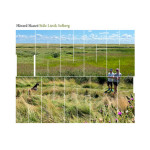
Artist: Håvard Skaset / Ståle Liavik Solberg
Title: Truck Rurâl
Format: CD + Download
Label: ConradSound (@)
Rated:
Title: Truck Rurâl
Format: CD + Download
Label: ConradSound (@)
Rated:
There’s a particular kind of honesty that only shows up when musicians abandon the safety net of “concept” and just sit in a room with wood, metal, and questionable decisions. "Truck Rural" by Håvard Skaset and Ståle Liavik Solberg does exactly that, and then refuses to tidy up the results.
The origin story alone already sets the tone: two veterans of Norway’s experimental underground, crossing paths at a barn party in Tangen and deciding, apparently without irony, that what the world needed was a folk duo. Not a polished, heritage-approved version of folk, of course. More like folk that wandered off, got distracted, and came back carrying bits of free improvisation, noise residue, and a mild disregard for tradition. The fact that the album is recorded in an actual stable, by the farm owner, is either a charming detail or a warning label. It works as both.
Skaset approaches the guitar like someone who doesn’t quite trust it. Open tunings are bent out of shape, phrases start as if they’re heading toward blues or rural lullabies, then quietly veer off into stranger territory. You hear echoes of American primitive styles, maybe a ghost of folk memory, but everything feels slightly misaligned, as if the instrument has its own opinion about where the music should go. It’s intimate in the way that makes you lean in, then immediately question why you did.
Solberg, on the other hand, treats percussion less like a timekeeping device and more like a conversational partner who enjoys interrupting. His playing doesn’t settle into grooves so much as orbit around Skaset’s gestures, sometimes supporting, sometimes poking at them, occasionally undermining them entirely. Given his history alongside figures like John Butcher, Phil Minton, and Pat Thomas, this refusal to behave is not surprising. Still, in this stripped-down context, it feels almost polite. Almost.
What’s interesting is how little the duo seems interested in proving anything. Tracks like “Furnes Fantasy” or “Lonesome Løten” unfold with a kind of rural absent-mindedness, as if the music were happening because it happens, not because it needs to justify itself. There are moments that flirt with melody, hints of something recognizable, but they’re never allowed to settle into comfort. Every time the listener starts to map the terrain, the ground shifts slightly. Not dramatically, just enough to keep you from feeling secure.
And yet, despite the improvisational looseness, there’s a quiet coherence running through the record. Maybe it’s the shared history between the two - decades of parallel trajectories finally intersecting - or maybe it’s the physical space itself, that stable in Tangen imprinting its own acoustics onto everything. The room breathes in the background, wood and air shaping the sound in ways no studio plugin could convincingly fake. You can almost hear the walls listening, which is unsettling if you think about it for too long.
Skaset’s past with projects like MoE and collaborations with Japanese improvisers such as Keiji Haino or PainJerk might suggest something more abrasive. Instead, "Truck Rural" feels like a deliberate narrowing of focus, a return to the bare materials of sound. Solberg mirrors that restraint, even when his instincts push toward disruption. The result is music that feels both grounded and slightly unstable, like a structure built from familiar parts but assembled according to a logic you’re not entirely privy to.
Releases on Conrad Sound often hover in that zone between documentation and exploration, and this one leans heavily toward the former. It doesn’t try to monumentalize the session. It just lets it exist, with all its small hesitations and sideways movements intact.
There’s something quietly disarming about that. No grand statements, no heavy conceptual framing, just two musicians, a shared history, and a room that smells faintly of hay and old decisions. It turns out that’s enough. Not in a triumphant, life-affirming sense. More in the modest way a conversation lingers after it’s over, leaving you with the vague suspicion that something meaningful happened, even if you can’t quite point to where.
The origin story alone already sets the tone: two veterans of Norway’s experimental underground, crossing paths at a barn party in Tangen and deciding, apparently without irony, that what the world needed was a folk duo. Not a polished, heritage-approved version of folk, of course. More like folk that wandered off, got distracted, and came back carrying bits of free improvisation, noise residue, and a mild disregard for tradition. The fact that the album is recorded in an actual stable, by the farm owner, is either a charming detail or a warning label. It works as both.
Skaset approaches the guitar like someone who doesn’t quite trust it. Open tunings are bent out of shape, phrases start as if they’re heading toward blues or rural lullabies, then quietly veer off into stranger territory. You hear echoes of American primitive styles, maybe a ghost of folk memory, but everything feels slightly misaligned, as if the instrument has its own opinion about where the music should go. It’s intimate in the way that makes you lean in, then immediately question why you did.
Solberg, on the other hand, treats percussion less like a timekeeping device and more like a conversational partner who enjoys interrupting. His playing doesn’t settle into grooves so much as orbit around Skaset’s gestures, sometimes supporting, sometimes poking at them, occasionally undermining them entirely. Given his history alongside figures like John Butcher, Phil Minton, and Pat Thomas, this refusal to behave is not surprising. Still, in this stripped-down context, it feels almost polite. Almost.
What’s interesting is how little the duo seems interested in proving anything. Tracks like “Furnes Fantasy” or “Lonesome Løten” unfold with a kind of rural absent-mindedness, as if the music were happening because it happens, not because it needs to justify itself. There are moments that flirt with melody, hints of something recognizable, but they’re never allowed to settle into comfort. Every time the listener starts to map the terrain, the ground shifts slightly. Not dramatically, just enough to keep you from feeling secure.
And yet, despite the improvisational looseness, there’s a quiet coherence running through the record. Maybe it’s the shared history between the two - decades of parallel trajectories finally intersecting - or maybe it’s the physical space itself, that stable in Tangen imprinting its own acoustics onto everything. The room breathes in the background, wood and air shaping the sound in ways no studio plugin could convincingly fake. You can almost hear the walls listening, which is unsettling if you think about it for too long.
Skaset’s past with projects like MoE and collaborations with Japanese improvisers such as Keiji Haino or PainJerk might suggest something more abrasive. Instead, "Truck Rural" feels like a deliberate narrowing of focus, a return to the bare materials of sound. Solberg mirrors that restraint, even when his instincts push toward disruption. The result is music that feels both grounded and slightly unstable, like a structure built from familiar parts but assembled according to a logic you’re not entirely privy to.
Releases on Conrad Sound often hover in that zone between documentation and exploration, and this one leans heavily toward the former. It doesn’t try to monumentalize the session. It just lets it exist, with all its small hesitations and sideways movements intact.
There’s something quietly disarming about that. No grand statements, no heavy conceptual framing, just two musicians, a shared history, and a room that smells faintly of hay and old decisions. It turns out that’s enough. Not in a triumphant, life-affirming sense. More in the modest way a conversation lingers after it’s over, leaving you with the vague suspicion that something meaningful happened, even if you can’t quite point to where.