
Browse by Genre
Industrial Music / Industrial Metal / Aggro Industrial / Electro Metal
Industrial Noise / Power Noise / Harsh Noise
Synth Pop / Electro Pop / Synth-Electronica
Techno / Trance / Goa / Drum'n'Bass / Jungle / Tribal / Trip-Hop
Ambient / Electronica / Ethereal / Dub / Soundscapes / Abstract
Experimental / Avantgarde / Weird & Wired / Glitch / Noise / Field Recording
Dark / Gothic / Wave / New Wave / Dark Wave / Industrial Gothic
New Music / Downtown / Avantgarde Jazz / New Classical / World
Search Reviews
Music Reviews
Death By Love: 444


Some bands are born from artistic vision. Others are born because reality detonates the previous arrangement and leaves musicians standing in the smoke holding damaged synthesizers and unresolved feelings. Death By Love clearly belongs to the second category. And honestly, that tends to produce better music. Stability is wonderful for cardiovascular health, less effective for goth-industrial records.
After the collapse of Dichro, producer and multi-instrumentalist Peter Guellard could have easily disappeared into the familiar post-band limbo of vague announcements and unfinished Dropbox folders. Instead, an unexpected creative collision with Polish vocalist Inga Habiba gave rise to something darker, sleeker, and emotionally more expansive. Their debut album 444, released through Distortion Productions, feels less like a debut and more like the documentation of two artists rapidly discovering a shared nocturnal language.
The album inhabits familiar territories: darkwave, industrial, gothic electronics, trip-hop atmospherics. Yet what makes "444" compelling is not genre allegiance but emotional architecture. Guellard and Habiba understand that darkness without tension quickly becomes costume drama. Plenty of modern darkwave records sound like attractive people sadly staring at candles while expensive reverb plugins do all the emotional labor. "444" instead carries genuine instability beneath its polished surfaces. There is longing here, exhaustion, seduction, spiritual confusion, resilience. Human wreckage, essentially. The eternal fuel source of art and late-night online conversations.
“Sellenno” opens the album like the slow unveiling of a ritual space. Habiba’s voice arrives with remarkable control, never overreaching into theatricality. She understands restraint, which in this style is invaluable. Rather than dominating the arrangements, her vocals move through them like smoke through ruined architecture. Guellard’s production meanwhile balances cinematic density with enough breathing room to avoid collapsing into gothic wallpaper.
“Cosmic Power” and “In Unity” deepen the album’s central mood: a strange mixture of vulnerability and propulsion. Rhythms pulse steadily beneath layers of shimmering synth textures, while guitars emerge not as rock gestures but as emotional weather systems. There is a subtle dialogue throughout the record between European coldwave melancholy, Eastern Asian nuances and American industrial precision, perhaps unsurprising considering the project’s transatlantic construction. The internet occasionally produces something more meaningful than targeted advertisements and collective neurological erosion.
One of the album’s greatest strengths lies in how naturally it integrates its influences. Trip-hop elements surface in the pacing and atmosphere, but never feel nostalgically borrowed from the 1990s. The gothic aesthetics avoid parody. Industrial textures appear as emotional pressure rather than brute aggression. Even the more dramatic moments maintain a sense of intimacy. “I Don’t” captures this especially well, allowing tension to simmer rather than explode.
“Strong Inside” deserves mention for how effectively it balances heaviness and momentum. The additional guitar work from Tomasz “Mechu” Wojciechowski injects a muscular undercurrent without pushing the track into metal territory. It remains elegant in its darkness, which is harder to achieve than people assume. Many artists mistake volume for intensity. "444" generally understands that true emotional heaviness often whispers.
Then there is “God”, perhaps the album’s emotional pivot point. Guellard’s vocal contributions add an almost confrontational fragility, creating one of the record’s most human moments. Not human in the triumphant self-help sense modern culture demands, but human in the older sense: uncertain creatures standing beneath incomprehensible skies while trying not to emotionally disintegrate before breakfast.
“Forest” and “Ziro” drift toward more atmospheric terrain, the latter enriched by Wojciech Lubertowicz’s duduk performance, which introduces a mournful organic texture that cuts beautifully through the electronic framework. It is one of several moments where "444" reveals its interest in spatial atmosphere rather than merely song construction. The album frequently feels architectural, as though each track were building another chamber inside an abandoned cathedral lit by malfunctioning LEDs.
The closing “Sellenno (Reprise)” stretches nearly eight minutes and wisely refuses the temptation of a grand explosive finale. Instead, it dissolves slowly into reflection, spoken word fragments, lingering textures, and emotional afterimages. The effect is less “ending” than “remaining haunted for a while”.
What ultimately elevates "444" beyond competent darkwave revivalism is its sincerity. There is no detectable cynicism in its construction. Guellard and Habiba seem genuinely invested in building emotional worlds rather than simply reproducing scene aesthetics. That matters. Dark music without emotional sincerity becomes fashion photography with drum machines.
The backstory inevitably shadows the album: a dissolved project, international collaboration, rapid creative reinvention, musicians rebuilding after rupture. Yet "444" never feels burdened by narrative baggage. Instead, it transforms instability into momentum. There is a difference between music that romanticizes darkness and music that has actually spent time wandering through it with open eyes.
In that sense, "444" succeeds beautifully. It dances with ghosts without turning them into mascots. And somewhere between Pittsburgh and ód, between collapsing pasts and uncertain futures, Death By Love managed to create a debut that feels strangely alive inside its shadows.
After the collapse of Dichro, producer and multi-instrumentalist Peter Guellard could have easily disappeared into the familiar post-band limbo of vague announcements and unfinished Dropbox folders. Instead, an unexpected creative collision with Polish vocalist Inga Habiba gave rise to something darker, sleeker, and emotionally more expansive. Their debut album 444, released through Distortion Productions, feels less like a debut and more like the documentation of two artists rapidly discovering a shared nocturnal language.
The album inhabits familiar territories: darkwave, industrial, gothic electronics, trip-hop atmospherics. Yet what makes "444" compelling is not genre allegiance but emotional architecture. Guellard and Habiba understand that darkness without tension quickly becomes costume drama. Plenty of modern darkwave records sound like attractive people sadly staring at candles while expensive reverb plugins do all the emotional labor. "444" instead carries genuine instability beneath its polished surfaces. There is longing here, exhaustion, seduction, spiritual confusion, resilience. Human wreckage, essentially. The eternal fuel source of art and late-night online conversations.
“Sellenno” opens the album like the slow unveiling of a ritual space. Habiba’s voice arrives with remarkable control, never overreaching into theatricality. She understands restraint, which in this style is invaluable. Rather than dominating the arrangements, her vocals move through them like smoke through ruined architecture. Guellard’s production meanwhile balances cinematic density with enough breathing room to avoid collapsing into gothic wallpaper.
“Cosmic Power” and “In Unity” deepen the album’s central mood: a strange mixture of vulnerability and propulsion. Rhythms pulse steadily beneath layers of shimmering synth textures, while guitars emerge not as rock gestures but as emotional weather systems. There is a subtle dialogue throughout the record between European coldwave melancholy, Eastern Asian nuances and American industrial precision, perhaps unsurprising considering the project’s transatlantic construction. The internet occasionally produces something more meaningful than targeted advertisements and collective neurological erosion.
One of the album’s greatest strengths lies in how naturally it integrates its influences. Trip-hop elements surface in the pacing and atmosphere, but never feel nostalgically borrowed from the 1990s. The gothic aesthetics avoid parody. Industrial textures appear as emotional pressure rather than brute aggression. Even the more dramatic moments maintain a sense of intimacy. “I Don’t” captures this especially well, allowing tension to simmer rather than explode.
“Strong Inside” deserves mention for how effectively it balances heaviness and momentum. The additional guitar work from Tomasz “Mechu” Wojciechowski injects a muscular undercurrent without pushing the track into metal territory. It remains elegant in its darkness, which is harder to achieve than people assume. Many artists mistake volume for intensity. "444" generally understands that true emotional heaviness often whispers.
Then there is “God”, perhaps the album’s emotional pivot point. Guellard’s vocal contributions add an almost confrontational fragility, creating one of the record’s most human moments. Not human in the triumphant self-help sense modern culture demands, but human in the older sense: uncertain creatures standing beneath incomprehensible skies while trying not to emotionally disintegrate before breakfast.
“Forest” and “Ziro” drift toward more atmospheric terrain, the latter enriched by Wojciech Lubertowicz’s duduk performance, which introduces a mournful organic texture that cuts beautifully through the electronic framework. It is one of several moments where "444" reveals its interest in spatial atmosphere rather than merely song construction. The album frequently feels architectural, as though each track were building another chamber inside an abandoned cathedral lit by malfunctioning LEDs.
The closing “Sellenno (Reprise)” stretches nearly eight minutes and wisely refuses the temptation of a grand explosive finale. Instead, it dissolves slowly into reflection, spoken word fragments, lingering textures, and emotional afterimages. The effect is less “ending” than “remaining haunted for a while”.
What ultimately elevates "444" beyond competent darkwave revivalism is its sincerity. There is no detectable cynicism in its construction. Guellard and Habiba seem genuinely invested in building emotional worlds rather than simply reproducing scene aesthetics. That matters. Dark music without emotional sincerity becomes fashion photography with drum machines.
The backstory inevitably shadows the album: a dissolved project, international collaboration, rapid creative reinvention, musicians rebuilding after rupture. Yet "444" never feels burdened by narrative baggage. Instead, it transforms instability into momentum. There is a difference between music that romanticizes darkness and music that has actually spent time wandering through it with open eyes.
In that sense, "444" succeeds beautifully. It dances with ghosts without turning them into mascots. And somewhere between Pittsburgh and ód, between collapsing pasts and uncertain futures, Death By Love managed to create a debut that feels strangely alive inside its shadows.
Sashash Ulz: Pingvinia

Artist: Sashash Ulz (@)
Title: Pingvinia
Format: Download Only (MP3 + Lossless)
Label: No Part Of It (@)
Rated:

Title: Pingvinia
Format: Download Only (MP3 + Lossless)
Label: No Part Of It (@)
Rated:
There is something strangely beautiful about discovering that an album you thought had just crawled out of yesterday’s digital swamp is actually six years old. Human perception of time on Bandcamp is already unreliable enough. One minute you are checking a new release, the next you realize the thing has been sitting there since 2020 like a forgotten cassette buried under snow in Karelia, quietly radiating ghosts through a cracked tape deck. So yes, "Pingvinia" arrived late to this listener, but perhaps records like this operate outside chronology anyway. They do not age. They ferment.
Pingvinia by Sasha Mishkin feels less like a conventional compilation and more like somebody opening a drawer filled with moldy photographs, broken toy instruments, field recordings, and half-remembered folk melodies from dreams they can no longer fully explain. Released through No Part Of It, the collection gathers fragments from the now-defunct project Sashash Ulz, active mainly in the early-to-mid 2010s. And while the compilation format often carries the scent of archival duty, this one feels alive in a deeply unstable way, like an abandoned house where the lights occasionally turn on by themselves.
The geography matters. Petrozavodsk, in Karelia near the Finnish border, already sounds like the sort of place where radios pick up weather transmissions from parallel dimensions. That atmosphere bleeds into the music. Mishkin’s work constantly hovers between recognizable folk structures and total collapse. A melody appears through the fog with heartbreaking sincerity, then suddenly a cheap keyboard sputters like it was submerged in swamp water. Tape hiss acts less as texture and more as climate. You do not merely hear these tracks; you inhabit their damp weather systems.
The opening “Orkestr” immediately establishes the album’s central contradiction: grandeur rendered through gloriously imperfect means. Brass-like tones wobble against fragile percussion as if a village marching band were reconstructed from damaged memories. “Fuga” and “In Autumn” drift closer toward melancholic miniatures, balancing naïve melodic instincts with an outsider sensibility that never sounds performative. There is no polished irony here. Mishkin seems genuinely committed to emotional directness, even when the machinery surrounding it threatens to disintegrate.
That is what makes "Pingvinia" unusually affecting. A lot of lo-fi experimental music hides behind abstraction, as though distortion itself were enough to imply depth. Mishkin instead uses degradation almost tenderly. The hiss, clipping, unstable tape textures, and ghostly layering create emotional ambiguity rather than mere aesthetic grit. The album often sounds haunted, but not in the fashionable horror-film sense. More like the sensation of revisiting a childhood location and realizing both you and the place survived differently.
Tracks such as “Out of the Fog” and “Hermit” amplify this uncanny warmth. There are moments where one genuinely cannot determine whether a church organ, a toy synthesizer, or a dying cassette motor is producing the central drone. That uncertainty becomes part of the composition. The music refuses technological hierarchy. Cheap keyboards are allowed the same spiritual authority as classical instrumentation. In a world obsessed with resolution, optimization, remastering, and algorithmic cleanliness, this feels quietly rebellious. Civilization keeps inventing sharper audio formats while human beings continue feeling emotionally destroyed by sounds recorded onto devices held together with adhesive tape and stubbornness.
“Viennese Collage” and “Bétula” lean deeper into surreal montage territory, blending environmental recordings and fragmented melodic gestures into something resembling travel diaries from invented countries. Then comes “Prazdnik,” where celebration and melancholy coexist in uneasy balance, as though somebody organized a village festival during the end of the world but still insisted on serving soup and homemade liquor because traditions matter.
The closing stretch becomes particularly mesmerizing. “Uprising” unfolds patiently, carrying a ceremonial gravity that suggests ritual without specifying its purpose. And then “Cánnabis”, sprawling over fourteen minutes, dissolves into an almost ecological listening experience. Sounds emerge like insects beneath wet leaves, loops circle themselves into hypnosis, and time stops behaving normally. Not many albums manage to feel simultaneously primitive and cosmically detached, but "Pingvinia" does so with alarming ease.
There is also something moving about the fact that this compilation exists at all. Curated by Arvo Zylo, it rescues pieces from a project that might otherwise have remained scattered across obscure tapes and forgotten uploads. That act of preservation matters. Experimental music often disappears quietly, without institutional memory, surviving only in dusty hard drives and the brains of a few devoted listeners. "Pingvinia" feels like a message recovered from beneah layers of snow and magnetic decay.
The remarkable thing is that despite all its rough edges, or perhaps because of them, the album radiates curiosity. Mishkin approaches sound the way certain folk storytellers approach myths: unconcerned with polish, entirely devoted to atmosphere and emotional residue. Even the crude photographic aesthetics associated with Sashash Ulz contribute to this sensation of peering into another self-contained reality, one populated by tape loops, strange animals, broken radios, and lonely saints wandering through forests.
Old release or not, "Pingvinia" still breathes with strange lungs. Some albums arrive on schedule. Others simply wait until the listener is finally ready to hear them. Human chronology remains a deeply overrated organizational system anyway.
Pingvinia by Sasha Mishkin feels less like a conventional compilation and more like somebody opening a drawer filled with moldy photographs, broken toy instruments, field recordings, and half-remembered folk melodies from dreams they can no longer fully explain. Released through No Part Of It, the collection gathers fragments from the now-defunct project Sashash Ulz, active mainly in the early-to-mid 2010s. And while the compilation format often carries the scent of archival duty, this one feels alive in a deeply unstable way, like an abandoned house where the lights occasionally turn on by themselves.
The geography matters. Petrozavodsk, in Karelia near the Finnish border, already sounds like the sort of place where radios pick up weather transmissions from parallel dimensions. That atmosphere bleeds into the music. Mishkin’s work constantly hovers between recognizable folk structures and total collapse. A melody appears through the fog with heartbreaking sincerity, then suddenly a cheap keyboard sputters like it was submerged in swamp water. Tape hiss acts less as texture and more as climate. You do not merely hear these tracks; you inhabit their damp weather systems.
The opening “Orkestr” immediately establishes the album’s central contradiction: grandeur rendered through gloriously imperfect means. Brass-like tones wobble against fragile percussion as if a village marching band were reconstructed from damaged memories. “Fuga” and “In Autumn” drift closer toward melancholic miniatures, balancing naïve melodic instincts with an outsider sensibility that never sounds performative. There is no polished irony here. Mishkin seems genuinely committed to emotional directness, even when the machinery surrounding it threatens to disintegrate.
That is what makes "Pingvinia" unusually affecting. A lot of lo-fi experimental music hides behind abstraction, as though distortion itself were enough to imply depth. Mishkin instead uses degradation almost tenderly. The hiss, clipping, unstable tape textures, and ghostly layering create emotional ambiguity rather than mere aesthetic grit. The album often sounds haunted, but not in the fashionable horror-film sense. More like the sensation of revisiting a childhood location and realizing both you and the place survived differently.
Tracks such as “Out of the Fog” and “Hermit” amplify this uncanny warmth. There are moments where one genuinely cannot determine whether a church organ, a toy synthesizer, or a dying cassette motor is producing the central drone. That uncertainty becomes part of the composition. The music refuses technological hierarchy. Cheap keyboards are allowed the same spiritual authority as classical instrumentation. In a world obsessed with resolution, optimization, remastering, and algorithmic cleanliness, this feels quietly rebellious. Civilization keeps inventing sharper audio formats while human beings continue feeling emotionally destroyed by sounds recorded onto devices held together with adhesive tape and stubbornness.
“Viennese Collage” and “Bétula” lean deeper into surreal montage territory, blending environmental recordings and fragmented melodic gestures into something resembling travel diaries from invented countries. Then comes “Prazdnik,” where celebration and melancholy coexist in uneasy balance, as though somebody organized a village festival during the end of the world but still insisted on serving soup and homemade liquor because traditions matter.
The closing stretch becomes particularly mesmerizing. “Uprising” unfolds patiently, carrying a ceremonial gravity that suggests ritual without specifying its purpose. And then “Cánnabis”, sprawling over fourteen minutes, dissolves into an almost ecological listening experience. Sounds emerge like insects beneath wet leaves, loops circle themselves into hypnosis, and time stops behaving normally. Not many albums manage to feel simultaneously primitive and cosmically detached, but "Pingvinia" does so with alarming ease.
There is also something moving about the fact that this compilation exists at all. Curated by Arvo Zylo, it rescues pieces from a project that might otherwise have remained scattered across obscure tapes and forgotten uploads. That act of preservation matters. Experimental music often disappears quietly, without institutional memory, surviving only in dusty hard drives and the brains of a few devoted listeners. "Pingvinia" feels like a message recovered from beneah layers of snow and magnetic decay.
The remarkable thing is that despite all its rough edges, or perhaps because of them, the album radiates curiosity. Mishkin approaches sound the way certain folk storytellers approach myths: unconcerned with polish, entirely devoted to atmosphere and emotional residue. Even the crude photographic aesthetics associated with Sashash Ulz contribute to this sensation of peering into another self-contained reality, one populated by tape loops, strange animals, broken radios, and lonely saints wandering through forests.
Old release or not, "Pingvinia" still breathes with strange lungs. Some albums arrive on schedule. Others simply wait until the listener is finally ready to hear them. Human chronology remains a deeply overrated organizational system anyway.
Those Who Walk Away: Afterlife Requiem
Artist: Those Who Walk Away
Title: Afterlife Requiem
Format: LP
Label: Constellation Records (@)
Rated:
Title: Afterlife Requiem
Format: LP
Label: Constellation Records (@)
Rated:
There are records that gesture toward death, circling it politely like guests at a wake who don’t know where to stand. And then there are records that get to work, quietly dismantling the room while you’re still inside it. "Afterlife Requiem" by Matthew Patton belongs, with unnerving composure, to the latter.
Patton isn’t some late-arriving ambient tourist draping reverb over grief and calling it depth. This is a composer who has spent decades moving between disciplines and margins, from scoring for the Paul Taylor Dance Company to shaping the curatorial identity of the Winnipeg Symphony Orchestra New Music Festival, quietly threading connections between figures like Jóhann Jóhannsson, Tim Hecker, and Glenn Branca. Under the Those Who Walk Away moniker, his work has always leaned toward erosion rather than construction. This second album just removes whatever scaffolding was left.
Framed as an elegy for Jóhannsson, "Afterlife Requiem" risks sounding like a conceptual trap. Mining fragments from a deceased composer’s hard drives could easily slip into something archival, even voyeuristic. Patton avoids that - barely - by refusing to treat these materials as artifacts. Instead, he treats them as residues: incomplete gestures, abandoned signals, stretches of accidental silence where the recording device kept listening long after intention had left the room. It’s less about preservation than about contamination.
The structure - alternating “Degraded Hymns” and “Memorial Environments” - suggests order, but what you hear is closer to a slow collapse of categories. Two string ensembles, Ghost Orchestra in Reykjavík and Possible Orchestra in Winnipeg, are present in theory; in practice, they flicker in and out like unreliable memories. Their tones are thinned, smeared, processed until they feel less like instruments and more like the idea of instruments someone is struggling to recall. The low-end, sculpted with the help of Paul Corley and Andy Rudolph, moves underneath like distant machinery, indifferent and continuous.
What’s striking is not the sadness - there’s plenty of that, obviously - but the methodical subtraction of meaning. Patton doesn’t build toward catharsis; he sands it down. Each piece feels slightly slower than the last, as if the album itself were obeying a private law of decay, a kind of durational ritardando where time doesn’t just stretch but thins out, becomes porous, eventually irrelevant. By the time you reach “The End Of Life In Sound”, the title feels less like a statement and more like a diagnosis.
There’s also an uncomfortable intimacy running through it. Patton has spoken about the overlap between this work and the death of his mother, about clearing her apartment while simultaneously erasing and reworking sound. You can hear that gesture everywhere: in the way textures are introduced only to be quietly removed, in the sense that every sonic object is already halfway gone the moment it appears. It’s grief translated into process rather than expression, which is either very honest or very ruthless, depending on how charitable you’re feeling.
The inclusion of environmental recordings - lava, turbines, bodily sounds - doesn’t expand the world so much as flatten it. Everything is reduced to vibration, to pressure moving through space. Human, mechanical, geological: it all ends up in the same indifferent continuum. If there’s a spiritual dimension here, it’s a bleak one. Eternity, in Patton’s hands, doesn’t glow. It just persists.
Fans of William Basinski, Kali Malone, or Ian William Craig will recognize some familiar coordinates - decay loops, sacred minimalism, voice-as-ghost - but "Afterlife Requiem" is less interested in beauty than in what remains after beauty has been methodically stripped for parts. Even compared to Patton’s own "The Infected Mass", revisited in the companion remix EP by artists like Alessandro Cortini, this feels more severe, less willing to offer even the illusion of resolution.
It’s not an easy listen, which is a polite way of saying it occasionally feels like being slowly erased alongside the music. But there’s a strange integrity in that refusal to comfort. Patton isn’t asking you to mourn with him. He’s demonstrating what it sounds like when mourning outlives its subject and keeps going anyway, long after the music - if we can still call it that - has technically stopped.
Patton isn’t some late-arriving ambient tourist draping reverb over grief and calling it depth. This is a composer who has spent decades moving between disciplines and margins, from scoring for the Paul Taylor Dance Company to shaping the curatorial identity of the Winnipeg Symphony Orchestra New Music Festival, quietly threading connections between figures like Jóhann Jóhannsson, Tim Hecker, and Glenn Branca. Under the Those Who Walk Away moniker, his work has always leaned toward erosion rather than construction. This second album just removes whatever scaffolding was left.
Framed as an elegy for Jóhannsson, "Afterlife Requiem" risks sounding like a conceptual trap. Mining fragments from a deceased composer’s hard drives could easily slip into something archival, even voyeuristic. Patton avoids that - barely - by refusing to treat these materials as artifacts. Instead, he treats them as residues: incomplete gestures, abandoned signals, stretches of accidental silence where the recording device kept listening long after intention had left the room. It’s less about preservation than about contamination.
The structure - alternating “Degraded Hymns” and “Memorial Environments” - suggests order, but what you hear is closer to a slow collapse of categories. Two string ensembles, Ghost Orchestra in Reykjavík and Possible Orchestra in Winnipeg, are present in theory; in practice, they flicker in and out like unreliable memories. Their tones are thinned, smeared, processed until they feel less like instruments and more like the idea of instruments someone is struggling to recall. The low-end, sculpted with the help of Paul Corley and Andy Rudolph, moves underneath like distant machinery, indifferent and continuous.
What’s striking is not the sadness - there’s plenty of that, obviously - but the methodical subtraction of meaning. Patton doesn’t build toward catharsis; he sands it down. Each piece feels slightly slower than the last, as if the album itself were obeying a private law of decay, a kind of durational ritardando where time doesn’t just stretch but thins out, becomes porous, eventually irrelevant. By the time you reach “The End Of Life In Sound”, the title feels less like a statement and more like a diagnosis.
There’s also an uncomfortable intimacy running through it. Patton has spoken about the overlap between this work and the death of his mother, about clearing her apartment while simultaneously erasing and reworking sound. You can hear that gesture everywhere: in the way textures are introduced only to be quietly removed, in the sense that every sonic object is already halfway gone the moment it appears. It’s grief translated into process rather than expression, which is either very honest or very ruthless, depending on how charitable you’re feeling.
The inclusion of environmental recordings - lava, turbines, bodily sounds - doesn’t expand the world so much as flatten it. Everything is reduced to vibration, to pressure moving through space. Human, mechanical, geological: it all ends up in the same indifferent continuum. If there’s a spiritual dimension here, it’s a bleak one. Eternity, in Patton’s hands, doesn’t glow. It just persists.
Fans of William Basinski, Kali Malone, or Ian William Craig will recognize some familiar coordinates - decay loops, sacred minimalism, voice-as-ghost - but "Afterlife Requiem" is less interested in beauty than in what remains after beauty has been methodically stripped for parts. Even compared to Patton’s own "The Infected Mass", revisited in the companion remix EP by artists like Alessandro Cortini, this feels more severe, less willing to offer even the illusion of resolution.
It’s not an easy listen, which is a polite way of saying it occasionally feels like being slowly erased alongside the music. But there’s a strange integrity in that refusal to comfort. Patton isn’t asking you to mourn with him. He’s demonstrating what it sounds like when mourning outlives its subject and keeps going anyway, long after the music - if we can still call it that - has technically stopped.
T.C.O. (aka Mirco Magnani): The Die (special Edition)
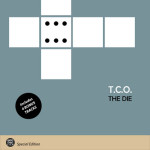
Artist: T.C.O. (aka Mirco Magnani)
Title: The Die (special Edition)
Format: Download Only (MP3 only)
Label: Undogmatisch (@)
Rated:
Title: The Die (special Edition)
Format: Download Only (MP3 only)
Label: Undogmatisch (@)
Rated:
Originally released in 2010 via The Centrifuge and now revived by Undogmatisch, "The Die" sits in that slightly awkward historical pocket where digital production had already matured, but hadn’t yet been flattened by algorithmic sameness. You can hear it immediately: the textures are precise but not over-polished, the structures deliberate but not overly optimized for attention spans that barely exist anymore.
Magnani’s approach to electronic composition here feels almost architectural. Tracks like “PAIR” and “TRILUX” are built from clean, interlocking elements that suggest order without ever settling into predictability. There’s a faint electro pulse running through the record, but it’s constantly being nudged off-center by small disruptions, tonal shifts, rhythmic hesitations. It’s as if the music is testing its own balance, just to prove it doesn’t depend on stability.
“TWO BEASTS” and “OXIGENS” lean into a more kinetic energy, but even at their most propulsive, they resist becoming functional in the usual dancefloor sense. This isn’t music that wants to serve a crowd. It’s more interested in constructing a space and then quietly observing how you move inside it. Not exactly generous, but certainly consistent.
What makes this reissue worth your already overburdened attention is not nostalgia, but perspective. The additional remixes - produced by Magnani himself between 2010 and 2011 - don’t feel like afterthoughts. They act more like parallel drafts, alternate angles on the same set of ideas. You hear a producer circling his own material, testing elasticity, seeing how far a structure can be stretched before it loses coherence. Sometimes it nearly does. That’s part of the appeal.
There’s also a certain restraint throughout the record that feels almost unfashionable now. No excessive layering, no desperate need to fill every frequency. Space is allowed to exist, which in 2026 feels borderline radical. The tracks breathe, pause, reconsider. They don’t rush toward a payoff, which might frustrate anyone expecting immediate gratification. That sounds like a them problem.
Magnani’s broader trajectory - spanning experimental electronics and a steady, somewhat understated presence in the underground - makes "The Die" read less like an isolated statement and more like a foundational document. You can trace later tendencies in minimal electro and abstract techno back to this kind of thinking, even if no one is eager to admit it. Influence is rarely credited where it should be. Convenient, that.
In the end, this special edition doesn’t try to modernize the album. It doesn’t need to. If anything, it highlights how little the core ideas have aged. Precision, tension, and a mild distrust of obvious resolution still hold up. Annoyingly well, in fact.
So here it is again: not louder, not bigger, just quietly insisting on its place. You can ignore it, like most things that don’t shout. It won’t take it personally.
Magnani’s approach to electronic composition here feels almost architectural. Tracks like “PAIR” and “TRILUX” are built from clean, interlocking elements that suggest order without ever settling into predictability. There’s a faint electro pulse running through the record, but it’s constantly being nudged off-center by small disruptions, tonal shifts, rhythmic hesitations. It’s as if the music is testing its own balance, just to prove it doesn’t depend on stability.
“TWO BEASTS” and “OXIGENS” lean into a more kinetic energy, but even at their most propulsive, they resist becoming functional in the usual dancefloor sense. This isn’t music that wants to serve a crowd. It’s more interested in constructing a space and then quietly observing how you move inside it. Not exactly generous, but certainly consistent.
What makes this reissue worth your already overburdened attention is not nostalgia, but perspective. The additional remixes - produced by Magnani himself between 2010 and 2011 - don’t feel like afterthoughts. They act more like parallel drafts, alternate angles on the same set of ideas. You hear a producer circling his own material, testing elasticity, seeing how far a structure can be stretched before it loses coherence. Sometimes it nearly does. That’s part of the appeal.
There’s also a certain restraint throughout the record that feels almost unfashionable now. No excessive layering, no desperate need to fill every frequency. Space is allowed to exist, which in 2026 feels borderline radical. The tracks breathe, pause, reconsider. They don’t rush toward a payoff, which might frustrate anyone expecting immediate gratification. That sounds like a them problem.
Magnani’s broader trajectory - spanning experimental electronics and a steady, somewhat understated presence in the underground - makes "The Die" read less like an isolated statement and more like a foundational document. You can trace later tendencies in minimal electro and abstract techno back to this kind of thinking, even if no one is eager to admit it. Influence is rarely credited where it should be. Convenient, that.
In the end, this special edition doesn’t try to modernize the album. It doesn’t need to. If anything, it highlights how little the core ideas have aged. Precision, tension, and a mild distrust of obvious resolution still hold up. Annoyingly well, in fact.
So here it is again: not louder, not bigger, just quietly insisting on its place. You can ignore it, like most things that don’t shout. It won’t take it personally.
Lauer: K1m Fantasy EP

Somewhere, in a parallel universe where dance floors behave like philosophical devices instead of sticky social experiments, "K1m Fantasy" makes perfect sense. In this one, it still does, but you have to meet it halfway. Philipp Lauer, operating as Lauer, has been around long enough to know that confidence in electronic music isn’t about volume or speed. It’s about restraint, timing, and the quiet arrogance of someone who’s seen trends come and go like seasonal allergies.
Released via Melodize, the imprint helmed by Beartrax, this EP doesn’t try to reinvent the dance floor. It treats it more like a lucid dream, a place where familiar forms behave slightly differently, as if they’ve been given just enough freedom to misbehave without collapsing entirely.
“Boss Electro” opens with the kind of self-assurance that would be unbearable if it weren’t so precisely calibrated. The groove is crisp, almost architectural, but there’s a looseness in the synth work that keeps it from feeling like a museum piece. Lauer isn’t showing off. He’s demonstrating control, which is more unsettling. You get the sense he could push it further, harder, faster, but chooses not to. Discipline as a flex. Irritating, but effective.
“Rabbits” shifts tone without abandoning structure. The title suggests whimsy, and yes, there’s something playful in the bouncing synth lines, but it’s not naïve. It feels more like watching something small and alert navigating a space that might not be entirely safe. The track hops, but it also listens. There’s tension under the surface, which saves it from becoming decorative.
The title track, “K1m Fantasy”, is where things stretch out and breathe. The tempo relaxes, the textures widen, and suddenly the dance floor becomes less about movement and more about suspension. It’s introspective without collapsing into self-importance, a delicate balance that many producers attempt and few manage. Lauer lets the elements unfold at their own pace, trusting the listener to stay with him. Which is generous, or risky, depending on your attention span.
“Choirs” closes the EP with a curious blend of the ceremonial and the synthetic. Brassy stabs cut through layers of vocal-like textures that feel communal but slightly uncanny, like a congregation made of circuits. There’s an undercurrent of collectivity here, a reminder that even the most individualistic dance floor experiences are, at their core, shared illusions. Not exactly comforting, but at least honest.
Lauer’s two-decade trajectory through electronic music is audible in the details. You can trace faint echoes of electro, techno, even Italo-adjacent warmth, but nothing feels nostalgic. If anything, "K1m Fantasy" is suspicious of nostalgia. It prefers to hover in a kind of perpetual present, where past influences are acknowledged but not worshipped.
It’s also worth noting what the EP doesn’t do. It doesn’t chase immediacy, doesn’t rely on obvious peaks, doesn’t beg for attention. In a landscape where many tracks behave like over-caffeinated sales pitches, this one feels almost aloof. It assumes you’ll come to it. If you don’t, it will continue existing just fine without you.
Which, annoyingly, makes it more compelling.
Released via Melodize, the imprint helmed by Beartrax, this EP doesn’t try to reinvent the dance floor. It treats it more like a lucid dream, a place where familiar forms behave slightly differently, as if they’ve been given just enough freedom to misbehave without collapsing entirely.
“Boss Electro” opens with the kind of self-assurance that would be unbearable if it weren’t so precisely calibrated. The groove is crisp, almost architectural, but there’s a looseness in the synth work that keeps it from feeling like a museum piece. Lauer isn’t showing off. He’s demonstrating control, which is more unsettling. You get the sense he could push it further, harder, faster, but chooses not to. Discipline as a flex. Irritating, but effective.
“Rabbits” shifts tone without abandoning structure. The title suggests whimsy, and yes, there’s something playful in the bouncing synth lines, but it’s not naïve. It feels more like watching something small and alert navigating a space that might not be entirely safe. The track hops, but it also listens. There’s tension under the surface, which saves it from becoming decorative.
The title track, “K1m Fantasy”, is where things stretch out and breathe. The tempo relaxes, the textures widen, and suddenly the dance floor becomes less about movement and more about suspension. It’s introspective without collapsing into self-importance, a delicate balance that many producers attempt and few manage. Lauer lets the elements unfold at their own pace, trusting the listener to stay with him. Which is generous, or risky, depending on your attention span.
“Choirs” closes the EP with a curious blend of the ceremonial and the synthetic. Brassy stabs cut through layers of vocal-like textures that feel communal but slightly uncanny, like a congregation made of circuits. There’s an undercurrent of collectivity here, a reminder that even the most individualistic dance floor experiences are, at their core, shared illusions. Not exactly comforting, but at least honest.
Lauer’s two-decade trajectory through electronic music is audible in the details. You can trace faint echoes of electro, techno, even Italo-adjacent warmth, but nothing feels nostalgic. If anything, "K1m Fantasy" is suspicious of nostalgia. It prefers to hover in a kind of perpetual present, where past influences are acknowledged but not worshipped.
It’s also worth noting what the EP doesn’t do. It doesn’t chase immediacy, doesn’t rely on obvious peaks, doesn’t beg for attention. In a landscape where many tracks behave like over-caffeinated sales pitches, this one feels almost aloof. It assumes you’ll come to it. If you don’t, it will continue existing just fine without you.
Which, annoyingly, makes it more compelling.