
Browse by Genre
Industrial Music / Industrial Metal / Aggro Industrial / Electro Metal
Industrial Noise / Power Noise / Harsh Noise
Synth Pop / Electro Pop / Synth-Electronica
Techno / Trance / Goa / Drum'n'Bass / Jungle / Tribal / Trip-Hop
Ambient / Electronica / Ethereal / Dub / Soundscapes / Abstract
Experimental / Avantgarde / Weird & Wired / Glitch / Noise / Field Recording
Dark / Gothic / Wave / New Wave / Dark Wave / Industrial Gothic
New Music / Downtown / Avantgarde Jazz / New Classical / World
Search Reviews
Music Reviews
Shane Aspegren: Spiritual Cannibalism

Artist: Shane Aspegren
Title: Spiritual Cannibalism
Format: 12"
Label: Prohibited Records (@)
Rated:

Title: Spiritual Cannibalism
Format: 12"
Label: Prohibited Records (@)
Rated:
The sea has always been an excellent editor. Throw enough stories into it and, after years of patient erosion, it returns only fragments polished beyond recognition. Shane Aspegren seems fascinated by this process. On "Spiritual Cannibalism", he dives beneath the familiar surface of both sound and memory, emerging not with picturesque recordings of marine life or postcard serenity, but with something far stranger: an ecosystem where tidal currents, industrial machinery and human perception dissolve into one another until distinctions cease to matter.
The American composer, percussionist and multidisciplinary artist has never been easy to pin down. Many listeners first encountered him as one half of the adventurous electronic duo Berg Sans Nipple, while others know him through collaborations spanning indie rock, experimental composition, contemporary dance, installation art and film scoring. Across projects as diverse as Blood Wine or Honey, Ça Va Chéri, or his work with artists including Arto Lindsay, Conor Oberst and Songs: Ohia, Aspegren has consistently treated rhythm less as a fixed pulse than as a living organism. His more recent solo releases have increasingly abandoned conventional structures in favour of immersive sonic environments, exploring the physical properties of vibration itself. "Spiritual Cannibalism" feels like a natural continuation of that evolution, perhaps even one of its clearest statements.
The album's conceptual foundation is deceptively simple. Hydrophone recordings captured beneath Hong Kong's Victoria Harbour become the primary raw material from which the three extended compositions emerge. Yet this is no field-recording documentary. By the time Aspegren has processed these underwater currents, mechanical drones and accidental recordings of trains travelling beneath the harbour, the source material has been metabolised into something almost geological. The title suddenly makes sense: these sounds have not merely been sampled, they have been digested.
The opening title track immediately establishes an unusual listening perspective. Rather than placing the audience in front of an acoustic event, Aspegren seems to position us inside the medium through which sound travels. Frequencies bend and diffuse with the peculiar elasticity of water, while low-end vibrations arrive less as audible notes than as shifting pressure against the body. Listening through headphones becomes an almost tactile experience. One occasionally catches oneself wondering whether the room has subtly changed shape, which is either excellent sound design or evidence that humans remain wonderfully susceptible to acoustic suggestion.
"Passing Beneath The Sea's Floor" pushes the ambiguity even further. The recorded trains become spectral presences rather than recognisable vehicles. They resemble distant tectonic movements, immense creatures communicating through infrasonic calls, or perhaps forgotten engines still running somewhere beneath civilisation long after everyone has gone home. Aspegren avoids obvious cinematic gestures; there are no sudden climaxes or dramatic reveals. Instead, tension accumulates through microscopic transformations. The music breathes with remarkable patience, allowing textures to evolve at the pace of natural processes rather than narrative expectations.
The closing "Resonant Harbour", originally commissioned as a standalone work, serves as both culmination and expansion. At nearly thirteen minutes, it unfolds with the quiet confidence of an artist who understands that duration is not measured by clocks but by attention. Layers gradually reveal hidden harmonic relationships within what initially appeared to be pure noise. Industrial resonance unexpectedly acquires warmth; mechanical repetition begins to resemble ritual. The distinction between environment and composition quietly collapses.
What distinguishes "Spiritual Cannibalism" from many works operating within electroacoustic or drone traditions is its refusal to romanticise either nature or technology. The harbour itself is neither pristine wilderness nor dystopian machine. It is a living interface where shipping traffic, geological forces, infrastructure, tides and human activity continuously reshape one another. Aspegren captures precisely this state of coexistence without assigning moral priorities. His compositions acknowledge that contemporary landscapes are rarely untouched and that beauty frequently emerges from complicated entanglements rather than idyllic purity.
There is also an understated philosophical dimension underpinning the record. The notion of "spiritual cannibalism" suggests absorbing external experiences until they become inseparable from one's own identity. That process mirrors listening itself. Every meaningful encounter with sound leaves subtle traces behind, altering perception in ways that cannot easily be quantified. Aspegren's music invites precisely this slow internalisation. Rather than demanding interpretation, it encourages prolonged exposure.
Production throughout is exceptionally refined without becoming clinically polished. Matthew David McQueen's mastering preserves the enormous dynamic subtlety of the material, allowing whispering textures and subterranean frequencies to coexist without either overwhelming the other. Silence, too, plays an active compositional role, functioning less as absence than as another acoustic habitat waiting to be inhabited.
For listeners expecting conventional ambient music, "Spiritual Cannibalism" may initially feel unusually dense. For those willing to surrender expectations, however, its rewards steadily accumulate. This is not music that paints underwater landscapes so much as it alters one's sense of hearing itself. By the end, the harbour no longer exists merely as a geographical location but as a state of perception, where every vibration carries invisible histories and every mechanical hum contains the possibility of transcendence.
The sea keeps its secrets by constantly moving. Shane Aspegren does not attempt to decode them. Instead, he listens carefully enough to discover that mystery itself may be the most resonant instrument of all.
The American composer, percussionist and multidisciplinary artist has never been easy to pin down. Many listeners first encountered him as one half of the adventurous electronic duo Berg Sans Nipple, while others know him through collaborations spanning indie rock, experimental composition, contemporary dance, installation art and film scoring. Across projects as diverse as Blood Wine or Honey, Ça Va Chéri, or his work with artists including Arto Lindsay, Conor Oberst and Songs: Ohia, Aspegren has consistently treated rhythm less as a fixed pulse than as a living organism. His more recent solo releases have increasingly abandoned conventional structures in favour of immersive sonic environments, exploring the physical properties of vibration itself. "Spiritual Cannibalism" feels like a natural continuation of that evolution, perhaps even one of its clearest statements.
The album's conceptual foundation is deceptively simple. Hydrophone recordings captured beneath Hong Kong's Victoria Harbour become the primary raw material from which the three extended compositions emerge. Yet this is no field-recording documentary. By the time Aspegren has processed these underwater currents, mechanical drones and accidental recordings of trains travelling beneath the harbour, the source material has been metabolised into something almost geological. The title suddenly makes sense: these sounds have not merely been sampled, they have been digested.
The opening title track immediately establishes an unusual listening perspective. Rather than placing the audience in front of an acoustic event, Aspegren seems to position us inside the medium through which sound travels. Frequencies bend and diffuse with the peculiar elasticity of water, while low-end vibrations arrive less as audible notes than as shifting pressure against the body. Listening through headphones becomes an almost tactile experience. One occasionally catches oneself wondering whether the room has subtly changed shape, which is either excellent sound design or evidence that humans remain wonderfully susceptible to acoustic suggestion.
"Passing Beneath The Sea's Floor" pushes the ambiguity even further. The recorded trains become spectral presences rather than recognisable vehicles. They resemble distant tectonic movements, immense creatures communicating through infrasonic calls, or perhaps forgotten engines still running somewhere beneath civilisation long after everyone has gone home. Aspegren avoids obvious cinematic gestures; there are no sudden climaxes or dramatic reveals. Instead, tension accumulates through microscopic transformations. The music breathes with remarkable patience, allowing textures to evolve at the pace of natural processes rather than narrative expectations.
The closing "Resonant Harbour", originally commissioned as a standalone work, serves as both culmination and expansion. At nearly thirteen minutes, it unfolds with the quiet confidence of an artist who understands that duration is not measured by clocks but by attention. Layers gradually reveal hidden harmonic relationships within what initially appeared to be pure noise. Industrial resonance unexpectedly acquires warmth; mechanical repetition begins to resemble ritual. The distinction between environment and composition quietly collapses.
What distinguishes "Spiritual Cannibalism" from many works operating within electroacoustic or drone traditions is its refusal to romanticise either nature or technology. The harbour itself is neither pristine wilderness nor dystopian machine. It is a living interface where shipping traffic, geological forces, infrastructure, tides and human activity continuously reshape one another. Aspegren captures precisely this state of coexistence without assigning moral priorities. His compositions acknowledge that contemporary landscapes are rarely untouched and that beauty frequently emerges from complicated entanglements rather than idyllic purity.
There is also an understated philosophical dimension underpinning the record. The notion of "spiritual cannibalism" suggests absorbing external experiences until they become inseparable from one's own identity. That process mirrors listening itself. Every meaningful encounter with sound leaves subtle traces behind, altering perception in ways that cannot easily be quantified. Aspegren's music invites precisely this slow internalisation. Rather than demanding interpretation, it encourages prolonged exposure.
Production throughout is exceptionally refined without becoming clinically polished. Matthew David McQueen's mastering preserves the enormous dynamic subtlety of the material, allowing whispering textures and subterranean frequencies to coexist without either overwhelming the other. Silence, too, plays an active compositional role, functioning less as absence than as another acoustic habitat waiting to be inhabited.
For listeners expecting conventional ambient music, "Spiritual Cannibalism" may initially feel unusually dense. For those willing to surrender expectations, however, its rewards steadily accumulate. This is not music that paints underwater landscapes so much as it alters one's sense of hearing itself. By the end, the harbour no longer exists merely as a geographical location but as a state of perception, where every vibration carries invisible histories and every mechanical hum contains the possibility of transcendence.
The sea keeps its secrets by constantly moving. Shane Aspegren does not attempt to decode them. Instead, he listens carefully enough to discover that mystery itself may be the most resonant instrument of all.
Dao Strom: Redux
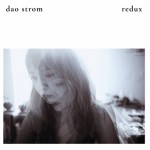

Some albums revisit the past as though it were an old photograph that simply needs dusting off. "Redux" does something considerably more interesting. Dao Strom returns to songs she wrote over two decades ago not to preserve them in amber, but to ask whether memories remain truthful after years of silence. The answer, unsurprisingly, is no. Memory edits, erases, embellishes and occasionally invents. Fortunately, it often becomes a better collaborator than nostalgia.
Born in Vietnam and now based in Portland, Oregon, Dao Strom has long occupied a singular artistic space where literature, music and visual art coexist without competing for attention. As a novelist, poet, multimedia artist and songwriter, her work consistently investigates displacement, diasporic identity, inheritance and emotional geography. Beginning within Austin's early-2000s Americana and alt-country scene, Strom gradually moved toward increasingly experimental forms, producing hybrid projects that merge poetry, sound and visual language. "Redux", first released independently on cassette before receiving this deserved vinyl edition through Disasters By Choice, feels like a natural bridge between those earlier songwriting roots and the broader artistic vocabulary she has developed since.
Calling this an ambient-folk album is accurate, but only in the same way calling the ocean "water" is technically correct. Acoustic guitars remain the skeletal framework, yet they rarely behave as conventional accompaniment. Fingerpicked patterns drift beneath translucent layers of voice, subtle electronics, distant samples and generous pockets of silence, producing songs that seem suspended somewhere between confession and recollection. Rather than moving forward, they circle gently around emotional centres, discovering new contours with every orbit.
Strom's voice is undoubtedly the emotional anchor throughout the record. It never strives for theatrical grandeur or technical display. Instead, it carries the remarkable ability to sound simultaneously intimate and elusive, as though the listener has wandered into a room where someone is quietly remembering rather than performing. Her layered vocal arrangements create soft halos around individual melodies, giving the impression that different versions of herself, separated by years, are singing together.
That concept becomes particularly poignant when considering the album's origins. These compositions were born during another life: another city, another artistic community, another version of Dao Strom. Some were recorded with collaborators at the time; others never progressed beyond unfinished sketches. Revisiting them decades later inevitably transforms them into conversations across time. One hears not simply songs revived, but perspectives revised. The younger songwriter provided the emotional spark; the older artist contributes patience, restraint and the confidence to leave space where younger musicians often feel compelled to fill every silence.
Musically, "Redux" inhabits an intriguing territory shared by contemporary ambient composition, dream folk and experimental songwriting. Listeners may occasionally think of artists such as Grouper, Julianna Barwick or early Grouper collaborator Helen Scarsdale projects, yet Strom avoids imitation by grounding abstraction within remarkably tangible songwriting. Beneath the reverberant textures lie melodies sturdy enough to survive being stripped back to little more than voice and guitar. The ambient elements enrich the songs rather than disguising them.
Tracks such as "Caller of Spirit" and "Jesus Darkness" demonstrate this balance particularly well, allowing sparse harmonic movement to coexist with slowly unfolding electronic atmospheres. Elsewhere, "Everything That Blooms Wrecks Me" distils emotional vulnerability into one of the album's most concise statements, while "Ancestors" gently extends Strom's recurring exploration of lineage and inherited memory without becoming didactic. Even the beautifully titled "Motherbear" resists sentimentality, preferring ambiguity over easy catharsis.
The production deserves equal praise. Recorded entirely by Strom in her home studio, it possesses the kind of sonic honesty that expensive studios often spend enormous effort trying to simulate. Tiny imperfections remain intact: breaths, shifting textures, delicate fluctuations in dynamics. These details become part of the album's emotional architecture rather than distractions from it. One never feels the presence of technology as an obstacle; instead, it functions like another sympathetic instrument quietly expanding the songs' natural resonance.
One of the funniest aspect of this release is that "Redux" suggests restoration, yet nothing here is restored to its original condition. These songs have aged exactly as people do. Their contours remain recognisable, but experience has altered every surface. They no longer belong entirely to the young woman who first wrote them, nor solely to the mature artist performing them now. They occupy the curious territory in between, where memory and imagination politely borrow each other's clothes without worrying too much about returning them.
In an age increasingly obsessed with remasters, anniversary editions and algorithmically fuelled nostalgia, "Redux" offers a far more meaningful form of return. Rather than asking whether old songs deserve another hearing, Dao Strom asks whether we ourselves are ever the same listeners who first encountered them. The answer unfolds quietly across these ten luminous pieces: we are not. And perhaps that gentle estrangement, where familiar voices become new companions once again, is where music discovers its deepest form of renewal.
Born in Vietnam and now based in Portland, Oregon, Dao Strom has long occupied a singular artistic space where literature, music and visual art coexist without competing for attention. As a novelist, poet, multimedia artist and songwriter, her work consistently investigates displacement, diasporic identity, inheritance and emotional geography. Beginning within Austin's early-2000s Americana and alt-country scene, Strom gradually moved toward increasingly experimental forms, producing hybrid projects that merge poetry, sound and visual language. "Redux", first released independently on cassette before receiving this deserved vinyl edition through Disasters By Choice, feels like a natural bridge between those earlier songwriting roots and the broader artistic vocabulary she has developed since.
Calling this an ambient-folk album is accurate, but only in the same way calling the ocean "water" is technically correct. Acoustic guitars remain the skeletal framework, yet they rarely behave as conventional accompaniment. Fingerpicked patterns drift beneath translucent layers of voice, subtle electronics, distant samples and generous pockets of silence, producing songs that seem suspended somewhere between confession and recollection. Rather than moving forward, they circle gently around emotional centres, discovering new contours with every orbit.
Strom's voice is undoubtedly the emotional anchor throughout the record. It never strives for theatrical grandeur or technical display. Instead, it carries the remarkable ability to sound simultaneously intimate and elusive, as though the listener has wandered into a room where someone is quietly remembering rather than performing. Her layered vocal arrangements create soft halos around individual melodies, giving the impression that different versions of herself, separated by years, are singing together.
That concept becomes particularly poignant when considering the album's origins. These compositions were born during another life: another city, another artistic community, another version of Dao Strom. Some were recorded with collaborators at the time; others never progressed beyond unfinished sketches. Revisiting them decades later inevitably transforms them into conversations across time. One hears not simply songs revived, but perspectives revised. The younger songwriter provided the emotional spark; the older artist contributes patience, restraint and the confidence to leave space where younger musicians often feel compelled to fill every silence.
Musically, "Redux" inhabits an intriguing territory shared by contemporary ambient composition, dream folk and experimental songwriting. Listeners may occasionally think of artists such as Grouper, Julianna Barwick or early Grouper collaborator Helen Scarsdale projects, yet Strom avoids imitation by grounding abstraction within remarkably tangible songwriting. Beneath the reverberant textures lie melodies sturdy enough to survive being stripped back to little more than voice and guitar. The ambient elements enrich the songs rather than disguising them.
Tracks such as "Caller of Spirit" and "Jesus Darkness" demonstrate this balance particularly well, allowing sparse harmonic movement to coexist with slowly unfolding electronic atmospheres. Elsewhere, "Everything That Blooms Wrecks Me" distils emotional vulnerability into one of the album's most concise statements, while "Ancestors" gently extends Strom's recurring exploration of lineage and inherited memory without becoming didactic. Even the beautifully titled "Motherbear" resists sentimentality, preferring ambiguity over easy catharsis.
The production deserves equal praise. Recorded entirely by Strom in her home studio, it possesses the kind of sonic honesty that expensive studios often spend enormous effort trying to simulate. Tiny imperfections remain intact: breaths, shifting textures, delicate fluctuations in dynamics. These details become part of the album's emotional architecture rather than distractions from it. One never feels the presence of technology as an obstacle; instead, it functions like another sympathetic instrument quietly expanding the songs' natural resonance.
One of the funniest aspect of this release is that "Redux" suggests restoration, yet nothing here is restored to its original condition. These songs have aged exactly as people do. Their contours remain recognisable, but experience has altered every surface. They no longer belong entirely to the young woman who first wrote them, nor solely to the mature artist performing them now. They occupy the curious territory in between, where memory and imagination politely borrow each other's clothes without worrying too much about returning them.
In an age increasingly obsessed with remasters, anniversary editions and algorithmically fuelled nostalgia, "Redux" offers a far more meaningful form of return. Rather than asking whether old songs deserve another hearing, Dao Strom asks whether we ourselves are ever the same listeners who first encountered them. The answer unfolds quietly across these ten luminous pieces: we are not. And perhaps that gentle estrangement, where familiar voices become new companions once again, is where music discovers its deepest form of renewal.
Gabriella Smart: Parasymbiosis

There is something quietly subversive about "Parasymbiosis". In an era where every device competes for attention with the enthusiasm of an overcaffeinated toddler, Gabriella Smart proposes the opposite: a form of listening that asks for patience, peripheral vision and, above all, humility. Not because the music is difficult for the sake of being difficult, but because it refuses to place humanity at the centre of its own story.
An Australian composer, conductor and artistic director best known for championing adventurous contemporary music through the Adelaide-based Soundstream collective, Smart has consistently blurred the boundaries between composition, performance and sonic ecology. On "Parasymbiosis", commissioned by Art Zoyd Studios and premiered live at the Music Meeting Festival in Nijmegen, she extends those interests into an elegant meditation on interconnectedness, drawing inspiration from ecological memory and the increasingly fragile relationship between Earth and the night sky. The work revolves around the remarkable Electric Cristal, Dylan Crismani's electro-acoustic microtonal instrument whose resonant glass rods generate shimmering, unstable harmonics that seem to hover somewhere between matter and apparition.
Joined by the formidable Kasper T. Toeplitz on bass and electronics and percussionist Didier Casamitjana, Smart builds eight interconnected movements that unfold less like discrete compositions than as successive phases of the same atmospheric phenomenon. The transitions feel organic, almost inevitable, as if each piece were quietly growing out of microscopic vibrations left behind by the previous one.
The Electric Cristal immediately defines the album's vocabulary. Its glassy overtones shimmer without becoming decorative, producing tones that feel strangely alive, as though they were discovering their own resonance while being played. Around them, electronics stretch and refract these frequencies into broad spectral clouds, while Toeplitz's bass periodically introduces darker gravitational pulls beneath the surface. Casamitjana's contribution is equally restrained; percussion rarely behaves like percussion in any traditional sense, instead emerging as textures, metallic breaths and subtle disturbances that alter the shape of the surrounding space rather than imposing rhythm upon it.
What makes "Parasymbiosis" particularly compelling is its relationship with time. Many ambient records speak about slowness; Smart actually composes with it. The shorter opening movements appear almost fragmentary, like observations through a telescope repeatedly adjusting its focus. As the sequence progresses, durations lengthen, culminating in the expansive seventh movement, where accumulated harmonic tension finally finds room to breathe before dissolving into the concise closing piece. The architecture is remarkably balanced without ever announcing itself.
There is also an intriguing paradox at work. The album concerns connection, yet many of its sounds feel isolated: individual tones suspended in vast acoustic distances, solitary resonances drifting through immense darkness. Rather than contradicting Smart's concept, this solitude reinforces it. Astronomical bodies remain separated by unimaginable distances while participating in the same cosmic system. Likewise, each sonic event here retains its individuality while contributing to a larger ecology of resonance.
Listeners familiar with Room40's catalogue will inevitably recognise certain affinities. Lawrence English's curatorial vision has long embraced works where environment, perception and duration become compositional materials rather than mere context. Yet Smart's voice remains distinctly her own. Her interest lies less in constructing immersive drones than in revealing the invisible negotiations constantly taking place between acoustic objects, electronic intervention and architectural space. Even silence becomes an active participant rather than an absence.
"Parasymbiosis" ultimately succeeds because it trusts listening itself as an ethical act. Rather than illustrating ecological ideas through programmatic gestures, it creates conditions where relationships become audible. Glass converses with electricity, bass with resonance, silence with memory, and the listener becomes another participant in this fragile network. The result is not simply an ambient composition but an invitation to reconsider how every sound, every body and every landscape continues to exist through countless invisible connections. In a culture increasingly fascinated by isolation disguised as independence, Gabriella Smart quietly reminds us that resonance is never a solo performance.
An Australian composer, conductor and artistic director best known for championing adventurous contemporary music through the Adelaide-based Soundstream collective, Smart has consistently blurred the boundaries between composition, performance and sonic ecology. On "Parasymbiosis", commissioned by Art Zoyd Studios and premiered live at the Music Meeting Festival in Nijmegen, she extends those interests into an elegant meditation on interconnectedness, drawing inspiration from ecological memory and the increasingly fragile relationship between Earth and the night sky. The work revolves around the remarkable Electric Cristal, Dylan Crismani's electro-acoustic microtonal instrument whose resonant glass rods generate shimmering, unstable harmonics that seem to hover somewhere between matter and apparition.
Joined by the formidable Kasper T. Toeplitz on bass and electronics and percussionist Didier Casamitjana, Smart builds eight interconnected movements that unfold less like discrete compositions than as successive phases of the same atmospheric phenomenon. The transitions feel organic, almost inevitable, as if each piece were quietly growing out of microscopic vibrations left behind by the previous one.
The Electric Cristal immediately defines the album's vocabulary. Its glassy overtones shimmer without becoming decorative, producing tones that feel strangely alive, as though they were discovering their own resonance while being played. Around them, electronics stretch and refract these frequencies into broad spectral clouds, while Toeplitz's bass periodically introduces darker gravitational pulls beneath the surface. Casamitjana's contribution is equally restrained; percussion rarely behaves like percussion in any traditional sense, instead emerging as textures, metallic breaths and subtle disturbances that alter the shape of the surrounding space rather than imposing rhythm upon it.
What makes "Parasymbiosis" particularly compelling is its relationship with time. Many ambient records speak about slowness; Smart actually composes with it. The shorter opening movements appear almost fragmentary, like observations through a telescope repeatedly adjusting its focus. As the sequence progresses, durations lengthen, culminating in the expansive seventh movement, where accumulated harmonic tension finally finds room to breathe before dissolving into the concise closing piece. The architecture is remarkably balanced without ever announcing itself.
There is also an intriguing paradox at work. The album concerns connection, yet many of its sounds feel isolated: individual tones suspended in vast acoustic distances, solitary resonances drifting through immense darkness. Rather than contradicting Smart's concept, this solitude reinforces it. Astronomical bodies remain separated by unimaginable distances while participating in the same cosmic system. Likewise, each sonic event here retains its individuality while contributing to a larger ecology of resonance.
Listeners familiar with Room40's catalogue will inevitably recognise certain affinities. Lawrence English's curatorial vision has long embraced works where environment, perception and duration become compositional materials rather than mere context. Yet Smart's voice remains distinctly her own. Her interest lies less in constructing immersive drones than in revealing the invisible negotiations constantly taking place between acoustic objects, electronic intervention and architectural space. Even silence becomes an active participant rather than an absence.
"Parasymbiosis" ultimately succeeds because it trusts listening itself as an ethical act. Rather than illustrating ecological ideas through programmatic gestures, it creates conditions where relationships become audible. Glass converses with electricity, bass with resonance, silence with memory, and the listener becomes another participant in this fragile network. The result is not simply an ambient composition but an invitation to reconsider how every sound, every body and every landscape continues to exist through countless invisible connections. In a culture increasingly fascinated by isolation disguised as independence, Gabriella Smart quietly reminds us that resonance is never a solo performance.
Trilogy: Forced Perspective
Artist: Trilogy (@)
Title: Forced Perspective
Format: CD x 2 + Download
Label: Electro Aggression Records (@)
Distributor: Poponaut
Rated:
Title: Forced Perspective
Format: CD x 2 + Download
Label: Electro Aggression Records (@)
Distributor: Poponaut
Rated:
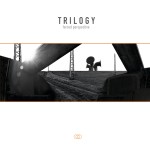
Since we had here a bigger coverage on the last official release of the legendary German Dark-Electro-cult-project Trial and their epic 30-years-anniversary-release "Für Zwei" (3CD + DVD), here: https://chaindlk.com/reviews/11676 , I guess it is almost unnecessary to delve deeper into any small detail out of this project's bio with respect to this new Trilogy release called "Forced Perspective". It's the long-awaited official full-length debut album by this duo from Germany as Trilogy is simply the project established out of the ashes of Trial after the sudden split of the musician Erick Miotke with the vocalist Torsten Schröder. Side by side with his new vocalist Jens Müller, Erick has never thought about to quit, no, he always worked hard to push forward the things around his and now their mutual music career under the new pseudonym Trilogy.
After spending some studio time to check out mutual interests, skills and to come to satisfying results for them both, they already started to release mostly smaller limited, self-produced EP's since 2013. Also several well-perceived live gigs at highly recognized events like the WGT Warm-up, Familientreffen, or the E-only- / NCN-festivals this duo has already performed with the expected euphoric reactions by their audience. It has always been a good idea to perform new interpretations of some Trial-classics like "Blut und Eisen" or "Is it Worth It?" combined with the new Trilogy compositions. Additionally they could hire the former Oomph!-drummer Christian "Leo" Leonhardt to add a massive punch- and pressure-impact to their live performances. Leo has to be seen as being the third official band-member of Trilogy.
As this is once again a quite typical release format from EAR (= Electro Aggression Records) also this Trilogy-release comes out as a jam-packed 2CD release filled on both CDs with almost 80 minutes of playing time each. CD1 - the "Forced Perspective"-side, features the main album which collects on one hand the already released EP-tracks back since 2013 with such club smasher-tracks like "Combat Surfer", "Entombed Love", "Seeking", or "Someone Inside", but also some newer and undiscovered tracks like the title track, "Tension", "Waves" or "Conclusion". Especially the rather older tracks are representing the leading scenario and general tone of this album. Trilogy are about to pick up a rather modern sounding path which reminds a bit that style which the often underrated second Trial-album "Secret Pain" (1994) has left for good.
It is lesser the mystic, deep-dark haunting mood of the early Trial-days at best performed on "Zero Feeling", "Forced Perspective" instead rather tends to speed the things up and especially the more club-friendly tracks offer a raw EBM-inspired impression to the general sound outfit. The organic pressure can be also pretty much recognized with the "live" drumming, even with respect to the fact, that Erick has programmed himself, looped and sampled from various real drum set resources - also this reminds stylistically on several tracks already discovered on "Secret Pain". This real-drumming-influence combined with the angry and raging vocal performance of Jens Müller stands for the charme and diversity of this album. Thanks to Jens and his impact these fast-paced, pretty much old-school-EBM-influenced tracks are sounding fresh, energetic and intense enough produced to leave out the often expected "darkness" in the term of a Dark Electro-band. If you're on the hunt for another highly Puppy-inspired follow-up album often perceived with the back-catalogue of the EAR-label, then Trilogy won't feed you well.
As for highlights presented on this album, "Combat Surfer" does pretty well with its militaristic attitude, well chosen voice-samples, and the well-perceived programming routine, although it's one of the oldest tracks produced by this duo. "Conclusion" with its highly remarkable programmed synthesizer-pads services you well if you're looking for a more layered and relaxed sound expression - to me this is the most outstanding tune on here.
Relatively compareable with that more layered sound-outfit we have the ominous sounding tracks like "Swamp" or "Waves", while that moody tune "Surface Scan" surprises with the guest vocal performance provided by the legendary German radio moderator Ecki Stieg (Grenzwellen). "Scherben" with its shattered-glass-samples then comes up with German lyrics. Also worth to mention is the brooding "Seeking" with its electric-guitar-inserts into the whole track.
The second CD called "Alternative Perspective" then offers the same track list again with the difference that Trilogy could make it possible to get remix-collaborations done by foreign band projects. Some well-sounding names out of the international EBM- / Dark Electro-/ Industrial-scene have been invited (for example Project Pitchfork, Mildreda, AD Key, Digital Factor, Second Disease, etc.) side by side with the expected protagonists of the EAR roster like R010R, Pyrroline, Serpents, or T.A.N.K.. They are all united here just to offer their best abilities to provide... well... alternative perspectives on the Trilogy-tracks.
Although to consume the pure mass of almost 80 minutes playing time on both CD's each can become challenging, I find myself quite often starting to compare if the original composition or the remix does fit better with me and my personal taste. The french project Brain Leisure earns a lot of agreeing nodding with their much darker, almost FLA-sounding remix on "Alienized". Terminal State had the one of the hardest jobs on here with the pretty well produced "Conclusion" - but what they've worked out of a fantastic hypnotic-, dark-space-sounding tune of this classy track leaves the listener deeply impressed.
R010R is another winner here and Michael Renfield gives us again that punchy and noisy vibe discovered on the last album "Total Disinformation Awareness" with the remix on "Masked". A rather softer interpretation with some calm and catchy underlaying piano drops comes from Project Pitchfork on "Waves" - and this one does really well here. "Waves" isn't for sure the hardest Trilogy-tune in its original - but this skilful produced remix is a real gem on here and slows down the mood. Mildreda are doing some nice things in the Dark Electro-field with their last releases signed to the German Dependent and offer a solid interpretation of the raw sounding "Tension", although this time without unexpected surprises. Finally Villaborghese - and here we have Erick Miotke's side-project with his partner Friedhelm Kranz (we had them on here with a few reviews...) - give us a pretty dense, sample-based filmic outro tune with "Turmoil Over".
It was indeed about time to collect the last years active under the Trilogy moniker and this professional pressed DCD set impresses in all categories regarding quality. The main album has enough food to offer for the club- and dancefloor-fetishists, while the listening connoisseur won't be left unimpressed too. The remix companion sums it up perfectly and has the one or another surprising sound-pearl to offer. Full force - full force ahead, go and get it.
After spending some studio time to check out mutual interests, skills and to come to satisfying results for them both, they already started to release mostly smaller limited, self-produced EP's since 2013. Also several well-perceived live gigs at highly recognized events like the WGT Warm-up, Familientreffen, or the E-only- / NCN-festivals this duo has already performed with the expected euphoric reactions by their audience. It has always been a good idea to perform new interpretations of some Trial-classics like "Blut und Eisen" or "Is it Worth It?" combined with the new Trilogy compositions. Additionally they could hire the former Oomph!-drummer Christian "Leo" Leonhardt to add a massive punch- and pressure-impact to their live performances. Leo has to be seen as being the third official band-member of Trilogy.
As this is once again a quite typical release format from EAR (= Electro Aggression Records) also this Trilogy-release comes out as a jam-packed 2CD release filled on both CDs with almost 80 minutes of playing time each. CD1 - the "Forced Perspective"-side, features the main album which collects on one hand the already released EP-tracks back since 2013 with such club smasher-tracks like "Combat Surfer", "Entombed Love", "Seeking", or "Someone Inside", but also some newer and undiscovered tracks like the title track, "Tension", "Waves" or "Conclusion". Especially the rather older tracks are representing the leading scenario and general tone of this album. Trilogy are about to pick up a rather modern sounding path which reminds a bit that style which the often underrated second Trial-album "Secret Pain" (1994) has left for good.
It is lesser the mystic, deep-dark haunting mood of the early Trial-days at best performed on "Zero Feeling", "Forced Perspective" instead rather tends to speed the things up and especially the more club-friendly tracks offer a raw EBM-inspired impression to the general sound outfit. The organic pressure can be also pretty much recognized with the "live" drumming, even with respect to the fact, that Erick has programmed himself, looped and sampled from various real drum set resources - also this reminds stylistically on several tracks already discovered on "Secret Pain". This real-drumming-influence combined with the angry and raging vocal performance of Jens Müller stands for the charme and diversity of this album. Thanks to Jens and his impact these fast-paced, pretty much old-school-EBM-influenced tracks are sounding fresh, energetic and intense enough produced to leave out the often expected "darkness" in the term of a Dark Electro-band. If you're on the hunt for another highly Puppy-inspired follow-up album often perceived with the back-catalogue of the EAR-label, then Trilogy won't feed you well.
As for highlights presented on this album, "Combat Surfer" does pretty well with its militaristic attitude, well chosen voice-samples, and the well-perceived programming routine, although it's one of the oldest tracks produced by this duo. "Conclusion" with its highly remarkable programmed synthesizer-pads services you well if you're looking for a more layered and relaxed sound expression - to me this is the most outstanding tune on here.
Relatively compareable with that more layered sound-outfit we have the ominous sounding tracks like "Swamp" or "Waves", while that moody tune "Surface Scan" surprises with the guest vocal performance provided by the legendary German radio moderator Ecki Stieg (Grenzwellen). "Scherben" with its shattered-glass-samples then comes up with German lyrics. Also worth to mention is the brooding "Seeking" with its electric-guitar-inserts into the whole track.
The second CD called "Alternative Perspective" then offers the same track list again with the difference that Trilogy could make it possible to get remix-collaborations done by foreign band projects. Some well-sounding names out of the international EBM- / Dark Electro-/ Industrial-scene have been invited (for example Project Pitchfork, Mildreda, AD Key, Digital Factor, Second Disease, etc.) side by side with the expected protagonists of the EAR roster like R010R, Pyrroline, Serpents, or T.A.N.K.. They are all united here just to offer their best abilities to provide... well... alternative perspectives on the Trilogy-tracks.
Although to consume the pure mass of almost 80 minutes playing time on both CD's each can become challenging, I find myself quite often starting to compare if the original composition or the remix does fit better with me and my personal taste. The french project Brain Leisure earns a lot of agreeing nodding with their much darker, almost FLA-sounding remix on "Alienized". Terminal State had the one of the hardest jobs on here with the pretty well produced "Conclusion" - but what they've worked out of a fantastic hypnotic-, dark-space-sounding tune of this classy track leaves the listener deeply impressed.
R010R is another winner here and Michael Renfield gives us again that punchy and noisy vibe discovered on the last album "Total Disinformation Awareness" with the remix on "Masked". A rather softer interpretation with some calm and catchy underlaying piano drops comes from Project Pitchfork on "Waves" - and this one does really well here. "Waves" isn't for sure the hardest Trilogy-tune in its original - but this skilful produced remix is a real gem on here and slows down the mood. Mildreda are doing some nice things in the Dark Electro-field with their last releases signed to the German Dependent and offer a solid interpretation of the raw sounding "Tension", although this time without unexpected surprises. Finally Villaborghese - and here we have Erick Miotke's side-project with his partner Friedhelm Kranz (we had them on here with a few reviews...) - give us a pretty dense, sample-based filmic outro tune with "Turmoil Over".
It was indeed about time to collect the last years active under the Trilogy moniker and this professional pressed DCD set impresses in all categories regarding quality. The main album has enough food to offer for the club- and dancefloor-fetishists, while the listening connoisseur won't be left unimpressed too. The remix companion sums it up perfectly and has the one or another surprising sound-pearl to offer. Full force - full force ahead, go and get it.
Hebbex D'Expectatio Expectata: Kva er Vald

Artist: Hebbex D'Expectatio Expectata
Title: Kva er Vald
Format: LP
Label: Drid Machine Records (@)
Rated:
Title: Kva er Vald
Format: LP
Label: Drid Machine Records (@)
Rated:
Some bands sound as though they spent years perfecting a shared musical vocabulary. Hebbex D'expectatio Expectata sound as though they wandered into the same room carrying completely different dictionaries, spilled them onto the floor, and somehow emerged with a language that shouldn't exist but stubbornly insists on making sense. It is messy, witty, occasionally bewildering, and far more coherent than first impressions suggest.
"Kva er Vald" (meaning "What is violence"), the Stavanger trio's debut, arrives with enough eccentric credentials to make any publicist's job suspiciously easy. Kjetil Brandsdal, one of Norway's defining figures in experimental noise through projects such as Noxagt, Ultralyd and No Balls, joins forces with the relentlessly inventive drummer Thore Warland, whose résumé stretches across some of the country's most uncompromising ensembles. Completing the triangle is Helge Thornes, whose career reads less like a biography than an elaborate practical joke: psychobilly singer, proto-jungle producer, Jamaican sound system devotee, dancehall collaborator with Mr. Vegas, translator of Joe Orton, and novelist. Predicting what such a combination might produce would have been impossible. Predicting it would sound ordinary would have been absurd.
The trio evolved from the long-running partnership between Brandsdal and Warland, but Thornes fundamentally alters the chemistry. His voice refuses to function as a conventional frontman presence. Sometimes he declaims, sometimes narrates, sometimes appears to be delivering fragments recovered from an imaginary radio broadcast drifting between stations. The lyrics draw upon sources as disparate as Aubrey Beardsley's unfinished fiction, Roman tragedy and Norwegian journalism, yet they rarely announce those references explicitly. Instead, language becomes another unstable object inside the mix, carrying rhythm and texture as much as narrative.
Musically, "Kva er Vald" inhabits an equally difficult territory. Found sounds, looping turntables, electronic percussion, fractured grooves and spoken vocals continuously intersect without settling into any recognisable genre. There are echoes of industrial music's mechanical discipline, post-punk's nervous energy, dub's fascination with space, musique concrète's appetite for sonic debris and free improvisation's willingness to let accidents dictate direction. Yet none of these descriptions quite captures the album's peculiar personality.
Brandsdal's record players behave less like playback devices than excavation tools. Snatches of forgotten recordings surface only to disappear beneath layers of static, feedback and manipulated texture, suggesting memories that refuse to remain intact. Warland's electronic drums provide restless, asymmetrical frameworks rather than stable rhythms, constantly shifting emphasis without sacrificing momentum. His playing retains the physical urgency of an acoustic drummer despite the synthetic palette, avoiding the sterile precision that often plagues electronic percussion.
The album's greatest surprise, however, is its humour. Experimental music has occasionally developed the unfortunate habit of taking itself with cathedral-level seriousness. Hebbex D'expectatio Expectata seem blissfully uninterested in such solemnity. Titles like "Spa Day" and "Transatlantic Slap" hint at an absurdist sensibility that quietly permeates the record. This is not comedy in any conventional sense, but rather the recognition that the world's inherent strangeness requires neither exaggeration nor explanation. Sometimes a bizarre juxtaposition is simply the most accurate description available.
Yet beneath the playful surface lies genuine intellectual curiosity. "Kva er Vald" repeatedly explores how information fragments circulate through contemporary life. Literary quotations, historical echoes, journalistic language and discarded recordings become equal participants in an ongoing cultural collage. The album asks whether meaning survives when context dissolves, and whether identity itself might simply be another assemblage of borrowed voices. Cheerful thoughts for a Tuesday afternoon.
The production, handled by Gaute Granli and mastered by Audun Strype, wisely preserves the music's tactile roughness. Every scrape, mechanical click and imperfect transition contributes to the sense of musicians actively wrestling with unstable material rather than presenting finished artefacts. The screen-printed sleeve designed by Brandsdal himself further reinforces the project's handmade ethos, extending its aesthetic beyond sound alone.
Norwegian experimental music has long occupied a fascinating position, often balancing conceptual rigour with a distinctly irreverent streak. "Kva er Vald" belongs comfortably within that tradition while refusing to imitate its predecessors. Instead, it embraces contradiction: disciplined yet unruly, literary yet physical, carefully constructed yet delightfully unpredictable.
By the album's conclusion, one realises that its apparent chaos has been remarkably purposeful all along. Like overhearing several conversations through thin apartment walls, the fragments gradually align into an oddly compelling portrait of contemporary consciousness. If Kva er Vald asks "What is violence?", its answer is anything but literal. Violence becomes the restless friction between ideas, sounds and histories, where nothing settles comfortably for long. It is unsettling, occasionally absurd, and unexpectedly beautiful.
"Kva er Vald" (meaning "What is violence"), the Stavanger trio's debut, arrives with enough eccentric credentials to make any publicist's job suspiciously easy. Kjetil Brandsdal, one of Norway's defining figures in experimental noise through projects such as Noxagt, Ultralyd and No Balls, joins forces with the relentlessly inventive drummer Thore Warland, whose résumé stretches across some of the country's most uncompromising ensembles. Completing the triangle is Helge Thornes, whose career reads less like a biography than an elaborate practical joke: psychobilly singer, proto-jungle producer, Jamaican sound system devotee, dancehall collaborator with Mr. Vegas, translator of Joe Orton, and novelist. Predicting what such a combination might produce would have been impossible. Predicting it would sound ordinary would have been absurd.
The trio evolved from the long-running partnership between Brandsdal and Warland, but Thornes fundamentally alters the chemistry. His voice refuses to function as a conventional frontman presence. Sometimes he declaims, sometimes narrates, sometimes appears to be delivering fragments recovered from an imaginary radio broadcast drifting between stations. The lyrics draw upon sources as disparate as Aubrey Beardsley's unfinished fiction, Roman tragedy and Norwegian journalism, yet they rarely announce those references explicitly. Instead, language becomes another unstable object inside the mix, carrying rhythm and texture as much as narrative.
Musically, "Kva er Vald" inhabits an equally difficult territory. Found sounds, looping turntables, electronic percussion, fractured grooves and spoken vocals continuously intersect without settling into any recognisable genre. There are echoes of industrial music's mechanical discipline, post-punk's nervous energy, dub's fascination with space, musique concrète's appetite for sonic debris and free improvisation's willingness to let accidents dictate direction. Yet none of these descriptions quite captures the album's peculiar personality.
Brandsdal's record players behave less like playback devices than excavation tools. Snatches of forgotten recordings surface only to disappear beneath layers of static, feedback and manipulated texture, suggesting memories that refuse to remain intact. Warland's electronic drums provide restless, asymmetrical frameworks rather than stable rhythms, constantly shifting emphasis without sacrificing momentum. His playing retains the physical urgency of an acoustic drummer despite the synthetic palette, avoiding the sterile precision that often plagues electronic percussion.
The album's greatest surprise, however, is its humour. Experimental music has occasionally developed the unfortunate habit of taking itself with cathedral-level seriousness. Hebbex D'expectatio Expectata seem blissfully uninterested in such solemnity. Titles like "Spa Day" and "Transatlantic Slap" hint at an absurdist sensibility that quietly permeates the record. This is not comedy in any conventional sense, but rather the recognition that the world's inherent strangeness requires neither exaggeration nor explanation. Sometimes a bizarre juxtaposition is simply the most accurate description available.
Yet beneath the playful surface lies genuine intellectual curiosity. "Kva er Vald" repeatedly explores how information fragments circulate through contemporary life. Literary quotations, historical echoes, journalistic language and discarded recordings become equal participants in an ongoing cultural collage. The album asks whether meaning survives when context dissolves, and whether identity itself might simply be another assemblage of borrowed voices. Cheerful thoughts for a Tuesday afternoon.
The production, handled by Gaute Granli and mastered by Audun Strype, wisely preserves the music's tactile roughness. Every scrape, mechanical click and imperfect transition contributes to the sense of musicians actively wrestling with unstable material rather than presenting finished artefacts. The screen-printed sleeve designed by Brandsdal himself further reinforces the project's handmade ethos, extending its aesthetic beyond sound alone.
Norwegian experimental music has long occupied a fascinating position, often balancing conceptual rigour with a distinctly irreverent streak. "Kva er Vald" belongs comfortably within that tradition while refusing to imitate its predecessors. Instead, it embraces contradiction: disciplined yet unruly, literary yet physical, carefully constructed yet delightfully unpredictable.
By the album's conclusion, one realises that its apparent chaos has been remarkably purposeful all along. Like overhearing several conversations through thin apartment walls, the fragments gradually align into an oddly compelling portrait of contemporary consciousness. If Kva er Vald asks "What is violence?", its answer is anything but literal. Violence becomes the restless friction between ideas, sounds and histories, where nothing settles comfortably for long. It is unsettling, occasionally absurd, and unexpectedly beautiful.