
Browse by Genre
Industrial Music / Industrial Metal / Aggro Industrial / Electro Metal
Industrial Noise / Power Noise / Harsh Noise
Synth Pop / Electro Pop / Synth-Electronica
Techno / Trance / Goa / Drum'n'Bass / Jungle / Tribal / Trip-Hop
Ambient / Electronica / Ethereal / Dub / Soundscapes / Abstract
Experimental / Avantgarde / Weird & Wired / Glitch / Noise / Field Recording
Dark / Gothic / Wave / New Wave / Dark Wave / Industrial Gothic
New Music / Downtown / Avantgarde Jazz / New Classical / World
Search Reviews
Music Reviews
The Sprigs: For Red Riberbank
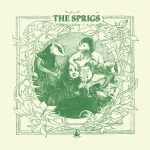

Kenneth Grahame's "The Wind in the Willows" has always contained a curious tension between the pleasures of domestic comfort and the temptation to venture beyond it. Mole, Ratty and Badger enjoy their meals, their homes and the occasional leisurely excursion, apparently unaware that the English countryside is one planning application away from becoming a gated community. On "For Red Riverbank", The Sprigs bring this pastoral idyll into contact with a much uglier reality: developers are approaching, landlords have their own interests, and the people who inhabit a place are not necessarily the people who get to decide its future. The result is an album that sounds as if a children's story has been discovered in a damp box of protest records, then assembled by musicians who cannot resist making the whole thing slightly stranger than it needs to be. Fortunately, that is precisely what it needs.
Initially the solo project of Rory Salter, aka Malvern Brume and Lone Capture Library, The Sprigs have grown into a trio with Ben Murphy and Ben Victor Waggett, the latter also a co-founder of Infant Tree. Their first full-length LP for Bison Records builds on two earlier cassettes and a covers collection, expanding the project into a more fully realised band without sacrificing its ramshackle character. Guitars, recorders, pipes, samples and assorted bits of musical detritus are assembled with a looseness that feels deliberate rather than careless. The recordings have the intimate, slightly battered quality of something made by people more interested in getting a sound to behave interestingly than in persuading it to behave correctly. Salter's experience in experimental music is audible in the way fragments are cut, repeated and placed beside one another, but the songs retain a crooked accessibility that keeps the whole enterprise from becoming an exercise in avant-garde self-importance.
The opening "come along, back home" establishes the album's peculiar emotional geography. Its long duration allows simple guitar figures and rough-edged vocal material to acquire an almost communal quality, though the apparent simplicity is continually unsettled by noises and fragments that seem to have wandered in from another recording altogether. The track feels familiar without being entirely reassuring. There is warmth in its musical gestures, but the surrounding material suggests that the past being recalled was never quite as innocent as nostalgia would prefer. Leon Rosselson's "Stand up for Judas" enters the collage as a reminder that songs can carry political arguments across decades, even when their original circumstances have changed. The effect is not that of a history lesson pasted onto a folk record; rather, the historical material complicates the music's apparent homespun innocence.
"Ratty & the moles get to work" is considerably more playful, its compact form suggesting an industrious little community setting about its business. Yet the title's cheerfulness has a double edge. Work is not simply a charming activity performed by anthropomorphic animals; it is also the means by which people maintain their lives, and the question of who benefits from that labour runs beneath the album's story. The Sprigs are too mischievous to spell out every implication, allowing the contrast between the music's buoyancy and the larger conflict to do the work. One moment the record seems content to potter about in the countryside; the next, the countryside appears to have acquired a planning department.
The shorter pieces that follow, "Lest limbs be reddened and rent" and "...on the wheels that turn for the profit of the few", bring the political dimension closer to the foreground. Their titles are less concerned with bucolic charm than with physical vulnerability and the machinery of economic advantage. The music remains fragmentary, avoiding the neatness of a conventional protest song, but the fragments themselves acquire a sharper purpose. Folk motifs, historical references and rough sonic edges are placed in uneasy proximity, as if the listener were overhearing several different versions of the same argument through thin walls. The collage does not need to become sonically aggressive to communicate conflict. Sometimes a small, apparently harmless tune is more disturbing when you realise what has been placed beside it.
"murmurs from the wide world" offers a brief change of perspective, a pause in which the album's rural setting seems to open onto a larger and less predictable landscape. The title is apt: the world beyond the immediate concerns of Mole and his companions is never entirely absent, and the album's samples make sure that the characters' private troubles cannot be mistaken for an isolated fairy tale. This is not escapist folk music, though it understands the appeal of escape. The Sprigs allow the listener to settle into the music's eccentric rhythms, then quietly remind us that the outside world has a habit of following people home.
The centrepiece, "For Peace & Mild Ale", featuring words and voice by Ash Reid, stretches across more than twelve minutes and gives the album room to develop its most sustained mixture of reflection and social commentary. The title suggests a modest vision of happiness: peace, a drink, the company of others, and perhaps the hope that tomorrow will not require quite so much effort. It is a small, humane aspiration, and that is precisely why the political context matters. The record is not defending an idealised past in which everyone lived harmoniously among hedgerows and hand-knitted waistcoats. It is concerned with the conditions that allow ordinary people to build lives, maintain communities and enjoy the pleasures that make existence tolerable. There is something moving about a record that can acknowledge historical hardship without treating every moment of pleasure as a guilty distraction.
The album's use of British labour history is especially effective because it avoids turning the past into decorative atmosphere. Leon Rosselson's material, including the reference to "Aliezer Coppe" in "Freedom is the mole who will turn the world upside down", brings historical and radical associations into a setting that might otherwise be mistaken for eccentric pastoral nostalgia. The juxtaposition is not merely clever. It exposes a relationship between the ideal of the countryside as a refuge and the material struggle over who can live, work and remain there. Even the animal characters become more than literary mascots. Their struggle to protect their home becomes a way of thinking about the communities that are routinely expected to make room for somebody else's ambitions.
"Freedom is the mole who will turn the world upside down" is the album's most striking change of scale. Its electric intensity pushes the music towards something resembling lo-fi noise rock, with a force that feels earned rather than theatrically imposed. After so much fragile, homespun material, the eruption has the effect of a small revolt finally deciding that politeness has not been especially productive. The title's political implication is unmistakable, but the track retains the band's unruly humour. The Mole, usually associated with domestic comforts and subterranean modesty, becomes an unlikely revolutionary. There is a joke here, but not a dismissive one: perhaps those who have been digging quietly beneath the established order have understood its weaknesses better than anyone standing proudly on top of it.
"The Battle for Red Riverbank" closes the record without tidying up its contradictions. The conflict has become explicit, but there is no reassuring suggestion that a good tune, a few determined woodland creatures and an archive of radical speeches will automatically defeat the developers. The Sprigs are too alert to the world's stubbornness to offer that kind of fairy-tale resolution. Instead, the music leaves the listener with the sense of a struggle that continues beyond the album's duration. The red riverbank is both a specific imagined place and a symbol for the real places whose value cannot be measured solely in terms of what they might earn.
This is where "For Red Riverbank" distinguishes itself from the more sentimental varieties of hauntological folk. Its lo-fi textures and historical fragments certainly evoke a Britain recalled through old recordings, fading memories and the peculiar emotional charge of obsolete media. But the album does not treat the past as a lost golden age whose only remaining function is to make the present seem disappointing. It asks what nostalgia conceals, whose histories are preserved, and what happens when affection for a place is confronted by the economics of its ownership. The musical roughness is essential to this argument. Nothing here has been polished into a reassuring heritage product, and the album's eccentricities keep its political concerns from hardening into a lecture.
There is also a welcome generosity in the music itself. For all its interest in inequality and displacement, the record is not permanently grim. Its tunes can be funny, awkward, catchy and unexpectedly tender; its instrumental passages offer genuine pleasure rather than treating enjoyment as a suspicious bourgeois habit. The Sprigs understand that communities are not held together by political convictions alone. They also depend on songs, shared jokes, familiar places and the small rituals through which people recognise one another. To defend those things is not to deny the seriousness of material conditions. It is to understand what those conditions are supposed to make possible.
The handmade presentation reinforces the record's refusal of mass-produced nostalgia. The screen-printed sleeve, artwork by Ben Victor Waggett and physical pressing produced by Press On in Middlesbrough give the LP a tangible connection to the independent network that sustains this kind of work. The object feels consistent with the music: locally made, slightly unruly and uninterested in disguising the labour involved. In an album so concerned with the relationship between place and value, that detail is more than packaging trivia.
Ultimately, "For Red Riverbank" is an imaginative achievement because it uses the language of folklore without surrendering to folklore's comforting simplifications. The Sprigs turn Grahame's woodland into a contested landscape, where domestic pleasures coexist with class conflict, and where the sounds of the past can illuminate the present without pretending to offer a ready-made solution. The music's rough edges, unexpected turns and occasional bursts of exuberance make the argument feel lived rather than merely stated.
Mole, Ratty and Badger may be fictional animals, but their predicament is recognisable enough. Somebody wants their land, somebody else has calculated its potential value, and the people who already live there are expected to regard the resulting disruption as progress. The Sprigs respond with guitars, recorders, archival voices and a healthy disregard for musical tidiness. It may not be the most efficient way to stop a developer, but it makes a more compelling case for the value of a place than another glossy brochure promising luxury apartments and a communal herb garden. The riverbank, after all, was never just real estate. It was somewhere to live.
Initially the solo project of Rory Salter, aka Malvern Brume and Lone Capture Library, The Sprigs have grown into a trio with Ben Murphy and Ben Victor Waggett, the latter also a co-founder of Infant Tree. Their first full-length LP for Bison Records builds on two earlier cassettes and a covers collection, expanding the project into a more fully realised band without sacrificing its ramshackle character. Guitars, recorders, pipes, samples and assorted bits of musical detritus are assembled with a looseness that feels deliberate rather than careless. The recordings have the intimate, slightly battered quality of something made by people more interested in getting a sound to behave interestingly than in persuading it to behave correctly. Salter's experience in experimental music is audible in the way fragments are cut, repeated and placed beside one another, but the songs retain a crooked accessibility that keeps the whole enterprise from becoming an exercise in avant-garde self-importance.
The opening "come along, back home" establishes the album's peculiar emotional geography. Its long duration allows simple guitar figures and rough-edged vocal material to acquire an almost communal quality, though the apparent simplicity is continually unsettled by noises and fragments that seem to have wandered in from another recording altogether. The track feels familiar without being entirely reassuring. There is warmth in its musical gestures, but the surrounding material suggests that the past being recalled was never quite as innocent as nostalgia would prefer. Leon Rosselson's "Stand up for Judas" enters the collage as a reminder that songs can carry political arguments across decades, even when their original circumstances have changed. The effect is not that of a history lesson pasted onto a folk record; rather, the historical material complicates the music's apparent homespun innocence.
"Ratty & the moles get to work" is considerably more playful, its compact form suggesting an industrious little community setting about its business. Yet the title's cheerfulness has a double edge. Work is not simply a charming activity performed by anthropomorphic animals; it is also the means by which people maintain their lives, and the question of who benefits from that labour runs beneath the album's story. The Sprigs are too mischievous to spell out every implication, allowing the contrast between the music's buoyancy and the larger conflict to do the work. One moment the record seems content to potter about in the countryside; the next, the countryside appears to have acquired a planning department.
The shorter pieces that follow, "Lest limbs be reddened and rent" and "...on the wheels that turn for the profit of the few", bring the political dimension closer to the foreground. Their titles are less concerned with bucolic charm than with physical vulnerability and the machinery of economic advantage. The music remains fragmentary, avoiding the neatness of a conventional protest song, but the fragments themselves acquire a sharper purpose. Folk motifs, historical references and rough sonic edges are placed in uneasy proximity, as if the listener were overhearing several different versions of the same argument through thin walls. The collage does not need to become sonically aggressive to communicate conflict. Sometimes a small, apparently harmless tune is more disturbing when you realise what has been placed beside it.
"murmurs from the wide world" offers a brief change of perspective, a pause in which the album's rural setting seems to open onto a larger and less predictable landscape. The title is apt: the world beyond the immediate concerns of Mole and his companions is never entirely absent, and the album's samples make sure that the characters' private troubles cannot be mistaken for an isolated fairy tale. This is not escapist folk music, though it understands the appeal of escape. The Sprigs allow the listener to settle into the music's eccentric rhythms, then quietly remind us that the outside world has a habit of following people home.
The centrepiece, "For Peace & Mild Ale", featuring words and voice by Ash Reid, stretches across more than twelve minutes and gives the album room to develop its most sustained mixture of reflection and social commentary. The title suggests a modest vision of happiness: peace, a drink, the company of others, and perhaps the hope that tomorrow will not require quite so much effort. It is a small, humane aspiration, and that is precisely why the political context matters. The record is not defending an idealised past in which everyone lived harmoniously among hedgerows and hand-knitted waistcoats. It is concerned with the conditions that allow ordinary people to build lives, maintain communities and enjoy the pleasures that make existence tolerable. There is something moving about a record that can acknowledge historical hardship without treating every moment of pleasure as a guilty distraction.
The album's use of British labour history is especially effective because it avoids turning the past into decorative atmosphere. Leon Rosselson's material, including the reference to "Aliezer Coppe" in "Freedom is the mole who will turn the world upside down", brings historical and radical associations into a setting that might otherwise be mistaken for eccentric pastoral nostalgia. The juxtaposition is not merely clever. It exposes a relationship between the ideal of the countryside as a refuge and the material struggle over who can live, work and remain there. Even the animal characters become more than literary mascots. Their struggle to protect their home becomes a way of thinking about the communities that are routinely expected to make room for somebody else's ambitions.
"Freedom is the mole who will turn the world upside down" is the album's most striking change of scale. Its electric intensity pushes the music towards something resembling lo-fi noise rock, with a force that feels earned rather than theatrically imposed. After so much fragile, homespun material, the eruption has the effect of a small revolt finally deciding that politeness has not been especially productive. The title's political implication is unmistakable, but the track retains the band's unruly humour. The Mole, usually associated with domestic comforts and subterranean modesty, becomes an unlikely revolutionary. There is a joke here, but not a dismissive one: perhaps those who have been digging quietly beneath the established order have understood its weaknesses better than anyone standing proudly on top of it.
"The Battle for Red Riverbank" closes the record without tidying up its contradictions. The conflict has become explicit, but there is no reassuring suggestion that a good tune, a few determined woodland creatures and an archive of radical speeches will automatically defeat the developers. The Sprigs are too alert to the world's stubbornness to offer that kind of fairy-tale resolution. Instead, the music leaves the listener with the sense of a struggle that continues beyond the album's duration. The red riverbank is both a specific imagined place and a symbol for the real places whose value cannot be measured solely in terms of what they might earn.
This is where "For Red Riverbank" distinguishes itself from the more sentimental varieties of hauntological folk. Its lo-fi textures and historical fragments certainly evoke a Britain recalled through old recordings, fading memories and the peculiar emotional charge of obsolete media. But the album does not treat the past as a lost golden age whose only remaining function is to make the present seem disappointing. It asks what nostalgia conceals, whose histories are preserved, and what happens when affection for a place is confronted by the economics of its ownership. The musical roughness is essential to this argument. Nothing here has been polished into a reassuring heritage product, and the album's eccentricities keep its political concerns from hardening into a lecture.
There is also a welcome generosity in the music itself. For all its interest in inequality and displacement, the record is not permanently grim. Its tunes can be funny, awkward, catchy and unexpectedly tender; its instrumental passages offer genuine pleasure rather than treating enjoyment as a suspicious bourgeois habit. The Sprigs understand that communities are not held together by political convictions alone. They also depend on songs, shared jokes, familiar places and the small rituals through which people recognise one another. To defend those things is not to deny the seriousness of material conditions. It is to understand what those conditions are supposed to make possible.
The handmade presentation reinforces the record's refusal of mass-produced nostalgia. The screen-printed sleeve, artwork by Ben Victor Waggett and physical pressing produced by Press On in Middlesbrough give the LP a tangible connection to the independent network that sustains this kind of work. The object feels consistent with the music: locally made, slightly unruly and uninterested in disguising the labour involved. In an album so concerned with the relationship between place and value, that detail is more than packaging trivia.
Ultimately, "For Red Riverbank" is an imaginative achievement because it uses the language of folklore without surrendering to folklore's comforting simplifications. The Sprigs turn Grahame's woodland into a contested landscape, where domestic pleasures coexist with class conflict, and where the sounds of the past can illuminate the present without pretending to offer a ready-made solution. The music's rough edges, unexpected turns and occasional bursts of exuberance make the argument feel lived rather than merely stated.
Mole, Ratty and Badger may be fictional animals, but their predicament is recognisable enough. Somebody wants their land, somebody else has calculated its potential value, and the people who already live there are expected to regard the resulting disruption as progress. The Sprigs respond with guitars, recorders, archival voices and a healthy disregard for musical tidiness. It may not be the most efficient way to stop a developer, but it makes a more compelling case for the value of a place than another glossy brochure promising luxury apartments and a communal herb garden. The riverbank, after all, was never just real estate. It was somewhere to live.
HYBRYDS: 7even Deadly Sins

There is no shortage of artists who have discovered that religion, sex and transgression make excellent raw material for album concepts. Humanity has been recycling the same seven mistakes for centuries, after all, so one might as well put them to a beat. What makes "7even Deadly Sins" more interesting than its rather unsubtle title suggests is that HYBRYDS do not approach the subject as a moral catalogue. The Belgian project turns the traditional Christian list into a sequence of physical states: desire, tension, appetite, resentment, inertia, excess. The result is not really a lesson in sinfulness, but a dark electronic theatre in which the body keeps getting in the way of spiritual improvement.
That is hardly unfamiliar territory for Sandy Nys. HYBRYDS has been active since the 1980s, evolving through ritual electronics, industrial rhythms, experimental ambient, tribal percussion and occult or mythical imagery, with a constantly changing circle of collaborators. Early material already treated music less as conventional composition than as a kind of ongoing ritual practice, and Nys has spent decades demonstrating that a synthesizer, a drum and an ominous voice can get along perfectly well without anybody having to invent a new genre name every Tuesday.
"7even Deadly Sins" is particularly revealing because its relationship with the past is structural rather than merely archival. Four of its central pieces originate in the 2002 "Lust" EP, but they have been substantially reworked here and given new vocal contributions by Madeline, with Katherina also involved. The older material therefore does not sit in the album like an archaeological exhibit. It has been brought back into circulation, altered and placed beside newly developed material so that the original "Lust" becomes one component of a larger cycle.
The opening “Love (Intro)” is an appropriately ambiguous beginning. Love is supposed to be the respectable emotion, the one allowed into family photographs and greeting cards, yet HYBRYDS immediately places it in the shadow of what follows. It functions less as a hymn than as an invitation into a psychological territory where affection and possession are already beginning to overlap. Then “Pride” arrives with a heavier sense of self-consciousness, establishing the album's characteristic combination of programmed rhythm, dark electronic layers and vocal presence. There is movement here, but rarely the sort that suggests carefree dancing. The body seems to be participating under contractual obligation.
“Envy” develops this tension particularly well. Rather than relying on melodramatic darkness, the track works through repetition and pressure, allowing its rhythmic structure to become increasingly obsessive. That is an important distinction. Envy is not simply sadness at somebody else's success; it is a form of attention that cannot look away. HYBRYDS understand this quite literally. The groove keeps returning to the same psychological point, as if the listener were scrolling through somebody else's life at three in the morning and making increasingly poor decisions.
“Wrath” is shorter and more concentrated, which suits its subject. Anger does not necessarily require duration. Sometimes four minutes are more than enough for civilisation to collapse. HYBRYDS favour a controlled physicality here, using industrial weight without reducing the track to blunt aggression. This is one of the album's strengths: the rhythms have enough propulsion to remain sensual, but enough darkness to prevent the sensuality from becoming comfortable.
That balance becomes crucial with “Sloth”. A lesser treatment of the sin might simply slow everything down and call the result conceptual. HYBRYDS are more subtle. Sloth becomes a condition of suspension, a refusal of momentum, where the music appears to resist the listener's expectation that every track must develop towards some obvious climax. The effect is oddly intimate. Laziness, after all, is not necessarily spectacular. It is often the quiet decision not to move.
“Greed” and “Gluttony” then shift the focus from psychological comparison towards accumulation. The distinction between the two is useful: greed wants to possess, while gluttony wants to consume. HYBRYDS translate both impulses into music without making either one sound particularly noble. Rhythmic insistence and layered electronic textures create a sense of appetite that is never completely satisfied. The music keeps taking in more, but the extra material does not produce peace. It produces another desire.
And then there is “Lust”, the track that gives the album its historical centre of gravity. Knowing that its ancestry reaches back to the 2002 EP changes the way it can be heard. This is not simply the eighth item on a theological checklist. It is the place where the album's past and present overlap most directly. The newer version's vocal treatment gives the piece a different expressive profile, while its sensuality remains embedded in HYBRYDS' long-standing interest in ritual, fetishistic imagery and altered states. The music is erotic without becoming conventionally seductive. There is something ceremonial about it, but also something faintly dangerous, as if pleasure had been invited to the meeting without being told that somebody had brought paperwork.
This is where the accompanying photography by Sandy Nys becomes relevant. The limited edition is not merely a CD with a provocative booklet added to increase collector anxiety. Its 64-page A5 photo album deliberately extends the album's symbolic system into the visual realm, using erotic imagery in relation to the seven sins. That can easily become juvenile when handled badly. Here, however, the decision makes conceptual sense because HYBRYDS has never maintained a strict border between sound, performance, ritual and visual provocation. The physical edition therefore behaves less like packaging and more like another component of the work. Zoharum's standard velvet digipack and the limited photo-book edition consequently offer two different degrees of entry into the same idea.
The erotic dimension is also worth separating from simple shock value. Desire is one of the few subjects capable of making the supposedly moral categories of the seven sins collapse into one another. Lust can become greed; greed can become envy; pride can disguise itself as desire; gluttony can be physical or emotional. HYBRYDS' sequencing takes advantage of these overlaps rather than pretending that each sin lives in its own tidy compartment. The album works best when the categories start bleeding into one another.
“Pain (Coda)” provides the necessary complication. After the seven sins have been named, the album does not conclude with redemption. Instead it arrives at pain, which is almost too obvious and therefore surprisingly effective. Pain is both consequence and reminder: whatever pleasure, aggression or appetite has been pursued, the body eventually sends an invoice. The track gives the preceding sequence a darker retrospective meaning without pretending to resolve it.
The two live pieces are another matter. “Lust (Live)” and “All Is Erotic (Live)” date from the early 2000s and provide a useful glimpse into HYBRYDS' performance history, but they do not possess quite the same structural importance as the main sequence. They feel more like evidence from the project's continuing ritual life than essential chapters in the album's narrative. Their presence is nevertheless valuable because HYBRYDS has always been an act whose identity is inseparable from performance and collective participation. The studio versions establish the psychological architecture; the live recordings remind us that this music was never intended merely to sit politely between a listener's headphones and a cup of coffee.
There is a curious modernity in this old-fashioned fascination with sin. The seven categories were devised within a very different moral universe, yet most of them have survived perfectly well into the age of advertising, social media and infinite scrolling. Pride has become a business model. Envy has a refresh button. Greed has quarterly reporting. Gluttony has home delivery. Sloth has streaming services. Lust has algorithms. Wrath has comment sections. The theological framework may be ancient, but the behavioural evidence remains depressingly abundant.
HYBRYDS wisely avoid trying to update the sins through explicit commentary. They simply make them physical. The rhythms are repetitive because obsession is repetitive. The electronic textures feel dense because appetite tends to demand more. The voices often seem caught between declaration and incantation because these states are neither rational arguments nor straightforward emotions. They are compulsions.
That is also why the record's darker passages are more effective than a purely atmospheric reading might suggest. HYBRYDS are not simply manufacturing a gothic backdrop for photographs of forbidden pleasures. There is a persistent interest in the mechanics of attraction: why repetition becomes hypnotic, why a pulse can alter attention, why a voice can sound intimate even when its words are distant, why a ritual becomes meaningful partly because it is repeated. These questions have been present in Nys' work since the early days of the project, when HYBRYDS combined primitive and contemporary technologies into a deliberately ambiguous musical language.
The album's title, with its conspicuous “7even”, perhaps captures that mixture of archaic symbolism and contemporary presentation better than a more solemn formulation would. HYBRYDS are not pretending to resurrect medieval theology. They are taking a very old taxonomy of human weakness and putting it through electronics, samples, programmed rhythms, voices and fetish imagery. The result is neither devotional nor anti-religious in any straightforward sense. It is closer to an examination of why people remain fascinated by the things they are told not to want.
And that may be the record's most persuasive quality. "7even Deadly Sins" does not really ask whether these impulses are good or bad. It asks what they feel like from inside. Pride becomes pressure, envy becomes fixation, wrath becomes acceleration, sloth becomes suspension, greed and gluttony become accumulation, lust becomes magnetic repetition. Even love, introduced at the beginning, turns out to be dangerously close to the same territory. The moral categories begin to look less like seven separate commandments and more like different symptoms of the same unruly animal.
After more than four decades of HYBRYDS, there is something almost reassuring about that continuity. The technology changes, collaborators change, old material is reconstructed, new imagery is added, archives disappear and reappear, but the fundamental fascination remains: ritual as a way of making invisible impulses audible. "7even Deadly Sins" succeeds because it does not treat those impulses as museum pieces. They are still moving, still desiring, still competing, still consuming.
Humanity has had a very long time to improve itself. HYBRYDS have apparently decided to soundtrack the evidence that we haven't.
That is hardly unfamiliar territory for Sandy Nys. HYBRYDS has been active since the 1980s, evolving through ritual electronics, industrial rhythms, experimental ambient, tribal percussion and occult or mythical imagery, with a constantly changing circle of collaborators. Early material already treated music less as conventional composition than as a kind of ongoing ritual practice, and Nys has spent decades demonstrating that a synthesizer, a drum and an ominous voice can get along perfectly well without anybody having to invent a new genre name every Tuesday.
"7even Deadly Sins" is particularly revealing because its relationship with the past is structural rather than merely archival. Four of its central pieces originate in the 2002 "Lust" EP, but they have been substantially reworked here and given new vocal contributions by Madeline, with Katherina also involved. The older material therefore does not sit in the album like an archaeological exhibit. It has been brought back into circulation, altered and placed beside newly developed material so that the original "Lust" becomes one component of a larger cycle.
The opening “Love (Intro)” is an appropriately ambiguous beginning. Love is supposed to be the respectable emotion, the one allowed into family photographs and greeting cards, yet HYBRYDS immediately places it in the shadow of what follows. It functions less as a hymn than as an invitation into a psychological territory where affection and possession are already beginning to overlap. Then “Pride” arrives with a heavier sense of self-consciousness, establishing the album's characteristic combination of programmed rhythm, dark electronic layers and vocal presence. There is movement here, but rarely the sort that suggests carefree dancing. The body seems to be participating under contractual obligation.
“Envy” develops this tension particularly well. Rather than relying on melodramatic darkness, the track works through repetition and pressure, allowing its rhythmic structure to become increasingly obsessive. That is an important distinction. Envy is not simply sadness at somebody else's success; it is a form of attention that cannot look away. HYBRYDS understand this quite literally. The groove keeps returning to the same psychological point, as if the listener were scrolling through somebody else's life at three in the morning and making increasingly poor decisions.
“Wrath” is shorter and more concentrated, which suits its subject. Anger does not necessarily require duration. Sometimes four minutes are more than enough for civilisation to collapse. HYBRYDS favour a controlled physicality here, using industrial weight without reducing the track to blunt aggression. This is one of the album's strengths: the rhythms have enough propulsion to remain sensual, but enough darkness to prevent the sensuality from becoming comfortable.
That balance becomes crucial with “Sloth”. A lesser treatment of the sin might simply slow everything down and call the result conceptual. HYBRYDS are more subtle. Sloth becomes a condition of suspension, a refusal of momentum, where the music appears to resist the listener's expectation that every track must develop towards some obvious climax. The effect is oddly intimate. Laziness, after all, is not necessarily spectacular. It is often the quiet decision not to move.
“Greed” and “Gluttony” then shift the focus from psychological comparison towards accumulation. The distinction between the two is useful: greed wants to possess, while gluttony wants to consume. HYBRYDS translate both impulses into music without making either one sound particularly noble. Rhythmic insistence and layered electronic textures create a sense of appetite that is never completely satisfied. The music keeps taking in more, but the extra material does not produce peace. It produces another desire.
And then there is “Lust”, the track that gives the album its historical centre of gravity. Knowing that its ancestry reaches back to the 2002 EP changes the way it can be heard. This is not simply the eighth item on a theological checklist. It is the place where the album's past and present overlap most directly. The newer version's vocal treatment gives the piece a different expressive profile, while its sensuality remains embedded in HYBRYDS' long-standing interest in ritual, fetishistic imagery and altered states. The music is erotic without becoming conventionally seductive. There is something ceremonial about it, but also something faintly dangerous, as if pleasure had been invited to the meeting without being told that somebody had brought paperwork.
This is where the accompanying photography by Sandy Nys becomes relevant. The limited edition is not merely a CD with a provocative booklet added to increase collector anxiety. Its 64-page A5 photo album deliberately extends the album's symbolic system into the visual realm, using erotic imagery in relation to the seven sins. That can easily become juvenile when handled badly. Here, however, the decision makes conceptual sense because HYBRYDS has never maintained a strict border between sound, performance, ritual and visual provocation. The physical edition therefore behaves less like packaging and more like another component of the work. Zoharum's standard velvet digipack and the limited photo-book edition consequently offer two different degrees of entry into the same idea.
The erotic dimension is also worth separating from simple shock value. Desire is one of the few subjects capable of making the supposedly moral categories of the seven sins collapse into one another. Lust can become greed; greed can become envy; pride can disguise itself as desire; gluttony can be physical or emotional. HYBRYDS' sequencing takes advantage of these overlaps rather than pretending that each sin lives in its own tidy compartment. The album works best when the categories start bleeding into one another.
“Pain (Coda)” provides the necessary complication. After the seven sins have been named, the album does not conclude with redemption. Instead it arrives at pain, which is almost too obvious and therefore surprisingly effective. Pain is both consequence and reminder: whatever pleasure, aggression or appetite has been pursued, the body eventually sends an invoice. The track gives the preceding sequence a darker retrospective meaning without pretending to resolve it.
The two live pieces are another matter. “Lust (Live)” and “All Is Erotic (Live)” date from the early 2000s and provide a useful glimpse into HYBRYDS' performance history, but they do not possess quite the same structural importance as the main sequence. They feel more like evidence from the project's continuing ritual life than essential chapters in the album's narrative. Their presence is nevertheless valuable because HYBRYDS has always been an act whose identity is inseparable from performance and collective participation. The studio versions establish the psychological architecture; the live recordings remind us that this music was never intended merely to sit politely between a listener's headphones and a cup of coffee.
There is a curious modernity in this old-fashioned fascination with sin. The seven categories were devised within a very different moral universe, yet most of them have survived perfectly well into the age of advertising, social media and infinite scrolling. Pride has become a business model. Envy has a refresh button. Greed has quarterly reporting. Gluttony has home delivery. Sloth has streaming services. Lust has algorithms. Wrath has comment sections. The theological framework may be ancient, but the behavioural evidence remains depressingly abundant.
HYBRYDS wisely avoid trying to update the sins through explicit commentary. They simply make them physical. The rhythms are repetitive because obsession is repetitive. The electronic textures feel dense because appetite tends to demand more. The voices often seem caught between declaration and incantation because these states are neither rational arguments nor straightforward emotions. They are compulsions.
That is also why the record's darker passages are more effective than a purely atmospheric reading might suggest. HYBRYDS are not simply manufacturing a gothic backdrop for photographs of forbidden pleasures. There is a persistent interest in the mechanics of attraction: why repetition becomes hypnotic, why a pulse can alter attention, why a voice can sound intimate even when its words are distant, why a ritual becomes meaningful partly because it is repeated. These questions have been present in Nys' work since the early days of the project, when HYBRYDS combined primitive and contemporary technologies into a deliberately ambiguous musical language.
The album's title, with its conspicuous “7even”, perhaps captures that mixture of archaic symbolism and contemporary presentation better than a more solemn formulation would. HYBRYDS are not pretending to resurrect medieval theology. They are taking a very old taxonomy of human weakness and putting it through electronics, samples, programmed rhythms, voices and fetish imagery. The result is neither devotional nor anti-religious in any straightforward sense. It is closer to an examination of why people remain fascinated by the things they are told not to want.
And that may be the record's most persuasive quality. "7even Deadly Sins" does not really ask whether these impulses are good or bad. It asks what they feel like from inside. Pride becomes pressure, envy becomes fixation, wrath becomes acceleration, sloth becomes suspension, greed and gluttony become accumulation, lust becomes magnetic repetition. Even love, introduced at the beginning, turns out to be dangerously close to the same territory. The moral categories begin to look less like seven separate commandments and more like different symptoms of the same unruly animal.
After more than four decades of HYBRYDS, there is something almost reassuring about that continuity. The technology changes, collaborators change, old material is reconstructed, new imagery is added, archives disappear and reappear, but the fundamental fascination remains: ritual as a way of making invisible impulses audible. "7even Deadly Sins" succeeds because it does not treat those impulses as museum pieces. They are still moving, still desiring, still competing, still consuming.
Humanity has had a very long time to improve itself. HYBRYDS have apparently decided to soundtrack the evidence that we haven't.
Kassel Jaeger: Sub Re
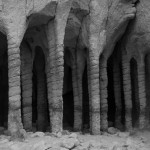
There is a particular danger in making music about the stuff beneath things. Eventually one starts talking about substance, immanence, matter, becoming, hidden layers and other words that seem to have been invented specifically to frighten people away from the listening chair. François J. Bonnet, fortunately, knows the difference between an idea and an explanation. Under his Kassel Jaeger alias, "Sub Re" approaches sound at its most physical while refusing to pin it down, producing a forty-two-minute work in which material is constantly appearing, receding and changing its apparent identity. The title, derived from the Latin expression for what lies beneath the thing or beneath matter, is therefore less a philosophical label than a listening instruction. Do not stop at the surface.
Bonnet is particularly well placed to investigate such territory. The Franco-Swiss composer, writer and theorist has directed INA GRM since 2018, inheriting responsibility for one of the crucial institutional histories of musique concrète and electroacoustic research, while maintaining a substantial practice of his own as Kassel Jaeger. His work has long occupied the uneasy territory between concrète experimentation, ambient noise and electroacoustic improvisation, and his collaborations with artists as different as Éliane Radigue, Oren Ambarchi, Jim O’Rourke, Stephan Mathieu and Akira Rabelais suggest an appetite for sound that refuses to behave according to genre etiquette. "Sub Re" feels like a particularly concentrated expression of that attitude: rigorous in construction, but much less interested in demonstrating its credentials than in making the listener uncertain about what is actually being heard.
The opening of “Sub Re (Part I)” is almost aggressively material. A thick, abrasive mass arrives before anything resembling conventional musical orientation has been established. There are hints of amplified strings, feedback, low-frequency pressure and electronic resonance, but identifying each component would rather miss the point. Bonnet does not present sounds as objects on a table. He allows them to contaminate one another until texture becomes event. A harsh surface can suddenly acquire depth; something that initially seems electronic begins to suggest an acoustic vibration; density collapses and leaves behind a much thinner trace. The ear is repeatedly forced to revise its assumptions, which is considerably more interesting than simply being told that a sound has been “processed”.
Then come the bells, or something sufficiently bell-like to make the distinction increasingly irrelevant. Their metallic presence introduces a different kind of temporality. Instead of the blunt pressure of the opening, we get intervals, resonance and decay, with individual strikes leaving enough space for their surroundings to become audible. The effect is surprisingly physical. These sounds do not decorate the composition; they establish distances within it. Their reverberations seem to measure the space in which the rest of the music is occurring, while the surrounding electronic layers keep altering the apparent dimensions of that space.
This is one of Bonnet's great strengths throughout the album: he understands that the identity of a sound is partly determined by what happens around it. A tone can be comforting or threatening depending on the pressure beneath it. A field recording can suggest an actual landscape until a synthetic layer quietly changes its meaning. A sustained frequency can resemble an organ, an electrical fault, wind, or simply the acoustic equivalent of having forgotten why you entered a room. "Sub Re" repeatedly exploits these shifts without turning them into cheap surprises.
The album's use of source material is particularly effective because Bonnet's concrete approach does not result in the usual parade of recognisable found sounds. Some elements originated in earlier works and performances, including material connected with projects presented in Venice and Sion, but once detached from their original circumstances they are no longer treated as archival evidence. They become available for recombination. This is crucial. "Sub Re" is not an anthology of sounds Bonnet has encountered; it is an argument for what happens when sounds lose their biographies and acquire new relationships.
The second half deepens that process rather than simply providing a calmer counterpart. A heavier, more organ-like presence gradually gives way to tones that seem almost illuminated from within, followed by environmental details that open the composition outward. At points, the music feels unexpectedly close to a landscape recording, but the impression never settles comfortably. The natural world arrives already filtered through technological perception, while the electronic material starts behaving with an almost organic patience. This ambiguity gives the album its peculiar emotional temperature. It can sound expansive without becoming picturesque, beautiful without becoming decorative.
That distinction matters because "Sub Re" is much less interested in atmosphere than many records that might be filed under ambient music. Atmosphere here is unstable. It is something produced by the interaction of materials rather than a permanent mood supplied in advance. One passage may feel submerged and claustrophobic; another suddenly seems to expose a huge horizon; then the horizon disappears and the listener is left with a residue of vibration. The transitions are not merely connective tissue. They are where the music actually thinks.
Several outside listeners have responded to precisely this quality, noting the record's unusual narrative continuity despite its abrupt changes of texture and register. One review describes it as difficult to remember in purely verbal terms, yet repeatedly rewarding on return, while another hears the two long pieces as a sequence of shifting environments rather than conventional compositions. Those observations get close to the album's real achievement: "Sub Re" is highly composed without constantly advertising the fact that it has been composed.
There is also a certain slyness in Bonnet's handling of grandeur. The album can become enormous, but it rarely settles into the grandiose. A swelling passage might suggest some monumental revelation, only for the composition to withdraw and leave a much smaller sound behind. This prevents the music from confusing scale with significance. Plenty of experimental electronics have mistaken loudness, duration or density for profundity. Human beings do enjoy putting three large words next to a thirty-minute drone and declaring the universe solved. Bonnet is more disciplined than that.
The Victor Hugo connection gives the title another dimension. "Sub Re" alludes to a section of "The Toilers of the Sea" in which a man confronts an apparently impossible task beneath the surface of a wreck, surrounded by water, currents and the forces of the sea. Bonnet's music does not illustrate this literary scene, and thankfully there are no shipwreck sound effects waiting around the corner. Instead, the association offers a useful metaphor for the album's compositional method: action happens below the visible surface, where perception becomes less certain and intuition has to replace stable landmarks.
That makes the record's silences and withdrawals as important as its more spectacular eruptions. Bonnet is not simply piling material on top of material. He is continually adjusting the pressure between presence and absence. When a dense passage disappears, what remains is not emptiness but a newly exposed sensitivity to smaller details. When a sparse passage thickens again, its weight is felt precisely because the ear has been recalibrated. The music breathes in terms of concentration rather than rhythm.
The two-part structure is consequently more convincing than a collection of shorter tracks might have been. Each side has enough time to establish a situation, undermine it and find another one without rushing towards a recognisable conclusion. The result is less like a suite in the traditional sense than a continuous negotiation between incompatible states. There are traces of noise, drone, musique concrète, environmental recording, electronic abstraction and something surprisingly close to instrumental music, yet none of these identities gets to take possession of the album.
Bonnet's own theoretical writing is often concerned with what sound can become before it is reduced to a fixed meaning, and "Sub Re" gives that question a remarkably tactile form. The record does not ask us to identify the raw material. It asks what the material can do once its original identity has become unstable. A bell can cease to be a bell. A field recording can stop being a document of place. Feedback can become a horizon. A drone can acquire the nervousness of weather. Nothing has to remain itself in order to remain recognisable.
The artwork by Ron Jude and the physical presentation reinforce this sense of unstable perception, while Giuseppe Ielasi's mastering is an especially appropriate choice for a work so dependent on fine distinctions between pressure, resonance and disappearance. Yet the album ultimately stands or falls by its refusal to make those distinctions too obvious. "Sub Re" is not a lesson in electroacoustic technique disguised as an LP. It is a record about listening as a process of continual correction.
And perhaps that is what lies beneath the thing here. Not some secret sonic essence waiting to be excavated, but the uncomfortable fact that sound never stays where we put it. We hear an object, then a texture, then a place, then a memory, then something that has no convenient name. Bonnet simply keeps the process going long enough for the listener to notice. The result is demanding without being forbidding, abstract without being bloodless, and occasionally beautiful in the slightly alarming way that beauty becomes more convincing when it refuses to explain itself.
"Sub Re" does not really take us somewhere else. It makes the familiar act of hearing feel less reliable, which is arguably a much stranger destination. And beneath all that matter, pressure, resonance and philosophical vocabulary, there is a rather simple proposition: listen again. The sound has changed.
Bonnet is particularly well placed to investigate such territory. The Franco-Swiss composer, writer and theorist has directed INA GRM since 2018, inheriting responsibility for one of the crucial institutional histories of musique concrète and electroacoustic research, while maintaining a substantial practice of his own as Kassel Jaeger. His work has long occupied the uneasy territory between concrète experimentation, ambient noise and electroacoustic improvisation, and his collaborations with artists as different as Éliane Radigue, Oren Ambarchi, Jim O’Rourke, Stephan Mathieu and Akira Rabelais suggest an appetite for sound that refuses to behave according to genre etiquette. "Sub Re" feels like a particularly concentrated expression of that attitude: rigorous in construction, but much less interested in demonstrating its credentials than in making the listener uncertain about what is actually being heard.
The opening of “Sub Re (Part I)” is almost aggressively material. A thick, abrasive mass arrives before anything resembling conventional musical orientation has been established. There are hints of amplified strings, feedback, low-frequency pressure and electronic resonance, but identifying each component would rather miss the point. Bonnet does not present sounds as objects on a table. He allows them to contaminate one another until texture becomes event. A harsh surface can suddenly acquire depth; something that initially seems electronic begins to suggest an acoustic vibration; density collapses and leaves behind a much thinner trace. The ear is repeatedly forced to revise its assumptions, which is considerably more interesting than simply being told that a sound has been “processed”.
Then come the bells, or something sufficiently bell-like to make the distinction increasingly irrelevant. Their metallic presence introduces a different kind of temporality. Instead of the blunt pressure of the opening, we get intervals, resonance and decay, with individual strikes leaving enough space for their surroundings to become audible. The effect is surprisingly physical. These sounds do not decorate the composition; they establish distances within it. Their reverberations seem to measure the space in which the rest of the music is occurring, while the surrounding electronic layers keep altering the apparent dimensions of that space.
This is one of Bonnet's great strengths throughout the album: he understands that the identity of a sound is partly determined by what happens around it. A tone can be comforting or threatening depending on the pressure beneath it. A field recording can suggest an actual landscape until a synthetic layer quietly changes its meaning. A sustained frequency can resemble an organ, an electrical fault, wind, or simply the acoustic equivalent of having forgotten why you entered a room. "Sub Re" repeatedly exploits these shifts without turning them into cheap surprises.
The album's use of source material is particularly effective because Bonnet's concrete approach does not result in the usual parade of recognisable found sounds. Some elements originated in earlier works and performances, including material connected with projects presented in Venice and Sion, but once detached from their original circumstances they are no longer treated as archival evidence. They become available for recombination. This is crucial. "Sub Re" is not an anthology of sounds Bonnet has encountered; it is an argument for what happens when sounds lose their biographies and acquire new relationships.
The second half deepens that process rather than simply providing a calmer counterpart. A heavier, more organ-like presence gradually gives way to tones that seem almost illuminated from within, followed by environmental details that open the composition outward. At points, the music feels unexpectedly close to a landscape recording, but the impression never settles comfortably. The natural world arrives already filtered through technological perception, while the electronic material starts behaving with an almost organic patience. This ambiguity gives the album its peculiar emotional temperature. It can sound expansive without becoming picturesque, beautiful without becoming decorative.
That distinction matters because "Sub Re" is much less interested in atmosphere than many records that might be filed under ambient music. Atmosphere here is unstable. It is something produced by the interaction of materials rather than a permanent mood supplied in advance. One passage may feel submerged and claustrophobic; another suddenly seems to expose a huge horizon; then the horizon disappears and the listener is left with a residue of vibration. The transitions are not merely connective tissue. They are where the music actually thinks.
Several outside listeners have responded to precisely this quality, noting the record's unusual narrative continuity despite its abrupt changes of texture and register. One review describes it as difficult to remember in purely verbal terms, yet repeatedly rewarding on return, while another hears the two long pieces as a sequence of shifting environments rather than conventional compositions. Those observations get close to the album's real achievement: "Sub Re" is highly composed without constantly advertising the fact that it has been composed.
There is also a certain slyness in Bonnet's handling of grandeur. The album can become enormous, but it rarely settles into the grandiose. A swelling passage might suggest some monumental revelation, only for the composition to withdraw and leave a much smaller sound behind. This prevents the music from confusing scale with significance. Plenty of experimental electronics have mistaken loudness, duration or density for profundity. Human beings do enjoy putting three large words next to a thirty-minute drone and declaring the universe solved. Bonnet is more disciplined than that.
The Victor Hugo connection gives the title another dimension. "Sub Re" alludes to a section of "The Toilers of the Sea" in which a man confronts an apparently impossible task beneath the surface of a wreck, surrounded by water, currents and the forces of the sea. Bonnet's music does not illustrate this literary scene, and thankfully there are no shipwreck sound effects waiting around the corner. Instead, the association offers a useful metaphor for the album's compositional method: action happens below the visible surface, where perception becomes less certain and intuition has to replace stable landmarks.
That makes the record's silences and withdrawals as important as its more spectacular eruptions. Bonnet is not simply piling material on top of material. He is continually adjusting the pressure between presence and absence. When a dense passage disappears, what remains is not emptiness but a newly exposed sensitivity to smaller details. When a sparse passage thickens again, its weight is felt precisely because the ear has been recalibrated. The music breathes in terms of concentration rather than rhythm.
The two-part structure is consequently more convincing than a collection of shorter tracks might have been. Each side has enough time to establish a situation, undermine it and find another one without rushing towards a recognisable conclusion. The result is less like a suite in the traditional sense than a continuous negotiation between incompatible states. There are traces of noise, drone, musique concrète, environmental recording, electronic abstraction and something surprisingly close to instrumental music, yet none of these identities gets to take possession of the album.
Bonnet's own theoretical writing is often concerned with what sound can become before it is reduced to a fixed meaning, and "Sub Re" gives that question a remarkably tactile form. The record does not ask us to identify the raw material. It asks what the material can do once its original identity has become unstable. A bell can cease to be a bell. A field recording can stop being a document of place. Feedback can become a horizon. A drone can acquire the nervousness of weather. Nothing has to remain itself in order to remain recognisable.
The artwork by Ron Jude and the physical presentation reinforce this sense of unstable perception, while Giuseppe Ielasi's mastering is an especially appropriate choice for a work so dependent on fine distinctions between pressure, resonance and disappearance. Yet the album ultimately stands or falls by its refusal to make those distinctions too obvious. "Sub Re" is not a lesson in electroacoustic technique disguised as an LP. It is a record about listening as a process of continual correction.
And perhaps that is what lies beneath the thing here. Not some secret sonic essence waiting to be excavated, but the uncomfortable fact that sound never stays where we put it. We hear an object, then a texture, then a place, then a memory, then something that has no convenient name. Bonnet simply keeps the process going long enough for the listener to notice. The result is demanding without being forbidding, abstract without being bloodless, and occasionally beautiful in the slightly alarming way that beauty becomes more convincing when it refuses to explain itself.
"Sub Re" does not really take us somewhere else. It makes the familiar act of hearing feel less reliable, which is arguably a much stranger destination. And beneath all that matter, pressure, resonance and philosophical vocabulary, there is a rather simple proposition: listen again. The sound has changed.
Michael Meier & Christoph Franz: The Rhythm of Design
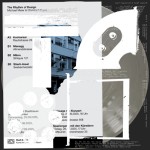
Artist: Michael Meier & Christoph Franz (@)
Title: The Rhythm of Design
Format: 12" + Download
Label: Präsens Editionen (@)
Rated:

Title: The Rhythm of Design
Format: 12" + Download
Label: Präsens Editionen (@)
Rated:
There is something almost perversely appropriate about turning the disappearance of music venues into a record, since vinyl is itself a rather good machine for preserving things that no longer exist. Michael Meier & Christoph Franz’s "The Rhythm of Design" takes this contradiction seriously, but without turning it into an exercise in cultural mourning. The Zürich-based artistic duo, whose research-driven practice repeatedly examines the social and historical layers embedded in built environments, began with six places connected to the city’s music scene: Club Zukunft, Giesshübel, Kochareal, Manegg, Mikro and Stierli-Areal. Some had already disappeared, others were threatened by redevelopment or changing urban priorities. Instead of simply photographing the remains and attaching a solemn text about gentrification, Meier & Franz removed pieces of the places themselves and had them transformed into six playable instruments with the help of specialist instrument builders. It is a beautifully literal idea: if the room is going to vanish, at least let it make some noise on the way out.
The conceptual elegance of "The Rhythm of Design" lies precisely in its refusal to separate architecture from music. The materials are not merely symbolic souvenirs of the venues; they become active components in a new musical process. Kalabrese, Tobibi Ferrari-Bienz, Rafal Skoczek, Lucien Badoux & Jeremy Sauter, Nicola Kazimir and Dualism were each asked to compose for one of these newly constructed instruments, resulting in six pieces whose stylistic coordinates stretch from experimental funk and punk towards kraut, noise and drone. The variety is important. A memorial made from a single aesthetic would risk turning a living musical culture into a tasteful museum exhibit, which is probably the last thing these places would have wanted. Instead, the record remains unruly enough to suggest that a scene is not defined by one sound but by the coexistence of incompatible ones.
The original performances made the idea even more radical. In September 2025, the six pieces were played simultaneously at their respective sites rather than presented as a conventional ensemble work. The audience had to move through the city, listening to isolated portions and constructing the larger composition through geography, memory and imagination. The city itself became the score, with distance functioning almost like another instrument. The LP inevitably changes that proposition. Six scattered events become six consecutive tracks; walking becomes sitting; architectural scale is reduced to a twelve-inch disc. Yet this apparent loss is actually where the album becomes fascinating. The record does not reproduce the original event so much as provide a second life for it. What was once spatial becomes temporal, and what depended upon physical movement can now be revisited through repetition.
That transformation also makes the individual pieces more revealing. “Club Zukunft” by Kalabrese carries the name of a place that belonged to Zürich’s nightlife but now survives here as a musical designation, while “Giesshübel” and “Kochareal” similarly convert addresses into titles that sound almost like coordinates on a map nobody needs to unfold anymore. The music consequently acquires a peculiar relationship with naming. These are not abstract compositions that happen to have urban titles attached to them; their identities are anchored to specific fragments of the city. Even when the listener has never stood in those places, the tracks retain the peculiar gravity of something made for a location rather than simply inspired by one.
The sequence becomes especially effective because the album does not insist on stylistic continuity. “Manegg”, credited to Lucien Badoux and Jeremy Sauter, gives way to Nicola Kazimir’s “Mikro” and finally Dualism’s “Stierli-Areal”, allowing the record to behave less like a unified genre statement than a collection of local dialects. That fragmentation is not a defect to be overcome. It is the point. Urban culture is messy because cities are messy, and the disappearance of a rehearsal room or club does not produce a neat hole in the cultural fabric. It redirects people, practices, friendships and sounds elsewhere, often in ways nobody can predict at the time.
The project also sits naturally within Meier & Franz’s wider artistic concerns. The duo, Michael Meier born in Wiener Neustadt in 1980 and Christoph Franz in Singen in 1982, both studied at the University of the Arts in Linz before completing Fine Arts degrees at Zurich University of the Arts. Their work repeatedly treats places not as neutral scenery but as accumulations of social, political and historical decisions. Earlier projects have dealt with urban transformation, construction, displacement and the strange ways in which apparently ordinary sites carry traces of larger systems. "The Rhythm of Design" extends that method into sound, but importantly does not treat music as an illustration of an architectural problem. Here music becomes evidence in its own right.
The title adds another layer. "The Rhythm of Design" echoes a song by the Zürich band Blue China, associated with the city’s youth and cultural protests of the 1980s. That historical reference prevents the project from presenting contemporary redevelopment as an entirely new phenomenon. Zürich has already had arguments about who gets to occupy the city, what kinds of culture deserve space, and whether urban development necessarily means cultural improvement. Apparently the city has been having this conversation for decades, which is reassuringly human in its inability to reach a final answer.
There is also something quietly political in the decision to preserve not only the memory of the venues but the materials associated with them. Photographs can document a demolished building, and an archive can catalogue its history, but an instrument made from its physical remains introduces another possibility: the past becomes capable of producing something new. The distinction matters. Nostalgia generally wants the vanished thing back exactly as it was. "The Rhythm of Design" accepts that this is impossible and asks a more useful question: what can be made from what remains?
The answer is neither purely musical nor purely architectural. These six pieces occupy the uncomfortable middle ground between document, composition and public artwork. Their real subject is therefore not simply the disappearance of Zürich’s music spaces, but the way culture survives spatial change by mutating. A venue closes; its wood or metal is repurposed; a musician writes for the resulting instrument; a performance takes place somewhere that has already ceased to be what it was; months later the performance becomes a record; eventually the record itself becomes another historical object. The process is almost absurdly elaborate for something as simple as remembering a room, but perhaps memory has always required unnecessary machinery.
That is what makes "The Rhythm of Design" more compelling than a straightforward commemorative release. It does not ask us to mourn six locations. It asks us to listen to what happens when their physical disappearance enters another form. The resulting album is fragmented because the city is fragmented, heterogeneous because scenes are heterogeneous, and slightly unstable because memory itself is a poor filing system. What survives here is not a replica of Zürich as it was, but a set of sonic residues capable of acquiring meanings beyond the places that generated them.
In that sense, the most important rhythm on "The Rhythm of Design" is not necessarily a beat. It is the rhythm of urban change itself: construction, occupation, displacement, adaptation, disappearance, recollection. Cities rarely stop moving long enough to notice what they have erased. This record does. It makes six vanished or endangered spaces audible again, not by pretending that they can be restored, but by giving their remains another function. A rather elegant form of resistance, and considerably more useful than another plaque nobody reads.
The conceptual elegance of "The Rhythm of Design" lies precisely in its refusal to separate architecture from music. The materials are not merely symbolic souvenirs of the venues; they become active components in a new musical process. Kalabrese, Tobibi Ferrari-Bienz, Rafal Skoczek, Lucien Badoux & Jeremy Sauter, Nicola Kazimir and Dualism were each asked to compose for one of these newly constructed instruments, resulting in six pieces whose stylistic coordinates stretch from experimental funk and punk towards kraut, noise and drone. The variety is important. A memorial made from a single aesthetic would risk turning a living musical culture into a tasteful museum exhibit, which is probably the last thing these places would have wanted. Instead, the record remains unruly enough to suggest that a scene is not defined by one sound but by the coexistence of incompatible ones.
The original performances made the idea even more radical. In September 2025, the six pieces were played simultaneously at their respective sites rather than presented as a conventional ensemble work. The audience had to move through the city, listening to isolated portions and constructing the larger composition through geography, memory and imagination. The city itself became the score, with distance functioning almost like another instrument. The LP inevitably changes that proposition. Six scattered events become six consecutive tracks; walking becomes sitting; architectural scale is reduced to a twelve-inch disc. Yet this apparent loss is actually where the album becomes fascinating. The record does not reproduce the original event so much as provide a second life for it. What was once spatial becomes temporal, and what depended upon physical movement can now be revisited through repetition.
That transformation also makes the individual pieces more revealing. “Club Zukunft” by Kalabrese carries the name of a place that belonged to Zürich’s nightlife but now survives here as a musical designation, while “Giesshübel” and “Kochareal” similarly convert addresses into titles that sound almost like coordinates on a map nobody needs to unfold anymore. The music consequently acquires a peculiar relationship with naming. These are not abstract compositions that happen to have urban titles attached to them; their identities are anchored to specific fragments of the city. Even when the listener has never stood in those places, the tracks retain the peculiar gravity of something made for a location rather than simply inspired by one.
The sequence becomes especially effective because the album does not insist on stylistic continuity. “Manegg”, credited to Lucien Badoux and Jeremy Sauter, gives way to Nicola Kazimir’s “Mikro” and finally Dualism’s “Stierli-Areal”, allowing the record to behave less like a unified genre statement than a collection of local dialects. That fragmentation is not a defect to be overcome. It is the point. Urban culture is messy because cities are messy, and the disappearance of a rehearsal room or club does not produce a neat hole in the cultural fabric. It redirects people, practices, friendships and sounds elsewhere, often in ways nobody can predict at the time.
The project also sits naturally within Meier & Franz’s wider artistic concerns. The duo, Michael Meier born in Wiener Neustadt in 1980 and Christoph Franz in Singen in 1982, both studied at the University of the Arts in Linz before completing Fine Arts degrees at Zurich University of the Arts. Their work repeatedly treats places not as neutral scenery but as accumulations of social, political and historical decisions. Earlier projects have dealt with urban transformation, construction, displacement and the strange ways in which apparently ordinary sites carry traces of larger systems. "The Rhythm of Design" extends that method into sound, but importantly does not treat music as an illustration of an architectural problem. Here music becomes evidence in its own right.
The title adds another layer. "The Rhythm of Design" echoes a song by the Zürich band Blue China, associated with the city’s youth and cultural protests of the 1980s. That historical reference prevents the project from presenting contemporary redevelopment as an entirely new phenomenon. Zürich has already had arguments about who gets to occupy the city, what kinds of culture deserve space, and whether urban development necessarily means cultural improvement. Apparently the city has been having this conversation for decades, which is reassuringly human in its inability to reach a final answer.
There is also something quietly political in the decision to preserve not only the memory of the venues but the materials associated with them. Photographs can document a demolished building, and an archive can catalogue its history, but an instrument made from its physical remains introduces another possibility: the past becomes capable of producing something new. The distinction matters. Nostalgia generally wants the vanished thing back exactly as it was. "The Rhythm of Design" accepts that this is impossible and asks a more useful question: what can be made from what remains?
The answer is neither purely musical nor purely architectural. These six pieces occupy the uncomfortable middle ground between document, composition and public artwork. Their real subject is therefore not simply the disappearance of Zürich’s music spaces, but the way culture survives spatial change by mutating. A venue closes; its wood or metal is repurposed; a musician writes for the resulting instrument; a performance takes place somewhere that has already ceased to be what it was; months later the performance becomes a record; eventually the record itself becomes another historical object. The process is almost absurdly elaborate for something as simple as remembering a room, but perhaps memory has always required unnecessary machinery.
That is what makes "The Rhythm of Design" more compelling than a straightforward commemorative release. It does not ask us to mourn six locations. It asks us to listen to what happens when their physical disappearance enters another form. The resulting album is fragmented because the city is fragmented, heterogeneous because scenes are heterogeneous, and slightly unstable because memory itself is a poor filing system. What survives here is not a replica of Zürich as it was, but a set of sonic residues capable of acquiring meanings beyond the places that generated them.
In that sense, the most important rhythm on "The Rhythm of Design" is not necessarily a beat. It is the rhythm of urban change itself: construction, occupation, displacement, adaptation, disappearance, recollection. Cities rarely stop moving long enough to notice what they have erased. This record does. It makes six vanished or endangered spaces audible again, not by pretending that they can be restored, but by giving their remains another function. A rather elegant form of resistance, and considerably more useful than another plaque nobody reads.
Tom Raworth Giancarlo Nino Locatelli, Pipeline: A Decent Run
Artist: Tom Raworth Giancarlo Nino Locatelli, Pipeline
Title: A Decent Run
Format: CD x 2 (double CD)
Label: We Insist! (@)
Rated:
Title: A Decent Run
Format: CD x 2 (double CD)
Label: We Insist! (@)
Rated:
There are easier ways of putting poetry to music. One can read the poem aloud over a tasteful piano chord, add some discreet strings, lower the lights and allow everyone present to feel culturally improved for approximately forty-five minutes. "A Decent Run" has considerably less interest in such civilised procedures. Its relationship with Tom Raworth's poetry is stranger, more physical and much more playful: words are spoken, sung, repeated, displaced, translated into instrumental gestures and sometimes treated almost as raw sound. The music does not accompany the poems so much as get into an argument with them, and, unusually, both parties appear to enjoy it.
The history behind the album makes that relationship particularly significant. Giancarlo Nino Locatelli first met Raworth in 1992, beginning a friendship and artistic collaboration that continued until the poet's death in 2017. The idea for this project dates back to 2000, but it finally took concrete form with recordings made in 2024. Ten pieces use Raworth's poetry, while two more draw on compositions by Steve Lacy, another crucial reference point in Locatelli's musical thinking. The resulting twelve tracks bring together the musicians of Pipeline with a remarkable group of guests, including Carla Kihlstedt, Sebi Tramontana, Alberto Braida, Luca Tilli, Andrea Grossi and Cristiano Calcagnile, alongside a collection of deliberately brief interventions from musicians gathered under the wonderfully suspicious name Clandestines.
Raworth's presence is therefore not simply literary. His recorded voice remains part of the album, making the project a posthumous collaboration rather than a retrospective tribute assembled at a safe distance. That distinction matters. Raworth was one of the central figures of the British Poetry Revival, a movement that challenged conventional poetic forms and embraced American influences from the Black Mountain and Beat traditions. His own writing often worked through rapid shifts of perception, compressed language, sudden associations and an almost gleeful distrust of grammatical stability. He also had a strong interest in visual art, publishing and the physical construction of books.
Such poetry already behaves a little like improvisation. Its syntax can turn before the reader has finished unpacking the previous image; its meanings are often provisional; its fragments seem to generate further fragments rather than obediently marching toward a conclusion. Locatelli understands this. Instead of trying to stabilise Raworth's language, he gives the musicians enough freedom to destabilise it further.
"Situations", which opens the album, immediately establishes the principle. A small music-box sound introduces the piece before Raworth's voice enters with language that refuses the reassuring distinction between sense and nonsense. The ensemble does not provide a conventional backdrop. Clarinet, strings, piano, trombone and percussion seem to examine the spoken words from different angles, sometimes reinforcing them, sometimes apparently ignoring them. The result feels less like an illustration than an alternative syntax running simultaneously alongside the poem.
This is where Locatelli's long experience with Pipeline becomes audible. The ensemble does not behave like a conventional jazz group in which a theme is stated, developed and eventually returned to with everybody congratulating themselves on having remembered it. The instruments retain individual personalities, but their roles remain unstable. A clarinet phrase may become a punctuation mark; a percussion sound may function almost like a consonant; a violin can extend a vowel that the voice has just abandoned. The distinction between musical accompaniment and linguistic structure begins to collapse.
"Poetry" takes the experiment further and, appropriately, does so with humour. Raworth's suspicion of categorisation meets a musical arrangement that refuses to behave categorically either. Carla Kihlstedt's voice shifts the material from speech toward song without turning the poem into a conventional art song, while the ensemble surrounds her with sounds that seem to have been selected partly because nobody informed them that they were supposed to behave like respectable instruments.
There is a mischievous intelligence in this. Raworth's poetry repeatedly questioned the mechanisms by which language acquires authority, while Locatelli questions the mechanisms by which music acquires coherence. Both approaches are interested in what happens when established relationships are nudged out of alignment. The album does not destroy meaning. It makes meaning work overtime.
"In Memoriam L. W." moves into more contemplative territory without becoming solemn in the conventional memorial sense. Raworth was capable of writing about absence, death and memory without allowing those subjects to dictate the emotional temperature of the work. Locatelli follows the same principle. The music leaves gaps rather than filling them, and the ensemble's restraint gives individual sounds considerable consequence.
Then comes "Vita Cortese Tara", where the album's relationship with voice becomes particularly intricate. The material exists in more than one state: spoken and sung, structured and improvised, recognisable and partially dissolved. The distinction is crucial because Raworth's poems are not being treated as fixed literary objects. They are being tested in different physical forms. What happens when the same words are spoken rather than sung? What happens when their semantic meaning becomes less important than their rhythm? What remains when a phrase becomes a sound before it becomes an idea? These are not academic questions dressed up as music. They are audible throughout the album.
"Sign of Time" and "Warm Autumn Problem" continue the process, but the album never settles into a single method. Sometimes the instruments seem to follow the contours of the language; elsewhere they appear to establish an independent conversation. This variation prevents the project from becoming a demonstration of one clever technique repeated twelve times. Locatelli has clearly resisted the temptation to invent a system and then spend an entire album proving that the system works.
That matters because Raworth's writing itself resists uniformity. His poetry could move rapidly between political observation, surreal imagery, mundane details, linguistic jokes and philosophical unease. He published more than forty collections and was also a publisher, editor, translator and visual artist, so the idea of language as something materially constructed was hardly incidental to his practice.
"Colonel Eternal", which appears on the second disc, revisits material related to the opening "Situations". But repetition here does not mean duplication. The return makes the earlier version look provisional, as though the same musical-poetic object has been picked up from another side. This is one of the album's recurring strategies: a piece can reappear without simply repeating itself, because the context has changed and therefore the listener's memory has changed with it.
"Radhopsin Blues" is especially revealing. Raworth's own voice comes forward, while the accompaniment initially seems almost skeletal before acquiring greater weight. There is a curious tension between the apparent looseness of the language and the careful control of the musical setting. The ensemble never tries to make the poem sound more comprehensible than it is. Instead, it gives its verbal movement somewhere to happen. That is probably the central virtue of "A Decent Run": it respects ambiguity without confusing ambiguity with vagueness.
"Translation" is perhaps the album's most mischievous episode. Its subject allows Locatelli to play with the instability of language itself, while the musicians turn the process of semantic distortion into a musical device. Trombone noises, electronic interventions and small instrumental gestures begin to resemble fragments of a conversation whose participants have all received slightly different versions of the dictionary.
It is difficult not to think about contemporary machine translation here, especially when language is stripped of context and rearranged according to rules that technically function while occasionally producing sentences that sound as if an exhausted extraterrestrial has been given access to an online phrasebook. Yet the piece does not merely mock linguistic failure. It suggests that translation is always a transformation, even when performed by humans who supposedly know exactly what they are doing.
"Oppio Inglese" shifts the atmosphere again. The music becomes comparatively spare, allowing the voice and instrumental textures to occupy separate but related spaces. There is something almost botanical in the way the sound grows and then retreats, although the album wisely avoids turning the poem into a soundtrack for a tasteful documentary about flowers. What matters is the fragility of the arrangement. A small change in density can radically alter the perceived weight of the words.
By the time the title track arrives, "A Decent Run" has accumulated enough different approaches that its apparent lack of stylistic uniformity becomes one of its strongest structural features. The project moves between free improvisation, composed material, song, spoken word, chamber-like textures, jazz, noise and electronics without treating genre as a border checkpoint.
This reflects Locatelli's own musical history. Pipeline has operated in different configurations, from trio to larger ensembles, and his approach has repeatedly involved combining written structures with improvisational freedom. Earlier Pipeline work has used compositions as frameworks around which musicians could construct networks of possible responses rather than simply reproducing a finished score.
That philosophy seems perfectly suited to Raworth. The poet's language does not need to be “set” because it already contains movement. Locatelli's role is to create circumstances in which that movement can interact with sound.
The final "Absence" is therefore appropriately unresolved. Its title might suggest a conventional elegy, but the music does something more interesting. Voice, instruments and small sounds occupy a space in which presence and disappearance constantly exchange places. The poem does not simply conclude, and neither does the music provide a grand emotional period at the end of the sentence. The album seems to understand that absence is not silence. It is the continuing effect of something that is no longer physically there.
That idea inevitably carries extra weight because Raworth died seven years before these recordings were made. Yet "A Decent Run" never turns his death into the organising principle of the music. This is not an album about a dead poet. It is an album made with a poet whose voice remains active inside it. That distinction saves the project from sentimentality.
The involvement of the Clandestines is another stroke of intelligence. John Corbett, Terry Kapsalis, Lou Mallozzi, Steve Beresford, Joëlle Léandre, Larry Ochs, Mazen Kerbaj, Gabriele Mitelli and others contribute brief gestures that are incorporated into the final structures. These interventions can be tiny, but their very brevity makes them significant. Instead of building a hierarchy in which the principal musicians produce the important material and guests decorate it, Locatelli treats the ensemble as a network of possible presences.
The album's title consequently acquires a slightly ironic dimension. A “decent run” sounds modest, almost dismissive, as though somebody has returned from an afternoon walk and reported that things went reasonably well. What actually sits behind the phrase is a quarter-century of friendship, correspondence, artistic exchange, a posthumous recording process and an ensemble large enough to make a tax accountant nervous.
But the modesty is appropriate. Raworth's poetry was never particularly interested in grand declarations when a sudden shift in language could do more damage with less effort. Locatelli's music follows a similar economy. Even when the ensemble becomes dense, the individual sounds remain legible. Nobody needs to demonstrate virtuosity by setting fire to the furniture.
The result is unusually generous music. It gives space to the voice without subordinating the instruments, allows improvisation without pretending that structure is unnecessary, and treats composition as something that can remain porous. The musicians listen not only to one another but to the internal rhythm of language.
That makes "A Decent Run" more than a meeting between literature and experimental jazz. It is an investigation into what happens when two different systems of thought are allowed to remain incomplete. Poetry does not become music, and music does not become poetry. Instead, each continually interferes with the other.
Raworth's language survives because it is not embalmed. Locatelli's arrangements survive because they are not overdetermined. Between them, Pipeline creates a music in which words can become rhythm, rhythm can become punctuation, noise can become syntax and silence can become part of the sentence.
There is something quietly moving about that. A project conceived in 2000, completed through recordings made in 2024 and released in 2026 might sound like an exercise in archival patience. Instead, "A Decent Run" feels remarkably alive. Its central idea is not preservation but continuation: the recognition that a friendship can outlast the people who began it, and that a poem can continue changing once its author is no longer available to change it himself.
Perhaps that is the most fitting tribute Raworth could receive. Not a monument, not a solemn anthology, and certainly not a tasteful recital. A set of musicians taking his words seriously enough to interfere with them.
That is what "A Decent Run" does. It listens to the poems, takes them apart, lets them collide with clarinets, trombone, strings, piano, percussion, electronics, voices and small mechanical noises, and then allows the resulting fragments to find their own relations. It is playful without being frivolous, intellectually demanding without becoming academic, and emotionally affecting without asking for the listener's sympathy.
A rare achievement, really. Twelve tracks, one absent poet, a large unruly ensemble, and somehow nobody has felt the need to explain what the music is supposed to mean. Human civilisation may yet have a little hope.
The history behind the album makes that relationship particularly significant. Giancarlo Nino Locatelli first met Raworth in 1992, beginning a friendship and artistic collaboration that continued until the poet's death in 2017. The idea for this project dates back to 2000, but it finally took concrete form with recordings made in 2024. Ten pieces use Raworth's poetry, while two more draw on compositions by Steve Lacy, another crucial reference point in Locatelli's musical thinking. The resulting twelve tracks bring together the musicians of Pipeline with a remarkable group of guests, including Carla Kihlstedt, Sebi Tramontana, Alberto Braida, Luca Tilli, Andrea Grossi and Cristiano Calcagnile, alongside a collection of deliberately brief interventions from musicians gathered under the wonderfully suspicious name Clandestines.
Raworth's presence is therefore not simply literary. His recorded voice remains part of the album, making the project a posthumous collaboration rather than a retrospective tribute assembled at a safe distance. That distinction matters. Raworth was one of the central figures of the British Poetry Revival, a movement that challenged conventional poetic forms and embraced American influences from the Black Mountain and Beat traditions. His own writing often worked through rapid shifts of perception, compressed language, sudden associations and an almost gleeful distrust of grammatical stability. He also had a strong interest in visual art, publishing and the physical construction of books.
Such poetry already behaves a little like improvisation. Its syntax can turn before the reader has finished unpacking the previous image; its meanings are often provisional; its fragments seem to generate further fragments rather than obediently marching toward a conclusion. Locatelli understands this. Instead of trying to stabilise Raworth's language, he gives the musicians enough freedom to destabilise it further.
"Situations", which opens the album, immediately establishes the principle. A small music-box sound introduces the piece before Raworth's voice enters with language that refuses the reassuring distinction between sense and nonsense. The ensemble does not provide a conventional backdrop. Clarinet, strings, piano, trombone and percussion seem to examine the spoken words from different angles, sometimes reinforcing them, sometimes apparently ignoring them. The result feels less like an illustration than an alternative syntax running simultaneously alongside the poem.
This is where Locatelli's long experience with Pipeline becomes audible. The ensemble does not behave like a conventional jazz group in which a theme is stated, developed and eventually returned to with everybody congratulating themselves on having remembered it. The instruments retain individual personalities, but their roles remain unstable. A clarinet phrase may become a punctuation mark; a percussion sound may function almost like a consonant; a violin can extend a vowel that the voice has just abandoned. The distinction between musical accompaniment and linguistic structure begins to collapse.
"Poetry" takes the experiment further and, appropriately, does so with humour. Raworth's suspicion of categorisation meets a musical arrangement that refuses to behave categorically either. Carla Kihlstedt's voice shifts the material from speech toward song without turning the poem into a conventional art song, while the ensemble surrounds her with sounds that seem to have been selected partly because nobody informed them that they were supposed to behave like respectable instruments.
There is a mischievous intelligence in this. Raworth's poetry repeatedly questioned the mechanisms by which language acquires authority, while Locatelli questions the mechanisms by which music acquires coherence. Both approaches are interested in what happens when established relationships are nudged out of alignment. The album does not destroy meaning. It makes meaning work overtime.
"In Memoriam L. W." moves into more contemplative territory without becoming solemn in the conventional memorial sense. Raworth was capable of writing about absence, death and memory without allowing those subjects to dictate the emotional temperature of the work. Locatelli follows the same principle. The music leaves gaps rather than filling them, and the ensemble's restraint gives individual sounds considerable consequence.
Then comes "Vita Cortese Tara", where the album's relationship with voice becomes particularly intricate. The material exists in more than one state: spoken and sung, structured and improvised, recognisable and partially dissolved. The distinction is crucial because Raworth's poems are not being treated as fixed literary objects. They are being tested in different physical forms. What happens when the same words are spoken rather than sung? What happens when their semantic meaning becomes less important than their rhythm? What remains when a phrase becomes a sound before it becomes an idea? These are not academic questions dressed up as music. They are audible throughout the album.
"Sign of Time" and "Warm Autumn Problem" continue the process, but the album never settles into a single method. Sometimes the instruments seem to follow the contours of the language; elsewhere they appear to establish an independent conversation. This variation prevents the project from becoming a demonstration of one clever technique repeated twelve times. Locatelli has clearly resisted the temptation to invent a system and then spend an entire album proving that the system works.
That matters because Raworth's writing itself resists uniformity. His poetry could move rapidly between political observation, surreal imagery, mundane details, linguistic jokes and philosophical unease. He published more than forty collections and was also a publisher, editor, translator and visual artist, so the idea of language as something materially constructed was hardly incidental to his practice.
"Colonel Eternal", which appears on the second disc, revisits material related to the opening "Situations". But repetition here does not mean duplication. The return makes the earlier version look provisional, as though the same musical-poetic object has been picked up from another side. This is one of the album's recurring strategies: a piece can reappear without simply repeating itself, because the context has changed and therefore the listener's memory has changed with it.
"Radhopsin Blues" is especially revealing. Raworth's own voice comes forward, while the accompaniment initially seems almost skeletal before acquiring greater weight. There is a curious tension between the apparent looseness of the language and the careful control of the musical setting. The ensemble never tries to make the poem sound more comprehensible than it is. Instead, it gives its verbal movement somewhere to happen. That is probably the central virtue of "A Decent Run": it respects ambiguity without confusing ambiguity with vagueness.
"Translation" is perhaps the album's most mischievous episode. Its subject allows Locatelli to play with the instability of language itself, while the musicians turn the process of semantic distortion into a musical device. Trombone noises, electronic interventions and small instrumental gestures begin to resemble fragments of a conversation whose participants have all received slightly different versions of the dictionary.
It is difficult not to think about contemporary machine translation here, especially when language is stripped of context and rearranged according to rules that technically function while occasionally producing sentences that sound as if an exhausted extraterrestrial has been given access to an online phrasebook. Yet the piece does not merely mock linguistic failure. It suggests that translation is always a transformation, even when performed by humans who supposedly know exactly what they are doing.
"Oppio Inglese" shifts the atmosphere again. The music becomes comparatively spare, allowing the voice and instrumental textures to occupy separate but related spaces. There is something almost botanical in the way the sound grows and then retreats, although the album wisely avoids turning the poem into a soundtrack for a tasteful documentary about flowers. What matters is the fragility of the arrangement. A small change in density can radically alter the perceived weight of the words.
By the time the title track arrives, "A Decent Run" has accumulated enough different approaches that its apparent lack of stylistic uniformity becomes one of its strongest structural features. The project moves between free improvisation, composed material, song, spoken word, chamber-like textures, jazz, noise and electronics without treating genre as a border checkpoint.
This reflects Locatelli's own musical history. Pipeline has operated in different configurations, from trio to larger ensembles, and his approach has repeatedly involved combining written structures with improvisational freedom. Earlier Pipeline work has used compositions as frameworks around which musicians could construct networks of possible responses rather than simply reproducing a finished score.
That philosophy seems perfectly suited to Raworth. The poet's language does not need to be “set” because it already contains movement. Locatelli's role is to create circumstances in which that movement can interact with sound.
The final "Absence" is therefore appropriately unresolved. Its title might suggest a conventional elegy, but the music does something more interesting. Voice, instruments and small sounds occupy a space in which presence and disappearance constantly exchange places. The poem does not simply conclude, and neither does the music provide a grand emotional period at the end of the sentence. The album seems to understand that absence is not silence. It is the continuing effect of something that is no longer physically there.
That idea inevitably carries extra weight because Raworth died seven years before these recordings were made. Yet "A Decent Run" never turns his death into the organising principle of the music. This is not an album about a dead poet. It is an album made with a poet whose voice remains active inside it. That distinction saves the project from sentimentality.
The involvement of the Clandestines is another stroke of intelligence. John Corbett, Terry Kapsalis, Lou Mallozzi, Steve Beresford, Joëlle Léandre, Larry Ochs, Mazen Kerbaj, Gabriele Mitelli and others contribute brief gestures that are incorporated into the final structures. These interventions can be tiny, but their very brevity makes them significant. Instead of building a hierarchy in which the principal musicians produce the important material and guests decorate it, Locatelli treats the ensemble as a network of possible presences.
The album's title consequently acquires a slightly ironic dimension. A “decent run” sounds modest, almost dismissive, as though somebody has returned from an afternoon walk and reported that things went reasonably well. What actually sits behind the phrase is a quarter-century of friendship, correspondence, artistic exchange, a posthumous recording process and an ensemble large enough to make a tax accountant nervous.
But the modesty is appropriate. Raworth's poetry was never particularly interested in grand declarations when a sudden shift in language could do more damage with less effort. Locatelli's music follows a similar economy. Even when the ensemble becomes dense, the individual sounds remain legible. Nobody needs to demonstrate virtuosity by setting fire to the furniture.
The result is unusually generous music. It gives space to the voice without subordinating the instruments, allows improvisation without pretending that structure is unnecessary, and treats composition as something that can remain porous. The musicians listen not only to one another but to the internal rhythm of language.
That makes "A Decent Run" more than a meeting between literature and experimental jazz. It is an investigation into what happens when two different systems of thought are allowed to remain incomplete. Poetry does not become music, and music does not become poetry. Instead, each continually interferes with the other.
Raworth's language survives because it is not embalmed. Locatelli's arrangements survive because they are not overdetermined. Between them, Pipeline creates a music in which words can become rhythm, rhythm can become punctuation, noise can become syntax and silence can become part of the sentence.
There is something quietly moving about that. A project conceived in 2000, completed through recordings made in 2024 and released in 2026 might sound like an exercise in archival patience. Instead, "A Decent Run" feels remarkably alive. Its central idea is not preservation but continuation: the recognition that a friendship can outlast the people who began it, and that a poem can continue changing once its author is no longer available to change it himself.
Perhaps that is the most fitting tribute Raworth could receive. Not a monument, not a solemn anthology, and certainly not a tasteful recital. A set of musicians taking his words seriously enough to interfere with them.
That is what "A Decent Run" does. It listens to the poems, takes them apart, lets them collide with clarinets, trombone, strings, piano, percussion, electronics, voices and small mechanical noises, and then allows the resulting fragments to find their own relations. It is playful without being frivolous, intellectually demanding without becoming academic, and emotionally affecting without asking for the listener's sympathy.
A rare achievement, really. Twelve tracks, one absent poet, a large unruly ensemble, and somehow nobody has felt the need to explain what the music is supposed to mean. Human civilisation may yet have a little hope.