
Browse by Genre
Industrial Music / Industrial Metal / Aggro Industrial / Electro Metal
Industrial Noise / Power Noise / Harsh Noise
Synth Pop / Electro Pop / Synth-Electronica
Techno / Trance / Goa / Drum'n'Bass / Jungle / Tribal / Trip-Hop
Ambient / Electronica / Ethereal / Dub / Soundscapes / Abstract
Experimental / Avantgarde / Weird & Wired / Glitch / Noise / Field Recording
Dark / Gothic / Wave / New Wave / Dark Wave / Industrial Gothic
New Music / Downtown / Avantgarde Jazz / New Classical / World
Search Reviews
Music Reviews
Strangebird~Sounds: Minerals From The Crust

Artist: Strangebird~Sounds
Title: Minerals From The Crust
Format: Download Only (MP3 + Lossless)
Label: Audiobulb (@)
Rated:


Title: Minerals From The Crust
Format: Download Only (MP3 + Lossless)
Label: Audiobulb (@)
Rated:
Geology is patient. Music, less so. "Minerals From The Crust" tries to reconcile the two, which is either ambitious or mildly delusional depending on your tolerance for concept-driven electronica. Against expectations, Gregory Geerts - working as Strangebird~Sounds - makes the idea hold together without turning it into a lecture disguised as a record.
Built around Eurorack modular synthesis (that beloved playground where cables breed like anxious thoughts), the album approaches sound as matter: shaped, fractured, compressed, occasionally allowed to shimmer. Geerts has been circling this territory for a while, but here the focus feels sharpened. Not more complex, just more intentional, which is rarer than most modular enthusiasts would like to admit.
“AMETRINE” opens like a brief calibration, a small flicker of tone and texture that sets the palette without overstaying its welcome. Then “AZURITE” settles into something more hypnotic, pulsing basslines underpinning crystalline sequences that feel structured but never rigid. There’s a tactile quality to the sound, as if you could run your fingers across it and come away with residue.
“BARYTE” and “CALCITE” deepen the terrain. Layers accumulate, but not in the usual maximalist sense. Instead, elements interlock, forming patterns that seem stable until they subtly shift, like mineral formations under pressure. It’s controlled unpredictability, the kind that comes from knowing your system well enough to let it misbehave productively.
“CELESTINE” and “FLUORITE” introduce a lighter, more suspended quality, where rhythm becomes less about propulsion and more about suggestion. The beats are there, technically, but they feel optional, like the music wouldn’t collapse without them. It’s ambient techno in the loosest sense, more concerned with texture than destination.
“MESOLITE” lives up to its fractured name, breaking rhythm into smaller, less obedient fragments. There’s a hint of microsound influence here, tiny events flickering in and out, refusing to coalesce into anything too comfortable. If you were hoping for a groove you could hold onto, this is where it slips away.
By the time “NEPTUNITE” and the longer “ZEOLITE” arrive, the album has settled into its own internal logic. Not narrative, exactly, but progression. You move through it the way you might move through layers of sediment, aware that each section contains traces of what came before, even if you can’t fully reconstruct it.
Comparisons to the broader ambient techno continuum are inevitable, but "Minerals From The Crust" feels less interested in the club-adjacent lineage and more in sound as material inquiry. There are faint echoes of artists who treat synthesis as a sculptural practice, but Geerts avoids the trap of turning process into spectacle. The machinery is present, but it doesn’t demand applause.
What makes the album work is its restraint. It could have easily become a showcase for modular excess, endless patching for the sake of complexity. Instead, it opts for brevity and focus. Most tracks hover around the three-minute mark, which in this context feels almost radical. Say what you need to say, then stop. Imagine that.
It’s not a record that overwhelms. It accumulates. Quietly, steadily, until you realize you’ve been listening more closely than you intended. Which, for a project about the slow formation of structure beneath the surface, feels appropriately on point.
Built around Eurorack modular synthesis (that beloved playground where cables breed like anxious thoughts), the album approaches sound as matter: shaped, fractured, compressed, occasionally allowed to shimmer. Geerts has been circling this territory for a while, but here the focus feels sharpened. Not more complex, just more intentional, which is rarer than most modular enthusiasts would like to admit.
“AMETRINE” opens like a brief calibration, a small flicker of tone and texture that sets the palette without overstaying its welcome. Then “AZURITE” settles into something more hypnotic, pulsing basslines underpinning crystalline sequences that feel structured but never rigid. There’s a tactile quality to the sound, as if you could run your fingers across it and come away with residue.
“BARYTE” and “CALCITE” deepen the terrain. Layers accumulate, but not in the usual maximalist sense. Instead, elements interlock, forming patterns that seem stable until they subtly shift, like mineral formations under pressure. It’s controlled unpredictability, the kind that comes from knowing your system well enough to let it misbehave productively.
“CELESTINE” and “FLUORITE” introduce a lighter, more suspended quality, where rhythm becomes less about propulsion and more about suggestion. The beats are there, technically, but they feel optional, like the music wouldn’t collapse without them. It’s ambient techno in the loosest sense, more concerned with texture than destination.
“MESOLITE” lives up to its fractured name, breaking rhythm into smaller, less obedient fragments. There’s a hint of microsound influence here, tiny events flickering in and out, refusing to coalesce into anything too comfortable. If you were hoping for a groove you could hold onto, this is where it slips away.
By the time “NEPTUNITE” and the longer “ZEOLITE” arrive, the album has settled into its own internal logic. Not narrative, exactly, but progression. You move through it the way you might move through layers of sediment, aware that each section contains traces of what came before, even if you can’t fully reconstruct it.
Comparisons to the broader ambient techno continuum are inevitable, but "Minerals From The Crust" feels less interested in the club-adjacent lineage and more in sound as material inquiry. There are faint echoes of artists who treat synthesis as a sculptural practice, but Geerts avoids the trap of turning process into spectacle. The machinery is present, but it doesn’t demand applause.
What makes the album work is its restraint. It could have easily become a showcase for modular excess, endless patching for the sake of complexity. Instead, it opts for brevity and focus. Most tracks hover around the three-minute mark, which in this context feels almost radical. Say what you need to say, then stop. Imagine that.
It’s not a record that overwhelms. It accumulates. Quietly, steadily, until you realize you’ve been listening more closely than you intended. Which, for a project about the slow formation of structure beneath the surface, feels appropriately on point.
Vasco Trilla & Lu?s Vicente: Ghost Strata
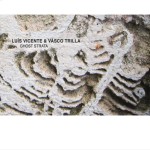
Artist: Vasco Trilla & Lu?s Vicente
Title: Ghost Strata
Format: CD + Download
Label: Cipsela Records (@)
Rated:
Title: Ghost Strata
Format: CD + Download
Label: Cipsela Records (@)
Rated:
There’s a particular courage in releasing an album that refuses to hide behind density, harmony, or even the polite illusion of structure. "Ghost Strata" by Luís Vicente and Vasco Trilla offers no such comforts. It stands there, almost bare, and dares you to listen without expecting to be guided.
Recorded in Barcelona but assembled from a broader European improvisational lineage, this duo encounter feels less like a conversation and more like a geological survey. The title isn’t decorative. Each “Strata” behaves like a layer of time, pressure, and residue, built not through accumulation in the traditional sense, but through friction, interruption, and careful attention to absence.
Vicente’s trumpet avoids lyricism in any conventional form. When it sings, it does so reluctantly, as if aware that melody might be a kind of betrayal. More often, it fractures into breath, metallic whispers, elongated tones that hover just long enough to suggest intention before dissolving. There are moments where it recalls the stark vocabulary of Don Cherry or the spatial austerity of Jon Hassell, but stripped even further, reduced to gesture and air.
Opposite him, Trilla doesn’t accompany so much as destabilize. His percussion is a field of events rather than a rhythmic foundation. Textures scrape, resonate, scatter. Silence is used not as a pause but as an active element, shaping the contour of each piece as much as any struck surface. At times, it feels like he’s playing the edges of sound itself, testing how little is required for something to register as presence.
“Strata #1” opens with a cautious probing, both musicians circling the space rather than occupying it. By “Strata #2” and “#3”, the interaction deepens, though deepening here doesn’t mean intensifying in any obvious way. It’s more about trust, or at least a shared willingness to let things remain unresolved. Sounds appear, hesitate, and withdraw, leaving traces that linger longer than the events themselves.
The longer “Strata #5” closes the album with a kind of suspended gravity. There’s no climax, no catharsis waiting at the end. Instead, the piece stretches time until it becomes slightly uncomfortable, forcing you to confront your own listening habits. Do you wait for something to happen, or do you accept that this is what’s happening?
What makes "Ghost Strata" compelling is its discipline. Free improvisation often risks excess, the urge to fill space simply because it exists. Vicente and Trilla resist that instinct. They carve rather than accumulate, removing as much as they add. The result is music that feels precise without being rigid, open without being formless.
It’s not an easy listen, and it has no interest in becoming one. But within its restraint lies a peculiar kind of clarity. Not pristine, not pure, but honest in a way that more elaborate constructions rarely achieve.
You don’t leave this record with melodies in your head. You leave with a heightened awareness of sound itself, which is a less convenient souvenir, but arguably a more durable one.
Recorded in Barcelona but assembled from a broader European improvisational lineage, this duo encounter feels less like a conversation and more like a geological survey. The title isn’t decorative. Each “Strata” behaves like a layer of time, pressure, and residue, built not through accumulation in the traditional sense, but through friction, interruption, and careful attention to absence.
Vicente’s trumpet avoids lyricism in any conventional form. When it sings, it does so reluctantly, as if aware that melody might be a kind of betrayal. More often, it fractures into breath, metallic whispers, elongated tones that hover just long enough to suggest intention before dissolving. There are moments where it recalls the stark vocabulary of Don Cherry or the spatial austerity of Jon Hassell, but stripped even further, reduced to gesture and air.
Opposite him, Trilla doesn’t accompany so much as destabilize. His percussion is a field of events rather than a rhythmic foundation. Textures scrape, resonate, scatter. Silence is used not as a pause but as an active element, shaping the contour of each piece as much as any struck surface. At times, it feels like he’s playing the edges of sound itself, testing how little is required for something to register as presence.
“Strata #1” opens with a cautious probing, both musicians circling the space rather than occupying it. By “Strata #2” and “#3”, the interaction deepens, though deepening here doesn’t mean intensifying in any obvious way. It’s more about trust, or at least a shared willingness to let things remain unresolved. Sounds appear, hesitate, and withdraw, leaving traces that linger longer than the events themselves.
The longer “Strata #5” closes the album with a kind of suspended gravity. There’s no climax, no catharsis waiting at the end. Instead, the piece stretches time until it becomes slightly uncomfortable, forcing you to confront your own listening habits. Do you wait for something to happen, or do you accept that this is what’s happening?
What makes "Ghost Strata" compelling is its discipline. Free improvisation often risks excess, the urge to fill space simply because it exists. Vicente and Trilla resist that instinct. They carve rather than accumulate, removing as much as they add. The result is music that feels precise without being rigid, open without being formless.
It’s not an easy listen, and it has no interest in becoming one. But within its restraint lies a peculiar kind of clarity. Not pristine, not pure, but honest in a way that more elaborate constructions rarely achieve.
You don’t leave this record with melodies in your head. You leave with a heightened awareness of sound itself, which is a less convenient souvenir, but arguably a more durable one.
CYLiX: Beta Life

Titles matter. They’re the first small lie or truth a record tells you. Calling an album "Beta Life" suggests transition, instability, a version not quite finished. Which is either refreshingly honest or a clever way to excuse your flaws in advance. Fortunately, CYLiX don’t hide behind the concept. They lean into it.
Based in Athens, the trio - Harry G on vocals, plasmaG on keyboards, Elias C. on drums - arrive here after a debut that already positioned them within the darker corners of synthpop and EBM. Their trajectory isn’t accidental. Collaborations, remixes, festival appearances, the slow accumulation of credibility within a scene that tends to remember everything and forgive very little. "Beta Life" feels like the moment where that groundwork either crystallizes or collapses. Thankfully, it chooses the former.
“Devotion” opens with a familiar grammar: pulsing electronics, melodic restraint, a voice that balances between detachment and longing. It doesn’t try to reinvent the genre, which is probably wise. Instead, it sharpens it. There’s a clarity in the production that suggests lessons learned from the lineage of bands orbiting Front 242, particularly in how rhythm and atmosphere negotiate space.
“End Of Decay” and “As if I Had Your Wings” deepen that approach, layering emotional directness over structured electronic frameworks. CYLiX understand something crucial: in this territory, excess kills tension. So they hold back just enough. Melodies are present but not overindulgent, hooks emerge but don’t insist on being remembered forever. It’s a controlled burn.
“In this Prison” and “A Dying Love” lean more heavily into the thematic core. There’s a persistent sense of confinement, emotional and psychological, that runs through the album. Not in a theatrical, gothic way, but in something closer to quiet endurance. The kind of sadness that doesn’t perform, it just stays.
“Distorted Memories” and “Broken” play with texture and structure, introducing subtle variations that prevent the album from flattening into uniformity. These are not radical departures, but small shifts in tone and pacing that suggest a band aware of its own boundaries and willing to test them without breaking the frame entirely.
By the time “Endless Skies” arrives, there’s a hint of expansion, a slight opening in what has been a fairly enclosed emotional landscape. It doesn’t resolve anything, but it offers perspective, which is sometimes the closest thing to relief this kind of music allows.
The closing stretch - “Always never”, “Spent”, “Down the Drain” - returns to a more introspective space, though by now the album’s logic is clear. This is not about transformation in a dramatic sense. It’s about persistence, about continuing within a state rather than escaping it.
What "Beta Life" does well is avoid the trap of nostalgia as mere imitation. Yes, the DNA of classic synthpop and EBM is present, unavoidable even. But CYLiX treat it as a framework, not a script. There are echoes of the past, but they’re filtered through a contemporary sensibility that favors precision over excess.
Is it groundbreaking? Not particularly. But it doesn’t need to be. It’s coherent, focused, and emotionally consistent, which in a genre often caught between homage and stagnation is already a small achievement.
“Beta” implies something unfinished. Here, it feels more like a state of becoming. Not quite resolved, not entirely stable, but moving forward anyway. Which, if we’re being honest, is about as accurate a description of life as you’re going to get from a synthpop record.
Based in Athens, the trio - Harry G on vocals, plasmaG on keyboards, Elias C. on drums - arrive here after a debut that already positioned them within the darker corners of synthpop and EBM. Their trajectory isn’t accidental. Collaborations, remixes, festival appearances, the slow accumulation of credibility within a scene that tends to remember everything and forgive very little. "Beta Life" feels like the moment where that groundwork either crystallizes or collapses. Thankfully, it chooses the former.
“Devotion” opens with a familiar grammar: pulsing electronics, melodic restraint, a voice that balances between detachment and longing. It doesn’t try to reinvent the genre, which is probably wise. Instead, it sharpens it. There’s a clarity in the production that suggests lessons learned from the lineage of bands orbiting Front 242, particularly in how rhythm and atmosphere negotiate space.
“End Of Decay” and “As if I Had Your Wings” deepen that approach, layering emotional directness over structured electronic frameworks. CYLiX understand something crucial: in this territory, excess kills tension. So they hold back just enough. Melodies are present but not overindulgent, hooks emerge but don’t insist on being remembered forever. It’s a controlled burn.
“In this Prison” and “A Dying Love” lean more heavily into the thematic core. There’s a persistent sense of confinement, emotional and psychological, that runs through the album. Not in a theatrical, gothic way, but in something closer to quiet endurance. The kind of sadness that doesn’t perform, it just stays.
“Distorted Memories” and “Broken” play with texture and structure, introducing subtle variations that prevent the album from flattening into uniformity. These are not radical departures, but small shifts in tone and pacing that suggest a band aware of its own boundaries and willing to test them without breaking the frame entirely.
By the time “Endless Skies” arrives, there’s a hint of expansion, a slight opening in what has been a fairly enclosed emotional landscape. It doesn’t resolve anything, but it offers perspective, which is sometimes the closest thing to relief this kind of music allows.
The closing stretch - “Always never”, “Spent”, “Down the Drain” - returns to a more introspective space, though by now the album’s logic is clear. This is not about transformation in a dramatic sense. It’s about persistence, about continuing within a state rather than escaping it.
What "Beta Life" does well is avoid the trap of nostalgia as mere imitation. Yes, the DNA of classic synthpop and EBM is present, unavoidable even. But CYLiX treat it as a framework, not a script. There are echoes of the past, but they’re filtered through a contemporary sensibility that favors precision over excess.
Is it groundbreaking? Not particularly. But it doesn’t need to be. It’s coherent, focused, and emotionally consistent, which in a genre often caught between homage and stagnation is already a small achievement.
“Beta” implies something unfinished. Here, it feels more like a state of becoming. Not quite resolved, not entirely stable, but moving forward anyway. Which, if we’re being honest, is about as accurate a description of life as you’re going to get from a synthpop record.
Jah Wobble & Jon Klein: Automated Paradise

Artist: Jah Wobble & Jon Klein (@)
Title: Automated Paradise
Format: LP
Label: Dimple Discs (@)
Rated:
Title: Automated Paradise
Format: LP
Label: Dimple Discs (@)
Rated:
There are musicians who age into irrelevance, and then there are those who simply change the room they’re standing in while everyone else is still arguing about the furniture. Jah Wobble belongs firmly to the second category. On "Automated Paradise", alongside Jon Klein, he sounds less like a legacy act and more like someone who never accepted the premise of nostalgia in the first place.
Which is slightly inconvenient if you were hoping for a comfortable return to the ghost of Public Image Ltd and the looming shadow of "Metal Box". That DNA is still there, obviously. Wobble’s bass remains what it has always been: not accompaniment, but axis. It doesn’t support the track, it "is" the track, everything else negotiating its existence around it.
What’s different here is the way Klein’s guitar operates. Rather than competing for space, it slips between roles, sometimes textural, sometimes abrasive, occasionally almost melodic before retreating again. Having passed through the orbit of Siouxsie and the Banshees, Klein brings a sense of drama that never quite tips into excess. He knows when to withdraw, which is a rarer skill than most guitarists would like to admit.
“Fading Away” opens the album with a kind of understated inevitability. The groove is there, but it’s not trying to seduce you. It just exists, steady and slightly ominous, as if it has somewhere to be and you’re welcome to follow if you can keep up. “Make It Stop” sharpens the tone, introducing a more confrontational edge, though even here the aggression feels controlled, almost observational rather than explosive.
“Who Wins” and “Read Between The Lines” continue this balancing act between dub-inflected spaciousness and post-punk tension. There’s a sense of restraint running through the album, as if both musicians are deliberately avoiding the obvious move at every turn. It makes the listening experience slightly unpredictable in a low-key way. Not chaotic, just unwilling to settle.
The title track, brief and almost skeletal, feels like a conceptual hinge. “Automated Paradise” doesn’t expand, it compresses, reducing the album’s concerns to a kind of distilled gesture. After that, “Terminal Terminal The End” sounds like it might deliver some kind of conclusion, but of course it doesn’t. Titles lie. Music shrugs.
“Endless Sky” opens things up again, offering a rare moment of something close to release, though even here it’s tempered by a lingering ambiguity. By the time “Brockwell Lido” closes the record, there’s a faint sense of return, not to a specific place, but to a mood. Urban, reflective, slightly detached. The kind of ending that doesn’t resolve anything but feels appropriate anyway.
What makes "Automated Paradise" work is its refusal to dramatize its own relevance. Wobble’s long history, from collaborations with figures like Brian Eno to his genre-blurring solo work, could easily become a burden. Instead, it functions as a kind of background radiation, present but not overwhelming. Klein, with his equally varied trajectory, meets that energy with a quiet adaptability.
The result is an album that feels deliberate without being rigid, exploratory without pretending to reinvent the wheel. It doesn’t chase modernity, doesn’t retreat into past formulas. It just occupies its own space, calmly, almost stubbornly.
Not exactly paradise, automated or otherwise. But something more interesting: a system that still allows for human interference.
Which is slightly inconvenient if you were hoping for a comfortable return to the ghost of Public Image Ltd and the looming shadow of "Metal Box". That DNA is still there, obviously. Wobble’s bass remains what it has always been: not accompaniment, but axis. It doesn’t support the track, it "is" the track, everything else negotiating its existence around it.
What’s different here is the way Klein’s guitar operates. Rather than competing for space, it slips between roles, sometimes textural, sometimes abrasive, occasionally almost melodic before retreating again. Having passed through the orbit of Siouxsie and the Banshees, Klein brings a sense of drama that never quite tips into excess. He knows when to withdraw, which is a rarer skill than most guitarists would like to admit.
“Fading Away” opens the album with a kind of understated inevitability. The groove is there, but it’s not trying to seduce you. It just exists, steady and slightly ominous, as if it has somewhere to be and you’re welcome to follow if you can keep up. “Make It Stop” sharpens the tone, introducing a more confrontational edge, though even here the aggression feels controlled, almost observational rather than explosive.
“Who Wins” and “Read Between The Lines” continue this balancing act between dub-inflected spaciousness and post-punk tension. There’s a sense of restraint running through the album, as if both musicians are deliberately avoiding the obvious move at every turn. It makes the listening experience slightly unpredictable in a low-key way. Not chaotic, just unwilling to settle.
The title track, brief and almost skeletal, feels like a conceptual hinge. “Automated Paradise” doesn’t expand, it compresses, reducing the album’s concerns to a kind of distilled gesture. After that, “Terminal Terminal The End” sounds like it might deliver some kind of conclusion, but of course it doesn’t. Titles lie. Music shrugs.
“Endless Sky” opens things up again, offering a rare moment of something close to release, though even here it’s tempered by a lingering ambiguity. By the time “Brockwell Lido” closes the record, there’s a faint sense of return, not to a specific place, but to a mood. Urban, reflective, slightly detached. The kind of ending that doesn’t resolve anything but feels appropriate anyway.
What makes "Automated Paradise" work is its refusal to dramatize its own relevance. Wobble’s long history, from collaborations with figures like Brian Eno to his genre-blurring solo work, could easily become a burden. Instead, it functions as a kind of background radiation, present but not overwhelming. Klein, with his equally varied trajectory, meets that energy with a quiet adaptability.
The result is an album that feels deliberate without being rigid, exploratory without pretending to reinvent the wheel. It doesn’t chase modernity, doesn’t retreat into past formulas. It just occupies its own space, calmly, almost stubbornly.
Not exactly paradise, automated or otherwise. But something more interesting: a system that still allows for human interference.
us & sparkles: Sir Kaboom and Trippy Tweet

Artist: us & sparkles (@)
Title: Sir Kaboom and Trippy Tweet
Format: 12" + Download
Label: self-released
Rated:
Title: Sir Kaboom and Trippy Tweet
Format: 12" + Download
Label: self-released
Rated:
There’s always a moment, usually around track two or three, when a “long-form groove exploration” either reveals itself as patient craft or just very polite procrastination. "Sir Kaboom and Trippy Tweet" lands, somewhat annoyingly for cynics, on the former.
Behind "us & sparkles" is Roland Vollenweider, a figure who divides his time between electronic music and psychoanalytic psychotherapy. Which explains a lot, unfortunately. This is music that doesn’t just want you to dance, it wants to "understand why you’re dancing", possibly trace it back to childhood, and then let the rhythm do the talking instead. Surprisingly, it works.
The album extends into long-form structures without collapsing under their weight. “Songs of Navarone” opens with a kind of patient unfolding, grooves emerging not as declarations but as slow agreements between elements. Nothing rushes. You’re not pushed onto the dancefloor; you sort of drift there, like you made the decision yourself. Clever.
“Bongo Dreams” leans more explicitly into rhythm, but avoids turning into a percussive cliché. The track breathes, expanding and contracting, letting textures flicker in and out like half-remembered scenes from a night that never quite resolves into a story. There’s a warmth here that feels deliberate, not sentimental, more about presence than nostalgia.
“Contemplation” does what the title threatens, but with restraint. It doesn’t disappear into ambient vagueness. Instead, it holds a groove at a distance, like something you can approach but never fully inhabit. This tension between movement and suspension runs throughout the record, giving it a quiet internal logic.
Then “FlashyFresh” shifts the tone, not by becoming louder or faster, but by sharpening its edges. The groove tightens, details become more pronounced, and for a moment it feels like the album might tip into something more overtly club-oriented. It doesn’t. It just hints at it, then steps back again, as if aware that commitment is overrated.
“Stay Alert” introduces a subtle sense of unease beneath its rhythmic surface, a reminder that repetition can be both comforting and slightly destabilizing. Patterns loop, but small deviations keep them from settling into pure hypnosis. It’s a delicate balance, and the track walks it with surprising confidence.
“The Poem” and “It Was Already in Me” close the album by leaning into something more introspective, though not in a way that abandons the body. The grooves soften, stretch, and dissolve into something closer to atmosphere, but they never fully disappear. There’s always a pulse, faint but persistent, like a memory that refuses to fade.
What’s notable is how collaborative this record feels, despite being anchored in Vollenweider’s vision. The presence of multiple musicians, from horns to guitars to percussion, adds a tactile richness that prevents the music from becoming overly digital or sterile. Each element seems to arrive, contribute, and then quietly step aside.
There are echoes of psychedelic electronica, hints of downtempo, traces of something that could have wandered out of a late-night set in a small, overly sincere club. But "Sir Kaboom and Trippy Tweet" avoids becoming a genre exercise. It’s less about fitting into a scene and more about sustaining an endorphinic state.
Not immediate, not flashy in the way the title jokingly suggests, but persistent. The kind of album that doesn’t demand attention, yet gradually occupies it, like a thought you didn’t invite but don’t entirely mind keeping around.
Behind "us & sparkles" is Roland Vollenweider, a figure who divides his time between electronic music and psychoanalytic psychotherapy. Which explains a lot, unfortunately. This is music that doesn’t just want you to dance, it wants to "understand why you’re dancing", possibly trace it back to childhood, and then let the rhythm do the talking instead. Surprisingly, it works.
The album extends into long-form structures without collapsing under their weight. “Songs of Navarone” opens with a kind of patient unfolding, grooves emerging not as declarations but as slow agreements between elements. Nothing rushes. You’re not pushed onto the dancefloor; you sort of drift there, like you made the decision yourself. Clever.
“Bongo Dreams” leans more explicitly into rhythm, but avoids turning into a percussive cliché. The track breathes, expanding and contracting, letting textures flicker in and out like half-remembered scenes from a night that never quite resolves into a story. There’s a warmth here that feels deliberate, not sentimental, more about presence than nostalgia.
“Contemplation” does what the title threatens, but with restraint. It doesn’t disappear into ambient vagueness. Instead, it holds a groove at a distance, like something you can approach but never fully inhabit. This tension between movement and suspension runs throughout the record, giving it a quiet internal logic.
Then “FlashyFresh” shifts the tone, not by becoming louder or faster, but by sharpening its edges. The groove tightens, details become more pronounced, and for a moment it feels like the album might tip into something more overtly club-oriented. It doesn’t. It just hints at it, then steps back again, as if aware that commitment is overrated.
“Stay Alert” introduces a subtle sense of unease beneath its rhythmic surface, a reminder that repetition can be both comforting and slightly destabilizing. Patterns loop, but small deviations keep them from settling into pure hypnosis. It’s a delicate balance, and the track walks it with surprising confidence.
“The Poem” and “It Was Already in Me” close the album by leaning into something more introspective, though not in a way that abandons the body. The grooves soften, stretch, and dissolve into something closer to atmosphere, but they never fully disappear. There’s always a pulse, faint but persistent, like a memory that refuses to fade.
What’s notable is how collaborative this record feels, despite being anchored in Vollenweider’s vision. The presence of multiple musicians, from horns to guitars to percussion, adds a tactile richness that prevents the music from becoming overly digital or sterile. Each element seems to arrive, contribute, and then quietly step aside.
There are echoes of psychedelic electronica, hints of downtempo, traces of something that could have wandered out of a late-night set in a small, overly sincere club. But "Sir Kaboom and Trippy Tweet" avoids becoming a genre exercise. It’s less about fitting into a scene and more about sustaining an endorphinic state.
Not immediate, not flashy in the way the title jokingly suggests, but persistent. The kind of album that doesn’t demand attention, yet gradually occupies it, like a thought you didn’t invite but don’t entirely mind keeping around.