
Tuesday, August 18, 2026
Browse by Genre
Industrial Music / Industrial Metal / Aggro Industrial / Electro Metal
Industrial Noise / Power Noise / Harsh Noise
Synth Pop / Electro Pop / Synth-Electronica
Techno / Trance / Goa / Drum'n'Bass / Jungle / Tribal / Trip-Hop
Ambient / Electronica / Ethereal / Dub / Soundscapes / Abstract
Experimental / Avantgarde / Weird & Wired / Glitch / Noise / Field Recording
Dark / Gothic / Wave / New Wave / Dark Wave / Industrial Gothic
New Music / Downtown / Avantgarde Jazz / New Classical / World
Search Reviews
Music Reviews
Francis Heery: Garry Kasparov vs Deep Blue
Artist: Francis Heery (@)
Title: Garry Kasparov vs Deep Blue
Format: CD
Label: Flaming Pines (@)
Rated:

Title: Garry Kasparov vs Deep Blue
Format: CD
Label: Flaming Pines (@)
Rated:
There are probably few subjects more thoroughly ruined by contemporary technological discourse than artificial intelligence. Give it five minutes and somebody will be explaining that civilisation is ending, creativity is dead, or a chatbot has developed feelings because it used a semicolon correctly. It is therefore oddly refreshing to return to 1997, when the confrontation between human intelligence and machine calculation was still capable of fitting onto a chessboard.
Francis Heery does precisely that on "Garry Kasparov vs Deep Blue", turning the six games played between Garry Kasparov and IBM's Deep Blue in their famous 1997 rematch into the raw material for six pieces of electronic music. The concept could easily have produced something painfully literal: ominous digital squelches, algorithmic blips, perhaps a synthesiser being repeatedly informed that humanity is doomed. Instead, Heery takes the opposite route. He makes a record of considerable warmth, patience and restraint, where computation becomes rhythm, strategic exchange becomes musical dialogue, and the drama emerges gradually rather than being underlined in fluorescent marker.
The most charmingly eccentric part of the process is that Heery did not simply feed the games into some software and wait for the machine to compose the soundtrack to its own victory. He copied the moves down by hand and then used that notation as compositional material, effectively translating an advanced computational process back into the decidedly biological technology of a person sitting at a table with a pen. There is something almost beautifully absurd about this. Deep Blue needed specialised hardware and an enormous capacity for calculation. Heery needed paper.
The result is an album in which two principal musical behaviours continually negotiate with each other. One is a sustained electronic current, patient and somewhat gravitational; the other is a sequence of notes that seems more agile, mobile and inquisitive. Neither remains permanently dominant. They exchange roles, retreat and return, accumulating tiny changes across extended durations. The six "Game" pieces consequently resemble variations on a single argument rather than six independent compositions. And that is precisely where the chess analogy becomes genuinely musical rather than merely decorative.
Chess is usually described through its competitive dimension: one player defeats another. But listening from outside the game reveals something different. The board becomes a system in which two intelligences generate a structure neither could create alone. Every move modifies the possibilities available to the next. A pawn advances and suddenly the entire geometry changes. A seemingly insignificant decision several minutes earlier becomes decisive only retrospectively. Heery's music understands this beautifully.
“Game 1” establishes the basic vocabulary without rushing to explain it. A subdued electronic pulse and delicate tonal figures coexist like two minds sharing the same room without necessarily agreeing about the furniture. The repetitions are tidal rather than mechanical. They don't insist on returning to exactly the same place, and that subtle instability gives the piece its tension.
“Game 2” stretches the same idea further. The music feels increasingly self-propelled, yet never frantic. There is movement everywhere, but almost none of the usual theatrical signposting associated with music about technology. No sinister machines. No cinematic red lights. No synthesiser pretending to be HAL 9000 after three espressos.
Instead, Heery seems interested in the quieter poetry of calculation. This makes "Garry Kasparov vs Deep Blue" surprisingly nostalgic. Not necessarily nostalgic for chess, or even for the 1990s, but for a moment when the relationship between humans and machines still appeared comparatively legible. Deep Blue was an extraordinary piece of technology, but it was also a physical object. You could point at it. It occupied a room. It played a finite game according to rules that humans understood.
Today's computational systems are rather harder to place. They inhabit networks, clouds, data centres and interfaces, producing an increasingly blurry mixture of usefulness, hallucination, convenience and existential panic. Heery's album looks backward to a much more tangible confrontation: a man sitting opposite a machine, both making moves, one eventually losing. That historical distance gives the record an unexpected tenderness.
Heery himself operates comfortably between several territories. Born in 1980, he is an Irish improviser, composer and sound artist whose work draws on science fiction, occult philosophies and bio-aesthetics. His instrumental compositions have been performed by ensembles including the RTÉ National Symphony Orchestra, Crash Ensemble and Quiet Music Ensemble, while his activities in Berlin include co-founding the experimental music series Nexus and untergrün. He also works with electronics and modular synthesis, and releases experimental electronica under the name The Cube of Unknowing. That background helps explain why this album never sounds like an academic exercise in musical data conversion. Heery isn't interested in demonstrating that chess moves can become music. That part is easy. The more difficult question is what kind of music those moves might "suggest" once removed from the board.
“Game 3” is perhaps where the answer becomes clearest. The recurring figures acquire a strange psychological quality. One element seems to anticipate another, then withdraws. The music advances through implication rather than declaration. There is no obvious melody telling us what to feel, yet the succession of small transformations creates a remarkably strong sense of expectation.
By “Game 4”, the longest piece on the album, the process has become almost architectural. Layers accumulate with the patience of someone constructing a building one brick at a time while refusing to tell you what the building is supposed to be. The electronic textures remain soft-edged, but their persistence gives them considerable weight. What initially seems serene gradually reveals itself as an elaborate system of pressure and release.
The final two pieces compress the scale. “Game 5” retains the album's hypnotic character but feels increasingly concentrated, while “Game 6”, at just over four minutes, functions almost like an epilogue. After the prolonged exchanges of the previous games, its brevity feels meaningful. The match has ended. The calculations have run their course. Six games, thousands upon thousands of possible moves, and eventually there is simply silence again.
There is also a nice irony in the fact that Heery's process reverses the technological direction of the historical event. Deep Blue represented an extraordinary acceleration of calculation. Heery slows that information down until it becomes something contemplative. The computer's moves, originally meaningful because of their strategic consequences, become patterns of duration, repetition and change. Strategy loses its competitive purpose and acquires another kind of intelligence: musical memory. That transformation is what ultimately makes the album more than a clever concept record.
"Garry Kasparov vs Deep Blue" is not really about whether machines can think. It is about what happens when human beings take something designed to demonstrate intelligence and reinterpret it through another human activity: composition. The machine's calculations become somebody else's material. A historical defeat becomes a source of beauty. A sequence of chess notation becomes six pieces of music. And perhaps that is the most interesting thing Heery does here. He refuses both nostalgia and technological dread. There is no triumphalist humanism, but neither is there worship of the machine. The computer doesn't become a monster, nor does Kasparov become a tragic prophet of the coming algorithmic apocalypse.
They simply play chess. And someone listens closely enough to discover that, beneath the competition, there was already a strange music happening.
Francis Heery does precisely that on "Garry Kasparov vs Deep Blue", turning the six games played between Garry Kasparov and IBM's Deep Blue in their famous 1997 rematch into the raw material for six pieces of electronic music. The concept could easily have produced something painfully literal: ominous digital squelches, algorithmic blips, perhaps a synthesiser being repeatedly informed that humanity is doomed. Instead, Heery takes the opposite route. He makes a record of considerable warmth, patience and restraint, where computation becomes rhythm, strategic exchange becomes musical dialogue, and the drama emerges gradually rather than being underlined in fluorescent marker.
The most charmingly eccentric part of the process is that Heery did not simply feed the games into some software and wait for the machine to compose the soundtrack to its own victory. He copied the moves down by hand and then used that notation as compositional material, effectively translating an advanced computational process back into the decidedly biological technology of a person sitting at a table with a pen. There is something almost beautifully absurd about this. Deep Blue needed specialised hardware and an enormous capacity for calculation. Heery needed paper.
The result is an album in which two principal musical behaviours continually negotiate with each other. One is a sustained electronic current, patient and somewhat gravitational; the other is a sequence of notes that seems more agile, mobile and inquisitive. Neither remains permanently dominant. They exchange roles, retreat and return, accumulating tiny changes across extended durations. The six "Game" pieces consequently resemble variations on a single argument rather than six independent compositions. And that is precisely where the chess analogy becomes genuinely musical rather than merely decorative.
Chess is usually described through its competitive dimension: one player defeats another. But listening from outside the game reveals something different. The board becomes a system in which two intelligences generate a structure neither could create alone. Every move modifies the possibilities available to the next. A pawn advances and suddenly the entire geometry changes. A seemingly insignificant decision several minutes earlier becomes decisive only retrospectively. Heery's music understands this beautifully.
“Game 1” establishes the basic vocabulary without rushing to explain it. A subdued electronic pulse and delicate tonal figures coexist like two minds sharing the same room without necessarily agreeing about the furniture. The repetitions are tidal rather than mechanical. They don't insist on returning to exactly the same place, and that subtle instability gives the piece its tension.
“Game 2” stretches the same idea further. The music feels increasingly self-propelled, yet never frantic. There is movement everywhere, but almost none of the usual theatrical signposting associated with music about technology. No sinister machines. No cinematic red lights. No synthesiser pretending to be HAL 9000 after three espressos.
Instead, Heery seems interested in the quieter poetry of calculation. This makes "Garry Kasparov vs Deep Blue" surprisingly nostalgic. Not necessarily nostalgic for chess, or even for the 1990s, but for a moment when the relationship between humans and machines still appeared comparatively legible. Deep Blue was an extraordinary piece of technology, but it was also a physical object. You could point at it. It occupied a room. It played a finite game according to rules that humans understood.
Today's computational systems are rather harder to place. They inhabit networks, clouds, data centres and interfaces, producing an increasingly blurry mixture of usefulness, hallucination, convenience and existential panic. Heery's album looks backward to a much more tangible confrontation: a man sitting opposite a machine, both making moves, one eventually losing. That historical distance gives the record an unexpected tenderness.
Heery himself operates comfortably between several territories. Born in 1980, he is an Irish improviser, composer and sound artist whose work draws on science fiction, occult philosophies and bio-aesthetics. His instrumental compositions have been performed by ensembles including the RTÉ National Symphony Orchestra, Crash Ensemble and Quiet Music Ensemble, while his activities in Berlin include co-founding the experimental music series Nexus and untergrün. He also works with electronics and modular synthesis, and releases experimental electronica under the name The Cube of Unknowing. That background helps explain why this album never sounds like an academic exercise in musical data conversion. Heery isn't interested in demonstrating that chess moves can become music. That part is easy. The more difficult question is what kind of music those moves might "suggest" once removed from the board.
“Game 3” is perhaps where the answer becomes clearest. The recurring figures acquire a strange psychological quality. One element seems to anticipate another, then withdraws. The music advances through implication rather than declaration. There is no obvious melody telling us what to feel, yet the succession of small transformations creates a remarkably strong sense of expectation.
By “Game 4”, the longest piece on the album, the process has become almost architectural. Layers accumulate with the patience of someone constructing a building one brick at a time while refusing to tell you what the building is supposed to be. The electronic textures remain soft-edged, but their persistence gives them considerable weight. What initially seems serene gradually reveals itself as an elaborate system of pressure and release.
The final two pieces compress the scale. “Game 5” retains the album's hypnotic character but feels increasingly concentrated, while “Game 6”, at just over four minutes, functions almost like an epilogue. After the prolonged exchanges of the previous games, its brevity feels meaningful. The match has ended. The calculations have run their course. Six games, thousands upon thousands of possible moves, and eventually there is simply silence again.
There is also a nice irony in the fact that Heery's process reverses the technological direction of the historical event. Deep Blue represented an extraordinary acceleration of calculation. Heery slows that information down until it becomes something contemplative. The computer's moves, originally meaningful because of their strategic consequences, become patterns of duration, repetition and change. Strategy loses its competitive purpose and acquires another kind of intelligence: musical memory. That transformation is what ultimately makes the album more than a clever concept record.
"Garry Kasparov vs Deep Blue" is not really about whether machines can think. It is about what happens when human beings take something designed to demonstrate intelligence and reinterpret it through another human activity: composition. The machine's calculations become somebody else's material. A historical defeat becomes a source of beauty. A sequence of chess notation becomes six pieces of music. And perhaps that is the most interesting thing Heery does here. He refuses both nostalgia and technological dread. There is no triumphalist humanism, but neither is there worship of the machine. The computer doesn't become a monster, nor does Kasparov become a tragic prophet of the coming algorithmic apocalypse.
They simply play chess. And someone listens closely enough to discover that, beneath the competition, there was already a strange music happening.
Build Buildings x Molly Gochman: Continuum

There is something satisfyingly strange about making an album out of people touching a sculpture. Not the sort of sentence that normally survives contact with the music industry, admittedly. Yet "Continuum" makes a convincing case that perhaps we have been recording the wrong things all along.
The starting point is Molly Gochman’s "Monuments to Motherhood", a fifteen-foot bronze sculpture installed near the Grand Army Plaza entrance to Brooklyn’s Prospect Park in 2025. Conceived as an alternative to the traditional monument, the work turns attention away from generals, politicians and assorted historical men who have spent centuries being rendered in metal, and toward caregiving, interdependence and the mostly invisible labour that keeps human life from collapsing before breakfast. Its two interlocking bronze loops are designed to suggest support, contact and mutual reliance.
Gochman also gave the sculpture another life, attaching piezo contact microphones to it and capturing the vibrations produced by hands, bodies and incidental encounters. Build Buildings, the project of Brooklyn musician Ben Tweel, happened to be there with his son. He subsequently returned with lap harp, melodica and ukulele, recording them in the park rather than sterilising them inside a studio. From these materials he constructed ten pieces whose loops operate at different lengths, constantly slipping against one another. The resulting patterns therefore refuse the reassuring punctuality of a conventional loop. They overlap, wander, drift apart and eventually meet again by accident.
This is where "Continuum" becomes more interesting than its rather lovely conceptual premise might initially suggest.
“Bronze 1” establishes the grammar with remarkable economy. Birds, environmental noise and a gently plucked figure inhabit the same acoustic plane, while something deeper hums underneath. It doesn't behave like background music, despite Tweel's desire to make the compositions become the space around the sculpture. Instead, it quietly alters one's sense of foreground and distance. The park seems to have been persuaded to start composing.
That distinction matters. There is a long tradition of ambient music pretending that nothing is happening when, in fact, quite a lot is happening very slowly. "Continuum" avoids that trap because its motion is generated structurally rather than theatrically. The asynchronous loops create minute discrepancies that accumulate over time. A phrase begins in one place, another arrives slightly late, a third has already wandered elsewhere. The music consequently behaves less like a machine and more like a small ecosystem.
“Bronze 2” darkens the palette without abandoning its delicacy. There is a faintly sepia quality to some of these passages, as though an old memory were being played back through equipment that has developed a mild personality disorder. “Piezo 1” makes the source material even less obvious: the bronze is no longer simply a sculpture being touched but a resonant body whose microscopic responses have been magnified until they become part of the composition. The physical object and its sonic representation begin to exchange identities.
This process is central to Tweel's work. Across previous releases such as "Ecotone" and "A Generation of Books", he has repeatedly taken humble or domestic sounds and subjected them to digital manipulation without completely erasing their tactile character. The interesting part has always been the threshold between recognition and abstraction. You can still sense the string, the object, the room, the gesture, even when you can no longer confidently identify them.
On "Continuum", that threshold acquires a particularly human dimension.
The album's deepest achievement is that it does not illustrate motherhood. It doesn't attempt to turn caregiving into ten pieces of tasteful New Age wallpaper, which humanity has already suffered enough of. Instead, it translates the "structure" of care into musical behaviour. Different elements depend upon one another without becoming identical. Nothing remains permanently in charge. The music survives through accommodation, overlap and adjustment.
That makes “Casting Sand”, “Burnisher” and “Armature 1” especially revealing. Their titles refer to the physical processes behind sculpture, but the sounds themselves are elusive. Metal, friction, resonance, strings and environmental traces are transformed into something almost weightless. The album continually moves between materiality and disappearance. You hear evidence of things without being handed an explanation of what those things are.
And then there is the rather beautiful paradox of the title.
"Continuum" suggests uninterrupted duration, but these compositions are built from discontinuities. Every loop has its own duration. Every layer follows a slightly different clock. The music therefore never quite returns to itself. What appears to be repetition is actually variation wearing repetition's clothes.
That idea also gives the record an unexpectedly poignant relationship with memory. A monument traditionally attempts to freeze something in place. Gochman's sculpture does almost the opposite: it is deliberately altered by touch and weather, accumulating traces of the people who encounter it. The bronze remembers by changing. Tweel's music remembers in much the same way, allowing each recurrence to arrive altered by everything that has happened between its appearances.
The final “Bronze 4” doesn't provide a grand conclusion because there isn't really one to provide. The loops continue their private negotiations, acoustic fragments shimmer and recede, and the whole thing seems less like an ending than the temporary suspension of an ongoing process.
There is something quietly radical in that modesty. "Continuum" proposes that art need not always announce its importance. Sometimes it can simply pay attention: to hands touching metal, to birds somewhere beyond the microphone, to a child walking through a park, to a little instrument being played outdoors, to vibrations too small to matter until somebody decides they do.
The result is an album about connection that is itself made through connection. Gochman's sculpture becomes an instrument; the visitors become unwitting performers; Tweel becomes an interpreter; the park becomes an acoustic collaborator; and the listener becomes the final recipient of a chain of gestures that began with someone simply putting their hand on bronze.
Which is a rather elegant way of reminding us that nothing is ever quite as isolated as it looks.
And, for once, the word “continuum” isn't merely ambient-music marketing pretending that a drone is a philosophy degree. This one has actually earned it.
The starting point is Molly Gochman’s "Monuments to Motherhood", a fifteen-foot bronze sculpture installed near the Grand Army Plaza entrance to Brooklyn’s Prospect Park in 2025. Conceived as an alternative to the traditional monument, the work turns attention away from generals, politicians and assorted historical men who have spent centuries being rendered in metal, and toward caregiving, interdependence and the mostly invisible labour that keeps human life from collapsing before breakfast. Its two interlocking bronze loops are designed to suggest support, contact and mutual reliance.
Gochman also gave the sculpture another life, attaching piezo contact microphones to it and capturing the vibrations produced by hands, bodies and incidental encounters. Build Buildings, the project of Brooklyn musician Ben Tweel, happened to be there with his son. He subsequently returned with lap harp, melodica and ukulele, recording them in the park rather than sterilising them inside a studio. From these materials he constructed ten pieces whose loops operate at different lengths, constantly slipping against one another. The resulting patterns therefore refuse the reassuring punctuality of a conventional loop. They overlap, wander, drift apart and eventually meet again by accident.
This is where "Continuum" becomes more interesting than its rather lovely conceptual premise might initially suggest.
“Bronze 1” establishes the grammar with remarkable economy. Birds, environmental noise and a gently plucked figure inhabit the same acoustic plane, while something deeper hums underneath. It doesn't behave like background music, despite Tweel's desire to make the compositions become the space around the sculpture. Instead, it quietly alters one's sense of foreground and distance. The park seems to have been persuaded to start composing.
That distinction matters. There is a long tradition of ambient music pretending that nothing is happening when, in fact, quite a lot is happening very slowly. "Continuum" avoids that trap because its motion is generated structurally rather than theatrically. The asynchronous loops create minute discrepancies that accumulate over time. A phrase begins in one place, another arrives slightly late, a third has already wandered elsewhere. The music consequently behaves less like a machine and more like a small ecosystem.
“Bronze 2” darkens the palette without abandoning its delicacy. There is a faintly sepia quality to some of these passages, as though an old memory were being played back through equipment that has developed a mild personality disorder. “Piezo 1” makes the source material even less obvious: the bronze is no longer simply a sculpture being touched but a resonant body whose microscopic responses have been magnified until they become part of the composition. The physical object and its sonic representation begin to exchange identities.
This process is central to Tweel's work. Across previous releases such as "Ecotone" and "A Generation of Books", he has repeatedly taken humble or domestic sounds and subjected them to digital manipulation without completely erasing their tactile character. The interesting part has always been the threshold between recognition and abstraction. You can still sense the string, the object, the room, the gesture, even when you can no longer confidently identify them.
On "Continuum", that threshold acquires a particularly human dimension.
The album's deepest achievement is that it does not illustrate motherhood. It doesn't attempt to turn caregiving into ten pieces of tasteful New Age wallpaper, which humanity has already suffered enough of. Instead, it translates the "structure" of care into musical behaviour. Different elements depend upon one another without becoming identical. Nothing remains permanently in charge. The music survives through accommodation, overlap and adjustment.
That makes “Casting Sand”, “Burnisher” and “Armature 1” especially revealing. Their titles refer to the physical processes behind sculpture, but the sounds themselves are elusive. Metal, friction, resonance, strings and environmental traces are transformed into something almost weightless. The album continually moves between materiality and disappearance. You hear evidence of things without being handed an explanation of what those things are.
And then there is the rather beautiful paradox of the title.
"Continuum" suggests uninterrupted duration, but these compositions are built from discontinuities. Every loop has its own duration. Every layer follows a slightly different clock. The music therefore never quite returns to itself. What appears to be repetition is actually variation wearing repetition's clothes.
That idea also gives the record an unexpectedly poignant relationship with memory. A monument traditionally attempts to freeze something in place. Gochman's sculpture does almost the opposite: it is deliberately altered by touch and weather, accumulating traces of the people who encounter it. The bronze remembers by changing. Tweel's music remembers in much the same way, allowing each recurrence to arrive altered by everything that has happened between its appearances.
The final “Bronze 4” doesn't provide a grand conclusion because there isn't really one to provide. The loops continue their private negotiations, acoustic fragments shimmer and recede, and the whole thing seems less like an ending than the temporary suspension of an ongoing process.
There is something quietly radical in that modesty. "Continuum" proposes that art need not always announce its importance. Sometimes it can simply pay attention: to hands touching metal, to birds somewhere beyond the microphone, to a child walking through a park, to a little instrument being played outdoors, to vibrations too small to matter until somebody decides they do.
The result is an album about connection that is itself made through connection. Gochman's sculpture becomes an instrument; the visitors become unwitting performers; Tweel becomes an interpreter; the park becomes an acoustic collaborator; and the listener becomes the final recipient of a chain of gestures that began with someone simply putting their hand on bronze.
Which is a rather elegant way of reminding us that nothing is ever quite as isolated as it looks.
And, for once, the word “continuum” isn't merely ambient-music marketing pretending that a drone is a philosophy degree. This one has actually earned it.
Hara Alonso: Music of Many Nows
There is something faintly rebellious about paying attention to ordinary life. Not in the heroic sense, obviously. Nobody is going to erect a statue for the person who noticed the rain hitting a pavement differently on a Tuesday morning. Modern life has decided that attention should be monetised, accelerated and preferably accompanied by a notification. Hara Alonso's "Music of Many Nows" quietly refuses the arrangement.
Instead, she listens.
The premise is deceptively modest: spontaneous recordings made on a phone, gathered from the places where Alonso walks, works and simply happens to exist. A choir rehearsal overheard through a window, a badly tuned piano, fountains in Granada, rain, fragments of urban ambience. On paper this sounds like the sort of project that could easily become a tasteful field-recording diary, complete with a photograph of moss and an unnecessarily serious paragraph about "presence". Thankfully, Alonso is a musician first, and the material is treated as composition rather than evidence.
The result is a five-track work lasting barely twenty-six minutes, but its temporal scale is considerably stranger. "Music of Many Nows" seems to stretch the instant without freezing it. Its "now" is plural because there is never only one present: there is the street, the memory of the street, the sound entering the microphone, the sound reconstructed later, and the listener's own moment of hearing it. Alonso turns these overlapping temporalities into something resembling a sonic notebook, although one whose pages have been exposed to weather, electricity and mild philosophical instability.
That makes “Everything is Moving” a particularly apt beginning. The title could sound like a statement from someone having a bad day at the railway station, but here movement is less about destination than permeability. Sounds seem to pass through one another rather than line up obediently. Alonso's electronic language, developed through her work with piano, extended techniques, signal processing and granular textures, has always had a physical component. She is a pianist and composer concerned with the body and with the way space can become part of the instrument. Her current practice also extends into research around listening and corporeal experience at Stockholm University of the Arts.
On "Music of Many Nows", that concern becomes almost invisible. And that is precisely its strength.
“A Second is a Choir”, featuring cellist Lia Kohl, is where the album's method becomes especially persuasive. Rather than presenting environmental recordings as exotic specimens, Alonso allows them to become musical partners. The distinction is important. A fountain is not included because fountains are supposedly relaxing. Rain is not present because someone has recently discovered that rain sounds good on headphones. These sounds retain their ambiguity, their accidents and their slightly grubby reality. They are not turned into wallpaper.
The cello adds another layer of human intentionality without sealing the piece shut. The track can feel simultaneously composed and overheard, as though somebody had carefully arranged an accident and then had the decency not to tell the accident. It is one of the album's most affecting contradictions.
This is also where Alonso's earlier work casts a useful shadow. Her discography has moved between piano and electronics, free improvisation, ambient composition, collaborative work and more explicitly somatic approaches. "Somatic Suspension" established one vocabulary; "Notions of Hope" explored a considerably more exposed piano language; "touch•me•not", released by FUU in 2025, brought field recordings, prepared piano, Juno 6, voice, double bass and percussion into another tactile environment. "Music of Many Nows" feels like a logical continuation, but one in which the microphone has become less a recording device than an extension of attention.
“Soft Wanderlust” consequently does not need to take you anywhere spectacular. Its wandering is internal and acoustic. The title suggests travel, but this isn't tourism for the ears. There is no postcard Granada, no carefully lit Stockholm, no picturesque European melancholy manufactured for people who own expensive headphones. Instead, Alonso seems interested in the tiny perceptual shifts that happen while moving through familiar surroundings. A place becomes different because the listener has changed position, speed, mood or simply noticed something that had been there all along.
This quality has been picked up by early radio attention too. "Music of Many Nows" was featured on Rai Radio 3's "Battiti", while Australian radio programme "Utility Fog" singled out Alonso's ability to combine casual recordings, a choir and found piano into vignettes whose musical depth exceeds the apparent simplicity of their ingredients.
The fourth piece, “Another Period of Time”, introduces electric guitarist Helga J, and the collaboration subtly alters the album's gravitational field. Guitar brings a different kind of memory to the music, something more historically loaded and physically recognisable. Yet it does not suddenly turn the record into an ambient-rock experiment. Instead, the guitar becomes another surface across which Alonso's sounds can travel. The title is wonderfully slippery: another period of time might mean nostalgia, anticipation, déjà vu, geological time, or simply the strange sensation that five minutes spent staring out of a window somehow lasted both five seconds and half an hour.
Human beings are extraordinarily bad at experiencing time consistently. Alonso seems to know this.
Finally, “Linnéplatsen” closes the album without offering the conventional emotional punctuation. It feels less like a conclusion than the moment when you stop walking and realise you have been listening for longer than expected. The album's scattered environments have become strangely intimate, although nothing has been forced into intimacy. This is perhaps the most sophisticated aspect of the whole project: Alonso does not tell us what to feel about these sounds. She makes room for us to discover that we have already begun feeling something.
There is a quiet philosophical proposition underneath "Music of Many Nows": attention changes the thing being attended to. A fountain remains a fountain, a piano remains out of tune, a distant choir continues rehearsing behind a wall. Yet once listened to carefully, they acquire relationships, rhythms and histories. They become part of a composition without losing their status as ordinary things.
The album therefore occupies an interesting middle ground between field recording and autobiography. Alonso's biography is present everywhere, but never as confession. We hear where she has been because we hear what she noticed. Granada, Stockholm, Barcelona, Gothenburg and Chicago become less geographical locations than layers in a personal acoustical map.
And perhaps this is why the cassette format makes peculiar sense. A tape is an object with a slightly stubborn relationship to time. It suggests diaries, mixtapes, private archives and things recorded because someone wanted to remember them rather than because the world had demanded their publication. "Music of Many Nows" has exactly that quality. It feels recovered rather than announced.
There is no monumental gesture here, no attempt to turn everyday life into something grander than it is. Alonso does something more difficult: she makes the everyday sufficiently strange that we might actually look at it again.
The world is already full of enormous sounds. Sirens, advertisements, arguments, explosions, engines, algorithms shouting for attention. "Music of Many Nows" proposes that perhaps the more radical act is to hear the little things underneath them.
A choir behind a window.
Rain.
An imperfect piano.
Water falling somewhere nearby.
A guitar entering the frame.
And, suddenly, the present is no longer singular.
It has become five pieces of music, several cities, countless unnoticed details, and twenty-six minutes in which ordinary life gets to be complicated without having to become important.
That is a rather beautiful form of resistance.
Instead, she listens.
The premise is deceptively modest: spontaneous recordings made on a phone, gathered from the places where Alonso walks, works and simply happens to exist. A choir rehearsal overheard through a window, a badly tuned piano, fountains in Granada, rain, fragments of urban ambience. On paper this sounds like the sort of project that could easily become a tasteful field-recording diary, complete with a photograph of moss and an unnecessarily serious paragraph about "presence". Thankfully, Alonso is a musician first, and the material is treated as composition rather than evidence.
The result is a five-track work lasting barely twenty-six minutes, but its temporal scale is considerably stranger. "Music of Many Nows" seems to stretch the instant without freezing it. Its "now" is plural because there is never only one present: there is the street, the memory of the street, the sound entering the microphone, the sound reconstructed later, and the listener's own moment of hearing it. Alonso turns these overlapping temporalities into something resembling a sonic notebook, although one whose pages have been exposed to weather, electricity and mild philosophical instability.
That makes “Everything is Moving” a particularly apt beginning. The title could sound like a statement from someone having a bad day at the railway station, but here movement is less about destination than permeability. Sounds seem to pass through one another rather than line up obediently. Alonso's electronic language, developed through her work with piano, extended techniques, signal processing and granular textures, has always had a physical component. She is a pianist and composer concerned with the body and with the way space can become part of the instrument. Her current practice also extends into research around listening and corporeal experience at Stockholm University of the Arts.
On "Music of Many Nows", that concern becomes almost invisible. And that is precisely its strength.
“A Second is a Choir”, featuring cellist Lia Kohl, is where the album's method becomes especially persuasive. Rather than presenting environmental recordings as exotic specimens, Alonso allows them to become musical partners. The distinction is important. A fountain is not included because fountains are supposedly relaxing. Rain is not present because someone has recently discovered that rain sounds good on headphones. These sounds retain their ambiguity, their accidents and their slightly grubby reality. They are not turned into wallpaper.
The cello adds another layer of human intentionality without sealing the piece shut. The track can feel simultaneously composed and overheard, as though somebody had carefully arranged an accident and then had the decency not to tell the accident. It is one of the album's most affecting contradictions.
This is also where Alonso's earlier work casts a useful shadow. Her discography has moved between piano and electronics, free improvisation, ambient composition, collaborative work and more explicitly somatic approaches. "Somatic Suspension" established one vocabulary; "Notions of Hope" explored a considerably more exposed piano language; "touch•me•not", released by FUU in 2025, brought field recordings, prepared piano, Juno 6, voice, double bass and percussion into another tactile environment. "Music of Many Nows" feels like a logical continuation, but one in which the microphone has become less a recording device than an extension of attention.
“Soft Wanderlust” consequently does not need to take you anywhere spectacular. Its wandering is internal and acoustic. The title suggests travel, but this isn't tourism for the ears. There is no postcard Granada, no carefully lit Stockholm, no picturesque European melancholy manufactured for people who own expensive headphones. Instead, Alonso seems interested in the tiny perceptual shifts that happen while moving through familiar surroundings. A place becomes different because the listener has changed position, speed, mood or simply noticed something that had been there all along.
This quality has been picked up by early radio attention too. "Music of Many Nows" was featured on Rai Radio 3's "Battiti", while Australian radio programme "Utility Fog" singled out Alonso's ability to combine casual recordings, a choir and found piano into vignettes whose musical depth exceeds the apparent simplicity of their ingredients.
The fourth piece, “Another Period of Time”, introduces electric guitarist Helga J, and the collaboration subtly alters the album's gravitational field. Guitar brings a different kind of memory to the music, something more historically loaded and physically recognisable. Yet it does not suddenly turn the record into an ambient-rock experiment. Instead, the guitar becomes another surface across which Alonso's sounds can travel. The title is wonderfully slippery: another period of time might mean nostalgia, anticipation, déjà vu, geological time, or simply the strange sensation that five minutes spent staring out of a window somehow lasted both five seconds and half an hour.
Human beings are extraordinarily bad at experiencing time consistently. Alonso seems to know this.
Finally, “Linnéplatsen” closes the album without offering the conventional emotional punctuation. It feels less like a conclusion than the moment when you stop walking and realise you have been listening for longer than expected. The album's scattered environments have become strangely intimate, although nothing has been forced into intimacy. This is perhaps the most sophisticated aspect of the whole project: Alonso does not tell us what to feel about these sounds. She makes room for us to discover that we have already begun feeling something.
There is a quiet philosophical proposition underneath "Music of Many Nows": attention changes the thing being attended to. A fountain remains a fountain, a piano remains out of tune, a distant choir continues rehearsing behind a wall. Yet once listened to carefully, they acquire relationships, rhythms and histories. They become part of a composition without losing their status as ordinary things.
The album therefore occupies an interesting middle ground between field recording and autobiography. Alonso's biography is present everywhere, but never as confession. We hear where she has been because we hear what she noticed. Granada, Stockholm, Barcelona, Gothenburg and Chicago become less geographical locations than layers in a personal acoustical map.
And perhaps this is why the cassette format makes peculiar sense. A tape is an object with a slightly stubborn relationship to time. It suggests diaries, mixtapes, private archives and things recorded because someone wanted to remember them rather than because the world had demanded their publication. "Music of Many Nows" has exactly that quality. It feels recovered rather than announced.
There is no monumental gesture here, no attempt to turn everyday life into something grander than it is. Alonso does something more difficult: she makes the everyday sufficiently strange that we might actually look at it again.
The world is already full of enormous sounds. Sirens, advertisements, arguments, explosions, engines, algorithms shouting for attention. "Music of Many Nows" proposes that perhaps the more radical act is to hear the little things underneath them.
A choir behind a window.
Rain.
An imperfect piano.
Water falling somewhere nearby.
A guitar entering the frame.
And, suddenly, the present is no longer singular.
It has become five pieces of music, several cities, countless unnoticed details, and twenty-six minutes in which ordinary life gets to be complicated without having to become important.
That is a rather beautiful form of resistance.
Tujiko Noriko: Pon
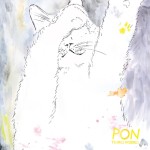
There is a particular difficulty in writing about music made out of grief when the music itself refuses to behave like grief. "Pon", Tujiko Noriko’s sixth album for Editions Mego, is dedicated to Ponpon, the deaf cat she adopted as a kitten and later lost in an accident. One might reasonably expect a record of mourning to arrive wearing black, sit in a corner and make everyone uncomfortable. Noriko has other ideas. Her response is stranger and, ultimately, more convincing: she builds a world in which affection, memory, absurdity, domestic noise, electronic fragility and melodic beauty can continue to coexist.
That distinction matters. "Pon" is not really an album "about" loss. It is an album about what remains active after loss has happened.
Noriko has spent more than two decades cultivating a musical language in which the apparently incompatible are allowed to occupy the same room. Electronics can be delicate rather than clinical; melodies can be sentimental without becoming syrupy; field recordings can function simultaneously as documentation and hallucination. Her work has always possessed an unusual relationship with technology, treating digital manipulation less as a demonstration of technical competence than as another bodily surface to touch, scratch and gently deform. Contemporary writing on "Pon" has picked up precisely on this tension between experimental electronics, dream-pop intimacy, field recordings and a deliberately childlike sense of wonder.
The opening “Only on Love” establishes the terms beautifully. There is no grand entrance, no neon sign announcing "IMPORTANT EMOTIONAL ALBUM HERE". Instead, Noriko lets sounds appear as if they had been lying around the room all along: small electronic events, soft vocal gestures, fragments of rhythm and melody occupying their own little corners. The result is intimate without being claustrophobic. Her voice rarely behaves like a conventional pop singer demanding the foreground. It is more like another object inside the arrangement, sometimes clearly articulated, sometimes half-swallowed by the machinery surrounding it.
That balance becomes increasingly fascinating as "Pon" progresses. “Bosom” and “Boku Wa Obake” introduce rhythmic and vocal oddities without abandoning the album's fundamental warmth. There is something slightly mischievous in the way Noriko inserts unexpected sounds into apparently innocent structures. The music frequently seems to be smiling while concealing a small knife behind its back.
And then there is “Knife of Yonder”, one of the album's major achievements. At almost eleven minutes, it has room to mutate rather than merely develop. It begins in an unusually warm, spacious electronic environment, gradually accumulates pressure and eventually opens into a much larger, almost ecstatic passage before drifting somewhere considerably less predictable. Its trajectory is important because it demonstrates that Noriko's gentleness is not synonymous with passivity. Beneath the pastel surfaces there is a restless composer constantly testing what a song is allowed to become.
This is perhaps where comparisons with Björk, which have followed Noriko since the beginning of her career, become particularly unhelpful. The resemblance is superficial at best. Both artists understand the expressive possibilities of the voice when surrounded by microscopic electronic detail, certainly, but Noriko's universe is considerably more eccentric and less interested in technological spectacle. Her music often feels assembled from things that should not quite fit together: lullaby, glitch, domestic recording, synthetic pulse, half-remembered melody, accidental noise. The seams are not hidden. They are part of the emotional information.
“Kikoeru Pon” brings that approach into especially sharp focus. The track incorporates domestic recordings and the sounds associated with Ponpon, allowing the animal to become present not through some sentimental reconstruction but through the ordinary acoustic traces of a shared life. It is an unusually powerful gesture because it refuses the monumental language of memorialisation. There is no marble statue here. There is a room, a memory, some noise, a voice and the faintly ridiculous fact that love often survives in the least cinematic details.
That sense of domesticity keeps returning. “Birthday” is almost miniature in scale, while “Beachside Cats” sounds like the sort of title that might belong to a harmless children's record until you remember that Tujiko Noriko is constitutionally incapable of leaving harmless things entirely alone. “Pon on TGV” shifts the geography again, transforming travel into another fragment of memory. The album becomes a collection of places and moments rather than a linear narrative.
There is also a fascinating relationship here between language and perception. Noriko does not need every listener to understand every word. The voice is frequently experienced first as texture, rhythm and emotional contour. That becomes especially poignant given Ponpon's deafness: "Pon" repeatedly asks what it means to communicate when conventional assumptions about listening no longer suffice. The record does not turn this into an academic thesis, thankfully. Humans already have enough academic theses. Instead, it lets the question remain embedded in the sounds themselves.
The later sequence becomes more spacious and contemplative, with “Kareki Ni Hana”, “Wakaru Pon” and “Kazeyo Pon” allowing the album's emotional temperature to settle. Some listeners may find the extended atmospheric passages less immediately eventful than the more intricate opening material, but that apparent looseness is part of the record's logic. Memory does not edit itself efficiently. It wanders, repeats, loses the thread, discovers something irrelevant and suddenly finds that the irrelevant thing was the point.
Noriko's production is crucial throughout. The electronics never create an impassable wall between listener and subject. Instead, they behave almost like translucent curtains. Behind them are melody, breath, domestic life and absence. Lawrence English contributes mixing and treatments, while Stephan Mathieu handles mastering, but the finished object remains unmistakably Noriko's: tactile, peculiar, tender and occasionally just odd enough to keep sentimentality at bay.
There is a lovely contradiction at the heart of "Pon". It is an album about something that cannot be recovered, yet it is full of movement. Things scurry, flicker, travel, glitch, sing and disappear. Even the album's shortest pieces feel less like interludes than photographs whose edges have begun to move.
Perhaps that is why "Pon" ultimately feels less like a memorial than a continuation. The cat is gone, but the sounds of having lived together have not vanished. They have been rearranged, transformed and given another life. Noriko does not attempt to make absence beautiful. She simply discovers that beauty was already hiding inside the ordinary things that absence leaves behind.
And that may be the most affecting thing about "Pon": it understands that remembering someone, or some creature, is not necessarily a solemn activity. Sometimes memory is a glitch. Sometimes it is a melody. Sometimes it is a noise from another room. Sometimes it is an inexplicable little electronic squeak that should probably have been removed in the mix but somehow makes the whole thing more alive.
"Pon" leaves those imperfections intact. Humanity, inconveniently, survives there.
That distinction matters. "Pon" is not really an album "about" loss. It is an album about what remains active after loss has happened.
Noriko has spent more than two decades cultivating a musical language in which the apparently incompatible are allowed to occupy the same room. Electronics can be delicate rather than clinical; melodies can be sentimental without becoming syrupy; field recordings can function simultaneously as documentation and hallucination. Her work has always possessed an unusual relationship with technology, treating digital manipulation less as a demonstration of technical competence than as another bodily surface to touch, scratch and gently deform. Contemporary writing on "Pon" has picked up precisely on this tension between experimental electronics, dream-pop intimacy, field recordings and a deliberately childlike sense of wonder.
The opening “Only on Love” establishes the terms beautifully. There is no grand entrance, no neon sign announcing "IMPORTANT EMOTIONAL ALBUM HERE". Instead, Noriko lets sounds appear as if they had been lying around the room all along: small electronic events, soft vocal gestures, fragments of rhythm and melody occupying their own little corners. The result is intimate without being claustrophobic. Her voice rarely behaves like a conventional pop singer demanding the foreground. It is more like another object inside the arrangement, sometimes clearly articulated, sometimes half-swallowed by the machinery surrounding it.
That balance becomes increasingly fascinating as "Pon" progresses. “Bosom” and “Boku Wa Obake” introduce rhythmic and vocal oddities without abandoning the album's fundamental warmth. There is something slightly mischievous in the way Noriko inserts unexpected sounds into apparently innocent structures. The music frequently seems to be smiling while concealing a small knife behind its back.
And then there is “Knife of Yonder”, one of the album's major achievements. At almost eleven minutes, it has room to mutate rather than merely develop. It begins in an unusually warm, spacious electronic environment, gradually accumulates pressure and eventually opens into a much larger, almost ecstatic passage before drifting somewhere considerably less predictable. Its trajectory is important because it demonstrates that Noriko's gentleness is not synonymous with passivity. Beneath the pastel surfaces there is a restless composer constantly testing what a song is allowed to become.
This is perhaps where comparisons with Björk, which have followed Noriko since the beginning of her career, become particularly unhelpful. The resemblance is superficial at best. Both artists understand the expressive possibilities of the voice when surrounded by microscopic electronic detail, certainly, but Noriko's universe is considerably more eccentric and less interested in technological spectacle. Her music often feels assembled from things that should not quite fit together: lullaby, glitch, domestic recording, synthetic pulse, half-remembered melody, accidental noise. The seams are not hidden. They are part of the emotional information.
“Kikoeru Pon” brings that approach into especially sharp focus. The track incorporates domestic recordings and the sounds associated with Ponpon, allowing the animal to become present not through some sentimental reconstruction but through the ordinary acoustic traces of a shared life. It is an unusually powerful gesture because it refuses the monumental language of memorialisation. There is no marble statue here. There is a room, a memory, some noise, a voice and the faintly ridiculous fact that love often survives in the least cinematic details.
That sense of domesticity keeps returning. “Birthday” is almost miniature in scale, while “Beachside Cats” sounds like the sort of title that might belong to a harmless children's record until you remember that Tujiko Noriko is constitutionally incapable of leaving harmless things entirely alone. “Pon on TGV” shifts the geography again, transforming travel into another fragment of memory. The album becomes a collection of places and moments rather than a linear narrative.
There is also a fascinating relationship here between language and perception. Noriko does not need every listener to understand every word. The voice is frequently experienced first as texture, rhythm and emotional contour. That becomes especially poignant given Ponpon's deafness: "Pon" repeatedly asks what it means to communicate when conventional assumptions about listening no longer suffice. The record does not turn this into an academic thesis, thankfully. Humans already have enough academic theses. Instead, it lets the question remain embedded in the sounds themselves.
The later sequence becomes more spacious and contemplative, with “Kareki Ni Hana”, “Wakaru Pon” and “Kazeyo Pon” allowing the album's emotional temperature to settle. Some listeners may find the extended atmospheric passages less immediately eventful than the more intricate opening material, but that apparent looseness is part of the record's logic. Memory does not edit itself efficiently. It wanders, repeats, loses the thread, discovers something irrelevant and suddenly finds that the irrelevant thing was the point.
Noriko's production is crucial throughout. The electronics never create an impassable wall between listener and subject. Instead, they behave almost like translucent curtains. Behind them are melody, breath, domestic life and absence. Lawrence English contributes mixing and treatments, while Stephan Mathieu handles mastering, but the finished object remains unmistakably Noriko's: tactile, peculiar, tender and occasionally just odd enough to keep sentimentality at bay.
There is a lovely contradiction at the heart of "Pon". It is an album about something that cannot be recovered, yet it is full of movement. Things scurry, flicker, travel, glitch, sing and disappear. Even the album's shortest pieces feel less like interludes than photographs whose edges have begun to move.
Perhaps that is why "Pon" ultimately feels less like a memorial than a continuation. The cat is gone, but the sounds of having lived together have not vanished. They have been rearranged, transformed and given another life. Noriko does not attempt to make absence beautiful. She simply discovers that beauty was already hiding inside the ordinary things that absence leaves behind.
And that may be the most affecting thing about "Pon": it understands that remembering someone, or some creature, is not necessarily a solemn activity. Sometimes memory is a glitch. Sometimes it is a melody. Sometimes it is a noise from another room. Sometimes it is an inexplicable little electronic squeak that should probably have been removed in the mix but somehow makes the whole thing more alive.
"Pon" leaves those imperfections intact. Humanity, inconveniently, survives there.
Sun Ra | Merzbow: Strange City (10th anniversary edition)
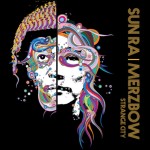
Artist: Sun Ra | Merzbow
Title: Strange City (10th anniversary edition)
Format: CD x 2 (double CD)
Label: Cold Spring (@)
Rated:
Title: Strange City (10th anniversary edition)
Format: CD x 2 (double CD)
Label: Cold Spring (@)
Rated:
There are collaborations that make perfect sense on paper, collaborations that seem designed by an algorithm after being fed the words "legendary", "experimental" and "unlikely". Then there is "Strange City", which belongs to the more entertaining category of ideas that sound both completely inevitable and faintly illegal. Sun Ra and Merzbow.
One spent his life insisting that earthly categories were insufficient for understanding music, identity and existence. The other spent more than four decades demonstrating that earthly categories were also insufficient for understanding what constitutes an acceptable volume level. That they never actually met is, therefore, less a problem than an invitation to science fiction.
Originally issued by Cold Spring in 2016, "Strange City" now returns in an expanded 2CD edition that finally gathers material previously divided between the CD and LP editions. The new edition also adds “Granular Jazz Part 5”, originally made for Stuart Maconie's "Freak Zone" on BBC 6 Music. The result is roughly 104 minutes of music, which is enough time for several philosophical crises, one meal and at least two reconsiderations of your relationship with your neighbours.
The underlying concept is deceptively simple. Masami Akita, the Tokyo-based musician known as Merzbow, was given access to recordings from Sun Ra's archive, particularly material connected with "The Magic City" and "Strange Strings". Rather than presenting these recordings as sacred historical artefacts, he subjects them to his own vocabulary: distortion, feedback, electronic abrasion, loops, granular processing and vast accumulations of sound.
This is not a remix in the conventional sense. It is closer to archaeological vandalism. And I mean that as a compliment.
The opening of “Livid Sun Loop” is perhaps the best place to understand the operation. Fragments of Sun Ra's horns, drums and ensemble emerge sufficiently clearly to establish a recognisable musical past. Then Merzbow begins applying pressure. The original material is stretched, submerged, pulverised and periodically allowed to surface again, like something trapped underneath an industrial machine that has developed an interest in free jazz.
The crucial point is that Sun Ra does not completely disappear. That has been the source of some disagreement around the record since its original release. Some critics felt that Akita's noise overwhelms the source material to the point where the supposed collaboration becomes essentially another Merzbow record. Others have heard precisely the opposite phenomenon: Sun Ra's rhythmic and cosmic logic surviving underneath the violence, providing a hidden skeleton for the apparent chaos. Both interpretations contain some truth. But the ambiguity is exactly what makes "Strange City" work.
Sun Ra's music was never simply “jazz” in the tidy historical sense. His Arkestra could use swing, free improvisation, electronics, ritual, repetition and theatricality without asking permission from genre historians. His cosmic mythology was not merely eccentric decoration either. It gave him a way of imagining music as something capable of escaping the social and aesthetic limitations imposed upon it.
Merzbow's approach is similarly uncompromising, although his chosen vehicle is noise. So the real meeting point is not instrumentation.
It is "cosmology".
Sun Ra imagined music escaping Earth. Merzbow makes Earth itself sound as though it has malfunctioned.
“Livid Sun Loop” consequently feels less like jazz being covered in noise than like a recording being exposed to an entirely different physical environment. The horns are no longer simply horns. Percussion becomes rhythmic debris. Frequencies acquire mass. The music seems to stop obeying the ordinary relationship between foreground and background.
This is especially effective because Merzbow is not simply turning a knob marked "LOUD" and going home.
There is architecture underneath the brutality. The noise shifts in density and frequency. Rhythmic fragments recur. High frequencies sharpen the surface while lower registers provide weight. Layers accumulate and separate. After sufficient exposure, the ear begins to identify patterns inside what initially seemed like undifferentiated destruction. This phenomenon has been noted repeatedly in earlier assessments of the album: prolonged listening changes the listener's relationship with the noise, making its internal movement increasingly perceptible. In other words, Merzbow eventually teaches your ears to live in the disaster. Human civilisation has achieved stranger things, admittedly.
The first disc's second piece, “Granular Jazz Part 2”, pushes the relationship further. It is less concerned with the initial shock of impact and more interested in what happens after the original jazz material has been thoroughly contaminated. Sun Ra's presence becomes spectral rather than obvious, appearing through rhythmic suggestions, fragments of timbre and fleeting instrumental shapes.
This is where the title "Strange City" starts to feel particularly appropriate. A city is recognisable through patterns: roads, buildings, voices, traffic, repetition. Destroy those patterns and the city becomes noise. Yet even inside the noise, traces of the original organisation remain.
Merzbow does something similar to Sun Ra. He destroys the city without completely erasing its map.
The newly collected "Granular Jazz Parts 1–4" deepen this process. “Part 1” establishes a more gradual transformation, while “Part 3” becomes considerably more turbulent. “Part 4”, by contrast, is fascinating because it reduces the obvious violence and allows atmosphere to take over. Earlier criticism has recognised this relative restraint as one of the album's most striking moments.
It is tempting to call this the “quiet” section. That would be misleading.
Merzbow quiet is roughly equivalent to being trapped inside a malfunctioning aircraft engine that has recently discovered minimalism. But proportion matters. After enormous stretches of density, even a modest reduction in pressure becomes almost melodic. The ear recalibrates itself. Space acquires drama.
This is one of the album's most sophisticated characteristics: "volume is not its only weapon".
The newly restored sequence also makes more sense as a whole than the original split-format presentation. The 2016 edition had different music on CD and LP, partly because the extreme durations imposed practical limitations on vinyl mastering. This reissue removes that artificial division and allows the entire project to be heard as a single body. That matters.
"Strange City" is fundamentally about transformation over time. Its enormous durations are not an inconvenience to be overcome but part of the composition's physical logic. A three-minute version would be almost meaningless. The music needs time to become familiar enough for its internal relationships to reveal themselves. And this is where Sun Ra's presence becomes stranger. The longer you listen, the less useful it becomes to ask where Sun Ra ends and Merzbow begins.
At first, you hear a Sun Ra fragment being attacked by Merzbow. Then you hear Merzbow surrounding Sun Ra. Eventually you hear neither. You hear "Strange City".
That distinction is important because the record's greatest success is not preservation. It is transformation. Sun Ra is not being respectfully framed behind museum glass. He is being put through the machine. There is something beautifully appropriate about that. Sun Ra himself was a master of transformation, constantly reinventing his ensemble, his identity, his mythology and his conception of what music could contain. His archive is therefore being treated not as a mausoleum but as raw material. Even the historical gap becomes productive.
Sun Ra died in 1993. Merzbow's "Strange City" sessions took place in Tokyo in 2016. The two musicians belong to different generations, different scenes and radically different technological environments. Yet the album makes that distance feel less like an obstacle than an additional compositional layer.
Time becomes another effect pedal. The bonus “Granular Jazz Part 5”, brief at just two minutes, is almost comically short beside the other pieces. It works as a kind of epilogue, though its existence also reinforces the archival character of this edition. The main body is immense; the final fragment feels like one last transmission picked up from the wrong frequency.
That is perhaps the best way to understand "Strange City". Not as a collaboration between two musicians who never collaborated. Not even as a remix project.
But as a "conversation between two ideas about what sound can become".
Sun Ra supplies the extraterrestrial imagination, the rhythmic intelligence, the sense that jazz might be something much larger than its earthly genealogy.
Merzbow supplies the force necessary to make that imagination physically uncomfortable. One points toward Saturn. The other blows up the launchpad.
The astonishing thing is that the rocket still gets somewhere.
There are moments here when the jazz material is so thoroughly buried that one might reasonably wonder whether the Sun Ra connection has become merely conceptual. That criticism remains valid, particularly for listeners expecting a more balanced dialogue. Earlier reviews have disagreed sharply on precisely this question. But perhaps balance would have been the wrong objective. A balanced Sun Ra/Merzbow record would be considerably less interesting.
The imbalance is the event.
The source material survives not by remaining intact but by being damaged, displaced and forced into another language. That is why the occasional appearance of a horn, rhythm or vocal texture can feel almost miraculous. It is not nostalgia. It is evidence. Something was here. Something is still here. And it has been through hell.
"Strange City" is therefore a peculiar kind of archival release: one that does not merely preserve the past but subjects it to another future. Sun Ra's cosmic jazz is not reconstructed. It is reimagined through one of the most extreme sonic practices of the modern era.
The result is abrasive, excessive, occasionally absurd and frequently magnificent. It is also oddly moving. Not because Merzbow makes Sun Ra sound beautiful. Because, underneath all that electronic violence, Sun Ra still sounds like someone trying to get a message through. Perhaps that is the real collaboration. One musician sends a transmission from Saturn. Another fills the channel with static. And somehow, against all reasonable expectations, the message survives.
I actually had the chance to experience this strange beast in the flesh in Manchester in 2016, around the time the material was being presented live. I still remember the sheer physical impact of it. This wasn't simply something you listened to; it seemed to arrive as a weather system with a personal grudge. The room was being hit by wave after wave of noise, with Merzbow's machinery turning the remnants of Sun Ra's cosmic jazz into something vast, metallic and almost aggressively corporeal. I distinctly remember looking around and wondering whether everybody else was experiencing the same thing or whether my ears had already resigned from their employment. There were, inevitably, people joking about their ears bleeding, but the joke contained an uncomfortable amount of truth: the sound was so intense that hearing became a physical activity, something involving the entire body rather than just the supposedly convenient organs on either side of the head. It was awesome, ridiculous and slightly terrifying, which seems an entirely appropriate description of a Sun Ra/Merzbow encounter. Listening to Strange City again now, almost a decade later, brings back that sensation with surprising force. The record may be archival, but its impact remains stubbornly present tense.
One spent his life insisting that earthly categories were insufficient for understanding music, identity and existence. The other spent more than four decades demonstrating that earthly categories were also insufficient for understanding what constitutes an acceptable volume level. That they never actually met is, therefore, less a problem than an invitation to science fiction.
Originally issued by Cold Spring in 2016, "Strange City" now returns in an expanded 2CD edition that finally gathers material previously divided between the CD and LP editions. The new edition also adds “Granular Jazz Part 5”, originally made for Stuart Maconie's "Freak Zone" on BBC 6 Music. The result is roughly 104 minutes of music, which is enough time for several philosophical crises, one meal and at least two reconsiderations of your relationship with your neighbours.
The underlying concept is deceptively simple. Masami Akita, the Tokyo-based musician known as Merzbow, was given access to recordings from Sun Ra's archive, particularly material connected with "The Magic City" and "Strange Strings". Rather than presenting these recordings as sacred historical artefacts, he subjects them to his own vocabulary: distortion, feedback, electronic abrasion, loops, granular processing and vast accumulations of sound.
This is not a remix in the conventional sense. It is closer to archaeological vandalism. And I mean that as a compliment.
The opening of “Livid Sun Loop” is perhaps the best place to understand the operation. Fragments of Sun Ra's horns, drums and ensemble emerge sufficiently clearly to establish a recognisable musical past. Then Merzbow begins applying pressure. The original material is stretched, submerged, pulverised and periodically allowed to surface again, like something trapped underneath an industrial machine that has developed an interest in free jazz.
The crucial point is that Sun Ra does not completely disappear. That has been the source of some disagreement around the record since its original release. Some critics felt that Akita's noise overwhelms the source material to the point where the supposed collaboration becomes essentially another Merzbow record. Others have heard precisely the opposite phenomenon: Sun Ra's rhythmic and cosmic logic surviving underneath the violence, providing a hidden skeleton for the apparent chaos. Both interpretations contain some truth. But the ambiguity is exactly what makes "Strange City" work.
Sun Ra's music was never simply “jazz” in the tidy historical sense. His Arkestra could use swing, free improvisation, electronics, ritual, repetition and theatricality without asking permission from genre historians. His cosmic mythology was not merely eccentric decoration either. It gave him a way of imagining music as something capable of escaping the social and aesthetic limitations imposed upon it.
Merzbow's approach is similarly uncompromising, although his chosen vehicle is noise. So the real meeting point is not instrumentation.
It is "cosmology".
Sun Ra imagined music escaping Earth. Merzbow makes Earth itself sound as though it has malfunctioned.
“Livid Sun Loop” consequently feels less like jazz being covered in noise than like a recording being exposed to an entirely different physical environment. The horns are no longer simply horns. Percussion becomes rhythmic debris. Frequencies acquire mass. The music seems to stop obeying the ordinary relationship between foreground and background.
This is especially effective because Merzbow is not simply turning a knob marked "LOUD" and going home.
There is architecture underneath the brutality. The noise shifts in density and frequency. Rhythmic fragments recur. High frequencies sharpen the surface while lower registers provide weight. Layers accumulate and separate. After sufficient exposure, the ear begins to identify patterns inside what initially seemed like undifferentiated destruction. This phenomenon has been noted repeatedly in earlier assessments of the album: prolonged listening changes the listener's relationship with the noise, making its internal movement increasingly perceptible. In other words, Merzbow eventually teaches your ears to live in the disaster. Human civilisation has achieved stranger things, admittedly.
The first disc's second piece, “Granular Jazz Part 2”, pushes the relationship further. It is less concerned with the initial shock of impact and more interested in what happens after the original jazz material has been thoroughly contaminated. Sun Ra's presence becomes spectral rather than obvious, appearing through rhythmic suggestions, fragments of timbre and fleeting instrumental shapes.
This is where the title "Strange City" starts to feel particularly appropriate. A city is recognisable through patterns: roads, buildings, voices, traffic, repetition. Destroy those patterns and the city becomes noise. Yet even inside the noise, traces of the original organisation remain.
Merzbow does something similar to Sun Ra. He destroys the city without completely erasing its map.
The newly collected "Granular Jazz Parts 1–4" deepen this process. “Part 1” establishes a more gradual transformation, while “Part 3” becomes considerably more turbulent. “Part 4”, by contrast, is fascinating because it reduces the obvious violence and allows atmosphere to take over. Earlier criticism has recognised this relative restraint as one of the album's most striking moments.
It is tempting to call this the “quiet” section. That would be misleading.
Merzbow quiet is roughly equivalent to being trapped inside a malfunctioning aircraft engine that has recently discovered minimalism. But proportion matters. After enormous stretches of density, even a modest reduction in pressure becomes almost melodic. The ear recalibrates itself. Space acquires drama.
This is one of the album's most sophisticated characteristics: "volume is not its only weapon".
The newly restored sequence also makes more sense as a whole than the original split-format presentation. The 2016 edition had different music on CD and LP, partly because the extreme durations imposed practical limitations on vinyl mastering. This reissue removes that artificial division and allows the entire project to be heard as a single body. That matters.
"Strange City" is fundamentally about transformation over time. Its enormous durations are not an inconvenience to be overcome but part of the composition's physical logic. A three-minute version would be almost meaningless. The music needs time to become familiar enough for its internal relationships to reveal themselves. And this is where Sun Ra's presence becomes stranger. The longer you listen, the less useful it becomes to ask where Sun Ra ends and Merzbow begins.
At first, you hear a Sun Ra fragment being attacked by Merzbow. Then you hear Merzbow surrounding Sun Ra. Eventually you hear neither. You hear "Strange City".
That distinction is important because the record's greatest success is not preservation. It is transformation. Sun Ra is not being respectfully framed behind museum glass. He is being put through the machine. There is something beautifully appropriate about that. Sun Ra himself was a master of transformation, constantly reinventing his ensemble, his identity, his mythology and his conception of what music could contain. His archive is therefore being treated not as a mausoleum but as raw material. Even the historical gap becomes productive.
Sun Ra died in 1993. Merzbow's "Strange City" sessions took place in Tokyo in 2016. The two musicians belong to different generations, different scenes and radically different technological environments. Yet the album makes that distance feel less like an obstacle than an additional compositional layer.
Time becomes another effect pedal. The bonus “Granular Jazz Part 5”, brief at just two minutes, is almost comically short beside the other pieces. It works as a kind of epilogue, though its existence also reinforces the archival character of this edition. The main body is immense; the final fragment feels like one last transmission picked up from the wrong frequency.
That is perhaps the best way to understand "Strange City". Not as a collaboration between two musicians who never collaborated. Not even as a remix project.
But as a "conversation between two ideas about what sound can become".
Sun Ra supplies the extraterrestrial imagination, the rhythmic intelligence, the sense that jazz might be something much larger than its earthly genealogy.
Merzbow supplies the force necessary to make that imagination physically uncomfortable. One points toward Saturn. The other blows up the launchpad.
The astonishing thing is that the rocket still gets somewhere.
There are moments here when the jazz material is so thoroughly buried that one might reasonably wonder whether the Sun Ra connection has become merely conceptual. That criticism remains valid, particularly for listeners expecting a more balanced dialogue. Earlier reviews have disagreed sharply on precisely this question. But perhaps balance would have been the wrong objective. A balanced Sun Ra/Merzbow record would be considerably less interesting.
The imbalance is the event.
The source material survives not by remaining intact but by being damaged, displaced and forced into another language. That is why the occasional appearance of a horn, rhythm or vocal texture can feel almost miraculous. It is not nostalgia. It is evidence. Something was here. Something is still here. And it has been through hell.
"Strange City" is therefore a peculiar kind of archival release: one that does not merely preserve the past but subjects it to another future. Sun Ra's cosmic jazz is not reconstructed. It is reimagined through one of the most extreme sonic practices of the modern era.
The result is abrasive, excessive, occasionally absurd and frequently magnificent. It is also oddly moving. Not because Merzbow makes Sun Ra sound beautiful. Because, underneath all that electronic violence, Sun Ra still sounds like someone trying to get a message through. Perhaps that is the real collaboration. One musician sends a transmission from Saturn. Another fills the channel with static. And somehow, against all reasonable expectations, the message survives.
I actually had the chance to experience this strange beast in the flesh in Manchester in 2016, around the time the material was being presented live. I still remember the sheer physical impact of it. This wasn't simply something you listened to; it seemed to arrive as a weather system with a personal grudge. The room was being hit by wave after wave of noise, with Merzbow's machinery turning the remnants of Sun Ra's cosmic jazz into something vast, metallic and almost aggressively corporeal. I distinctly remember looking around and wondering whether everybody else was experiencing the same thing or whether my ears had already resigned from their employment. There were, inevitably, people joking about their ears bleeding, but the joke contained an uncomfortable amount of truth: the sound was so intense that hearing became a physical activity, something involving the entire body rather than just the supposedly convenient organs on either side of the head. It was awesome, ridiculous and slightly terrifying, which seems an entirely appropriate description of a Sun Ra/Merzbow encounter. Listening to Strange City again now, almost a decade later, brings back that sensation with surprising force. The record may be archival, but its impact remains stubbornly present tense.