
Tuesday, August 18, 2026
Browse by Genre
Industrial Music / Industrial Metal / Aggro Industrial / Electro Metal
Industrial Noise / Power Noise / Harsh Noise
Synth Pop / Electro Pop / Synth-Electronica
Techno / Trance / Goa / Drum'n'Bass / Jungle / Tribal / Trip-Hop
Ambient / Electronica / Ethereal / Dub / Soundscapes / Abstract
Experimental / Avantgarde / Weird & Wired / Glitch / Noise / Field Recording
Dark / Gothic / Wave / New Wave / Dark Wave / Industrial Gothic
New Music / Downtown / Avantgarde Jazz / New Classical / World
Search Reviews
Music Reviews
Ran Slavin: Aegean Gold

Artist: Ran Slavin (@)
Title: Aegean Gold
Format: 12" + Download
Label: Nocturnal Rainbow Recordings
Rated:

Title: Aegean Gold
Format: 12" + Download
Label: Nocturnal Rainbow Recordings
Rated:
There is a particular kind of musical memory that does not remember events so much as temperatures. A certain afternoon light. Salt drying on the skin. The colour of a wall just before sunset. The sound of water becoming indistinguishable from wind. "Aegean Gold", Ran Slavin's twenty-second solo long-player, operates almost entirely inside that peculiar territory where recollection stops being documentary and becomes atmosphere.
This is important, because an album inspired by the Aegean could very easily have become a soundtrack for an expensive holiday advertisement. One can almost imagine the danger: turquoise water, tasteful linen clothing, an abandoned amphora, somebody gazing meaningfully toward the horizon while a Greek island appears to have been personally curated by a luxury hotel chain. Thankfully, Slavin has more interesting things in mind.
The sea here is not really a landscape. It is a state of mind.
Slavin has spent more than two decades moving between electronic composition, cinematic sound, abstraction and visual art, and "Aegean Gold" feels like the work of somebody who understands that landscape is never merely what stands in front of the eyes. It is also what the mind subsequently does with it. His own Nocturnal Rainbow Recordings, founded in 2022, has become a kind of self-contained home for this ongoing body of work, allowing the albums to exist without having to obey the usual industrial superstition that every record must announce itself as a new beginning. There is, instead, continuity.
The opening trio makes this unusually clear. “Sun Kissed Waters”, “Saffron Breeze” and “Marble & Salt” first appear in abbreviated versions before returning later in more expansive forms. These are not simply radio edits followed by their supposedly serious incarnations. They function more like photographic exposures of different durations. One gives you the glance, another asks you to remain in the room. That structural decision says quite a lot about Slavin's understanding of memory.
Memory rarely operates in real time. Sometimes an entire summer survives as a two-second flash. Sometimes a trivial afternoon returns with ridiculous cinematic detail decades later. The short and long versions of these pieces mirror that instability: recollection can be a postcard or an entire climate.
Musically, "Aegean Gold" is remarkably restrained. Slow-moving drones, vintage-flavoured orchestral pads and delicate electronic textures provide the broad atmospheric field, but the album's most consequential presence is the piano. It does not behave like a grand classical protagonist arriving to explain the plot. It appears modestly, sometimes almost apologetically, tracing melodic paths through the surrounding haze. Bandcamp describes the album as piano-led orchestral ambient, and that description is accurate, although perhaps too well behaved for something whose emotional effects are considerably more slippery. The piano gives the record something human to hold onto. Without it, the surrounding electronics could have become an exceptionally attractive piece of environmental design. With it, they acquire hesitation. A note can sound like a decision. A chord can feel like the recollection of one.
“Golden Haze” is particularly effective in this respect. Its atmosphere does not attempt to imitate sunlight literally. Instead, it creates the sensation of light losing its edges. The drones seem to soften the distance between objects, while the melodic fragments retain just enough definition to suggest that something is being remembered rather than merely observed. “Coral Veil / Glacier Green” extends that ambiguity. Even the title seems to contain two incompatible temperatures: tropical warmth and mineral coldness. Slavin's music thrives on precisely these small contradictions. The Mediterranean is not presented as a single colour but as an unstable palette in which blue can become silver, gold can become grey, and brightness can acquire melancholy.
This is where "Aegean Gold" becomes more than a travelogue. The record certainly contains geographical specificity. “Plomari Days” is named after the town on Lesbos, while “Sea & Santur” places the sea beside the distinctive sound-world of the santur. But these references never become ethnographic postcards. They function as mnemonic triggers. The music does not tell us what the Aegean is. It asks what the Aegean might become inside somebody's memory. That distinction saves the album from the worst excesses of ambient tourism.
There is also something intriguing about Slavin's choice of electronic means. His music has always occupied a zone where sound, cinema and visual imagination overlap, and the present album often feels as though it has been photographed rather than composed. Yet it remains unmistakably synthetic. The orchestral colours have a slight patina, the drones possess the patience of machines, and the electronics never completely disappear behind their picturesque associations. Nature is being remembered through technology. Which is, in fairness, what most of us do now. We photograph sunsets, record waves, geo-tag ruins and then spend years looking at compressed representations of places we once inhabited physically. The machine has become part of memory's vocabulary.
Slavin simply makes that condition sound beautiful. The album's most substantial achievement is therefore its refusal to distinguish sharply between external landscape and internal projection. “Marble & Salt” can suggest architecture, mineral surfaces, seawater and skin without deciding which one matters most. “Saffron Breeze” feels almost tactile despite being constructed from electronic materials. “Sun Kissed Waters” does not need actual waves because the imagination supplies them with embarrassing efficiency.
And then there is “Sea & Santur”, which closes the album without really closing anything. The title proposes an encounter between two things, but the music leaves them suspended in a soft field of resonance. It feels less like arriving somewhere than watching the last light retreat from a shoreline. That is probably the right ending. Because "Aegean Gold" is ultimately not about Greece. It is about "the places we carry after leaving them".
The distinction matters. A geographical location exists independently of our affection for it. Memory does not. Memory edits relentlessly. It removes the unpleasant weather, the arguments, the badly timed ferry, the mosquito bites, the overpriced coffee and the person who was irritating for three consecutive days. It retains the light. Slavin's great trick is to allow the music to behave in exactly this way.
There are no hard edges here because memory tends to sand them down. There is little dramatic conflict because recollection is an unreliable curator. Even melancholy arrives filtered through warmth. The album does not deny sadness; it simply lets it float in the same water as beauty. This is also why the title "Aegean Gold" works better than it initially seems. Gold is not merely a colour. It is what memory does to certain experiences. It makes them precious, sometimes disproportionately so. The ordinary becomes luminous because it has been removed from ordinary time.
Slavin understands that transformation without becoming sentimental about it. The result is a record that can be approached as ambient music, modern-classical electronics, cinematic composition or simply as a place to sit quietly for forty-seven minutes. The ten-track sequence lasts just under forty-eight minutes, with the repeated compositions providing a useful sense of recurrence rather than conventional development. And perhaps that is its deepest strength: "Aegean Gold" does not demand attention through novelty. It asks for time. That can feel almost radical now.
Modern music, like modern life, seems increasingly terrified that you might become bored for seven seconds. Slavin instead allows sounds to linger until they cease being objects and become surroundings. The music does not constantly move forward. Sometimes it simply changes the light.
By the end, the Aegean has become less a place than a condition: sun on water, mineral under fingertips, a piano note suspended in air, an image already fading as it appears.
A beautiful memory, perhaps. Or a memory of something that never happened. At this point, the distinction seems rather unnecessary.
This is important, because an album inspired by the Aegean could very easily have become a soundtrack for an expensive holiday advertisement. One can almost imagine the danger: turquoise water, tasteful linen clothing, an abandoned amphora, somebody gazing meaningfully toward the horizon while a Greek island appears to have been personally curated by a luxury hotel chain. Thankfully, Slavin has more interesting things in mind.
The sea here is not really a landscape. It is a state of mind.
Slavin has spent more than two decades moving between electronic composition, cinematic sound, abstraction and visual art, and "Aegean Gold" feels like the work of somebody who understands that landscape is never merely what stands in front of the eyes. It is also what the mind subsequently does with it. His own Nocturnal Rainbow Recordings, founded in 2022, has become a kind of self-contained home for this ongoing body of work, allowing the albums to exist without having to obey the usual industrial superstition that every record must announce itself as a new beginning. There is, instead, continuity.
The opening trio makes this unusually clear. “Sun Kissed Waters”, “Saffron Breeze” and “Marble & Salt” first appear in abbreviated versions before returning later in more expansive forms. These are not simply radio edits followed by their supposedly serious incarnations. They function more like photographic exposures of different durations. One gives you the glance, another asks you to remain in the room. That structural decision says quite a lot about Slavin's understanding of memory.
Memory rarely operates in real time. Sometimes an entire summer survives as a two-second flash. Sometimes a trivial afternoon returns with ridiculous cinematic detail decades later. The short and long versions of these pieces mirror that instability: recollection can be a postcard or an entire climate.
Musically, "Aegean Gold" is remarkably restrained. Slow-moving drones, vintage-flavoured orchestral pads and delicate electronic textures provide the broad atmospheric field, but the album's most consequential presence is the piano. It does not behave like a grand classical protagonist arriving to explain the plot. It appears modestly, sometimes almost apologetically, tracing melodic paths through the surrounding haze. Bandcamp describes the album as piano-led orchestral ambient, and that description is accurate, although perhaps too well behaved for something whose emotional effects are considerably more slippery. The piano gives the record something human to hold onto. Without it, the surrounding electronics could have become an exceptionally attractive piece of environmental design. With it, they acquire hesitation. A note can sound like a decision. A chord can feel like the recollection of one.
“Golden Haze” is particularly effective in this respect. Its atmosphere does not attempt to imitate sunlight literally. Instead, it creates the sensation of light losing its edges. The drones seem to soften the distance between objects, while the melodic fragments retain just enough definition to suggest that something is being remembered rather than merely observed. “Coral Veil / Glacier Green” extends that ambiguity. Even the title seems to contain two incompatible temperatures: tropical warmth and mineral coldness. Slavin's music thrives on precisely these small contradictions. The Mediterranean is not presented as a single colour but as an unstable palette in which blue can become silver, gold can become grey, and brightness can acquire melancholy.
This is where "Aegean Gold" becomes more than a travelogue. The record certainly contains geographical specificity. “Plomari Days” is named after the town on Lesbos, while “Sea & Santur” places the sea beside the distinctive sound-world of the santur. But these references never become ethnographic postcards. They function as mnemonic triggers. The music does not tell us what the Aegean is. It asks what the Aegean might become inside somebody's memory. That distinction saves the album from the worst excesses of ambient tourism.
There is also something intriguing about Slavin's choice of electronic means. His music has always occupied a zone where sound, cinema and visual imagination overlap, and the present album often feels as though it has been photographed rather than composed. Yet it remains unmistakably synthetic. The orchestral colours have a slight patina, the drones possess the patience of machines, and the electronics never completely disappear behind their picturesque associations. Nature is being remembered through technology. Which is, in fairness, what most of us do now. We photograph sunsets, record waves, geo-tag ruins and then spend years looking at compressed representations of places we once inhabited physically. The machine has become part of memory's vocabulary.
Slavin simply makes that condition sound beautiful. The album's most substantial achievement is therefore its refusal to distinguish sharply between external landscape and internal projection. “Marble & Salt” can suggest architecture, mineral surfaces, seawater and skin without deciding which one matters most. “Saffron Breeze” feels almost tactile despite being constructed from electronic materials. “Sun Kissed Waters” does not need actual waves because the imagination supplies them with embarrassing efficiency.
And then there is “Sea & Santur”, which closes the album without really closing anything. The title proposes an encounter between two things, but the music leaves them suspended in a soft field of resonance. It feels less like arriving somewhere than watching the last light retreat from a shoreline. That is probably the right ending. Because "Aegean Gold" is ultimately not about Greece. It is about "the places we carry after leaving them".
The distinction matters. A geographical location exists independently of our affection for it. Memory does not. Memory edits relentlessly. It removes the unpleasant weather, the arguments, the badly timed ferry, the mosquito bites, the overpriced coffee and the person who was irritating for three consecutive days. It retains the light. Slavin's great trick is to allow the music to behave in exactly this way.
There are no hard edges here because memory tends to sand them down. There is little dramatic conflict because recollection is an unreliable curator. Even melancholy arrives filtered through warmth. The album does not deny sadness; it simply lets it float in the same water as beauty. This is also why the title "Aegean Gold" works better than it initially seems. Gold is not merely a colour. It is what memory does to certain experiences. It makes them precious, sometimes disproportionately so. The ordinary becomes luminous because it has been removed from ordinary time.
Slavin understands that transformation without becoming sentimental about it. The result is a record that can be approached as ambient music, modern-classical electronics, cinematic composition or simply as a place to sit quietly for forty-seven minutes. The ten-track sequence lasts just under forty-eight minutes, with the repeated compositions providing a useful sense of recurrence rather than conventional development. And perhaps that is its deepest strength: "Aegean Gold" does not demand attention through novelty. It asks for time. That can feel almost radical now.
Modern music, like modern life, seems increasingly terrified that you might become bored for seven seconds. Slavin instead allows sounds to linger until they cease being objects and become surroundings. The music does not constantly move forward. Sometimes it simply changes the light.
By the end, the Aegean has become less a place than a condition: sun on water, mineral under fingertips, a piano note suspended in air, an image already fading as it appears.
A beautiful memory, perhaps. Or a memory of something that never happened. At this point, the distinction seems rather unnecessary.
Cyparissus: Tombeaux Infinis
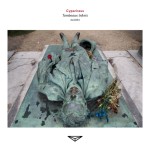
Artist: Cyparissus
Title: Tombeaux Infinis
Format: Download Only (MP3 + Lossless)
Label: Dragon's Eye Recordings (@)
Rated:
Title: Tombeaux Infinis
Format: Download Only (MP3 + Lossless)
Label: Dragon's Eye Recordings (@)
Rated:
Identity is a rather inconvenient thing. We like to imagine it as a possession, something stored somewhere inside the body alongside our childhood memories, embarrassing photographs and the passwords we will definitely remember this time. But identity becomes considerably less stable once another person enters the room. What do they see? What have they misunderstood? What have we misunderstood about what they have understood?
"Tombeaux Infinis", the third Cyparissus album for Dragon's Eye Recordings, has no tidy answer to these questions. It does something more interesting: it turns the problem into a method of composition.
Cyparissus is the alias of Kenneth Moss, an environmental science educator from central Maine who has been making music since the mid-2000s without following the conventional academic route into composition. Their interests in biology, entomology, language and the natural world have long seeped into the music, which often occupies the porous territory between ambient, experimental electronics, drone and sound collage. Previous Cyparissus releases such as "To the Moon and Back" and "Two Shakes of a Lamb's Tail" already treated identity as something unstable and difficult to observe from within. This new record turns the camera around.
The trilogy's first volume looked backward, the second examined the immediate present, and "Tombeaux Infinis" looks outward, toward the gaze of other people. The conceptual progression sounds neat on paper, but the music itself is anything but neat. It behaves like a collection of damaged mirrors, each returning a recognisable image with some crucial piece missing.
“Calamine Crush” establishes the atmosphere with a strange mixture of delicacy and unease. Sounds seem to emerge from a haze rather than begin at a clearly defined point. There is no insistence on the clean architecture of conventional electronic composition. Instead, Cyparissus allows textures to hover, overlap and acquire meaning through proximity. That looseness is deceptive. The album is carefully constructed, but its construction is deliberately made visible as a process of uncertainty. Voices, fragments and electronic material are not presented as finished objects. They are shown being interpreted.
The most revealing sequence involves Freddy Ruppert. First, his reading of text written by Cyparissus is presented with minimal interference. Then the voice is broken apart, glitched and granulated until language approaches the threshold of intelligibility. Finally, the material is reconstructed so that Ruppert's voice speaks phrases assembled by Cyparissus.
The progression is quietly brutal.
First: this is what you said.
Then: this is what remains when I interfere.
Finally: this is what I hear you saying.
It is difficult to think of a more accurate sonic metaphor for human relationships.
We spend enormous amounts of time interpreting other people, usually with the confidence of people who have never once had access to the complete evidence. A pause becomes a judgement. A facial expression becomes a message. Silence becomes an accusation. Someone says something perfectly ordinary and we spend three days constructing an elaborate psychological opera around it.
Cyparissus turns that basic human malfunction into musical form. “Alces” and “Cimmerian” continue the movement between comprehensible material and atmospheric ambiguity. The sounds are sparse but never empty. There is a sense of information constantly approaching the listener and then withdrawing before it can be completely decoded. This is where the album's title becomes particularly evocative. "Tombeaux Infinis" suggests infinite tombs, endless repositories of things that have been buried but not necessarily forgotten. The record feels populated by such remnants: voices stripped from their original context, phrases severed from their intentions, sounds detached from their sources. Nothing is quite dead, but nothing is entirely alive in its original form either. The past is not preserved. It is edited.
“What is meant by the phrase, ‘La tristesse durera toujours.’” takes this uncertainty into more explicitly linguistic territory. The famous sentence associated with the final words of Vincent van Gogh becomes less a quotation to be admired than a linguistic object to be worried at. Meaning begins to detach from authorship. The question becomes not simply what the phrase means, but what happens when somebody else decides what it means. This distinction runs through the entire album.
Cyparissus is not particularly interested in the idea of an untouched recording. Every recording already involves framing. A microphone chooses what counts as sound. Editing determines what remains. Mixing establishes relationships that did not exist in the original event. Even listening is interpretive. The supposedly objective document is therefore a myth. A very useful myth, perhaps, but still a myth.
“Amplexus” introduces another kind of closeness. Its title refers to the physical embrace used by some amphibians during mating, a detail that might seem biologically specific until one notices how often Cyparissus's music treats bodies, connection and distance as related problems. The biological vocabulary is not decorative. It gives the abstract question of identity a physical substrate.
Bodies touch. Voices overlap. Boundaries become inconvenient. The album repeatedly returns to this problem.
“Saturn Jupiter” widens the scale, introducing an almost astronomical distance into a record otherwise obsessed with interpersonal perception. It is an effective contrast. The farther the music seems to travel outward, the more it raises the question of where the observer actually stands.
“Moose Moon” is perhaps the most characteristic title in this respect: animal, landscape, celestial body, observation. A moose does not care what you think of it. The moon certainly does not. Humans, however, have spent thousands of years projecting meaning onto both. We are spectacularly bad at leaving things alone. Cyparissus understands this.
The album's environmental and biological associations therefore never feel like an attempt to create a picturesque “nature” ambience. The natural world functions more like a counterargument to human certainty. It reminds us that our categories are temporary, while the things we classify continue existing perfectly well without consulting us.
“Theriaca” is another beautifully ambiguous piece, its title referring to the old medicinal compound known as theriac. Historically, theriac became an almost absurdly elaborate mixture believed to counteract poisons. It is an appropriate image for an album in which disparate materials are combined in the hope that some larger meaning might emerge. But "Tombeaux Infinis" is suspicious of cures. It does not resolve. It accumulates.
“Cocytus”, named for the river of lamentation in Dante's frozen ninth circle of Hell, brings the album into darker territory. Yet the music remains too restrained to become conventionally gothic. There are no dramatic gestures demanding that we recognise the darkness. Instead, the atmosphere becomes colder, more isolated, more difficult to inhabit. The effect is stronger precisely because Cyparissus refuses to overplay it.
This restraint is one of the album's defining virtues. The record contains plenty of conceptual material, but it never turns into an audio essay with a soundtrack attached. The ideas are embedded in the manipulation of sound itself. You do not need to know the trilogy's theoretical architecture to experience the uncertainty. The music already produces it. That is difficult to achieve.
Conceptual electronic music can easily become a little too pleased with its own explanation. Once the artist has supplied the philosophical framework, the listener is sometimes left feeling like an unfortunate undergraduate who has been handed the reading list before being allowed to hear the album. Cyparissus avoids that trap. The concepts remain useful, but the sounds retain their independence.
The final track, “We'll Never Slow Dance”, provides the most poignant conclusion. The title suggests intimacy, but also its impossibility. A slow dance requires two people to coordinate movement while remaining aware of each other. It is perhaps one of the simplest metaphors for mutual perception imaginable.
Yet there is always a gap. One person moves. The other interprets. Neither ever has complete access to the other's experience. That gap is where "Tombeaux Infinis" lives.
The album is ultimately less about identity than about the impossibility of possessing an identity privately. We are partly made by memory, partly by self-perception and partly by other people's descriptions of us. Those descriptions are inevitably incomplete, sometimes generous, sometimes hostile, often simply wrong. Cyparissus does not try to correct the record. Instead, the record becomes the correction.
A voice is given to another person, broken apart, rearranged and returned. A sound is detached from its origin and placed beside another. A phrase changes meaning because its surroundings change. Something familiar becomes strange, then strangely familiar again. This is not simply an aesthetic technique. It is how identity works. We are all, to some degree, collages made by other people. The uncomfortable part is that some of those people were editing without our permission.
"Tombeaux Infinis" understands that identity is not a monument but an ongoing excavation. Every attempt to uncover a definitive self produces another layer of material. Every explanation creates another question. The infinite tombs of the title may therefore not contain dead identities at all. They contain previous versions of ourselves, along with the versions other people invented for us.
Some are recognisable. Some are grotesque. Some are probably more accurate than we'd like. The album's achievement is to make that philosophical problem tactile. Its electronics do not illustrate an argument about perception. They behave like perception itself: selective, unstable, associative, prone to distortion and absolutely convinced that it is telling the truth.
That last part, naturally, is the most human thing about it.
"Tombeaux Infinis" closes Cyparissus's trilogy without closing its question. There is no final self-portrait, no authoritative answer, no neat psychological frame around the work.
Just another reflection. And behind it, another. And another...
"Tombeaux Infinis", the third Cyparissus album for Dragon's Eye Recordings, has no tidy answer to these questions. It does something more interesting: it turns the problem into a method of composition.
Cyparissus is the alias of Kenneth Moss, an environmental science educator from central Maine who has been making music since the mid-2000s without following the conventional academic route into composition. Their interests in biology, entomology, language and the natural world have long seeped into the music, which often occupies the porous territory between ambient, experimental electronics, drone and sound collage. Previous Cyparissus releases such as "To the Moon and Back" and "Two Shakes of a Lamb's Tail" already treated identity as something unstable and difficult to observe from within. This new record turns the camera around.
The trilogy's first volume looked backward, the second examined the immediate present, and "Tombeaux Infinis" looks outward, toward the gaze of other people. The conceptual progression sounds neat on paper, but the music itself is anything but neat. It behaves like a collection of damaged mirrors, each returning a recognisable image with some crucial piece missing.
“Calamine Crush” establishes the atmosphere with a strange mixture of delicacy and unease. Sounds seem to emerge from a haze rather than begin at a clearly defined point. There is no insistence on the clean architecture of conventional electronic composition. Instead, Cyparissus allows textures to hover, overlap and acquire meaning through proximity. That looseness is deceptive. The album is carefully constructed, but its construction is deliberately made visible as a process of uncertainty. Voices, fragments and electronic material are not presented as finished objects. They are shown being interpreted.
The most revealing sequence involves Freddy Ruppert. First, his reading of text written by Cyparissus is presented with minimal interference. Then the voice is broken apart, glitched and granulated until language approaches the threshold of intelligibility. Finally, the material is reconstructed so that Ruppert's voice speaks phrases assembled by Cyparissus.
The progression is quietly brutal.
First: this is what you said.
Then: this is what remains when I interfere.
Finally: this is what I hear you saying.
It is difficult to think of a more accurate sonic metaphor for human relationships.
We spend enormous amounts of time interpreting other people, usually with the confidence of people who have never once had access to the complete evidence. A pause becomes a judgement. A facial expression becomes a message. Silence becomes an accusation. Someone says something perfectly ordinary and we spend three days constructing an elaborate psychological opera around it.
Cyparissus turns that basic human malfunction into musical form. “Alces” and “Cimmerian” continue the movement between comprehensible material and atmospheric ambiguity. The sounds are sparse but never empty. There is a sense of information constantly approaching the listener and then withdrawing before it can be completely decoded. This is where the album's title becomes particularly evocative. "Tombeaux Infinis" suggests infinite tombs, endless repositories of things that have been buried but not necessarily forgotten. The record feels populated by such remnants: voices stripped from their original context, phrases severed from their intentions, sounds detached from their sources. Nothing is quite dead, but nothing is entirely alive in its original form either. The past is not preserved. It is edited.
“What is meant by the phrase, ‘La tristesse durera toujours.’” takes this uncertainty into more explicitly linguistic territory. The famous sentence associated with the final words of Vincent van Gogh becomes less a quotation to be admired than a linguistic object to be worried at. Meaning begins to detach from authorship. The question becomes not simply what the phrase means, but what happens when somebody else decides what it means. This distinction runs through the entire album.
Cyparissus is not particularly interested in the idea of an untouched recording. Every recording already involves framing. A microphone chooses what counts as sound. Editing determines what remains. Mixing establishes relationships that did not exist in the original event. Even listening is interpretive. The supposedly objective document is therefore a myth. A very useful myth, perhaps, but still a myth.
“Amplexus” introduces another kind of closeness. Its title refers to the physical embrace used by some amphibians during mating, a detail that might seem biologically specific until one notices how often Cyparissus's music treats bodies, connection and distance as related problems. The biological vocabulary is not decorative. It gives the abstract question of identity a physical substrate.
Bodies touch. Voices overlap. Boundaries become inconvenient. The album repeatedly returns to this problem.
“Saturn Jupiter” widens the scale, introducing an almost astronomical distance into a record otherwise obsessed with interpersonal perception. It is an effective contrast. The farther the music seems to travel outward, the more it raises the question of where the observer actually stands.
“Moose Moon” is perhaps the most characteristic title in this respect: animal, landscape, celestial body, observation. A moose does not care what you think of it. The moon certainly does not. Humans, however, have spent thousands of years projecting meaning onto both. We are spectacularly bad at leaving things alone. Cyparissus understands this.
The album's environmental and biological associations therefore never feel like an attempt to create a picturesque “nature” ambience. The natural world functions more like a counterargument to human certainty. It reminds us that our categories are temporary, while the things we classify continue existing perfectly well without consulting us.
“Theriaca” is another beautifully ambiguous piece, its title referring to the old medicinal compound known as theriac. Historically, theriac became an almost absurdly elaborate mixture believed to counteract poisons. It is an appropriate image for an album in which disparate materials are combined in the hope that some larger meaning might emerge. But "Tombeaux Infinis" is suspicious of cures. It does not resolve. It accumulates.
“Cocytus”, named for the river of lamentation in Dante's frozen ninth circle of Hell, brings the album into darker territory. Yet the music remains too restrained to become conventionally gothic. There are no dramatic gestures demanding that we recognise the darkness. Instead, the atmosphere becomes colder, more isolated, more difficult to inhabit. The effect is stronger precisely because Cyparissus refuses to overplay it.
This restraint is one of the album's defining virtues. The record contains plenty of conceptual material, but it never turns into an audio essay with a soundtrack attached. The ideas are embedded in the manipulation of sound itself. You do not need to know the trilogy's theoretical architecture to experience the uncertainty. The music already produces it. That is difficult to achieve.
Conceptual electronic music can easily become a little too pleased with its own explanation. Once the artist has supplied the philosophical framework, the listener is sometimes left feeling like an unfortunate undergraduate who has been handed the reading list before being allowed to hear the album. Cyparissus avoids that trap. The concepts remain useful, but the sounds retain their independence.
The final track, “We'll Never Slow Dance”, provides the most poignant conclusion. The title suggests intimacy, but also its impossibility. A slow dance requires two people to coordinate movement while remaining aware of each other. It is perhaps one of the simplest metaphors for mutual perception imaginable.
Yet there is always a gap. One person moves. The other interprets. Neither ever has complete access to the other's experience. That gap is where "Tombeaux Infinis" lives.
The album is ultimately less about identity than about the impossibility of possessing an identity privately. We are partly made by memory, partly by self-perception and partly by other people's descriptions of us. Those descriptions are inevitably incomplete, sometimes generous, sometimes hostile, often simply wrong. Cyparissus does not try to correct the record. Instead, the record becomes the correction.
A voice is given to another person, broken apart, rearranged and returned. A sound is detached from its origin and placed beside another. A phrase changes meaning because its surroundings change. Something familiar becomes strange, then strangely familiar again. This is not simply an aesthetic technique. It is how identity works. We are all, to some degree, collages made by other people. The uncomfortable part is that some of those people were editing without our permission.
"Tombeaux Infinis" understands that identity is not a monument but an ongoing excavation. Every attempt to uncover a definitive self produces another layer of material. Every explanation creates another question. The infinite tombs of the title may therefore not contain dead identities at all. They contain previous versions of ourselves, along with the versions other people invented for us.
Some are recognisable. Some are grotesque. Some are probably more accurate than we'd like. The album's achievement is to make that philosophical problem tactile. Its electronics do not illustrate an argument about perception. They behave like perception itself: selective, unstable, associative, prone to distortion and absolutely convinced that it is telling the truth.
That last part, naturally, is the most human thing about it.
"Tombeaux Infinis" closes Cyparissus's trilogy without closing its question. There is no final self-portrait, no authoritative answer, no neat psychological frame around the work.
Just another reflection. And behind it, another. And another...
Meinschaft: Empire of Liberty

Artist: Meinschaft
Title: Empire of Liberty
Format: CD + Download
Label: Discriminate Audio (@)
Rated:
Title: Empire of Liberty
Format: CD + Download
Label: Discriminate Audio (@)
Rated:
Here's a group that's been around for a while, at lest since 2017. Comprised of East Tennesseans Evan Lipson and Evmh, 'Empire of Liberty' is Meinschaft's fourth full length album, and their first on a label I'm familiar with. Prior efforts by this outfit have been compared to Dead Can Dance, Coil, Scott Walker and Insane Clown Posse, but over the first few tracks I'm not hearing any of that. The opening number, "Freezing Rain," employs acoustic guitar and acoustic bass with mournful synth voice which is rather nice, but unlikely to reveal what you're in for.
"Lux Æterna, Part One" begins with a baritone choral voices, adding a sequenced synth line, some spoken word about destructive sunshine, then adding freefrom brass, and again the song changes before conclusion. "Lux Æterna, Part Two" offers some cool chord changes over intense beats, somewhat reminiscent of outfits like AIR, with a touch of Tuxedo Moon-style melancholy. So far this is all rather mellow compared to what I was expecting, and quite melodically musical. The weirdness doesn't really begin until the third track - "Gay Parade." It's a downtempo crawl with gravelly vocals - "I saw you at the gay parade, you were drinking a Gatorade..." ... utter silliness beneath a darkly furrowed brow. The song that follows, "French Erection," begins with buzzy sawtooth bass and Residents-style vocals with other percussive elements. It becomes rather disjunct when the acoustic guitar and watery elements enter towards the end.
"Event Horizon" is a nice old school synth instrumental that borrows the melody from Suzanne Vega's "Tom's Diner," in a child-like voice before it descends into chaos and noise, and then its back to the Vega melody again. "Biting the Hand" sounds like a stoned or drunken Jonah Hex, if he was fronting some industrial slowcore metal outfit. "Remember to Remember (You Must Die)" juxtaposes acoustic guitar with electronic effects and sad synth lines before a baritone vocal croons out a melody at the end. The familiar "Heart of Glass"/Wall of Voodoo-like electronic percussion pattern opens "Anacalypto," reminiscent more of the latter than the former, likely due to the stark, minimal guitar riff. "Pneumatic Waltz" is a quirky but genial synth instrumental. There is something familiar about "Wave Train" that I just can't put my finger on. It could be the simple treble melody, the moving bass lines, the fluid-echo slide guitar, the percussion./drum loops, the stolen background voices...I dunno...but it's interesting.
"Mother & Son" is an acoustic guitar-backed melancholy ballad that goes through a brief harsh section before ending placidly. "Haints & Sinners" is a spooky finger-poppin' back alley number with free jazz elements on the horn-side. I think there's a missed opportunity with this one as it doesn't really go anywhere until the end when it devolves into a hokey melody. Maybe that's the point. Last track (or next to last, depending on whether you sprung for the CD or not) is "The Fall," which starts out as a quiet Death In Juney kind of ballad before it zzz's out. Very nice! On the CD there's a hidden track called "For Francis Scott Key" which is part Star Mangled Banner and part chaos. As strange as many parts of this album are, there is almost as much that's rather normal, and I daresay, a bit sentimental, making this even a more eclectic listening experience.
It should be mentioned that Evan Lipson's previous project include Normal Love and Satanized, and also produced the synaesthetic internet radio show, Evcast with Evmh. Lipson has performed and/or recorded with artists such as Susan Alcom, Eugene Chadboure, Elliott Sharp, Col. Bruce Hamopton (of the Hampton Grease Band), Pauline Oliveros, and Mat Maneri, among others. 'Empire of Liberty' also features appearances by FKA ICE, Greg Kelly, Jonathan Moritz, Ben Bennett, Jack Wright, Mike Pride, and Brandon Seabrook. My guess is that if you like the Residents and Tuxedo Moon, or left-of-center electronica projects, you will probably enjoy this. CD limited to 250 copies.
Jorge Solís Arenazas: Conatus

Artist: Jorge Solís Arenazas (@)
Title: Conatus
Format: Download Only (MP3 + Lossless)
Label: self-released
Rated:
Title: Conatus
Format: Download Only (MP3 + Lossless)
Label: self-released
Rated:
There is something almost perversely appropriate about making a forty-three-minute electronic composition during lockdown and deciding that its principal subject should be persistence. Humanity had temporarily discovered that time could become a viscous substance, that Tuesdays could last approximately three geological eras, and that staring at the same four walls was apparently an acceptable lifestyle. Solís Arenazas responded by asking what happens when sound refuses to leave. "Conatus" is the answer.
The word comes from Spinoza's notion of the fundamental tendency of every being to persevere in its existence, to continue being what it is while simultaneously entering into relations that inevitably alter it. Solís Arenazas does not merely borrow this idea as an intellectual ornament. He builds the entire piece around it. A small number of sonic materials persist for an extended duration, repeating without ever remaining perfectly identical. Their survival depends on change. That distinction is crucial.
A loop normally promises recurrence: here we are again, back at the beginning, congratulations, humanity has invented the circle. But "Conatus" is interested in a less obedient kind of repetition. Its materials return altered by their previous encounters. Frequencies interfere, textures thicken or thin, microscopic deviations accumulate. What initially appears static gradually reveals itself as a system in continuous negotiation with itself.
This is also where Solís Arenazas' wider practice becomes relevant. The Mexico City-based sound artist, essayist and composer works across electroacoustic music, synthesis, acousmatic research, installations, radio and documentary sound, with a recurring interest in ambiguity, language and the behaviour of indeterminate materials. His work has appeared in contexts ranging from contemporary dance and film to sound installations and experimental music. His 2026 LINE release "Displacements", for example, explores relationships between language, chaotic systems and randomness through feedback, noise, field recordings and electronic processes. "Conatus" approaches similar territory from a considerably narrower doorway. Everything happens inside a single piece. That could sound restrictive. It isn't. The forty-three minutes function less like a conventional composition than like a laboratory in which a handful of sounds are left alone long enough to reveal their bad habits. The materials were originally recorded at Vano Sonoro's studios in Mexico City in early 2021, then subjected to processes involving Markov-chain probability, interference modulation, low-frequency oscillation and resampling. But the interesting thing is not the technology itself. It is the composer's decision to listen before intervening.
The procedure is almost anti-virtuosic. Instead of constantly demonstrating control, Solís Arenazas allows the system to produce unexpected consequences and then responds to them. Parameters are adjusted sparingly. The composer becomes partly gardener, partly scientist, partly person sitting in front of a computer wondering whether that strange sound was intentional. It is a productive relinquishing of authority. The piece consequently develops through tiny discrepancies. A tone that initially seems merely functional begins acquiring grain. A pulse creates secondary vibrations. One frequency appears to lean against another. A texture thickens enough to become almost architectural before gradually losing its solidity. The listener's attention is repeatedly redirected from the object itself toward the space around it. This is where "Conatus" becomes genuinely compelling. Its repetition is not about hypnosis in the conventional ambient sense. It is about "perceptual recalibration". The longer the same materials remain present, the more aggressively the ear starts examining them. What sounded like a single event becomes a cluster of internal movements. What seemed motionless begins crawling.
There is a beautiful paradox here: the music changes because it insists on remaining itself. Spinoza would probably approve. Or at least he might have found the premise less ridiculous than most things humans do with synthesizers. The piece also has an interesting relationship with the experience of lockdown without attempting to turn itself into a pandemic document. There are no obvious gestures toward catastrophe, isolation or collective trauma. Instead, the connection is temporal. "Conatus" remembers a period in which duration became unusually conspicuous. Ordinary time lost its usual punctuation. Days ceased to be differentiated by events and became quantities of waiting. Solís Arenazas translates that experience into sound without narrating it.
The result is not music about lockdown so much as music that understands what it meant for time to become materially noticeable. At first, forty-three minutes can seem like an extravagant amount of time to ask from a listener. By the end, the opposite becomes true. The duration feels necessary because the composition needs enough temporal distance for its smallest deviations to become significant. This is the great risk of such music, naturally. Minimalism can easily become minimal effort wearing a serious expression. Put a drone on for forty minutes, mention phenomenology somewhere in the accompanying text and humanity will occasionally reward you for it.
"Conatus" earns its duration because the repetition contains consequences. Its materials do not simply persist. They remember.
Every recurrence carries traces of what happened before. The sonic environment therefore becomes cumulative rather than cyclical. The listener is never returned to precisely the same point, even when the surface suggests otherwise. The piece behaves more like a spiral than a loop, gradually circling the same territory while changing its altitude.
There is also something quietly physical about the music. The low-frequency components and interference processes give the piece a sense of pressure. It does not merely occupy listening space; it modifies the perception of that space. Headphones make this particularly evident, because the apparently modest events begin revealing depth and lateral movement that the first pass may have concealed. This is perhaps the most successful aspect of "Conatus": its ability to turn small differences into events.
Nothing needs to explode. Nothing needs to announce a climax. There is no heroic final transformation waiting patiently at minute forty-two. Instead, the reward lies in discovering that the supposedly identical thing has been changing all along. That idea extends beyond music. A person repeats habits and remains recognisably themselves, yet is altered by every repetition. A relationship returns to familiar gestures but never to the same circumstances. A memory resurfaces with a slightly different emphasis. Even an apparently stable identity is continuously modified by its encounters.
Persistence is therefore not the opposite of change. Persistence is one of the mechanisms through which change happens.
That is what gives "Conatus" its philosophical weight without requiring it to behave like a philosophy lecture with a synthesizer underneath. The Spinozist premise is useful because it is audible. You can hear the materials trying to remain themselves. You can also hear them failing, which is arguably the more interesting part.
The piece ends, but it does not feel concluded in any conventional sense. It simply reaches the point at which the listener is released from the experiment. The processes could presumably continue. The sounds could keep modifying one another indefinitely. And perhaps that is the final trick.
"Conatus" makes us aware that repetition is never really repetition. There is always another microscopic difference waiting inside the return, another accidental relation, another mutation too small to notice until we have stayed still long enough.
In a culture addicted to novelty, Solís Arenazas proposes something considerably stranger: stay with the same thing until it becomes something else.
It turns out that patience, unlike most fashionable production techniques, still has consequences.
The word comes from Spinoza's notion of the fundamental tendency of every being to persevere in its existence, to continue being what it is while simultaneously entering into relations that inevitably alter it. Solís Arenazas does not merely borrow this idea as an intellectual ornament. He builds the entire piece around it. A small number of sonic materials persist for an extended duration, repeating without ever remaining perfectly identical. Their survival depends on change. That distinction is crucial.
A loop normally promises recurrence: here we are again, back at the beginning, congratulations, humanity has invented the circle. But "Conatus" is interested in a less obedient kind of repetition. Its materials return altered by their previous encounters. Frequencies interfere, textures thicken or thin, microscopic deviations accumulate. What initially appears static gradually reveals itself as a system in continuous negotiation with itself.
This is also where Solís Arenazas' wider practice becomes relevant. The Mexico City-based sound artist, essayist and composer works across electroacoustic music, synthesis, acousmatic research, installations, radio and documentary sound, with a recurring interest in ambiguity, language and the behaviour of indeterminate materials. His work has appeared in contexts ranging from contemporary dance and film to sound installations and experimental music. His 2026 LINE release "Displacements", for example, explores relationships between language, chaotic systems and randomness through feedback, noise, field recordings and electronic processes. "Conatus" approaches similar territory from a considerably narrower doorway. Everything happens inside a single piece. That could sound restrictive. It isn't. The forty-three minutes function less like a conventional composition than like a laboratory in which a handful of sounds are left alone long enough to reveal their bad habits. The materials were originally recorded at Vano Sonoro's studios in Mexico City in early 2021, then subjected to processes involving Markov-chain probability, interference modulation, low-frequency oscillation and resampling. But the interesting thing is not the technology itself. It is the composer's decision to listen before intervening.
The procedure is almost anti-virtuosic. Instead of constantly demonstrating control, Solís Arenazas allows the system to produce unexpected consequences and then responds to them. Parameters are adjusted sparingly. The composer becomes partly gardener, partly scientist, partly person sitting in front of a computer wondering whether that strange sound was intentional. It is a productive relinquishing of authority. The piece consequently develops through tiny discrepancies. A tone that initially seems merely functional begins acquiring grain. A pulse creates secondary vibrations. One frequency appears to lean against another. A texture thickens enough to become almost architectural before gradually losing its solidity. The listener's attention is repeatedly redirected from the object itself toward the space around it. This is where "Conatus" becomes genuinely compelling. Its repetition is not about hypnosis in the conventional ambient sense. It is about "perceptual recalibration". The longer the same materials remain present, the more aggressively the ear starts examining them. What sounded like a single event becomes a cluster of internal movements. What seemed motionless begins crawling.
There is a beautiful paradox here: the music changes because it insists on remaining itself. Spinoza would probably approve. Or at least he might have found the premise less ridiculous than most things humans do with synthesizers. The piece also has an interesting relationship with the experience of lockdown without attempting to turn itself into a pandemic document. There are no obvious gestures toward catastrophe, isolation or collective trauma. Instead, the connection is temporal. "Conatus" remembers a period in which duration became unusually conspicuous. Ordinary time lost its usual punctuation. Days ceased to be differentiated by events and became quantities of waiting. Solís Arenazas translates that experience into sound without narrating it.
The result is not music about lockdown so much as music that understands what it meant for time to become materially noticeable. At first, forty-three minutes can seem like an extravagant amount of time to ask from a listener. By the end, the opposite becomes true. The duration feels necessary because the composition needs enough temporal distance for its smallest deviations to become significant. This is the great risk of such music, naturally. Minimalism can easily become minimal effort wearing a serious expression. Put a drone on for forty minutes, mention phenomenology somewhere in the accompanying text and humanity will occasionally reward you for it.
"Conatus" earns its duration because the repetition contains consequences. Its materials do not simply persist. They remember.
Every recurrence carries traces of what happened before. The sonic environment therefore becomes cumulative rather than cyclical. The listener is never returned to precisely the same point, even when the surface suggests otherwise. The piece behaves more like a spiral than a loop, gradually circling the same territory while changing its altitude.
There is also something quietly physical about the music. The low-frequency components and interference processes give the piece a sense of pressure. It does not merely occupy listening space; it modifies the perception of that space. Headphones make this particularly evident, because the apparently modest events begin revealing depth and lateral movement that the first pass may have concealed. This is perhaps the most successful aspect of "Conatus": its ability to turn small differences into events.
Nothing needs to explode. Nothing needs to announce a climax. There is no heroic final transformation waiting patiently at minute forty-two. Instead, the reward lies in discovering that the supposedly identical thing has been changing all along. That idea extends beyond music. A person repeats habits and remains recognisably themselves, yet is altered by every repetition. A relationship returns to familiar gestures but never to the same circumstances. A memory resurfaces with a slightly different emphasis. Even an apparently stable identity is continuously modified by its encounters.
Persistence is therefore not the opposite of change. Persistence is one of the mechanisms through which change happens.
That is what gives "Conatus" its philosophical weight without requiring it to behave like a philosophy lecture with a synthesizer underneath. The Spinozist premise is useful because it is audible. You can hear the materials trying to remain themselves. You can also hear them failing, which is arguably the more interesting part.
The piece ends, but it does not feel concluded in any conventional sense. It simply reaches the point at which the listener is released from the experiment. The processes could presumably continue. The sounds could keep modifying one another indefinitely. And perhaps that is the final trick.
"Conatus" makes us aware that repetition is never really repetition. There is always another microscopic difference waiting inside the return, another accidental relation, another mutation too small to notice until we have stayed still long enough.
In a culture addicted to novelty, Solís Arenazas proposes something considerably stranger: stay with the same thing until it becomes something else.
It turns out that patience, unlike most fashionable production techniques, still has consequences.
Kasper Agnas: Stockholm 2019-2023

There is a peculiar irony in "Stockholm 2019-2023": Kasper Agnas arrives at meticulously notated music after spending years becoming very good at doing precisely the opposite. A guitarist deeply rooted in Swedish jazz and improvisation, Agnas has built much of his reputation around the unpredictable possibilities of playing in the moment. He has worked with musicians including David StackenÄs, Joakim Milder and Per “Texas” Johansson, and as part of Agnas Bros he has become one of the more recognisable names in Sweden's adventurous jazz scene. His 2017 Montreux Jazz Festival guitar prize confirmed the technical side of that reputation, while releases such as "Grain" and "1305" increasingly revealed a composer unwilling to leave the instrument's possibilities safely inside the jazz department.
"Stockholm 2019-2023" takes the next step. Over four years Agnas wrote around thirty compositions for different chamber formations, selecting six for this album. The instrumentation changes from piece to piece, bringing together guitars, pianos, violins, cello, trumpet, voice and drums. The result is neither conventional chamber music nor jazz stripped of improvisation. It occupies a more curious middle ground, where repetition, counterpoint, timbral colour and tiny rhythmic displacements generate movement without relying on spontaneous intervention.
The crucial question is therefore not whether the music is improvised. It isn't. The more interesting question is why it often "feels" as though it could be.
That sensation becomes immediately apparent in “Parus Major”. The piece is brief, but its compactness is deceptive. Small figures appear to circulate among the instruments, each repetition slightly altering the listener's sense of where the musical centre lies. There is no grand exposition followed by development in the traditional sense. Instead, the music seems to observe itself changing. This is one of Agnas's most distinctive qualities as a composer: he seems fascinated by the difference between repetition and recurrence. A repeated figure is never entirely the same because the context around it has shifted. A phrase returns, but another instrument has moved half a step in perception, if not literally in pitch. A rhythmic cell acquires a different weight because the silence before it has changed. The music behaves like an object being turned slowly under a lamp.
“Springs” makes this particularly evident through its treatment of trumpet lines. Phrases overlap with a slight delay, producing something close to a musical afterimage. The effect is almost comic at times, as though one instrument has heard the other and decided that copying it three seconds later would be an excellent idea. But beneath the simplicity lies considerable structural precision. The pieces do not simply repeat. They pursue.
This sense of musical pursuit becomes even more pronounced in “Nostalgi I-IX”, the album's longest composition. Written for two guitars and cello, it works with small melodic units that are repeatedly rearranged through different temporal relationships. The title promises nostalgia, but the music is not particularly sentimental. Instead, it examines what nostalgia might actually consist of: the recognition of something familiar that is never quite reproduced in the same form. Memory, after all, is a terrible archivist. It keeps the outline and loses the furniture. “Nostalgi I-IX” understands this beautifully. A tiny musical fragment can become almost hypnotic through repetition, then suddenly seem unfamiliar because another voice has changed its position around it. The piece feels less like a story than a sequence of rooms connected by doors that are all slightly misplaced.
This is also where Agnas's transition away from improvisation becomes philosophically interesting. His own reasoning is that improvisation may not possess an inherent artistic value simply because it is improvised. What matters may instead be the sensation of immediacy, the impression that the music is unfolding rather than merely being reproduced. That is a dangerous thought for a jazz musician. It is also an unusually productive one. Because if spontaneity is partly a "perception", then composition can attempt to manufacture that perception. Agnas does exactly this. He builds pieces in which musicians follow predetermined structures, yet the interaction of their lines creates enough instability to suggest that the music might take another route at any moment.
“Agogics I” is perhaps the clearest demonstration. Written for guitar, two violins and piano, it layers independent repetitive processes whose speeds and points of emphasis do not always coincide. The resulting texture is both orderly and slippery. You can hear the mechanisms, but you cannot quite predict the next convergence. The music resembles several clocks placed in the same room, all accurate, none quite agreeing about what time it is. Human beings have spent centuries inventing clocks and then becoming upset when they disagree. Agnas turns the problem into composition. What makes “Agogics I” particularly effective is that its complexity does not depend upon density. There is plenty of space between events. The listener can isolate individual lines, follow their trajectories, lose them, rediscover them. The piece therefore rewards both analytical listening and passive absorption.
That balance is central to the album. Agnas's music is constructed with enough detail to withstand close examination, but it does not punish anyone who simply lets it happen. This is important because minimalist and repetitive music can sometimes become an exercise in endurance disguised as profundity. Here, repetition is not used to tell the listener that patience is morally superior to pleasure. There are things to enjoy.
“Waves, surge, float” is the most immediately evocative title on the record, and the music lives up to it without becoming illustrative. Its gestures seem to swell, recede and return, creating a gentle sense of instability. The piece has an almost physical relationship with motion: not the dramatic movement of a crescendo, but the continuous shifting of something suspended in water.
The final “Agogics II” brings the album's concerns back into sharper focus. The title itself refers to expressive changes in rhythm and tempo, and Agnas uses that territory not as decoration but as structural material. Timing becomes melody. Acceleration becomes colour. A pause can alter the shape of an entire phrase.
The musicians on the album are crucial to making these ideas convincing. Mandus and Sabina Agnas join Kasper on guitars; Johan and Max Agnas contribute piano; Alva Press and Josefin Runsteen play violin; Linnea Talp cello; Urban and Joakim Agnas trumpet; Stina Agnas voice; and Nils Agnas drums. It is a sizeable ensemble by the standards of much contemporary chamber music, yet the sound rarely becomes crowded. That restraint is one of the album's strengths.
The instruments are not arranged as competing personalities. They behave more like different materials inside a single mechanism. Brass can provide a pulse rather than a fanfare. Guitars can function almost percussively. Strings become lines of duration rather than emotional decoration. The piano may establish a harmonic field only to have that field gradually destabilised by repetition.
There is something almost architectural about the whole thing. Not architecture in the grand, monumental sense. More like a carefully designed building where you only notice the geometry after walking around inside it for a while. This is perhaps why the album's title matters. "Stockholm 2019-2023" sounds deliberately administrative, almost bureaucratic. A location and a date range. No poetic subtitle, no grand conceptual declaration. Yet those five years contain a significant transition in Agnas's musical thinking.
The album documents a period in which he stopped treating improvisation as an unquestionable good and began asking what composition could do once that assumption had been removed. The answer is not rigidity. It is freedom of another kind.
When musicians are no longer responsible for inventing the material in real time, Agnas can construct relationships that would be difficult to sustain through spontaneous playing. Tiny temporal shifts can be repeated precisely. Multiple processes can coexist. A phrase can return at exactly the right moment, then be displaced just enough to alter its meaning. Paradoxically, removing improvisation gives the composer more room to manipulate uncertainty. That is the album's real conceptual achievement.
It does not reject jazz so much as examine one of its fundamental assumptions from the outside. The improviser is not necessarily freer because everything is open. Sometimes freedom comes from knowing exactly where you are, precisely enough to notice what happens when the surrounding structures move. And there is a quiet emotional dimension to this process.
The album is not cold mathematics. Its repetitive figures accumulate a peculiar tenderness. Perhaps that is because repetition is inherently human. We repeat things when we practise, when we remember, when we worry, when we love, when we fail to say something properly the first time. We return to the same places hoping that this time the view will be different. Agnas's compositions understand that instinct without turning it into sentimentality. The music keeps moving. Not dramatically. Not urgently. It moves because standing still, in music as in life, is usually just another form of motion measured badly.
"Stockholm 2019-2023" is therefore an unexpectedly convincing argument for composition as a form of controlled uncertainty. Its precision does not eliminate spontaneity; it relocates it. Instead of asking musicians to invent the material, Agnas asks them to inhabit a structure so carefully that the structure itself begins to breathe.
For a guitarist who came from improvisation, that is quite a beautiful contradiction. The musician who once trusted the instant has learned to write it down.
And somehow, the instant survives.
"Stockholm 2019-2023" takes the next step. Over four years Agnas wrote around thirty compositions for different chamber formations, selecting six for this album. The instrumentation changes from piece to piece, bringing together guitars, pianos, violins, cello, trumpet, voice and drums. The result is neither conventional chamber music nor jazz stripped of improvisation. It occupies a more curious middle ground, where repetition, counterpoint, timbral colour and tiny rhythmic displacements generate movement without relying on spontaneous intervention.
The crucial question is therefore not whether the music is improvised. It isn't. The more interesting question is why it often "feels" as though it could be.
That sensation becomes immediately apparent in “Parus Major”. The piece is brief, but its compactness is deceptive. Small figures appear to circulate among the instruments, each repetition slightly altering the listener's sense of where the musical centre lies. There is no grand exposition followed by development in the traditional sense. Instead, the music seems to observe itself changing. This is one of Agnas's most distinctive qualities as a composer: he seems fascinated by the difference between repetition and recurrence. A repeated figure is never entirely the same because the context around it has shifted. A phrase returns, but another instrument has moved half a step in perception, if not literally in pitch. A rhythmic cell acquires a different weight because the silence before it has changed. The music behaves like an object being turned slowly under a lamp.
“Springs” makes this particularly evident through its treatment of trumpet lines. Phrases overlap with a slight delay, producing something close to a musical afterimage. The effect is almost comic at times, as though one instrument has heard the other and decided that copying it three seconds later would be an excellent idea. But beneath the simplicity lies considerable structural precision. The pieces do not simply repeat. They pursue.
This sense of musical pursuit becomes even more pronounced in “Nostalgi I-IX”, the album's longest composition. Written for two guitars and cello, it works with small melodic units that are repeatedly rearranged through different temporal relationships. The title promises nostalgia, but the music is not particularly sentimental. Instead, it examines what nostalgia might actually consist of: the recognition of something familiar that is never quite reproduced in the same form. Memory, after all, is a terrible archivist. It keeps the outline and loses the furniture. “Nostalgi I-IX” understands this beautifully. A tiny musical fragment can become almost hypnotic through repetition, then suddenly seem unfamiliar because another voice has changed its position around it. The piece feels less like a story than a sequence of rooms connected by doors that are all slightly misplaced.
This is also where Agnas's transition away from improvisation becomes philosophically interesting. His own reasoning is that improvisation may not possess an inherent artistic value simply because it is improvised. What matters may instead be the sensation of immediacy, the impression that the music is unfolding rather than merely being reproduced. That is a dangerous thought for a jazz musician. It is also an unusually productive one. Because if spontaneity is partly a "perception", then composition can attempt to manufacture that perception. Agnas does exactly this. He builds pieces in which musicians follow predetermined structures, yet the interaction of their lines creates enough instability to suggest that the music might take another route at any moment.
“Agogics I” is perhaps the clearest demonstration. Written for guitar, two violins and piano, it layers independent repetitive processes whose speeds and points of emphasis do not always coincide. The resulting texture is both orderly and slippery. You can hear the mechanisms, but you cannot quite predict the next convergence. The music resembles several clocks placed in the same room, all accurate, none quite agreeing about what time it is. Human beings have spent centuries inventing clocks and then becoming upset when they disagree. Agnas turns the problem into composition. What makes “Agogics I” particularly effective is that its complexity does not depend upon density. There is plenty of space between events. The listener can isolate individual lines, follow their trajectories, lose them, rediscover them. The piece therefore rewards both analytical listening and passive absorption.
That balance is central to the album. Agnas's music is constructed with enough detail to withstand close examination, but it does not punish anyone who simply lets it happen. This is important because minimalist and repetitive music can sometimes become an exercise in endurance disguised as profundity. Here, repetition is not used to tell the listener that patience is morally superior to pleasure. There are things to enjoy.
“Waves, surge, float” is the most immediately evocative title on the record, and the music lives up to it without becoming illustrative. Its gestures seem to swell, recede and return, creating a gentle sense of instability. The piece has an almost physical relationship with motion: not the dramatic movement of a crescendo, but the continuous shifting of something suspended in water.
The final “Agogics II” brings the album's concerns back into sharper focus. The title itself refers to expressive changes in rhythm and tempo, and Agnas uses that territory not as decoration but as structural material. Timing becomes melody. Acceleration becomes colour. A pause can alter the shape of an entire phrase.
The musicians on the album are crucial to making these ideas convincing. Mandus and Sabina Agnas join Kasper on guitars; Johan and Max Agnas contribute piano; Alva Press and Josefin Runsteen play violin; Linnea Talp cello; Urban and Joakim Agnas trumpet; Stina Agnas voice; and Nils Agnas drums. It is a sizeable ensemble by the standards of much contemporary chamber music, yet the sound rarely becomes crowded. That restraint is one of the album's strengths.
The instruments are not arranged as competing personalities. They behave more like different materials inside a single mechanism. Brass can provide a pulse rather than a fanfare. Guitars can function almost percussively. Strings become lines of duration rather than emotional decoration. The piano may establish a harmonic field only to have that field gradually destabilised by repetition.
There is something almost architectural about the whole thing. Not architecture in the grand, monumental sense. More like a carefully designed building where you only notice the geometry after walking around inside it for a while. This is perhaps why the album's title matters. "Stockholm 2019-2023" sounds deliberately administrative, almost bureaucratic. A location and a date range. No poetic subtitle, no grand conceptual declaration. Yet those five years contain a significant transition in Agnas's musical thinking.
The album documents a period in which he stopped treating improvisation as an unquestionable good and began asking what composition could do once that assumption had been removed. The answer is not rigidity. It is freedom of another kind.
When musicians are no longer responsible for inventing the material in real time, Agnas can construct relationships that would be difficult to sustain through spontaneous playing. Tiny temporal shifts can be repeated precisely. Multiple processes can coexist. A phrase can return at exactly the right moment, then be displaced just enough to alter its meaning. Paradoxically, removing improvisation gives the composer more room to manipulate uncertainty. That is the album's real conceptual achievement.
It does not reject jazz so much as examine one of its fundamental assumptions from the outside. The improviser is not necessarily freer because everything is open. Sometimes freedom comes from knowing exactly where you are, precisely enough to notice what happens when the surrounding structures move. And there is a quiet emotional dimension to this process.
The album is not cold mathematics. Its repetitive figures accumulate a peculiar tenderness. Perhaps that is because repetition is inherently human. We repeat things when we practise, when we remember, when we worry, when we love, when we fail to say something properly the first time. We return to the same places hoping that this time the view will be different. Agnas's compositions understand that instinct without turning it into sentimentality. The music keeps moving. Not dramatically. Not urgently. It moves because standing still, in music as in life, is usually just another form of motion measured badly.
"Stockholm 2019-2023" is therefore an unexpectedly convincing argument for composition as a form of controlled uncertainty. Its precision does not eliminate spontaneity; it relocates it. Instead of asking musicians to invent the material, Agnas asks them to inhabit a structure so carefully that the structure itself begins to breathe.
For a guitarist who came from improvisation, that is quite a beautiful contradiction. The musician who once trusted the instant has learned to write it down.
And somehow, the instant survives.