
Browse by Genre
Industrial Music / Industrial Metal / Aggro Industrial / Electro Metal
Industrial Noise / Power Noise / Harsh Noise
Synth Pop / Electro Pop / Synth-Electronica
Techno / Trance / Goa / Drum'n'Bass / Jungle / Tribal / Trip-Hop
Ambient / Electronica / Ethereal / Dub / Soundscapes / Abstract
Experimental / Avantgarde / Weird & Wired / Glitch / Noise / Field Recording
Dark / Gothic / Wave / New Wave / Dark Wave / Industrial Gothic
New Music / Downtown / Avantgarde Jazz / New Classical / World
Search Reviews
Music Reviews
Danny McCarthy: Haunted By Silence
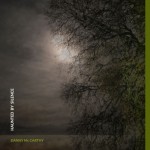
Artist: Danny McCarthy (@)
Title: Haunted By Silence
Format: CD + Download
Label: Farpoint Recordings (@)
Rated:


Title: Haunted By Silence
Format: CD + Download
Label: Farpoint Recordings (@)
Rated:
Silence, as it turns out, is rarely silent. It creaks, exhales, contracts, remembers. And if you sit still long enough - longer than most people are willing to - you start to notice that it has a temperament. "Haunted By Silence" by Danny McCarthy is built precisely on that uncomfortable realization: that absence is never empty, only unattended.
McCarthy has been working in the field of sound art and deep listening for decades, often orbiting installations, environments, and site-specific works rather than conventional “albums”. This piece, though released as a single 47-minute composition, carries that spatial DNA with it. It doesn’t behave like a recording. It behaves like a place you’re temporarily allowed to occupy, assuming you don’t start making noise and ruin everything.
The origin story matters here, and not just as a romantic backdrop. St. Mary’s Abbey in Glencairn - home to a Cistercian community where silence is not aesthetic but structural - provides both the conceptual and acoustic seed. McCarthy listens to the building the way some people listen to music: heating systems switching off, wood contracting, tiny fractures of sound appearing without warning. No rhythm, no pattern, no intention. Just events. And between them, something far more demanding than sound: attention.
The piece unfolds with a kind of severe patience. Field recordings and manipulated objects are arranged so sparingly that each gesture feels consequential, almost intrusive. Some sounds hover at the edge of perception, others cut through with surgical precision. There’s no narrative, no progression in the traditional sense. Instead, there’s a shifting field of presence and withdrawal, as if the work is constantly negotiating how much it should reveal.
At times, it borders on the perverse. You find yourself leaning in, waiting for something to happen, and when it does, it’s barely there. A click, a distant resonance, a texture that dissolves before you can name it. It’s the kind of listening experience that exposes how conditioned we are to expect reward, payoff, meaning neatly delivered. "Haunted By Silence" offers none of that. It offers proximity.
The influence of deep listening practices is evident, though never didactic. McCarthy doesn’t instruct you to listen differently. He simply removes the usual scaffolding and leaves you alone with your own perceptual habits. The result is mildly disorienting, occasionally frustrating, and, if you persist, unexpectedly absorbing.
There’s also a quiet dialogue with the accompanying texts - particularly the presence of David Toop, whose reflections on silence have long occupied a similar terrain. But the album doesn’t rely on theory to justify itself. It stands, or rather barely stands, on its own fragile acoustics.
Released by Farpoint Recordings, a label that has consistently documented work at the edges of audibility and intention, this album fits comfortably within a catalog that values attention over spectacle. The limited CD edition, with essays and photographic documentation, reinforces the sense that this is as much an object of contemplation as a piece of sound.
What "Haunted By Silence" ultimately does is strip listening down to something almost primitive. No hooks, no gestures toward accessibility, no concern for your patience threshold. It asks you to sit, to wait, to notice. Which, in a world engineered to prevent exactly that, feels less like an artistic choice and more like a quiet act of resistance.
It won’t fill a room. It will, however, change how the room feels once it’s gone.
McCarthy has been working in the field of sound art and deep listening for decades, often orbiting installations, environments, and site-specific works rather than conventional “albums”. This piece, though released as a single 47-minute composition, carries that spatial DNA with it. It doesn’t behave like a recording. It behaves like a place you’re temporarily allowed to occupy, assuming you don’t start making noise and ruin everything.
The origin story matters here, and not just as a romantic backdrop. St. Mary’s Abbey in Glencairn - home to a Cistercian community where silence is not aesthetic but structural - provides both the conceptual and acoustic seed. McCarthy listens to the building the way some people listen to music: heating systems switching off, wood contracting, tiny fractures of sound appearing without warning. No rhythm, no pattern, no intention. Just events. And between them, something far more demanding than sound: attention.
The piece unfolds with a kind of severe patience. Field recordings and manipulated objects are arranged so sparingly that each gesture feels consequential, almost intrusive. Some sounds hover at the edge of perception, others cut through with surgical precision. There’s no narrative, no progression in the traditional sense. Instead, there’s a shifting field of presence and withdrawal, as if the work is constantly negotiating how much it should reveal.
At times, it borders on the perverse. You find yourself leaning in, waiting for something to happen, and when it does, it’s barely there. A click, a distant resonance, a texture that dissolves before you can name it. It’s the kind of listening experience that exposes how conditioned we are to expect reward, payoff, meaning neatly delivered. "Haunted By Silence" offers none of that. It offers proximity.
The influence of deep listening practices is evident, though never didactic. McCarthy doesn’t instruct you to listen differently. He simply removes the usual scaffolding and leaves you alone with your own perceptual habits. The result is mildly disorienting, occasionally frustrating, and, if you persist, unexpectedly absorbing.
There’s also a quiet dialogue with the accompanying texts - particularly the presence of David Toop, whose reflections on silence have long occupied a similar terrain. But the album doesn’t rely on theory to justify itself. It stands, or rather barely stands, on its own fragile acoustics.
Released by Farpoint Recordings, a label that has consistently documented work at the edges of audibility and intention, this album fits comfortably within a catalog that values attention over spectacle. The limited CD edition, with essays and photographic documentation, reinforces the sense that this is as much an object of contemplation as a piece of sound.
What "Haunted By Silence" ultimately does is strip listening down to something almost primitive. No hooks, no gestures toward accessibility, no concern for your patience threshold. It asks you to sit, to wait, to notice. Which, in a world engineered to prevent exactly that, feels less like an artistic choice and more like a quiet act of resistance.
It won’t fill a room. It will, however, change how the room feels once it’s gone.
Roman Leykam: Enticing
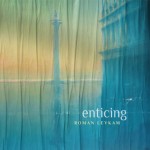
There’s a certain type of album that promises contemplation and then delivers a politely blurred background for your next existential crisis. "Enticing" by Roman Leykam gets dangerously close to that territory, then quietly sidesteps it, as if aware that true stillness is less about comfort and more about what starts surfacing when nothing distracts you.
Leykam works in that porous space where guitar stops behaving like a guitar. Through analog and digital synth treatments, field recordings, and a patient dismantling of instrumental identity, he builds something that feels less composed than slowly exhaled. The fact that much of the material dates back to 2022 recordings gives the album a faint temporal dislocation, like memories processed long after the events themselves have lost their urgency.
“A Tireless Choir of Waves” opens with exactly the kind of title that dares you to roll your eyes. Resist the urge. The piece unfolds with a restrained insistence, layering tones that never quite resolve into harmony, more like parallel currents brushing against each other. It’s not oceanic in the clichéd ambient sense. It’s more like standing near water and realizing you’ve been listening to it for longer than you intended.
Across the record, Leykam avoids dramatic gestures with almost stubborn discipline. “A Touch of Bleakness” and “Fleeing Shadows” drift through minor tonalities that never collapse into despair, instead hovering in that ambiguous emotional register where melancholy feels observational rather than confessional. There’s no catharsis here, which is either a flaw or the entire point, depending on how much emotional closure you require from your music.
“Elation” briefly suggests a shift, but even here the brightness feels filtered, as if viewed through frosted glass. Any sense of uplift is tempered by a lingering hesitation, like someone who has learned not to trust sudden happiness. It’s a small, almost cruel detail, and it works.
Field recordings - subtly integrated, occasionally sourced by Jacqueline Leykam - appear less as documentary elements and more as spatial interruptions. They don’t locate you in a place so much as remind you that place is always slipping. “Myriads of Black Angels” and “Grey Unlimited Water Area” extend this ambiguity, stretching time until it becomes difficult to tell whether the music is evolving or simply persisting.
“Ponte Pantalon” introduces a faint architectural echo, a suggestion of Venice not as postcard but as acoustic residue: footsteps, water, stone, absence. It’s one of the few moments where the outside world feels momentarily legible before dissolving again into abstraction.
By the time “Environmental Sounds” and “The Leisure of a Dream” arrive, the album has thinned out into something almost transparent. The closing stretch - “Silent Beauty” and “City of Masks” - doesn’t conclude so much as fade into a state of suspended attention, as if ending would be too definitive a gesture for a record so invested in ambiguity.
Released by Frank Mark Arts, "Enticing" aligns itself with a lineage of ambient and electroacoustic work that treats sound less as narrative and more as environment. But unlike more decorative entries in the genre, it resists becoming purely ornamental. There’s a quiet insistence here, a refusal to be reduced to atmosphere alone.
It’s not an album that reaches out. It waits. And if you meet it halfway, it does something mildly inconvenient: it removes the illusion that stillness is empty. Instead, it reveals it as crowded, layered, and slightly unsettling.
Which, frankly, is a more honest kind of calm.
Leykam works in that porous space where guitar stops behaving like a guitar. Through analog and digital synth treatments, field recordings, and a patient dismantling of instrumental identity, he builds something that feels less composed than slowly exhaled. The fact that much of the material dates back to 2022 recordings gives the album a faint temporal dislocation, like memories processed long after the events themselves have lost their urgency.
“A Tireless Choir of Waves” opens with exactly the kind of title that dares you to roll your eyes. Resist the urge. The piece unfolds with a restrained insistence, layering tones that never quite resolve into harmony, more like parallel currents brushing against each other. It’s not oceanic in the clichéd ambient sense. It’s more like standing near water and realizing you’ve been listening to it for longer than you intended.
Across the record, Leykam avoids dramatic gestures with almost stubborn discipline. “A Touch of Bleakness” and “Fleeing Shadows” drift through minor tonalities that never collapse into despair, instead hovering in that ambiguous emotional register where melancholy feels observational rather than confessional. There’s no catharsis here, which is either a flaw or the entire point, depending on how much emotional closure you require from your music.
“Elation” briefly suggests a shift, but even here the brightness feels filtered, as if viewed through frosted glass. Any sense of uplift is tempered by a lingering hesitation, like someone who has learned not to trust sudden happiness. It’s a small, almost cruel detail, and it works.
Field recordings - subtly integrated, occasionally sourced by Jacqueline Leykam - appear less as documentary elements and more as spatial interruptions. They don’t locate you in a place so much as remind you that place is always slipping. “Myriads of Black Angels” and “Grey Unlimited Water Area” extend this ambiguity, stretching time until it becomes difficult to tell whether the music is evolving or simply persisting.
“Ponte Pantalon” introduces a faint architectural echo, a suggestion of Venice not as postcard but as acoustic residue: footsteps, water, stone, absence. It’s one of the few moments where the outside world feels momentarily legible before dissolving again into abstraction.
By the time “Environmental Sounds” and “The Leisure of a Dream” arrive, the album has thinned out into something almost transparent. The closing stretch - “Silent Beauty” and “City of Masks” - doesn’t conclude so much as fade into a state of suspended attention, as if ending would be too definitive a gesture for a record so invested in ambiguity.
Released by Frank Mark Arts, "Enticing" aligns itself with a lineage of ambient and electroacoustic work that treats sound less as narrative and more as environment. But unlike more decorative entries in the genre, it resists becoming purely ornamental. There’s a quiet insistence here, a refusal to be reduced to atmosphere alone.
It’s not an album that reaches out. It waits. And if you meet it halfway, it does something mildly inconvenient: it removes the illusion that stillness is empty. Instead, it reveals it as crowded, layered, and slightly unsettling.
Which, frankly, is a more honest kind of calm.
Bad Groupy & Pink Twins: Hallitusvastane Puhastus
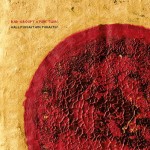
Artist: Bad Groupy & Pink Twins (@)
Title: Hallitusvastane Puhastus
Format: CD + Download
Label: I Shall Sing Until My Land Is Free (@)
Rated:
Title: Hallitusvastane Puhastus
Format: CD + Download
Label: I Shall Sing Until My Land Is Free (@)
Rated:
Some records arrive with a concept. Others arrive like a dent in the wall and dare you to explain how it got there. "Hallitusvastane Puhastus" - the meeting point between Bad Groupy and Pink Twins - belongs firmly to the second category. A single 37-minute piece, recorded until the computer gave up, which is either a romantic anecdote or a subtle warning.
The title alone does half the work: anti-government activity in Finnish, bathroom mold cleaner in Estonian. It’s difficult to decide whether this is conceptual brilliance or a perfectly calibrated joke at the listener’s expense. Either way, it sets the tone. Expect ambiguity. Expect friction. Expect to question your life choices somewhere around minute twelve.
The four minds involved - Kris Kuldkepp, Jeff Surak, Juha VehvilÄinen and Vesa VehvilÄinen - approach sound not as composition but as accumulation. Synthesizers, tapes, pedals, field recordings, and whatever else happened to be within arm’s reach are fed into a process that feels less like collaboration and more like a controlled landslide.
The result is a monolith, but not a static one. It shifts, corrodes, regenerates. Early on, there’s a sense of spatial exploration: fragments flicker in and out, textures scrape against each other, as if the piece is testing its own boundaries. Then, gradually, density takes over. Layers stack, distort, and begin to obscure their own origins. You stop identifying sources and start perceiving mass.
There’s a peculiar psychedelic quality here, though not the comforting, kaleidoscopic kind. This is closer to sensory overload filtered through industrial fatigue. At times, it hints at rhythm, then immediately undermines it. At others, it flirts with drone, only to inject enough instability to prevent any meditative drift. If this is “rock ’n’ roll”, it’s been dismantled, catalogued, and reassembled without instructions.
What makes the piece unexpectedly compelling is its refusal to resolve into a single identity. It doesn’t settle into noise, though it frequently approaches it. It doesn’t commit to structure, though patterns occasionally emerge like temporary scaffolding. The question “is it art or noise?” lingers, but the record seems largely indifferent to the outcome. It exists regardless, which is both admirable and mildly irritating.
There’s also a quiet sense of humor embedded in the excess. Playing until the recording system crashes is the kind of gesture that flirts with cliché in experimental circles, yet here it feels oddly appropriate. The music carries that same threshold energy, as if constantly approaching its own limit without quite collapsing.
Released by I Shall Sing Until My Land Is Free, a label whose name already suggests a certain ideological stubbornness, "Hallitusvastane Puhastus" fits neatly into a lineage of works that treat sound as both material and provocation. It doesn’t guide, it confronts. Not aggressively, but persistently.
For the sake of clarity, this review remains strictly focused on the artistic content of the release and does not endorse or oppose any political stance or campaign associated with the label.
Listening to it is less like following a narrative and more like inhabiting a space that keeps rearranging itself while you’re inside. Doors appear, disappear, lead nowhere. Eventually, you stop looking for an exit and start paying attention to the walls.
Whether it’s a tool for dismantling systems or cleaning imaginary mold is, ultimately, beside the point. It does something more basic and more inconvenient: it forces you to confront how much meaning you expect from sound - and how uneasy it feels when that expectation isn’t met.
The title alone does half the work: anti-government activity in Finnish, bathroom mold cleaner in Estonian. It’s difficult to decide whether this is conceptual brilliance or a perfectly calibrated joke at the listener’s expense. Either way, it sets the tone. Expect ambiguity. Expect friction. Expect to question your life choices somewhere around minute twelve.
The four minds involved - Kris Kuldkepp, Jeff Surak, Juha VehvilÄinen and Vesa VehvilÄinen - approach sound not as composition but as accumulation. Synthesizers, tapes, pedals, field recordings, and whatever else happened to be within arm’s reach are fed into a process that feels less like collaboration and more like a controlled landslide.
The result is a monolith, but not a static one. It shifts, corrodes, regenerates. Early on, there’s a sense of spatial exploration: fragments flicker in and out, textures scrape against each other, as if the piece is testing its own boundaries. Then, gradually, density takes over. Layers stack, distort, and begin to obscure their own origins. You stop identifying sources and start perceiving mass.
There’s a peculiar psychedelic quality here, though not the comforting, kaleidoscopic kind. This is closer to sensory overload filtered through industrial fatigue. At times, it hints at rhythm, then immediately undermines it. At others, it flirts with drone, only to inject enough instability to prevent any meditative drift. If this is “rock ’n’ roll”, it’s been dismantled, catalogued, and reassembled without instructions.
What makes the piece unexpectedly compelling is its refusal to resolve into a single identity. It doesn’t settle into noise, though it frequently approaches it. It doesn’t commit to structure, though patterns occasionally emerge like temporary scaffolding. The question “is it art or noise?” lingers, but the record seems largely indifferent to the outcome. It exists regardless, which is both admirable and mildly irritating.
There’s also a quiet sense of humor embedded in the excess. Playing until the recording system crashes is the kind of gesture that flirts with cliché in experimental circles, yet here it feels oddly appropriate. The music carries that same threshold energy, as if constantly approaching its own limit without quite collapsing.
Released by I Shall Sing Until My Land Is Free, a label whose name already suggests a certain ideological stubbornness, "Hallitusvastane Puhastus" fits neatly into a lineage of works that treat sound as both material and provocation. It doesn’t guide, it confronts. Not aggressively, but persistently.
For the sake of clarity, this review remains strictly focused on the artistic content of the release and does not endorse or oppose any political stance or campaign associated with the label.
Listening to it is less like following a narrative and more like inhabiting a space that keeps rearranging itself while you’re inside. Doors appear, disappear, lead nowhere. Eventually, you stop looking for an exit and start paying attention to the walls.
Whether it’s a tool for dismantling systems or cleaning imaginary mold is, ultimately, beside the point. It does something more basic and more inconvenient: it forces you to confront how much meaning you expect from sound - and how uneasy it feels when that expectation isn’t met.
Extrema Ratio: Vexata Quaestio

Artist: Extrema Ratio (@)
Title: Vexata Quaestio
Format: CD + Download
Label: Wave Guardian Records (@)
Rated:
Title: Vexata Quaestio
Format: CD + Download
Label: Wave Guardian Records (@)
Rated:
There are albums that flirt with rebellion, and then there are albums that treat it like a full-time occupation, with no holidays and very poor working conditions. "Vexata Quaestio" by Extrema Ratio clearly belongs to the second category. It doesn’t perform dissent. It metabolizes it, chews it into something abrasive and spits it back with interest.
The title itself hints at an unresolved problem, something historically debated and never settled. The band, a quartet from the Canavese area orbiting Ivrea, doesn’t attempt to solve anything. That would be far too polite. Instead, they stage conflict as a method, drawing from a lineage where Sun Ra’s “organized freedom” collides head-on with the industrial abrasion of Einstürzende Neubauten and the feral urgency of Peter Brötzmann. If that sounds exhausting, it is. Intentionally.
Opening track “die litanie des g.b.” drags the specter of Viennese Actionism into the room, specifically Günter Brus, not as historical reference but as vocal possession. The piece feels less like music and more like a ritual conducted in a language that resents being understood. The comparison to early Neubauten isn’t accidental, but this isn’t homage. It’s closer to an autopsy performed with industrial tools.
“Bitter Absinthe”, featuring Marina Andreeva, spirals into a dub-inflected hallucination where post-punk austerity is refracted through Soviet grayscale. The ghost of It's Hard to Be a God lingers in the background, not visually but atmospherically, as if the track itself had been dragged through mud and memory. The use of Marina Tsvetaeva’s final words doesn’t elevate the piece. It destabilizes it, stripping away any safe distance between listener and subject.
With “La recherche d’un impossible,” the band briefly assembles something resembling a groove, thanks in part to Michele Anelli. It doesn’t last. The structure feels like it’s constantly negotiating its own collapse, while the influence of Georges Bataille seeps in as a philosophical infection rather than a literary citation. The result is a tension between propulsion and disintegration that never quite resolves, which seems to be the point.
“The Anatomy of Cruelty” dives into the writings of Antonin Artaud with the subtlety of a controlled explosion. This is not theatrical in any conventional sense. It’s more like the idea of theater after it has been dismantled and repurposed as a weapon. The voice here doesn’t express. It erupts.
“Revolt” is, predictably, not subtle. But it avoids cliché by refusing to organize its anger into anything digestible. Rhythms fracture, metallic textures corrode, and the entire track limps forward like a machine that has decided to keep functioning out of spite.
“Von Protest zum Widerstand”, with Alex Spalck, channels the words of Ulrike Meinhof through interference and obstruction. The piece feels like a transmission constantly on the verge of being cut off, which, given the source material, is less an aesthetic choice and more an ethical one.
Closing track “The Anatomy of Affliction” expands into a two-part structure that brushes against the shadows of Karlheinz Stockhausen and Luigi Nono without settling into academic reverence. The first section dissects, the second descends. Somewhere in between, the idea of catharsis is proposed and then quietly sabotaged.
What holds "Vexata Quaestio" together is not cohesion in any traditional sense, but a relentless commitment to tension. The band’s non-idiomatic approach, filtered through members like xlaidox on voice and trumpet, Alessandro Cartolari on baritone sax, Diego Rosso on drums, and Pier Rot Rosso on electronics, results in a sound that feels perpetually on edge, as if stability were a moral failure.
Released by Wave Guardian Records, the album continues the trajectory set by their debut "A Dangerous Method", but with less interest in defining a sound and more interest in dismantling it.
Majakovskij’s words hover over the entire record like a warning rather than a manifesto. Art as a hammer, not a mirror. It’s a nice slogan until you actually hear what that implies. "Vexata Quaestio" doesn’t just tap at the surface. It swings, repeatedly, without checking what’s left standing.
It’s not pleasant. It’s not supposed to be. And if it occasionally feels like too much, that probably says more about the listener than the music, which remains stubbornly, almost admirably, unconcerned.
The title itself hints at an unresolved problem, something historically debated and never settled. The band, a quartet from the Canavese area orbiting Ivrea, doesn’t attempt to solve anything. That would be far too polite. Instead, they stage conflict as a method, drawing from a lineage where Sun Ra’s “organized freedom” collides head-on with the industrial abrasion of Einstürzende Neubauten and the feral urgency of Peter Brötzmann. If that sounds exhausting, it is. Intentionally.
Opening track “die litanie des g.b.” drags the specter of Viennese Actionism into the room, specifically Günter Brus, not as historical reference but as vocal possession. The piece feels less like music and more like a ritual conducted in a language that resents being understood. The comparison to early Neubauten isn’t accidental, but this isn’t homage. It’s closer to an autopsy performed with industrial tools.
“Bitter Absinthe”, featuring Marina Andreeva, spirals into a dub-inflected hallucination where post-punk austerity is refracted through Soviet grayscale. The ghost of It's Hard to Be a God lingers in the background, not visually but atmospherically, as if the track itself had been dragged through mud and memory. The use of Marina Tsvetaeva’s final words doesn’t elevate the piece. It destabilizes it, stripping away any safe distance between listener and subject.
With “La recherche d’un impossible,” the band briefly assembles something resembling a groove, thanks in part to Michele Anelli. It doesn’t last. The structure feels like it’s constantly negotiating its own collapse, while the influence of Georges Bataille seeps in as a philosophical infection rather than a literary citation. The result is a tension between propulsion and disintegration that never quite resolves, which seems to be the point.
“The Anatomy of Cruelty” dives into the writings of Antonin Artaud with the subtlety of a controlled explosion. This is not theatrical in any conventional sense. It’s more like the idea of theater after it has been dismantled and repurposed as a weapon. The voice here doesn’t express. It erupts.
“Revolt” is, predictably, not subtle. But it avoids cliché by refusing to organize its anger into anything digestible. Rhythms fracture, metallic textures corrode, and the entire track limps forward like a machine that has decided to keep functioning out of spite.
“Von Protest zum Widerstand”, with Alex Spalck, channels the words of Ulrike Meinhof through interference and obstruction. The piece feels like a transmission constantly on the verge of being cut off, which, given the source material, is less an aesthetic choice and more an ethical one.
Closing track “The Anatomy of Affliction” expands into a two-part structure that brushes against the shadows of Karlheinz Stockhausen and Luigi Nono without settling into academic reverence. The first section dissects, the second descends. Somewhere in between, the idea of catharsis is proposed and then quietly sabotaged.
What holds "Vexata Quaestio" together is not cohesion in any traditional sense, but a relentless commitment to tension. The band’s non-idiomatic approach, filtered through members like xlaidox on voice and trumpet, Alessandro Cartolari on baritone sax, Diego Rosso on drums, and Pier Rot Rosso on electronics, results in a sound that feels perpetually on edge, as if stability were a moral failure.
Released by Wave Guardian Records, the album continues the trajectory set by their debut "A Dangerous Method", but with less interest in defining a sound and more interest in dismantling it.
Majakovskij’s words hover over the entire record like a warning rather than a manifesto. Art as a hammer, not a mirror. It’s a nice slogan until you actually hear what that implies. "Vexata Quaestio" doesn’t just tap at the surface. It swings, repeatedly, without checking what’s left standing.
It’s not pleasant. It’s not supposed to be. And if it occasionally feels like too much, that probably says more about the listener than the music, which remains stubbornly, almost admirably, unconcerned.
Joe Harvey-Whyte & Geir Sundstøl: Langeleik
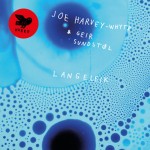
Some records ask for your attention. Others quietly remove it from circulation. "Langeleik" belongs to the second category, the kind that doesn’t beg but waits, watching you fidget until your need for constant stimulation starts to feel a little embarrassing.
The meeting between Joe Harvey-Whyte and Geir Sundstøl begins with an instrument that usually carries a heavy suitcase of associations: dust, Americana, emotional déjà vu. Here, the pedal steel is stripped of its usual narrative and set adrift. It doesn’t mourn, it hovers. It doesn’t resolve, it seeps.
Their origin story has that suspiciously organic charm: a chance discovery, a message sent across curiosity, years of slow correspondence, then five days in an Oslo studio that somehow crystallize into a full-length record. Five days, which in contemporary production terms sounds either reckless or liberating, depending on how much you trust accidents. "Langeleik" makes a quiet case for the latter. Nothing feels overworked; everything feels allowed.
The tracks move like waterways that insist on their names while refusing fixed identities. “Tana” and “Otra Mantra” open with a kind of suspended patience, not calm exactly, more like a held breath that never quite resolves into release. “Lea Dub” subtly bends geography, threading East London into a landscape that now speaks in glacial tones. Melodies appear only to dissolve as soon as you notice them, as if the music distrusts permanence.
The emotional fault line runs through “Rørvikelva”, where the voice of Ivar Orvedal emerges like something recovered rather than composed. His spoken word doesn’t anchor the piece; it destabilizes it in the best possible way, reframing the track as something unfinished, or perhaps something that refuses to be finished at all.
Around them, a discreet constellation of collaborators - Erland Dahlen, Jo Berger Myhre, Anders Engen - contribute without ever breaking the fragile equilibrium. No one pushes forward. No one insists. In a musical landscape addicted to presence, this kind of restraint feels almost radical.
The instrumentation, from Optigan to Moog to aging amplifiers, avoids the usual vintage fetishism. These are not nostalgic props but living, slightly unreliable bodies. They hum, they waver, they remind you that sound is a physical event with edges and decay. It’s an oddly refreshing stance in an era obsessed with frictionless perfection.
There’s also a quietly amusing undertone to the whole project: two musicians deciding to plan nothing and somehow managing to avoid producing an unstructured mess. It turns out that deep listening, that unfashionable skill, still has practical applications.
Released by Hubro, a label that has refined a particular sensitivity to Nordic sonic landscapes without turning them into aesthetic clichés, "Langeleik" sidesteps both ambient wallpaper and pastoral sentimentality. It feels closer to a weather log than an album, a record of shifting pressures and invisible currents.
This is not a record that gives. It subtracts. It removes urgency, expectation, the quiet panic of needing something to happen. For some listeners, that will register as absence. For others, it might resemble relief.
Listen casually and it evaporates. Listen properly and it does something mildly inconvenient: it slows you down. At which point the discomfort is no longer the music’s problem.
The meeting between Joe Harvey-Whyte and Geir Sundstøl begins with an instrument that usually carries a heavy suitcase of associations: dust, Americana, emotional déjà vu. Here, the pedal steel is stripped of its usual narrative and set adrift. It doesn’t mourn, it hovers. It doesn’t resolve, it seeps.
Their origin story has that suspiciously organic charm: a chance discovery, a message sent across curiosity, years of slow correspondence, then five days in an Oslo studio that somehow crystallize into a full-length record. Five days, which in contemporary production terms sounds either reckless or liberating, depending on how much you trust accidents. "Langeleik" makes a quiet case for the latter. Nothing feels overworked; everything feels allowed.
The tracks move like waterways that insist on their names while refusing fixed identities. “Tana” and “Otra Mantra” open with a kind of suspended patience, not calm exactly, more like a held breath that never quite resolves into release. “Lea Dub” subtly bends geography, threading East London into a landscape that now speaks in glacial tones. Melodies appear only to dissolve as soon as you notice them, as if the music distrusts permanence.
The emotional fault line runs through “Rørvikelva”, where the voice of Ivar Orvedal emerges like something recovered rather than composed. His spoken word doesn’t anchor the piece; it destabilizes it in the best possible way, reframing the track as something unfinished, or perhaps something that refuses to be finished at all.
Around them, a discreet constellation of collaborators - Erland Dahlen, Jo Berger Myhre, Anders Engen - contribute without ever breaking the fragile equilibrium. No one pushes forward. No one insists. In a musical landscape addicted to presence, this kind of restraint feels almost radical.
The instrumentation, from Optigan to Moog to aging amplifiers, avoids the usual vintage fetishism. These are not nostalgic props but living, slightly unreliable bodies. They hum, they waver, they remind you that sound is a physical event with edges and decay. It’s an oddly refreshing stance in an era obsessed with frictionless perfection.
There’s also a quietly amusing undertone to the whole project: two musicians deciding to plan nothing and somehow managing to avoid producing an unstructured mess. It turns out that deep listening, that unfashionable skill, still has practical applications.
Released by Hubro, a label that has refined a particular sensitivity to Nordic sonic landscapes without turning them into aesthetic clichés, "Langeleik" sidesteps both ambient wallpaper and pastoral sentimentality. It feels closer to a weather log than an album, a record of shifting pressures and invisible currents.
This is not a record that gives. It subtracts. It removes urgency, expectation, the quiet panic of needing something to happen. For some listeners, that will register as absence. For others, it might resemble relief.
Listen casually and it evaporates. Listen properly and it does something mildly inconvenient: it slows you down. At which point the discomfort is no longer the music’s problem.