
Browse by Genre
Industrial Music / Industrial Metal / Aggro Industrial / Electro Metal
Industrial Noise / Power Noise / Harsh Noise
Synth Pop / Electro Pop / Synth-Electronica
Techno / Trance / Goa / Drum'n'Bass / Jungle / Tribal / Trip-Hop
Ambient / Electronica / Ethereal / Dub / Soundscapes / Abstract
Experimental / Avantgarde / Weird & Wired / Glitch / Noise / Field Recording
Dark / Gothic / Wave / New Wave / Dark Wave / Industrial Gothic
New Music / Downtown / Avantgarde Jazz / New Classical / World
Search Reviews
Music Reviews
Gabi Delgado & Marc Hurtado: Neue Weltumfassende Resistance
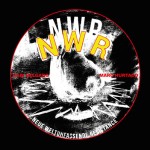
Artist: Gabi Delgado & Marc Hurtado
Title: Neue Weltumfassende Resistance
Format: CD
Label: play loud! (@)
Rated:

Title: Neue Weltumfassende Resistance
Format: CD
Label: play loud! (@)
Rated:
Let’s clear the fog immediately. This long-delayed debut is not a polite archival release, not a museum piece gently dusted off for historical reasons. It is a living, breathing artifact of friction. Sound against word, body against machine, urgency against time. If you were hoping for a neat posthumous tribute wrapped in reverence and safety glass, you are in the wrong room.
"Neue Weltumfassende Resistance" is the audible trace of a dialogue that unfolded across borders, cables, and years. Germany, Spain, France. Emails, files, voices sent into the void and sent back altered. Gabi Delgado and Marc Hurtado were not collaborating in the friendly sense of the word. They were colliding. The project, founded in 2004 and refined through rare but intense physical encounters, works like a 360-degree cinematic drift. Fast, volatile, sometimes graceful, sometimes feral. No map. No master plan. Just motion.
Delgado, permanently etched into history through DAF, always treated minimalism as a weapon. Few words, heavy meaning, bodies forced into attention. Hurtado, with decades of work through Étant Donnés and his solo universe Sol Ixent, approaches sound as ritual, poetry as combustion, art as a total field. Put them together and you do not get compromise. You get exposure.
The album moves like a fractured dream. Short pieces bleed into longer ones. Languages slip past each other. French, German, Spanish coexist without translation, because translation would weaken the spell. Tracks like "Erotique Narcotique" pulse with a tense, narcotic sensuality, while "Embrasse-moi" and "Ouvre-moi" feel less like invitations and more like doors being forced open. Intimacy here is not comforting. It is invasive, necessary, slightly dangerous.
There are moments where Delgado’s ghost of EBM discipline surfaces. "Master" and "Business ist Business" echo the skeletal, confrontational economy he perfected decades ago. But this is not nostalgia, and certainly not revivalism. The rhythms feel less designed for movement and more for insistence. They repeat until meaning leaks out of them. They stare you down until you blink first.
Other tracks dissolve into something closer to sonic prose. "Ich trÄume nur" drifts with a fragile, dreamlike melancholy. "Traumfabrik" hums like a half-functioning factory of illusions. "Europa" sounds weary, ambiguous, unresolved, which feels appropriate. The final "Resistance (NWR)" stretches out into a slow-burning incantation. Not a climax, more a state of being. Resistance not as slogan, but as ongoing tension between spirit and structure.
Poetry here is not decorative. It does not sit politely on top of the music. It scratches, interrupts, destabilizes. Sometimes the voice leads, sometimes it dissolves into the electronics. Sometimes both happen at once. The result feels less like songs and more like transmissions intercepted mid-flight. Incomplete. Urgent. Necessary.
Knowing that Gabi Delgado passed away in 2020 adds weight, but the album does not trade on absence or sentimentality. It does not look backward. If anything, it feels impatient with the past. This is not a farewell. It is a statement that arrived late only because it refused to arrive prematurely.
"Neue Weltumfassende Resistance" is not comfortable listening. It resists easy categorization, easy pleasure, easy consumption. It demands attention and repays it unevenly. Some moments burn. Some hover. Some pass like brief hallucinations. Taken together, they form a work that refuses closure.
This is not a record that explains itself. It does not want your approval. It wants your presence. You do not listen to it so much as stand inside it, while two uncompromising artistic wills argue, embrace, and vanish into noise. And somehow, against all odds, it still feels alive.
"Neue Weltumfassende Resistance" is the audible trace of a dialogue that unfolded across borders, cables, and years. Germany, Spain, France. Emails, files, voices sent into the void and sent back altered. Gabi Delgado and Marc Hurtado were not collaborating in the friendly sense of the word. They were colliding. The project, founded in 2004 and refined through rare but intense physical encounters, works like a 360-degree cinematic drift. Fast, volatile, sometimes graceful, sometimes feral. No map. No master plan. Just motion.
Delgado, permanently etched into history through DAF, always treated minimalism as a weapon. Few words, heavy meaning, bodies forced into attention. Hurtado, with decades of work through Étant Donnés and his solo universe Sol Ixent, approaches sound as ritual, poetry as combustion, art as a total field. Put them together and you do not get compromise. You get exposure.
The album moves like a fractured dream. Short pieces bleed into longer ones. Languages slip past each other. French, German, Spanish coexist without translation, because translation would weaken the spell. Tracks like "Erotique Narcotique" pulse with a tense, narcotic sensuality, while "Embrasse-moi" and "Ouvre-moi" feel less like invitations and more like doors being forced open. Intimacy here is not comforting. It is invasive, necessary, slightly dangerous.
There are moments where Delgado’s ghost of EBM discipline surfaces. "Master" and "Business ist Business" echo the skeletal, confrontational economy he perfected decades ago. But this is not nostalgia, and certainly not revivalism. The rhythms feel less designed for movement and more for insistence. They repeat until meaning leaks out of them. They stare you down until you blink first.
Other tracks dissolve into something closer to sonic prose. "Ich trÄume nur" drifts with a fragile, dreamlike melancholy. "Traumfabrik" hums like a half-functioning factory of illusions. "Europa" sounds weary, ambiguous, unresolved, which feels appropriate. The final "Resistance (NWR)" stretches out into a slow-burning incantation. Not a climax, more a state of being. Resistance not as slogan, but as ongoing tension between spirit and structure.
Poetry here is not decorative. It does not sit politely on top of the music. It scratches, interrupts, destabilizes. Sometimes the voice leads, sometimes it dissolves into the electronics. Sometimes both happen at once. The result feels less like songs and more like transmissions intercepted mid-flight. Incomplete. Urgent. Necessary.
Knowing that Gabi Delgado passed away in 2020 adds weight, but the album does not trade on absence or sentimentality. It does not look backward. If anything, it feels impatient with the past. This is not a farewell. It is a statement that arrived late only because it refused to arrive prematurely.
"Neue Weltumfassende Resistance" is not comfortable listening. It resists easy categorization, easy pleasure, easy consumption. It demands attention and repays it unevenly. Some moments burn. Some hover. Some pass like brief hallucinations. Taken together, they form a work that refuses closure.
This is not a record that explains itself. It does not want your approval. It wants your presence. You do not listen to it so much as stand inside it, while two uncompromising artistic wills argue, embrace, and vanish into noise. And somehow, against all odds, it still feels alive.
Test Dept: Industrial Overture. Studio & Live Recordings 1982–1985

"Industrial Overture" arrives with the subtlety of a dropped anvil, which is exactly the point. This 4CD box set does not attempt to rehabilitate Test Dept into polite cultural history. It restores them as a problem. A loud, metallic, politically inconvenient problem that still rattles the furniture four decades on.
Formed in early-80s London, Test Dept were never just a band. They were a collision point between music, performance art, direct action, and an unshakable suspicion toward power structures. Scrap metal, found percussion, tape loops, shouted texts, and an almost architectural sense of rhythm became tools not for atmosphere but for confrontation. If industrial music often flirted with dystopia as aesthetic, Test Dept insisted on dystopia as lived condition.
This box set, "Industrial Overture. Studio & Live Recordings 1982–1985", functions less like a retrospective and more like an excavation. Across forty tracks, it captures the group at their most volatile, before genre boundaries hardened and before “industrial” became a marketing tag rather than a warning label. The inclusion of "Strength Of Metal In Motion", originally a cassette-only release from 1983, is particularly telling. It sounds raw, underfed, and absolutely convinced of its own necessity. No polish, no distance, just impact and intent.
The early albums "Ecstasy Under Duress" and "Atonal & Hamburg", unavailable for decades, confirm how quickly Test Dept refined their language without softening it. These recordings are obsessed with labor, discipline, control, and resistance. Rhythms grind rather than groove. Repetition feels coercive. Silence, when it appears, is tactical. Even now, the material refuses nostalgia. It doesn’t want to be remembered fondly. It wants to be taken seriously.
Live recordings dominate much of the set, and rightly so. Test Dept were always a physical entity. Performances documented here from venues like Acklam Hall, Heaven, Arch 69, and later Atonal festivals reveal music that behaves differently in rooms filled with bodies. Pieces stretch, mutate, collapse, then reassemble under pressure. Tracks like “Shockwork”, “Gdask”, and “Efficiency” appear in multiple versions, not as redundancy but as evidence of function. These works adapt to context, acoustics, and political temperature.
The John Peel sessions included here are a reminder of how strange it was that this music ever reached mainstream radio. Stripped of visuals and volume, the material still transmits urgency. It also shows how tightly constructed these pieces actually were beneath the noise. Test Dept were not anti-structure. They were anti-complacency.
The previously unreleased studio material and demo versions offer further insight into process rather than myth. You hear ideas being tested, stressed, sometimes abandoned. It reinforces the sense that this was not an aesthetic pose but an ongoing experiment in how sound could operate socially.
Since resurfacing in the mid-2010s under the guidance of founding members Paul Jamrozy and Gray Cunnington, Test Dept have resisted the temptation to rebrand themselves as legacy artists. Signing with Artoffact and launching this archival series feels less like a victory lap and more like unfinished business. The remastering by Paul Lavigne is respectful without sterilizing the edges. The packaging, designed by Jamrozy with Stefan Alt, keeps the visual language functional and unsentimental.
The accompanying booklet, featuring an essay by Alexei Monroe, adds historical framing without draining the material of its bite. This is useful context, but the music does not rely on explanation. It still communicates directly, and not gently.
"Industrial Overture" ultimately confirms that Test Dept were not documenting an era so much as anticipating a recurring condition. Surveillance, austerity, mechanized labor, ideological exhaustion. None of this feels resolved. If anything, the box set lands uncomfortably close to the present.
This is not a box for casual listening or background ambiance. It demands time, volume, and a certain tolerance for being unsettled. Test Dept never asked to be liked. They asked to be heard. Unfortunately, they still are.
Formed in early-80s London, Test Dept were never just a band. They were a collision point between music, performance art, direct action, and an unshakable suspicion toward power structures. Scrap metal, found percussion, tape loops, shouted texts, and an almost architectural sense of rhythm became tools not for atmosphere but for confrontation. If industrial music often flirted with dystopia as aesthetic, Test Dept insisted on dystopia as lived condition.
This box set, "Industrial Overture. Studio & Live Recordings 1982–1985", functions less like a retrospective and more like an excavation. Across forty tracks, it captures the group at their most volatile, before genre boundaries hardened and before “industrial” became a marketing tag rather than a warning label. The inclusion of "Strength Of Metal In Motion", originally a cassette-only release from 1983, is particularly telling. It sounds raw, underfed, and absolutely convinced of its own necessity. No polish, no distance, just impact and intent.
The early albums "Ecstasy Under Duress" and "Atonal & Hamburg", unavailable for decades, confirm how quickly Test Dept refined their language without softening it. These recordings are obsessed with labor, discipline, control, and resistance. Rhythms grind rather than groove. Repetition feels coercive. Silence, when it appears, is tactical. Even now, the material refuses nostalgia. It doesn’t want to be remembered fondly. It wants to be taken seriously.
Live recordings dominate much of the set, and rightly so. Test Dept were always a physical entity. Performances documented here from venues like Acklam Hall, Heaven, Arch 69, and later Atonal festivals reveal music that behaves differently in rooms filled with bodies. Pieces stretch, mutate, collapse, then reassemble under pressure. Tracks like “Shockwork”, “Gdask”, and “Efficiency” appear in multiple versions, not as redundancy but as evidence of function. These works adapt to context, acoustics, and political temperature.
The John Peel sessions included here are a reminder of how strange it was that this music ever reached mainstream radio. Stripped of visuals and volume, the material still transmits urgency. It also shows how tightly constructed these pieces actually were beneath the noise. Test Dept were not anti-structure. They were anti-complacency.
The previously unreleased studio material and demo versions offer further insight into process rather than myth. You hear ideas being tested, stressed, sometimes abandoned. It reinforces the sense that this was not an aesthetic pose but an ongoing experiment in how sound could operate socially.
Since resurfacing in the mid-2010s under the guidance of founding members Paul Jamrozy and Gray Cunnington, Test Dept have resisted the temptation to rebrand themselves as legacy artists. Signing with Artoffact and launching this archival series feels less like a victory lap and more like unfinished business. The remastering by Paul Lavigne is respectful without sterilizing the edges. The packaging, designed by Jamrozy with Stefan Alt, keeps the visual language functional and unsentimental.
The accompanying booklet, featuring an essay by Alexei Monroe, adds historical framing without draining the material of its bite. This is useful context, but the music does not rely on explanation. It still communicates directly, and not gently.
"Industrial Overture" ultimately confirms that Test Dept were not documenting an era so much as anticipating a recurring condition. Surveillance, austerity, mechanized labor, ideological exhaustion. None of this feels resolved. If anything, the box set lands uncomfortably close to the present.
This is not a box for casual listening or background ambiance. It demands time, volume, and a certain tolerance for being unsettled. Test Dept never asked to be liked. They asked to be heard. Unfortunately, they still are.
Jonas Olsson: Helmut Lachenmann Complete Piano Works
Artist: Jonas Olsson
Title: Helmut Lachenmann Complete Piano Works
Format: CD + Download
Label: Thanatosis Produktion (@)
Rated:
Title: Helmut Lachenmann Complete Piano Works
Format: CD + Download
Label: Thanatosis Produktion (@)
Rated:
Some composers write for the piano. Helmut Lachenmann writes against it, around it, sometimes seemingly despite it. This Thanatosis release, arriving neatly for his 90th birthday, finally gathers the complete solo piano works into a single object, and what emerges is less a corpus than a long, stubborn argument with an instrument that keeps refusing to behave.
Jonas Olsson is the right person to mediate this dispute. He has worked closely with Lachenmann, knows the difference between a note and a residue, and understands that in this music sound is often a side-effect rather than the goal. The piano here is not a noble Romantic beast but a physical system: keys scraped, strings touched, pedals half-engaged, resonance treated as material rather than decoration. Olsson doesn’t dramatize this. He simply lets the actions speak, which is harder and more convincing.
The early "5 Variationen über ein Thema von Franz Schubert" already feel like a polite door being closed. Schubert’s dance is present, yes, but constantly interrupted, irritated, eroded. It’s tradition viewed through clenched teeth. By "Echo Andante", the piano has learned a new trick: to exist mainly as an afterimage. Attacks matter less than what lingers, and the real composition seems to happen in the air after the hands have already moved on. It’s severe, but oddly tender, like someone whispering to a room and trusting it to remember.
"Wiegenmusik" and "Guero" sharpen this attitude. The former rocks uneasily, never quite settling into comfort, while the latter famously turns the piano into a percussion instrument that forgot it was supposed to sing. Fingernails, wood, friction, breathless quiet. Anyone expecting virtuosity in the usual sense should recalibrate. The difficulty here is not speed or volume, but restraint and nerve.
The cycle "Ein Kinderspiel" is where Lachenmann’s reputation for austerity quietly cracks. Written for his son, these miniature pieces are approachable without being simple, playful without being naive. Nursery tunes are filtered, distorted, placed at the edges of the keyboard, where sound thins out and resonance becomes the real protagonist. It’s music that remembers childhood without romanticizing it, which is rarer than it should be.
At the center sits "Serynade", a sprawling, unbroken work that feels like the piano discovering its own internal weather system. Resonance piles on resonance, sections bleed into each other, and moments of brilliance collapse into noise or silence without warning. Olsson navigates this with an impressive sense of long form. He doesn’t smooth the rough edges, but he makes the arc clear, letting tension accumulate and release with a logic that only becomes apparent in retrospect.
The final pieces, "Berliner Kirschblüten" and "Marche fatale", arrive late in Lachenmann’s life and sound like a grim smile. The piano no longer argues; it mutters, laughs darkly, stumbles forward. There is bitterness here, but also a refusal to turn reflective or nostalgic. Even at the end, Lachenmann avoids the comfort of summing up.
The production, recorded at Norrlandsoperan, captures the essential fragility of these works: the way silence presses in, the way tiny sounds suddenly matter. The booklet, with diagrams, notes by Paul Griffiths, and a long interview conducted by Olsson himself, reinforces the sense that this is not just a performance but a document.
This CD won’t convert skeptics overnight, and it doesn’t try to. What it offers instead is clarity: a full view of how one composer spent seven decades asking what sound is allowed to be. With Olsson’s focused, unsentimental playing, these pieces don’t feel like museum objects or academic exercises. They feel alive, awkward, sometimes funny in a dry, sideways way, and stubbornly human. For Lachenmann’s piano music, this is very likely the reference recording. And for the piano itself, it’s another reminder that survival sometimes means learning to make noise differently.
Jonas Olsson is the right person to mediate this dispute. He has worked closely with Lachenmann, knows the difference between a note and a residue, and understands that in this music sound is often a side-effect rather than the goal. The piano here is not a noble Romantic beast but a physical system: keys scraped, strings touched, pedals half-engaged, resonance treated as material rather than decoration. Olsson doesn’t dramatize this. He simply lets the actions speak, which is harder and more convincing.
The early "5 Variationen über ein Thema von Franz Schubert" already feel like a polite door being closed. Schubert’s dance is present, yes, but constantly interrupted, irritated, eroded. It’s tradition viewed through clenched teeth. By "Echo Andante", the piano has learned a new trick: to exist mainly as an afterimage. Attacks matter less than what lingers, and the real composition seems to happen in the air after the hands have already moved on. It’s severe, but oddly tender, like someone whispering to a room and trusting it to remember.
"Wiegenmusik" and "Guero" sharpen this attitude. The former rocks uneasily, never quite settling into comfort, while the latter famously turns the piano into a percussion instrument that forgot it was supposed to sing. Fingernails, wood, friction, breathless quiet. Anyone expecting virtuosity in the usual sense should recalibrate. The difficulty here is not speed or volume, but restraint and nerve.
The cycle "Ein Kinderspiel" is where Lachenmann’s reputation for austerity quietly cracks. Written for his son, these miniature pieces are approachable without being simple, playful without being naive. Nursery tunes are filtered, distorted, placed at the edges of the keyboard, where sound thins out and resonance becomes the real protagonist. It’s music that remembers childhood without romanticizing it, which is rarer than it should be.
At the center sits "Serynade", a sprawling, unbroken work that feels like the piano discovering its own internal weather system. Resonance piles on resonance, sections bleed into each other, and moments of brilliance collapse into noise or silence without warning. Olsson navigates this with an impressive sense of long form. He doesn’t smooth the rough edges, but he makes the arc clear, letting tension accumulate and release with a logic that only becomes apparent in retrospect.
The final pieces, "Berliner Kirschblüten" and "Marche fatale", arrive late in Lachenmann’s life and sound like a grim smile. The piano no longer argues; it mutters, laughs darkly, stumbles forward. There is bitterness here, but also a refusal to turn reflective or nostalgic. Even at the end, Lachenmann avoids the comfort of summing up.
The production, recorded at Norrlandsoperan, captures the essential fragility of these works: the way silence presses in, the way tiny sounds suddenly matter. The booklet, with diagrams, notes by Paul Griffiths, and a long interview conducted by Olsson himself, reinforces the sense that this is not just a performance but a document.
This CD won’t convert skeptics overnight, and it doesn’t try to. What it offers instead is clarity: a full view of how one composer spent seven decades asking what sound is allowed to be. With Olsson’s focused, unsentimental playing, these pieces don’t feel like museum objects or academic exercises. They feel alive, awkward, sometimes funny in a dry, sideways way, and stubbornly human. For Lachenmann’s piano music, this is very likely the reference recording. And for the piano itself, it’s another reminder that survival sometimes means learning to make noise differently.
Luis Fernando Amaya: nacen en silencio

Artist: Luis Fernando Amaya
Title: nacen en silencio
Format: Download Only (MP3 only)
Label: Aurora Records (@)
Rated:

Title: nacen en silencio
Format: Download Only (MP3 only)
Label: Aurora Records (@)
Rated:
Luis Fernando Amaya’s "nacen en silencio" arrives quietly, which is not a marketing trick but a compositional stance. This is music that distrusts grand entrances and prefers to unfold like a biological process you only notice once it is already happening. Released by Aurora Records as his second monographic album, it confirms Amaya as a composer less interested in spectacle than in attention: sustained, patient, almost ecological listening.
Amaya, born in Aguascalientes in 1992 and now based in Oslo, has built a practice around a deceptively simple question: how do other forms of life perceive the world, and what happens if music tries to listen back? This record extends that inquiry with unusual coherence. Across works for percussion, strings, voices, and electronics, "nacen en silencio" maps a territory where sound behaves less like expression and more like interaction. Things touch, resonate, trigger one another. Agency feels distributed.
The album’s conceptual backbone is borrowed from Marosa Di Giorgio’s image of mushrooms emerging silently, sometimes accompanied by a faint thunder. It’s a perfect metaphor for Amaya’s approach. The title piece for solo percussion opens with restraint, assembling itself from metallic glints and low, woody impacts. Modeled on mycelial networks, the music spreads horizontally rather than pushing forward. The fact that it is scored for accessible, often homemade instruments is not an ethical footnote but part of the sound itself. Nothing here feels precious; everything feels grounded.
The two entries from the "Dialecto de Árbol" series form the album’s nervous system. In No. 6, eight voices interact with multichannel electronics, producing vibrations through glass that blur the line between breath, resonance, and noise. The result is neither choral nor electronic in any conventional sense. It feels closer to an environmental phenomenon, something oscillating between presence and absence. No. 4, written for string quartet and performed with remarkable sensitivity by the Varo Quartet, strips the voice away but keeps the idea of polyphony as movement. Lines sway, collide gently, settle, then stir again, like branches negotiating a shared space.
If the "Dialecto" pieces explore vegetal time, "Bestiario: cinco" introduces a more unstable creature. Written for viola and electronics, it imagines an unseen animal defined by multiplicity. The electronics do not accompany so much as haunt the instrument, producing a sense of layered identity. The viola seems to hesitate between gestures, as if unsure which limb or wing to use next. It’s a playful piece in concept, but never whimsical. There’s an undercurrent of unease, as if the creature is constantly on the verge of slipping out of focus.
The longest and perhaps most physically striking work is "un leve trueno", for percussion and feedback. Two large drums face each other, wired so that actions on one provoke unpredictable responses on the other. The composer describes this as fungal behavior, and the analogy holds. Cause and effect are present but obscured. The music breathes, swells, recoils. What’s compelling here is not volume or drama, but proximity. Thunder that is both near and soft turns out to be deeply unsettling, a reminder that intensity does not require force.
What unites these five works is a refusal to treat non-human inspiration as metaphor alone. Amaya does not imitate nature; he borrows its operating principles. Feedback, resonance, variation, and contingency are not decorative ideas but structural ones. This is helped by the album’s production, which keeps textures tactile and close, and by a roster of performers who clearly understand that precision here means sensitivity, not control.
There is something gently radical about "nacen en silencio". It does not posture as environmental commentary, yet it quietly reshapes how listening itself might function. Time slows, hierarchies flatten, sound becomes less about telling and more about coexisting. In a musical landscape often obsessed with urgency and statement, Amaya offers something rarer: music that trusts silence, and knows that some of the most consequential things happen before anyone notices they’ve begun.
Amaya, born in Aguascalientes in 1992 and now based in Oslo, has built a practice around a deceptively simple question: how do other forms of life perceive the world, and what happens if music tries to listen back? This record extends that inquiry with unusual coherence. Across works for percussion, strings, voices, and electronics, "nacen en silencio" maps a territory where sound behaves less like expression and more like interaction. Things touch, resonate, trigger one another. Agency feels distributed.
The album’s conceptual backbone is borrowed from Marosa Di Giorgio’s image of mushrooms emerging silently, sometimes accompanied by a faint thunder. It’s a perfect metaphor for Amaya’s approach. The title piece for solo percussion opens with restraint, assembling itself from metallic glints and low, woody impacts. Modeled on mycelial networks, the music spreads horizontally rather than pushing forward. The fact that it is scored for accessible, often homemade instruments is not an ethical footnote but part of the sound itself. Nothing here feels precious; everything feels grounded.
The two entries from the "Dialecto de Árbol" series form the album’s nervous system. In No. 6, eight voices interact with multichannel electronics, producing vibrations through glass that blur the line between breath, resonance, and noise. The result is neither choral nor electronic in any conventional sense. It feels closer to an environmental phenomenon, something oscillating between presence and absence. No. 4, written for string quartet and performed with remarkable sensitivity by the Varo Quartet, strips the voice away but keeps the idea of polyphony as movement. Lines sway, collide gently, settle, then stir again, like branches negotiating a shared space.
If the "Dialecto" pieces explore vegetal time, "Bestiario: cinco" introduces a more unstable creature. Written for viola and electronics, it imagines an unseen animal defined by multiplicity. The electronics do not accompany so much as haunt the instrument, producing a sense of layered identity. The viola seems to hesitate between gestures, as if unsure which limb or wing to use next. It’s a playful piece in concept, but never whimsical. There’s an undercurrent of unease, as if the creature is constantly on the verge of slipping out of focus.
The longest and perhaps most physically striking work is "un leve trueno", for percussion and feedback. Two large drums face each other, wired so that actions on one provoke unpredictable responses on the other. The composer describes this as fungal behavior, and the analogy holds. Cause and effect are present but obscured. The music breathes, swells, recoils. What’s compelling here is not volume or drama, but proximity. Thunder that is both near and soft turns out to be deeply unsettling, a reminder that intensity does not require force.
What unites these five works is a refusal to treat non-human inspiration as metaphor alone. Amaya does not imitate nature; he borrows its operating principles. Feedback, resonance, variation, and contingency are not decorative ideas but structural ones. This is helped by the album’s production, which keeps textures tactile and close, and by a roster of performers who clearly understand that precision here means sensitivity, not control.
There is something gently radical about "nacen en silencio". It does not posture as environmental commentary, yet it quietly reshapes how listening itself might function. Time slows, hierarchies flatten, sound becomes less about telling and more about coexisting. In a musical landscape often obsessed with urgency and statement, Amaya offers something rarer: music that trusts silence, and knows that some of the most consequential things happen before anyone notices they’ve begun.
Uruboro: Close Position

"Close Position" is the kind of debut that politely refuses to behave like one. No manifesto, no stylistic shopping list, no anxious need to demonstrate versatility. Pierluigi Foschi, under the deliberately circular moniker Uruboro, starts instead from a single object, a single gesture, and a single room, and then worries that gesture until it begins to misbehave perceptually. The result is a 38-minute study in proximity, friction, and the strange things our ears do when they are denied clear boundaries.
Foschi is a percussionist, improviser, and composer, and all three roles are present here, though never announced. The core material of "Close Position" comes from bowing a gong with a double bass bow, a technique that already suggests duration over attack, pressure over impact. These sounds were recorded repeatedly throughout 2024 in Santa Colomba, always with the same setup, as if variation itself were something to be constrained, observed under laboratory conditions. The piece is a re-composition rather than a document: a careful stacking and balancing of nearly identical events, where difference is a matter of microns.
Enter Cosimo Fiaschi, whose soprano saxophone and reed trumpet are not asked to contrast the gong, but to impersonate it. This is where the record becomes quietly mischievous. Instead of dialogue, we get mimicry. Instead of call and response, a kind of sonic ventriloquism. The instruments lean so close to one another in pitch and color that the ear begins to lose track of who is doing what, or whether “who” is even the right question anymore.
What emerges is a long, slowly shifting texture dominated by beating phenomena, those phantom pulsations that arise when neighboring frequencies rub against each other. These beats are not played; they happen to you. The music exploits a basic limitation of human hearing, our inability to process extremely close frequencies simultaneously, and turns it into compositional material. You do not listen to "Close Position" so much as host it. The sound sets up residence in your perceptual system and starts rearranging the furniture.
This makes the listening experience oddly tense. The sounds are sustained, seemingly static, yet full of internal agitation. Change is always imminent and almost never arrives in a conventional sense. The drama lies in anticipation, in the suspicion that something has shifted when, technically, very little has. It’s minimal music without the clean lines, drone music without the comfort blanket, reduced music that refuses to be ascetic.
The live version of the piece, which relies on samples to maintain multiple layers at once, underlines an important point: "Close Position" is not about purity or instrumental heroics. It is about balance, accumulation, and the subjective nature of listening itself. Your position in the room matters. Your focus matters. Your tolerance for ambiguity definitely matters. Two people hearing the same performance are, in a very real sense, hearing different pieces.
Contextually, the album sits comfortably within the kind of contemporary electroacoustic and improvised practices that value timbre as structure and perception as form. But Foschi avoids academic stiffness. There is a dry sense of humor in committing so fully to such narrow parameters, in trusting that a gong, a bow, and a near-perfect impersonation can sustain half an hour without blinking.
Released by Disasters By Choice on CD, "Close Position" feels less like a statement than a condition. It asks for patience, proximity, and a willingness to let your ears do some of the composing. For a first release, it’s remarkably unafraid of standing still and watching the listener squirm just a little.
Foschi is a percussionist, improviser, and composer, and all three roles are present here, though never announced. The core material of "Close Position" comes from bowing a gong with a double bass bow, a technique that already suggests duration over attack, pressure over impact. These sounds were recorded repeatedly throughout 2024 in Santa Colomba, always with the same setup, as if variation itself were something to be constrained, observed under laboratory conditions. The piece is a re-composition rather than a document: a careful stacking and balancing of nearly identical events, where difference is a matter of microns.
Enter Cosimo Fiaschi, whose soprano saxophone and reed trumpet are not asked to contrast the gong, but to impersonate it. This is where the record becomes quietly mischievous. Instead of dialogue, we get mimicry. Instead of call and response, a kind of sonic ventriloquism. The instruments lean so close to one another in pitch and color that the ear begins to lose track of who is doing what, or whether “who” is even the right question anymore.
What emerges is a long, slowly shifting texture dominated by beating phenomena, those phantom pulsations that arise when neighboring frequencies rub against each other. These beats are not played; they happen to you. The music exploits a basic limitation of human hearing, our inability to process extremely close frequencies simultaneously, and turns it into compositional material. You do not listen to "Close Position" so much as host it. The sound sets up residence in your perceptual system and starts rearranging the furniture.
This makes the listening experience oddly tense. The sounds are sustained, seemingly static, yet full of internal agitation. Change is always imminent and almost never arrives in a conventional sense. The drama lies in anticipation, in the suspicion that something has shifted when, technically, very little has. It’s minimal music without the clean lines, drone music without the comfort blanket, reduced music that refuses to be ascetic.
The live version of the piece, which relies on samples to maintain multiple layers at once, underlines an important point: "Close Position" is not about purity or instrumental heroics. It is about balance, accumulation, and the subjective nature of listening itself. Your position in the room matters. Your focus matters. Your tolerance for ambiguity definitely matters. Two people hearing the same performance are, in a very real sense, hearing different pieces.
Contextually, the album sits comfortably within the kind of contemporary electroacoustic and improvised practices that value timbre as structure and perception as form. But Foschi avoids academic stiffness. There is a dry sense of humor in committing so fully to such narrow parameters, in trusting that a gong, a bow, and a near-perfect impersonation can sustain half an hour without blinking.
Released by Disasters By Choice on CD, "Close Position" feels less like a statement than a condition. It asks for patience, proximity, and a willingness to let your ears do some of the composing. For a first release, it’s remarkably unafraid of standing still and watching the listener squirm just a little.