
Browse by Genre
Industrial Music / Industrial Metal / Aggro Industrial / Electro Metal
Industrial Noise / Power Noise / Harsh Noise
Synth Pop / Electro Pop / Synth-Electronica
Techno / Trance / Goa / Drum'n'Bass / Jungle / Tribal / Trip-Hop
Ambient / Electronica / Ethereal / Dub / Soundscapes / Abstract
Experimental / Avantgarde / Weird & Wired / Glitch / Noise / Field Recording
Dark / Gothic / Wave / New Wave / Dark Wave / Industrial Gothic
New Music / Downtown / Avantgarde Jazz / New Classical / World
Search Reviews
Music Reviews
Tomat: Afasi
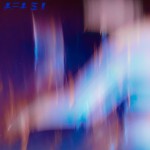
Artist: Tomat (@)
Title: Afasi
Format: Download Only (MP3 + Lossless)
Label: The State51 Conspiracy (@)
Rated:

Title: Afasi
Format: Download Only (MP3 + Lossless)
Label: The State51 Conspiracy (@)
Rated:
Tomat calls "Afasi" a collection of fragments, which is a polite way of saying it refuses to sit still or behave like an album in the traditional sense. Songs appear, evaporate, come back shorter, warped, half-remembered. If you’re looking for neat arcs or declarative statements, this is the wrong door. If you’re curious about what happens when memory, sound, and attention all start shedding parts of themselves, then this one quietly gets under the skin.
The title is doing real work here. The collision between aphasia and "a fasi" isn’t a clever word game, it’s a structural principle. These tracks don’t develop so much as accumulate and decay. Ideas surface briefly, loop just long enough to feel familiar, then dissolve. The frequent micro-interludes feel less like transitions than symptoms: gaps in speech, missing words, mental buffering. The three “Carousel” pieces frame the record like flickering markers of time passing, reminding you that motion doesn’t necessarily mean progress.
Sonically, "Afasi" lives in a limbo between ambient, IDM residue, and soundtrack logic stripped of images. Tomat’s background in installation work and film music is obvious, but never in a cinematic, overdetermined way. These pieces feel like cues for scenes that were cut, or memories that no longer remember what they were attached to. Rhythms appear crooked and tentative, often collapsing into texture. Melodies behave like shy witnesses: present, unreliable, unwilling to testify for long.
What keeps the record from drifting into abstract wallpaper is its emotional weight. Tracks like "Fatigue", "Maze", or "Opaque" don’t announce their moods, they leak them. There’s a persistent sense of weariness here, not dramatic despair but the softer exhaustion of living inside too much information for too long. Tomat’s idea of “communicative entropy” isn’t delivered as a manifesto, it’s embedded in the music’s behavior. Loops degrade, signals blur, structure keeps slipping just out of reach. The listener is not guided, only accompanied.
The shorter cuts are crucial. Those seconds-long pieces aren’t sketches waiting to be expanded, they are the point. They function like corrupted files or incomplete thoughts that refuse to be resolved. In that sense, "Afasi" is honest to the contemporary condition it’s responding to. Nothing here pretends to offer clarity or synthesis. Even the more extended moments, like "Aisle" or "Palafitta", feel provisional, as if they could stop at any moment without apology.
Tomat’s long trajectory through experimental electronics, collaborative projects, and sound design gives him the restraint to let things remain unresolved. There’s no urge to decorate the emptiness or explain it away. The mixing and mastering keep everything close and intimate, reinforcing the feeling of a private archive being quietly opened rather than a statement being broadcast.
"Afasi" doesn’t dramatize fragmentation, and that’s its strength. It treats disorientation as a lived condition rather than a theme to perform. The result is a record that feels unstable but deliberate, fragile but controlled. It doesn’t ask for immersion so much as patience. In return, it offers something rare: music that sounds like it knows language is failing, and keeps speaking anyway, in pieces, in phases, without pretending that the gaps don’t matter.
The title is doing real work here. The collision between aphasia and "a fasi" isn’t a clever word game, it’s a structural principle. These tracks don’t develop so much as accumulate and decay. Ideas surface briefly, loop just long enough to feel familiar, then dissolve. The frequent micro-interludes feel less like transitions than symptoms: gaps in speech, missing words, mental buffering. The three “Carousel” pieces frame the record like flickering markers of time passing, reminding you that motion doesn’t necessarily mean progress.
Sonically, "Afasi" lives in a limbo between ambient, IDM residue, and soundtrack logic stripped of images. Tomat’s background in installation work and film music is obvious, but never in a cinematic, overdetermined way. These pieces feel like cues for scenes that were cut, or memories that no longer remember what they were attached to. Rhythms appear crooked and tentative, often collapsing into texture. Melodies behave like shy witnesses: present, unreliable, unwilling to testify for long.
What keeps the record from drifting into abstract wallpaper is its emotional weight. Tracks like "Fatigue", "Maze", or "Opaque" don’t announce their moods, they leak them. There’s a persistent sense of weariness here, not dramatic despair but the softer exhaustion of living inside too much information for too long. Tomat’s idea of “communicative entropy” isn’t delivered as a manifesto, it’s embedded in the music’s behavior. Loops degrade, signals blur, structure keeps slipping just out of reach. The listener is not guided, only accompanied.
The shorter cuts are crucial. Those seconds-long pieces aren’t sketches waiting to be expanded, they are the point. They function like corrupted files or incomplete thoughts that refuse to be resolved. In that sense, "Afasi" is honest to the contemporary condition it’s responding to. Nothing here pretends to offer clarity or synthesis. Even the more extended moments, like "Aisle" or "Palafitta", feel provisional, as if they could stop at any moment without apology.
Tomat’s long trajectory through experimental electronics, collaborative projects, and sound design gives him the restraint to let things remain unresolved. There’s no urge to decorate the emptiness or explain it away. The mixing and mastering keep everything close and intimate, reinforcing the feeling of a private archive being quietly opened rather than a statement being broadcast.
"Afasi" doesn’t dramatize fragmentation, and that’s its strength. It treats disorientation as a lived condition rather than a theme to perform. The result is a record that feels unstable but deliberate, fragile but controlled. It doesn’t ask for immersion so much as patience. In return, it offers something rare: music that sounds like it knows language is failing, and keeps speaking anyway, in pieces, in phases, without pretending that the gaps don’t matter.
Plaster: Mainframe re_coded
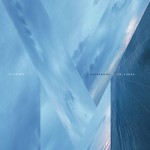
Plaster’s "Mainframe re_coded" arrives less like a nostalgic reissue and more like a controlled system reboot. The original "Mainframe", released in 2015 on Kvitnu, already carried the weight of a transition: it was the first Plaster album fully authored by Gianclaudio Hashem Moniri after Giuseppe Carlini’s departure, and it sounded like a project suddenly stripped of negotiation. What remained was pressure, focus, and a distinctly architectural approach to sound. Ten years later, "re_coded" does not soften that stance. If anything, it sharpens the edges and reorganizes the circuitry.
Moniri has always treated industrial and experimental electronics less as genres and more as working conditions. On "Mainframe", rhythm functioned like infrastructure: repetitive, oppressive, and necessary. In this remastered and expanded version, that logic becomes clearer. Tracks like “Unicore” and “Blade” hinge on obsessive loops that feel engineered rather than performed, while distortions are deployed with a kind of cold intentionality. Noise here is not chaos; it is calibration. The remaster emphasizes low-end density and spatial separation, making the album feel heavier without inflating it.
What stands out, especially in hindsight, is the album’s restraint. For music that lives in abrasive territories, "Mainframe" is remarkably disciplined. Gloomy atmospheres and corroded textures never spill into excess. Pieces like “Lucubra” and “Redshift” breathe in narrow corridors, maintaining tension through subtraction rather than overload. Valeria Svizzeri’s choral and lead vocal contributions add a human grain to the machinery, but they are treated as material rather than narrative. The voice is absorbed into the system, not elevated above it.
"Mainframe re_coded" expands this world without diluting it. The remixes by Franck Vigroux, Kaeba, and Agan are not decorative add-ons but structural reinterpretations. Vigroux’s version of “Terminal” in particular reframes the track’s severity, stretching it into something more volatile and unstable, while Kaeba’s take on “Blade” pushes the rhythmic logic toward a harsher, almost confrontational minimalism. The inclusion of live recordings and alternative mixes exposes the album’s physical dimension, reminding the listener that this music is built to test bodies as much as speakers.
There is also an unspoken narrative running beneath this release. The long delay, the collapse of earlier reissue plans, the stalled momentum of the pandemic era, and finally the successful crowdfunding campaign all feed into the album’s meaning. "Mainframe re_coded" is not just a revisiting of past material but a reclaiming of authorship and continuity. It insists on the relevance of a sound that never aimed to be timely in the first place.
Design and production details reinforce this sense of coherence. Richard Grant’s cover artwork mirrors the album’s logic: stark, functional, and suggestive of systems rather than stories. The CD edition, shorter out of necessity, feels more like a concentrated core, while the digital version allows the project to sprawl, loop back on itself, and expose its internal variations.
In the end, "Mainframe re_coded" does not ask to be rediscovered. It stands its ground, unapologetically dense and methodical, offering no comfort beyond the strange satisfaction of immersion. For longtime followers of Plaster, it clarifies a pivotal moment in the project’s evolution. For new listeners, it is a reminder that industrial music, when handled with precision and intent, can still feel dangerously alive.
Moniri has always treated industrial and experimental electronics less as genres and more as working conditions. On "Mainframe", rhythm functioned like infrastructure: repetitive, oppressive, and necessary. In this remastered and expanded version, that logic becomes clearer. Tracks like “Unicore” and “Blade” hinge on obsessive loops that feel engineered rather than performed, while distortions are deployed with a kind of cold intentionality. Noise here is not chaos; it is calibration. The remaster emphasizes low-end density and spatial separation, making the album feel heavier without inflating it.
What stands out, especially in hindsight, is the album’s restraint. For music that lives in abrasive territories, "Mainframe" is remarkably disciplined. Gloomy atmospheres and corroded textures never spill into excess. Pieces like “Lucubra” and “Redshift” breathe in narrow corridors, maintaining tension through subtraction rather than overload. Valeria Svizzeri’s choral and lead vocal contributions add a human grain to the machinery, but they are treated as material rather than narrative. The voice is absorbed into the system, not elevated above it.
"Mainframe re_coded" expands this world without diluting it. The remixes by Franck Vigroux, Kaeba, and Agan are not decorative add-ons but structural reinterpretations. Vigroux’s version of “Terminal” in particular reframes the track’s severity, stretching it into something more volatile and unstable, while Kaeba’s take on “Blade” pushes the rhythmic logic toward a harsher, almost confrontational minimalism. The inclusion of live recordings and alternative mixes exposes the album’s physical dimension, reminding the listener that this music is built to test bodies as much as speakers.
There is also an unspoken narrative running beneath this release. The long delay, the collapse of earlier reissue plans, the stalled momentum of the pandemic era, and finally the successful crowdfunding campaign all feed into the album’s meaning. "Mainframe re_coded" is not just a revisiting of past material but a reclaiming of authorship and continuity. It insists on the relevance of a sound that never aimed to be timely in the first place.
Design and production details reinforce this sense of coherence. Richard Grant’s cover artwork mirrors the album’s logic: stark, functional, and suggestive of systems rather than stories. The CD edition, shorter out of necessity, feels more like a concentrated core, while the digital version allows the project to sprawl, loop back on itself, and expose its internal variations.
In the end, "Mainframe re_coded" does not ask to be rediscovered. It stands its ground, unapologetically dense and methodical, offering no comfort beyond the strange satisfaction of immersion. For longtime followers of Plaster, it clarifies a pivotal moment in the project’s evolution. For new listeners, it is a reminder that industrial music, when handled with precision and intent, can still feel dangerously alive.
Trinary System: The Hard Machine
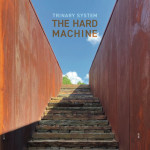
Artist: Trinary System (@)
Title: The Hard Machine
Format: CD + Download
Label: Cuneiform (http://www.cuneiformrecords.com/) (@)
Rated:
Title: The Hard Machine
Format: CD + Download
Label: Cuneiform (http://www.cuneiformrecords.com/) (@)
Rated:
There’s a certain age when rock musicians either start polishing their legacy or quietly disappear into tasteful irrelevance. Roger C. Miller does neither. "The Hard Machine" sounds like the work of someone who still enjoys friction - between ideas, between players, between intention and accident. It doesn’t try to convince you it matters. It just keeps moving, grinding forward, daring you to keep up.
Trinary System is Miller’s current - and by his own admission, final - rock band. Coming after Sproton Layer and Mission of Burma, that’s a dangerous sentence to write down. Expectations are a trap. The good news is that "The Hard Machine" doesn’t behave like a sequel, nor does it posture as a grand summation. It’s a band record in the old, honorable sense: three people locked into a shared logic, alert, slightly antagonistic, and visibly enjoying the tension.
Miller’s long arc matters here, but not as nostalgia. His background - psychedelia, post-punk abrasion, modern composition, film scoring - has trained him to think in structures rather than riffs, even when the guitars are loud and the drums are punching holes in the floor. The songs on "The Hard Machine" feel built, not stacked. They pivot, lurch, and reset themselves with a composer’s sense of proportion, even when they’re pretending to be blunt objects.
Larry Dersch’s drumming is crucial. He doesn’t drive the music so much as keep it unstable, always threatening to tilt the whole thing sideways. There’s a physical intelligence to his playing - no flashy declarations, just pressure applied in exactly the wrong place. Andrew Willis, meanwhile, plays bass and electronics like someone rearranging furniture mid-conversation. His lines don’t decorate; they interrupt, reroute, and occasionally short-circuit the song’s momentum.
Tracks like “Monkeys (on Your Back)” and “Pop!” announce the album’s temperament early: compressed, wiry, slightly sardonic. “The Golem” and “The Green Wall” dig into darker terrain, where repetition becomes insistence and melody feels more like a hypothesis than a destination. Miller’s guitar work is lean and angular, rarely indulgent, often unsettling in its restraint. He knows exactly when "not" to play, which is a skill that only reveals itself after decades of learning how to play too much.
Lyrically and structurally, "The Hard Machine" resists closure. “Upending Time” lives up to its title, refusing linear development, while “On the Ground (Complete the Circle)” stretches out, testing endurance without lapsing into indulgence. Even the final track, “Sometimes the Rain Fall in Your Favor”, avoids resolution. It doesn’t end the record so much as loosen its grip, as if to say: this continues whether you’re listening or not.
"The Hard Machine" is not a victory lap, nor a statement of defiance. It’s something rarer: a record made by musicians who trust process over myth, curiosity over comfort. Rock music as an ongoing problem to be solved, not a style to be preserved. And if this really is Miller’s last great rock band, it’s a satisfying way to leave the room - not slamming the door, just leaving it ajar, humming quietly, still powered on.
Trinary System is Miller’s current - and by his own admission, final - rock band. Coming after Sproton Layer and Mission of Burma, that’s a dangerous sentence to write down. Expectations are a trap. The good news is that "The Hard Machine" doesn’t behave like a sequel, nor does it posture as a grand summation. It’s a band record in the old, honorable sense: three people locked into a shared logic, alert, slightly antagonistic, and visibly enjoying the tension.
Miller’s long arc matters here, but not as nostalgia. His background - psychedelia, post-punk abrasion, modern composition, film scoring - has trained him to think in structures rather than riffs, even when the guitars are loud and the drums are punching holes in the floor. The songs on "The Hard Machine" feel built, not stacked. They pivot, lurch, and reset themselves with a composer’s sense of proportion, even when they’re pretending to be blunt objects.
Larry Dersch’s drumming is crucial. He doesn’t drive the music so much as keep it unstable, always threatening to tilt the whole thing sideways. There’s a physical intelligence to his playing - no flashy declarations, just pressure applied in exactly the wrong place. Andrew Willis, meanwhile, plays bass and electronics like someone rearranging furniture mid-conversation. His lines don’t decorate; they interrupt, reroute, and occasionally short-circuit the song’s momentum.
Tracks like “Monkeys (on Your Back)” and “Pop!” announce the album’s temperament early: compressed, wiry, slightly sardonic. “The Golem” and “The Green Wall” dig into darker terrain, where repetition becomes insistence and melody feels more like a hypothesis than a destination. Miller’s guitar work is lean and angular, rarely indulgent, often unsettling in its restraint. He knows exactly when "not" to play, which is a skill that only reveals itself after decades of learning how to play too much.
Lyrically and structurally, "The Hard Machine" resists closure. “Upending Time” lives up to its title, refusing linear development, while “On the Ground (Complete the Circle)” stretches out, testing endurance without lapsing into indulgence. Even the final track, “Sometimes the Rain Fall in Your Favor”, avoids resolution. It doesn’t end the record so much as loosen its grip, as if to say: this continues whether you’re listening or not.
"The Hard Machine" is not a victory lap, nor a statement of defiance. It’s something rarer: a record made by musicians who trust process over myth, curiosity over comfort. Rock music as an ongoing problem to be solved, not a style to be preserved. And if this really is Miller’s last great rock band, it’s a satisfying way to leave the room - not slamming the door, just leaving it ajar, humming quietly, still powered on.
Martin Brandlmayr: Interstitial Spaces
Some records shout. Some whisper. "Interstitial Spaces" barely breathes - and in doing so, says more than most albums with a full lung capacity and a marketing budget.
Martin Brandlmayr, known for his work with Radian and Polwechsel, has always been fascinated by structure, restraint, and the architecture of sound. But here he flips the usual logic inside out: instead of composing with events, he composes with their shadows. Not the notes, not the scenes, not the action - but what leaks out "between" them. The offcuts. The residue. The awkward pauses where nothing “important” is supposed to happen and therefore everything becomes audible.
This isn’t an album in the traditional sense; it’s a listening exercise disguised as a radio collage. Built from fragments of music recordings, films, TV adverts, and field recordings, "Interstitial Spaces" zooms in on those moments engineers usually erase: the tail of a reverb, the silence after applause, the hum of a room, a chair shifting its weight, a breath that wasn’t meant for the microphone. Brandlmayr treats these sonic crumbs with forensic tenderness, placing them under a microscope and letting them become protagonists.
Part 1 feels like wandering through an abandoned studio complex at night. You hear preparations without performances, endings without beginnings, presence without identity. Instruments tuning. Rooms settling. Machinery sleeping. It’s uncanny, but not in a horror sense - more like that slightly vertiginous feeling when you enter a theatre after the audience has left and the building itself seems to be listening to you.
Part 2 slowly thickens the texture. The fragments begin to cluster, forming a denser acoustic fog where individual sources dissolve into structure. Noise becomes rhythm, ambience becomes pattern. And then - cruelly, beautifully - it all releases back into emptiness again, as if nothing ever happened. A full narrative arc built entirely from things that aren’t supposed to matter.
There’s a quiet humor in this gesture. Brandlmayr essentially takes the most ignored material in audio culture and says: "This is the concert". The anti-spectacle becomes the spectacle. The eventful uneventfulness, to borrow the album’s own logic, turns into a strangely gripping form of drama. No solos, no climaxes, no hooks - just the fragile choreography of space itself.
What makes this work is Brandlmayr’s background: decades of working in reduced music, electroacoustic composition, and experimental ensembles have trained his ear to treat silence as material, not absence. He doesn’t aestheticize quiet; he organizes it. The result is not meditative wallpaper, nor academic exercise, but something more physical and slightly unsettling. You become hyper-aware of your own listening body: your breathing, your room, your chair, your presence in the soundfield.
"Interstitial Spaces" is a record that doesn’t want your attention - it wants your patience. It doesn’t seduce, it recalibrates. It’s not about beauty in the conventional sense, but about perception: teaching the ear to recognize that “nothing happening” is never actually nothing.
A bold, stubborn, quietly radical release. The kind of album that doesn’t change your playlist - but changes how you listen to the world after you turn it off.
Martin Brandlmayr, known for his work with Radian and Polwechsel, has always been fascinated by structure, restraint, and the architecture of sound. But here he flips the usual logic inside out: instead of composing with events, he composes with their shadows. Not the notes, not the scenes, not the action - but what leaks out "between" them. The offcuts. The residue. The awkward pauses where nothing “important” is supposed to happen and therefore everything becomes audible.
This isn’t an album in the traditional sense; it’s a listening exercise disguised as a radio collage. Built from fragments of music recordings, films, TV adverts, and field recordings, "Interstitial Spaces" zooms in on those moments engineers usually erase: the tail of a reverb, the silence after applause, the hum of a room, a chair shifting its weight, a breath that wasn’t meant for the microphone. Brandlmayr treats these sonic crumbs with forensic tenderness, placing them under a microscope and letting them become protagonists.
Part 1 feels like wandering through an abandoned studio complex at night. You hear preparations without performances, endings without beginnings, presence without identity. Instruments tuning. Rooms settling. Machinery sleeping. It’s uncanny, but not in a horror sense - more like that slightly vertiginous feeling when you enter a theatre after the audience has left and the building itself seems to be listening to you.
Part 2 slowly thickens the texture. The fragments begin to cluster, forming a denser acoustic fog where individual sources dissolve into structure. Noise becomes rhythm, ambience becomes pattern. And then - cruelly, beautifully - it all releases back into emptiness again, as if nothing ever happened. A full narrative arc built entirely from things that aren’t supposed to matter.
There’s a quiet humor in this gesture. Brandlmayr essentially takes the most ignored material in audio culture and says: "This is the concert". The anti-spectacle becomes the spectacle. The eventful uneventfulness, to borrow the album’s own logic, turns into a strangely gripping form of drama. No solos, no climaxes, no hooks - just the fragile choreography of space itself.
What makes this work is Brandlmayr’s background: decades of working in reduced music, electroacoustic composition, and experimental ensembles have trained his ear to treat silence as material, not absence. He doesn’t aestheticize quiet; he organizes it. The result is not meditative wallpaper, nor academic exercise, but something more physical and slightly unsettling. You become hyper-aware of your own listening body: your breathing, your room, your chair, your presence in the soundfield.
"Interstitial Spaces" is a record that doesn’t want your attention - it wants your patience. It doesn’t seduce, it recalibrates. It’s not about beauty in the conventional sense, but about perception: teaching the ear to recognize that “nothing happening” is never actually nothing.
A bold, stubborn, quietly radical release. The kind of album that doesn’t change your playlist - but changes how you listen to the world after you turn it off.
Joana Guerra, Maria Do Mar, Romke Kleefstra, Jan Kleefstra: IT DEEL IV
Artist: Joana Guerra, Maria Do Mar, Romke Kleefstra, Jan Kleefstra
Title: IT DEEL IV
Format: LP
Label: Moving Furniture Records (@)
Rated:

Title: IT DEEL IV
Format: LP
Label: Moving Furniture Records (@)
Rated:
There are records that seem to be born "in spite of" the world, and others that come into being because the world is the way it is: brittle, frayed, short of breath. IT DEEL IV belongs to the latter species. It doesn’t comment on current affairs with slogans or manifestos, but with something older and more dangerous: listening. In an age of permanent noise, that alone feels faintly subversive.
This fourth and final chapter of IT DEEL, the long-term residency project initiated by brothers Jan and Romke Kleefstra, arrives less as a full stop than as a natural exhale. A door left ajar. Since 2021, the project has staged a yearly dialogue between Frisian poetry, landscape and invited musicians; here the circle tightens and breathes together with Joana Guerra and Maria do Mar, two artists who never tiptoe, yet know how to move across silence without breaking it.
Recorded in the Thomas Church in Katlijk, the album wears its location like a second skin. This is not reverberation as postcard beauty; it’s a space that listens while being listened to. Guerra’s cello and do Mar’s violin avoid ornamental lyricism, working instead like exposed nerves, scraping across bow, wood, air and friction. The music often seems on the verge of becoming noise, then pulls back - not out of politeness, but out of necessity.
Jan Kleefstra’s poetry, spoken or half-embedded rather than declaimed, sits at the core without ever asserting dominance. Frisian here is not an exotic flourish; it’s raw material. It sounds like damp soil under fingernails, like words that don’t ask to be understood so much as "inhabited". Themes of human–non-human entanglement and our estrangement from living systems are not explained or underlined; they’re simply placed there, like objects found in a field after rain.
Romke Kleefstra, drawing on decades of work across ambient, drone, post-rock and free improvisation, acts as an almost invisible director. The structures are sparse, sometimes skeletal, but never rigid. Pieces such as "Pear Wurden Mar" or "As De Ljoft Meisjongt" unfold slowly, with a patience that today borders on the indecent. Shorter tracks feel like sonic marginalia: crooked haikus, breaths taken mid-thought.
With IT DEEL IV, the project settles into a form of active stillness. This is not a record about nature in any illustrative sense, but one that tries to place the human back inside the landscape, stripped of privilege. In a moment obsessed with visibility and instant reaction, this LP opts for duration, attention, and a slower gait. Its message is simple and unsparing: we are not separate from what we are dismantling.
This is not comfort music. It is companion music. And right now, that feels like something quietly essential.
This fourth and final chapter of IT DEEL, the long-term residency project initiated by brothers Jan and Romke Kleefstra, arrives less as a full stop than as a natural exhale. A door left ajar. Since 2021, the project has staged a yearly dialogue between Frisian poetry, landscape and invited musicians; here the circle tightens and breathes together with Joana Guerra and Maria do Mar, two artists who never tiptoe, yet know how to move across silence without breaking it.
Recorded in the Thomas Church in Katlijk, the album wears its location like a second skin. This is not reverberation as postcard beauty; it’s a space that listens while being listened to. Guerra’s cello and do Mar’s violin avoid ornamental lyricism, working instead like exposed nerves, scraping across bow, wood, air and friction. The music often seems on the verge of becoming noise, then pulls back - not out of politeness, but out of necessity.
Jan Kleefstra’s poetry, spoken or half-embedded rather than declaimed, sits at the core without ever asserting dominance. Frisian here is not an exotic flourish; it’s raw material. It sounds like damp soil under fingernails, like words that don’t ask to be understood so much as "inhabited". Themes of human–non-human entanglement and our estrangement from living systems are not explained or underlined; they’re simply placed there, like objects found in a field after rain.
Romke Kleefstra, drawing on decades of work across ambient, drone, post-rock and free improvisation, acts as an almost invisible director. The structures are sparse, sometimes skeletal, but never rigid. Pieces such as "Pear Wurden Mar" or "As De Ljoft Meisjongt" unfold slowly, with a patience that today borders on the indecent. Shorter tracks feel like sonic marginalia: crooked haikus, breaths taken mid-thought.
With IT DEEL IV, the project settles into a form of active stillness. This is not a record about nature in any illustrative sense, but one that tries to place the human back inside the landscape, stripped of privilege. In a moment obsessed with visibility and instant reaction, this LP opts for duration, attention, and a slower gait. Its message is simple and unsparing: we are not separate from what we are dismantling.
This is not comfort music. It is companion music. And right now, that feels like something quietly essential.