
Browse by Genre
Industrial Music / Industrial Metal / Aggro Industrial / Electro Metal
Industrial Noise / Power Noise / Harsh Noise
Synth Pop / Electro Pop / Synth-Electronica
Techno / Trance / Goa / Drum'n'Bass / Jungle / Tribal / Trip-Hop
Ambient / Electronica / Ethereal / Dub / Soundscapes / Abstract
Experimental / Avantgarde / Weird & Wired / Glitch / Noise / Field Recording
Dark / Gothic / Wave / New Wave / Dark Wave / Industrial Gothic
New Music / Downtown / Avantgarde Jazz / New Classical / World
Search Reviews
Music Reviews
Not Normal: Modærn Qualitet
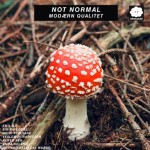
There’s something deliciously ironic about calling a project "Not Normal" and then delivering an album that feels uncannily precise in diagnosing the present moment. "Modærn Qualitet", the debut full-length from Emil Bø’s ensemble of the same name, doesn’t just comment on contemporary jazz or contemporary society: it stares at both until they blink first.
Bø, a Norwegian trombonist and composer who has been quietly but steadily sharpening his voice on the Scandinavian scene, first conceived "Not Normal" as a commissioned work for the Oslo Jazz Festival. On stage, it apparently hit with the force of a well-aimed paradox. In the studio, at Øra in Trondheim, that energy doesn’t dissipate; it mutates. The result is not a document of a live performance, nor a polite studio refinement, but something stranger: a curated ecosystem where composition, improvisation, electronics, and conceptual intent coexist without asking permission.
The album’s central obsession is isolation. Not the romantic, artist-in-a-cabin kind, but the algorithmic one: self-chosen bubbles, curated realities, the comfort of never being surprised unless you want to be. Bø translates this into music that refuses to settle into a single aesthetic lane. Jazz here is elastic, occasionally confrontational, sometimes playful, sometimes eerily vacant. Grooves emerge, wobble, and then quietly dissolve, like social consensus in a comment section.
Instrumentation plays a key role in this sense of controlled instability. Trombone and saxophones often feel less like soloists and more like argumentative voices in a public debate that no one is moderating. Synths, vibraphone, and sound treatments creep in not as decorative elements but as structural agents, blurring the line between acoustic intention and electronic intervention. Veslemøy Narvesen’s drumming deserves special mention: it’s alert, responsive, and often sounds like it’s listening harder than the rest of us.
Tracks like “Maskinell loop” and “Subland” flirt openly with repetition and mechanization, but never fully surrender to them. They circle the idea of automation without becoming automated themselves. The title track, “Modærn Qualitet”, functions almost as a thesis statement: modernity presented not as sleek progress, but as a collage of contradictions, glitches included. Elsewhere, moments labeled “Trio.” or “Solo.” feel less like traditional jazz signposts and more like conceptual placeholders, as if Bø is asking what those terms even mean anymore when context keeps dissolving.
There’s also humor here, dry and slightly absurd. “Dizzy Dada Pt.1” and “Pt.2” wink knowingly at jazz history while dragging it through a hall of distorted mirrors. Reverence is present, but it’s irreverent reverence, the kind that respects tradition enough to poke it with a stick.
What makes "Modærn Qualitet" particularly compelling is that it doesn’t offer solutions. It doesn’t moralize. It observes, assembles, and lets the discomfort linger. The question “what happens when the abnormal becomes normal?” is never answered outright, but the album suggests that the result is this very tension: music that keeps shifting its footing, alert to the absurdity of trying to stand still.
In the end, "Modærn Qualitet" feels less like a statement and more like a condition. Restless, fragmented, oddly lucid. Not normal, indeed - but disturbingly accurate.
Bø, a Norwegian trombonist and composer who has been quietly but steadily sharpening his voice on the Scandinavian scene, first conceived "Not Normal" as a commissioned work for the Oslo Jazz Festival. On stage, it apparently hit with the force of a well-aimed paradox. In the studio, at Øra in Trondheim, that energy doesn’t dissipate; it mutates. The result is not a document of a live performance, nor a polite studio refinement, but something stranger: a curated ecosystem where composition, improvisation, electronics, and conceptual intent coexist without asking permission.
The album’s central obsession is isolation. Not the romantic, artist-in-a-cabin kind, but the algorithmic one: self-chosen bubbles, curated realities, the comfort of never being surprised unless you want to be. Bø translates this into music that refuses to settle into a single aesthetic lane. Jazz here is elastic, occasionally confrontational, sometimes playful, sometimes eerily vacant. Grooves emerge, wobble, and then quietly dissolve, like social consensus in a comment section.
Instrumentation plays a key role in this sense of controlled instability. Trombone and saxophones often feel less like soloists and more like argumentative voices in a public debate that no one is moderating. Synths, vibraphone, and sound treatments creep in not as decorative elements but as structural agents, blurring the line between acoustic intention and electronic intervention. Veslemøy Narvesen’s drumming deserves special mention: it’s alert, responsive, and often sounds like it’s listening harder than the rest of us.
Tracks like “Maskinell loop” and “Subland” flirt openly with repetition and mechanization, but never fully surrender to them. They circle the idea of automation without becoming automated themselves. The title track, “Modærn Qualitet”, functions almost as a thesis statement: modernity presented not as sleek progress, but as a collage of contradictions, glitches included. Elsewhere, moments labeled “Trio.” or “Solo.” feel less like traditional jazz signposts and more like conceptual placeholders, as if Bø is asking what those terms even mean anymore when context keeps dissolving.
There’s also humor here, dry and slightly absurd. “Dizzy Dada Pt.1” and “Pt.2” wink knowingly at jazz history while dragging it through a hall of distorted mirrors. Reverence is present, but it’s irreverent reverence, the kind that respects tradition enough to poke it with a stick.
What makes "Modærn Qualitet" particularly compelling is that it doesn’t offer solutions. It doesn’t moralize. It observes, assembles, and lets the discomfort linger. The question “what happens when the abnormal becomes normal?” is never answered outright, but the album suggests that the result is this very tension: music that keeps shifting its footing, alert to the absurdity of trying to stand still.
In the end, "Modærn Qualitet" feels less like a statement and more like a condition. Restless, fragmented, oddly lucid. Not normal, indeed - but disturbingly accurate.
NiCKY: with
If "by" was NiCKY alone at the piano, mascara slightly smudged, "with" is NiCKY after midnight, jacket off, lights low, surrounded by accomplices who know exactly when to enter and, more importantly, when to leave space. This EP doesn’t abandon intimacy, it dresses it up, then gently pulls the costume back off again.
NiCKY comes from London’s queer performance ecosystem, a place where persona is survival kit and art form at once. What’s striking here is how consciously that armor is loosened. "with" is not louder because it wants to impress, it’s fuller because it wants company. The songs breathe differently: piano still anchors everything, but now there are saxophones that sidle up like flirtatious strangers, drums that know restraint is sexier than bravado, and voices that appear like confidants rather than backing singers.
The EP opens with "I Saw You", a song that understands cruising not as provocation but as recognition. It moves with the calm assurance of someone who has learned that seeing and being seen can be an act of care. NiCKY’s vocal delivery, half-spoken, half-sung, carries that fragile authority familiar from artists who turn vulnerability into posture, though here it never curdles into mannerism.
"The Fall" is the emotional fulcrum, a piece that balances precarity and resilience without turning either into slogan. The spoken-word introduction feels like a threshold, the piano lines arrive cautiously, and then the song lifts itself into something quietly defiant. It’s not a rallying cry, it’s a hand on your shoulder saying: you’re not imagining this, but you’re not alone either.
Then there’s "Private Glance", which struts in wearing a grin sharp enough to puncture art-world pretensions. Saxophones skitter, rhythms tilt, and NiCKY delivers one of their most playful performances to date. It’s funny, yes, but not frivolous. The humor cuts because it knows the room too well, the mirrors, the masks, the choreography of cool. Camp here is not decoration, it’s a diagnostic tool.
Across the EP, collaboration never feels like dilution. The presence of musicians from adjacent worlds, alt-jazz, avant-pop, underground performance, doesn’t blur NiCKY’s voice, it frames it. "Fool’s Convention" closes things on a note of tender introspection, floating somewhere between torch song and dream sequence, as if the EP itself is exhaling after a long, necessary confession.
"with" is about queer vulnerability, yes, but not the Instagram-ready kind. This is vulnerability as process: awkward, layered, occasionally contradictory. NiCKY doesn’t ask for empathy, they construct situations where empathy becomes unavoidable. The result is an EP that feels less like a statement and more like an invitation. Not to watch, not to applaud, but to sit nearby, listen closely, and stay a little longer than planned.
NiCKY comes from London’s queer performance ecosystem, a place where persona is survival kit and art form at once. What’s striking here is how consciously that armor is loosened. "with" is not louder because it wants to impress, it’s fuller because it wants company. The songs breathe differently: piano still anchors everything, but now there are saxophones that sidle up like flirtatious strangers, drums that know restraint is sexier than bravado, and voices that appear like confidants rather than backing singers.
The EP opens with "I Saw You", a song that understands cruising not as provocation but as recognition. It moves with the calm assurance of someone who has learned that seeing and being seen can be an act of care. NiCKY’s vocal delivery, half-spoken, half-sung, carries that fragile authority familiar from artists who turn vulnerability into posture, though here it never curdles into mannerism.
"The Fall" is the emotional fulcrum, a piece that balances precarity and resilience without turning either into slogan. The spoken-word introduction feels like a threshold, the piano lines arrive cautiously, and then the song lifts itself into something quietly defiant. It’s not a rallying cry, it’s a hand on your shoulder saying: you’re not imagining this, but you’re not alone either.
Then there’s "Private Glance", which struts in wearing a grin sharp enough to puncture art-world pretensions. Saxophones skitter, rhythms tilt, and NiCKY delivers one of their most playful performances to date. It’s funny, yes, but not frivolous. The humor cuts because it knows the room too well, the mirrors, the masks, the choreography of cool. Camp here is not decoration, it’s a diagnostic tool.
Across the EP, collaboration never feels like dilution. The presence of musicians from adjacent worlds, alt-jazz, avant-pop, underground performance, doesn’t blur NiCKY’s voice, it frames it. "Fool’s Convention" closes things on a note of tender introspection, floating somewhere between torch song and dream sequence, as if the EP itself is exhaling after a long, necessary confession.
"with" is about queer vulnerability, yes, but not the Instagram-ready kind. This is vulnerability as process: awkward, layered, occasionally contradictory. NiCKY doesn’t ask for empathy, they construct situations where empathy becomes unavoidable. The result is an EP that feels less like a statement and more like an invitation. Not to watch, not to applaud, but to sit nearby, listen closely, and stay a little longer than planned.
Jessica Moss: Unfolding

There are artists who compose music; and then there are artists who allow music to condense around them, like dew forming on a cold window at dawn. Jessica Moss has always belonged to the latter camp. "Unfolding", her sixth solo album and perhaps her most inward-reading one, feels like watching someone breathe through grief until breath becomes ritual, and ritual becomes transmission.
This record does not whisper, nor does it roar. It glows. It’s the glow of a votive candle in a room where someone hasn’t slept for a week but still finds the strength to sing. Moss, whose résumé stretches from the apocalyptic hymns of Thee Silver Mt. Zion to the diasporic ache of Black Ox Orkestar, has long orbited the borderlands between serenity and devastation. Here she slows her orbit. She turns it into a vigil.
“Washing Machine”, the opener, sounds almost like a private séance she inadvertently left the door open for. The metallic hums, the buried voice, the looping strings - everything sways with the stubborn rhythm of a body trying to make peace with itself. Knowing the piece began beside an actual European washer is almost too poetic to be true: heartbreak meeting household appliance astronomy, finding a scale of comfort in the drone of warm water and centrifugal force.
“One, Now”, shaped with the help of Tony Buck’s brushwork and Radwan Ghazi Moumneh’s sonic fingerprints, moves as if through fog: violin lines tracing long, aching arcs; bells flickering like memory; voices that seem to hover just above the ground, unsure whether to lament or to bless. Moss draws from Jewish and Arabic modes as if plucking threads from old garments, weaving them into something meant for a future ceremony we haven’t been invited to yet - but may desperately need.
Side Two’s four-part suite - “no one / no where / no one is free / until all are free” - is where her political and personal axes align into something unmistakably sharp. The drones become more fractured, the spaces more cavernous. And yet the message is clear: she’s not offering refuge from the world, but a listening space "inside" it, where sorrow doesn’t need translation and solidarity doesn’t need applause.
Then comes “until all are free”, the choral finale that lands like someone opening a window during a storm - not to stop it, but to acknowledge its truth. Moss multitracks her voice into a secular psalm, a protest hymn disguised as a lullaby. She sings alone, but it’s written for the day she won’t have to.
This is Moss at her most vulnerable, yes, but also at her most exacting. The album is not fragile: it’s tensile, woven from fibres that stretch without breaking. Her collaboration with Montréal’s quantum physicists suddenly feels apt - "Unfolding" behaves like music observing itself, collapsing and expanding at the listener’s touch, a wave that dares to remain a wave.
In an era where ambient often means “pleasant fog machine”, Moss offers something with stakes, with history, with pulse. She isn’t lulling; she’s testifying. And she trusts the listener enough to sit with discomfort, beauty, and the fact that the two often look like siblings.
"Unfolding" is not an escape hatch. It is a lantern. And Moss lights it not for herself, but for whoever else is still searching in the dark - for connection, for justice, for the simple proof that we are not alone.
This record does not whisper, nor does it roar. It glows. It’s the glow of a votive candle in a room where someone hasn’t slept for a week but still finds the strength to sing. Moss, whose résumé stretches from the apocalyptic hymns of Thee Silver Mt. Zion to the diasporic ache of Black Ox Orkestar, has long orbited the borderlands between serenity and devastation. Here she slows her orbit. She turns it into a vigil.
“Washing Machine”, the opener, sounds almost like a private séance she inadvertently left the door open for. The metallic hums, the buried voice, the looping strings - everything sways with the stubborn rhythm of a body trying to make peace with itself. Knowing the piece began beside an actual European washer is almost too poetic to be true: heartbreak meeting household appliance astronomy, finding a scale of comfort in the drone of warm water and centrifugal force.
“One, Now”, shaped with the help of Tony Buck’s brushwork and Radwan Ghazi Moumneh’s sonic fingerprints, moves as if through fog: violin lines tracing long, aching arcs; bells flickering like memory; voices that seem to hover just above the ground, unsure whether to lament or to bless. Moss draws from Jewish and Arabic modes as if plucking threads from old garments, weaving them into something meant for a future ceremony we haven’t been invited to yet - but may desperately need.
Side Two’s four-part suite - “no one / no where / no one is free / until all are free” - is where her political and personal axes align into something unmistakably sharp. The drones become more fractured, the spaces more cavernous. And yet the message is clear: she’s not offering refuge from the world, but a listening space "inside" it, where sorrow doesn’t need translation and solidarity doesn’t need applause.
Then comes “until all are free”, the choral finale that lands like someone opening a window during a storm - not to stop it, but to acknowledge its truth. Moss multitracks her voice into a secular psalm, a protest hymn disguised as a lullaby. She sings alone, but it’s written for the day she won’t have to.
This is Moss at her most vulnerable, yes, but also at her most exacting. The album is not fragile: it’s tensile, woven from fibres that stretch without breaking. Her collaboration with Montréal’s quantum physicists suddenly feels apt - "Unfolding" behaves like music observing itself, collapsing and expanding at the listener’s touch, a wave that dares to remain a wave.
In an era where ambient often means “pleasant fog machine”, Moss offers something with stakes, with history, with pulse. She isn’t lulling; she’s testifying. And she trusts the listener enough to sit with discomfort, beauty, and the fact that the two often look like siblings.
"Unfolding" is not an escape hatch. It is a lantern. And Moss lights it not for herself, but for whoever else is still searching in the dark - for connection, for justice, for the simple proof that we are not alone.
Mike Majkowski: Tide
Artist: Mike Majkowski (@)
Title: Tide
Format: Download Only (MP3 + Lossless)
Label: Room40 (@)
Rated:

Title: Tide
Format: Download Only (MP3 + Lossless)
Label: Room40 (@)
Rated:
Mike Majkowski has always had a knack for stretching sound until it reveals its inner skeleton, but "Tide" feels like the moment he simply lets the water take over. The Australian-born, Berlin-based bassist and composer - long known for his patient, almost ascetic approach to texture - turns here toward a kind of sonic coastal erosion. Not the dramatic kind, all cliffs collapsing and waves roaring, but the slower, sneaky process: the sea that steals sand grain by grain, while you’re busy squinting at the horizon trying to spot what changed.
Majkowski’s own note about the album emerged after the fact, which makes perfect sense. "Tide" sounds like music made without a map and only later recognised as part of a landscape. Two long pieces - plus their trimmed counterparts - expand with the kind of self-assurance that doesn’t need a plan. He has done this before, but here the patience grows almost animal: the sound seems to breathe, to hesitate, to drift away from itself. Part I begins as if tuning its pulse to a distant buoy, and slowly, almost shyly, you realise that layers have been slipping apart, widening into a kind of shimmering slack tide. Majkowski isn’t trying to surprise anyone; he’s trying to show you how little surprise is needed to make a transformation.
The real trick is how physical it feels. There’s an insistence on resonance, on tones hanging in the air like mist a few seconds after the weather has technically changed. It’s the sort of music that seems static until you look over your shoulder and realise the whole coastline has shifted. If one wanted to be playful, one could say "Tide" is a rare album that sounds like it’s evaporating and accumulating at the same time - because Majkowski lets decay and bloom coexist without fuss. He loves that frictionless contradiction.
By the time Part II arrives, it feels less like a sequel and more like a continuation you accidentally walked away from, only to find it still unfolding politely without you. It gives the album its peculiar emotional weight: not melancholy, not serenity, but the feeling of sitting long enough in one place to watch something imperceptible happen. And somehow that becomes moving.
Majkowski has spent years in ensembles and solo projects refining this ability to make stillness feel alive. His Berlin period, especially, has deepened the sense of scale in his work - an awareness of small rooms, long reverbs, faint neighbourhood rumbles, the quiet hum of domestic life that sneaks into minimalist composition. "Tide" absorbs all that and distils it into a slow exhale.
The edits included here are less “radio versions” and more like quick sketches reminding you what the longer pieces were doing in the first place. They’re almost charming in their bluntness, like postcards mailed from a coastline you’d need a week to fully walk.
In the end, "Tide" is a study in almost-nothings that accumulate into something unexpectedly luminous. It’s patient music, but not passive: it asks you to shift your attention, to notice the moment a tone loosens its grip, to realise you’re hearing the sonic equivalent of a tide moving while pretending to be still. And if that sounds too philosophical, don’t worry - Majkowski has already done the thinking for you. Your job is simply to listen, preferably long enough to forget where the beginning ended and the ending began.
Majkowski’s own note about the album emerged after the fact, which makes perfect sense. "Tide" sounds like music made without a map and only later recognised as part of a landscape. Two long pieces - plus their trimmed counterparts - expand with the kind of self-assurance that doesn’t need a plan. He has done this before, but here the patience grows almost animal: the sound seems to breathe, to hesitate, to drift away from itself. Part I begins as if tuning its pulse to a distant buoy, and slowly, almost shyly, you realise that layers have been slipping apart, widening into a kind of shimmering slack tide. Majkowski isn’t trying to surprise anyone; he’s trying to show you how little surprise is needed to make a transformation.
The real trick is how physical it feels. There’s an insistence on resonance, on tones hanging in the air like mist a few seconds after the weather has technically changed. It’s the sort of music that seems static until you look over your shoulder and realise the whole coastline has shifted. If one wanted to be playful, one could say "Tide" is a rare album that sounds like it’s evaporating and accumulating at the same time - because Majkowski lets decay and bloom coexist without fuss. He loves that frictionless contradiction.
By the time Part II arrives, it feels less like a sequel and more like a continuation you accidentally walked away from, only to find it still unfolding politely without you. It gives the album its peculiar emotional weight: not melancholy, not serenity, but the feeling of sitting long enough in one place to watch something imperceptible happen. And somehow that becomes moving.
Majkowski has spent years in ensembles and solo projects refining this ability to make stillness feel alive. His Berlin period, especially, has deepened the sense of scale in his work - an awareness of small rooms, long reverbs, faint neighbourhood rumbles, the quiet hum of domestic life that sneaks into minimalist composition. "Tide" absorbs all that and distils it into a slow exhale.
The edits included here are less “radio versions” and more like quick sketches reminding you what the longer pieces were doing in the first place. They’re almost charming in their bluntness, like postcards mailed from a coastline you’d need a week to fully walk.
In the end, "Tide" is a study in almost-nothings that accumulate into something unexpectedly luminous. It’s patient music, but not passive: it asks you to shift your attention, to notice the moment a tone loosens its grip, to realise you’re hearing the sonic equivalent of a tide moving while pretending to be still. And if that sounds too philosophical, don’t worry - Majkowski has already done the thinking for you. Your job is simply to listen, preferably long enough to forget where the beginning ended and the ending began.
Ryuuta Takaki: Jewels
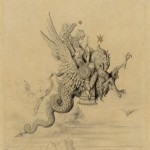
Ryuuta Takaki’s debut feels like the kind of record you stumble upon as if by accident, the way you might discover a tiny shrine hidden behind a pachinko parlor: glowing quietly, entirely unbothered by the noise of the world. "Jewels" is his first full-length statement after years of drifting through Tokyo’s experimental fringes, where he once toyed with hip hop cadences and electronica textures before dissolving into something gentler and stranger. Here he works like a patient artisan polishing stones until they hum.
Takaki builds his pieces as if they were little devotional objects. Not in a religious sense, but in the way a child treasures a marble because it catches the sun just right. His inspirations point toward Symbolist painting, Buddhist cosmology, and mythic dreamscapes, yet the music never collapses under the weight of its references. Instead it sparkles lightly, like the thought you almost had but lost because you blinked too slowly.
The album opens with a subtle flutter in “Chrysalis”, a miniature awakening suspended between breath and intention. It grows into “Funnel and Infinite Reflections”, where melodies fold back onto themselves with a sly grin, as if amused by their own geometry. “Kegon” plays the role of quiet axis, a meditation on interdependence that hints at cosmic architecture without showing off. Takaki prefers suggestion over proclamation, which is refreshing in a genre where some artists feel the need to explain the entire universe before hitting the first note.
“Jewels” glows with a measured shine, each tone placed as carefully as gold leaf. “Sunken Cathedral” sinks into a submerged chapel where the sacred and the mundane share the same water. Later, “Gilded Veins” pulses with a warmth that feels almost bodily, like the faint shimmer of blood moving through light. The closing “Celestial Tuning” lifts everything skyward and leaves it there, hanging like a lantern over a mountain path.
There are echoes of Susumu Yokota here, in the way the pieces feel both ornate and fleeting. At times you might hear traces of the more delicate corners of new age music, but Takaki never drifts into syrup. Instead he threads these influences with the kind of personal grammar that resists categorization. There is also a faint kinship with the so-called Fourth World approach, though Takaki’s rendering feels more intimate, less like a global map and more like a sketchbook filled during late nights of quiet fascination.
Listening to "Jewels" is a bit like watching an illuminated manuscript being written in real time. Every sound feels etched, burnished, touched by intention. It is ambient music with spine, sensuality, and the mischievous pleasure of small revelations. Each track holds a miniature universe that gleams from a different angle, yet they all connect as if strung on the same invisible thread.
In the end, the album’s title is literal. Takaki offers a collection of tiny gems, each one reflecting something larger than itself. You do not analyze them so much as hold them up to the light and watch them shimmer.
Takaki builds his pieces as if they were little devotional objects. Not in a religious sense, but in the way a child treasures a marble because it catches the sun just right. His inspirations point toward Symbolist painting, Buddhist cosmology, and mythic dreamscapes, yet the music never collapses under the weight of its references. Instead it sparkles lightly, like the thought you almost had but lost because you blinked too slowly.
The album opens with a subtle flutter in “Chrysalis”, a miniature awakening suspended between breath and intention. It grows into “Funnel and Infinite Reflections”, where melodies fold back onto themselves with a sly grin, as if amused by their own geometry. “Kegon” plays the role of quiet axis, a meditation on interdependence that hints at cosmic architecture without showing off. Takaki prefers suggestion over proclamation, which is refreshing in a genre where some artists feel the need to explain the entire universe before hitting the first note.
“Jewels” glows with a measured shine, each tone placed as carefully as gold leaf. “Sunken Cathedral” sinks into a submerged chapel where the sacred and the mundane share the same water. Later, “Gilded Veins” pulses with a warmth that feels almost bodily, like the faint shimmer of blood moving through light. The closing “Celestial Tuning” lifts everything skyward and leaves it there, hanging like a lantern over a mountain path.
There are echoes of Susumu Yokota here, in the way the pieces feel both ornate and fleeting. At times you might hear traces of the more delicate corners of new age music, but Takaki never drifts into syrup. Instead he threads these influences with the kind of personal grammar that resists categorization. There is also a faint kinship with the so-called Fourth World approach, though Takaki’s rendering feels more intimate, less like a global map and more like a sketchbook filled during late nights of quiet fascination.
Listening to "Jewels" is a bit like watching an illuminated manuscript being written in real time. Every sound feels etched, burnished, touched by intention. It is ambient music with spine, sensuality, and the mischievous pleasure of small revelations. Each track holds a miniature universe that gleams from a different angle, yet they all connect as if strung on the same invisible thread.
In the end, the album’s title is literal. Takaki offers a collection of tiny gems, each one reflecting something larger than itself. You do not analyze them so much as hold them up to the light and watch them shimmer.