
Browse by Genre
Industrial Music / Industrial Metal / Aggro Industrial / Electro Metal
Industrial Noise / Power Noise / Harsh Noise
Synth Pop / Electro Pop / Synth-Electronica
Techno / Trance / Goa / Drum'n'Bass / Jungle / Tribal / Trip-Hop
Ambient / Electronica / Ethereal / Dub / Soundscapes / Abstract
Experimental / Avantgarde / Weird & Wired / Glitch / Noise / Field Recording
Dark / Gothic / Wave / New Wave / Dark Wave / Industrial Gothic
New Music / Downtown / Avantgarde Jazz / New Classical / World
Search Reviews
Music Reviews
SixTurnsNine: Soul Glitches

Artist: SixTurnsNine (@)
Title: Soul Glitches
Format: CD & 12" + Download
Label: self-released
Rated:

Title: Soul Glitches
Format: CD & 12" + Download
Label: self-released
Rated:
Over a month ago Lutz Bauer, the guy behind the electronics and programming of SixTurnsNine asked me if I'd be interested in reviewing the band's new album, 'Soul Glitches' and I said sure send me a copy of the CD. Well, the mail from Europe is really slow these days (for obvious geopolitical reasons) so I deceided that since it's kind of a slow time to just go on SixTurnsNine's Bandcamp site and check it out. The group is still a trio with Anja Valpiani (Vocals); Lutz Bauer (Electronics / Programming) and Philip Akoto (Bass Guitar). The album is nine tracks of downtempo gripping and stirring stories about dealing with such recurring, flashback-like “glitches” triggered by thoughts, feelings, or memories. The album reflects more mature songwriting (this being their third) and Anja's voice has never sounded better. She carries the lyrics with emotive expression and cool confidence. Comparisons with Portishead are inevitable but that band hasn't done anything new in a long while and their last album ('Third') was pretty mediocre and a lifetime ago in 2008. The music on 'Soul Glitches' is dark, bleak and riveted with industrial nuts and bolts, yet Anja's uber-melodic voice sounds like an angelic cry above the firmament. While the song structure isn't what I'd call complex, they do manage to pack a great amount of atmosphere into their minimal production. 'Soul Glitches' is somewhat heavier than their previous two albums, perhaps a sign of the times. Although they're all good I think the two most compelling tracks on the album are "Tripping Point" and "Distortion". This Düsseldorf band is touring now so if you happen to be in Germany, you should go see them. And if you're looking for 'Soul Glitches' on vinyl, you will have to go to the band's website (https://www.sixturnsnine.de/) because it's not available in that format on their Bandcamp site. Great stuff!
Rudy Adrian: Along the Coppermine Ridge
Artist: Rudy Adrian (@)
Title: Along the Coppermine Ridge
Format: CD + Download
Label: Spotted Peccary Music (@)
Rated:

Title: Along the Coppermine Ridge
Format: CD + Download
Label: Spotted Peccary Music (@)
Rated:
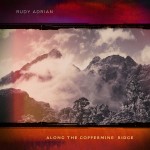
New Zealand soundscape artist Rudy Adrian is back with a new album for his 21st (not counting 'The Sleepy Hills 6 Extended,' sort of a continuation of 2024's 'Beyond The Sleepy Hills') over all and 11th on the Spotted Peccary label, attesting to his prolific output as an ambient artist. I didn't much think about this until now, but Adrian's albums are always easy to listen to but bloody hard to review. There is so much more "space" between the actual music (notes, chords, timbres) that often is the compositional main ingredient that cannot be easily defined and quantified. Both in the promo text from Adrian's Bandcamp site and Spotted Peccary, [the album]"... is like the essence of landscape photography in sonic form. Here, in vast texture and shimmering chimes, Adrian conjures dense forests and dramatic mountain crests, breeze-buffeted snowdrifts and swirling cloud formations of self-reflection." That reads a lot into the music from imagination, and not everyone is going to imagine the same scenario. Take the opener, "Castle Rocks," with its reverb-saturated ostinado piano chords that seem to float on formless ambient effects. From this one could imagine a forgotten gothic graveyard, or a heavenly cloud. It's all subjective. While "Ridgetop Clouds" does have an airy ambience about it, the trickling sound of water brings it back down to earth. Light, amorphic chordal pads with organic overtones and incidental synth sounds could either be construed as a spiritual experience, or a balloon ride over a vast landscape. Unless one is willing to describe all the sonic elements of each track in detail, all we have to convey is just our imagination, and describing each and every sonic event is just too much work for me. Like Adrian's other albums, you get a good number of tracks (11) in over an hour's worth (62 minutes) of peaceful, thoughtful ambient compositions that flow gently into one another with moments of light and dark, but nothing thematic you can easily define. Rudy is careful to present only the vaguest of melodic motifs (as in the guitar on "Where the Skylarks Sing,") avoiding any thematic development beyond a notion. Adrian's compositional subtlety is certainly not lost on me but there is not much really new here on 'Along the Coppermine Ridge.' If I had to put it into a seasonal perspective, I think I'd classify this work as a winter album, which seems to just fit the climate of right now.
Andrea Costanza: Celestial Dreams
Artist: Andrea Costanza
Title: Celestial Dreams
Format: Download Only (MP3 + Lossless)
Label: Dragon's Eye Recordings (@)
Rated:
Title: Celestial Dreams
Format: Download Only (MP3 + Lossless)
Label: Dragon's Eye Recordings (@)
Rated:
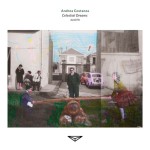
Andrea Costanza’s "Celestial Dreams" feels like stepping into a memory you are not entirely sure belongs to you. The air is full of soft colors, the kind that leak from childhood photographs left too long in the sun. Costanza pulls these shades into sound with a delicacy that suggests he is handling something breakable. And he is. The album is built around early wounds that came too soon, the kind that rearrange the heart before it even knows its shape. Yet nothing here sounds heavy. The weight has been metabolized into light.
Costanza is the kind of artist who seems to live in slow motion while the rest of us unzip our days in a blur. His background zigzags through punk, opera houses, techno basements, and Italian cinema scores, giving his music a gently scrambled lineage. You can hear that restless path in these tracks. They are ambient, yes, but they carry a pulse that feels borrowed from the nights he spent inhaling dub-techno fog in the Netherlands. They shimmer with the romantic curves of Italian compositions he grew up on. They occasionally blush with a folk melody he probably didn’t intend to write but slipped through anyway, like a childhood habit returning at the wrong time.
"If only you.." opens the album with a sense of longing that avoids melodrama by staying small and sincere. The piece seems to walk toward you, quietly offering its hand. "Youth" follows with a kind of soft sunrise energy. Not the triumphant sort. More the moment when you wake up too early and the world is still unmade. Costanza excels at this atmosphere: the half-hour before responsibility clocks in.
"Can you Imagine?" brings in Emil F and feels like two friends comparing dreams without worrying if the stories make sense. Then "Life is Beautiful" arrives, and yes, it is dangerously close to the territory of sentimentality, yet Costanza dodges the trap by grounding it in a melody that feels as fragile as thin glass. If it had been any grander, it would have collapsed under its own optimism.
In "Two celestial souls", there is a glimmer that recalls Italian film scores from the seventies. Slightly nostalgic, slightly mysterious, slightly too beautiful to be trusted. "I’ll always think about you" is gentler, almost whispered. The title might suggest drama, but the track behaves more like a folded note passed across a school desk. It holds a secret but offers it without pressure.
By the time we reach "Us forever, together", Costanza’s romantic streak is fully awake. Yet he refuses to saturate the emotion, instead choosing repetition as a kind of heartbeat. "Without fears" is the closest the album gets to steady rhythm, and there is a bittersweet courage to it, as though the title were not a declaration but a wish. Finally, "Dreaming Love" closes the collection with Emil F again, the two weaving a lullaby for an adulthood that still remembers how to giggle.
What makes "Celestial Dreams" compelling is not its theme of childhood, which is easy enough to invoke. It is the way Costanza resists nostalgia’s usual traps. There is no sugary glow here, no attempt to varnish the past into something sacred. Instead, he constructs a listening space where wonder can reappear without theatrics. The music is gentle but not timid, hopeful but not naive, emotional but never swollen. And it does something quietly radical. It suggests that the innocence we mourn is not gone, merely folded into the corners of our lives, waiting for a bit of attention.
Costanza is not preaching. He is offering. He has carved out a little clearing in the noise of contemporary life and placed nine pieces inside it, each one an invitation to breathe differently for a few minutes. If the album has a message, it is whispered rather than spoken. Something like: “You were once lighter. It is not too late to remember”.
And that, frankly, is a gift.
Costanza is the kind of artist who seems to live in slow motion while the rest of us unzip our days in a blur. His background zigzags through punk, opera houses, techno basements, and Italian cinema scores, giving his music a gently scrambled lineage. You can hear that restless path in these tracks. They are ambient, yes, but they carry a pulse that feels borrowed from the nights he spent inhaling dub-techno fog in the Netherlands. They shimmer with the romantic curves of Italian compositions he grew up on. They occasionally blush with a folk melody he probably didn’t intend to write but slipped through anyway, like a childhood habit returning at the wrong time.
"If only you.." opens the album with a sense of longing that avoids melodrama by staying small and sincere. The piece seems to walk toward you, quietly offering its hand. "Youth" follows with a kind of soft sunrise energy. Not the triumphant sort. More the moment when you wake up too early and the world is still unmade. Costanza excels at this atmosphere: the half-hour before responsibility clocks in.
"Can you Imagine?" brings in Emil F and feels like two friends comparing dreams without worrying if the stories make sense. Then "Life is Beautiful" arrives, and yes, it is dangerously close to the territory of sentimentality, yet Costanza dodges the trap by grounding it in a melody that feels as fragile as thin glass. If it had been any grander, it would have collapsed under its own optimism.
In "Two celestial souls", there is a glimmer that recalls Italian film scores from the seventies. Slightly nostalgic, slightly mysterious, slightly too beautiful to be trusted. "I’ll always think about you" is gentler, almost whispered. The title might suggest drama, but the track behaves more like a folded note passed across a school desk. It holds a secret but offers it without pressure.
By the time we reach "Us forever, together", Costanza’s romantic streak is fully awake. Yet he refuses to saturate the emotion, instead choosing repetition as a kind of heartbeat. "Without fears" is the closest the album gets to steady rhythm, and there is a bittersweet courage to it, as though the title were not a declaration but a wish. Finally, "Dreaming Love" closes the collection with Emil F again, the two weaving a lullaby for an adulthood that still remembers how to giggle.
What makes "Celestial Dreams" compelling is not its theme of childhood, which is easy enough to invoke. It is the way Costanza resists nostalgia’s usual traps. There is no sugary glow here, no attempt to varnish the past into something sacred. Instead, he constructs a listening space where wonder can reappear without theatrics. The music is gentle but not timid, hopeful but not naive, emotional but never swollen. And it does something quietly radical. It suggests that the innocence we mourn is not gone, merely folded into the corners of our lives, waiting for a bit of attention.
Costanza is not preaching. He is offering. He has carved out a little clearing in the noise of contemporary life and placed nine pieces inside it, each one an invitation to breathe differently for a few minutes. If the album has a message, it is whispered rather than spoken. Something like: “You were once lighter. It is not too late to remember”.
And that, frankly, is a gift.
Ioa Beduneau: Mélodies pour Clairons
Ioa Beduneau’s debut, "Mélodies pour Clairons", feels like opening a terrarium someone has been quietly tending for years. You lift the lid and the air trembles a little, alive with tiny movements you can’t immediately catalogue. Beduneau, working from the sun-bleached south of France, has long built contraptions that play themselves, a kind of intimate robotics shaped by disabled embodiment and DIY stubbornness. He understands machines not as servants but as companions. Here he turns that same sensibility toward modular synthesis, treating voltages like breath and circuits like cartilage, until the whole album moves with an oddly biological grace.
Despite the title, don’t expect a parade of medieval trumpets. The clairon becomes more of a memory than an instrument, a point of emotional gravity around which these pieces drift. During the lockdown hush, Beduneau used it as a confidant of sorts, and you can hear that tenderness in the way he reimagines its physics. Air pressure becomes voltage pressure. Metal tubing becomes spectral resonance. It is less reenactment than reincarnation.
The opening track, "Bête ivre", wobbles into view like an animal learning to stand. Notes sway, almost tipsy, while little synthetic creatures chatter around the edges. Beduneau isn’t building melodies so much as coaxing them into existence, like a naturalist humming at a hesitant bird. "Bêtes heureuses" stretches further, warm and slightly unhinged, a meadow where every blade of grass seems to have its oscillator. He lets chaos have a seat at the table, but never the head of it.
"Volante" feels like a glimmering insect flicking between sunbeams. Its rhythm is almost accidental, born from overlapping gestures rather than strict sequencing. Then "Cloches & Trompes" lowers us into a world of confused bells and half-remembered brass timbres. It is charmingly odd; you get the sense Beduneau is deliberately misinterpreting tradition to find out what else might fall out of its pockets.
The two parts of "Une Flaque sous les Bois" close the album with something resembling narrative clarity. The short first section is a shy ripple, barely a footprint in wet soil. The second deepens into a contemplative pool, full of layered echoes that feel like thoughts you had during childhood and forgot to finish.
Across the record, Beduneau shows a knack for sculpting sound that is playful but not frivolous, tender but never saccharine. There is humor in the way these synthetic lifeforms behave, but also a quiet seriousness in how they are cared for. His approach to disability as a form of perceptual tuning rather than limitation gives the music a rare specificity. Nothing here feels generic; every gesture seems to come from a body listening to itself as much as the world.
Marionette has built its reputation on releasing music that doesn’t fear its strangeness, and Beduneau fits right into that lineage. "Mélodies pour Clairons" is a small biosphere of wonders, an album that invites you to lean in closer until you start hearing your breath tangled in its circuits. It is impressionistic, sincere, slightly eccentric, and quietly luminous. In other words, alive.
Despite the title, don’t expect a parade of medieval trumpets. The clairon becomes more of a memory than an instrument, a point of emotional gravity around which these pieces drift. During the lockdown hush, Beduneau used it as a confidant of sorts, and you can hear that tenderness in the way he reimagines its physics. Air pressure becomes voltage pressure. Metal tubing becomes spectral resonance. It is less reenactment than reincarnation.
The opening track, "Bête ivre", wobbles into view like an animal learning to stand. Notes sway, almost tipsy, while little synthetic creatures chatter around the edges. Beduneau isn’t building melodies so much as coaxing them into existence, like a naturalist humming at a hesitant bird. "Bêtes heureuses" stretches further, warm and slightly unhinged, a meadow where every blade of grass seems to have its oscillator. He lets chaos have a seat at the table, but never the head of it.
"Volante" feels like a glimmering insect flicking between sunbeams. Its rhythm is almost accidental, born from overlapping gestures rather than strict sequencing. Then "Cloches & Trompes" lowers us into a world of confused bells and half-remembered brass timbres. It is charmingly odd; you get the sense Beduneau is deliberately misinterpreting tradition to find out what else might fall out of its pockets.
The two parts of "Une Flaque sous les Bois" close the album with something resembling narrative clarity. The short first section is a shy ripple, barely a footprint in wet soil. The second deepens into a contemplative pool, full of layered echoes that feel like thoughts you had during childhood and forgot to finish.
Across the record, Beduneau shows a knack for sculpting sound that is playful but not frivolous, tender but never saccharine. There is humor in the way these synthetic lifeforms behave, but also a quiet seriousness in how they are cared for. His approach to disability as a form of perceptual tuning rather than limitation gives the music a rare specificity. Nothing here feels generic; every gesture seems to come from a body listening to itself as much as the world.
Marionette has built its reputation on releasing music that doesn’t fear its strangeness, and Beduneau fits right into that lineage. "Mélodies pour Clairons" is a small biosphere of wonders, an album that invites you to lean in closer until you start hearing your breath tangled in its circuits. It is impressionistic, sincere, slightly eccentric, and quietly luminous. In other words, alive.
Jon Porras: Achlys
"Achlys" feels like the moment a landscape exhales. Jon Porras, best known for shaping windswept drone worlds with Barn Owl, steps here into a darker, more granular climate, one where sound behaves less like composition and more like geology. The album moves slowly but with intent, as if each track were a drifting fragment of cliffside breaking loose and sliding into a fog-filled ravine. It doesn’t bloom; it accumulates. And accumulation, in Porras’ hands, becomes a kind of narrative without words, a ritual of sediment rather than melody.
The record’s backbone is a tug-of-war between what’s played and what’s eroded. Porras writes fingerpicked guitar phrases, then subjects them to a patient series of distortions and modular alchemies until the original shape becomes unsteady. You sense the ghost of the guitar more often than the instrument itself, like finding a fossil whose outline refuses to stay still. This approach makes the music feel haunted by its own earlier versions, always drifting between what it once was and what it is becoming.
Porras has always had an eye for the cinematographic, but "Achlys" feels like his most film-minded work yet. Not in the sense of scoring images, but in evoking cuts, dissolves, and misaligned frames. The influence of "El Mar La Mar" is easily felt in the way he layers textures until emotional meaning forms through density rather than theme. Each piece feels like a short shot of landscape etched onto decaying celluloid. The pacing is disjunctive, swollen with pauses, shot through with heat shimmer.
The opener, “Fields”, sets the tone immediately: faint guitar trails buried under a loose architecture of hollow resonance. The track feels like watching smoke coil upward from smoldering ground. “Before the Rite” deepens the tension, swelling until it nearly breaks apart, but Porras reins it back with a strange tenderness, as if refusing to let the storm have the final word. “Castilleja” follows with a brittle, wind-bent beauty, while “Sea Storm” disorients the ear with low-end churns that suggest the ocean heaving in its sleep.
The title track is one of the most striking moments: harmonic shards suspended in a web of distortion, flickering like insects caught in a beam of dying daylight. “Ceremony Stone” circles ideas without ever landing, a ritual that refuses resolution, while “Holodiscus” drifts with a kind of mournful defiance. The closer, “Walking Void”, is as much an echo as a track, the album’s final gesture of dissolution.
Part of the album’s charge comes from the environment that shaped it. Porras composed much of it during mountain storms, listening to trees groan under pressure, hearing the low-end rumble of weather against high elevation terrain. You can feel that physicality throughout "Achlys". The music is both immense and delicate, heavy as old wood and fragile as a dried leaf. The emotional world here is not dramatic but elemental, drawn from the tension of standing between sky and ground, watching everything around you shift by degrees.
What makes the album compelling is its refusal to resolve into a single identity. It exists in thresholds: between form and drift, between presence and dissolution, between memory and distortion. Even at its densest, it remains spacious, like fog lit by distant moonlight. Porras offers no answers, no catharsis, only the sensation of moving through a place where everything is fading into something else.
"Achlys" is patient, shadowed, strangely luminous. It’s an album that feels like walking along the edge of a landscape that is still deciding whether to remain or disappear. And in that quiet uncertainty, it finds something rare: the beauty of erosion as a living process.
The record’s backbone is a tug-of-war between what’s played and what’s eroded. Porras writes fingerpicked guitar phrases, then subjects them to a patient series of distortions and modular alchemies until the original shape becomes unsteady. You sense the ghost of the guitar more often than the instrument itself, like finding a fossil whose outline refuses to stay still. This approach makes the music feel haunted by its own earlier versions, always drifting between what it once was and what it is becoming.
Porras has always had an eye for the cinematographic, but "Achlys" feels like his most film-minded work yet. Not in the sense of scoring images, but in evoking cuts, dissolves, and misaligned frames. The influence of "El Mar La Mar" is easily felt in the way he layers textures until emotional meaning forms through density rather than theme. Each piece feels like a short shot of landscape etched onto decaying celluloid. The pacing is disjunctive, swollen with pauses, shot through with heat shimmer.
The opener, “Fields”, sets the tone immediately: faint guitar trails buried under a loose architecture of hollow resonance. The track feels like watching smoke coil upward from smoldering ground. “Before the Rite” deepens the tension, swelling until it nearly breaks apart, but Porras reins it back with a strange tenderness, as if refusing to let the storm have the final word. “Castilleja” follows with a brittle, wind-bent beauty, while “Sea Storm” disorients the ear with low-end churns that suggest the ocean heaving in its sleep.
The title track is one of the most striking moments: harmonic shards suspended in a web of distortion, flickering like insects caught in a beam of dying daylight. “Ceremony Stone” circles ideas without ever landing, a ritual that refuses resolution, while “Holodiscus” drifts with a kind of mournful defiance. The closer, “Walking Void”, is as much an echo as a track, the album’s final gesture of dissolution.
Part of the album’s charge comes from the environment that shaped it. Porras composed much of it during mountain storms, listening to trees groan under pressure, hearing the low-end rumble of weather against high elevation terrain. You can feel that physicality throughout "Achlys". The music is both immense and delicate, heavy as old wood and fragile as a dried leaf. The emotional world here is not dramatic but elemental, drawn from the tension of standing between sky and ground, watching everything around you shift by degrees.
What makes the album compelling is its refusal to resolve into a single identity. It exists in thresholds: between form and drift, between presence and dissolution, between memory and distortion. Even at its densest, it remains spacious, like fog lit by distant moonlight. Porras offers no answers, no catharsis, only the sensation of moving through a place where everything is fading into something else.
"Achlys" is patient, shadowed, strangely luminous. It’s an album that feels like walking along the edge of a landscape that is still deciding whether to remain or disappear. And in that quiet uncertainty, it finds something rare: the beauty of erosion as a living process.