
Browse by Genre
Industrial Music / Industrial Metal / Aggro Industrial / Electro Metal
Industrial Noise / Power Noise / Harsh Noise
Synth Pop / Electro Pop / Synth-Electronica
Techno / Trance / Goa / Drum'n'Bass / Jungle / Tribal / Trip-Hop
Ambient / Electronica / Ethereal / Dub / Soundscapes / Abstract
Experimental / Avantgarde / Weird & Wired / Glitch / Noise / Field Recording
Dark / Gothic / Wave / New Wave / Dark Wave / Industrial Gothic
New Music / Downtown / Avantgarde Jazz / New Classical / World
Search Reviews
Music Reviews
Hvast: Chwasty Polskie
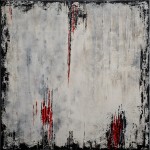
Artist: Hvast
Title: Chwasty Polskie
Format: CD + Download
Label: Zoharum (http://zoharum.com/) (@)
Rated:

Title: Chwasty Polskie
Format: CD + Download
Label: Zoharum (http://zoharum.com/) (@)
Rated:
There’s something poetic, almost mischievous, about naming an album after weeds. Chwasty Polskie - “Polish Weeds” - doesn’t romanticize the pastoral; it digs its nails into the soil, unearthing the stubborn, tangled roots of something raw and unrefined. Hvast, a trio forged from the ashes and amplifiers of Polish underground bands like So Slow, Czern, and Rigor Mortiss, sound like they’ve found a strange, electric spirituality in the compost heap of post-rock and dark ambient.
This isn’t the sterile beauty of modular synths or cinematic melancholy. It’s closer to a damp rehearsal room with moss creeping up the walls, the air thick with the smell of solder and decay. The five long pieces bloom and wilt like invasive flora - slow, deliberate, often hypnotic. The electronics of Michal Glowacki hum and pulse like photosynthesis caught on tape, while Arkadiusz Lerch’s drums drag time through the mud, letting it breathe and mutate. Grzegorz Chudzik’s bass isn’t just rhythm; it’s the hum of underground roots - constant, ominous, alive.
Guest musicians add splinters of light and air: Aleksandra Buda’s flute pierces through the low-end fog on “Wrotycz i Nawloc”, like a breeze disturbing stagnant water, while Bartek Lesniewski and Marcin Loks lend guitars that feel less like melodies and more like weather systems moving across the soundscape. Recorded in Buczkowice’s appropriately named Mustache Ministry Studio, the album has that peculiar Zoharum fingerprint - polished but organic, as if the mix itself were composted.
The real trick of Chwasty Polskie lies in its tone. It’s not trying to impress, or comfort, or even surprise. It grows. Slowly, stubbornly, beautifully - and occasionally, with a hint of menace. “Bielun” opens like a ritual drone, half meditative, half toxic bloom. “Lopian” feels heavier, its rhythm section a rusted pendulum, dragging fragments of krautrock into the mire. And “Oset”, the closing piece, is a kind of electric pilgrimage - patient, grinding, ecstatic in its restraint.
There’s an ecological undercurrent too - not in a didactic way, but in the album’s refusal to separate noise from nature. Everything here breathes and corrodes at the same time. If weeds are the planet’s quiet rebellion against human order, then Chwasty Polskie is that rebellion translated into sound: messy, resilient, oddly sacred.
If you were expecting the smooth sophistication of post-rock à la Sigur Rós, forget it. This is Poland, not Iceland - less glacier, more industrial wasteland blooming with wildflowers. Hvast remind us that the line between ugliness and beauty is just another human invention. The weeds don’t care, and neither do they.
This isn’t the sterile beauty of modular synths or cinematic melancholy. It’s closer to a damp rehearsal room with moss creeping up the walls, the air thick with the smell of solder and decay. The five long pieces bloom and wilt like invasive flora - slow, deliberate, often hypnotic. The electronics of Michal Glowacki hum and pulse like photosynthesis caught on tape, while Arkadiusz Lerch’s drums drag time through the mud, letting it breathe and mutate. Grzegorz Chudzik’s bass isn’t just rhythm; it’s the hum of underground roots - constant, ominous, alive.
Guest musicians add splinters of light and air: Aleksandra Buda’s flute pierces through the low-end fog on “Wrotycz i Nawloc”, like a breeze disturbing stagnant water, while Bartek Lesniewski and Marcin Loks lend guitars that feel less like melodies and more like weather systems moving across the soundscape. Recorded in Buczkowice’s appropriately named Mustache Ministry Studio, the album has that peculiar Zoharum fingerprint - polished but organic, as if the mix itself were composted.
The real trick of Chwasty Polskie lies in its tone. It’s not trying to impress, or comfort, or even surprise. It grows. Slowly, stubbornly, beautifully - and occasionally, with a hint of menace. “Bielun” opens like a ritual drone, half meditative, half toxic bloom. “Lopian” feels heavier, its rhythm section a rusted pendulum, dragging fragments of krautrock into the mire. And “Oset”, the closing piece, is a kind of electric pilgrimage - patient, grinding, ecstatic in its restraint.
There’s an ecological undercurrent too - not in a didactic way, but in the album’s refusal to separate noise from nature. Everything here breathes and corrodes at the same time. If weeds are the planet’s quiet rebellion against human order, then Chwasty Polskie is that rebellion translated into sound: messy, resilient, oddly sacred.
If you were expecting the smooth sophistication of post-rock à la Sigur Rós, forget it. This is Poland, not Iceland - less glacier, more industrial wasteland blooming with wildflowers. Hvast remind us that the line between ugliness and beauty is just another human invention. The weeds don’t care, and neither do they.
Scissorgun: Scream If You Wanna Go Faster

There’s something charmingly Mancunian about "Scream If You Wanna Go Faster" - an album that feels like it was recorded at 2 a.m. under a flickering streetlight, half-inspired by industrial ghosts, half by the smell of chip oil and rain. Scissorgun, the trio of Dave Clarkson, Alan Hempsall, and Adrian Ball, have been working this strange alchemy for nearly a decade: urban electronica with a conscience, texture-rich improvisation disguised as design, and humour hiding behind a wall of treated guitars and malfunctioning rhythms.
Improvisation remains their secret weapon. Clarkson and Hempsall, veterans of Triclops and Crispy Ambulance respectively, still treat composition as an accident that happens to people with instruments in their hands. Their sessions sound like eavesdropping on circuitry learning to dream - loops misfire, tones warp, and a synth suddenly mutters something that might be profound. “We play it first, then invent the reason later”, they’ve said elsewhere - which might be the most honest artistic manifesto Manchester’s produced since Factory’s heyday.
The album opens with "Seven Bells", which pulses like an emergency signal that forgot what it was warning us about, then moves through "Face Deflector" and "Fresh Hell", whose titles alone promise the black humour of post-Brexit Britain, a landscape where absurdity has become routine. "Fever Dream" slides into slower territory, a half-melted club memory dissolving under sodium lights, while "Gone Rogue" plays with dub shadows and broken tape motifs - like The Pop Group gone modular.
Scissorgun’s peculiar gift lies in finding melody in malfunction. "Late Nite Bento" sounds like a lost broadcast from a Tokyo back alley filtered through Northern drizzle, and "Bad As Bingo" is as ridiculous as it is glorious - a stomp for malfunctioning drum machines. By the time "Cubanos Nocturne" closes the record, we’re somewhere between a sound installation and a fever hallucination, all reverb, tape hiss, and strangely comforting decay.
There’s a political undertone here - soft, implied, and unpreachy, like the hum of discontent beneath a pub conversation. The band claim the title is “a soft attempt at social comment”, but it’s more than that: this is the sound of a culture accelerating toward absurdity, laughing and wincing in the same breath.
What keeps it from collapsing under its own concept is Scissorgun’s self-awareness - a knowing wink in the circuitry, a grin behind the noise. It’s urban music with the heart of improvisational jazz and the bones of post-industrial punk. In short: "Scream If You Wanna Go Faster" is what happens when machines start writing social satire and realise they, too, need a pint.
Improvisation remains their secret weapon. Clarkson and Hempsall, veterans of Triclops and Crispy Ambulance respectively, still treat composition as an accident that happens to people with instruments in their hands. Their sessions sound like eavesdropping on circuitry learning to dream - loops misfire, tones warp, and a synth suddenly mutters something that might be profound. “We play it first, then invent the reason later”, they’ve said elsewhere - which might be the most honest artistic manifesto Manchester’s produced since Factory’s heyday.
The album opens with "Seven Bells", which pulses like an emergency signal that forgot what it was warning us about, then moves through "Face Deflector" and "Fresh Hell", whose titles alone promise the black humour of post-Brexit Britain, a landscape where absurdity has become routine. "Fever Dream" slides into slower territory, a half-melted club memory dissolving under sodium lights, while "Gone Rogue" plays with dub shadows and broken tape motifs - like The Pop Group gone modular.
Scissorgun’s peculiar gift lies in finding melody in malfunction. "Late Nite Bento" sounds like a lost broadcast from a Tokyo back alley filtered through Northern drizzle, and "Bad As Bingo" is as ridiculous as it is glorious - a stomp for malfunctioning drum machines. By the time "Cubanos Nocturne" closes the record, we’re somewhere between a sound installation and a fever hallucination, all reverb, tape hiss, and strangely comforting decay.
There’s a political undertone here - soft, implied, and unpreachy, like the hum of discontent beneath a pub conversation. The band claim the title is “a soft attempt at social comment”, but it’s more than that: this is the sound of a culture accelerating toward absurdity, laughing and wincing in the same breath.
What keeps it from collapsing under its own concept is Scissorgun’s self-awareness - a knowing wink in the circuitry, a grin behind the noise. It’s urban music with the heart of improvisational jazz and the bones of post-industrial punk. In short: "Scream If You Wanna Go Faster" is what happens when machines start writing social satire and realise they, too, need a pint.
Sluta Leta: Drift Dekoder
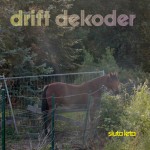
Sluta Leta’s return after a prolonged “digital hiatus” reads like a ghost story with a dance floor inserted. Thirty years after their chemo-electronic EPs and a decade and a half after their last significant statement, they have resurfaced on Cheap Records with "Drift Dekoder", a fractured dream of funk, broken rhythms, and icy vocal fragments. If one wanted a manifesto for how to re-emerge without nostalgia, this is it: beautifully strange, slyly ambitious, fond of missteps.
The Viennese electronic cult label Cheap - co-founded by Erdem Tunakan (among others) - has always backed visionary misfits. Sluta Leta’s presence there feels fitting: a band first heard on Lisa 94 back in 1998 is now speaking into 2025’s circuitry. After fading into virtual myth and a brief resurgence in 2020 with "Entrée Contrôle", Pieper, Bauer and Potuznik reconvene Sluta Leta as a patchwork collective: past members return, guests appear, and the lines between eras collapse.
From the opening "Prélude Gas", one senses tension - as if the air is just about to crack. "Tidsflayer" pulses with a determined glitch-funk, a motor rhythm that feels determined to destabilize itself. "Past in Reverse", with Gerhard Potuznik’s voice, glides across treated synthesizer shadows: voice as spectral anchor in a sea of drift. "Bjorn i FarklÄder" brings warm electronics and lean drum machine zeal; "First Order" leans into minimalism, letting silences speak. "Driftstopp" - as much concept as track name - halts the flow, inviting we listen to what’s left. "Moment Eternal" is the emotional core: a duet with Luise Nehl that glitters with tension. "Rymdpatrull" and the closing "Efterfest" and "Sodala" feel like after-hours fragments, pieces you overhear when the speakers are dying.
What gives "Drift Dekoder" its weight isn’t just sound design, but its relationships - between memory and advance, between imperfection and intention, between identity and access. The album’s very structure favors interruption over continuity; ideas do not always resolve, but that’s part of the point. The “drift decoder” is both metaphor and tool: a filter that tries to reassemble fragments from different technological epochs into something coherent enough to dance to, strange enough to recall dreams.
Sluta Leta have never sounded like they were trying to fit a genre. Rather, they sample their past selves, sabotage their own tropes, and invite you to wander their wreckage. "Drift Dekoder" is not a retro return - it’s a sideways jump, a reactivation of glitch-poetics for a new generation that’s never known smooth lines.
If you listen close, you hear the gap between then and now - and realize that it’s not a void but a room in which they’re still working.
The Viennese electronic cult label Cheap - co-founded by Erdem Tunakan (among others) - has always backed visionary misfits. Sluta Leta’s presence there feels fitting: a band first heard on Lisa 94 back in 1998 is now speaking into 2025’s circuitry. After fading into virtual myth and a brief resurgence in 2020 with "Entrée Contrôle", Pieper, Bauer and Potuznik reconvene Sluta Leta as a patchwork collective: past members return, guests appear, and the lines between eras collapse.
From the opening "Prélude Gas", one senses tension - as if the air is just about to crack. "Tidsflayer" pulses with a determined glitch-funk, a motor rhythm that feels determined to destabilize itself. "Past in Reverse", with Gerhard Potuznik’s voice, glides across treated synthesizer shadows: voice as spectral anchor in a sea of drift. "Bjorn i FarklÄder" brings warm electronics and lean drum machine zeal; "First Order" leans into minimalism, letting silences speak. "Driftstopp" - as much concept as track name - halts the flow, inviting we listen to what’s left. "Moment Eternal" is the emotional core: a duet with Luise Nehl that glitters with tension. "Rymdpatrull" and the closing "Efterfest" and "Sodala" feel like after-hours fragments, pieces you overhear when the speakers are dying.
What gives "Drift Dekoder" its weight isn’t just sound design, but its relationships - between memory and advance, between imperfection and intention, between identity and access. The album’s very structure favors interruption over continuity; ideas do not always resolve, but that’s part of the point. The “drift decoder” is both metaphor and tool: a filter that tries to reassemble fragments from different technological epochs into something coherent enough to dance to, strange enough to recall dreams.
Sluta Leta have never sounded like they were trying to fit a genre. Rather, they sample their past selves, sabotage their own tropes, and invite you to wander their wreckage. "Drift Dekoder" is not a retro return - it’s a sideways jump, a reactivation of glitch-poetics for a new generation that’s never known smooth lines.
If you listen close, you hear the gap between then and now - and realize that it’s not a void but a room in which they’re still working.
Faith Coloccia + Daniel Menche: Smelter
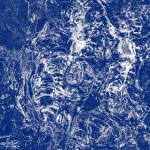
Artist: Faith Coloccia + Daniel Menche
Title: Smelter
Format: CD + Download
Label: Room40 (@)
Rated:

Title: Smelter
Format: CD + Download
Label: Room40 (@)
Rated:
Water and electricity rarely mix well. But when they do - carefully, dangerously - something alchemical can occur. "Smelter", the long-gestating collaboration between Faith Coloccia and Daniel Menche, feels exactly like that: two distinct chemistries-hers fluid and patient, his fierce and magnetic-meeting in a controlled storm. Released on Room40, the ever-consistent Australian label that treats the word "drone" like a verb, "Smelter" is both molten and glacial, an album that suggests slowness as a form of resistance.
Coloccia’s past work (with Mamiffer, Mára, and her many ethereal solo releases) has often circled themes of decay, renewal, and maternal temporality-how sound ages and breathes. Menche, by contrast, is an artisan of intensity: his solo catalog is a thunderhead of feedback, rumble, and field recordings sharpened to a knife’s edge. The beauty of "Smelter" lies in how neither yields to the other. Instead, they merge into something neither ambient nor noise, neither human nor geologic - a terrain where the microphone becomes both compass and confessor.
The album’s core is built from water - in all its shapes and moods. Rain, ice, streams, melting snow, the sound of a ferry parting the Puget Sound: each track feels like a memory of water trying to remember itself. You can almost hear Coloccia’s son laughing in the distance, his voice digitally blurred, a trace of time suspended. Menche, the eternal wanderer, seems to have met her there with his trademark field rituals - recording in wild Oregon, letting static and reverb bloom from wind and stone. Together, their material becomes less documentary and more dreamlike.
"Land Form" opens with a tectonic patience: drones like heat rising from metal, piano submerged beneath strata of noise. "Codec" hums with restrained violence - a dialogue between signal and dissolution. "Winter Enclosure" could almost be described as devotional, but its faith is geological, not spiritual. "Kettle" is the album’s quiet epic, a slow exhalation of feedback and breath that feels like time reversing. "Main Field" wavers between electronic and organic, while "Acequia", the 15-minute closer, is the record’s spiritual afterimage: a floodplain of resonances, water trickling through buried circuits, a hymn to entropy.
Despite its density, "Smelter" never lapses into chaos. The sound feels sculpted, not improvised - shaped with the same care one might use to polish a fossil. Each layer of drone carries memory: the hiss of a stream recorded in haste, the hum of Menche’s machines tuned to match it. This isn’t field recording as scenery; it’s field recording as archaeology, as a way of retrieving something personal from the landscape.
And yes, there’s a touch of humor here too - the irony that a record built on water and patience is called "Smelter". Fire meets flood. Steel meets ice. The title fits perfectly: this is sound as transformation, as the slow act of melting and re-solidifying meaning.
Room40 has long served as a home for such elemental dialogue - artists who speak through temperature and topography more than rhythm. In this context, "Smelter" feels both timeless and very much of its age: an album about collaboration in the truest sense, where two distinct languages fuse into a new, untranslatable dialect.
Coloccia’s past work (with Mamiffer, Mára, and her many ethereal solo releases) has often circled themes of decay, renewal, and maternal temporality-how sound ages and breathes. Menche, by contrast, is an artisan of intensity: his solo catalog is a thunderhead of feedback, rumble, and field recordings sharpened to a knife’s edge. The beauty of "Smelter" lies in how neither yields to the other. Instead, they merge into something neither ambient nor noise, neither human nor geologic - a terrain where the microphone becomes both compass and confessor.
The album’s core is built from water - in all its shapes and moods. Rain, ice, streams, melting snow, the sound of a ferry parting the Puget Sound: each track feels like a memory of water trying to remember itself. You can almost hear Coloccia’s son laughing in the distance, his voice digitally blurred, a trace of time suspended. Menche, the eternal wanderer, seems to have met her there with his trademark field rituals - recording in wild Oregon, letting static and reverb bloom from wind and stone. Together, their material becomes less documentary and more dreamlike.
"Land Form" opens with a tectonic patience: drones like heat rising from metal, piano submerged beneath strata of noise. "Codec" hums with restrained violence - a dialogue between signal and dissolution. "Winter Enclosure" could almost be described as devotional, but its faith is geological, not spiritual. "Kettle" is the album’s quiet epic, a slow exhalation of feedback and breath that feels like time reversing. "Main Field" wavers between electronic and organic, while "Acequia", the 15-minute closer, is the record’s spiritual afterimage: a floodplain of resonances, water trickling through buried circuits, a hymn to entropy.
Despite its density, "Smelter" never lapses into chaos. The sound feels sculpted, not improvised - shaped with the same care one might use to polish a fossil. Each layer of drone carries memory: the hiss of a stream recorded in haste, the hum of Menche’s machines tuned to match it. This isn’t field recording as scenery; it’s field recording as archaeology, as a way of retrieving something personal from the landscape.
And yes, there’s a touch of humor here too - the irony that a record built on water and patience is called "Smelter". Fire meets flood. Steel meets ice. The title fits perfectly: this is sound as transformation, as the slow act of melting and re-solidifying meaning.
Room40 has long served as a home for such elemental dialogue - artists who speak through temperature and topography more than rhythm. In this context, "Smelter" feels both timeless and very much of its age: an album about collaboration in the truest sense, where two distinct languages fuse into a new, untranslatable dialect.
Geoglyph: Otherworldly

Artist: Geoglyph (@)
Title: Otherworldly
Format: Download Only (MP3 + Lossless)
Label: Over The Moon Music (@)
Rated:
Title: Otherworldly
Format: Download Only (MP3 + Lossless)
Label: Over The Moon Music (@)
Rated:
Every ambient artist eventually gazes at the dunes - and Geoglyph does so not just with reverence but with a certain British restraint, as if staring at Arrakis through a window streaked with London rain. "Otherworldly" is his driest record yet, literally: an arid sound world of shimmering mirages, analog mirth, and slow, hypnotic motion that seems to exhale more than it plays.
Chris Charles - the man behind the Geoglyph alias - has always moved between two ecosystems: the deep-sea dubscapes of "Geolinguistic" (2018) and the lush psychedelic bass terrain of "Messages from the Resonator" (2020, with Globular). Here, he trades his subaquatic palette for sand, grit, and sunlight. The water has evaporated, leaving behind a mineral shimmer and the pulse of wind over dunes. The result feels like the moment between heat and hallucination - when a mirage starts to believe in itself.
The record’s architecture is patient and precise. “Desert Sky” opens like a time-lapse of dawn, breakbeats flickering like insects under synthetic heat. “A Gentle Breeze” - irony noted - moves like a meditation in motion, its flute phrases and bass curvatures recalling Kaya Project’s organic-mechanical balancing act. The title track, "Otherworldly", stands at the album’s core: a slow, almost devotional drift that flirts with psydub but ends up somewhere more mysterious, a sacred space built from delay tails and analog sighs.
Throughout, Geoglyph uses his tools like an archaeologist of sound - uncovering, brushing, unearthing the grooves rather than composing them. There’s a strong sense of temporal ambiguity here, reinforced by his declared fascination with “deep time.” Tracks such as “Resonant Structure” and “Pyramidion” might as well be soundtracks to shifting tectonic plates - trance not as club form, but as geological process. And then there’s “Start from Scratch”, a charmingly brief outro that reminds us that even in an age of plugins and presets, one can still pick up a bass guitar, learn it from zero, and mean it.
What gives "Otherworldly" its depth isn’t just technical craft but emotional intelligence. This is ambient with a heartbeat, psydub with humility. The production is meticulous, yet it never feels sterile; the rhythm breathes, the reverb sweats. It’s a record of paradoxes - dusty but lush, digital yet handmade, cosmic yet intimate.
Released on DJ Maggie Houtz’s "Over the Moon Music", the album fits perfectly within that label’s elegant downtempo cosmos - kin to Bluetech’s analog mysticism, but slightly more earthbound, more grounded in human pulse and ecological reflection. You could say this is the sound of "Dune" reimagined by a mindful engineer who left his synths in the desert overnight and came back to find them meditating.
In short: "Otherworldly" is a mirage that leaves footprints.
Chris Charles - the man behind the Geoglyph alias - has always moved between two ecosystems: the deep-sea dubscapes of "Geolinguistic" (2018) and the lush psychedelic bass terrain of "Messages from the Resonator" (2020, with Globular). Here, he trades his subaquatic palette for sand, grit, and sunlight. The water has evaporated, leaving behind a mineral shimmer and the pulse of wind over dunes. The result feels like the moment between heat and hallucination - when a mirage starts to believe in itself.
The record’s architecture is patient and precise. “Desert Sky” opens like a time-lapse of dawn, breakbeats flickering like insects under synthetic heat. “A Gentle Breeze” - irony noted - moves like a meditation in motion, its flute phrases and bass curvatures recalling Kaya Project’s organic-mechanical balancing act. The title track, "Otherworldly", stands at the album’s core: a slow, almost devotional drift that flirts with psydub but ends up somewhere more mysterious, a sacred space built from delay tails and analog sighs.
Throughout, Geoglyph uses his tools like an archaeologist of sound - uncovering, brushing, unearthing the grooves rather than composing them. There’s a strong sense of temporal ambiguity here, reinforced by his declared fascination with “deep time.” Tracks such as “Resonant Structure” and “Pyramidion” might as well be soundtracks to shifting tectonic plates - trance not as club form, but as geological process. And then there’s “Start from Scratch”, a charmingly brief outro that reminds us that even in an age of plugins and presets, one can still pick up a bass guitar, learn it from zero, and mean it.
What gives "Otherworldly" its depth isn’t just technical craft but emotional intelligence. This is ambient with a heartbeat, psydub with humility. The production is meticulous, yet it never feels sterile; the rhythm breathes, the reverb sweats. It’s a record of paradoxes - dusty but lush, digital yet handmade, cosmic yet intimate.
Released on DJ Maggie Houtz’s "Over the Moon Music", the album fits perfectly within that label’s elegant downtempo cosmos - kin to Bluetech’s analog mysticism, but slightly more earthbound, more grounded in human pulse and ecological reflection. You could say this is the sound of "Dune" reimagined by a mindful engineer who left his synths in the desert overnight and came back to find them meditating.
In short: "Otherworldly" is a mirage that leaves footprints.